A Simple Village-Muang Ngoi, Laos (Post #8)

Dear Friends and Family,

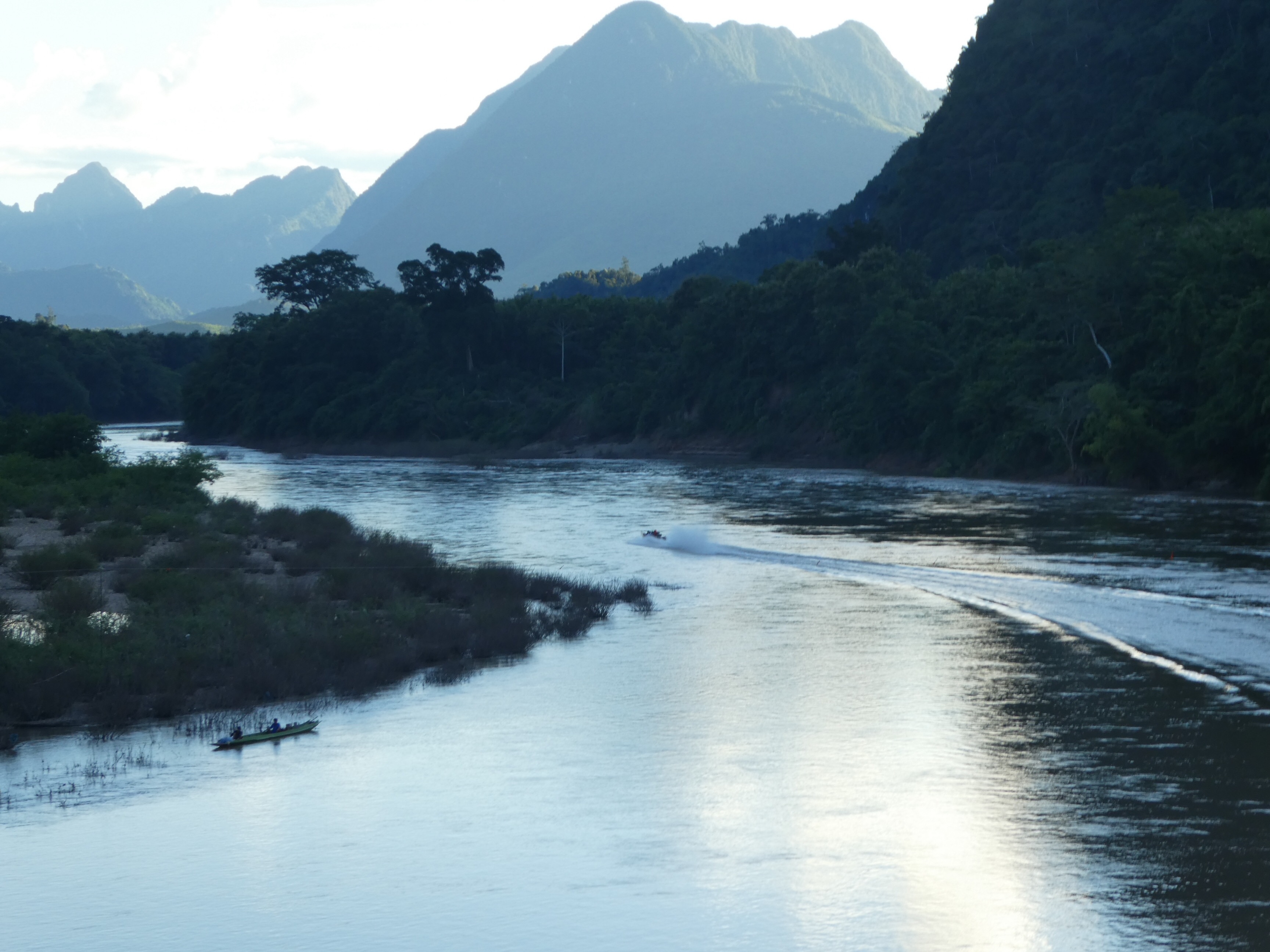
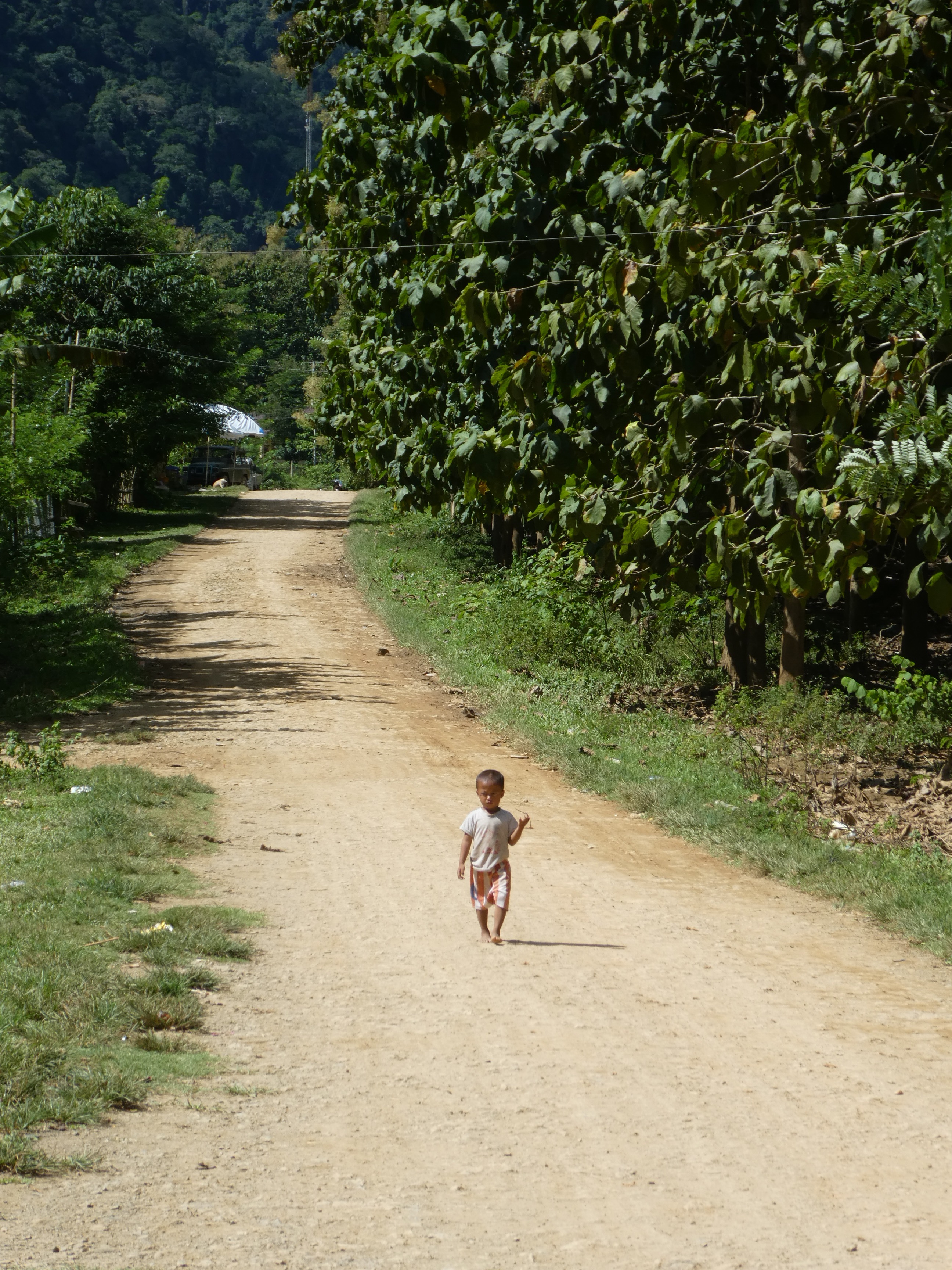
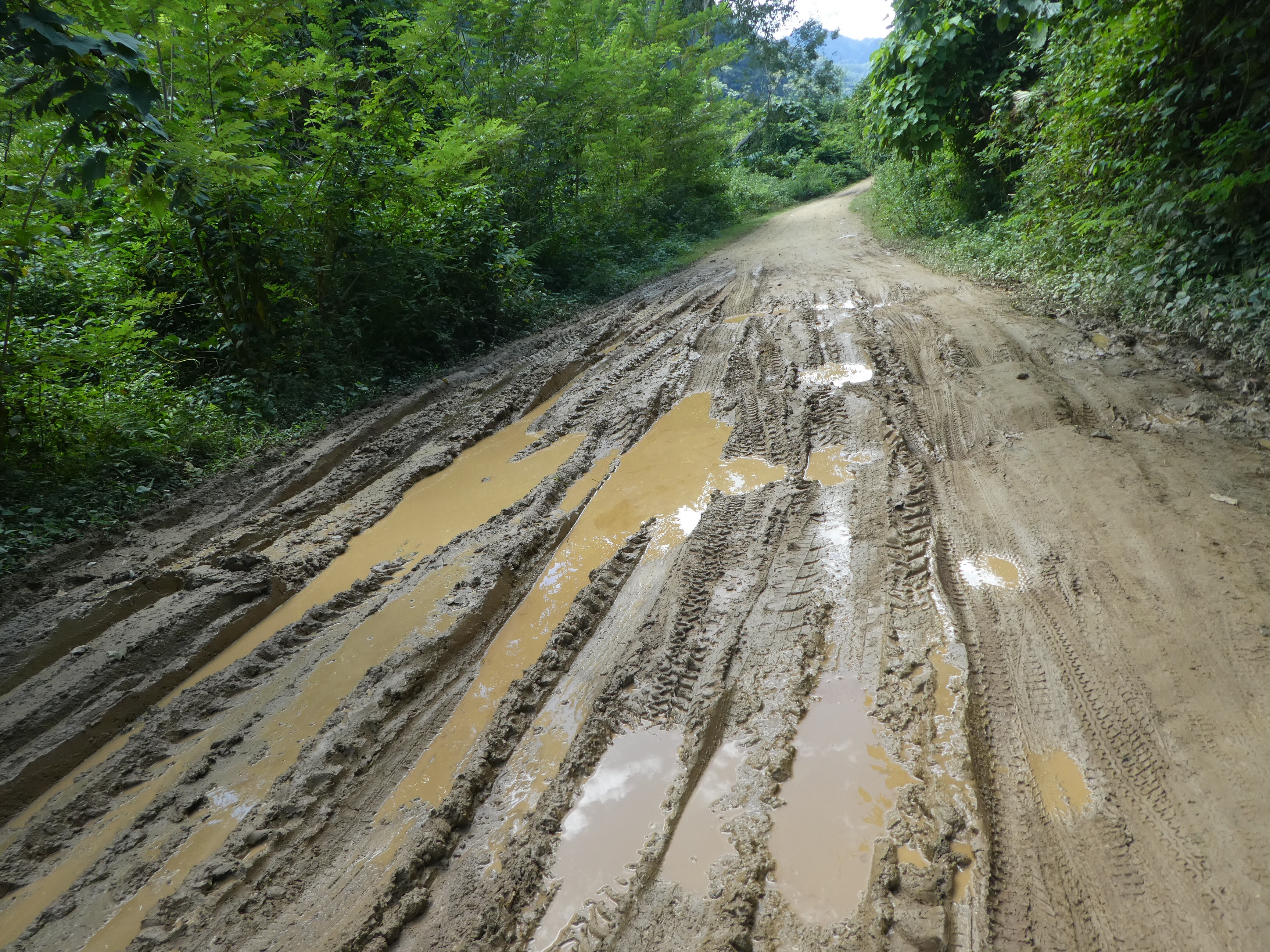
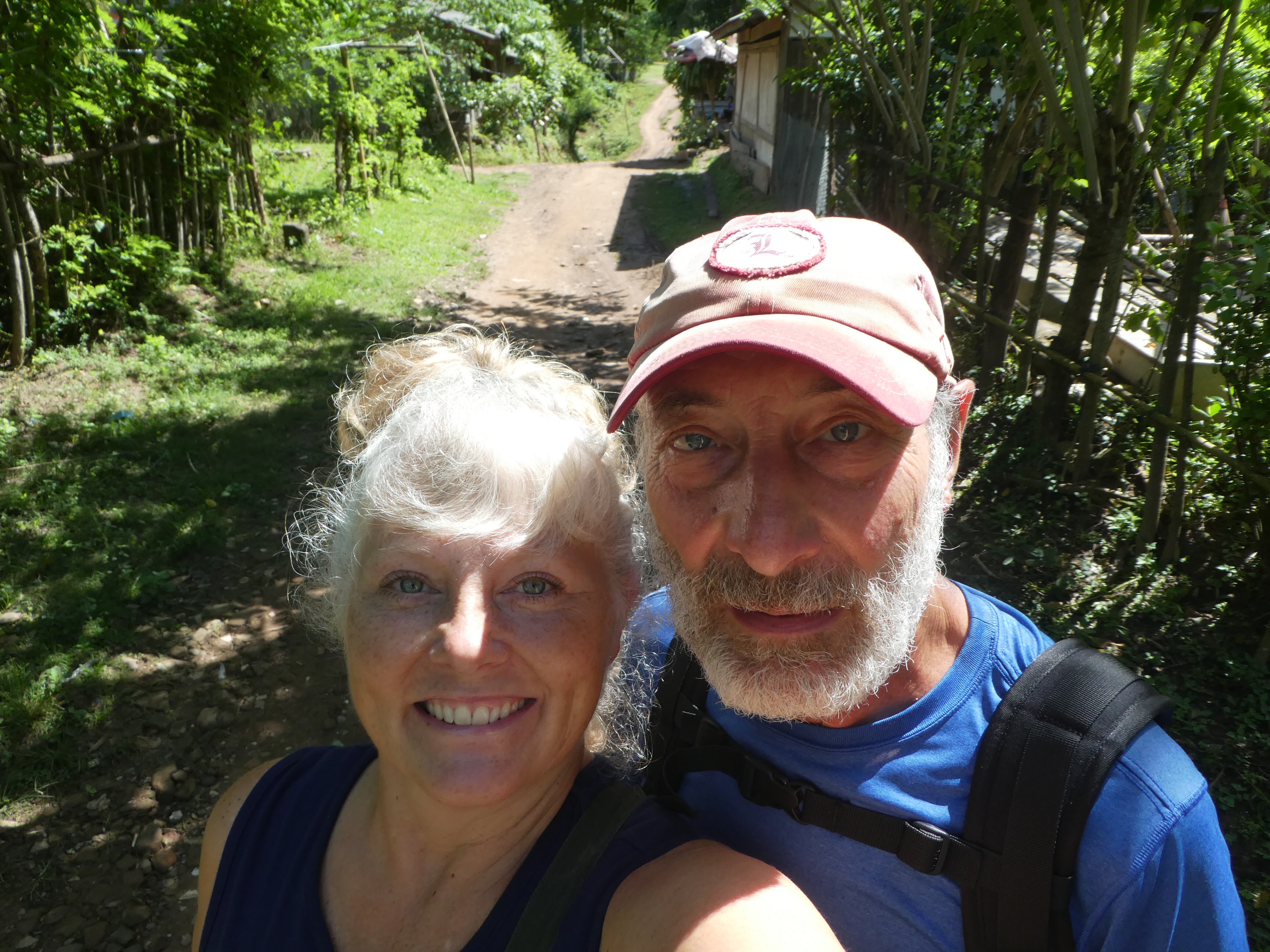
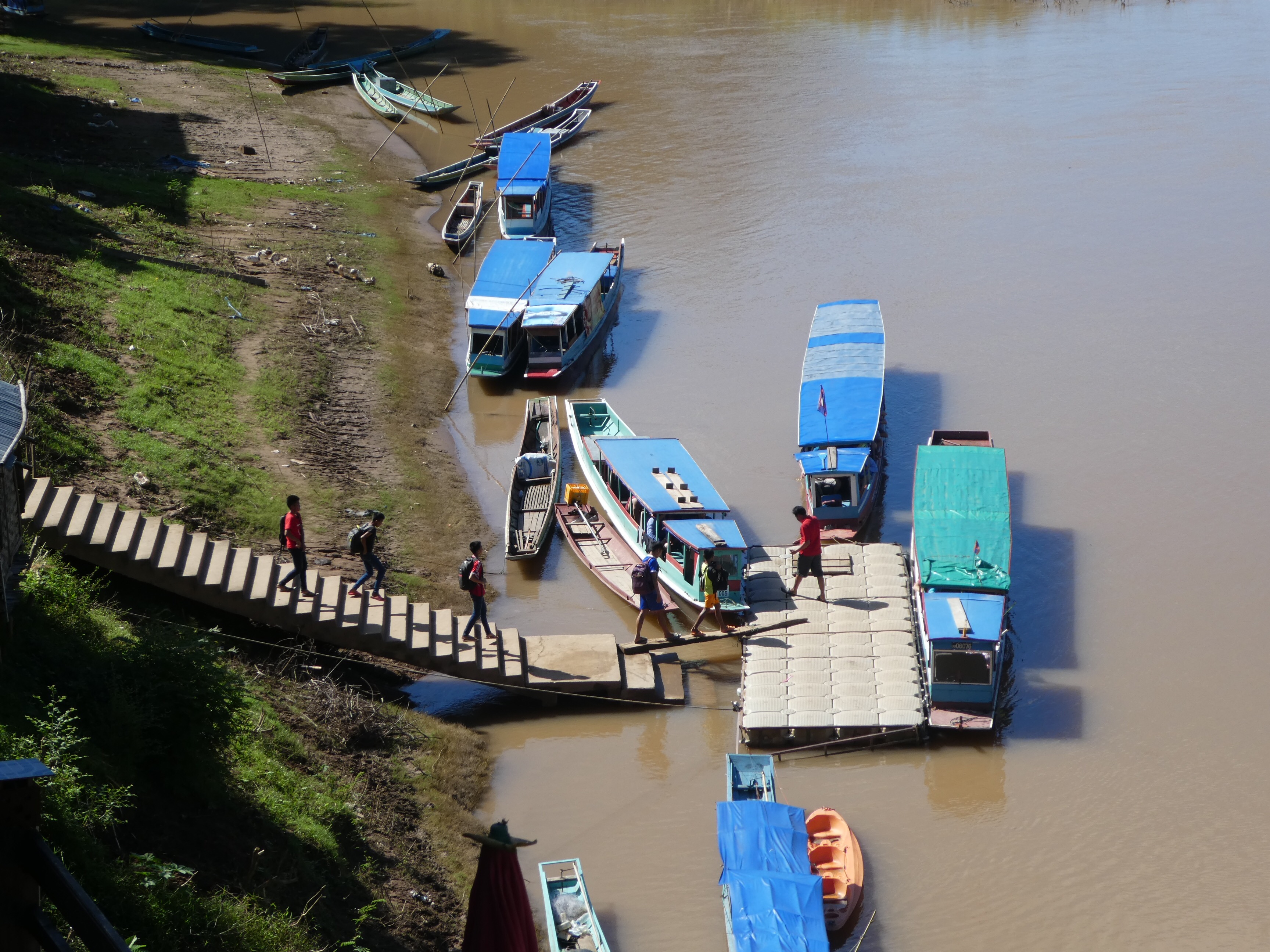
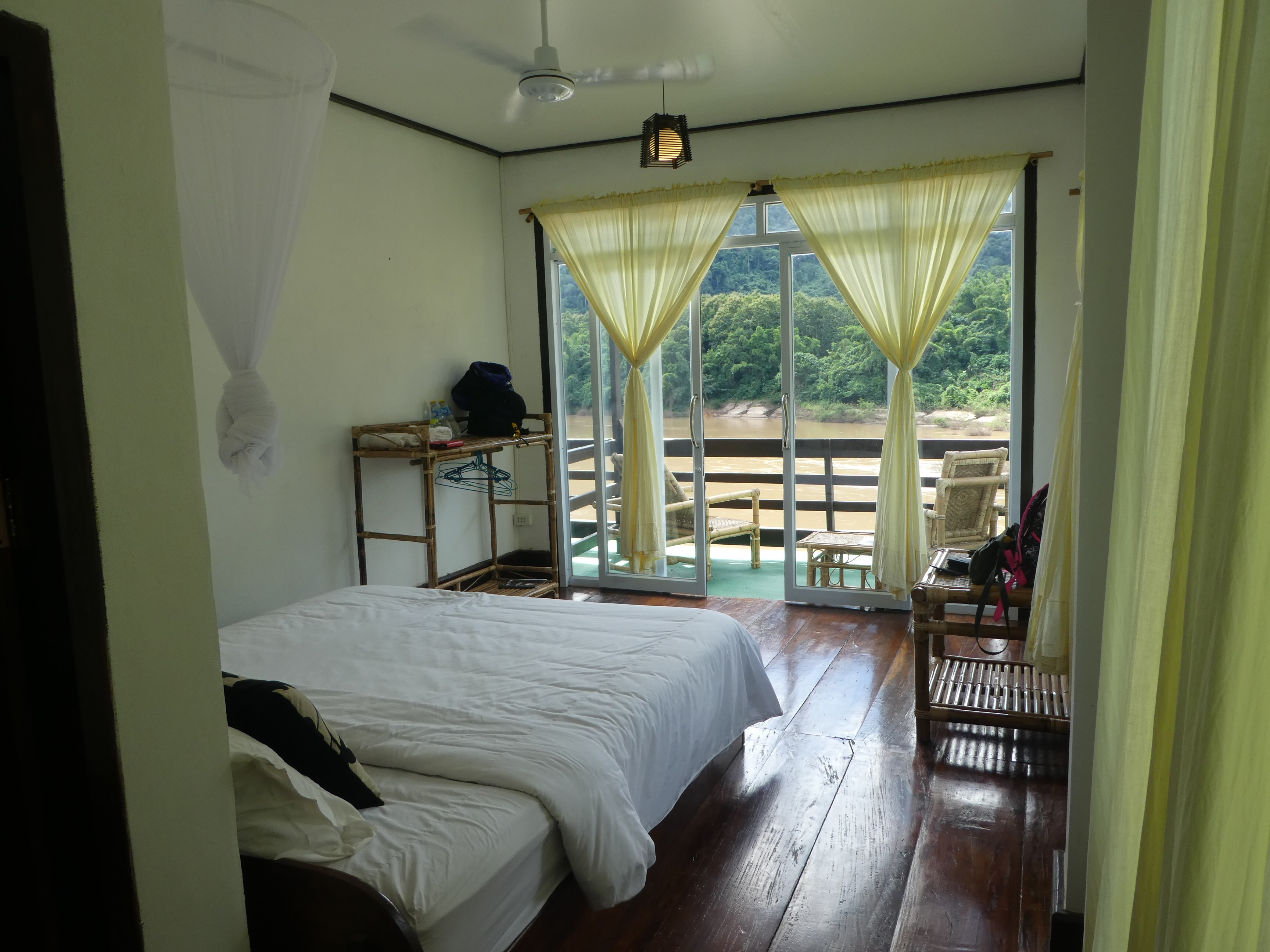
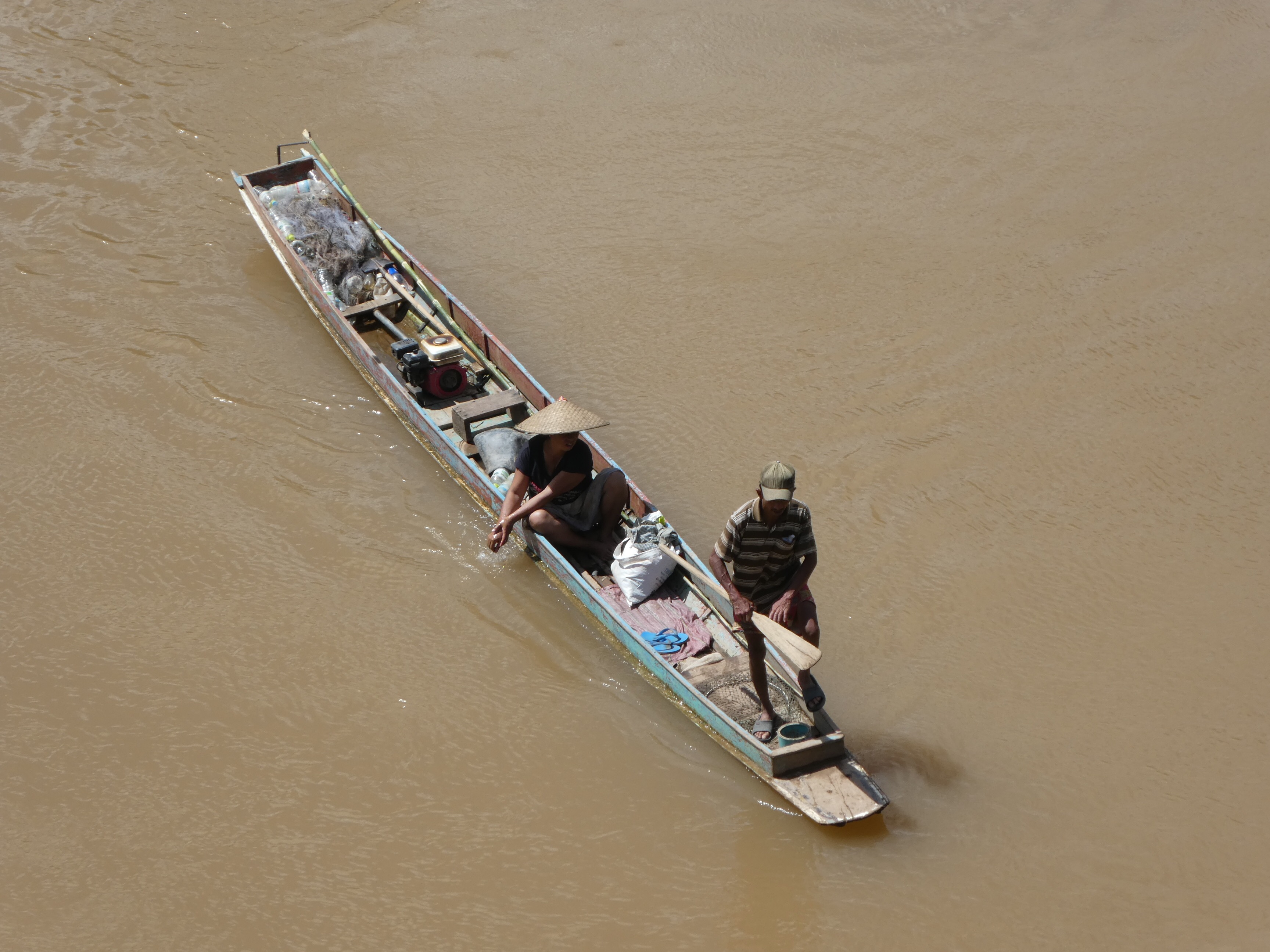
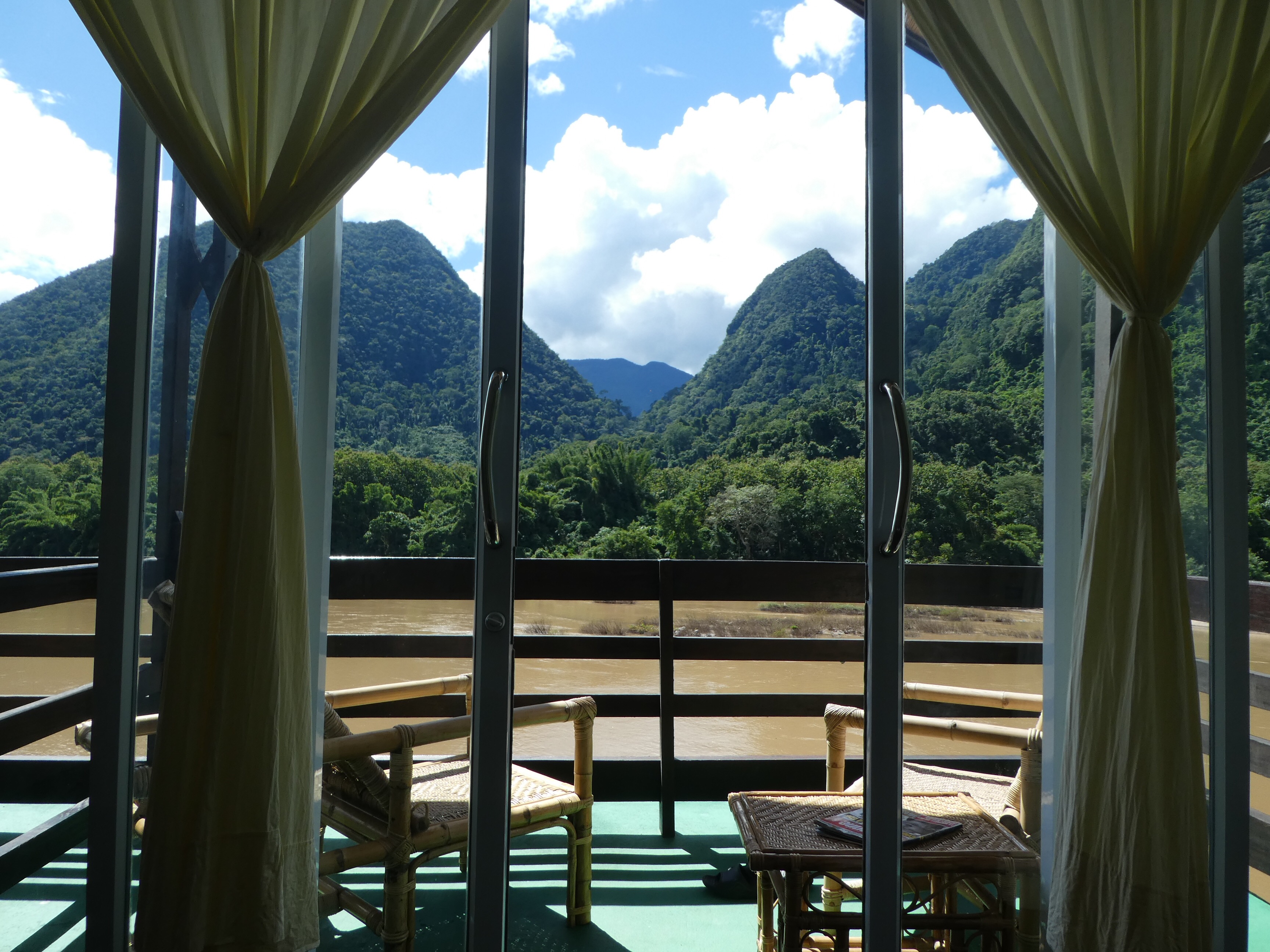
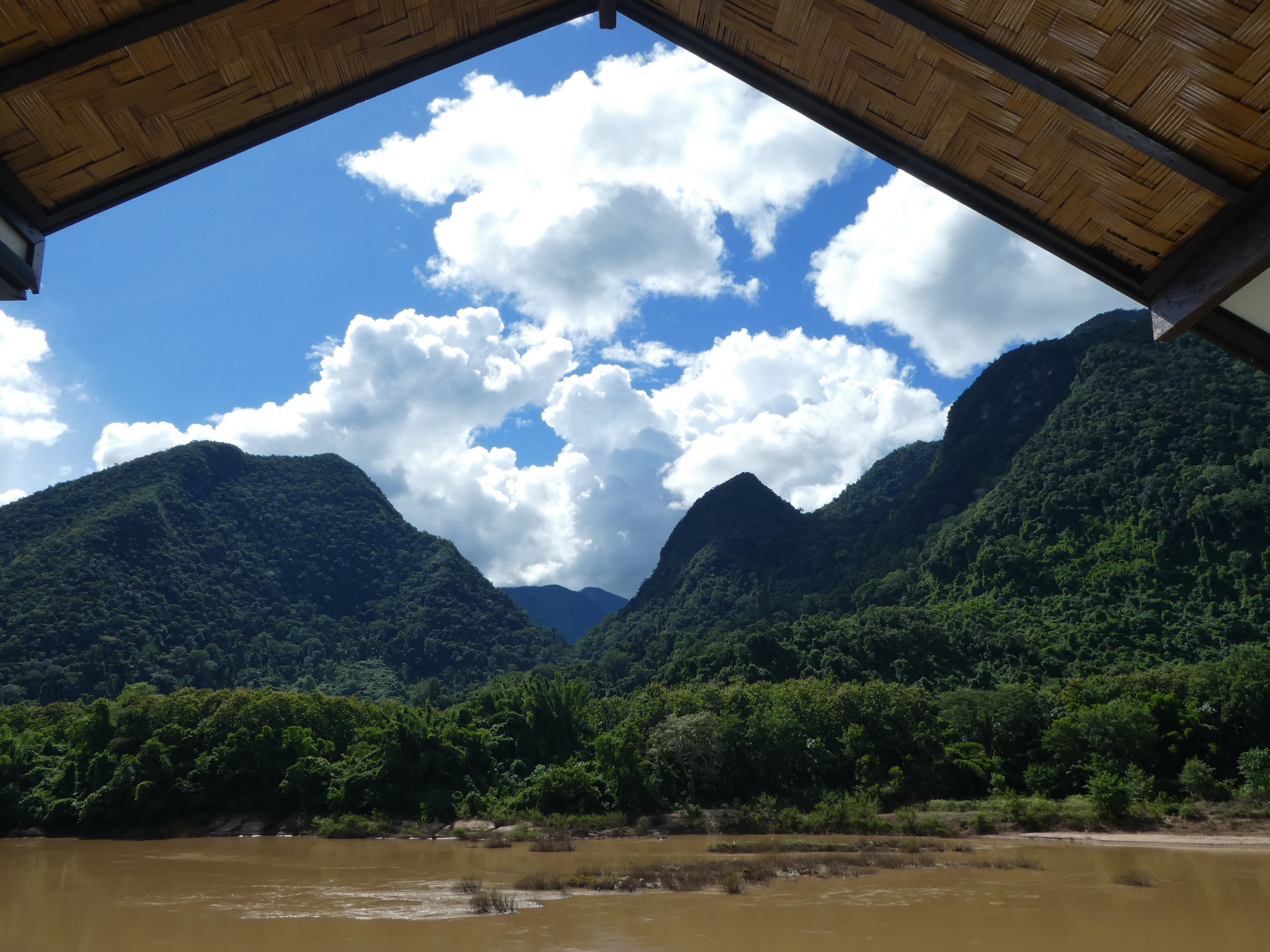
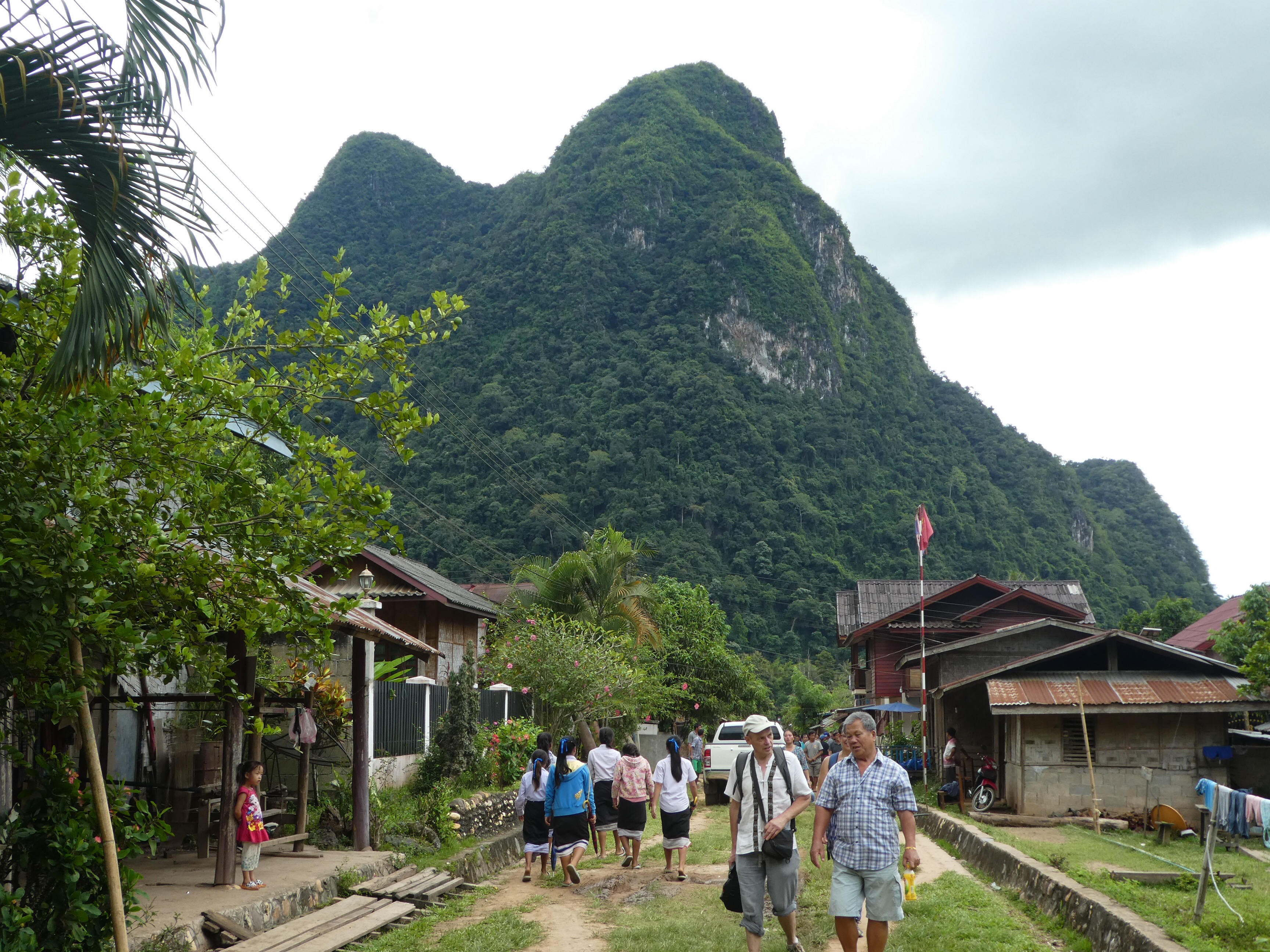
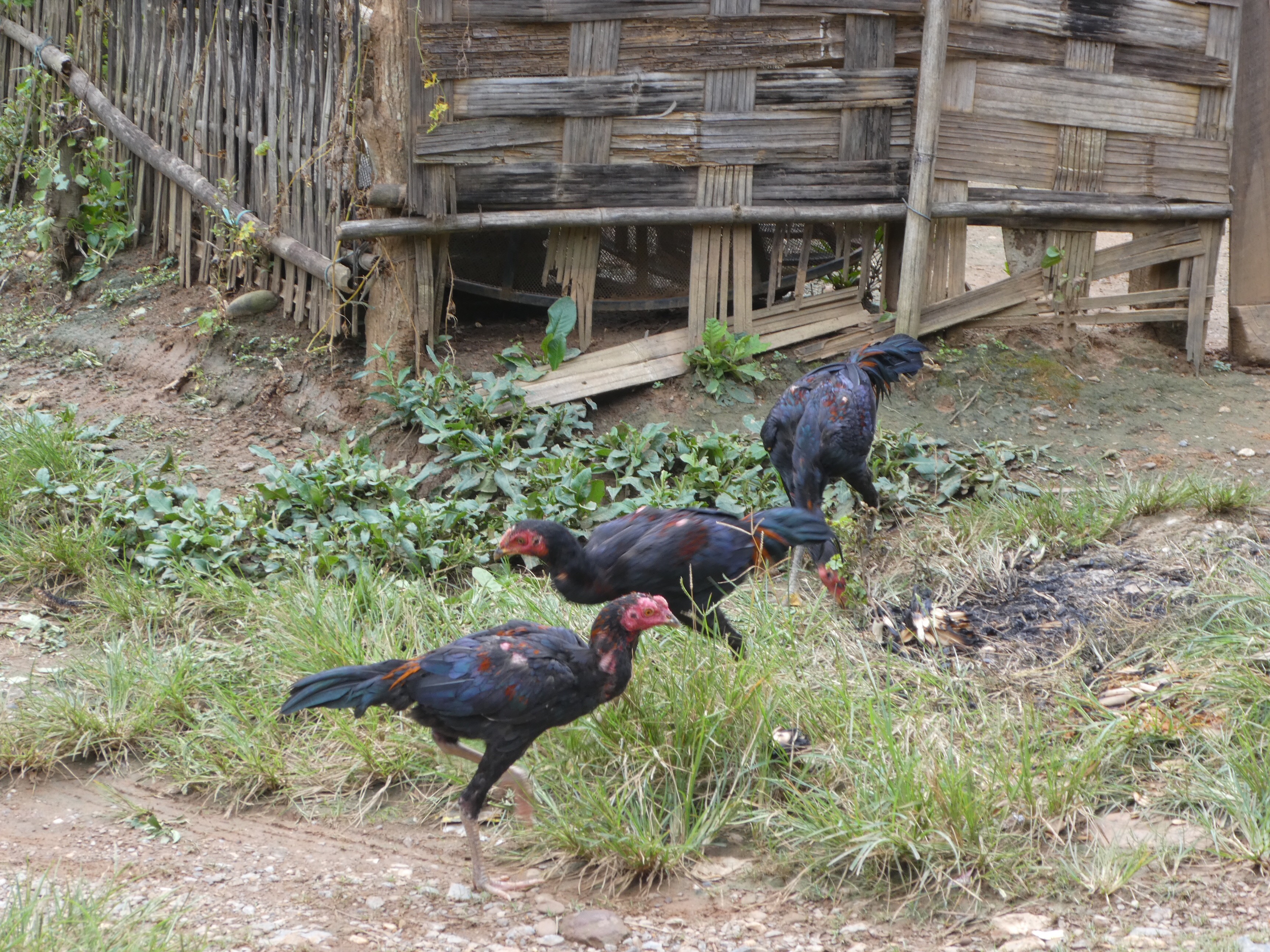
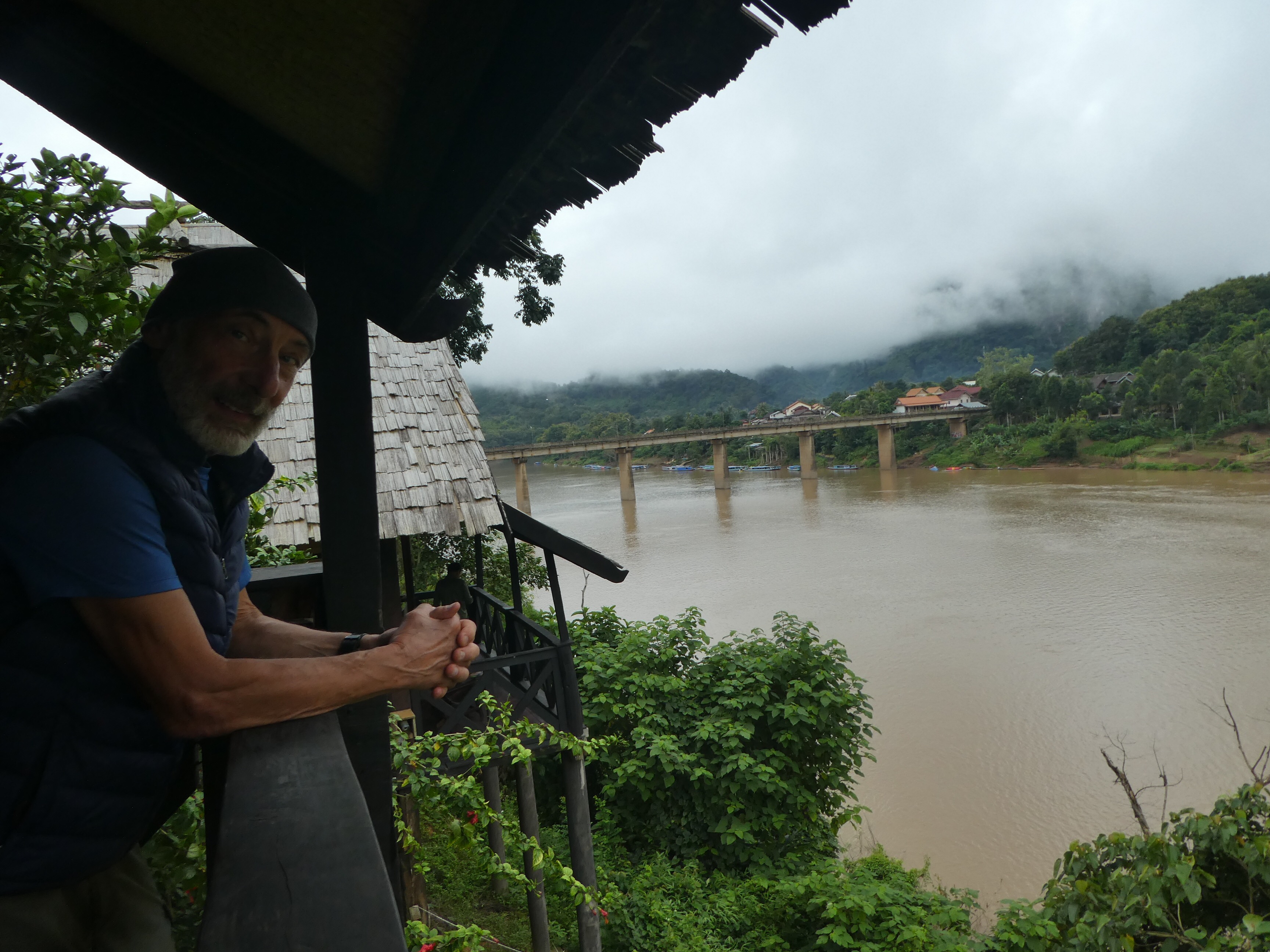
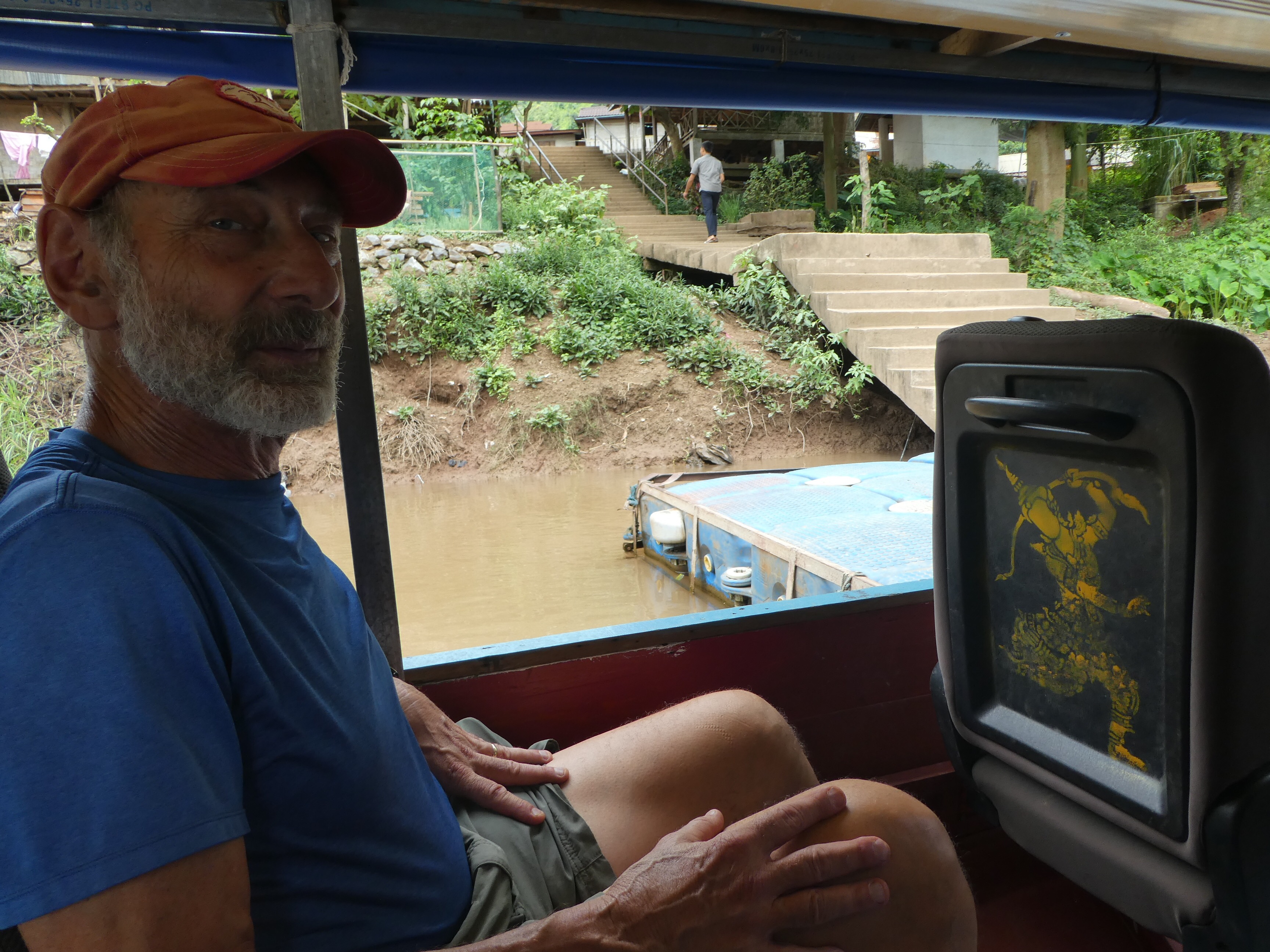
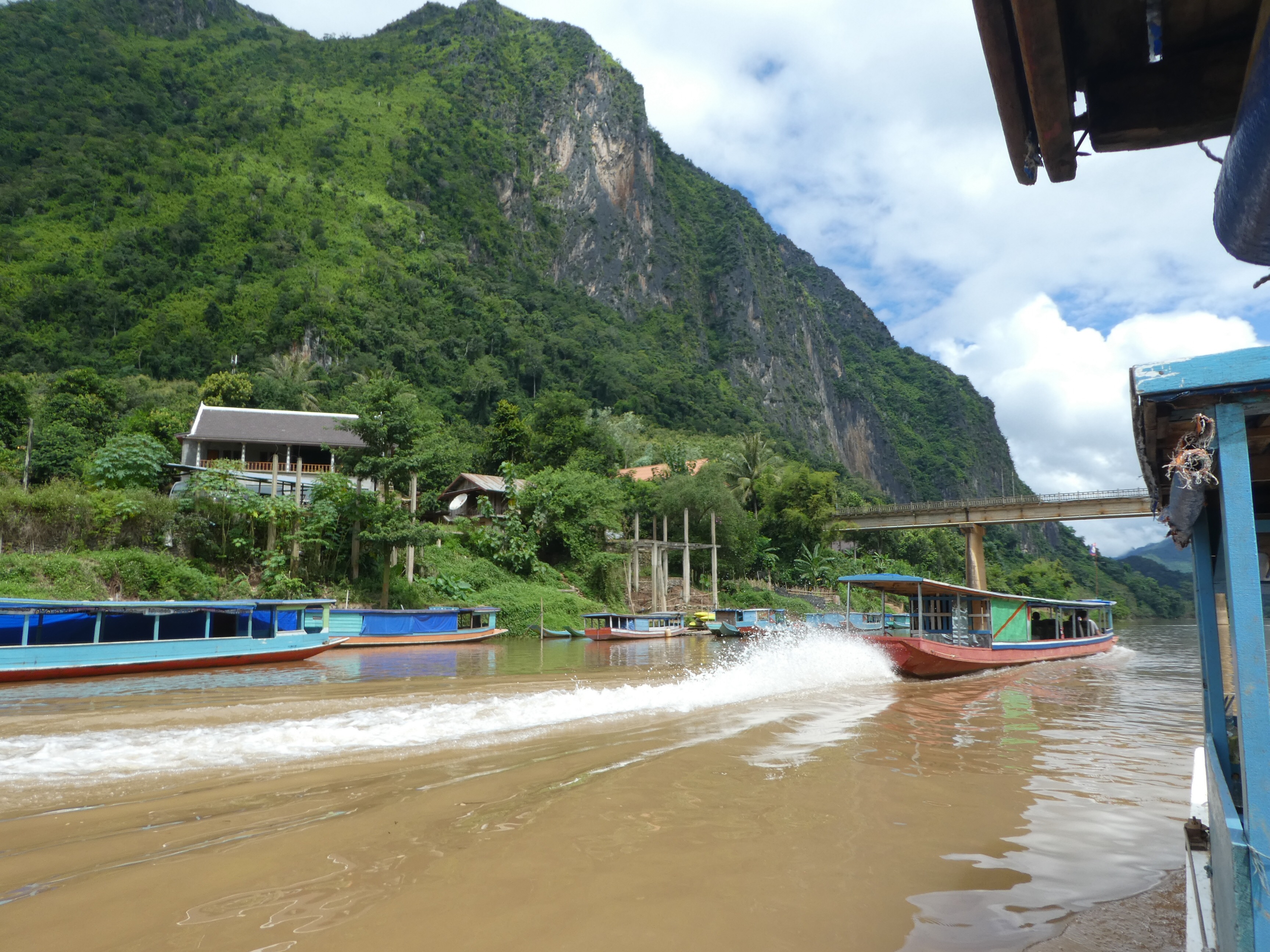
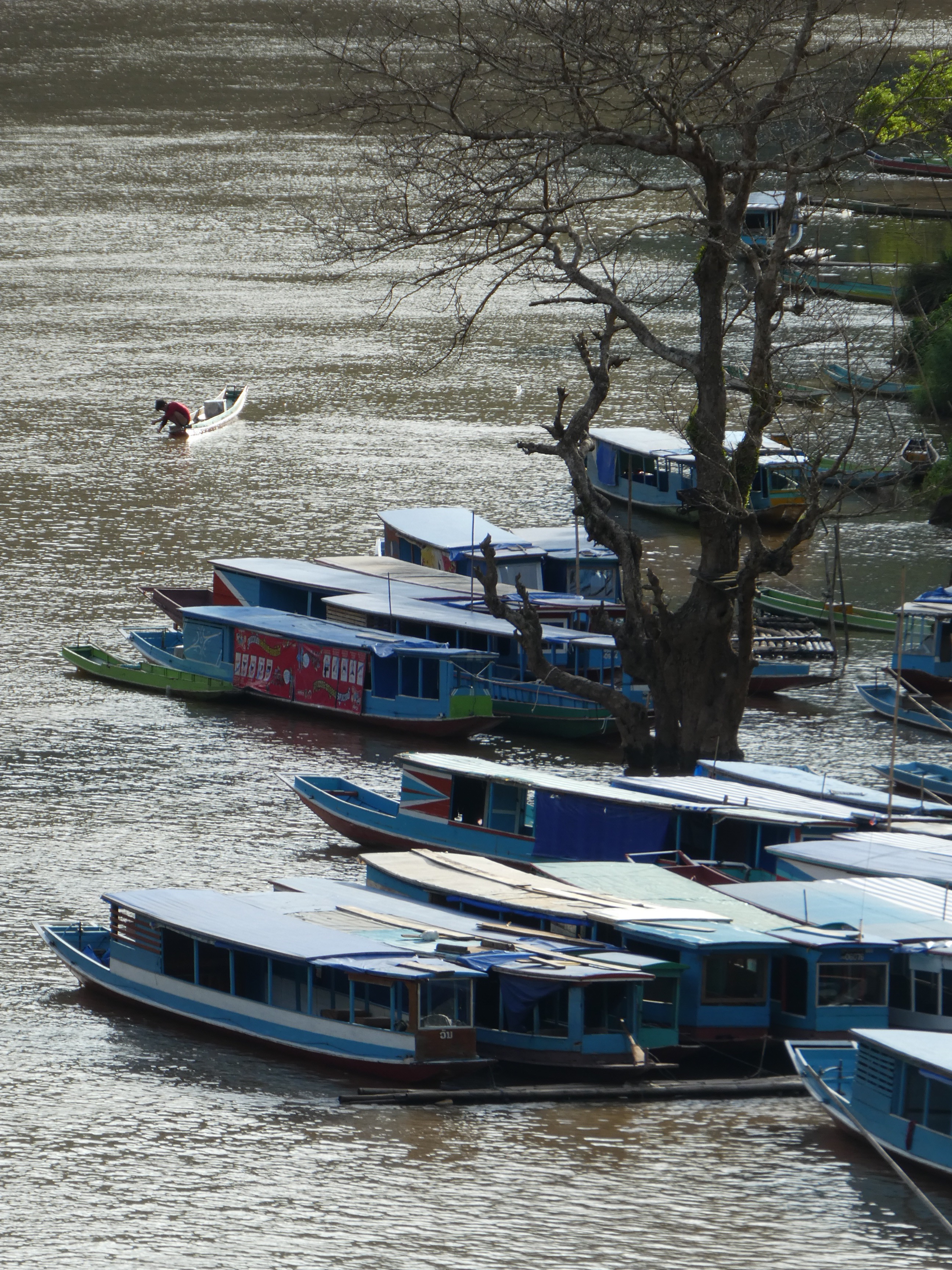
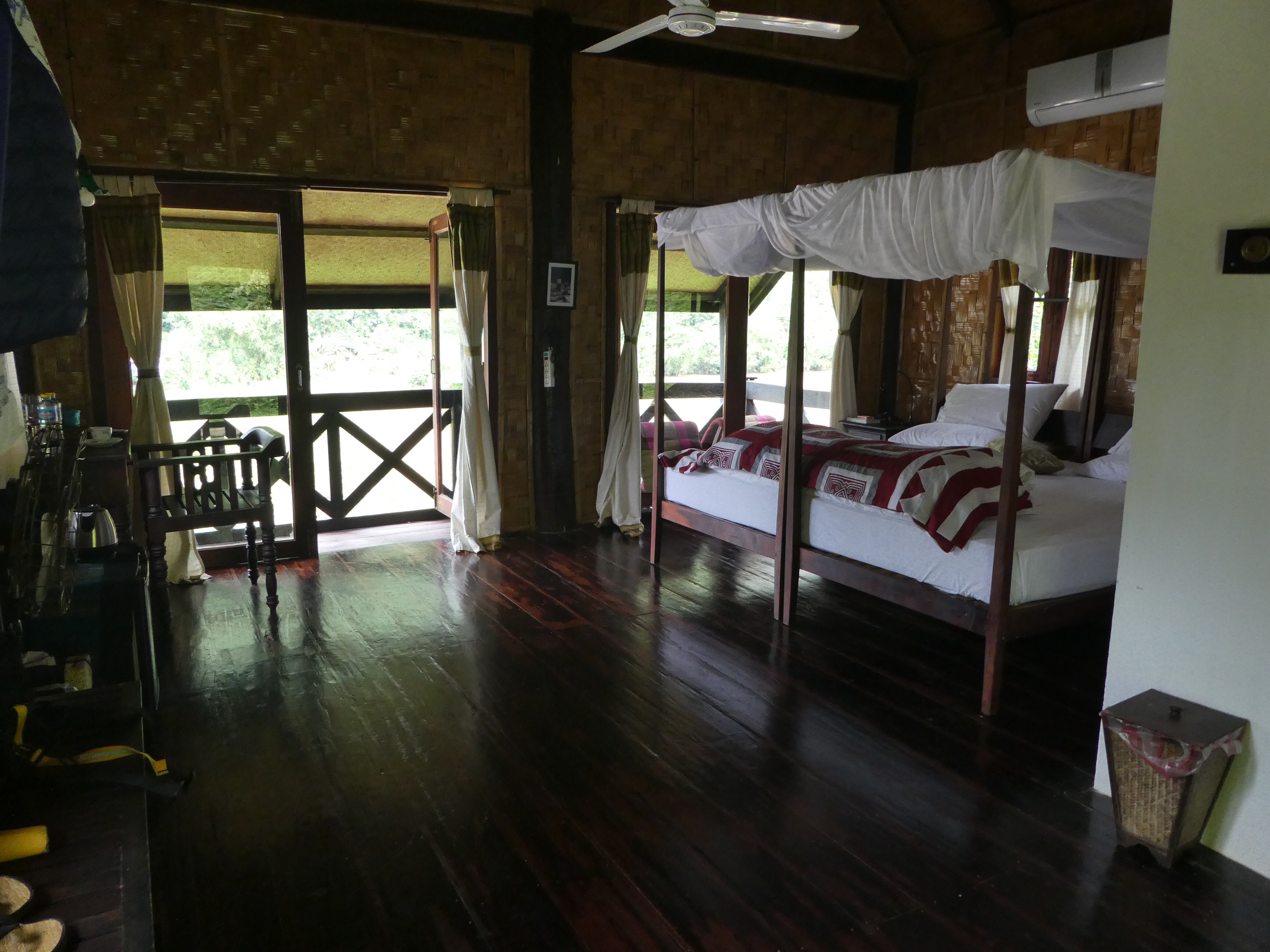
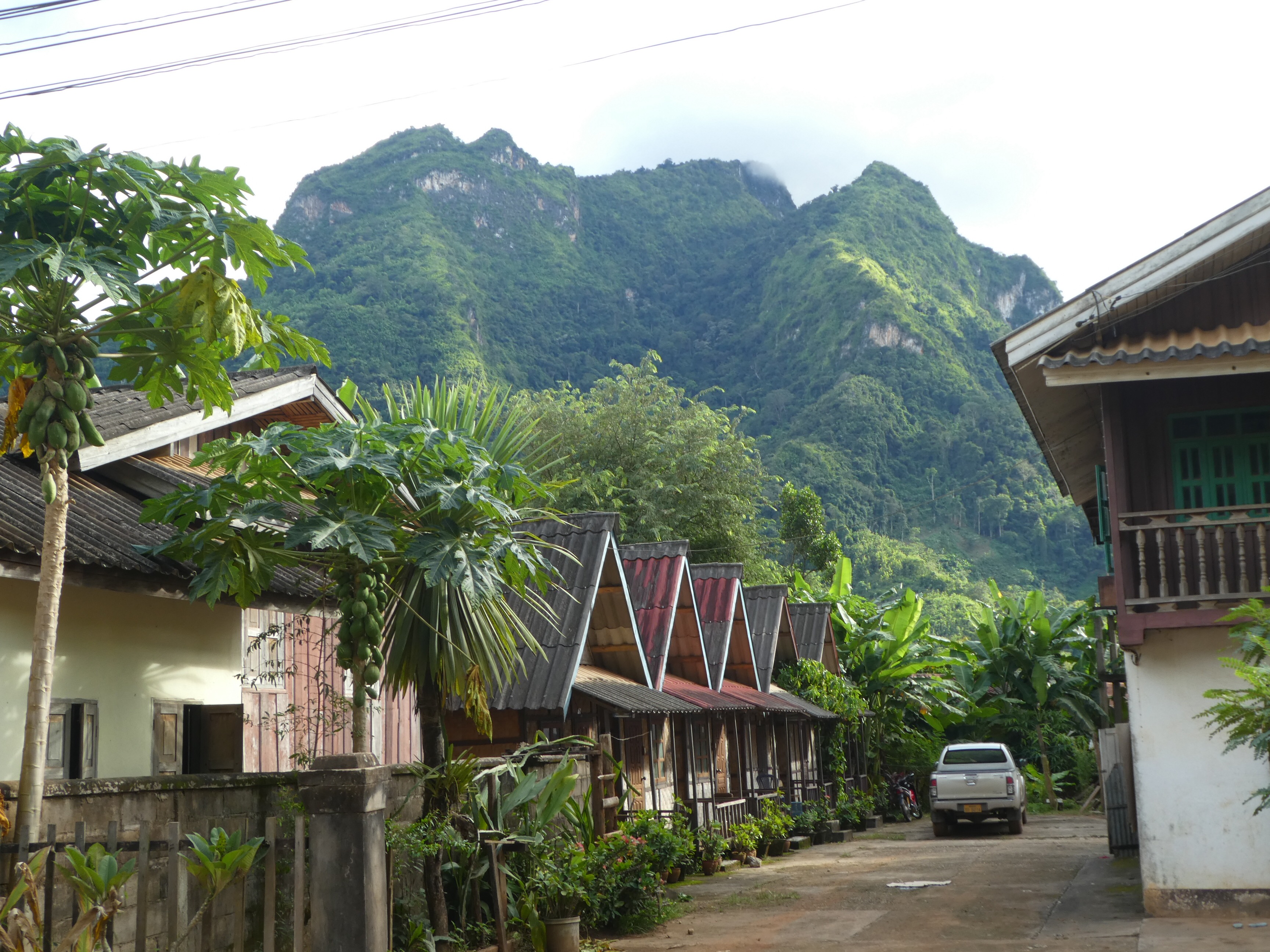
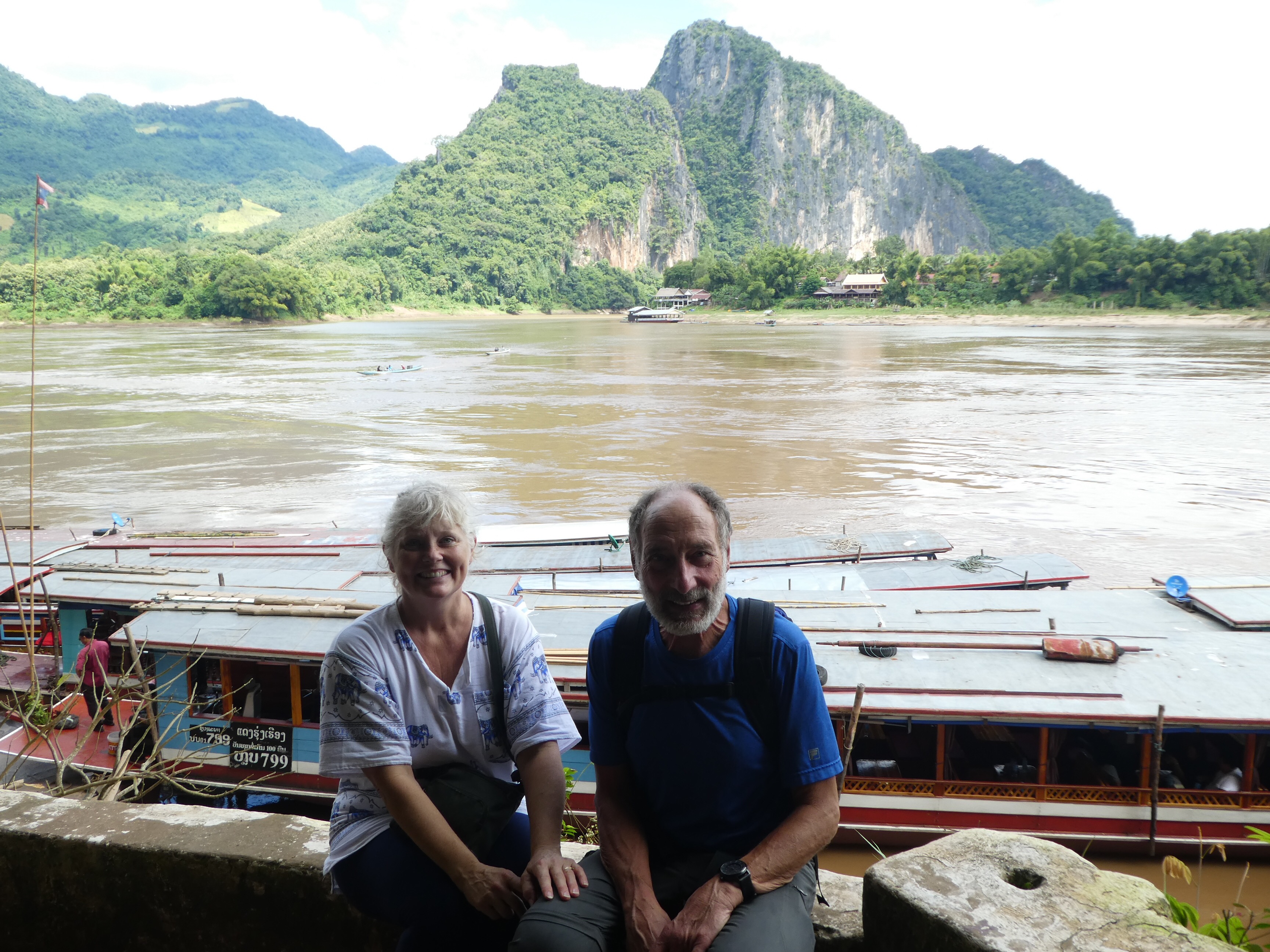
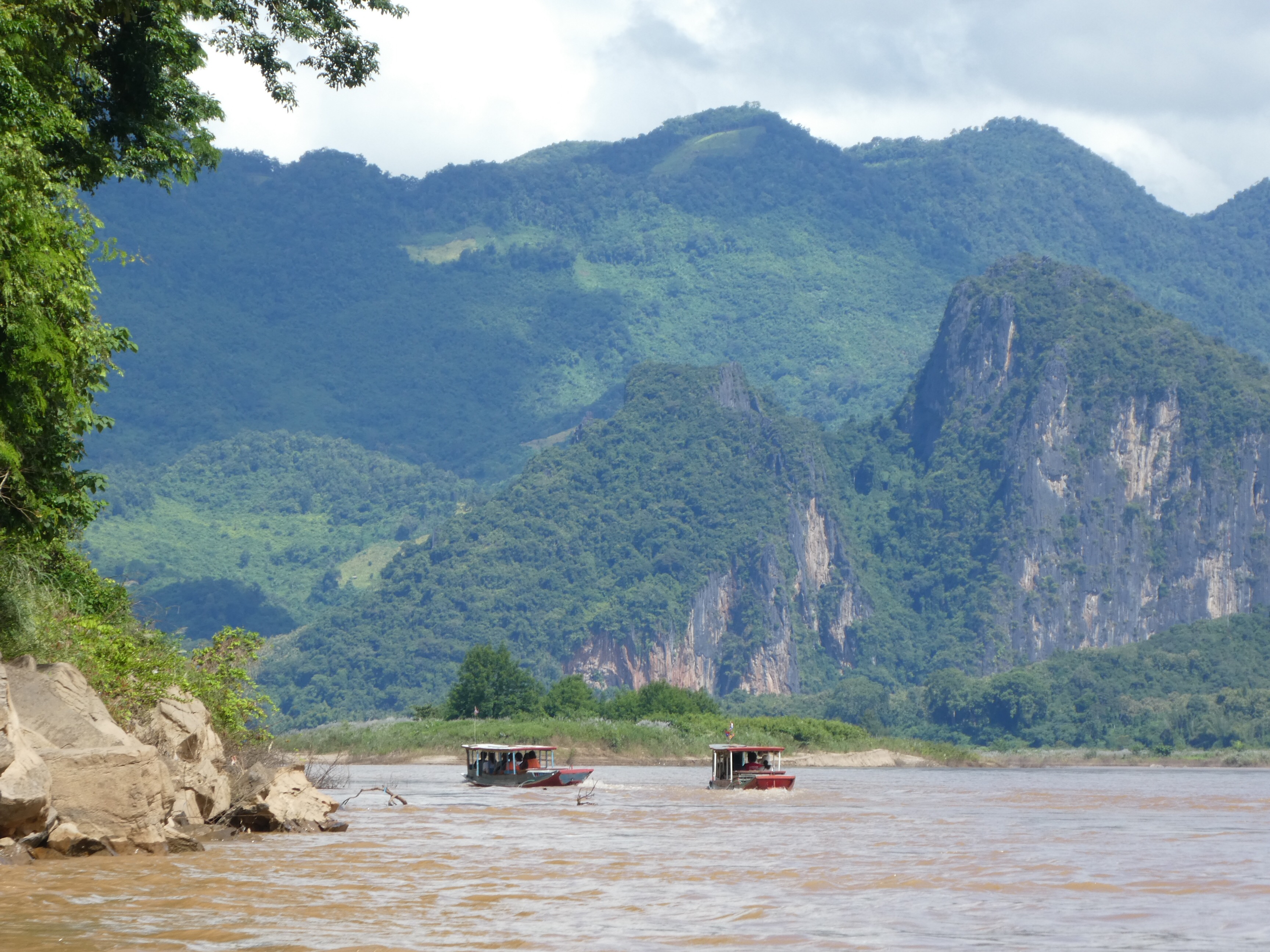
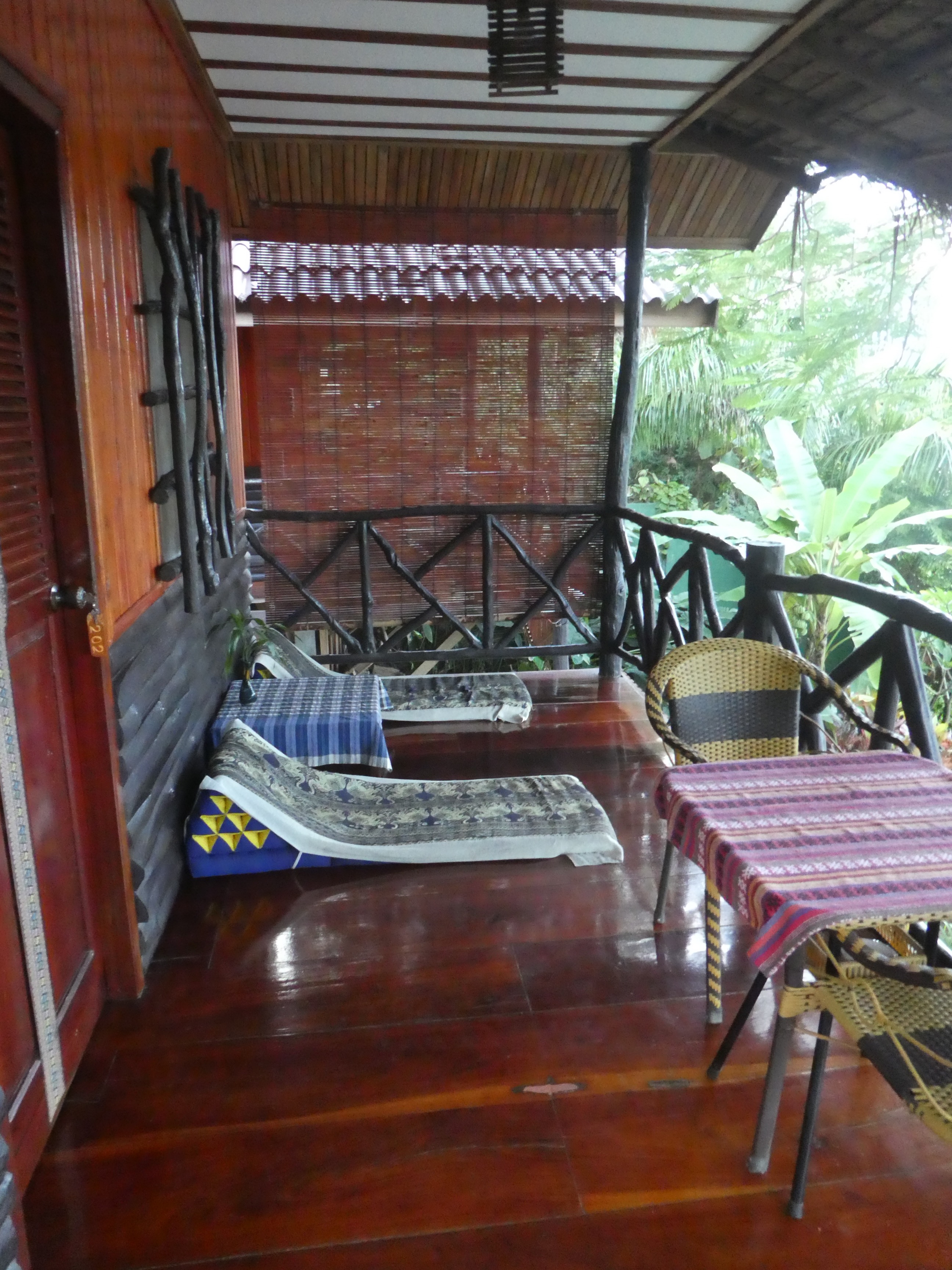
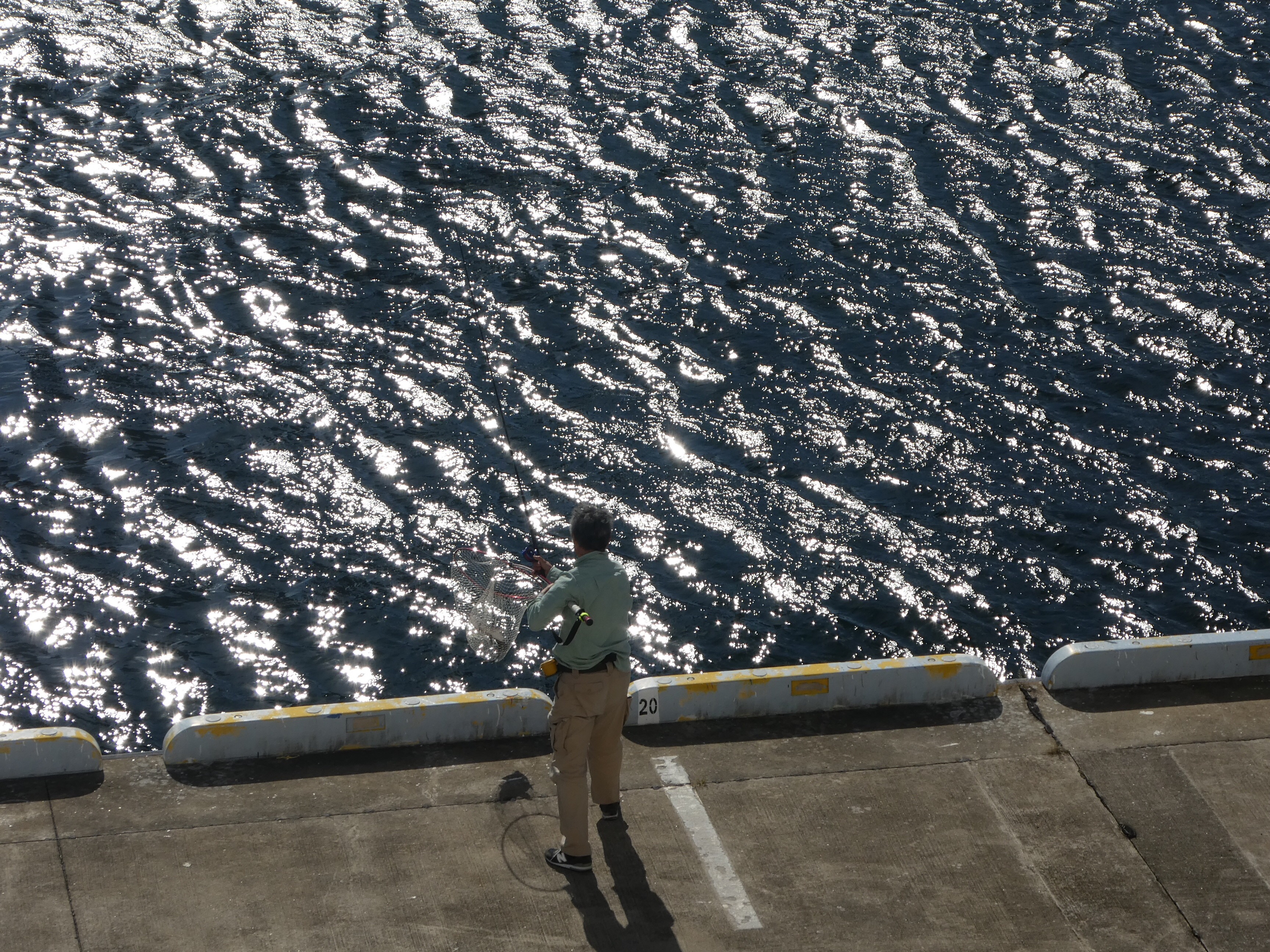
We arrived in the remote village of Muang Ngoi by boat. We so enjoyed our time there, in spite of its muddy, rocky dirt roads and broken down structures. There couldn’t be more than a few hundred very poor people living there. There was only one road, a deeply rutted, muddy path, shared by pedestrians, scooters, and an occasional truck. Dogs and cats roamed freely, and it seemed that everyone knew everyone. Simple hippy type travelers mixed with the locals. Our balcony room at Ning Ning hotel overlooked the Nam Ou river. Fishermen cast their nets from boats below us. They began before dawn, worked until mid-morning, began again at dusk, and fished through the night, with the aid of powerful lights to attract the fish. The pier was near our bungalow. Boats left with travelers on a loosely followed schedule. There were no souvenir shops or hawkers and very few camera wielding tourist types in Muang Ngoi. 

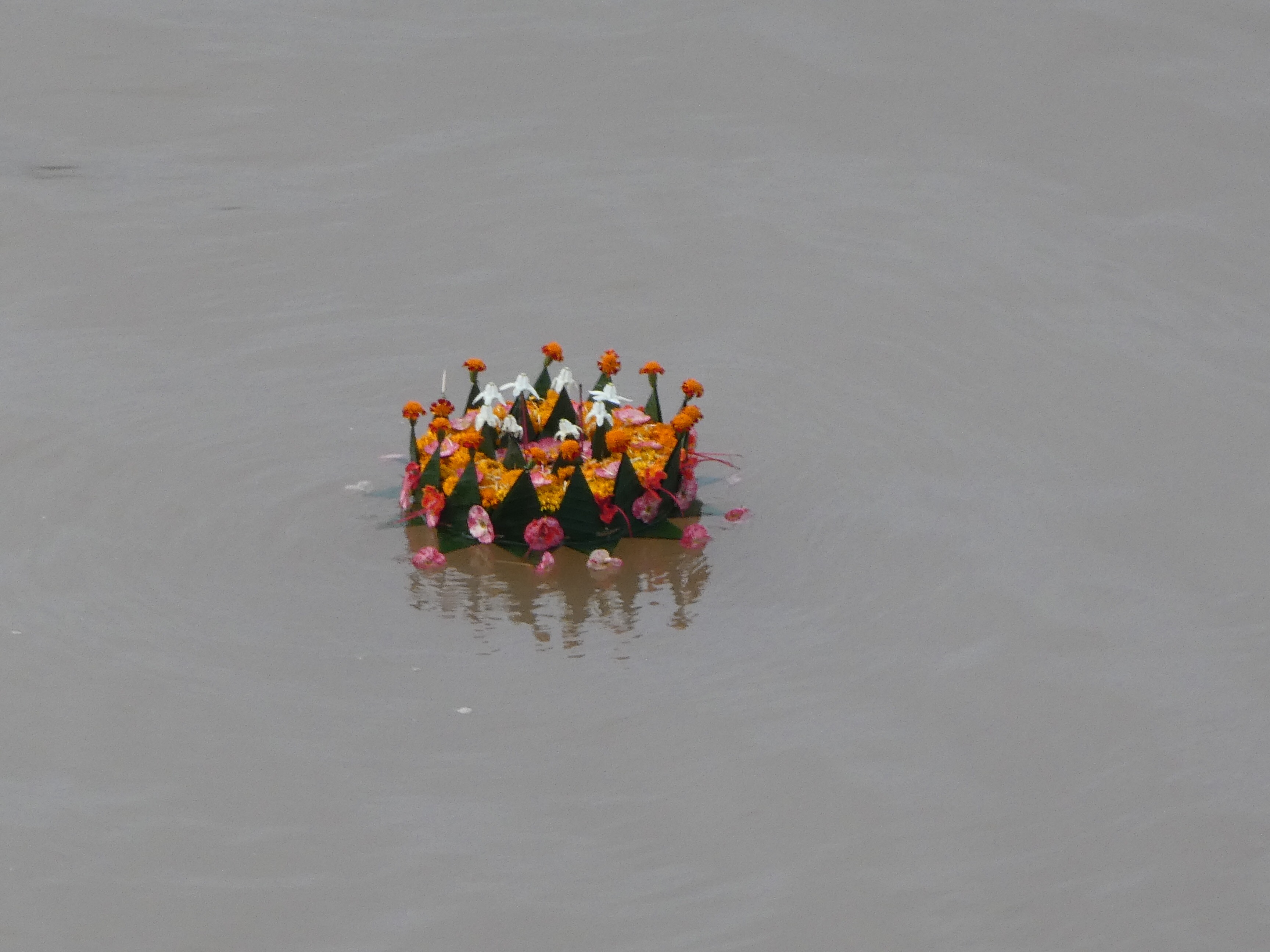
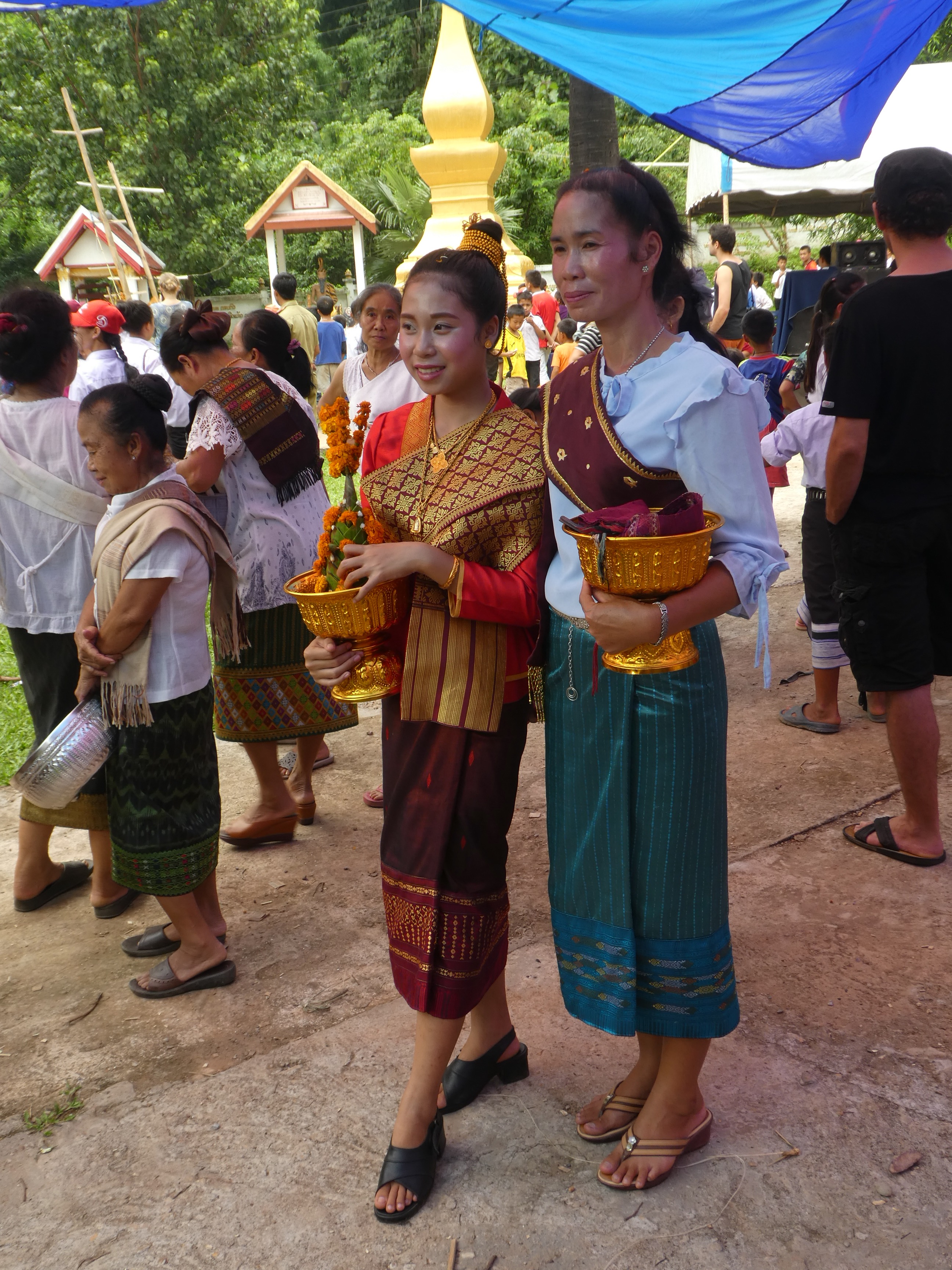
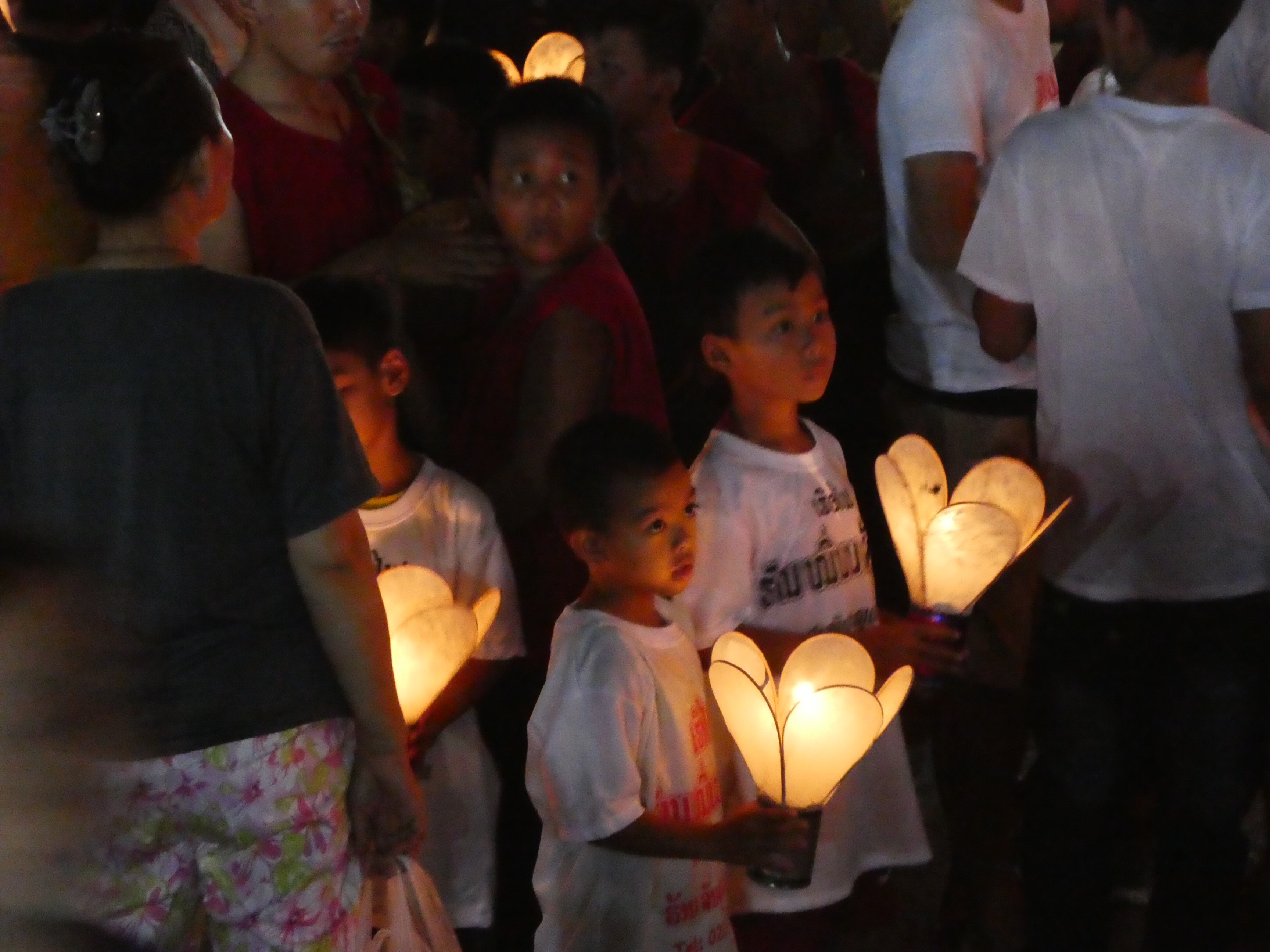
Our first night there was pretty noisy. The village participants and monks returned from Luang Prabang where they represented Muang Ngoi in the Dragon boat festival. They were welcomed back with a local “festival of music and rockets.” We walked down to the temple and watched a short parade, set to loud music and drumming. One at a time, “rockets” were launched and shot off across the river until the wee hours of the morning! The next morning, we saw several flower offerings float past our bungalow down river.  

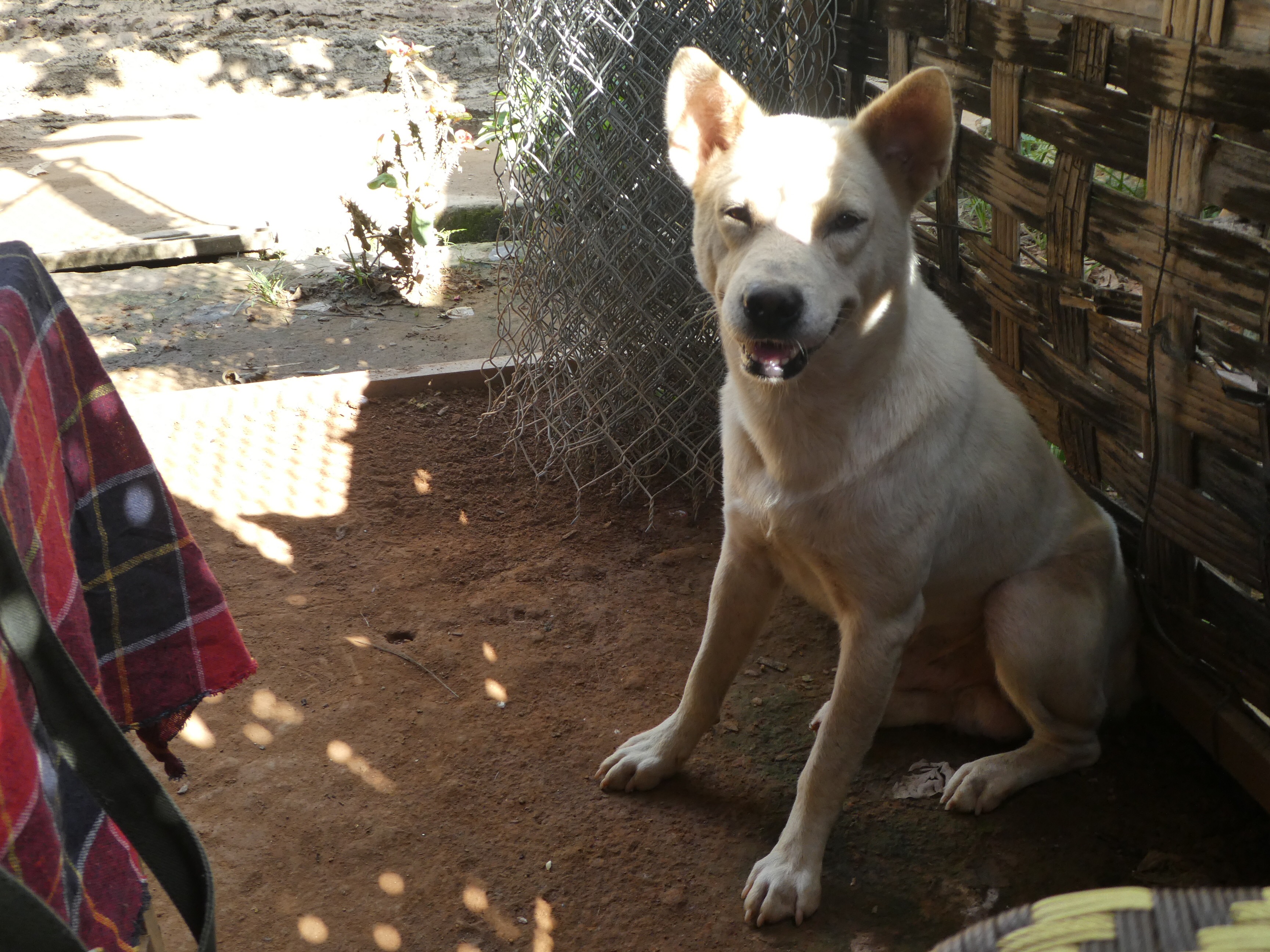
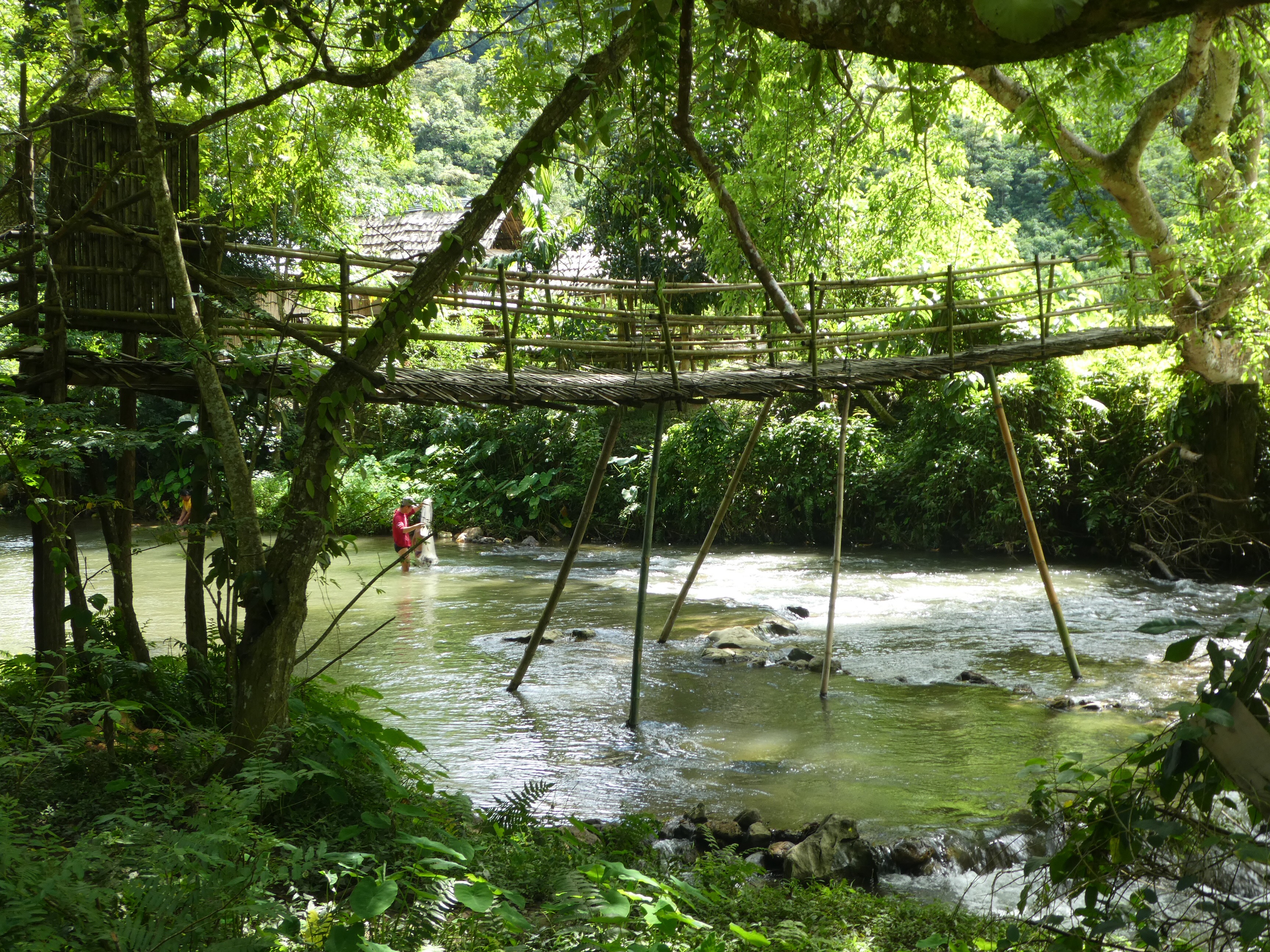
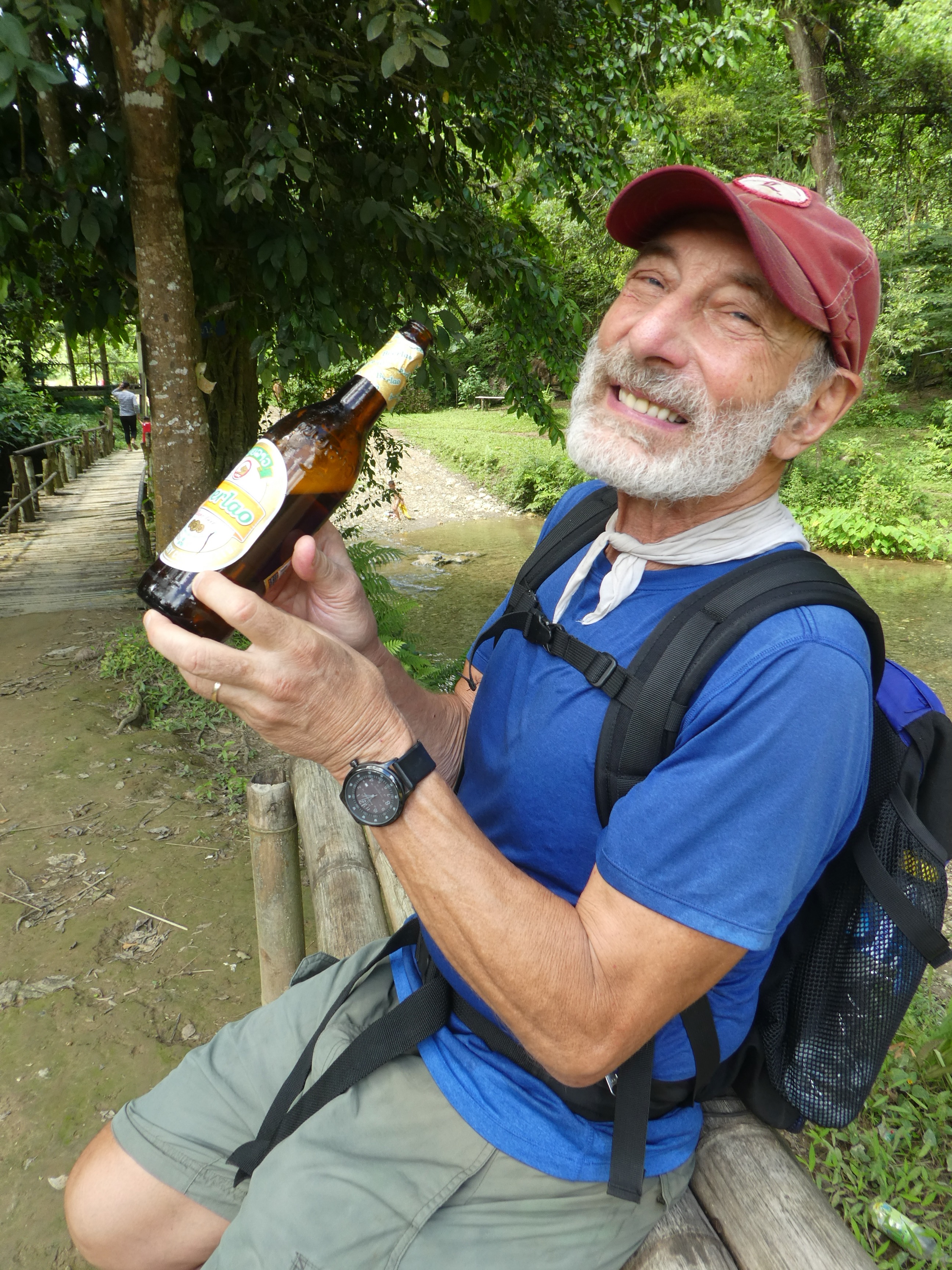
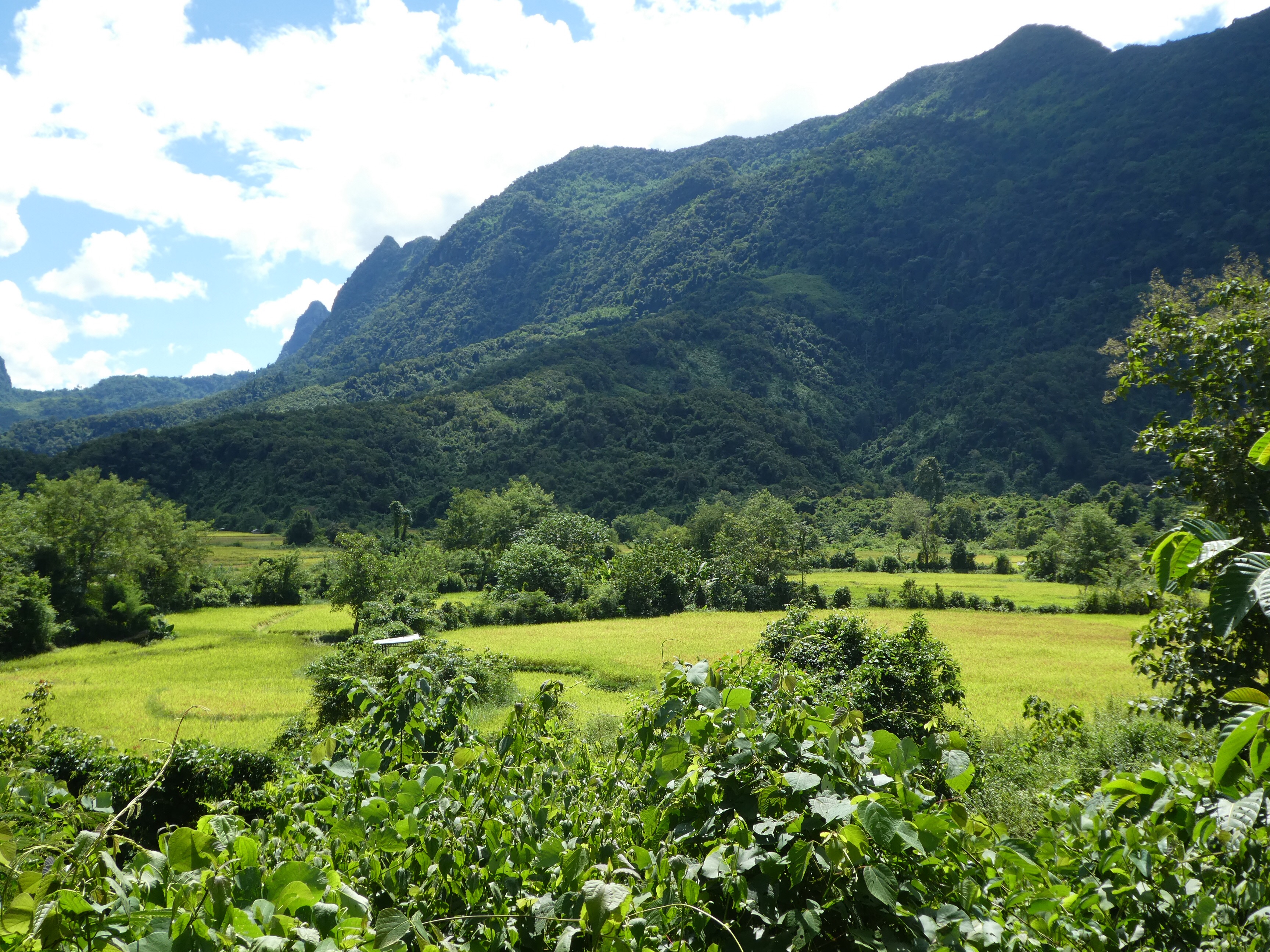
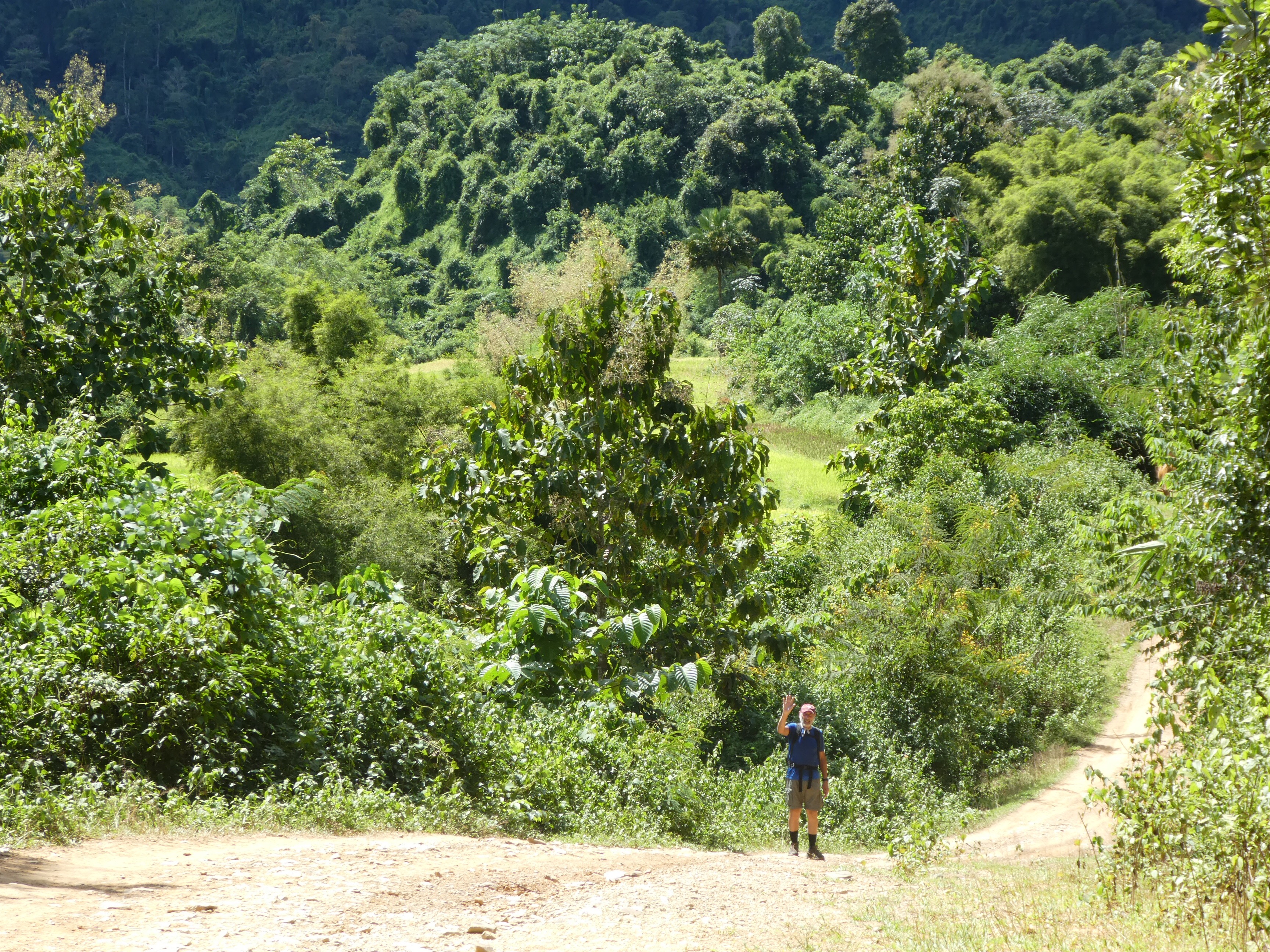
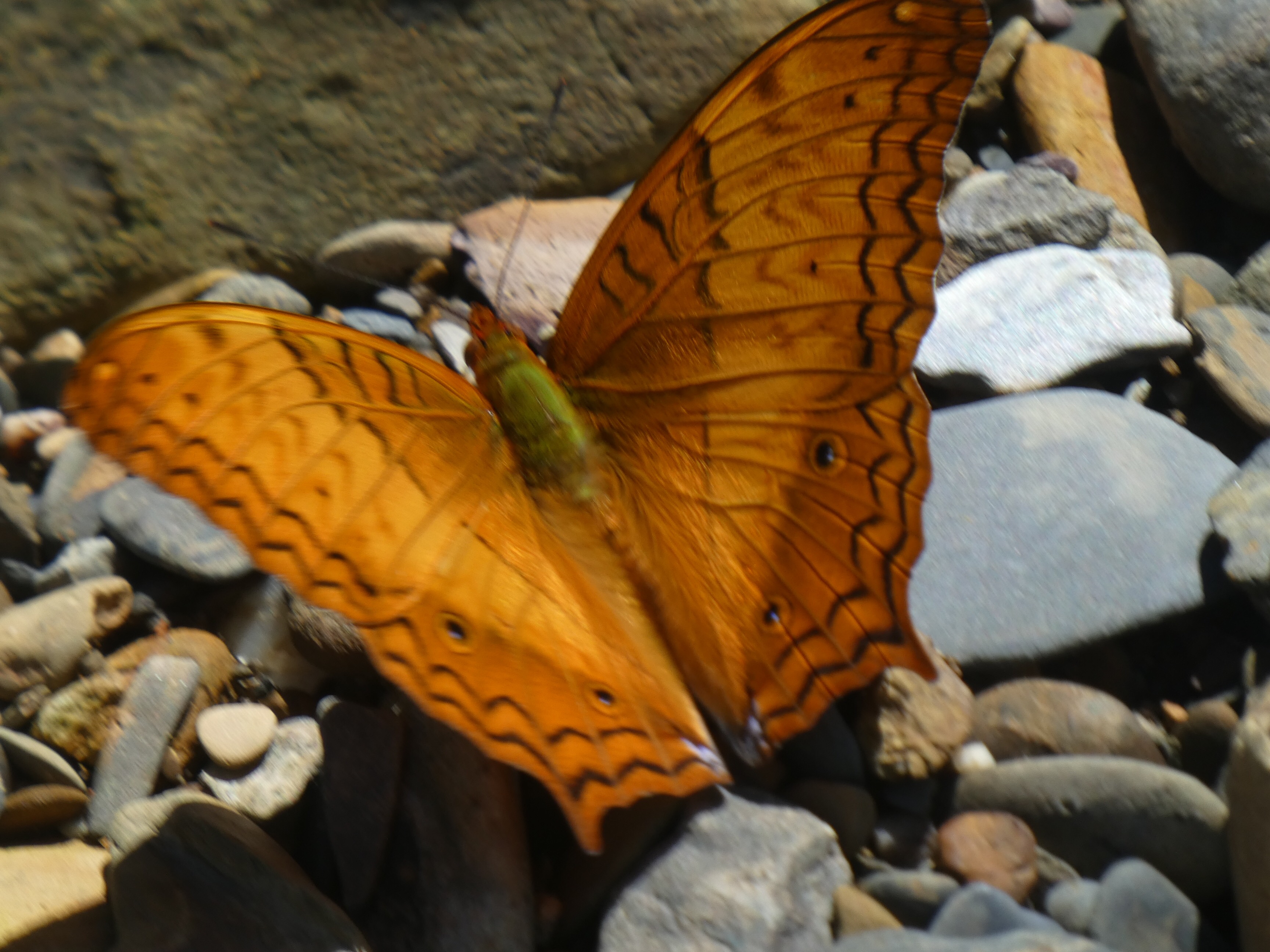
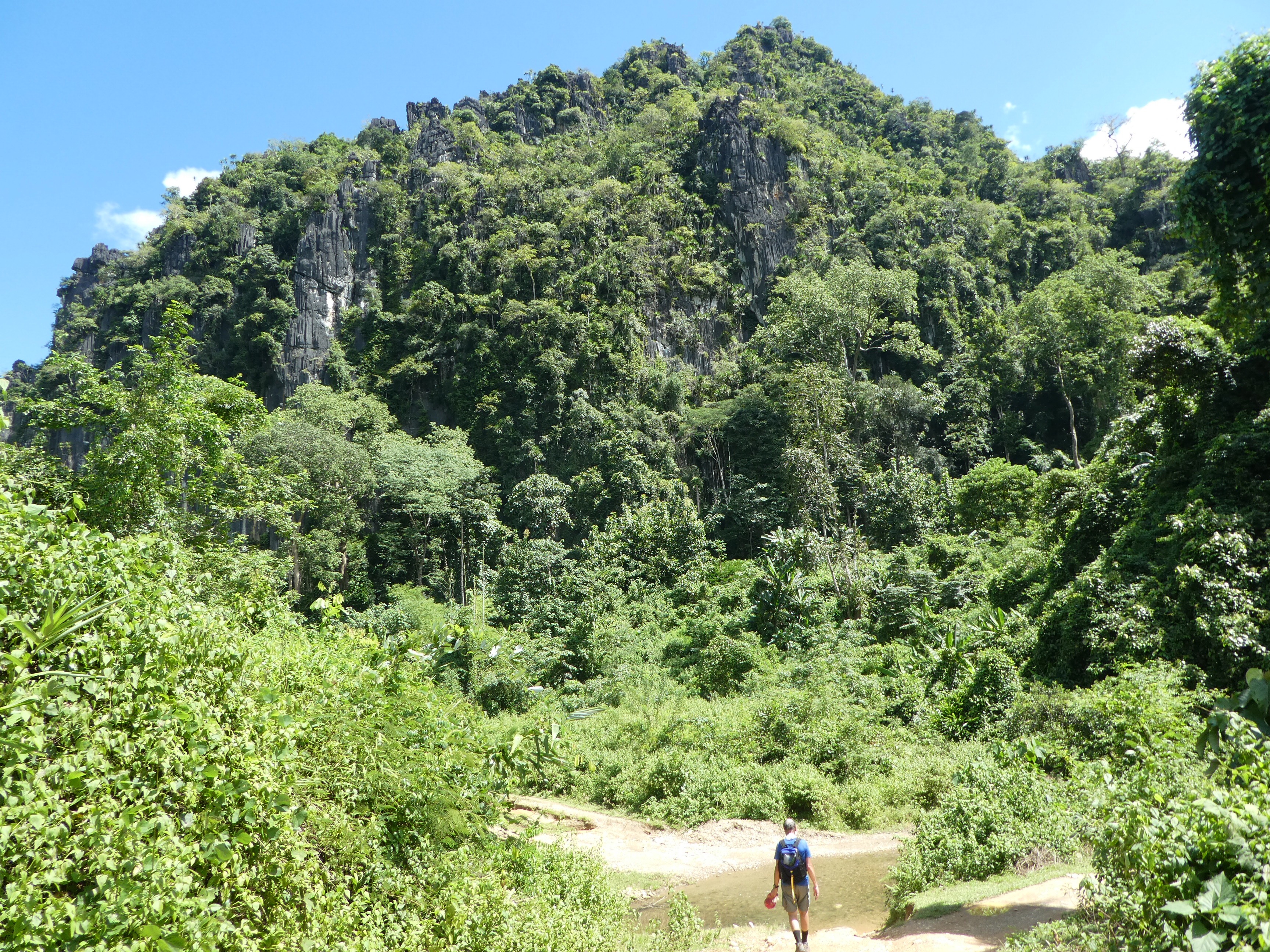
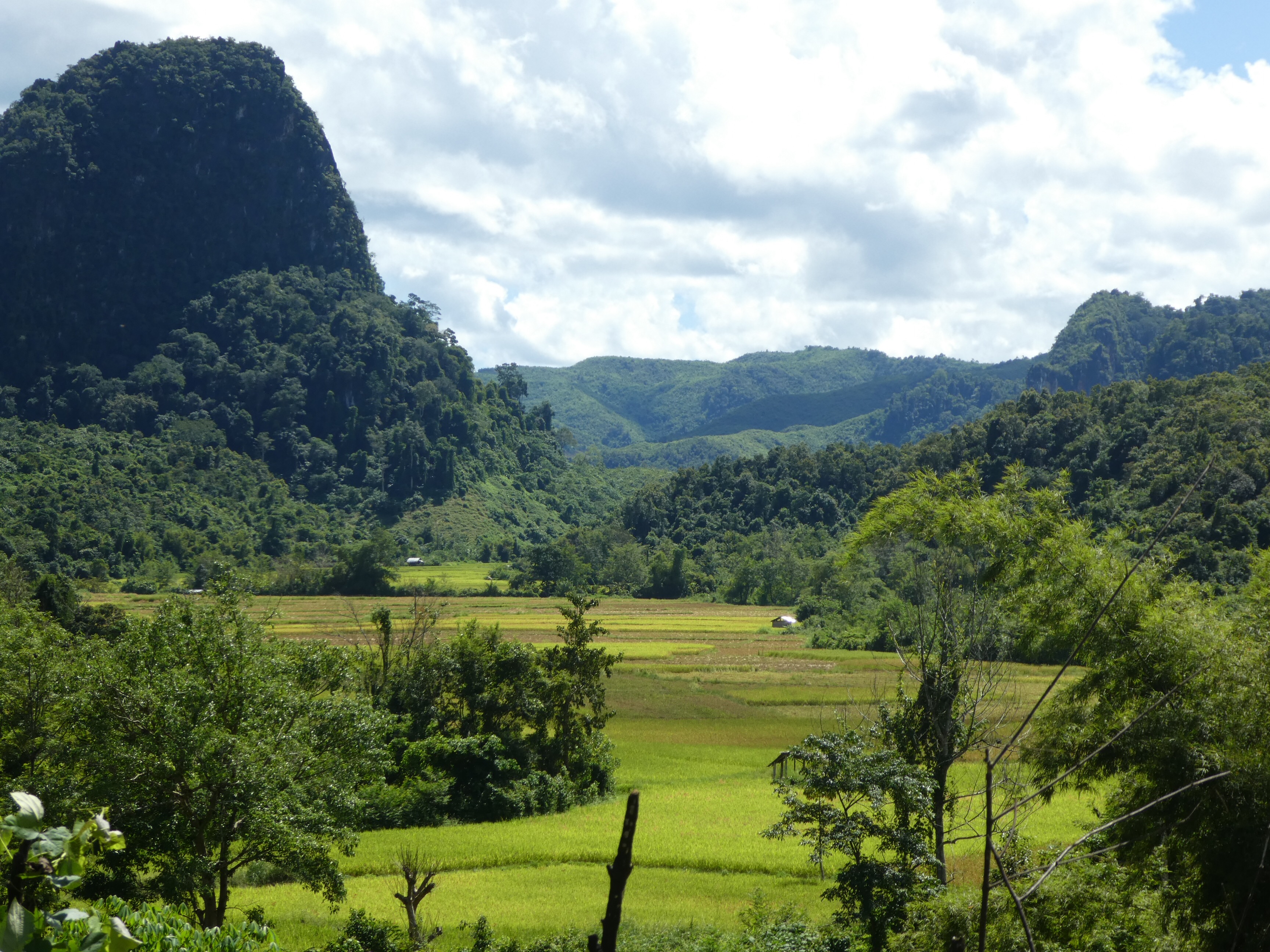
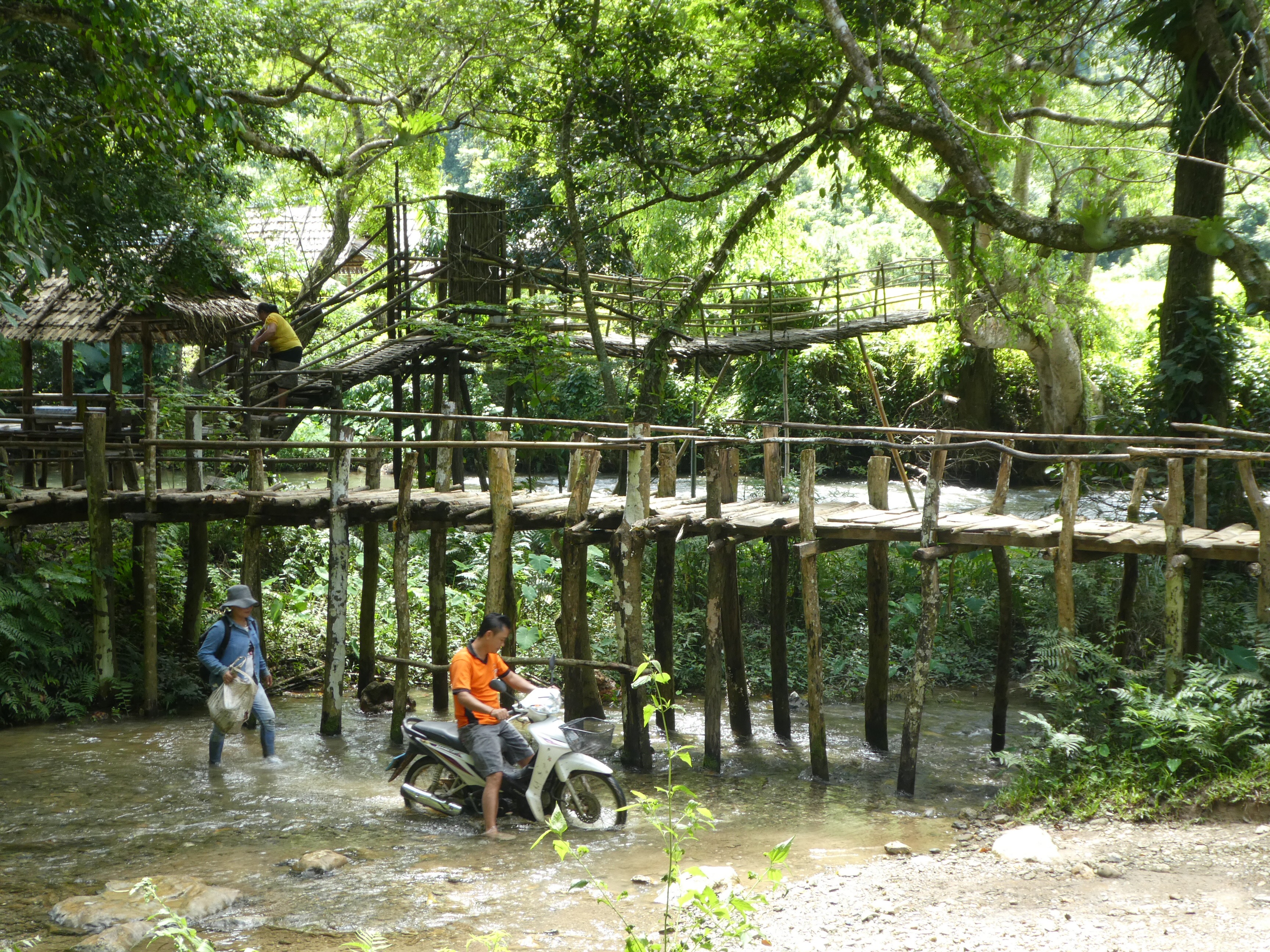
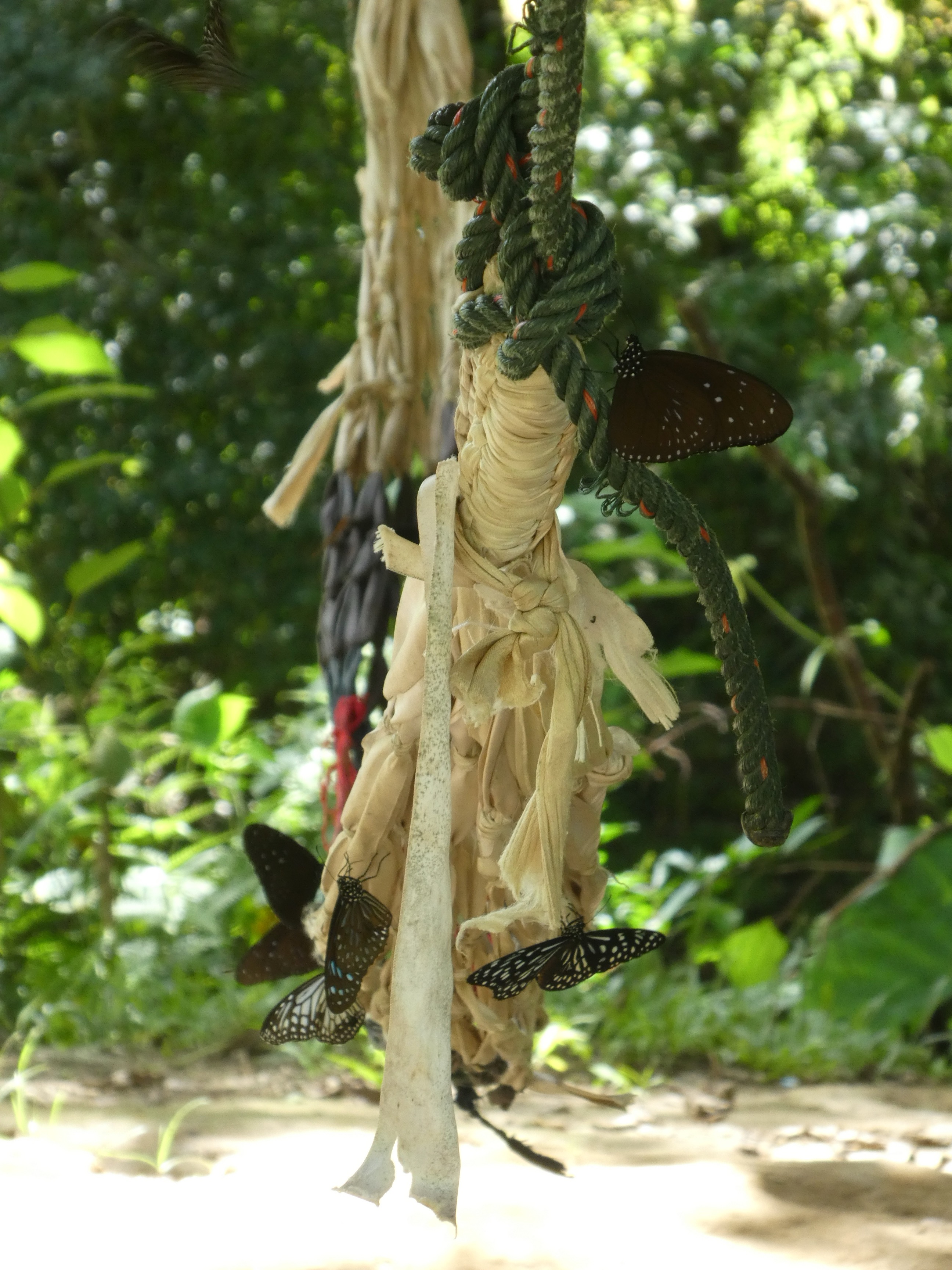
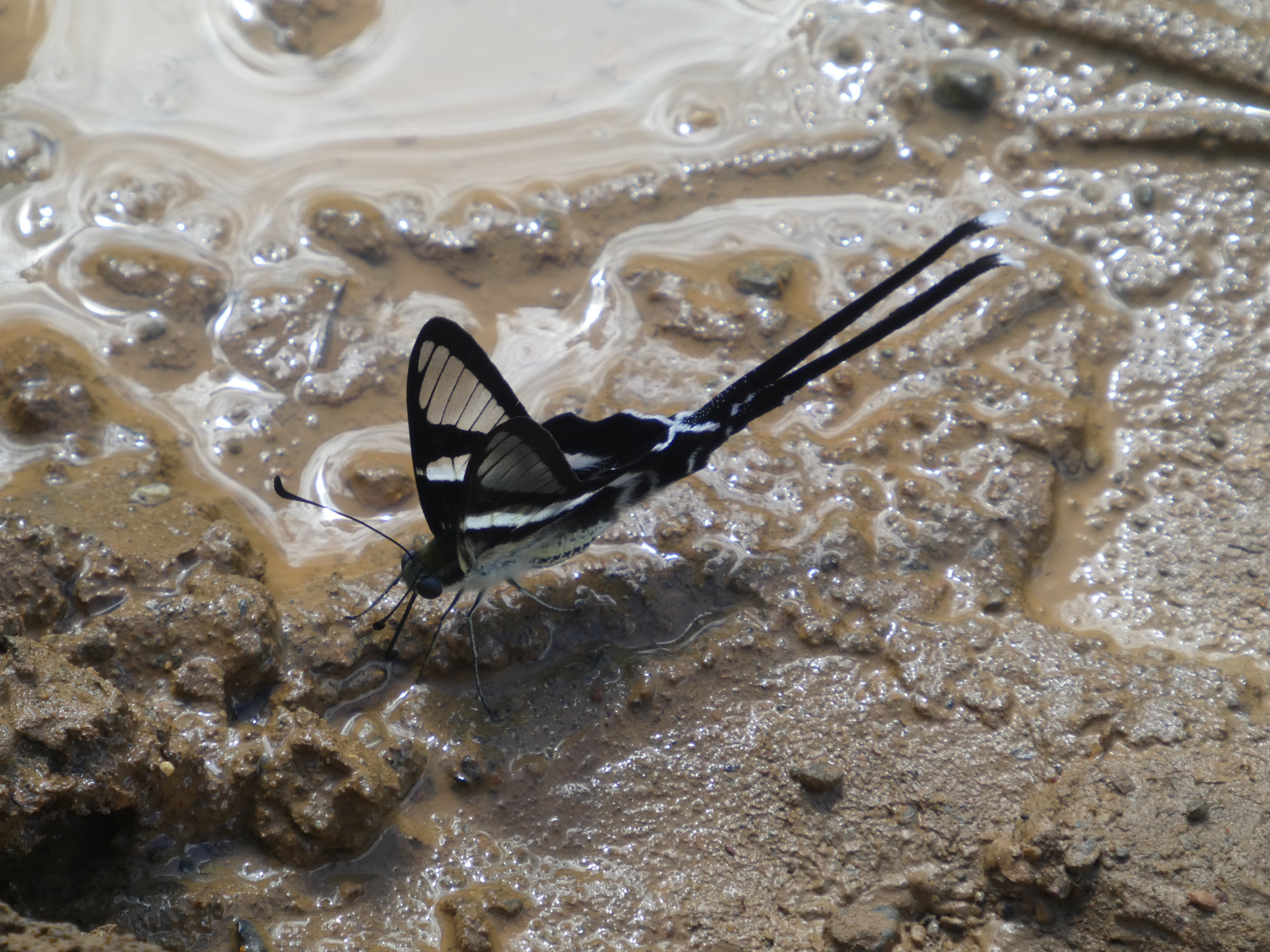
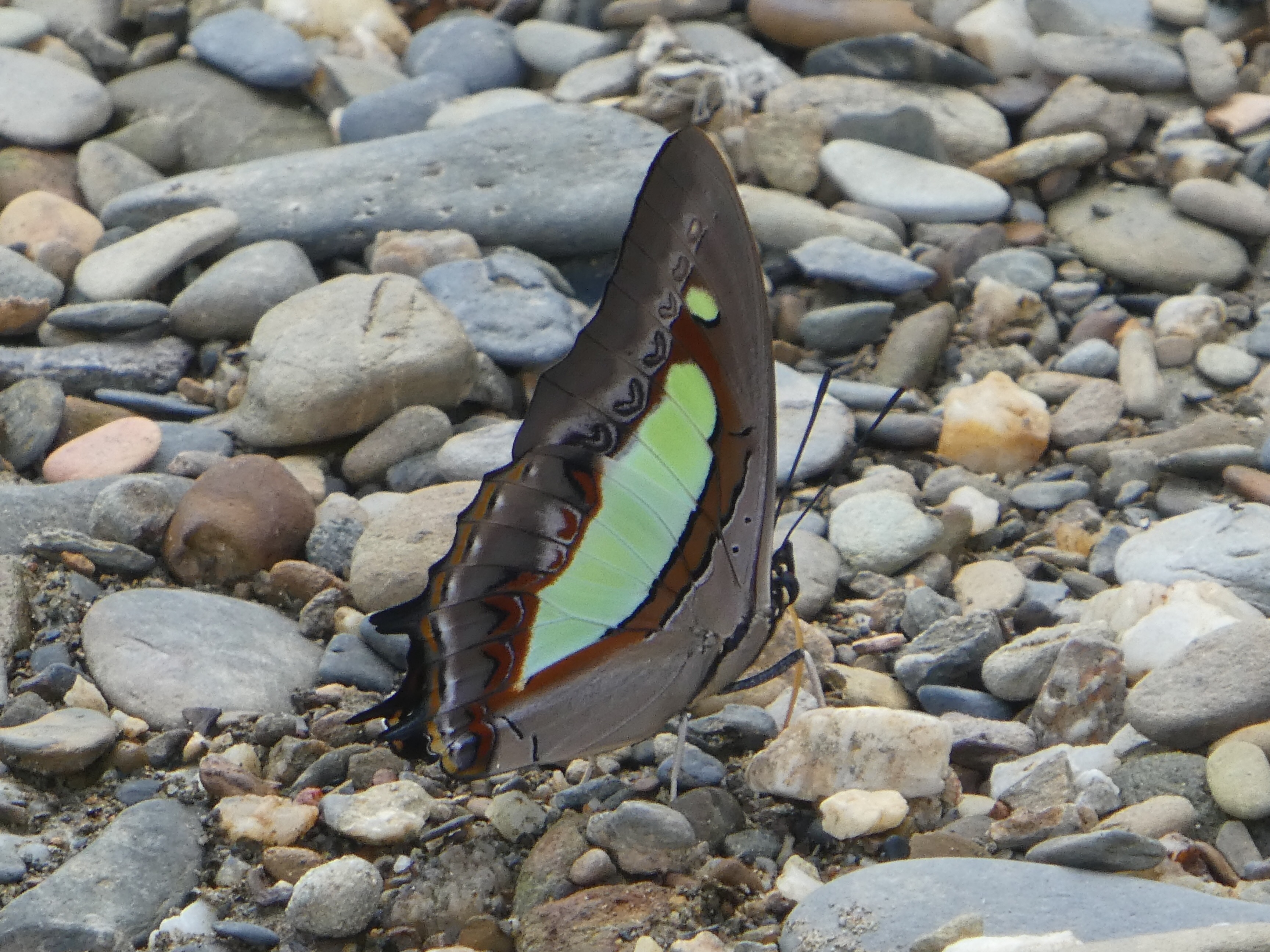
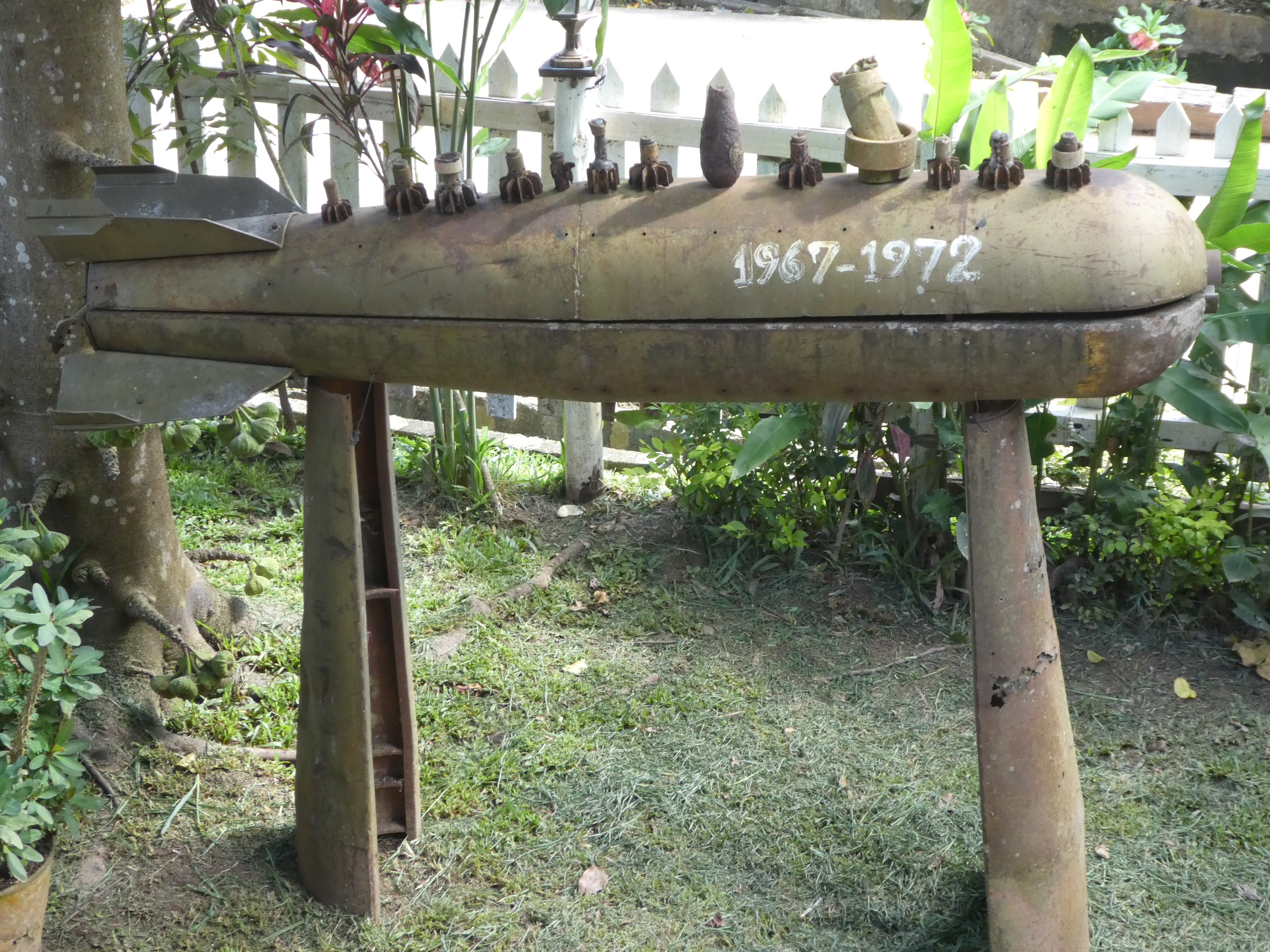
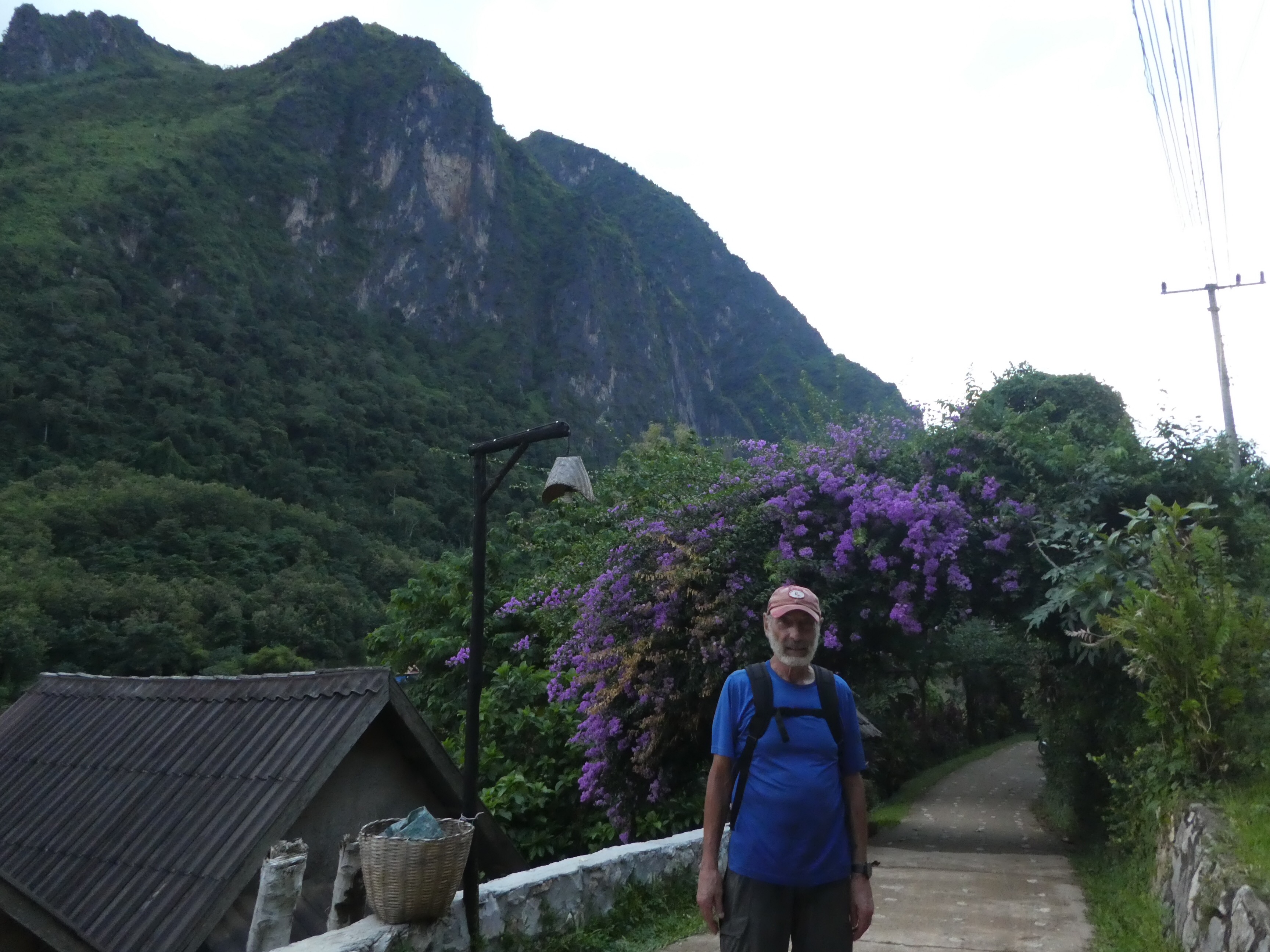
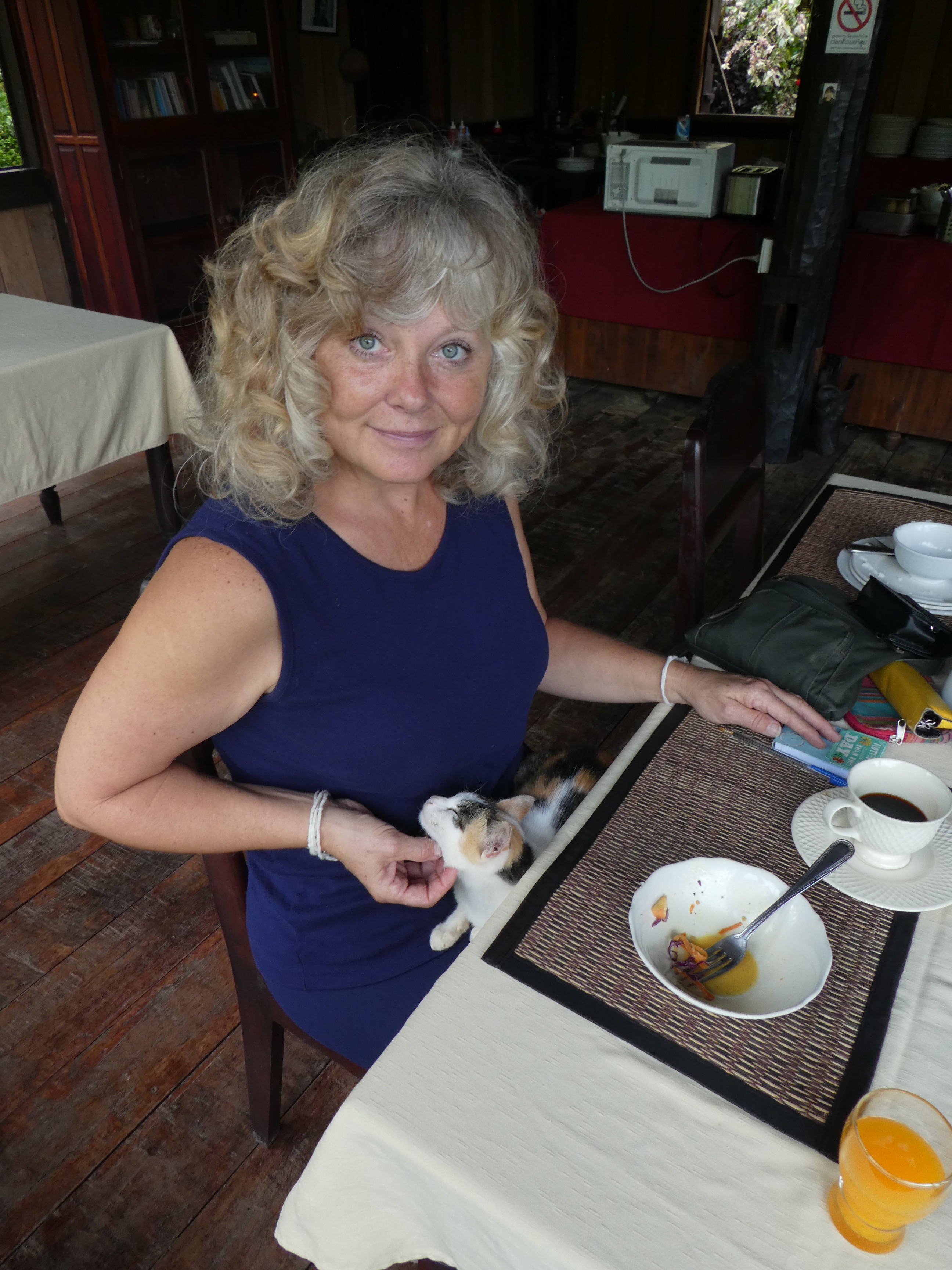
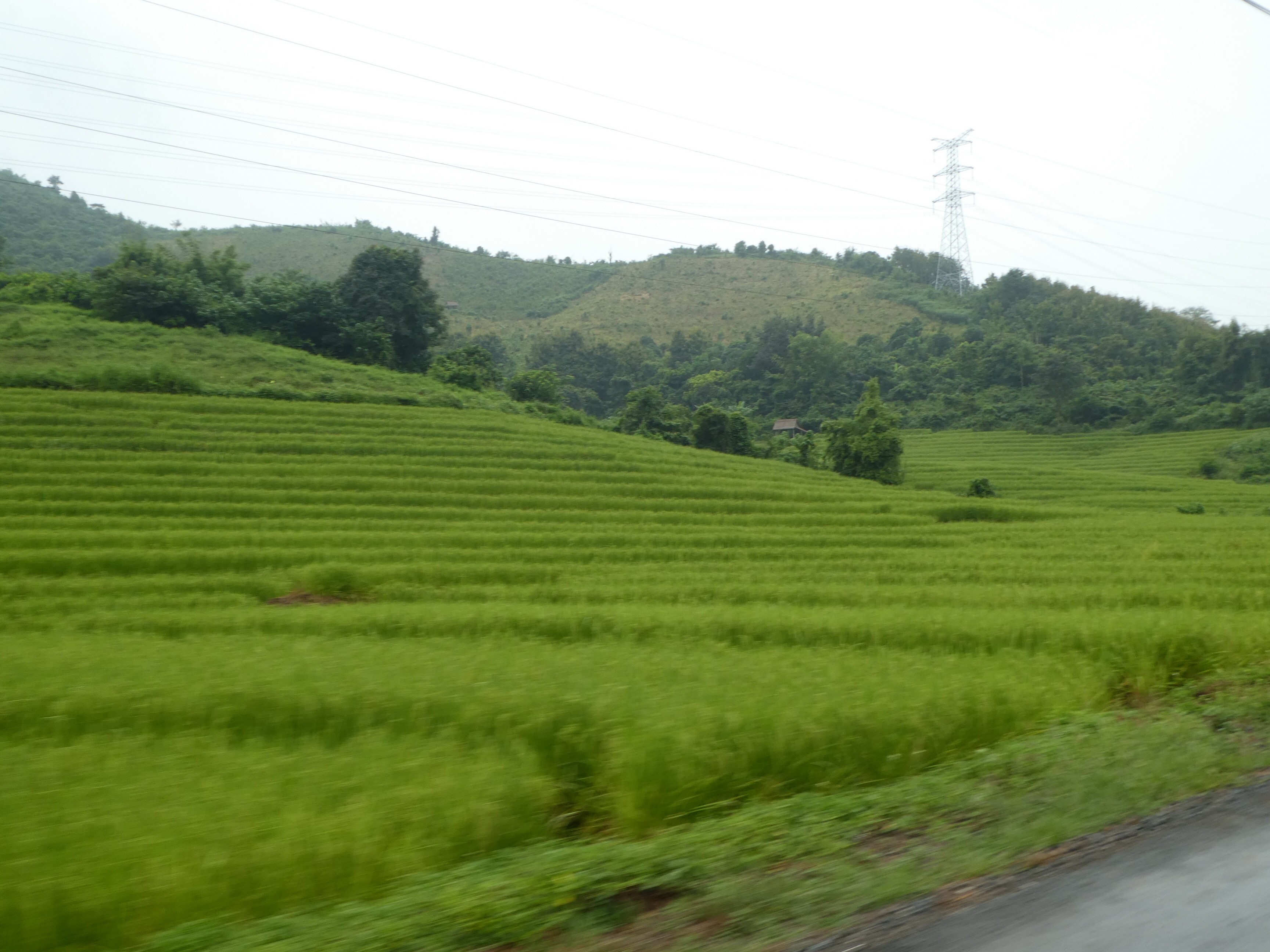
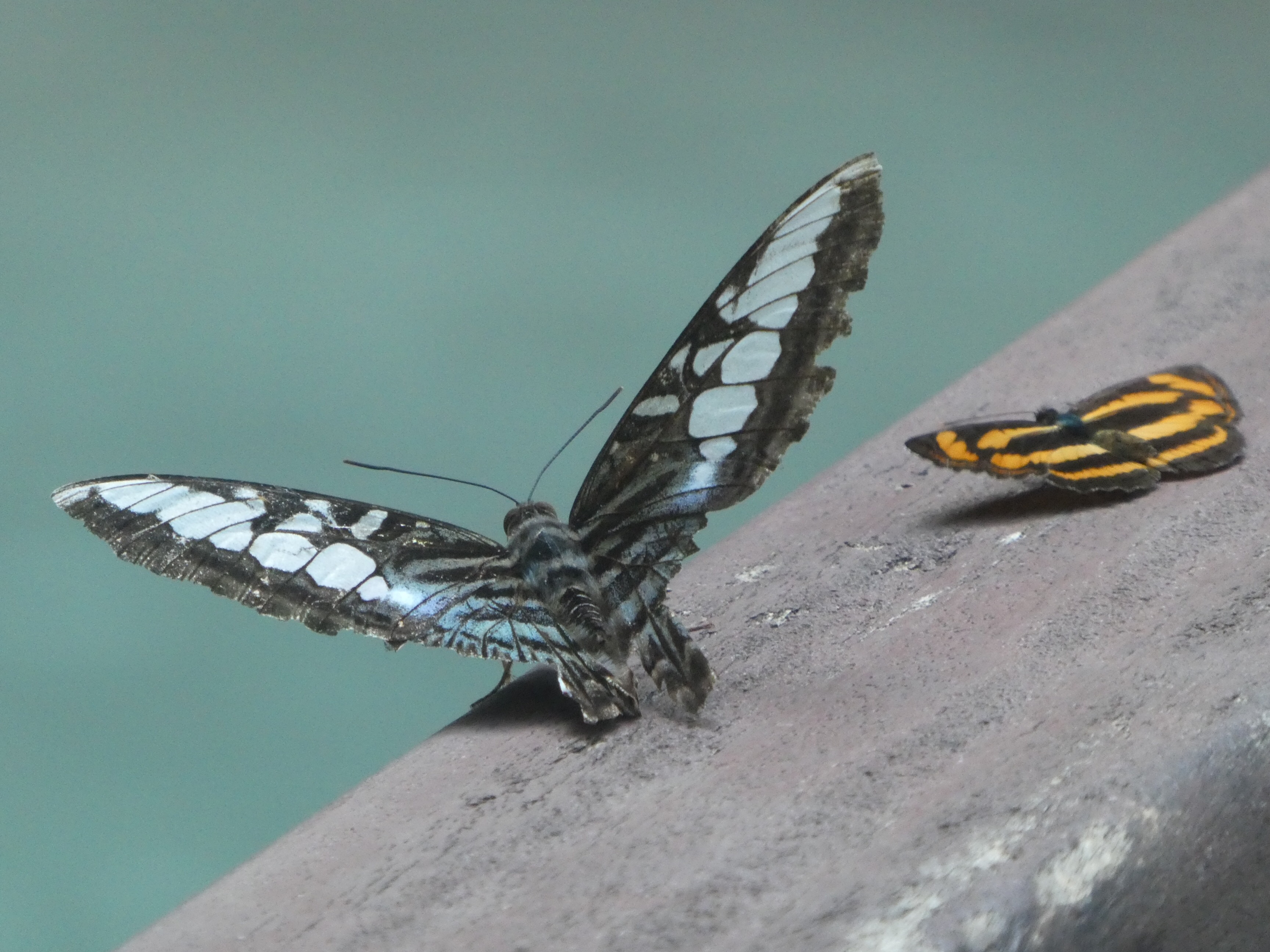
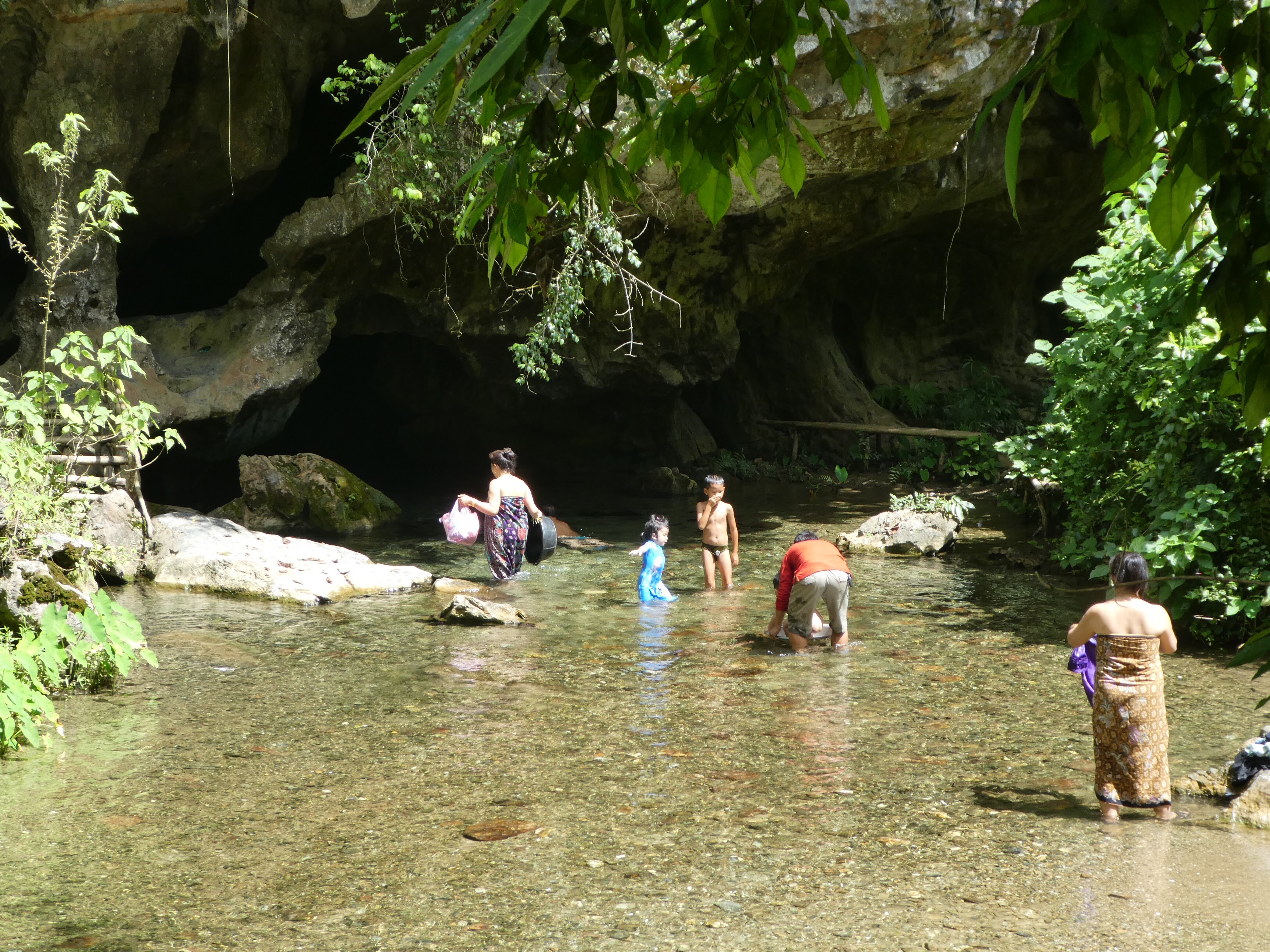
We hiked a really nice trail, another dirt road really, out of town to Nam Khan cave. The locals used it as a bomb shelter during the Vietnam war. A crystal clear river flowed through the cave and out through an opening, just outside the cave entrance. While we were there, a family was swimming and enjoying a picnic. Two rickety foot-traffic bridges crossed this small river and an adjacent river. One of the bridges had a sign that read “one only.” After exploring the cave, we continued down the road escorted by throngs of colorful butterflies. We passed valleys with rice fields and were surrounded by massive karsts, covered in jungle. We loved the valley view and had no interest in any “overlook” treks. Our walk was hot and sunny and, when our trail was blocked by a shallow river, we decided to turn around. The locals just wade or ride their motorbikes across, but we really didn’t feel the need to see another village. We hiked back to the cave, where we shared a cold beer, before finding our way back to Muang Ngoi. We had dinner at a small, family run outdoor restaurant, that had only three tables. We slipped table scraps to a cute dog who wandered over and plopped down beside us. 

We were worn out after our walk and were thankful the village was quiet our second night there. We walked back to our bungalow with the aid of a small flashlight. There are no streetlights in Muang Ngoi. We slept well and awoke to pouring rain. Fortunately, it stopped just before our return boat left for Nong Khiaw. From there, we took a 4 hr shuttle bus back to Luang Prabang. It felt like the big city after spending a few days in the northern countryside!  

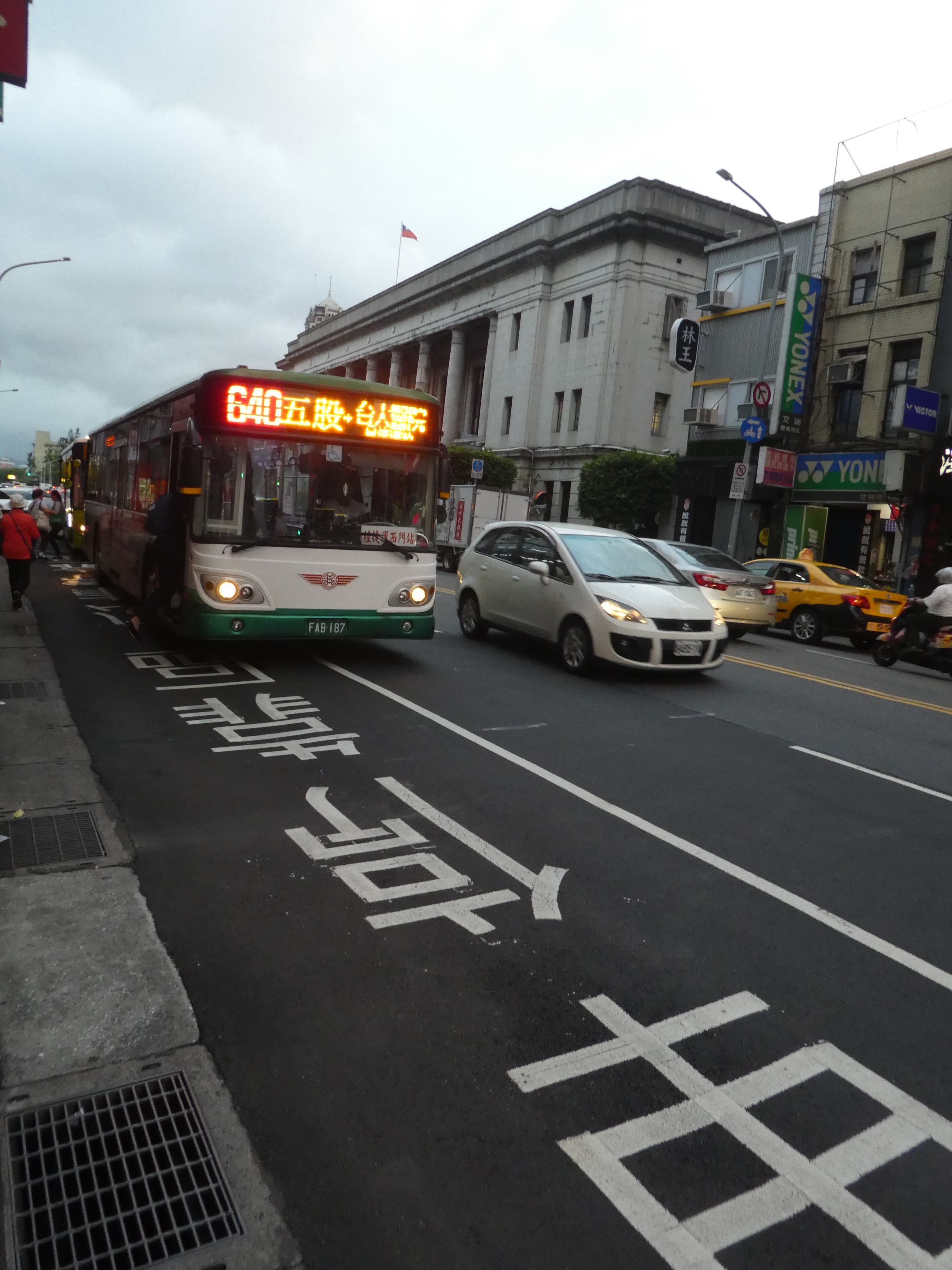
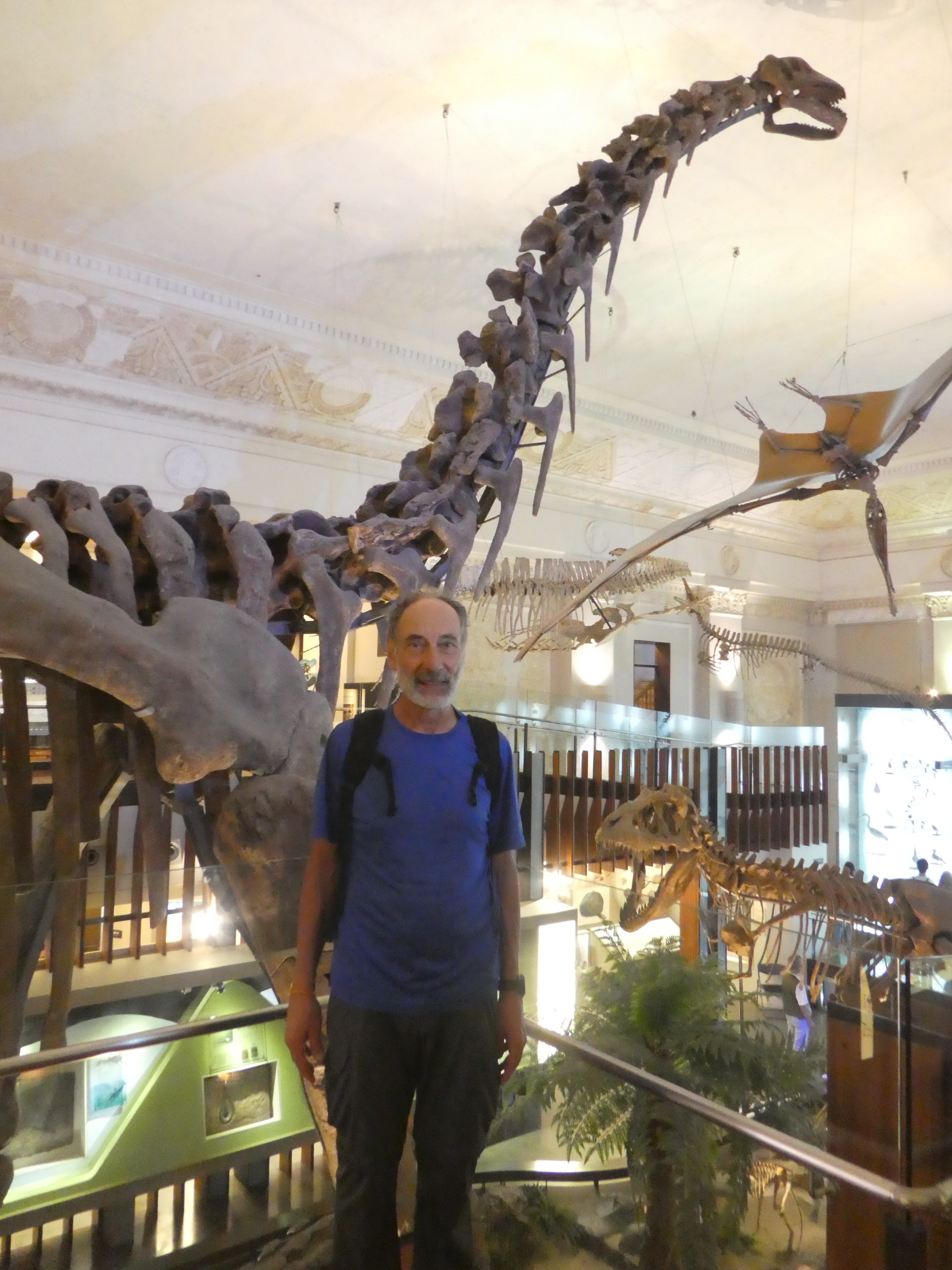
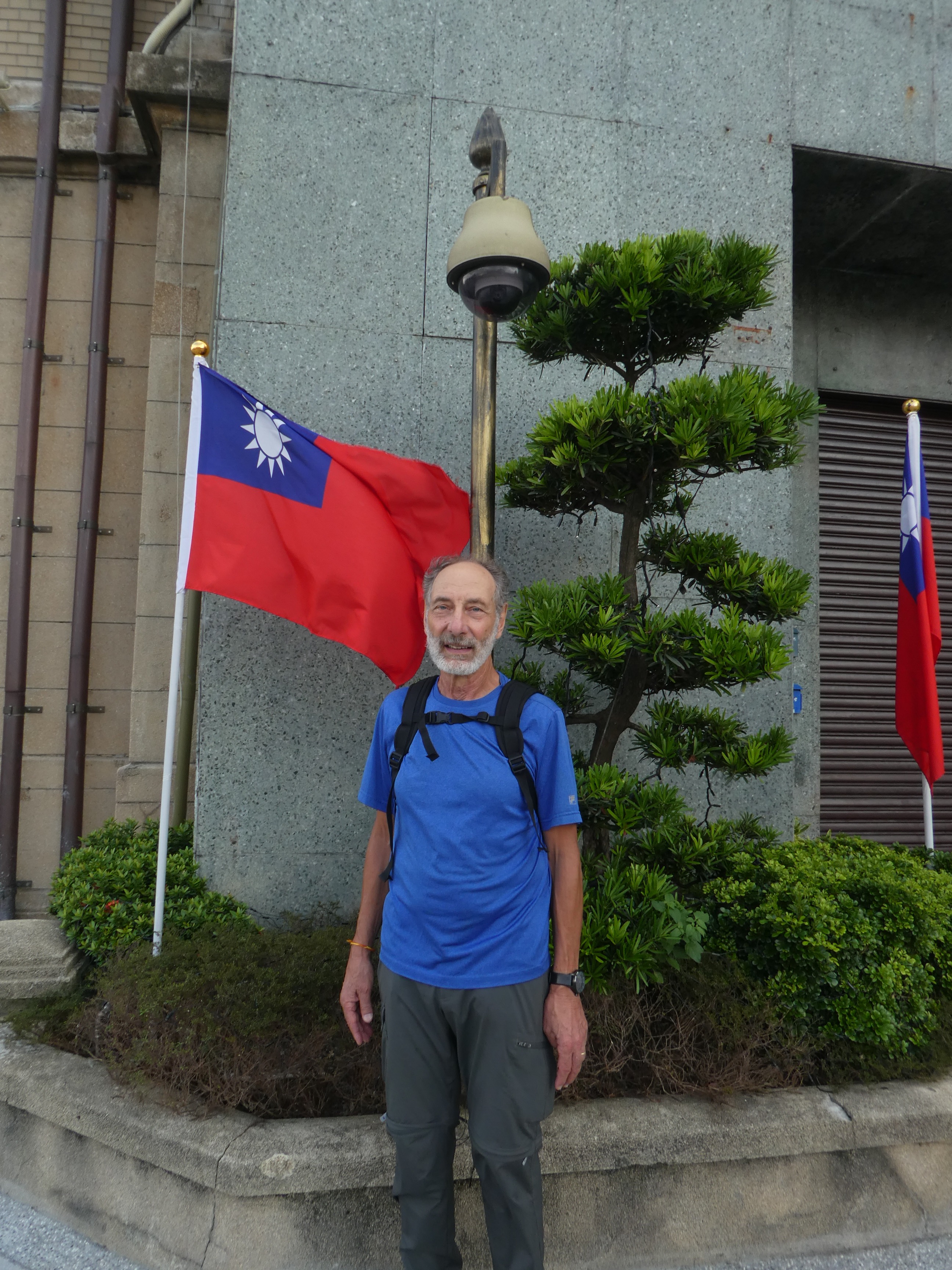
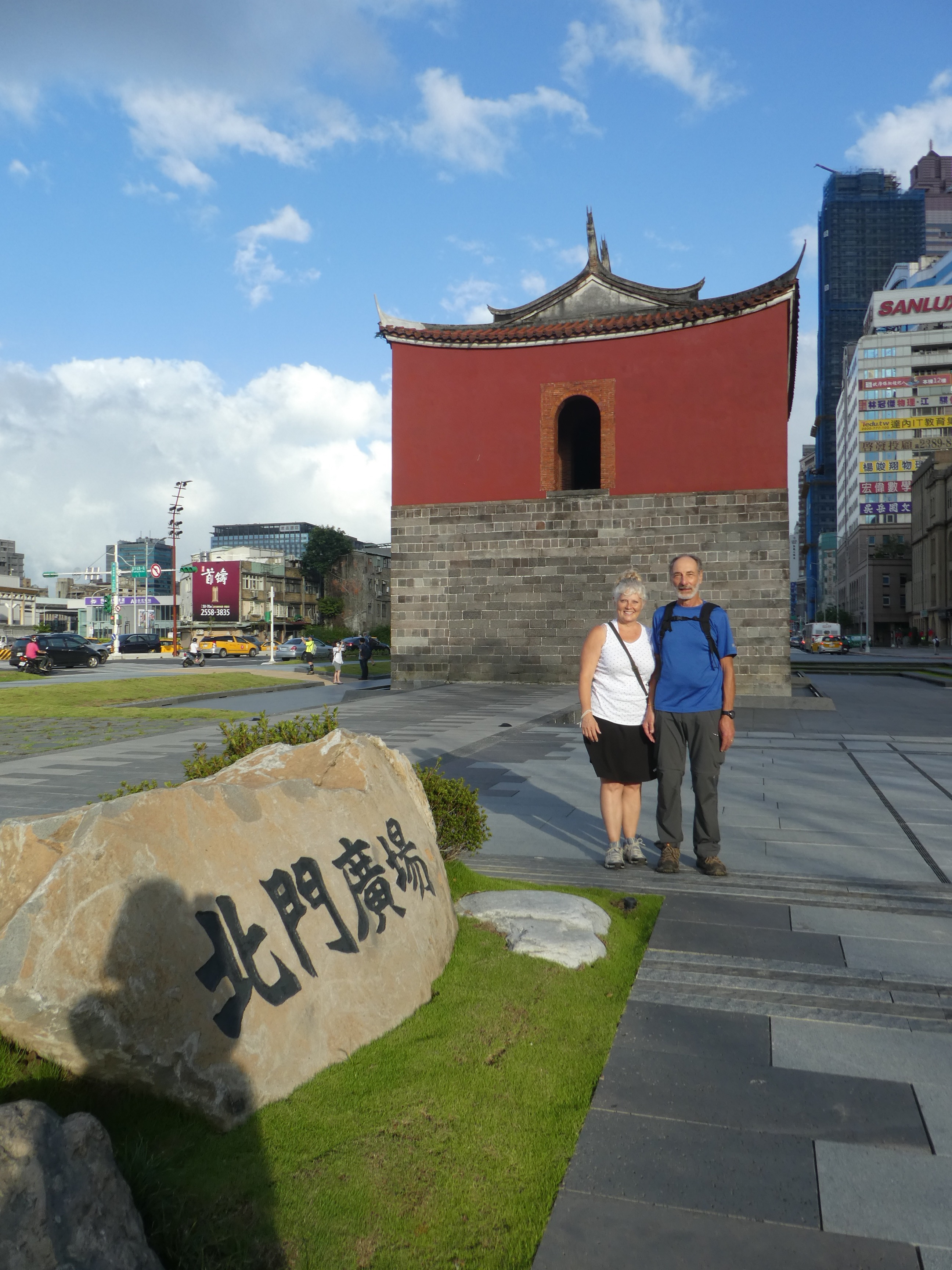
We were sad to leave Laos and it’s sweet people. Next, a three day stop in Taipei, Taiwan, followed by three weeks in the Himalaya mountains of Nepal. Hope this finds you well. Sending hugs. 

BnL

Jungle Journey-Nong Khiaw, Laos (Post #7)

Dear Friends and Family,

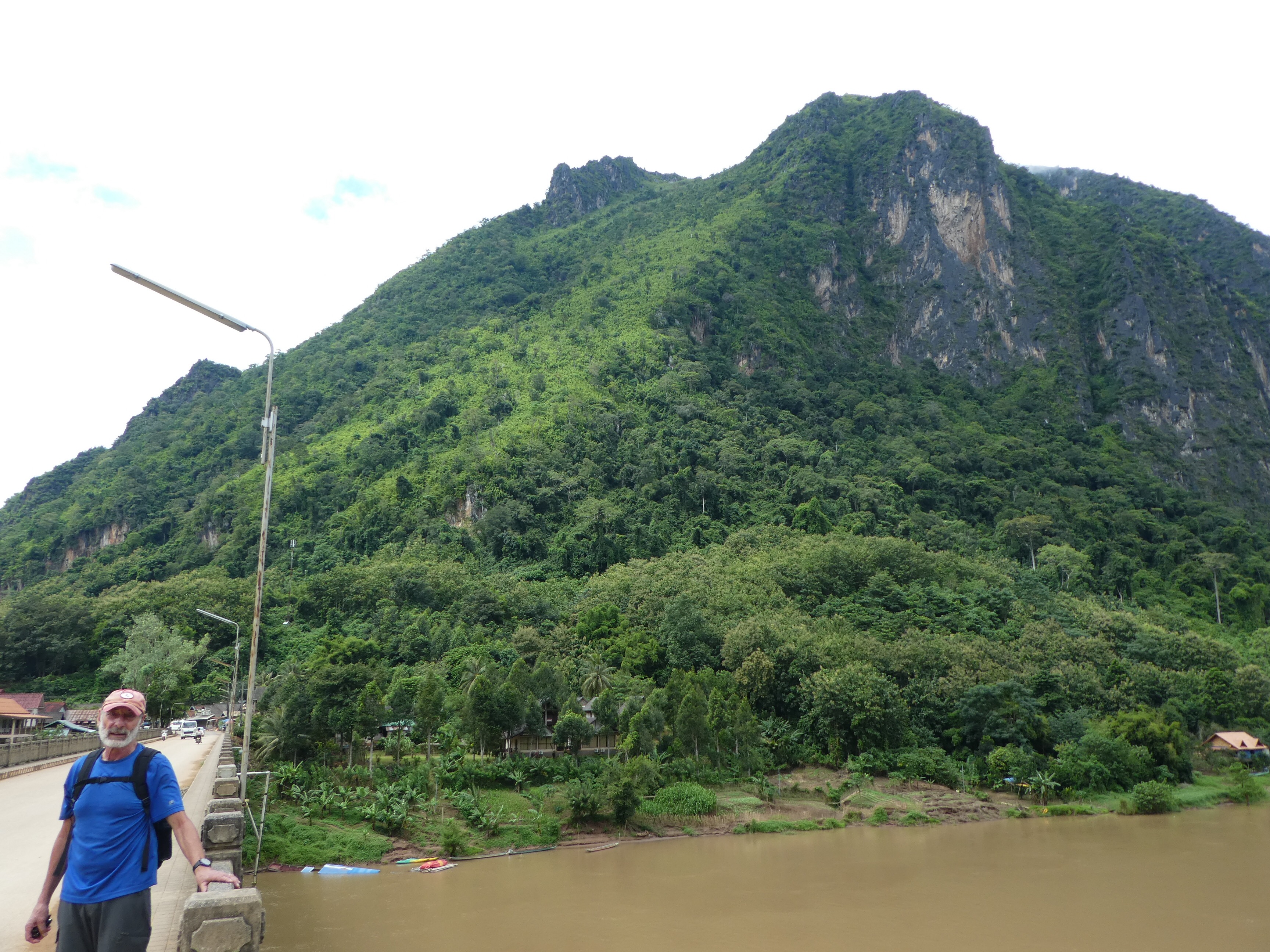
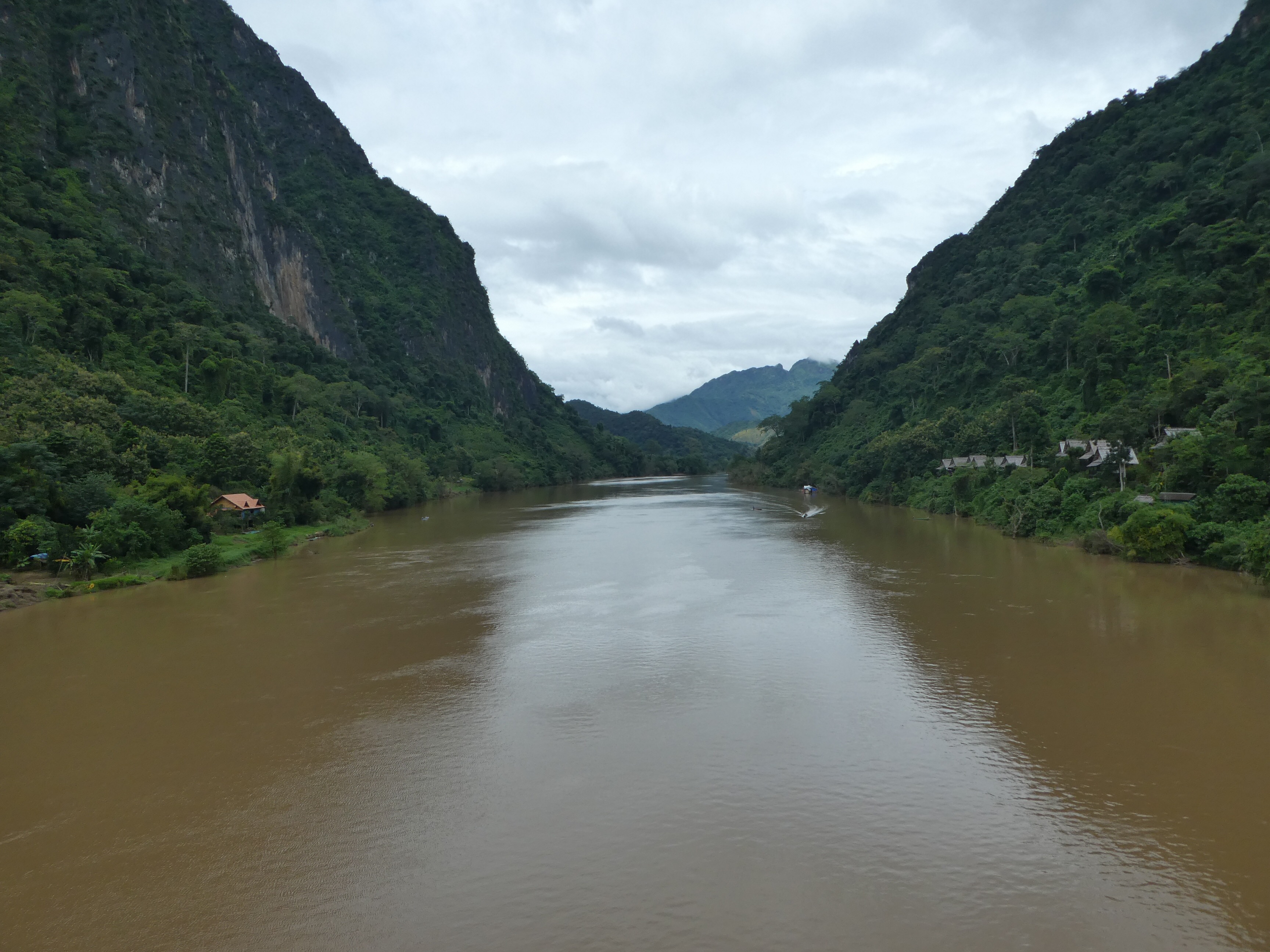
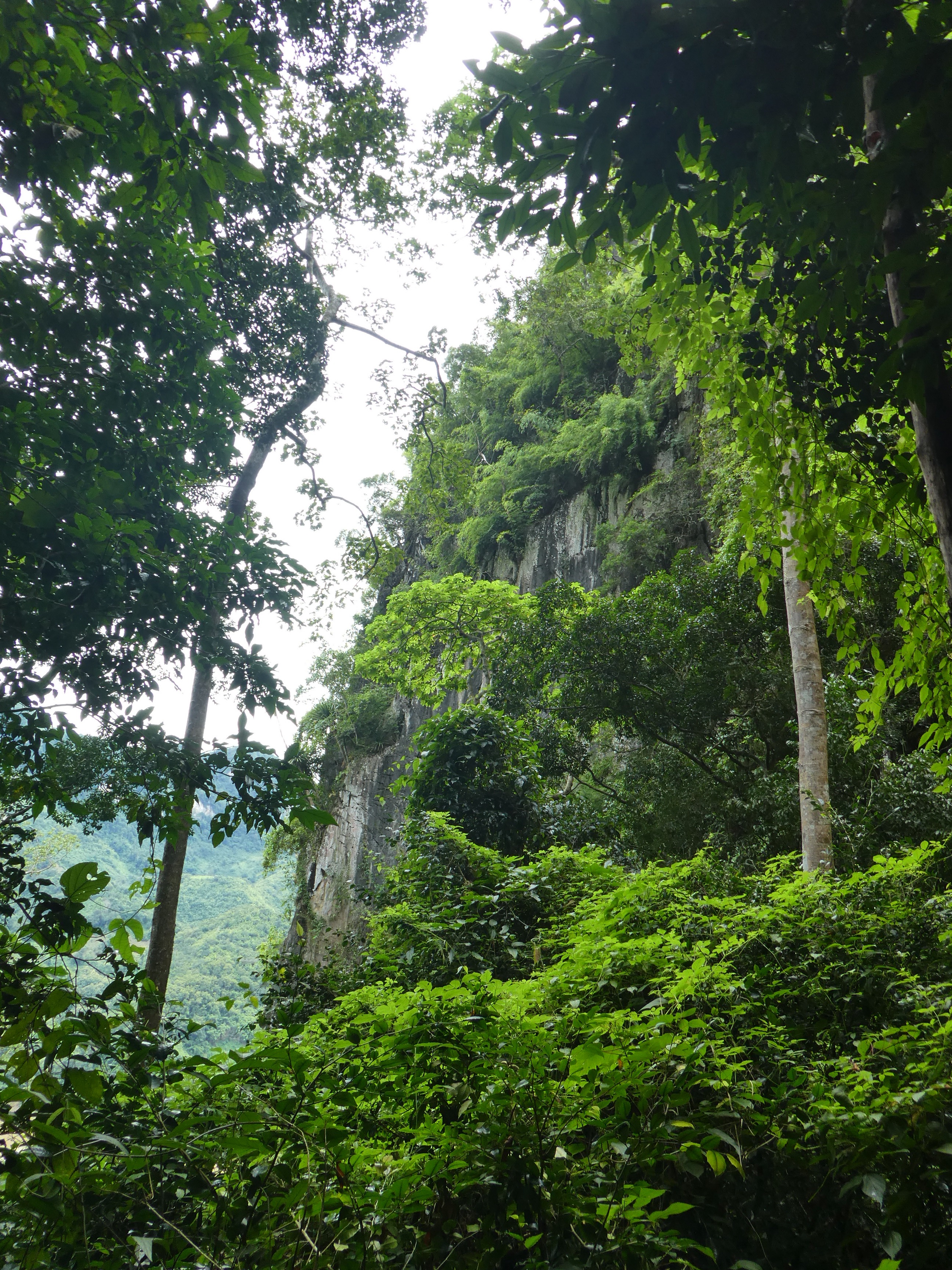
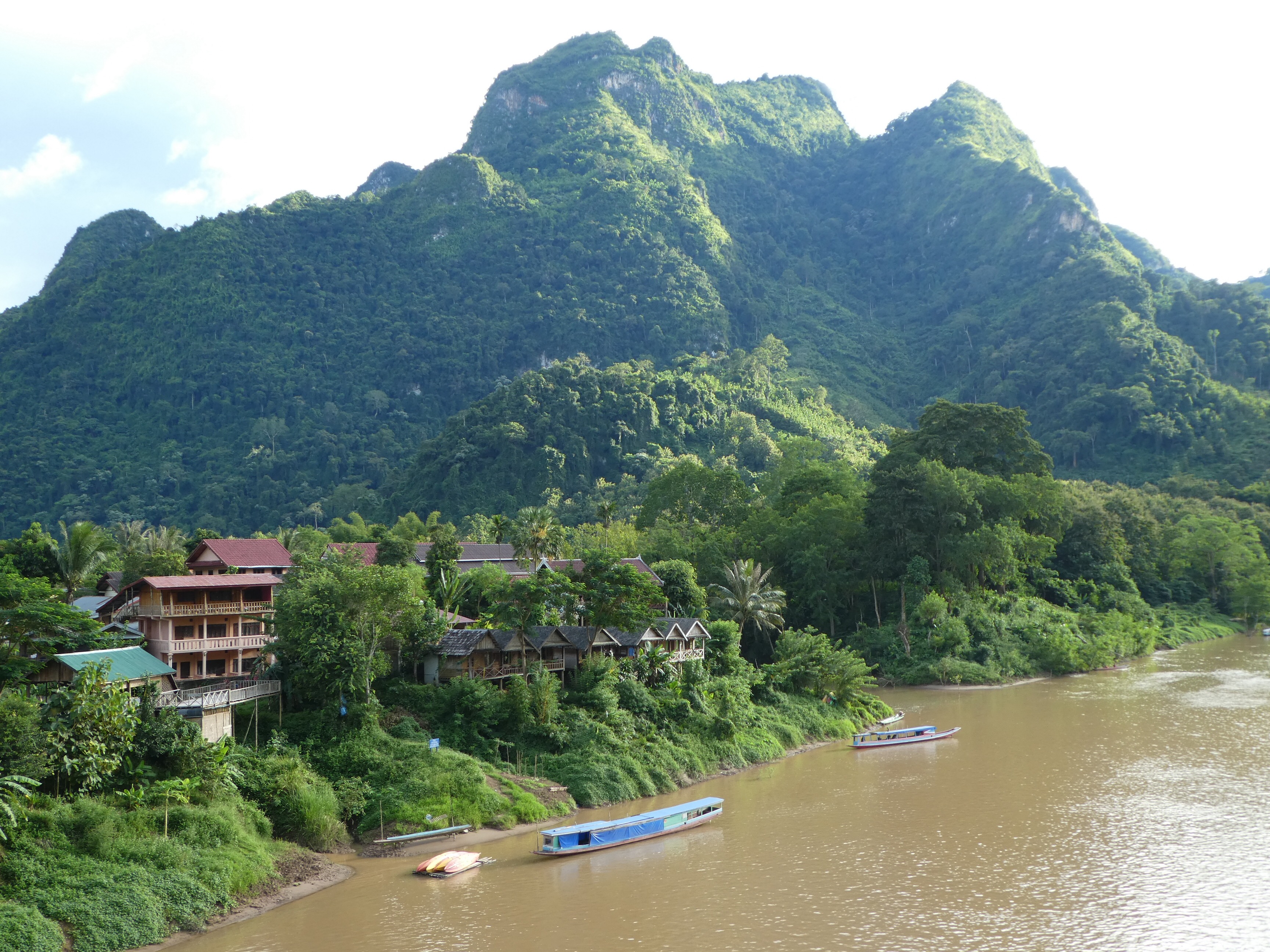
After 4 days in Luang Prabang, we took a minivan 4hrs north to Nong Khiaw, a small town on the Nam Ou river, surrounded by massive limestone karsts. The quiet village has hiking trails to look out points, boating, and kayaking. Our large riverside bungalow on stilts was so peaceful. We saw fishermen from our porch overlooking the muddy river and took photos from the bridge. How serene this place is! There were basically two streets, one on each side of the river.

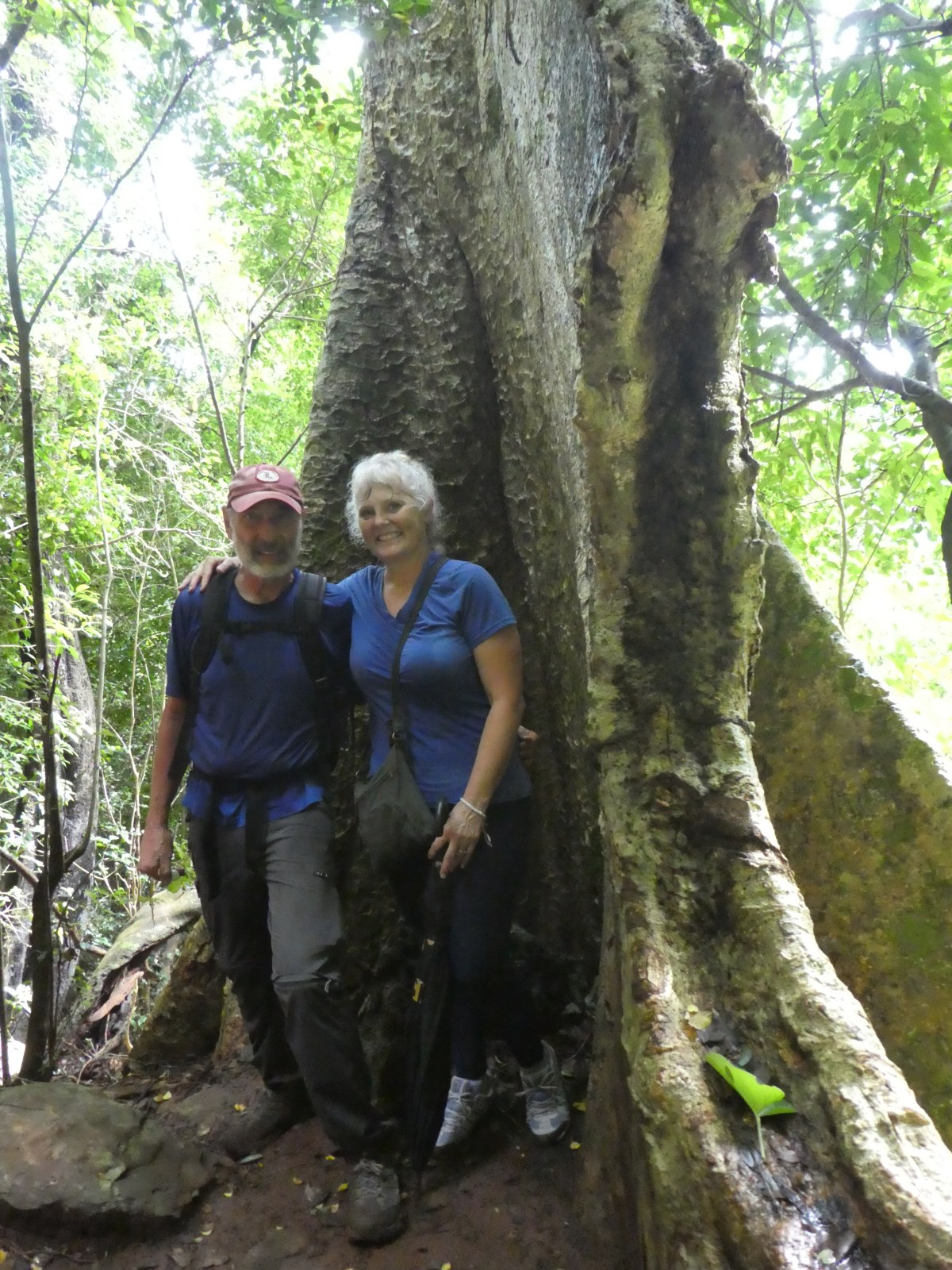
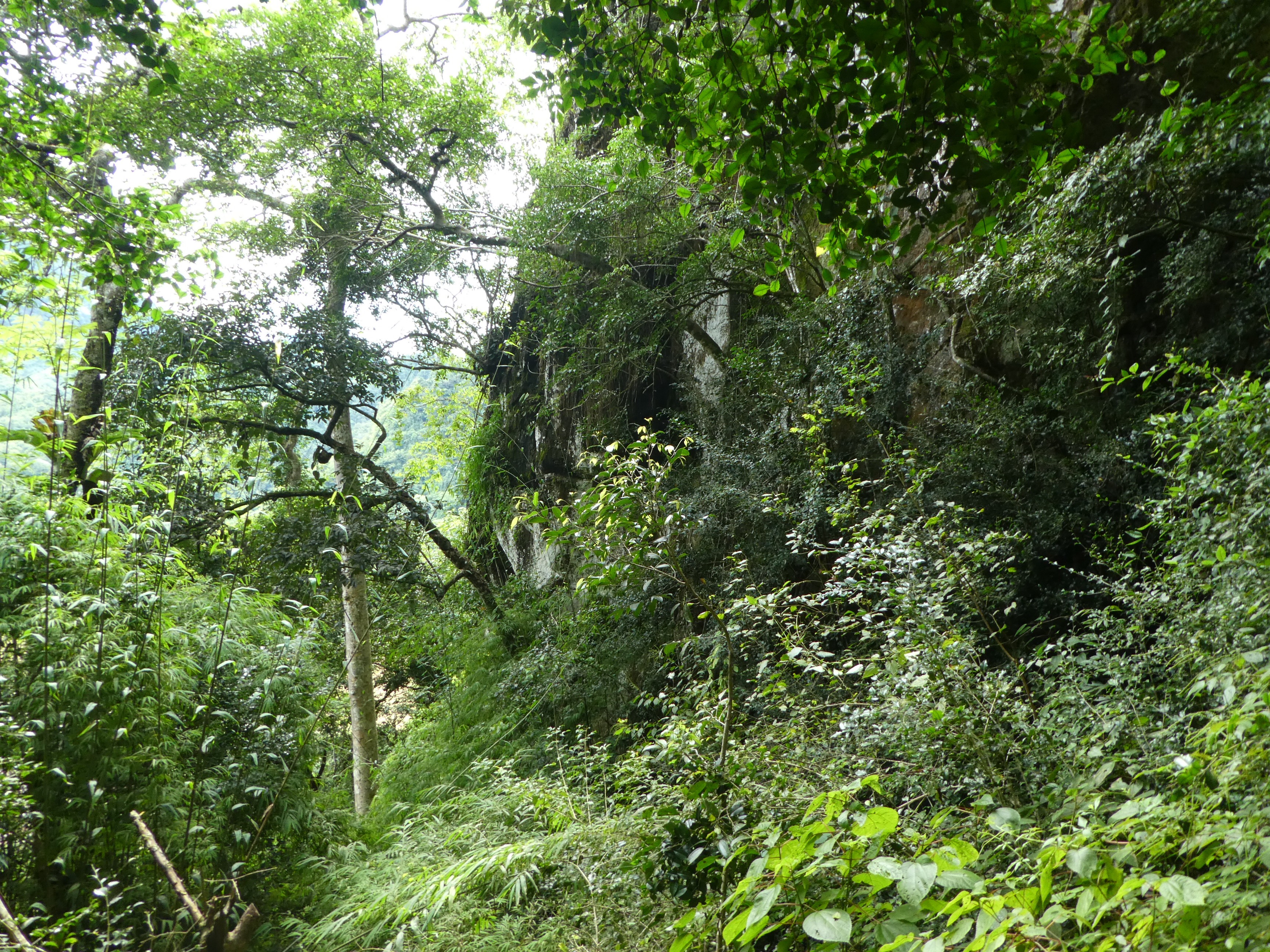
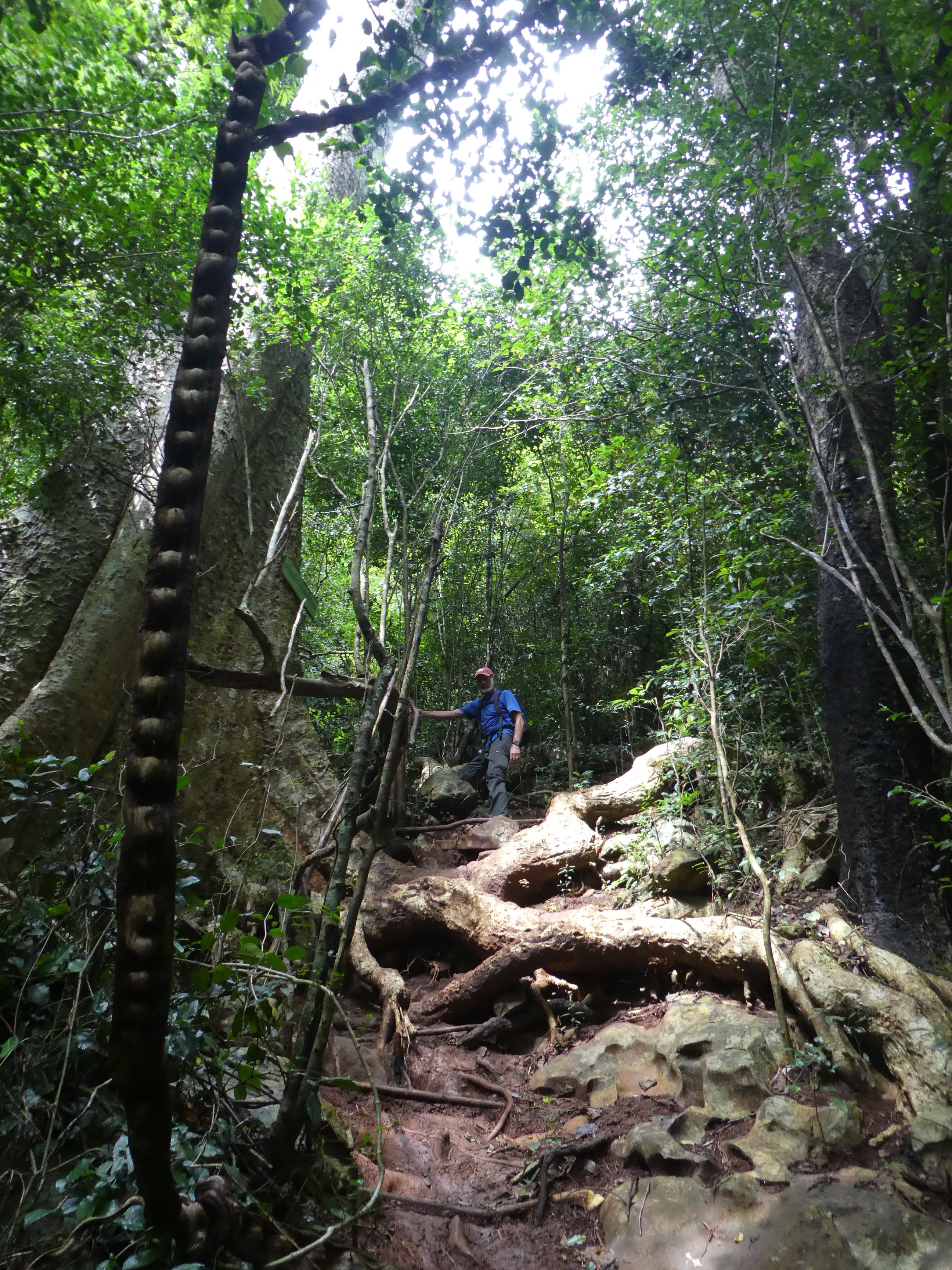
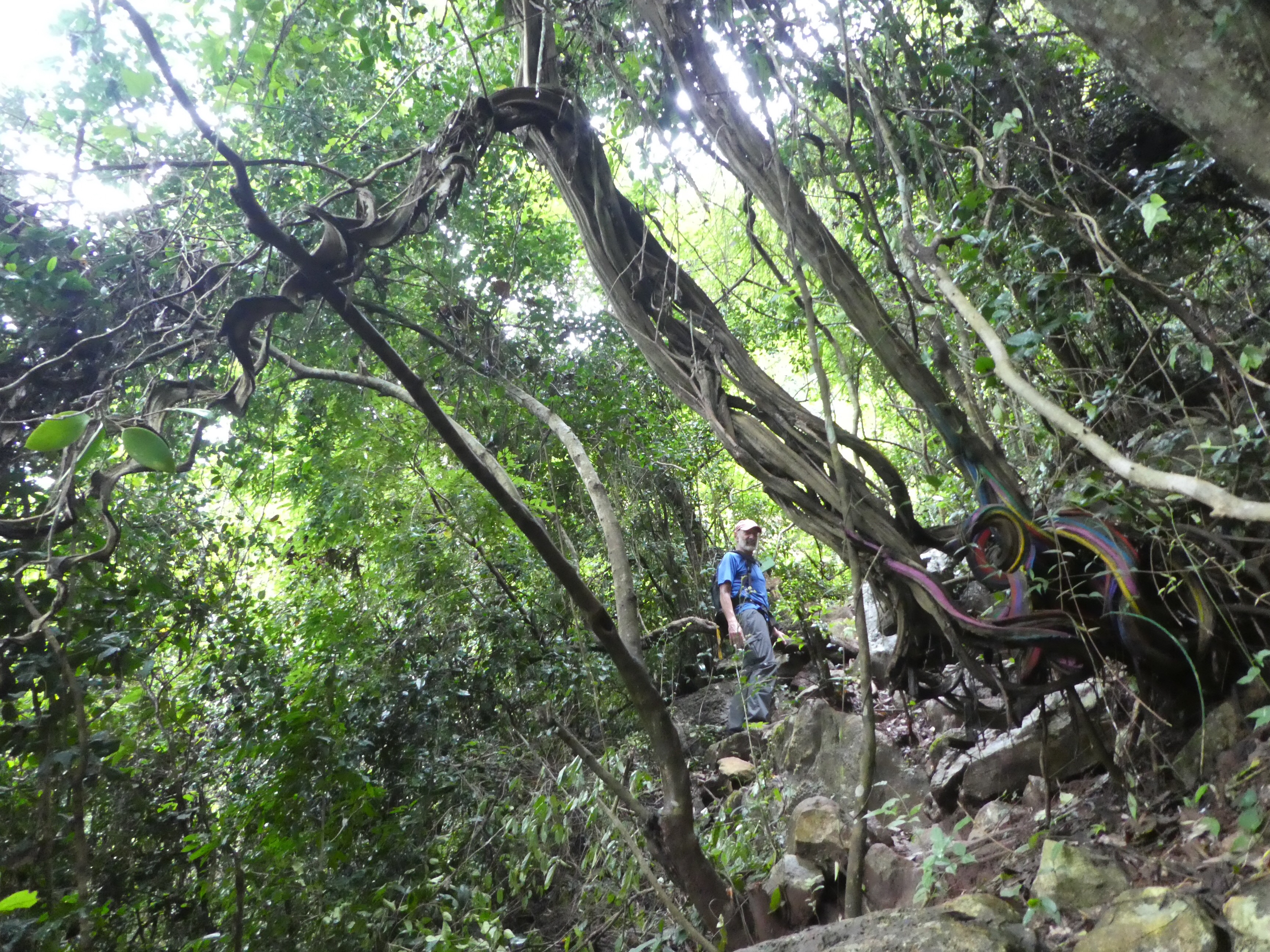
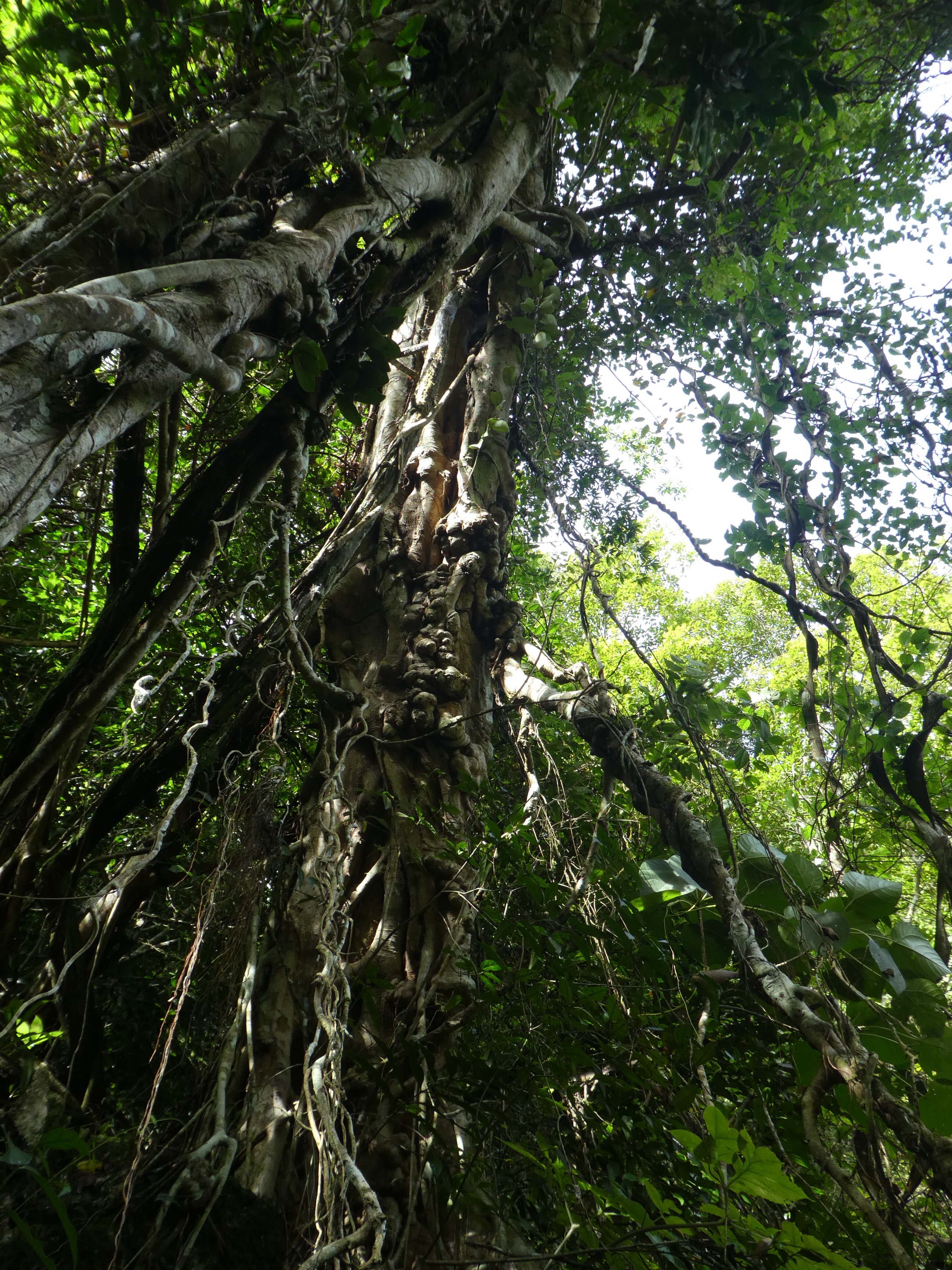
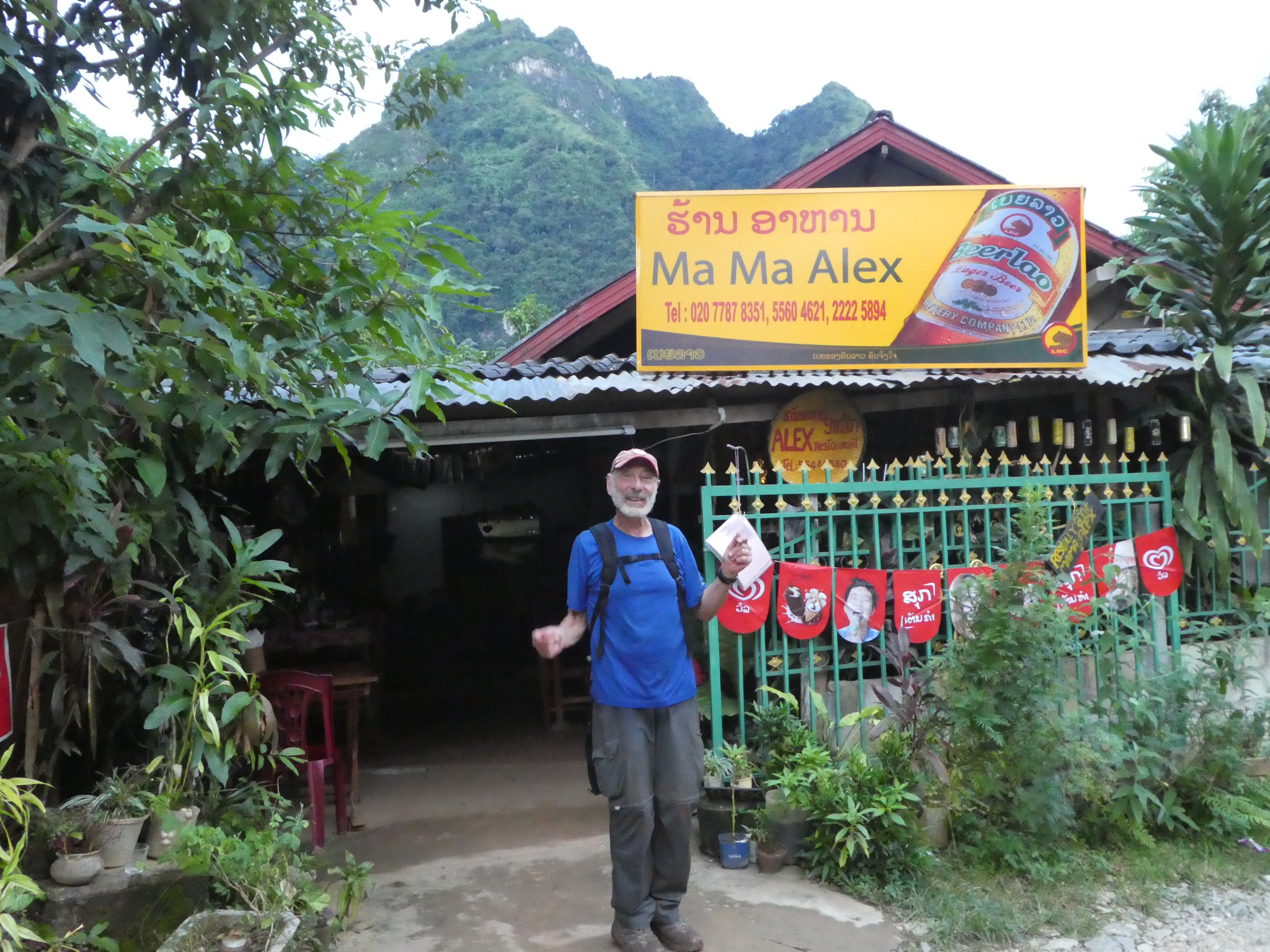
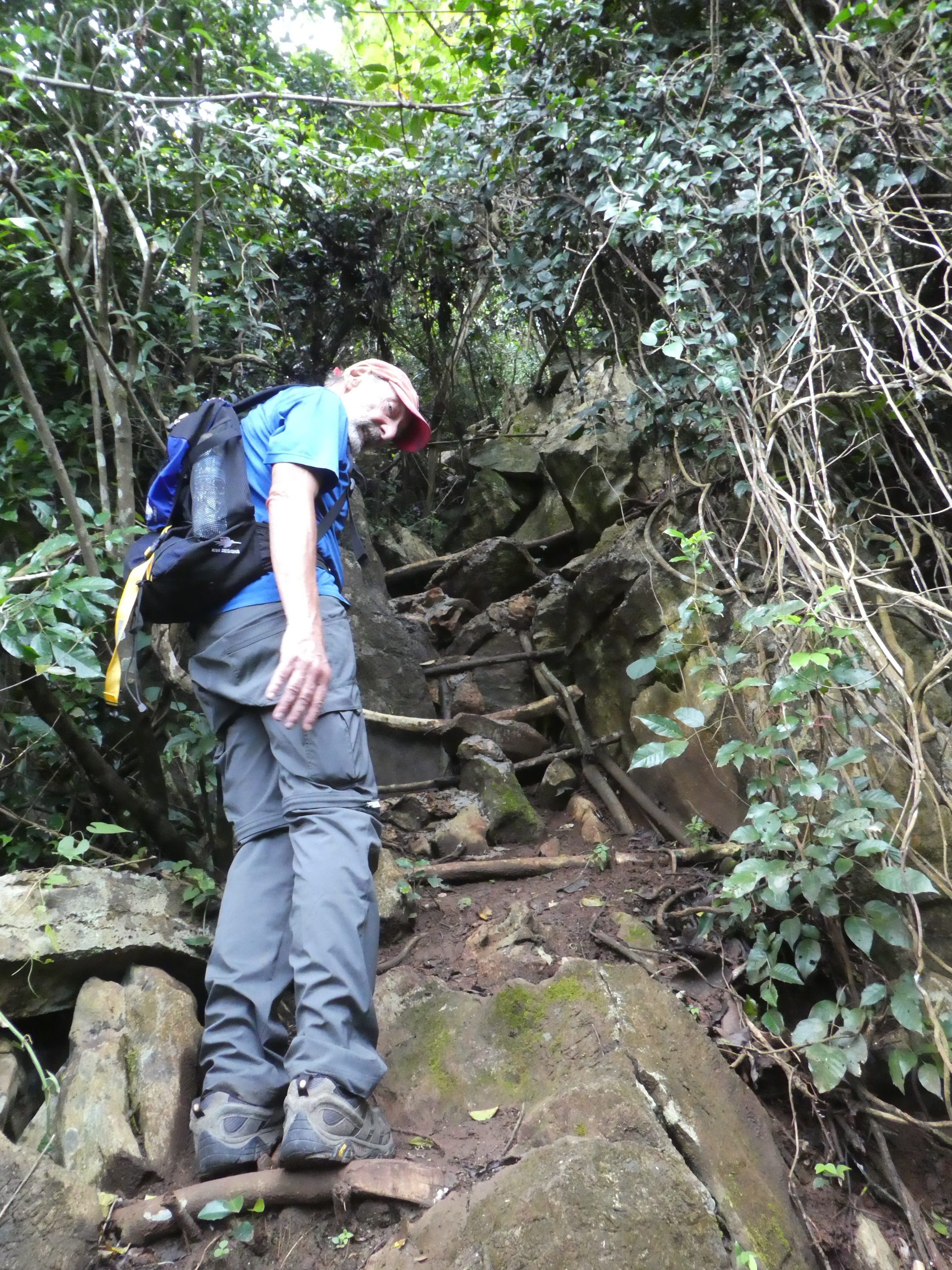
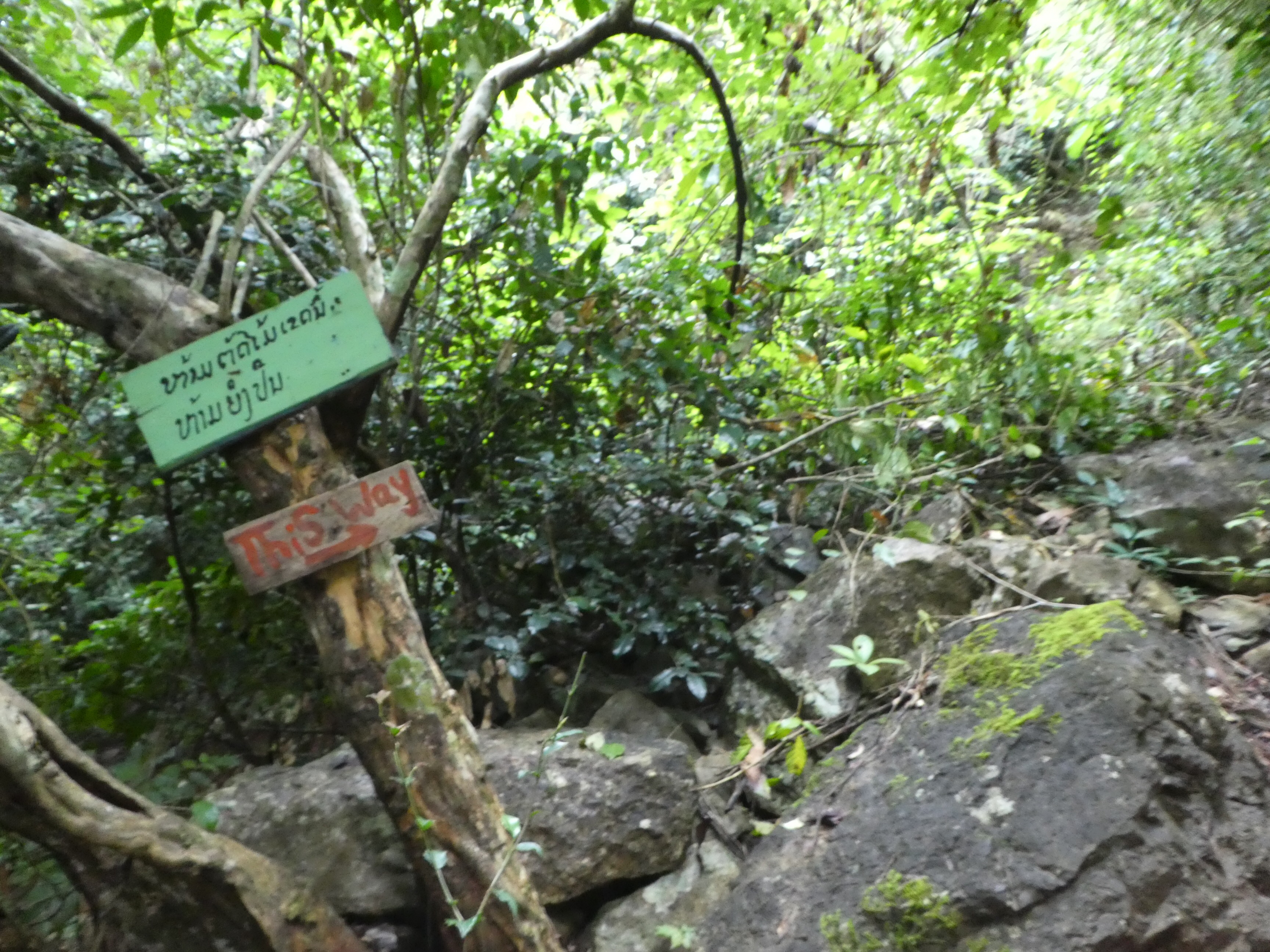
The ground was saturated with rain from the day before as we began a 1 hr trail ascent to a viewing area on top of one of the karsts on the east side of the river. It was straight up through the tropical jungle. We encountered tiny signs “this way” just often enough to reassure us that we weren’t lost. The trail was quite precarious! There were some handrails made of bamboo or tree limbs, but they weren’t always sturdily attached, and they were only “here and there.” We kept thinking the path would level out a little bit, but it never did. It was just up, up, up with zero switchbacks! After an hour, we abandoned our attempt and descended with great difficulty, slipping on muddy rocks and sliding down patches of clay soil. We barely made it back without injury. Linda went into one hole chest high and had to climb out, and Bruce put his injured shoulder to the ultimate challenge, grasping jungle vines and hanging onto rocks. We saw a giant centipede that was as thick as your thumb and about eight inches long. We were glad we took water bottles, as we’ve never sweated so profusely! They should have closed this trail under such wet conditions, but instead, accepted a fee to climb the karst. This is typical in a communist country. People cannot sue here, so it’s always “buyer beware.” In other respects, Laos is a very safe country to travel. We know that we only made it down by the grace of God. Seriously. We met a young couple with two kids, going up while we were heading down. They were struggling too, but were more determined (or crazy) than us. We hope they didn’t get hurt. When we got back to the village, we rewarded ourselves with dinner at Ma Ma Alex’s restaurant. Linda had chicken and vegetable curry stew, and Bruce had sweet and sour pork over steamed rice. We washed our meal down with ice cold Beer Lao. It was delicious! We had just a short walk back to our bungalow where, sore and tired, we showered and went to bed early.

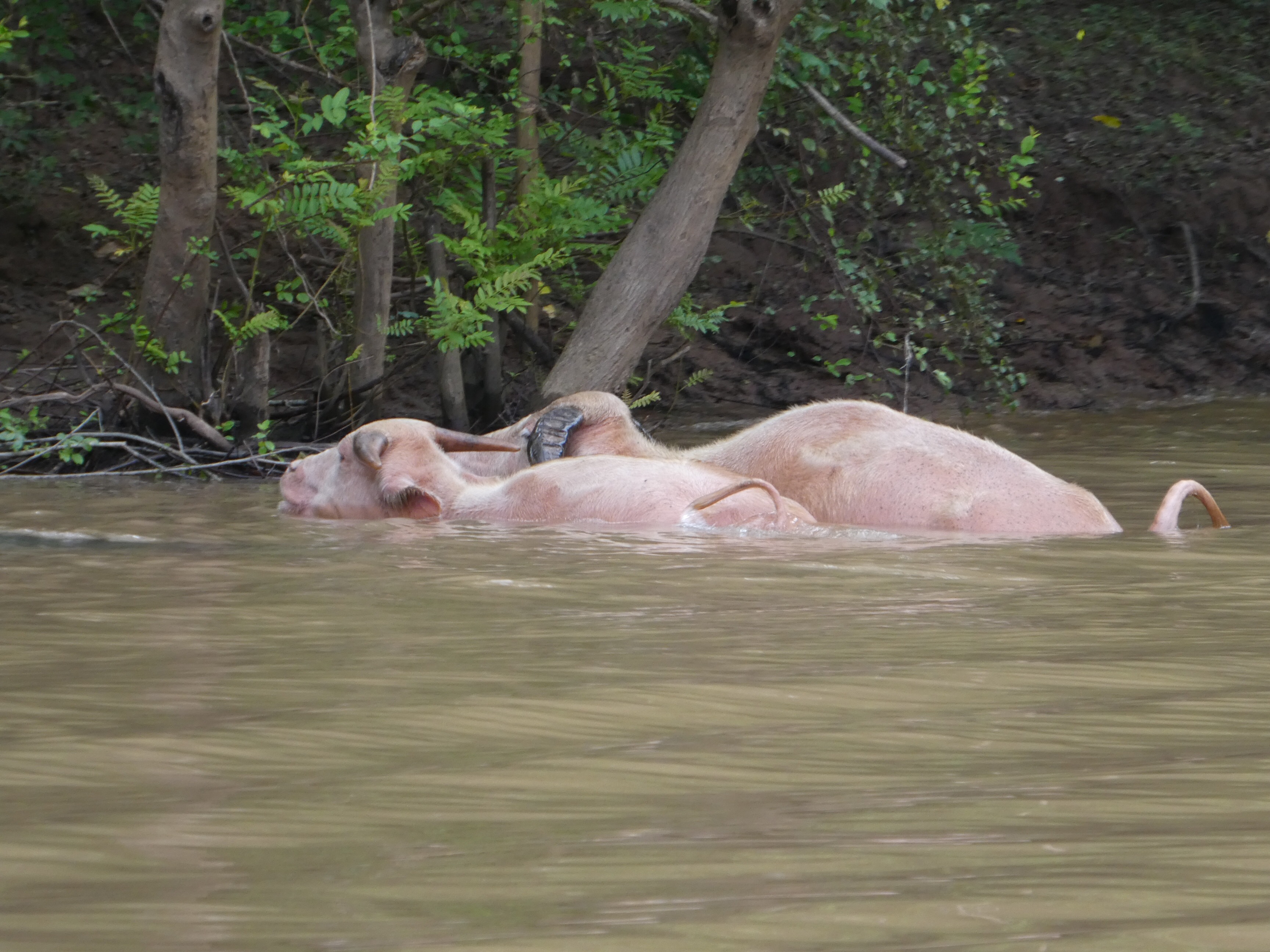
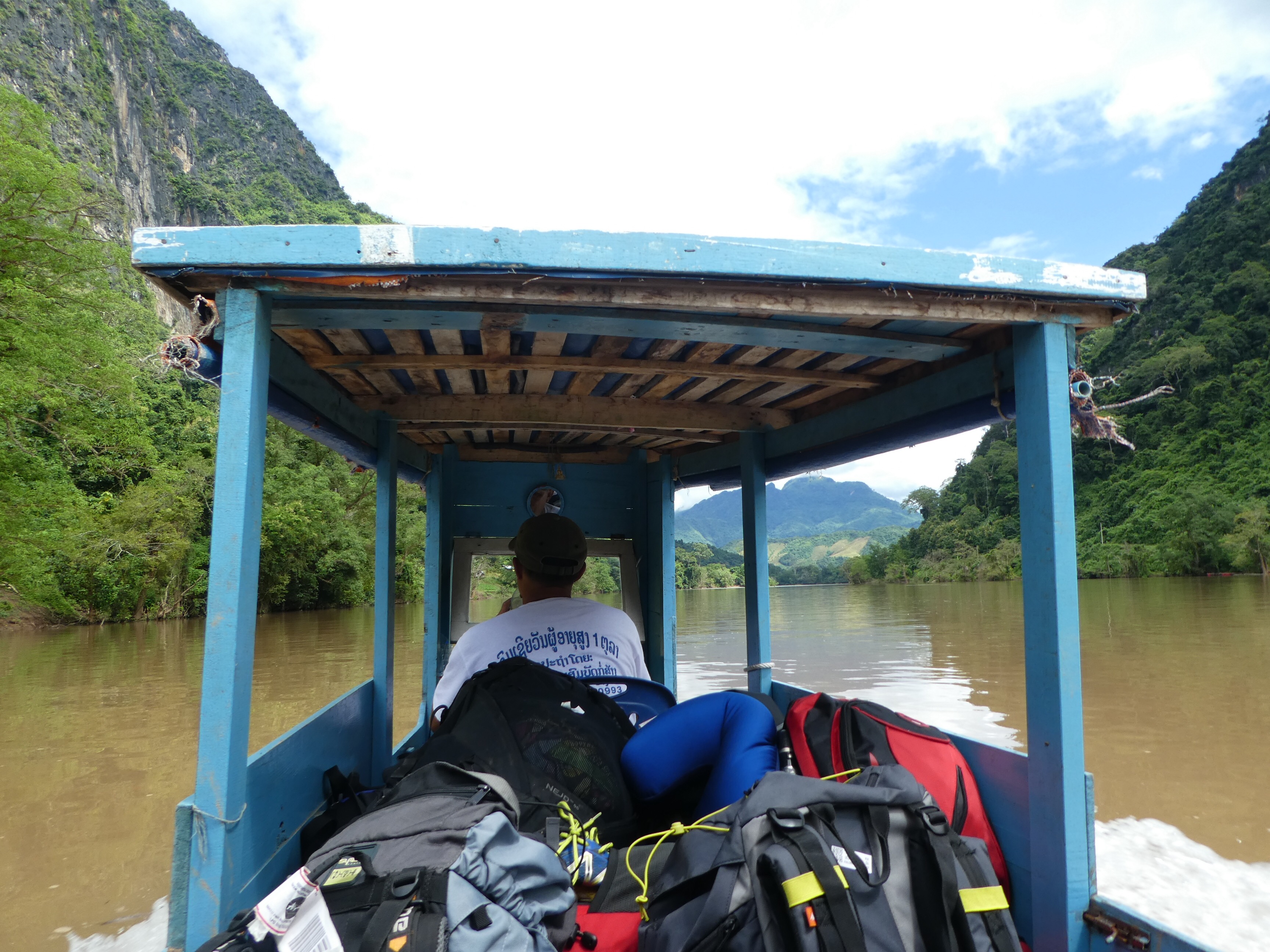
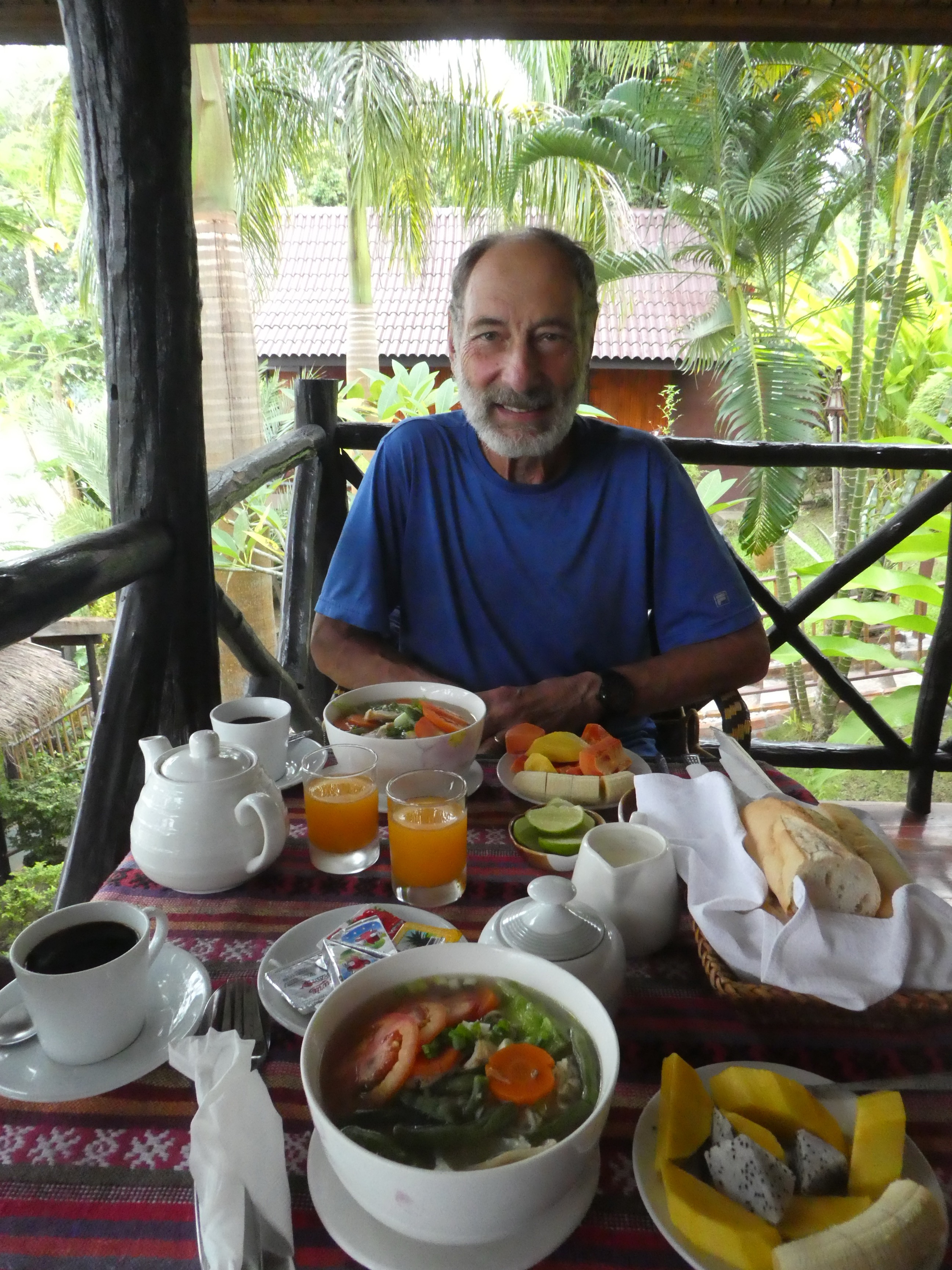
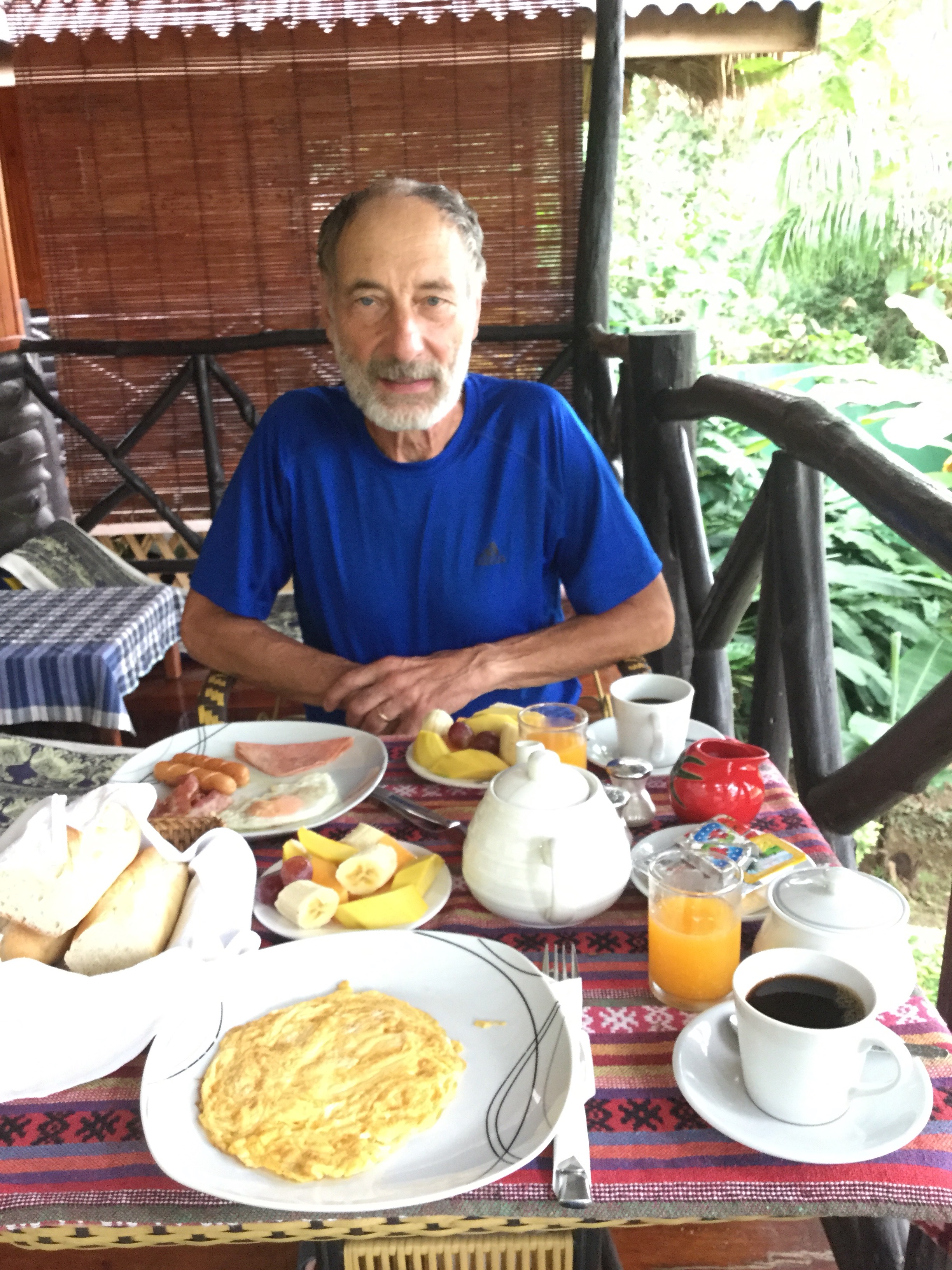
Breakfast was great, and Lao coffee is strong, so the next day we bounced right back. We agreed that the best viewpoint in Nong Khiaw is from the bridge. 😁 We stayed at the Riverside Guesthouse two nights and then joined other backpackers and a few locals on a 1 hr ferry boat ride up the Nam Ou river. We passed lots of water buffalo and even saw a couple of pink ones! We think they look like a cross between a steer and a hippo!  

Goodbye for now. We will update you from the next village upriver. 

Love, BnL

Laid-back Laos (Post #6)

Dear Friends and Family,

 Sabadi (hello) from the province, Luang Prabang, Laos! From Japan, we flew Air Asia 7hrs to an overnight lay-over (8hrs) in Kuala Lumpur, then flew 3 hrs to tropical Luang Prabang, Laos. ……too much travel time! Next trip we’ll pay the bigger bucks and fly direct! Luang Prabang is so cool, it was worth it. The airport is small and visa processing was easy.  
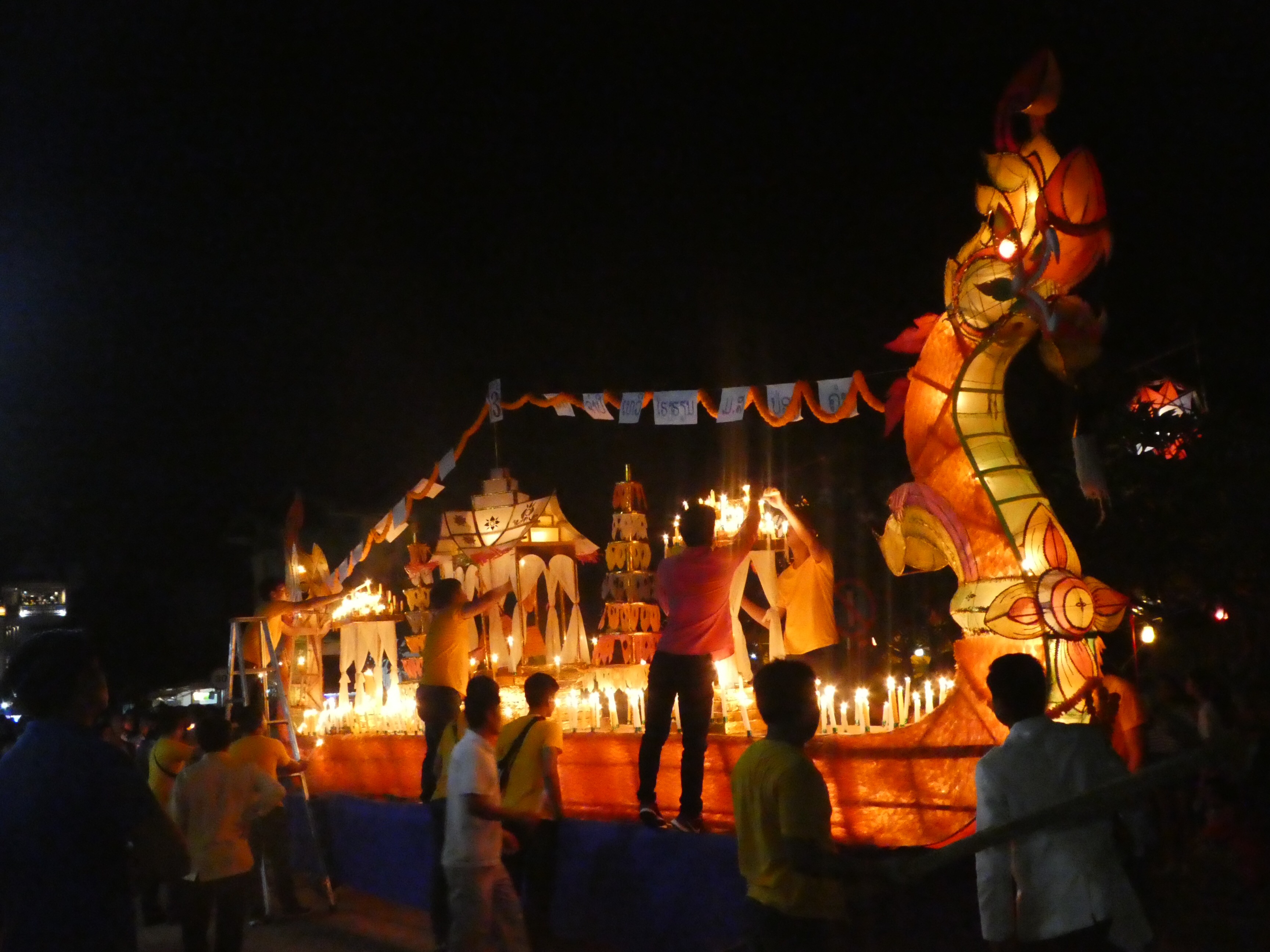
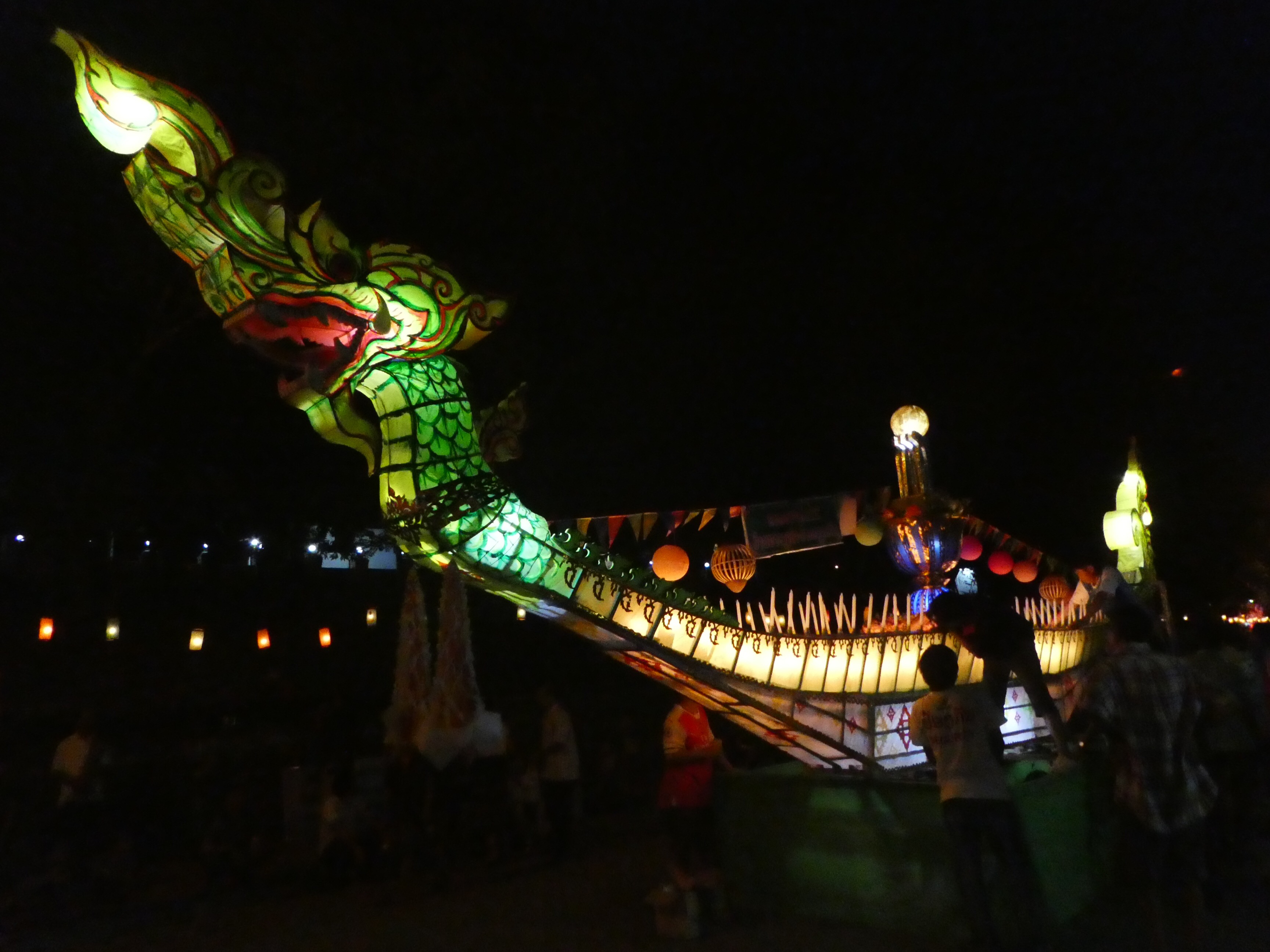
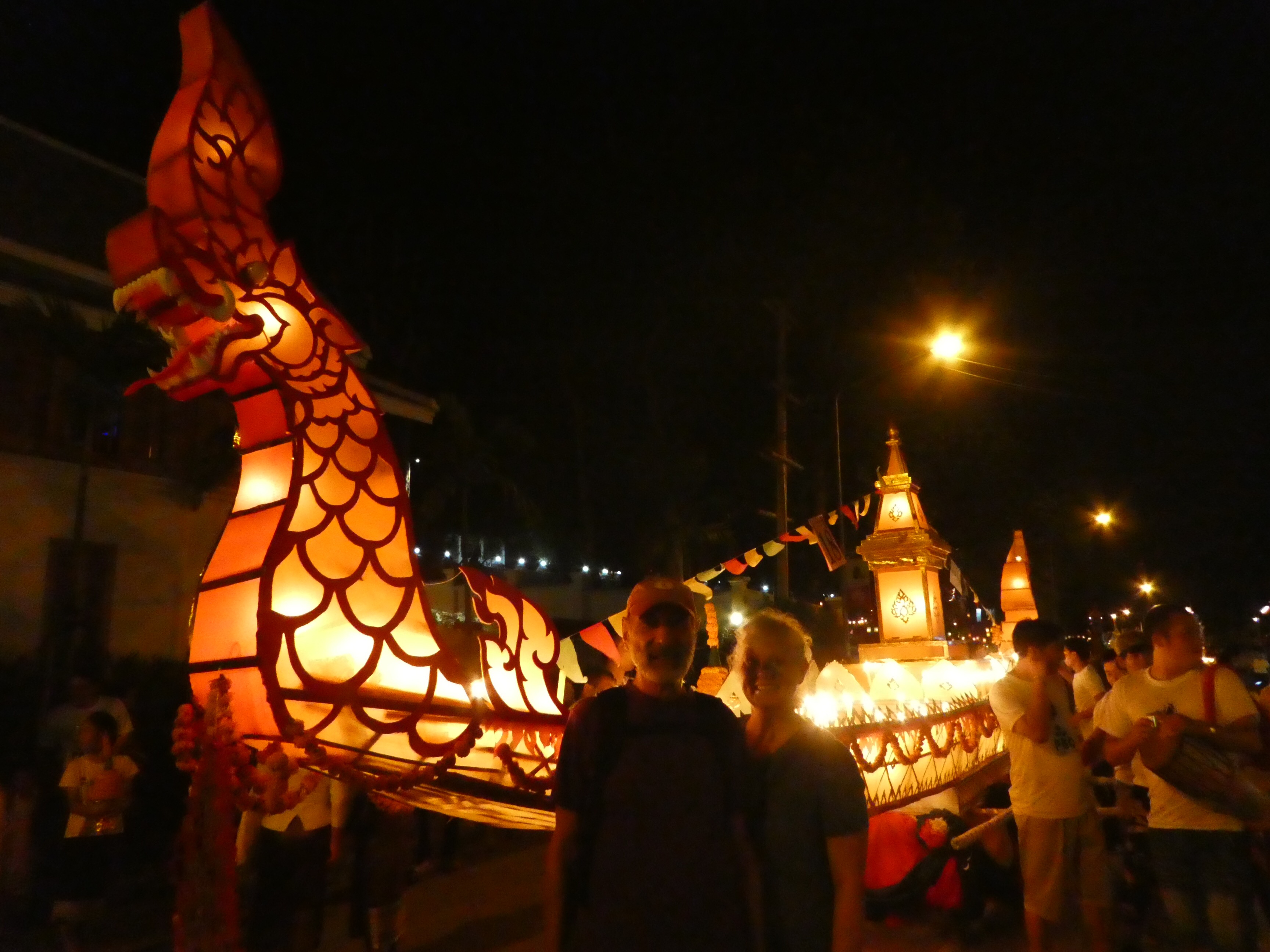
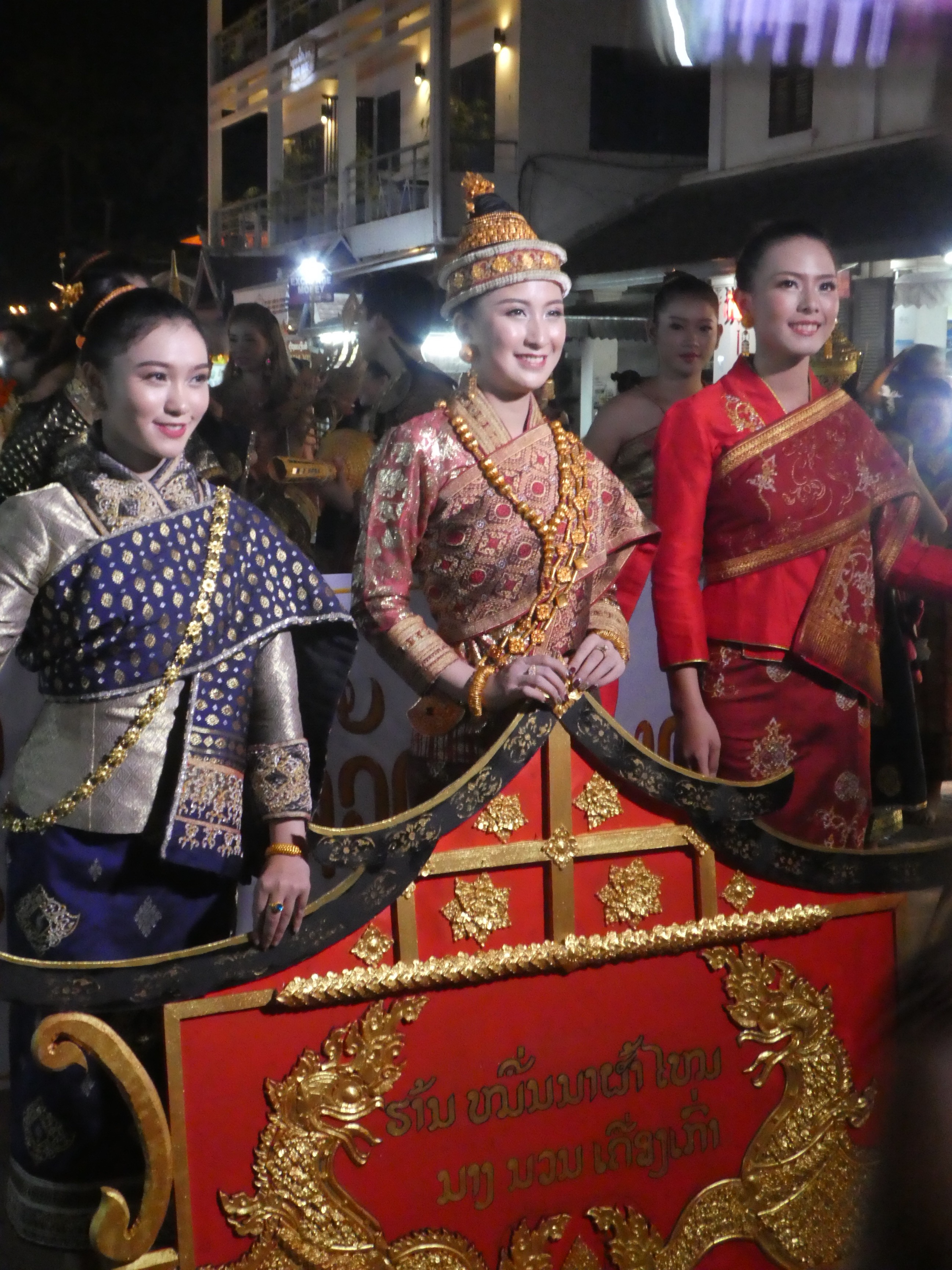
We were picked up by the guest house and driven 15 minutes to our teakwood bungalow overlooking the Nam Kiau River where we were met with a wonderful surprise! We arrived in time to attend the Festival of Lights and dragon boat parade down the main road in town. This annual celebration is held the day after a full moon and features numerous colorful tissue-paper dragon boats propped up on bamboo platforms and wheeled through the town’s main road for about one mile. Then they turned left into a Buddhist temple courtyard and lined up for judging before being launched into the Mekong river. It was magical! Hundreds of lit candles illuminated the boats, accompanied by scores of traditionally dressed Laotians, singing, dancing and drumming, as they proceeded down the street. People carried decorative marigold offerings with candles in the middle. Each dragon boat represented a different city/province and each boat/ presentation was judged. The winners received money for their village. Throngs of photo-taking spectators lined the street, following the floats towards the Mekong river, where more dancing continued. It was an amazing spectacle that we felt lucky to witness. The idea is to pray/wish away the bad things in life and ask for good, i.e love, health. Homes and businesses are decorated with lighted paper star lanterns, and sidewalks are lined with paper flowers lit up with candles. People believe the smoke from the candles carries their wish/ prayer, and the release of the dragon boats signifies letting go of the bad.
Our guesthouse shuttle van returned us to our bungalow late that night. Breakfast was served on our veranda, surrounded by tropical plants, overlooking the gently moving Nam Khan river. After breakfast, we were joined by an English speaking guide, “Xiong,” who had escorted Bruce’s brother and his wife for their visit to Luang Prabang a few months earlier. We agreed to use his services the next day for a 4hr RT boat ride on the Mekong river in the morning, followed by a visit to the Kuang Si waterfalls in the afternoon. The cooling breeze on the boat trip felt wonderful after the sweltering heat and humidity of Luang Prabang. We saw water buffalo cooling off in the river, white herons, boys frolicking in the water and loads of fisherman. The Mekong is huge and flows through China, Myanmar, Thailand, Laos ,Cambodia, and Vietnam.

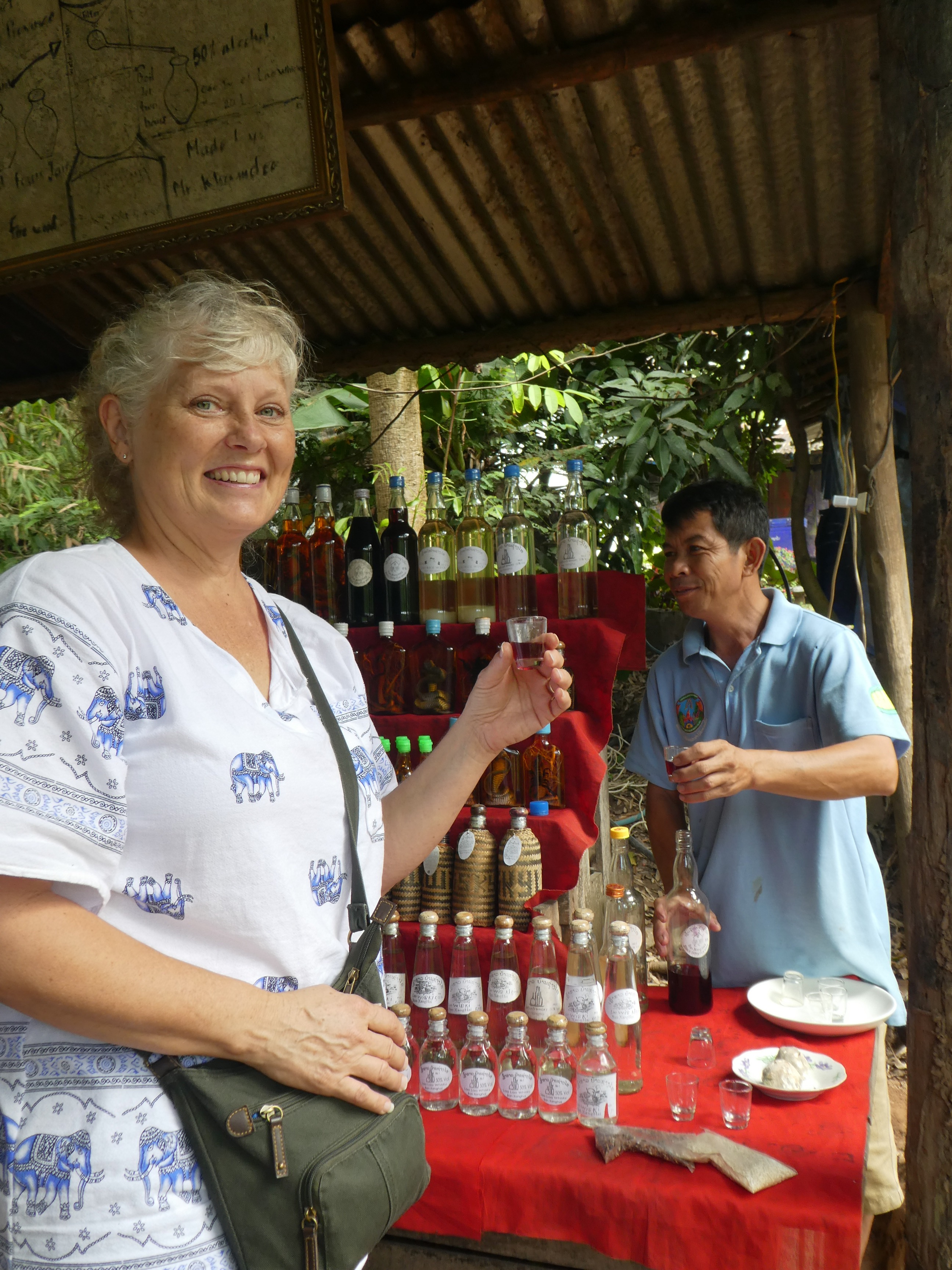
Along the way, our boat stopped at “Whiskey Village” where we learned about the process of making home made whiskey from white rice, and were given samples. Some of the bottles contained snakes or scorpions. We walked up a steep path into the village and watched local women weave linen, another source of income for the poor village. There were beautifully woven scarves, table runners, clothing, etc. offered for sale.  

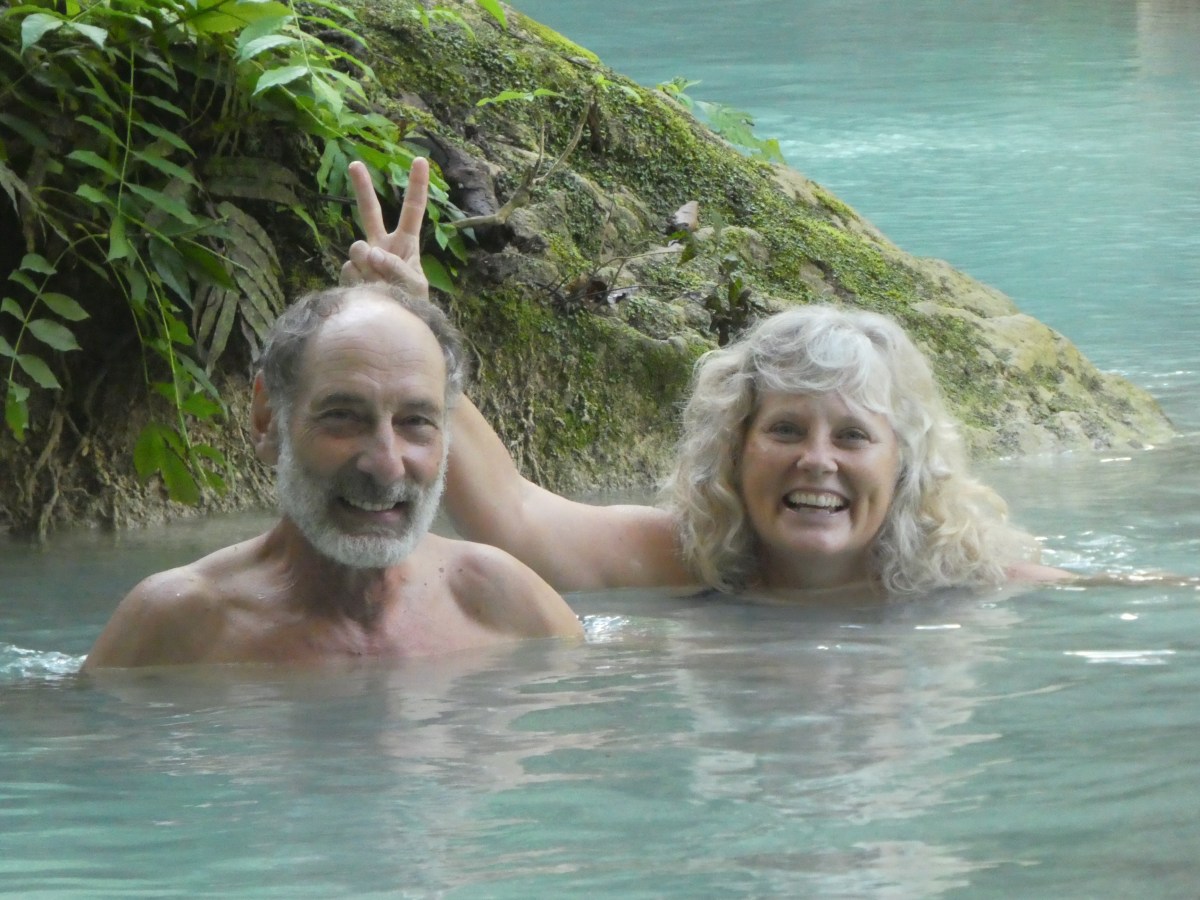
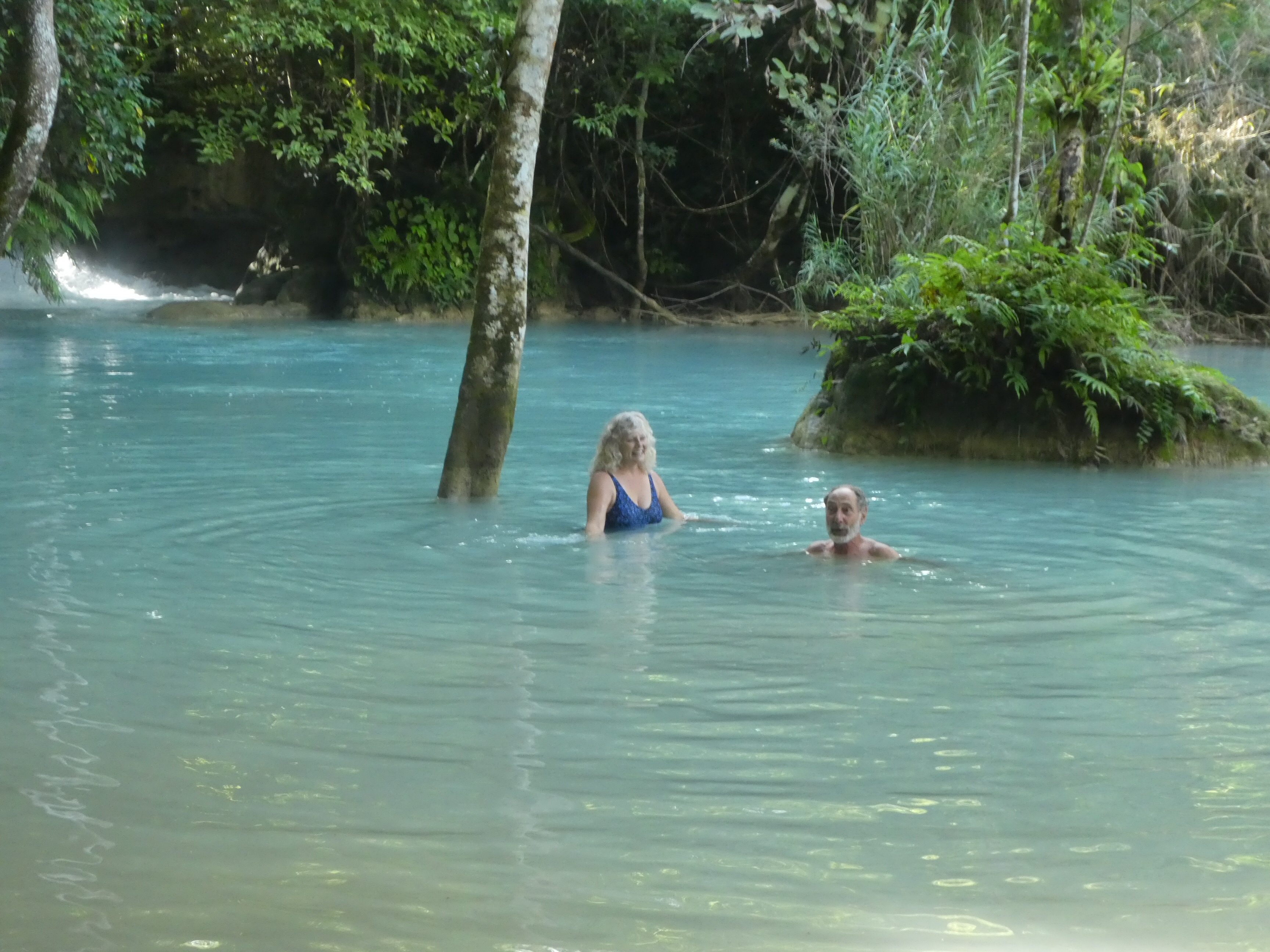
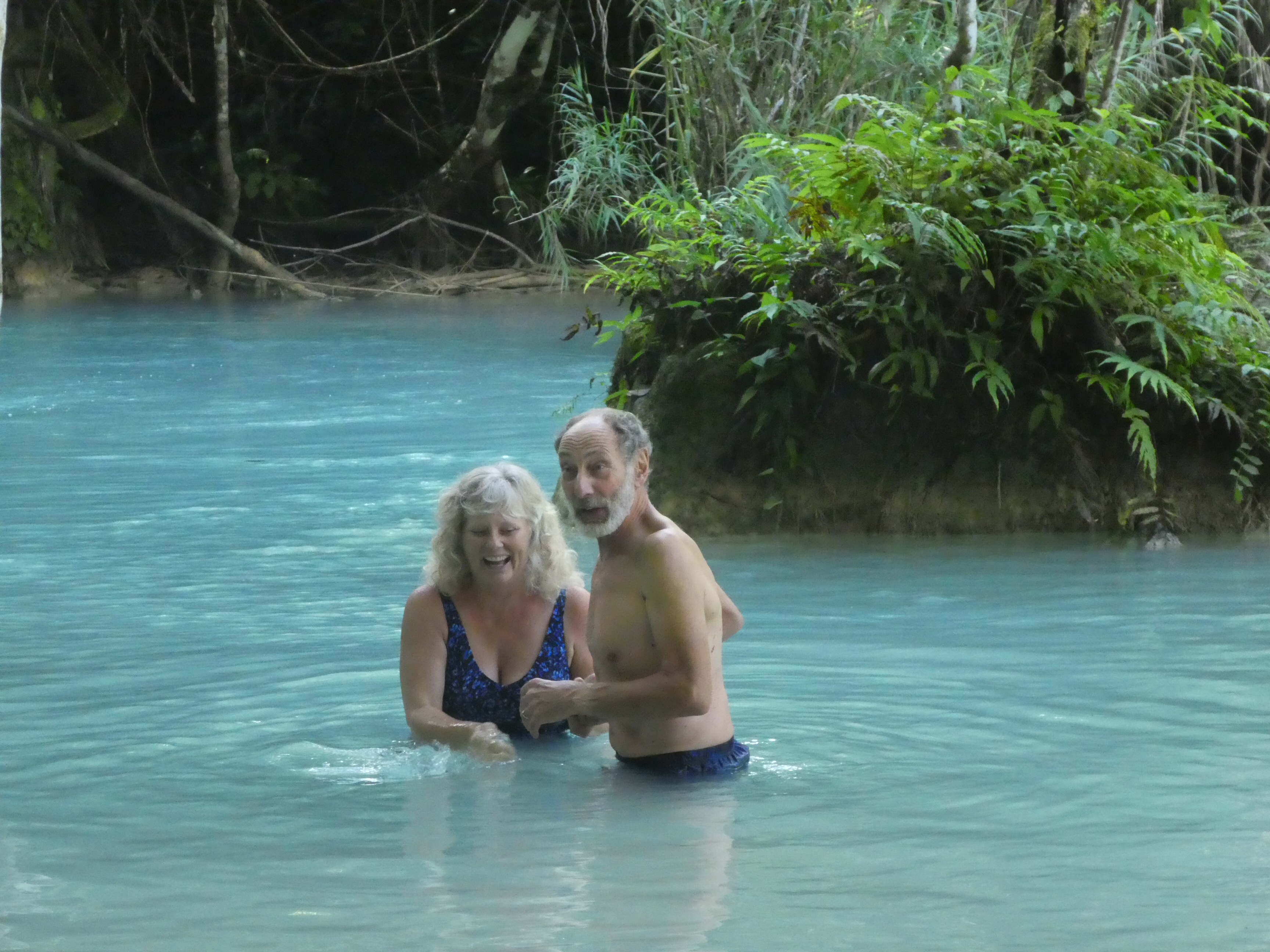
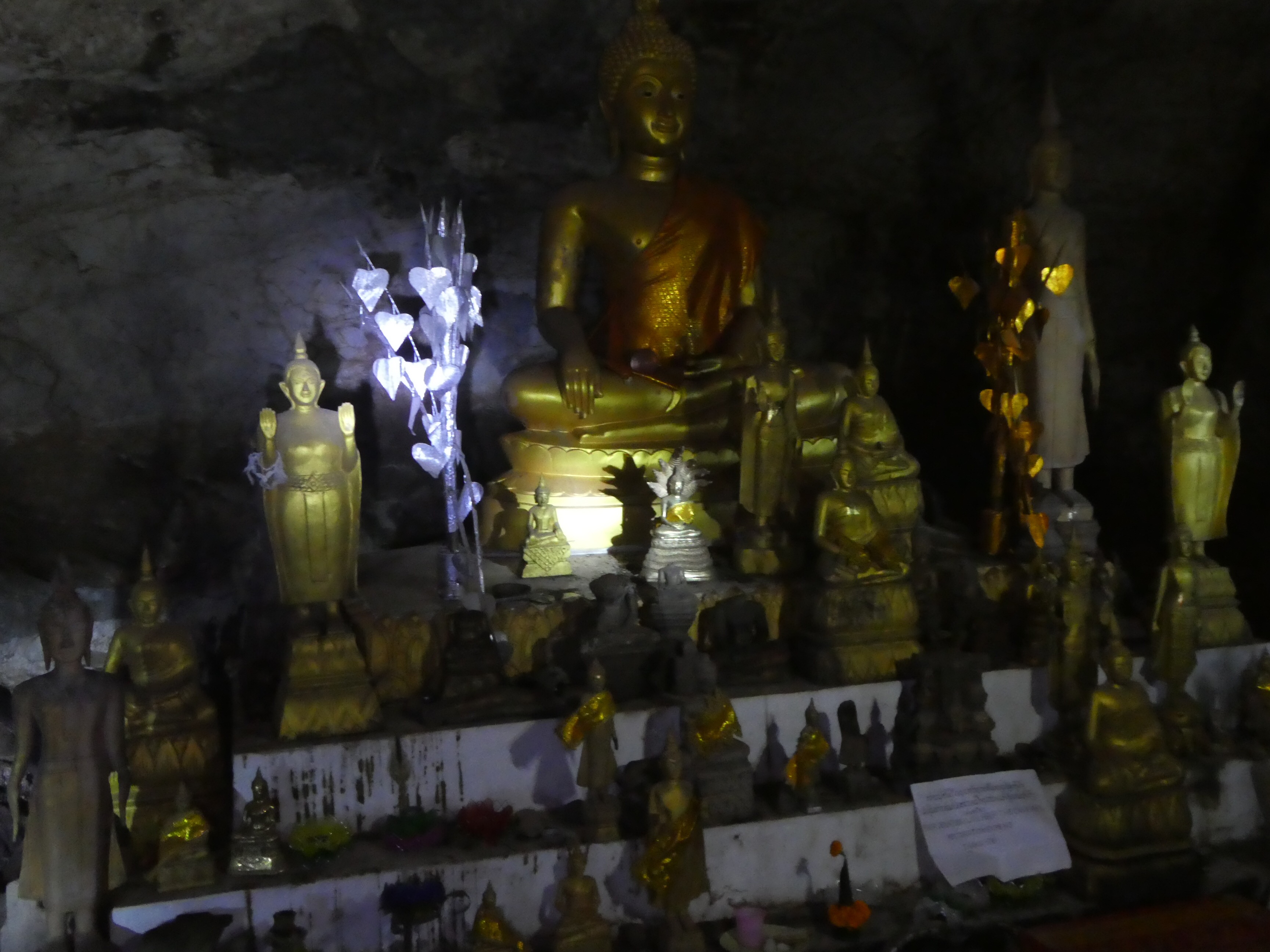
We continued on the Mekong river to the Pak Cou caves, a buddhist shrine housing hundreds of Buddha statues, some dating back to the 16th century. Though we weren’t there at the right time, once a year villagers ceremoniously wash the statues. After a tasty Pho lunch back in Luang Prabang, we were driven to the incredible Kuang Si waterfalls. The falls are in a tropical garden park setting with a bear reserve near the entrance. The reserve houses eight kinds of bears, wandering around freely, and we saw several, including cubs, up close. There was a chain-link fence around their enclosure and at night the bears are caged indoors. After we passed by the bear reserve, we entered the lower-falls area. We were overwhelmed with the beauty! We continued walking and saw several levels of fantastic waterfalls. The water was milky-blue, from limestone deposits, cold, and clean. Tourists happily frolicked in the waters, and we did too. It was truly like a scene from fantasy island.  

On the way back to Luang Prabang we stopped at a couple of villages where we learned a bit about the three main Laotian ethnic groups Laos, Khymer, and Hmong. We watched a shaman dressed in black with a black scarf covering his head dance and beat an instrument similar to a tambourine, as he chanted aloud. Our Hmong guide explained that he was chanting thanks that a young girl was feeling better after a serious illness for which he had performed an earlier healing ceremony. A couple of villagers ran through with a young, slaughtered pig raised high…all part of the thanksgiving ceremony!  

We stopped at a rice paddy field where Xiong explained the process of rice farming. In Vietnam there are 3-4 harvests per year but in Laos, only two. Xiong works as a tour guide, and is also a rice farmer. His family grows “mountain” rice, but we stopped with him at a “low land” rice field. We ended the 12 hour day with dinner at the home of Xiong’s cousin. We were treated like honored guests in their humble home and shared a meal with them of chicken, pork, fish, and steamed rice. They surprised us with a traditional Hmong good luck ceremony normally performed at births and weddings, to wish us the best in our travels.  

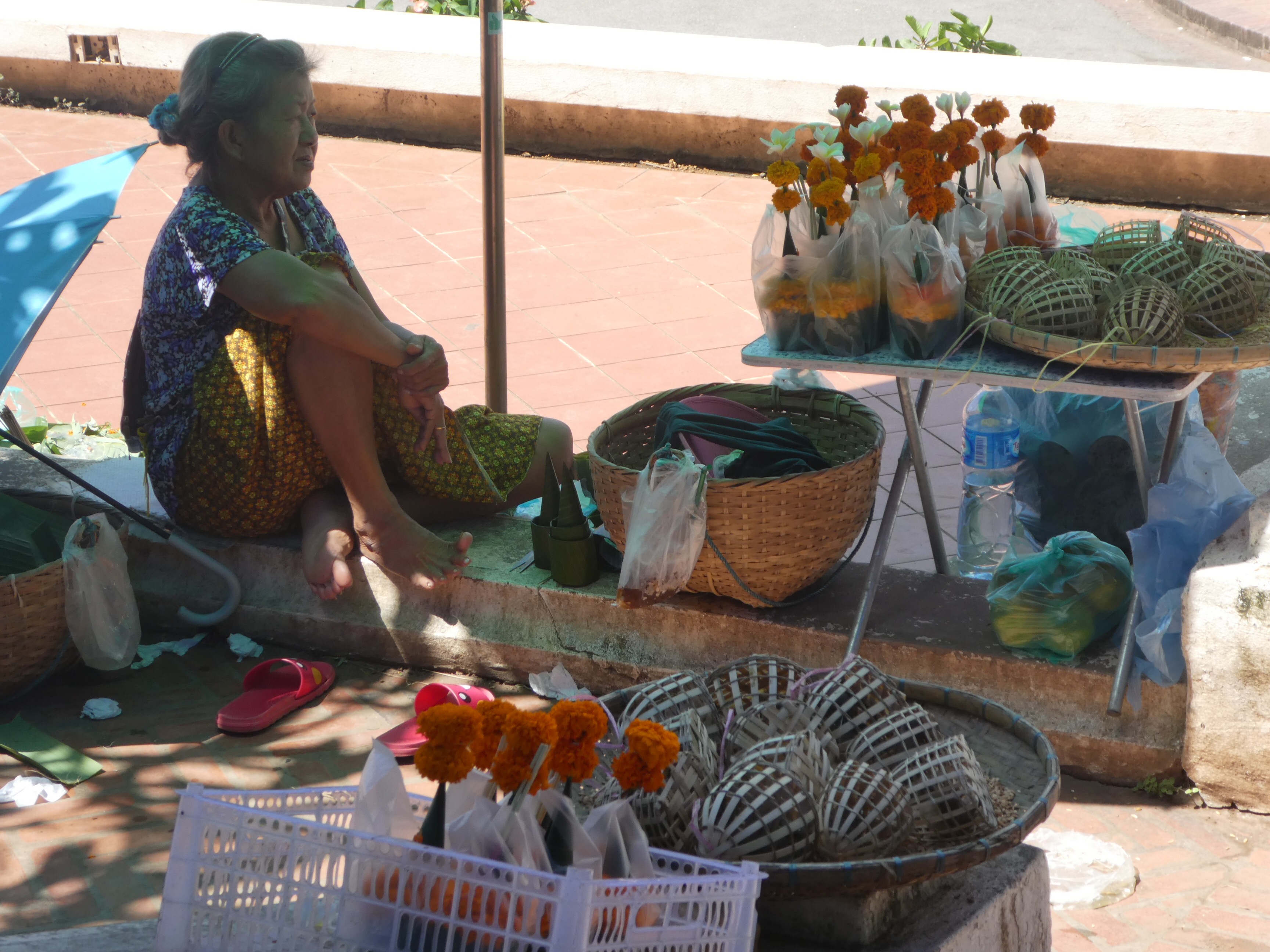
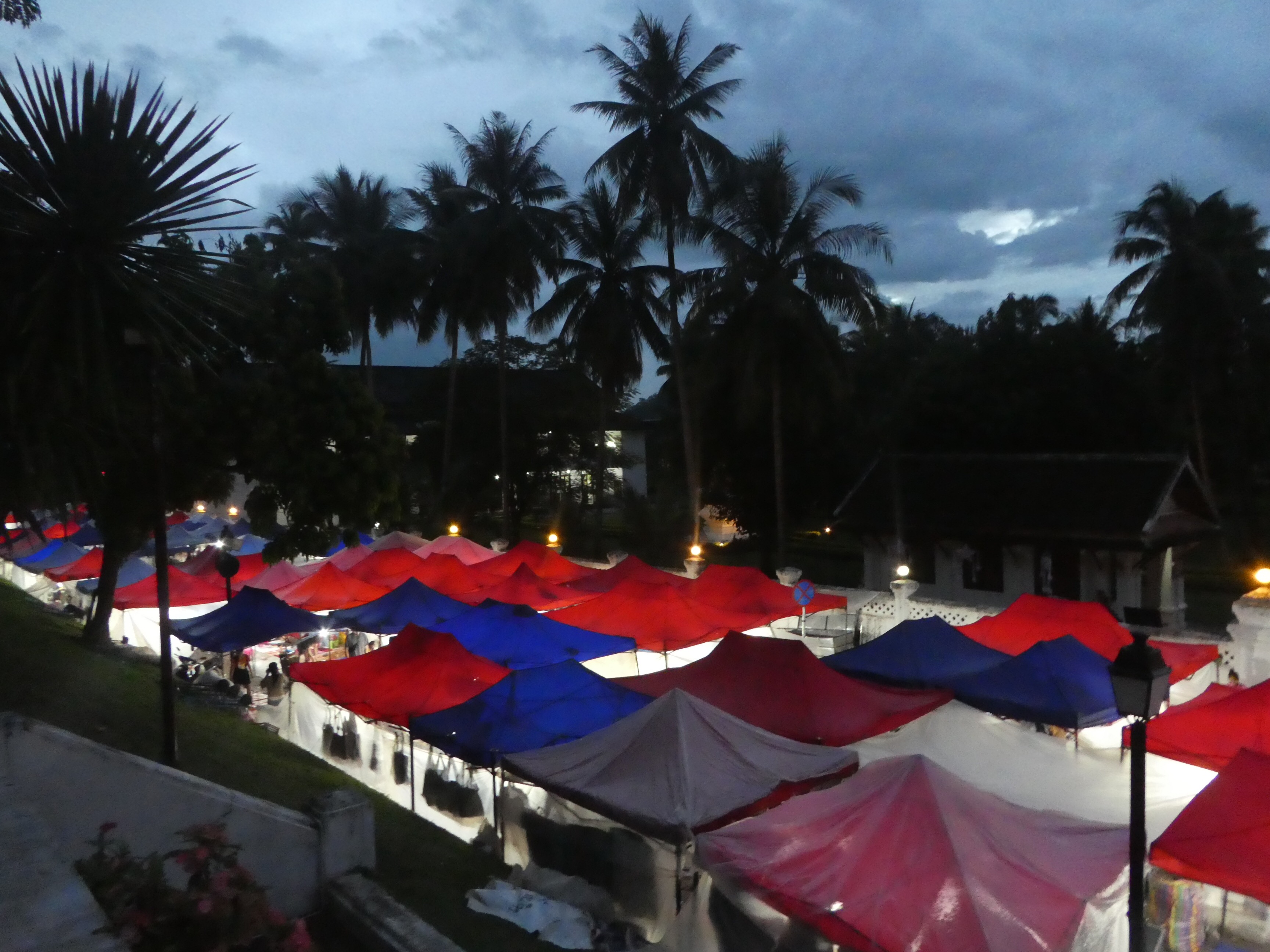
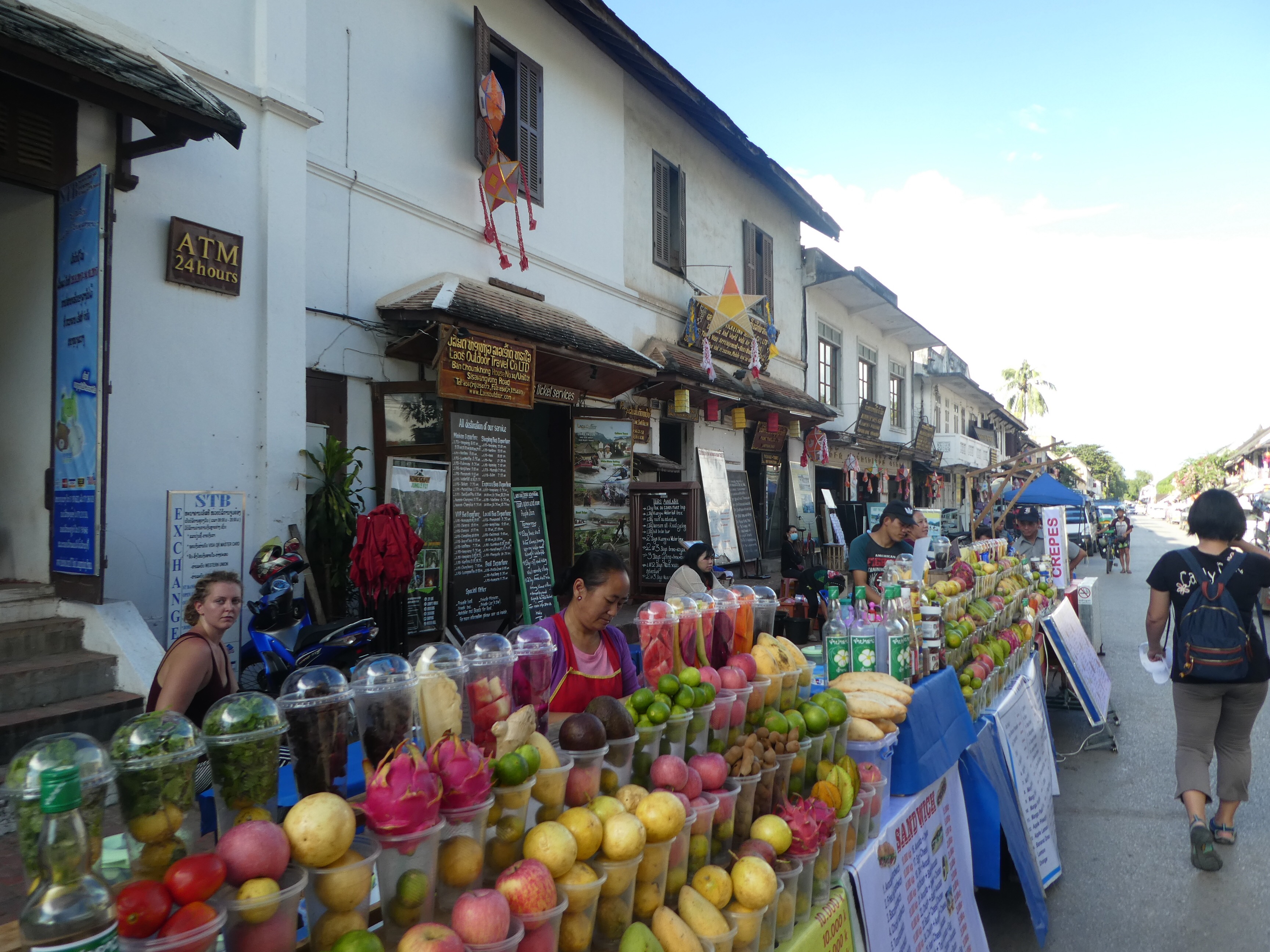
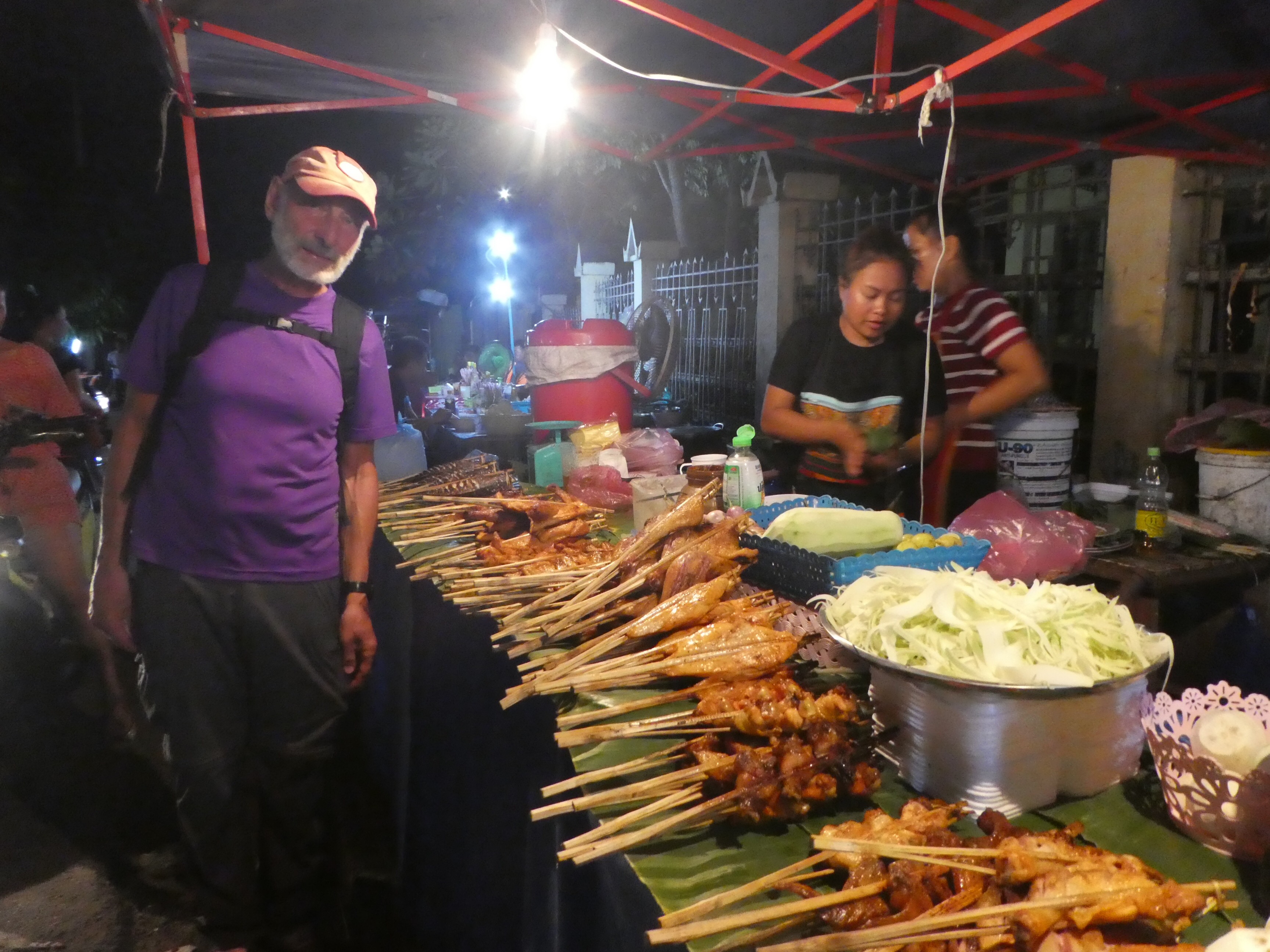
Over the next couple of days we explored picturesque Luang Prabang. We climbed ~300 steps to the top of Mount Phousi (pronounced poo-si) for a great aerial view of the city, nestled between the Mekong and Nam Khan rivers. At the top of the sacred mountain we found another Buddhist shrine where people placed flowers, incense and candles. A woman sold tiny birds in small bamboo cages at the base of the mountain. The theory is you release the bird at the top as you make a wish! Nearby, we saw Wat Xiengthong, a stunning Buddhist temple complex, covered in colorful mirrored glass mosaics, and lots of gold, all sparkling in the sun. We walked until we came to the place where the Nam Khan flows into the Mekong river. We enjoyed strolling around and drinking cold, refreshing fruit shakes made with pineapple, lemon, banana, mango, and coconut milk and giant fresh squeezed oranges juice for only $1.25! We ended the days winding our way back through canopied stalls of the night market which cover the Main Street each evening and where tourists can buy just about anything imaginable. Though we had our shuttle van to/from the city center, we did our share of walking, and hopped on/off of three-wheeled motorized “tuk-tuks” as well.

 
We left Luang Prabang and headed to a village further north. We’ll write again soon! 

Hope this finds you all well.

Love, BnL


Genteel Japan (post #5)

Dear Friends and Family,

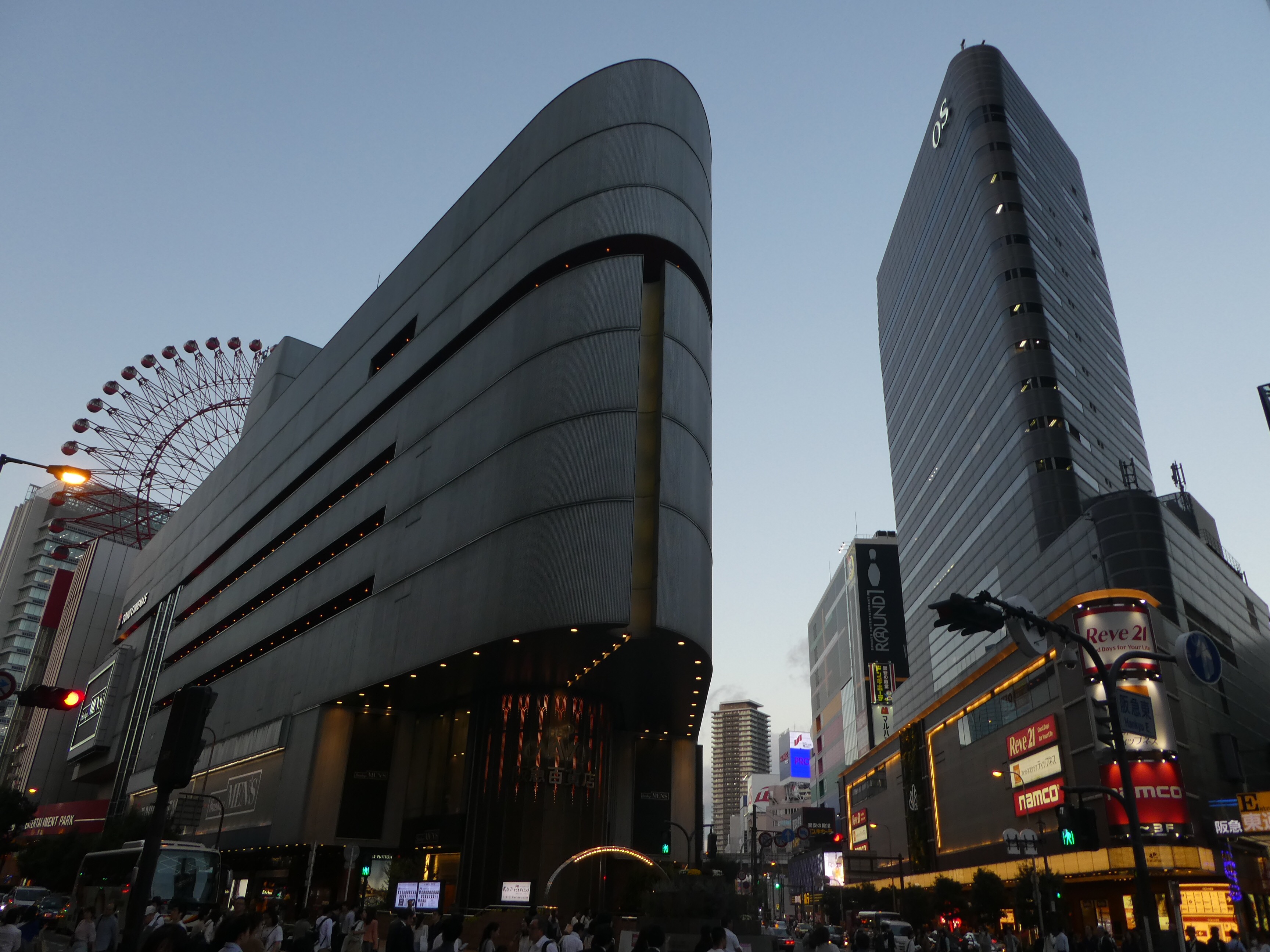
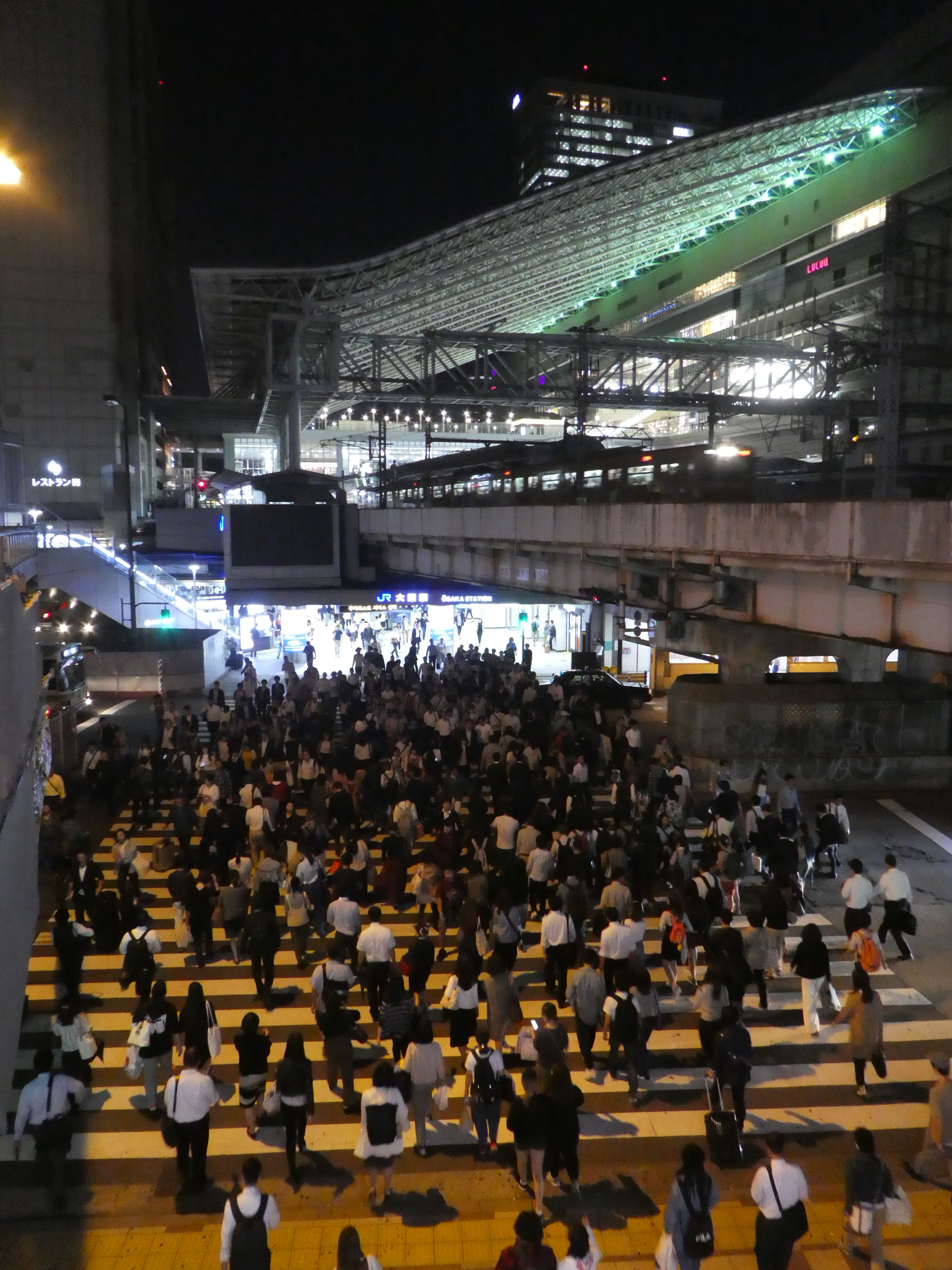
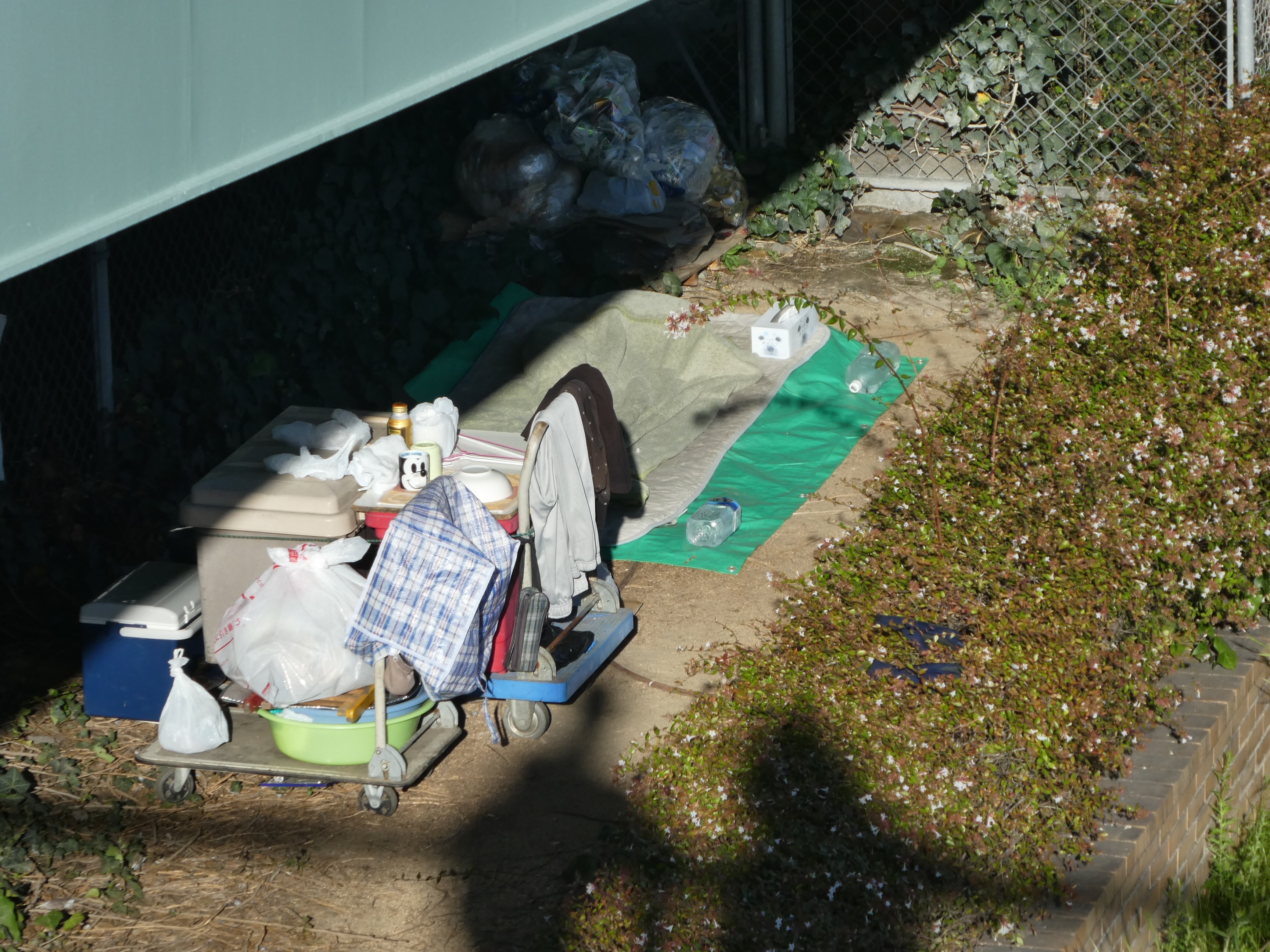
We arrived just after 12 midnight at Toyoko Inn 2, Nakatsu/Umeda in Osaka, Japan. Our friend, Minoru, helped find and book this wonderful hotel chain in the heart of Osaka. We thought it would be so hard to find, especially late at night, but kind Japanese people guided us on our way. Japan is such a breath of fresh air! It is so clean, orderly, and pretty, and feels loving and safe, just the way you wish the whole world would be. A group of teenagers joyfully escorted us to the right subway train, and we took a group photo. 😎 Many people speak or understand a little English. Though shy, they are happy to try to communicate with us, once we reach out to them. People often smile and bow respectfully to us, and to each other. Osaka is teaming with nearly three million people, tall buildings, great infrastructure, and busy traffic. Most people are well dressed, well employed and well mannered. We have not seen even one homeless person begging on our trip so far in either Vietnam or Japan. Yesterday, we saw evidence they must exist. There was a tidy “camp” under a walking bridge.

The food is delicious, healthy and sanitary, though fairly expensive, and so are the trains, busses, and especially, the taxis. We are very impressed by the subway/train system. It is reasonably priced, super fast, and like everything else, clean and orderly! We had to adjust to the higher overall cost. In Vietnam, we spent only a few dollars for transportation and food on any given day. The prices in Japan are more comparable to America. In Vietnam, a seven hour bus ride to the Ban Gioc falls cost us $6.50. Here, we paid $44 for subway/train/bus combo to see a site in a city just one-hour away! Then again, it is wonderful to queue up for a subway train when everyone politely waits for passengers to disembark before politely boarding.

Our hotel room was tiny, but so neatly arranged, and a steal at $65 a night, including a delicious buffet breakfast. The breakfast included rice, salad, miso soup, juice, bread and coffee, every day, and sometimes scrambled eggs. The front desk presented Linda with rose bath salts for the deep tub she enjoyed, and a rose water facial mask. They had the usual toiletries, and in addition, offered complimentary sanitized (striped) pajamas!

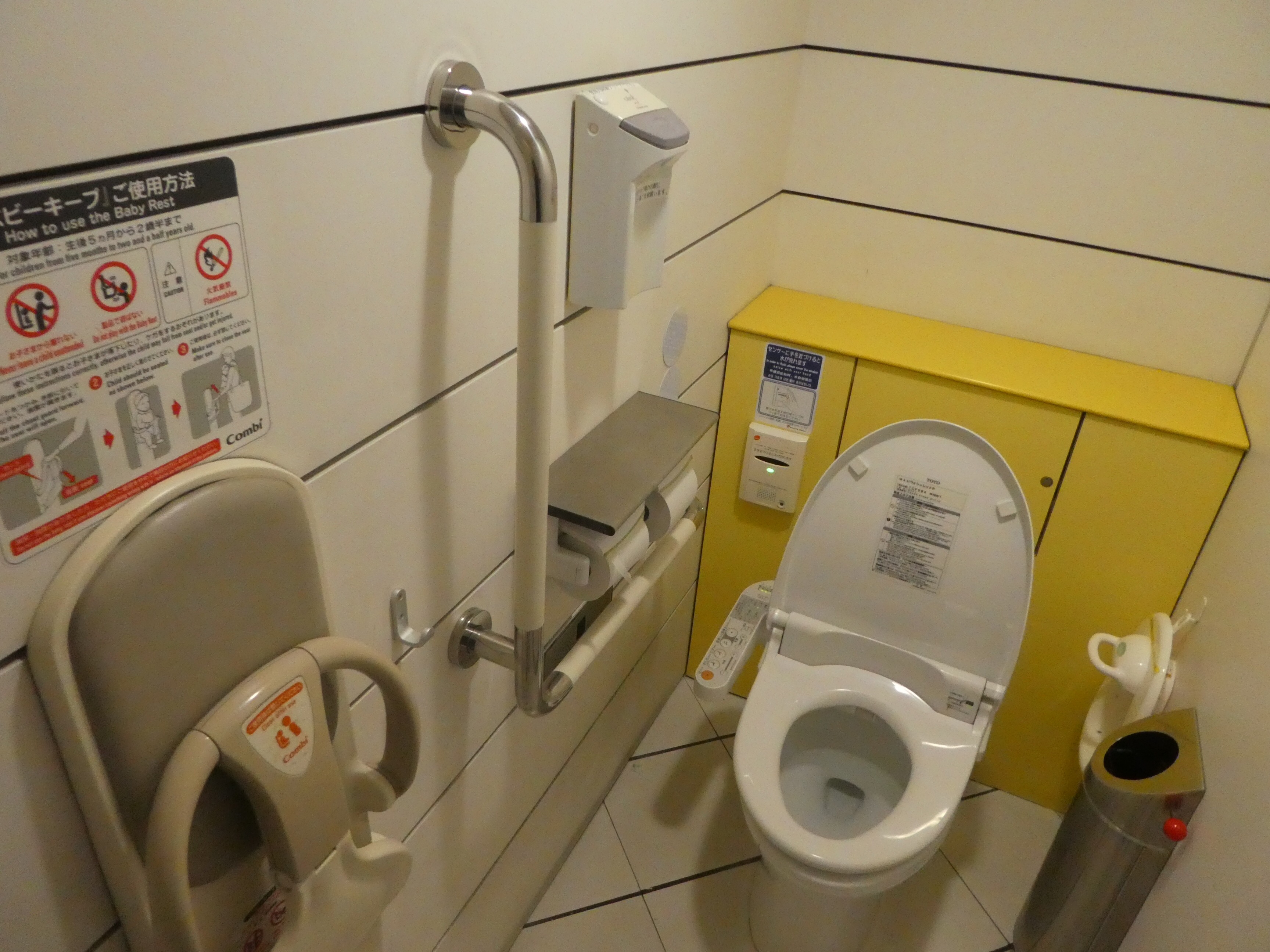
Unlike in Vietnam, in Japan, we can drink and brush our teeth with the tap water and the plumbing is good. Restrooms are free, and available everywhere. “Toitie time” is something else! Inside the stalls, there are containers of special sanitizer for the seat. There is an arm with push buttons on one side of the seat, mostly written in Japanese, but we figured it out. One button makes the room fill with the sound of running water, and there is volume control, for all of the shy folks out there. Toilet seats are heated, and include a water option to help clean you after usage, with stream, spray, and pulse options available, and then a gentle blow-dry. 👀

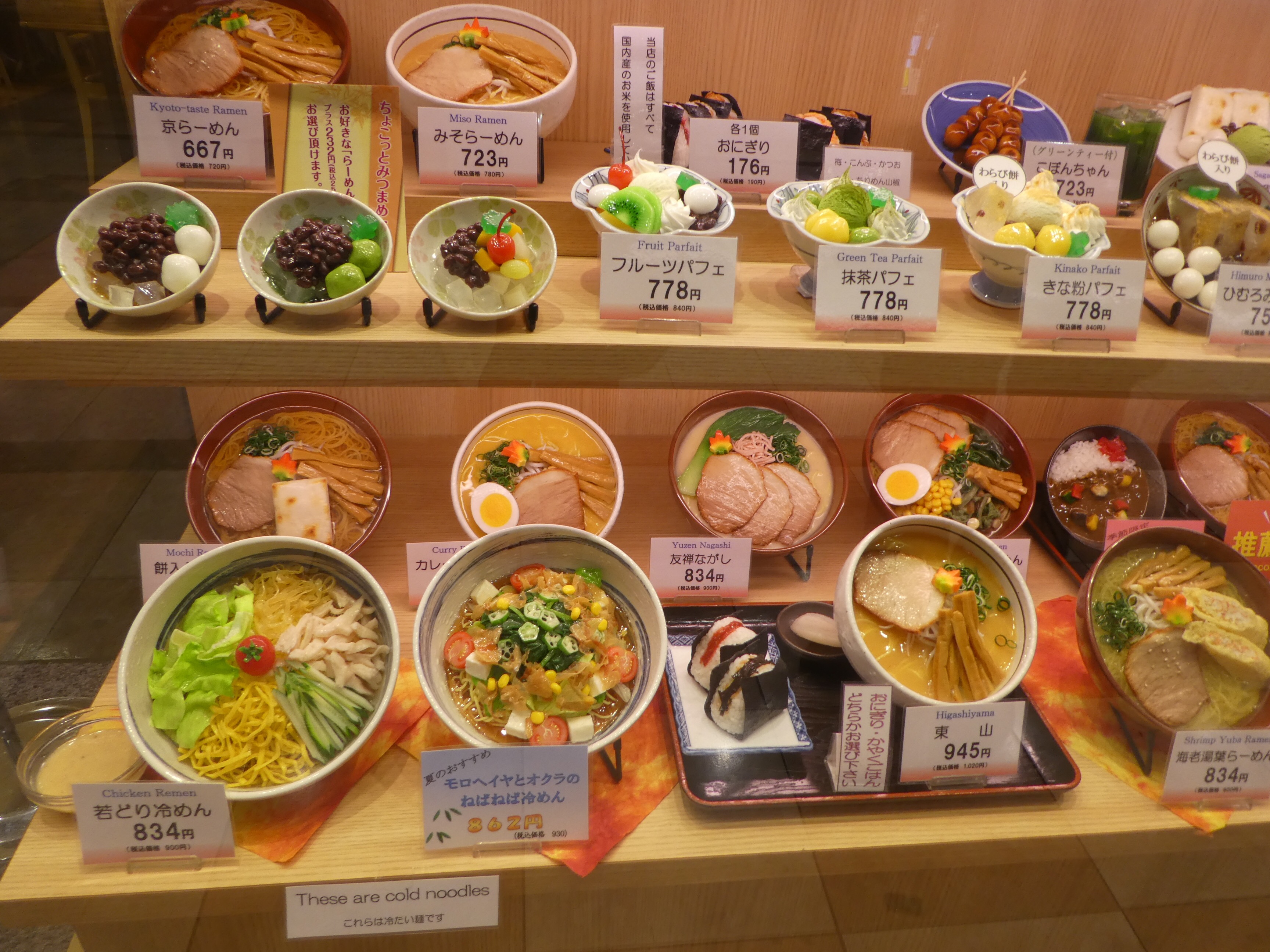
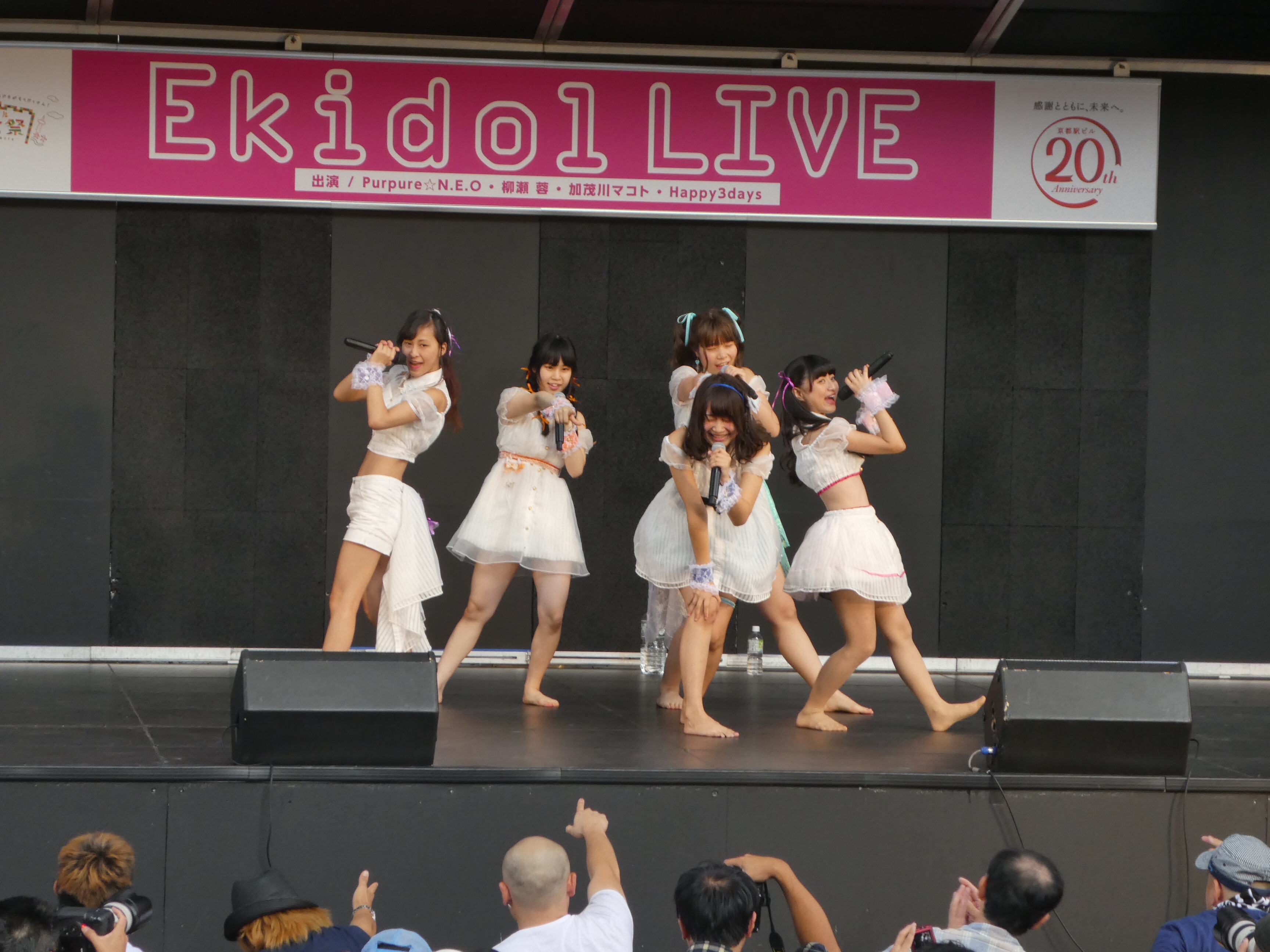
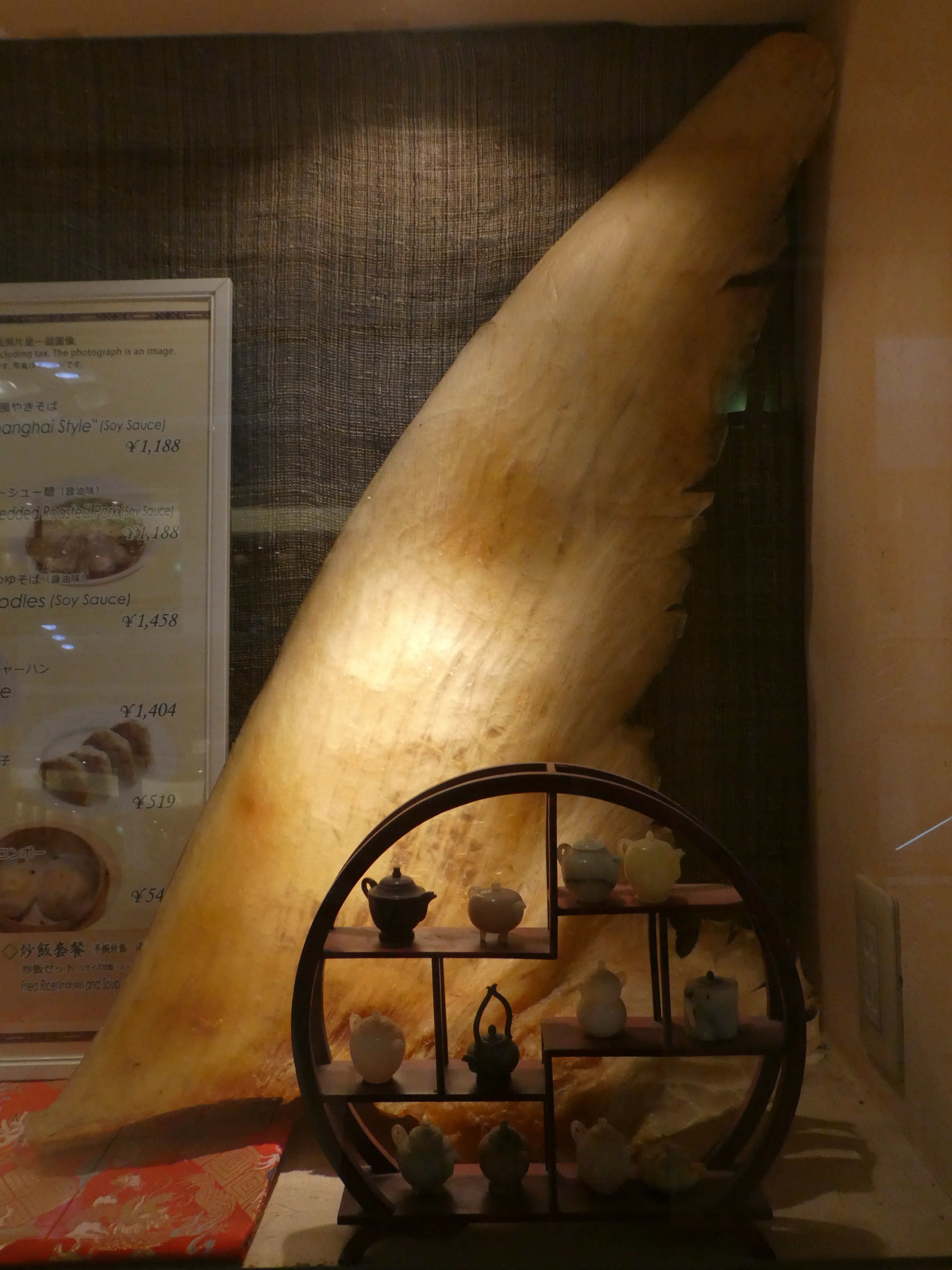
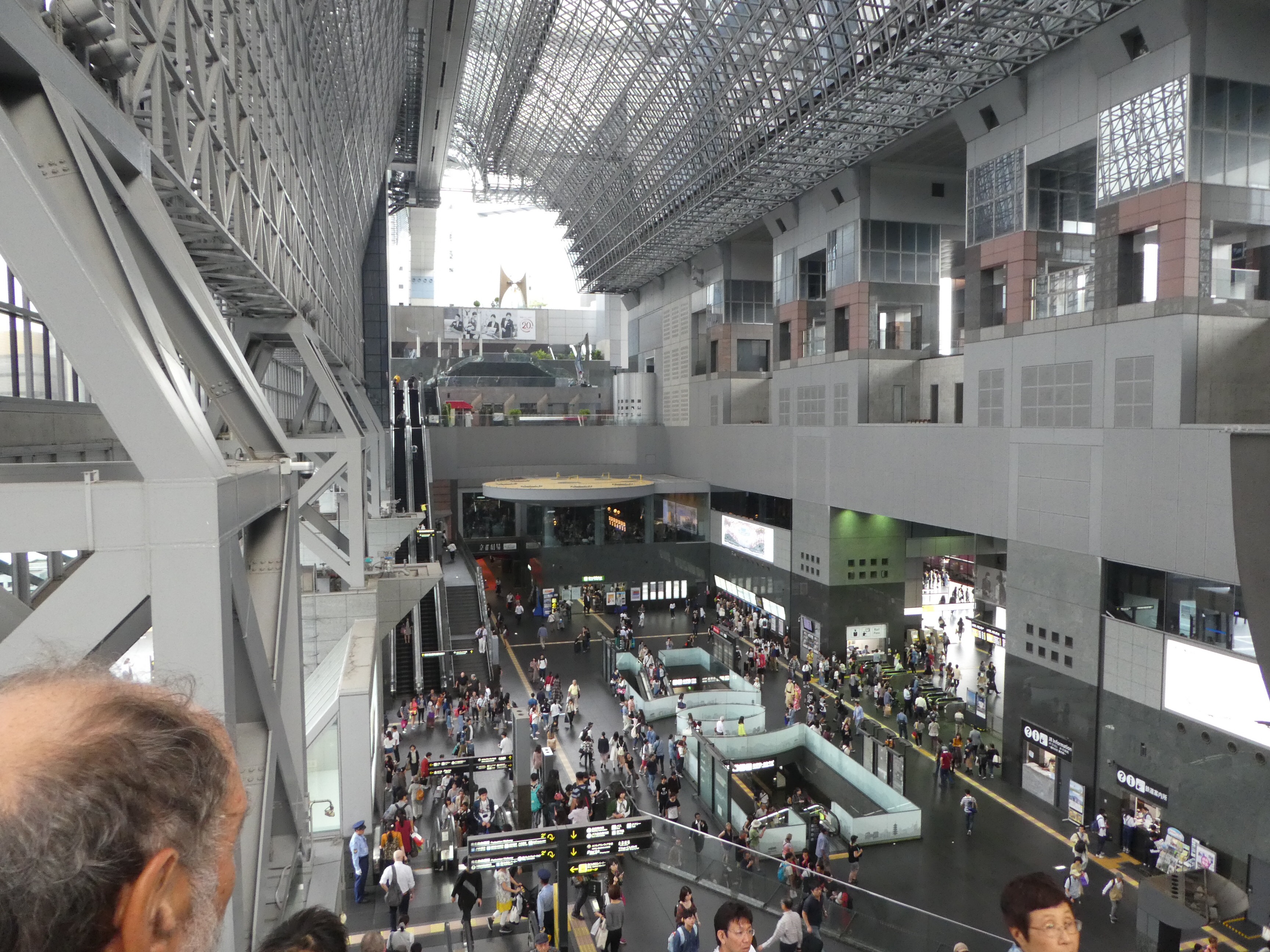
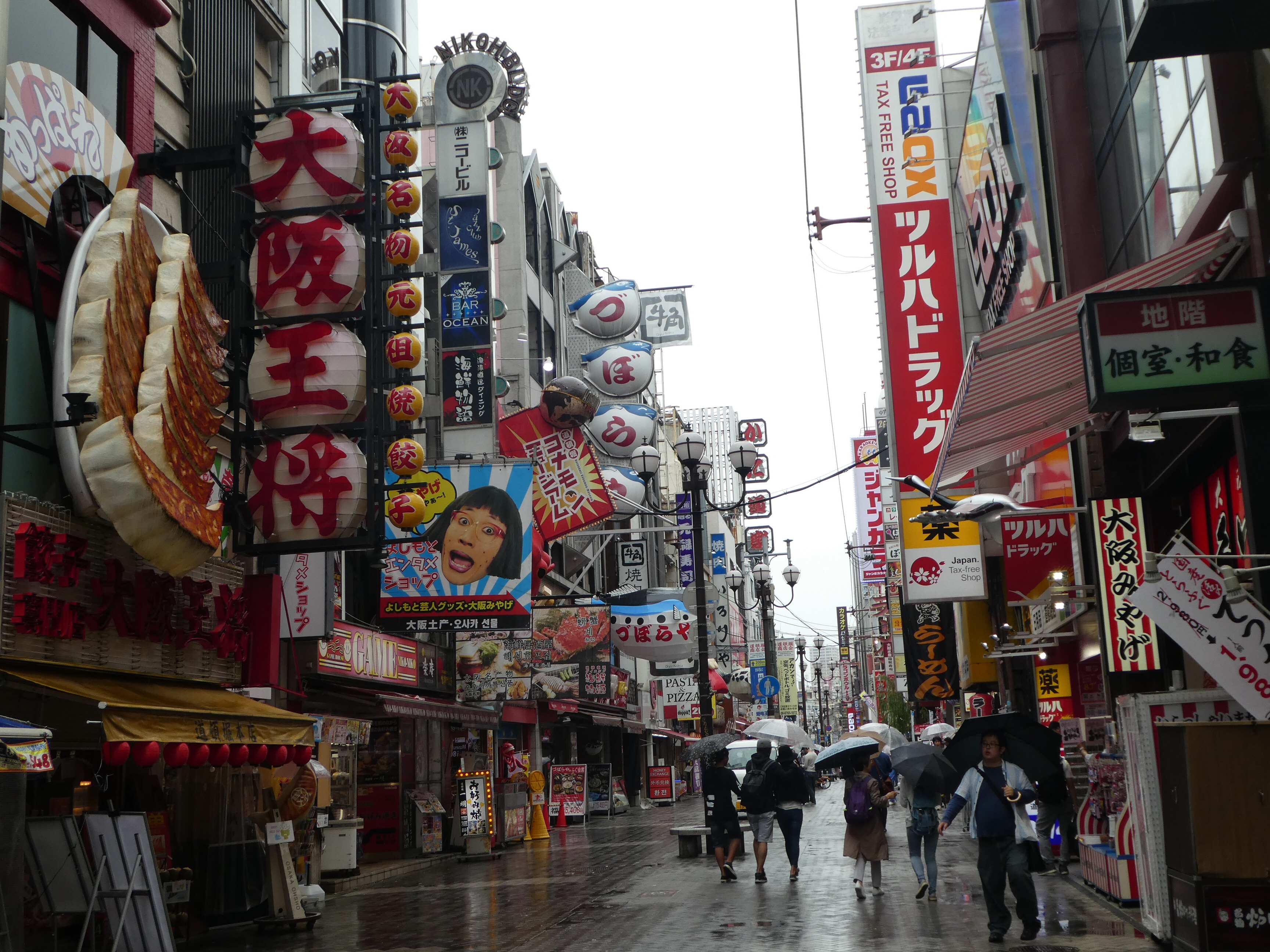
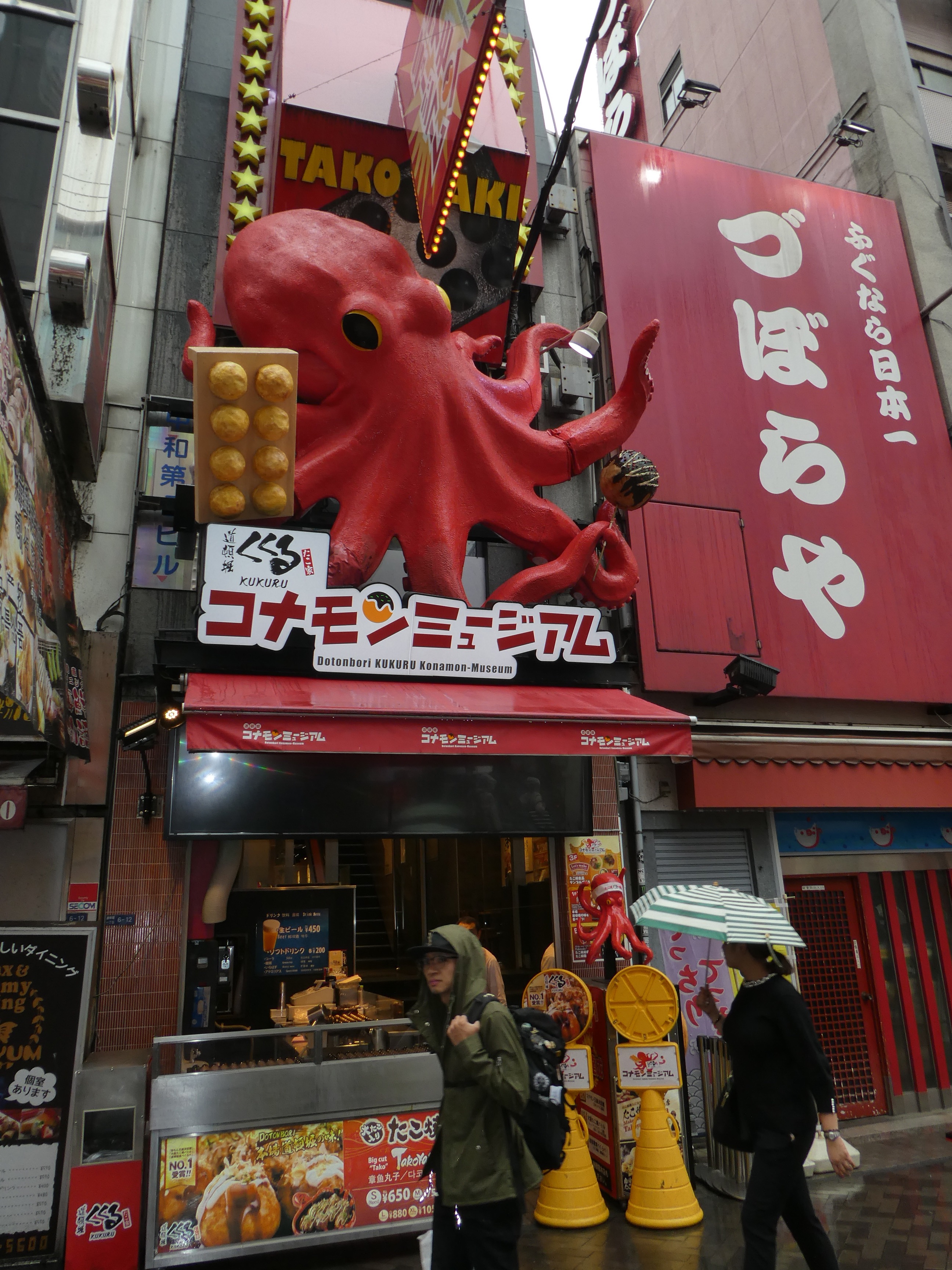
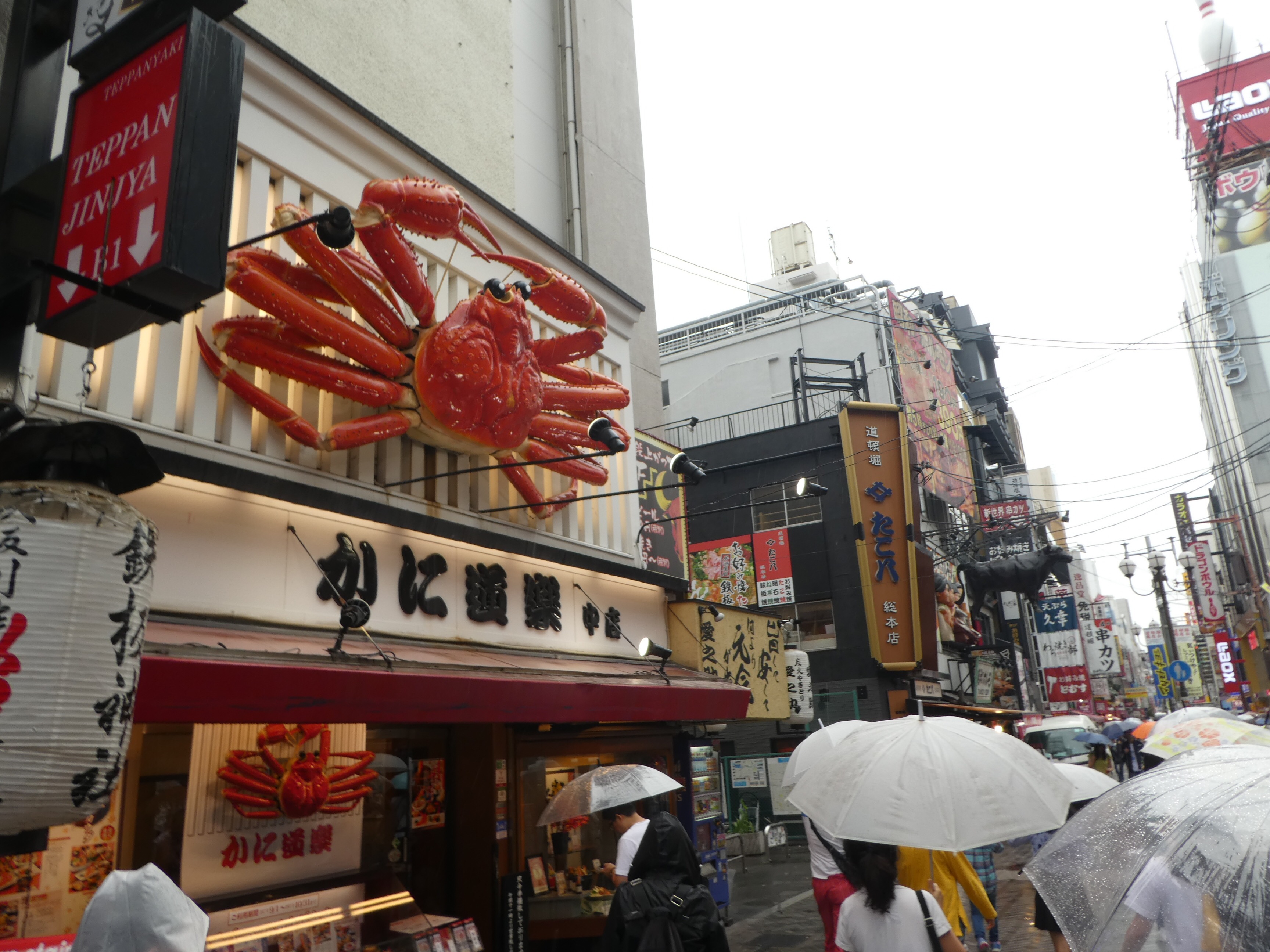
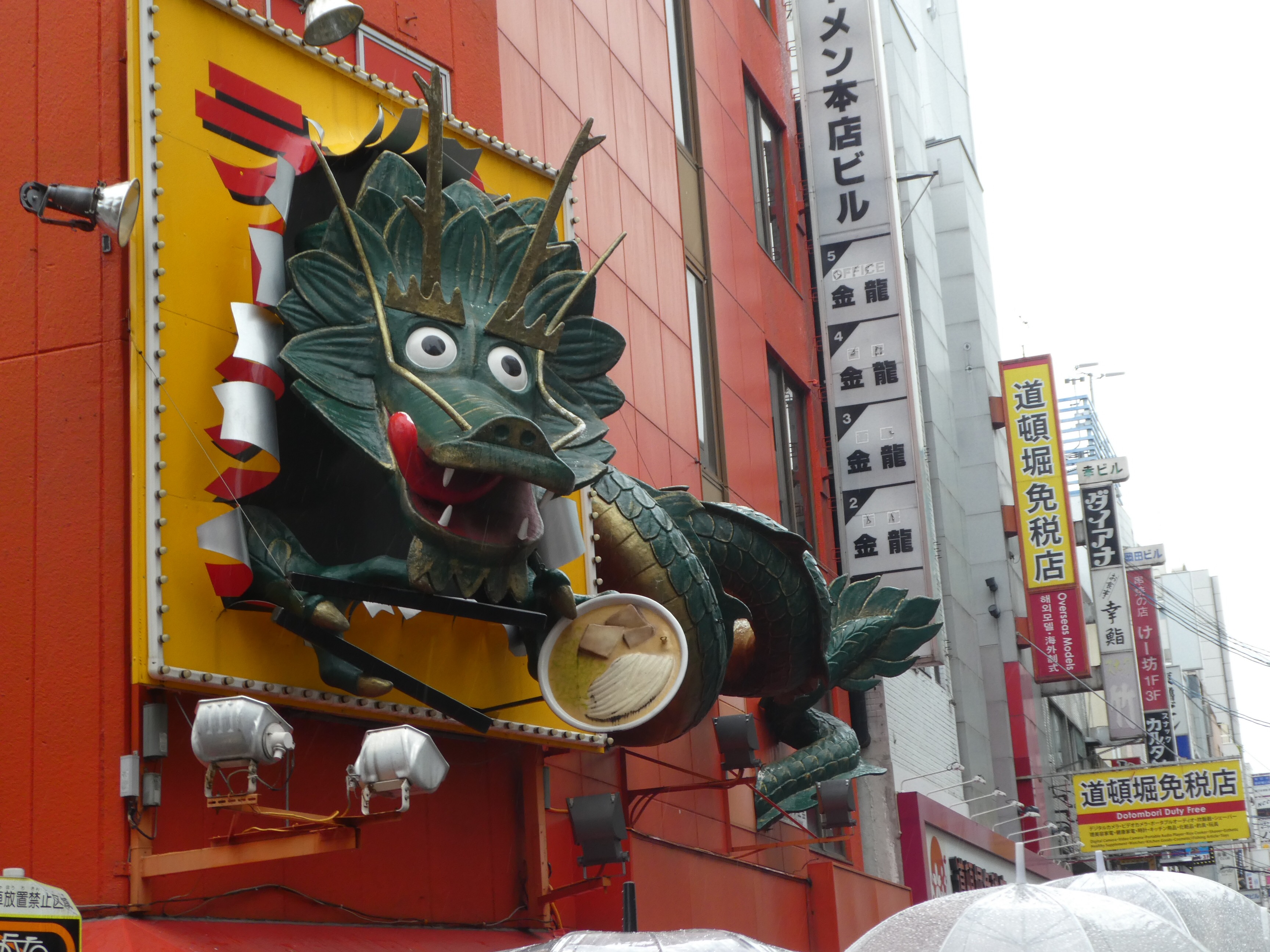
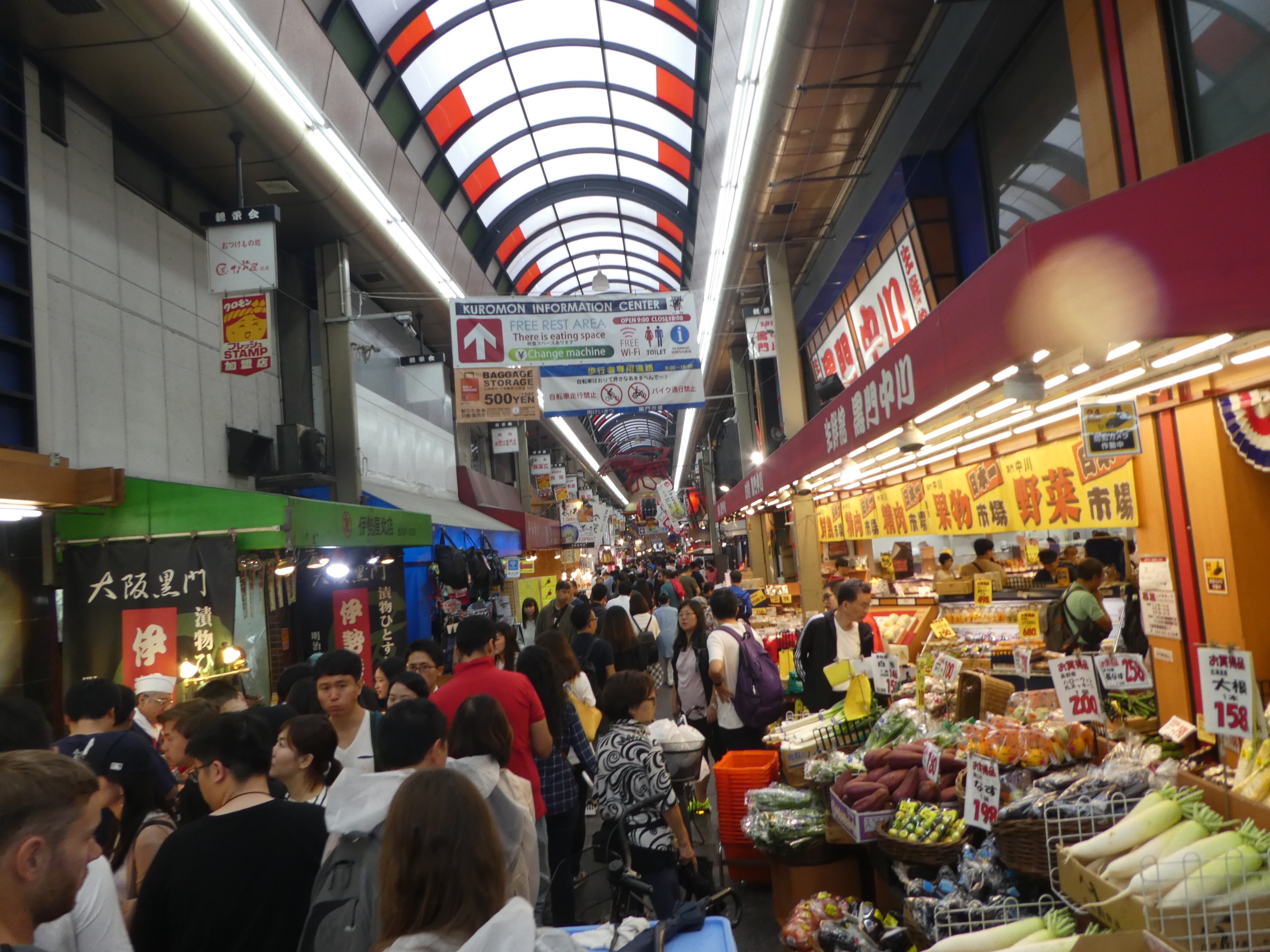
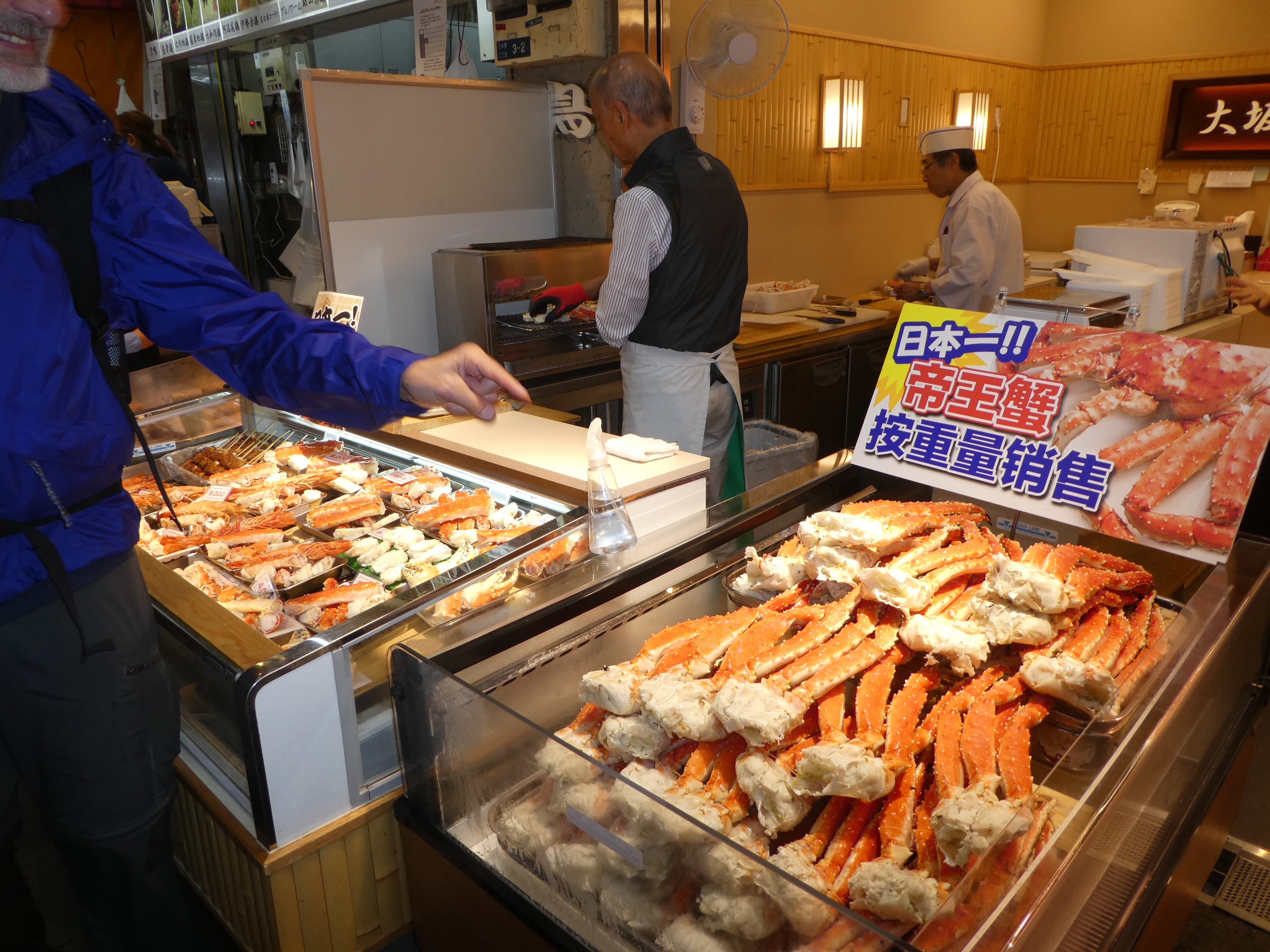
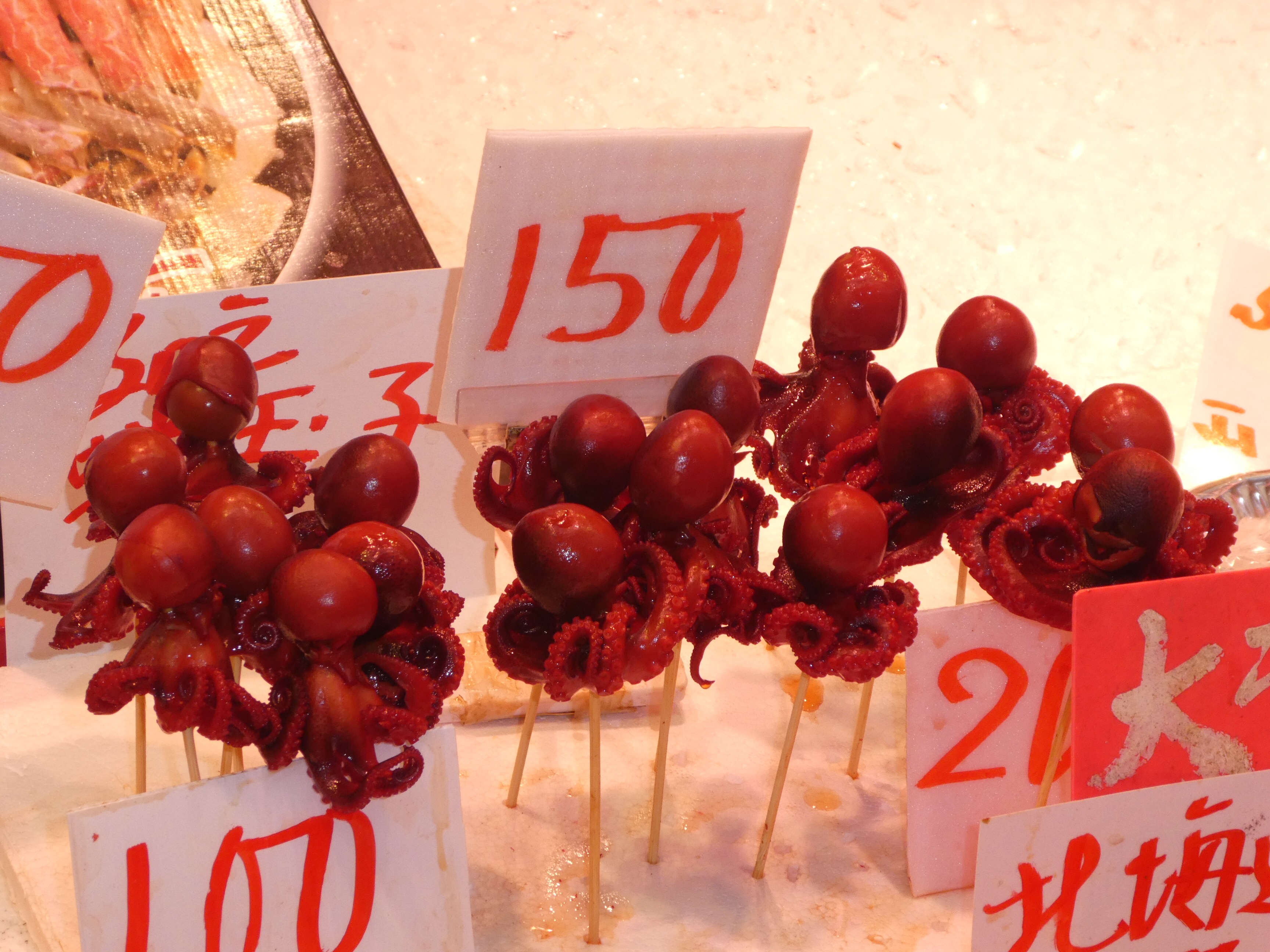
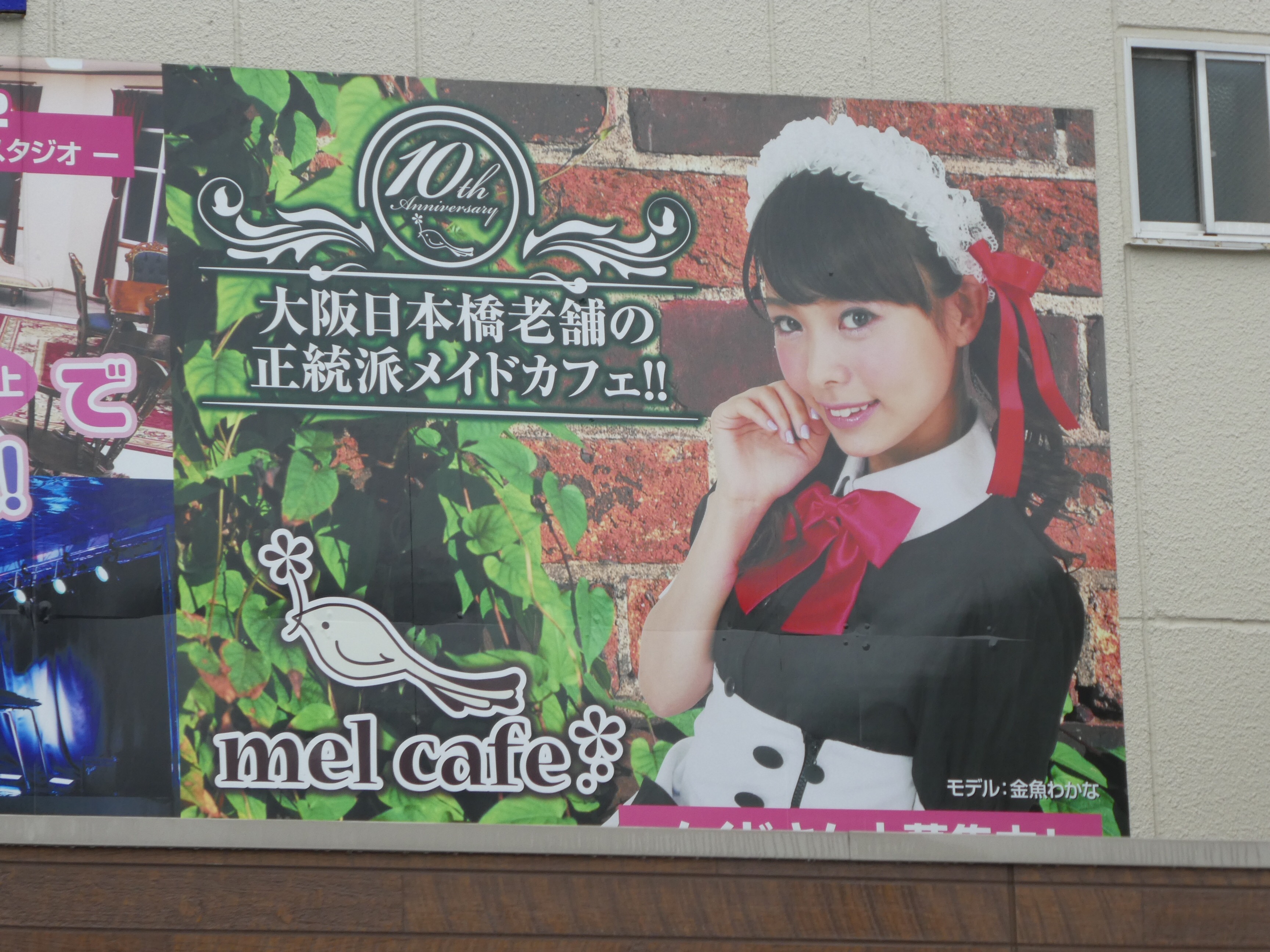
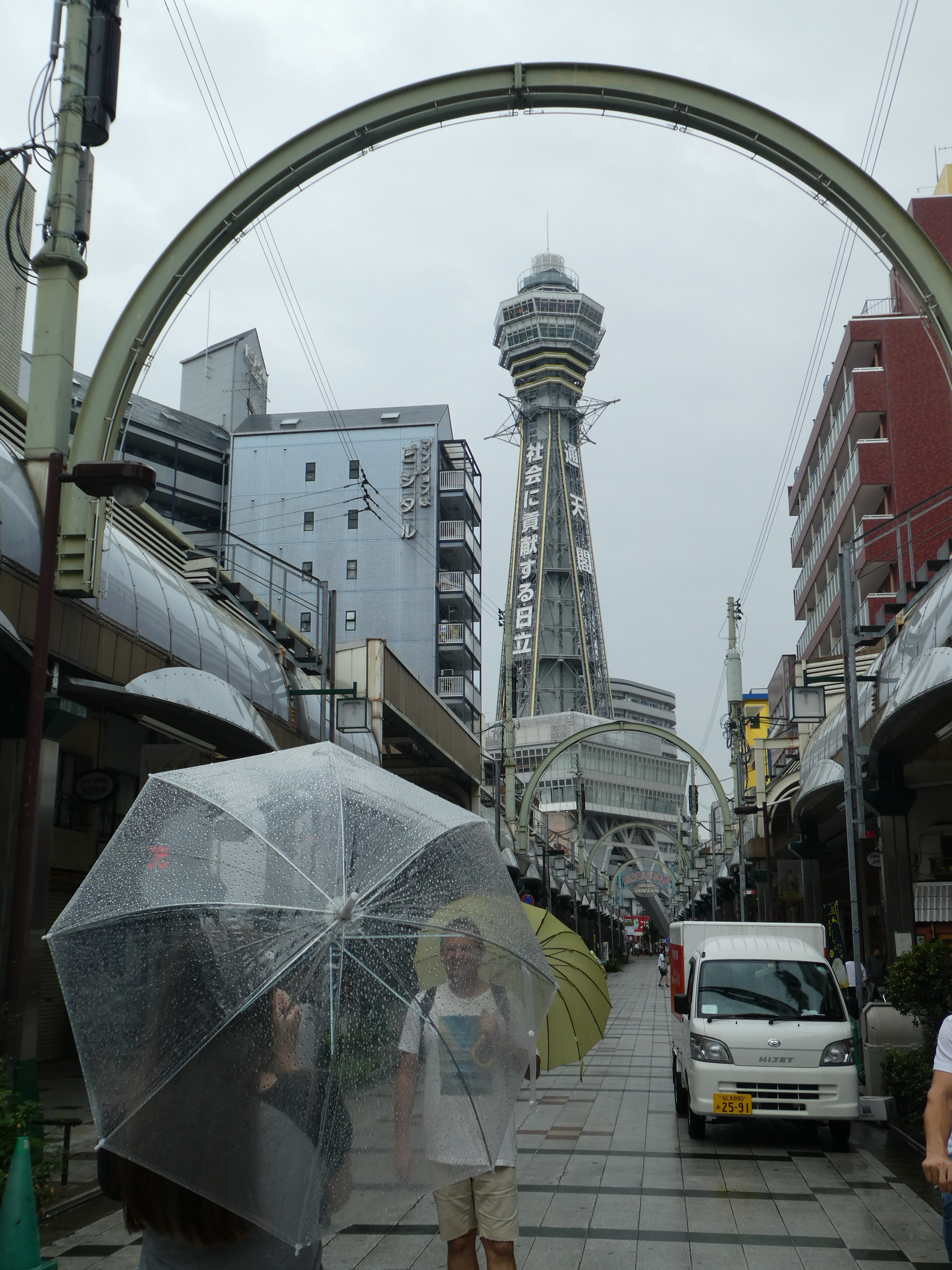
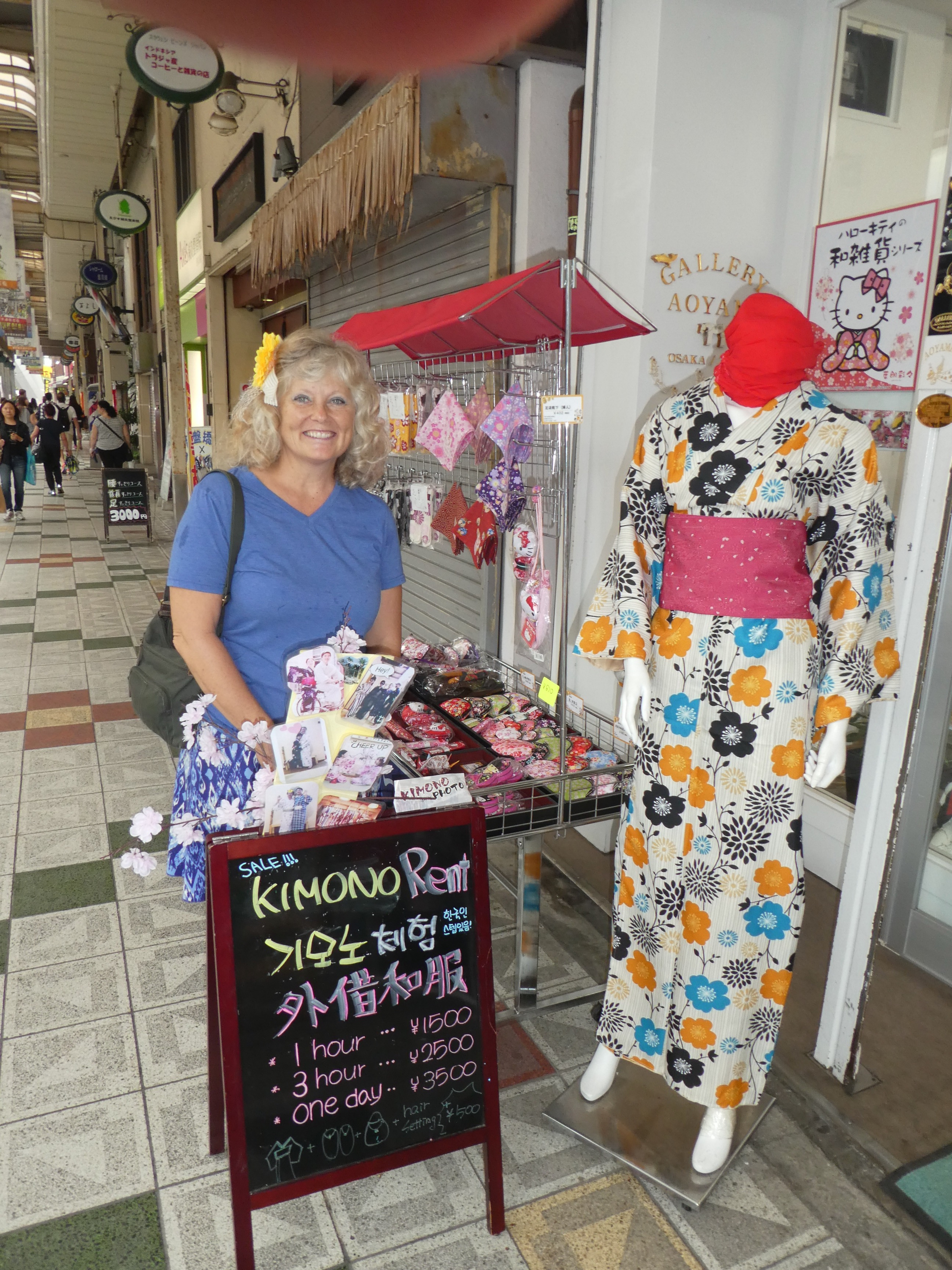
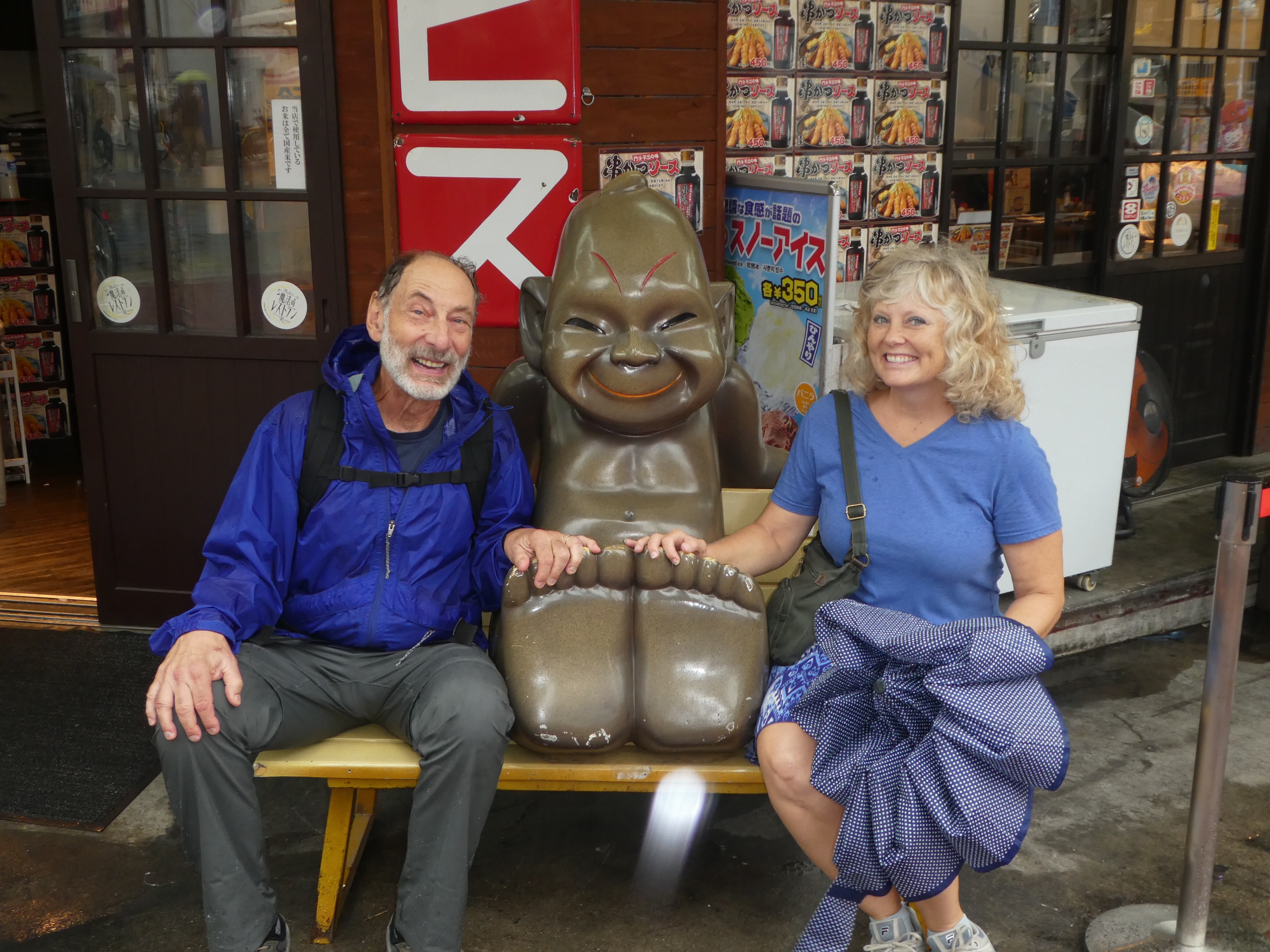
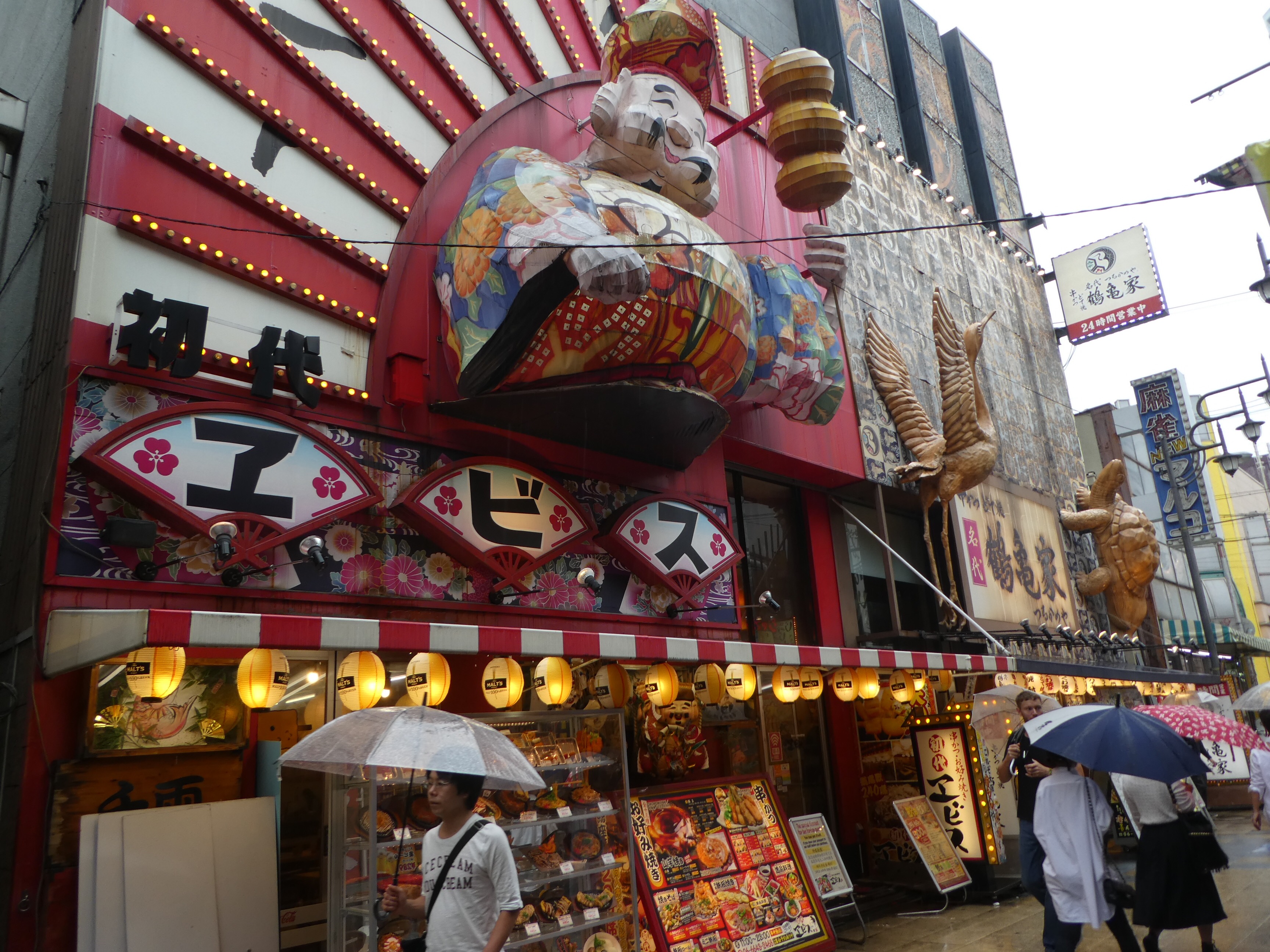
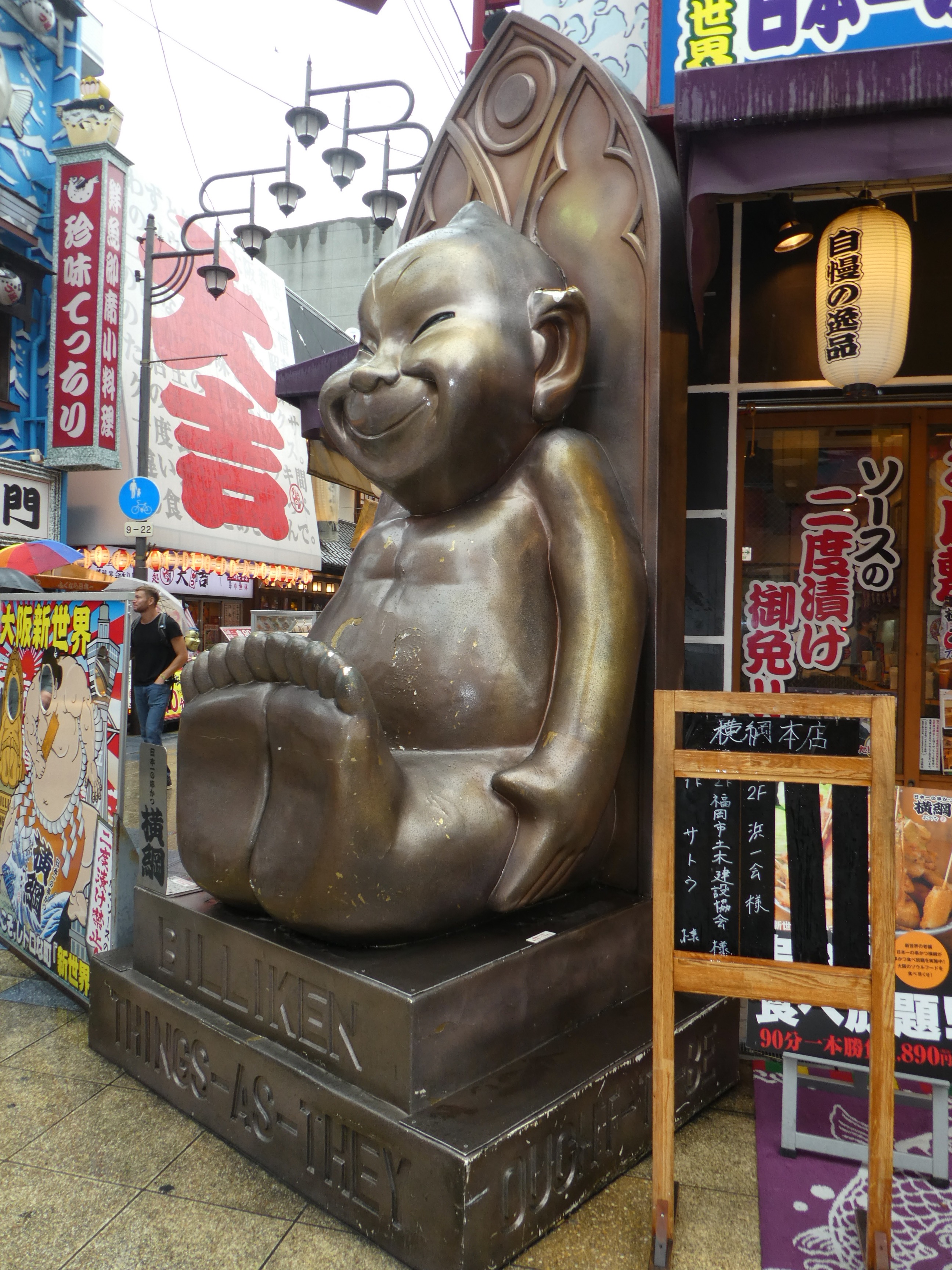
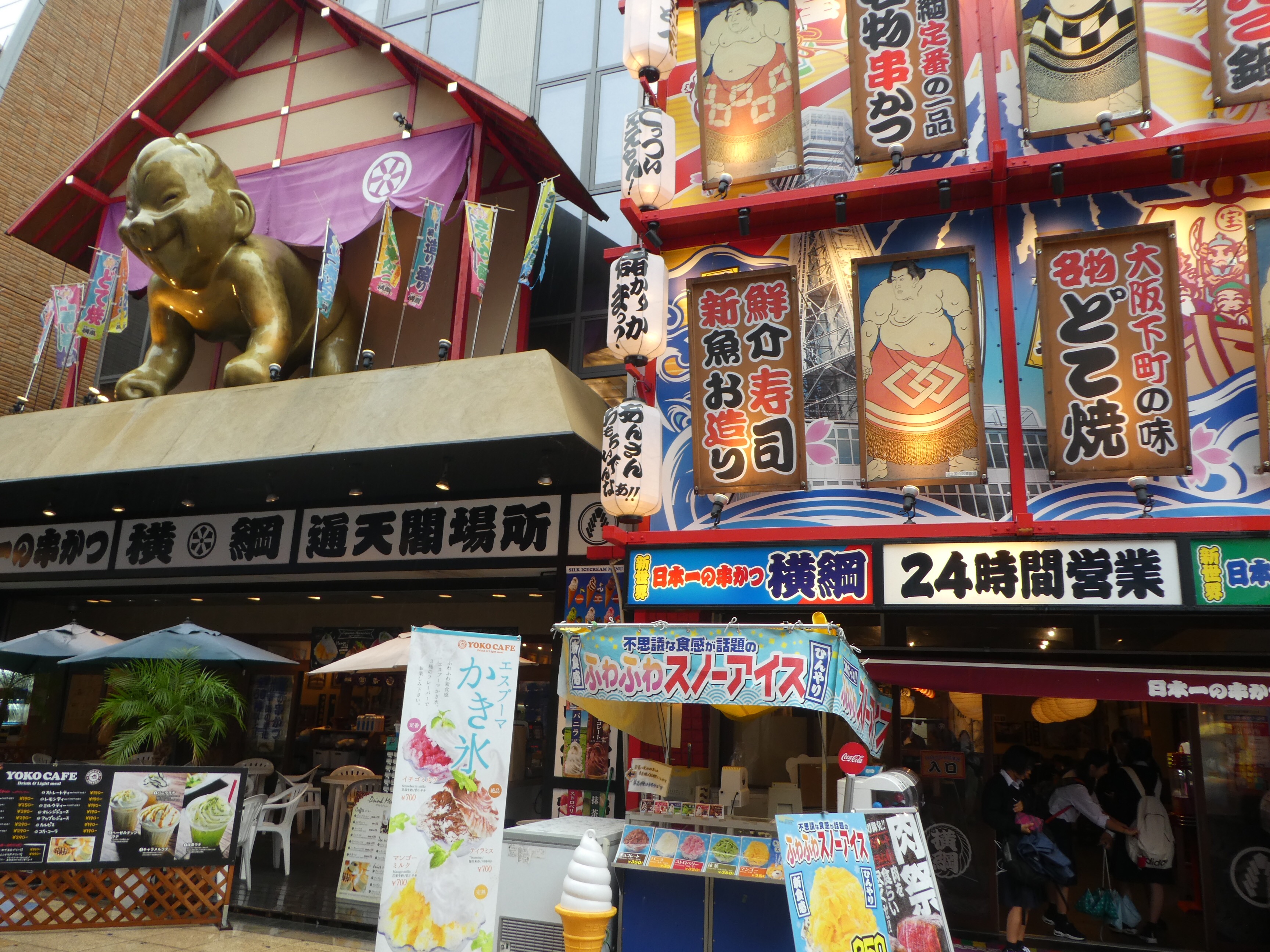
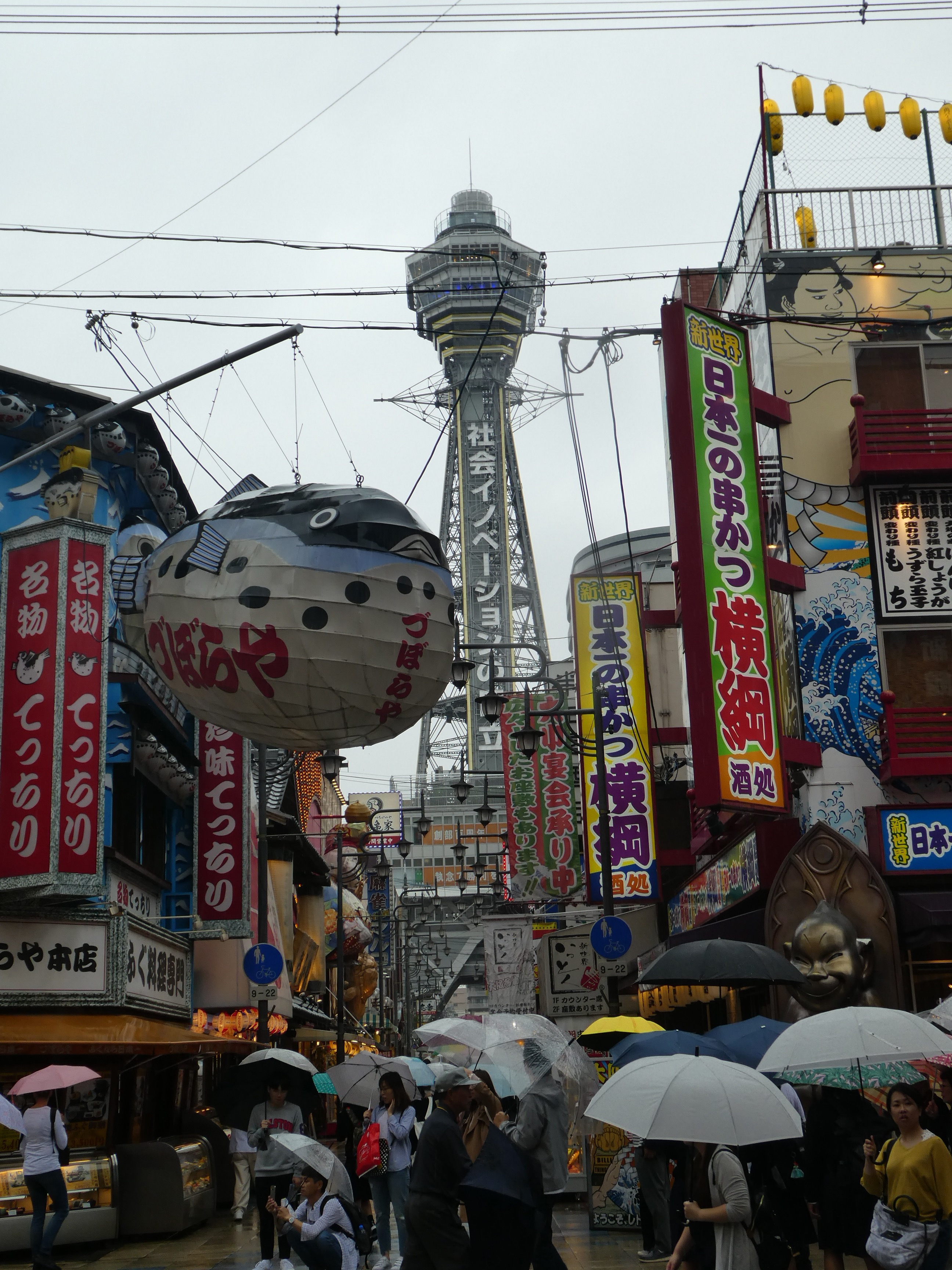
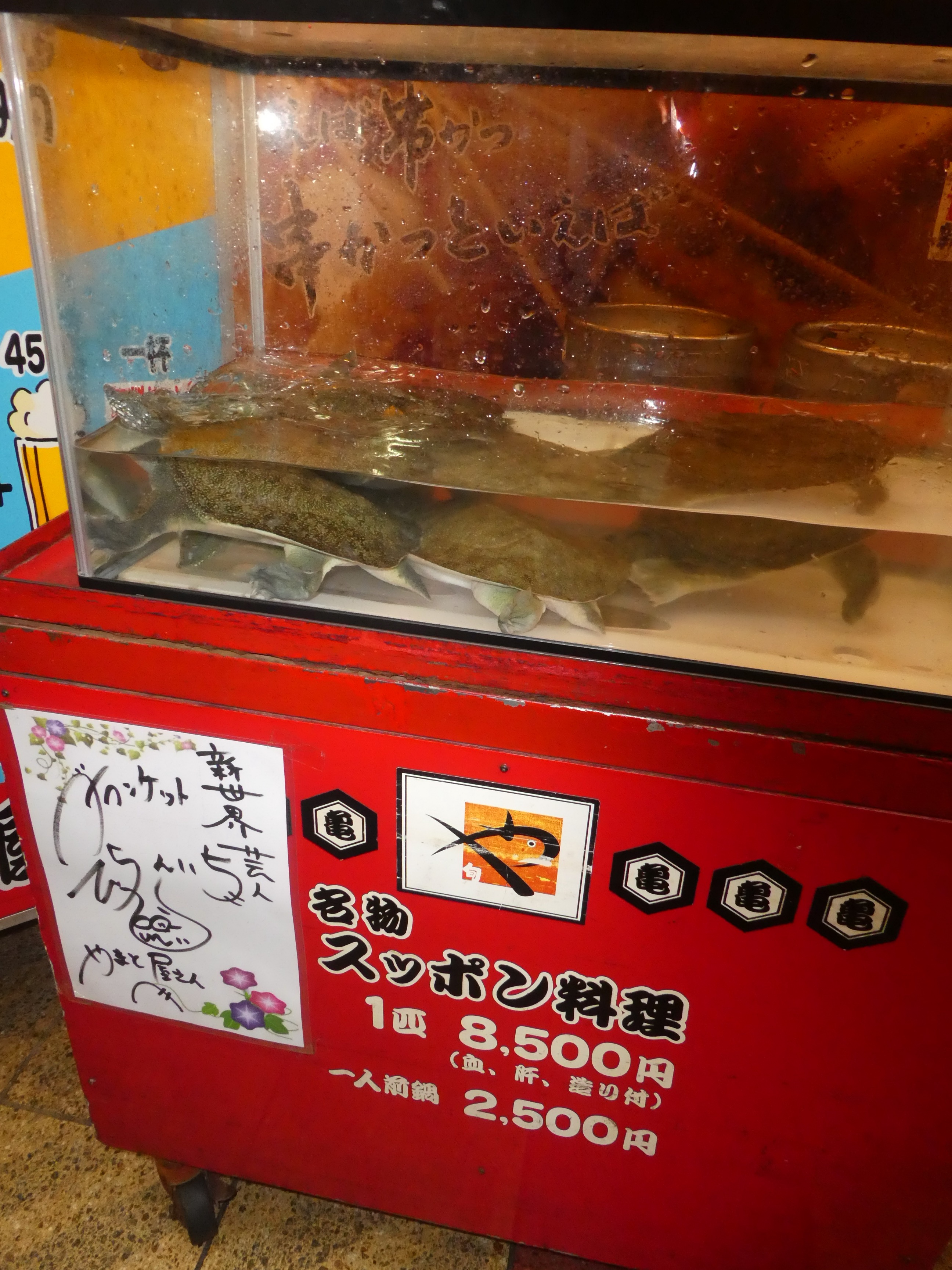
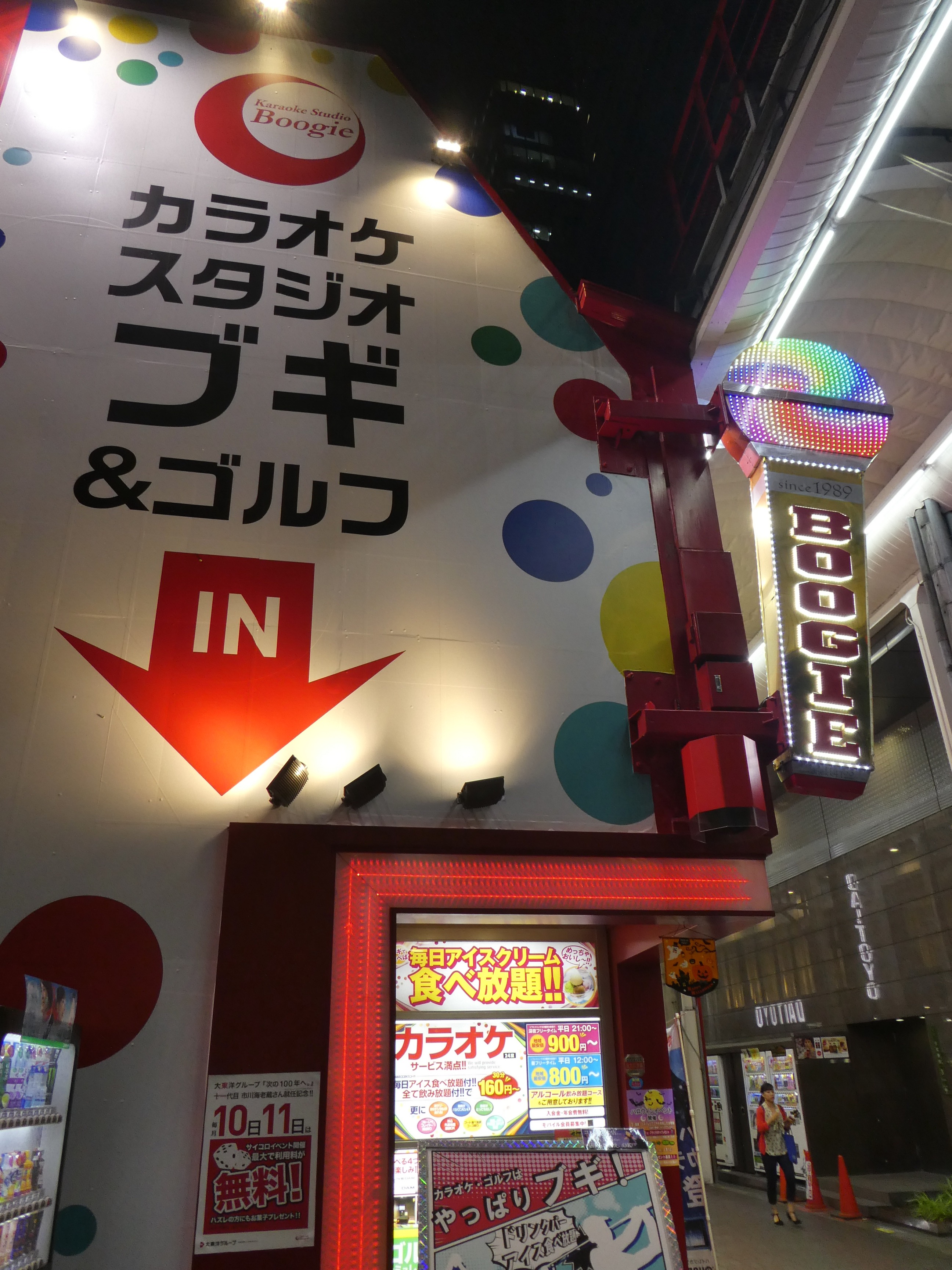
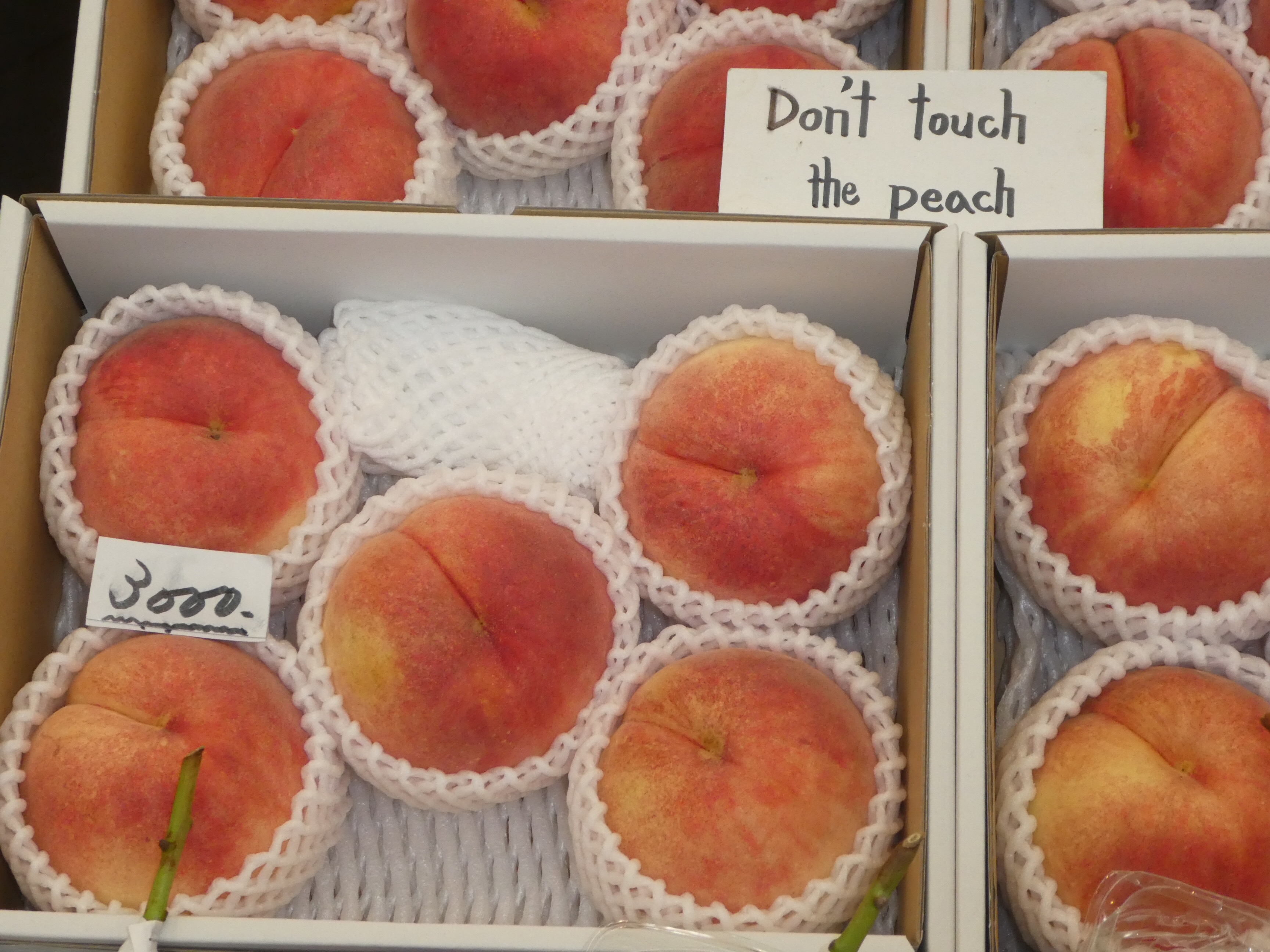
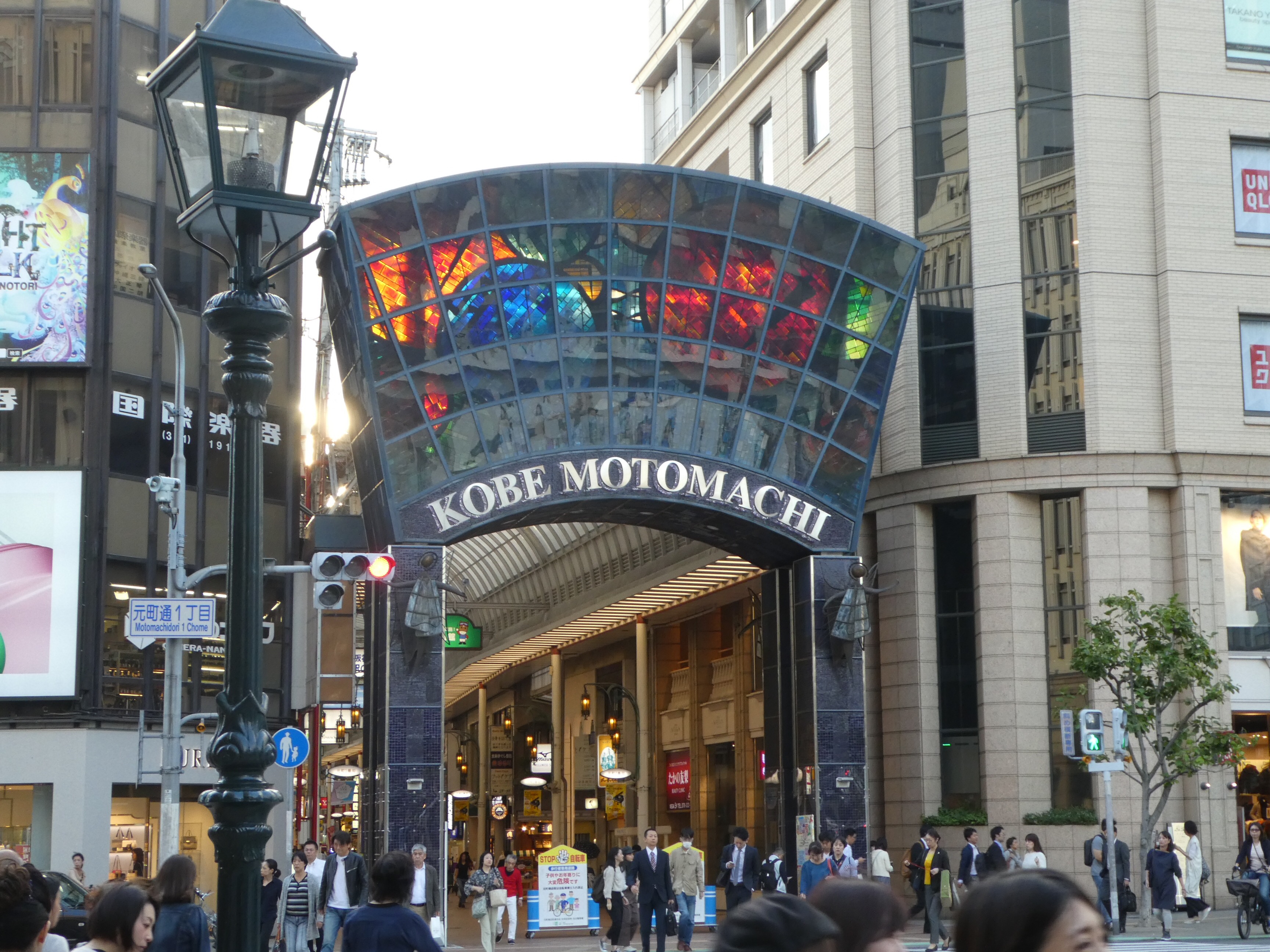
We made it to three cities over six days, Osaka, Kyoto, and Kobe. In Osaka, we enjoyed a free walking tour. The Dotonburi and Kunomon areas are packed with food shoppers and restaurants. Buildings feature enlarged plastic sculptures of gyoza (Japanese dumplings),crabs 🦀 with moving legs, and octopus 🐙 advertising their food specialties. We tried the Takoyaki, octopus-filled dumplings, but decided we like Mexican “tacos” much better! We also tried Japanese curry, which was delicious, though surprisingly spicy, and teppanyaki, food grilled at your table and eaten off the grill. We chickened out on the turtle clay pot and sharks fin soup. There are Biliken sculptures (a God of good luck), whose feet you rub for good luck. We ate yummy sushi and enjoyed tempura and noodle dishes everywhere. We ate very little fruit because it was very pricey. Linda had a treat of twelve large green grapes for $3.00, and one day we ate four bananas for $6, but we saw cantaloupe for around $18, and peaches, five per box, for nearly $30! The streets light up in colorful neon lights at night. There was a section dedicated to “Anime,” a very popular Asian cartoon style, and one area famous for “maid cafes,” where servers dress like maids. It’s a popular but a strange concept with odd sexual overtones. Young women try to look like little girls in maid costumes. “K-Pop” (a music genre) has a “bubble-gum”sound and adult performers dress like little girls. We saw one group perform at the Kyoto train station and found it distasteful. The train stations are huge. They can be several stories high.

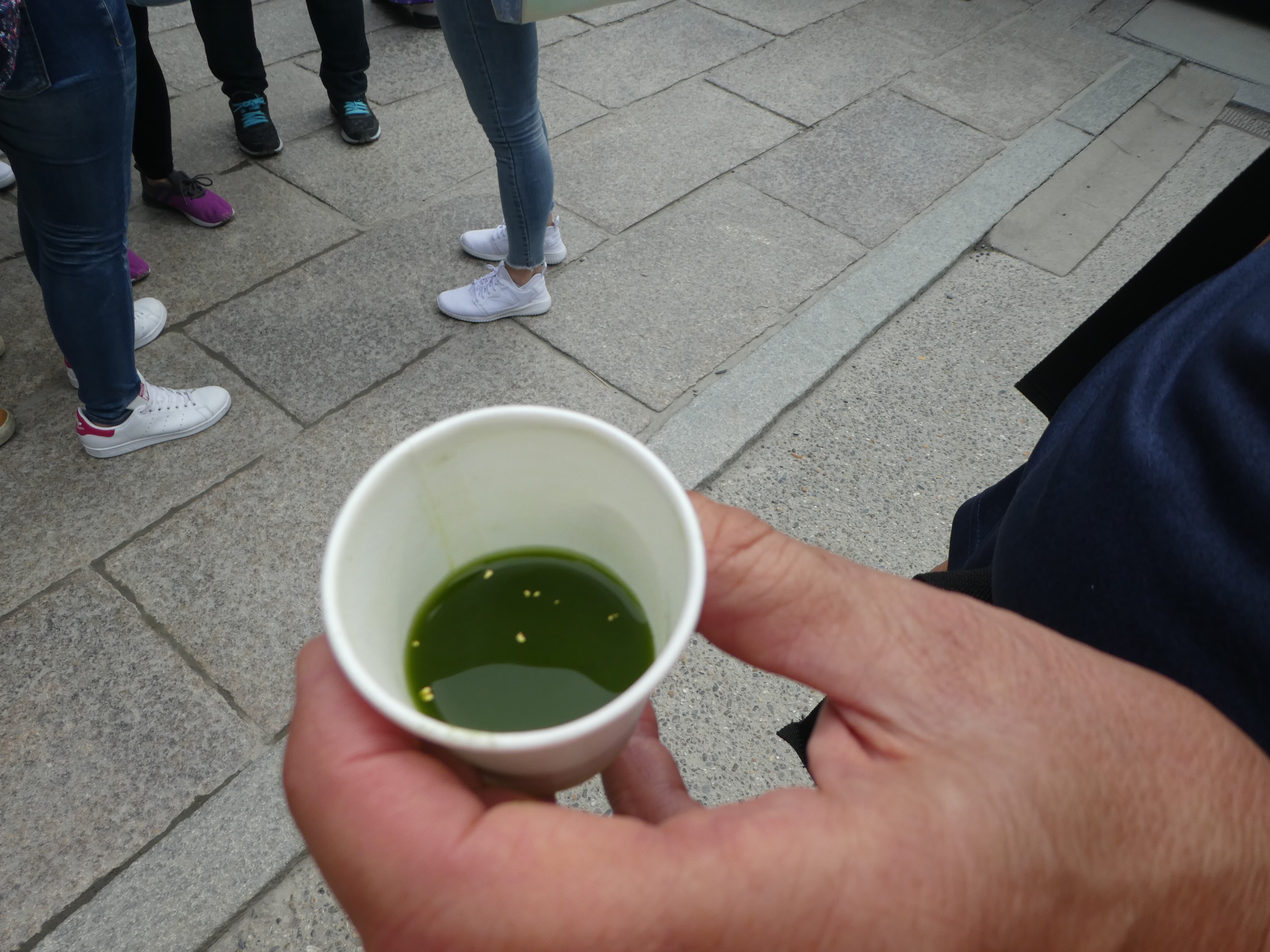
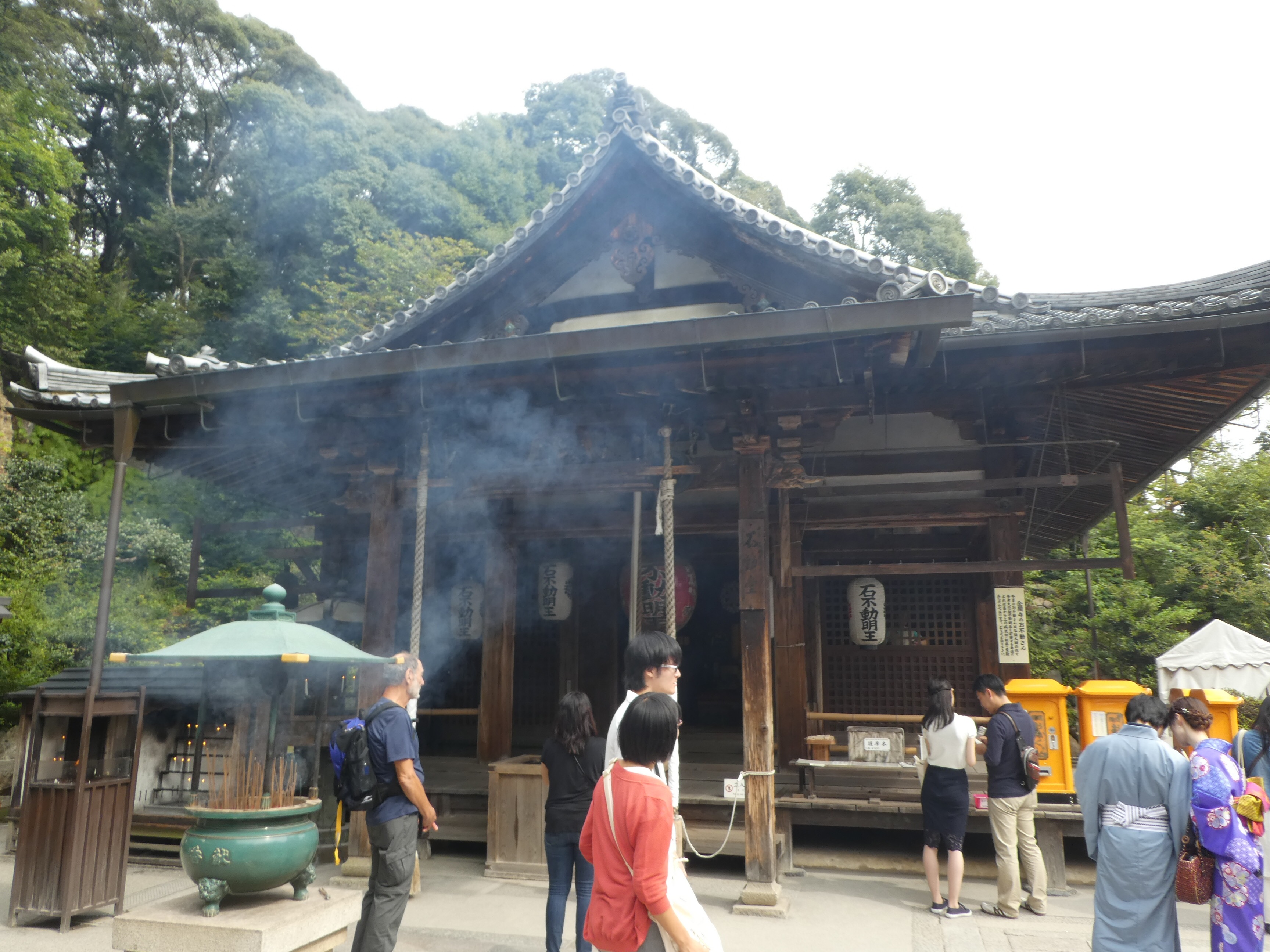
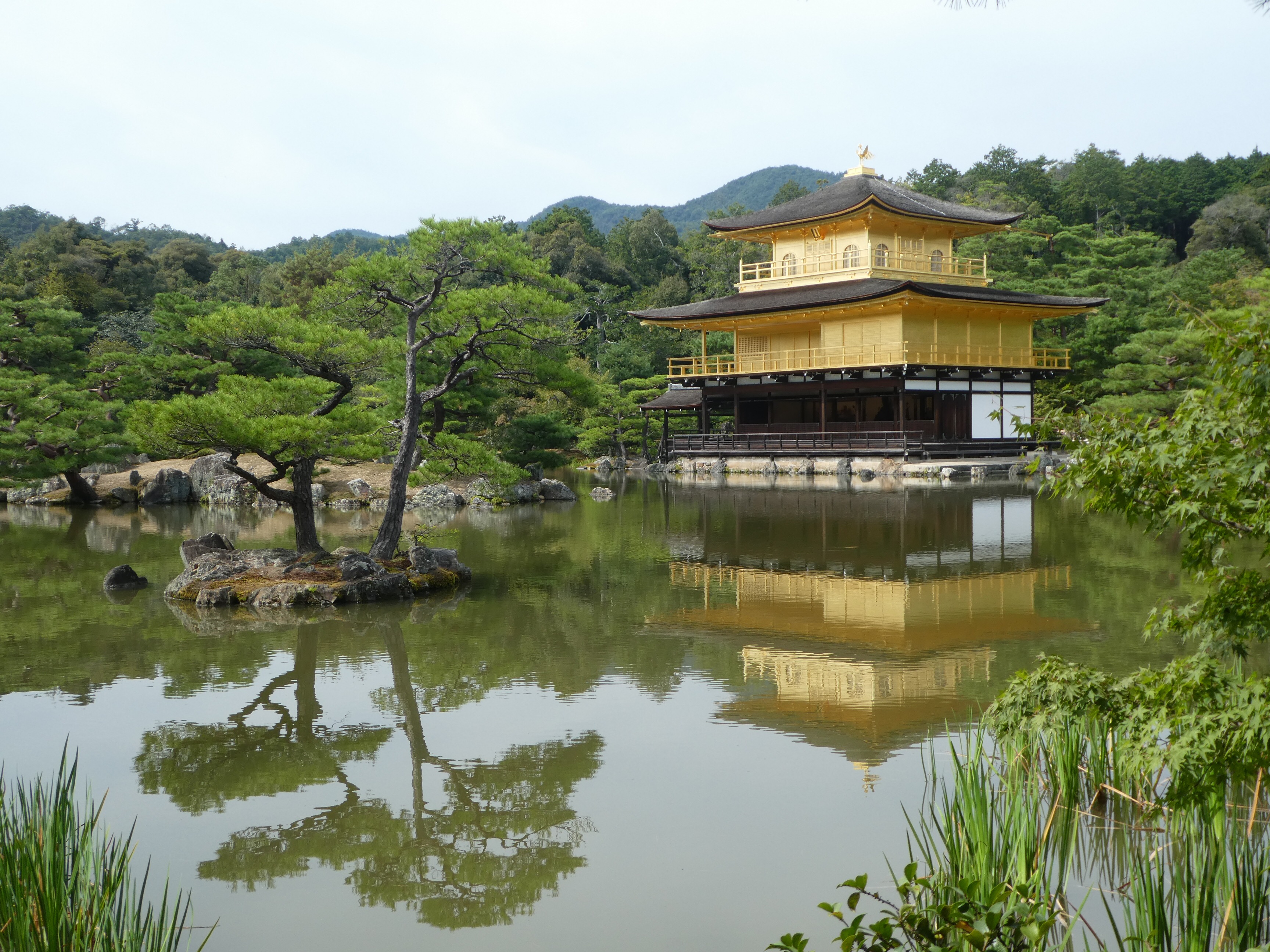
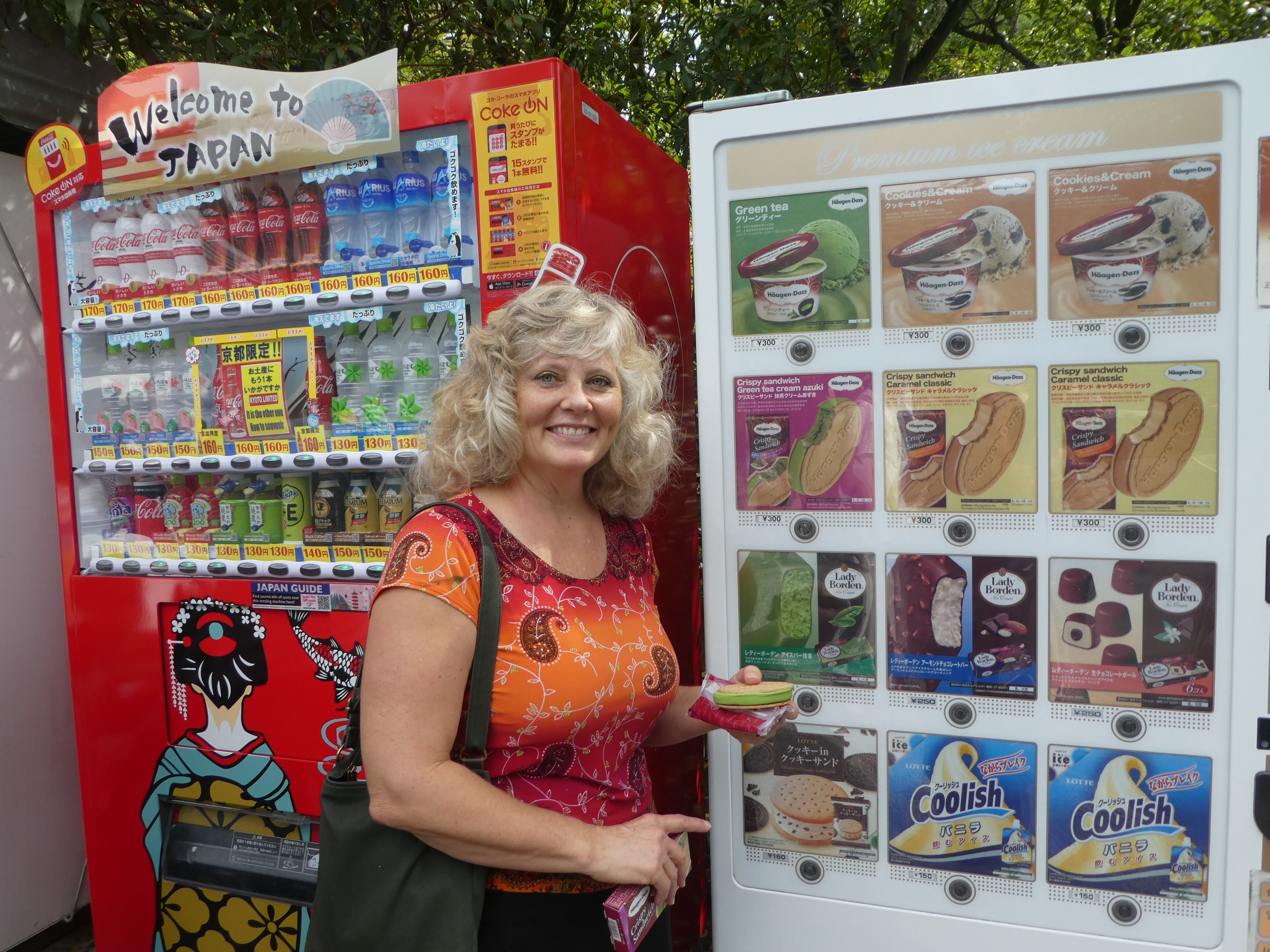
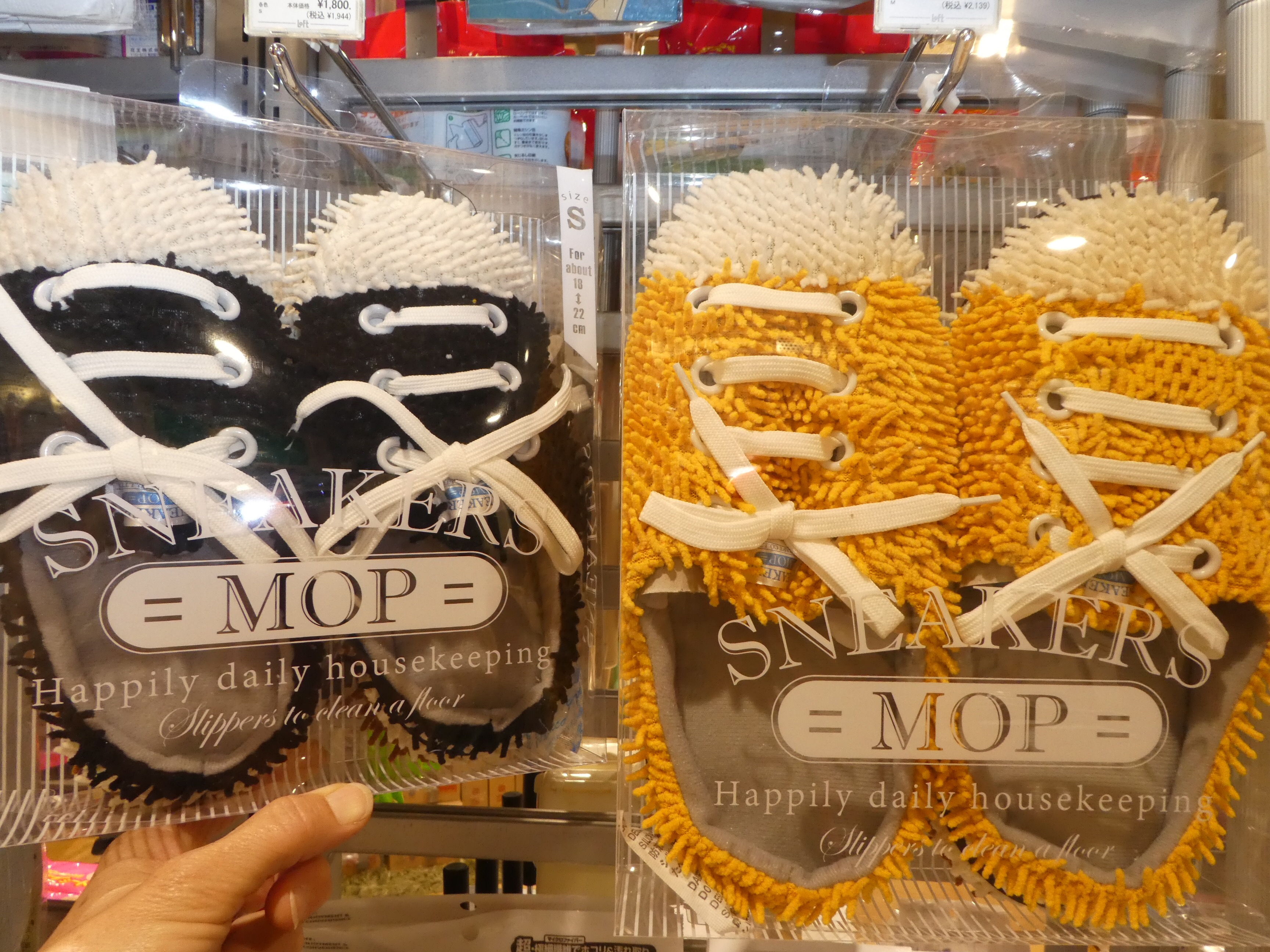
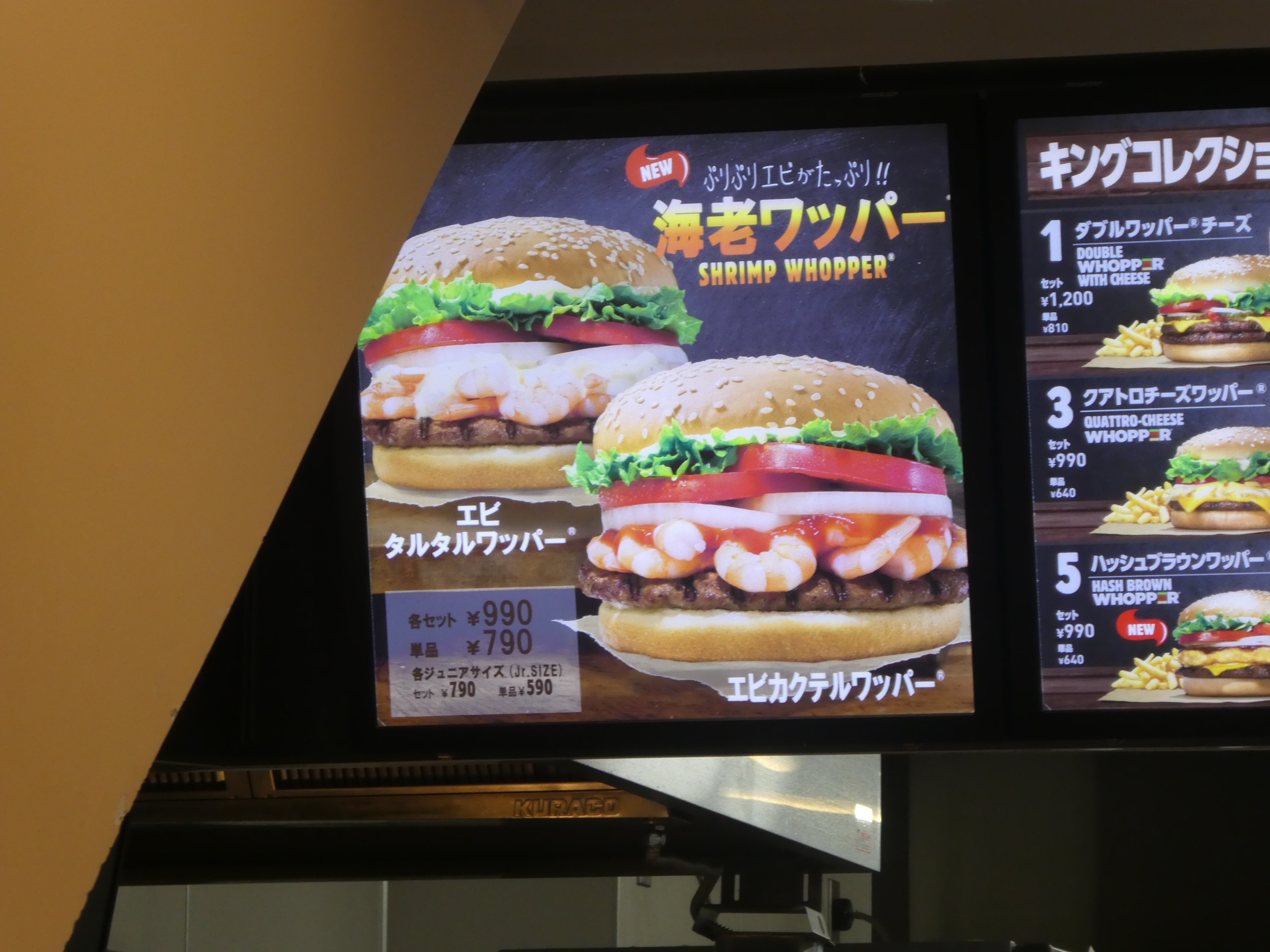
In Kyoto, we went to a famous Buddhist “zen” temple, the Golden Pavilion. It has been mused to host nobility and foreign dignitaries. The top two floors of the temple are covered in gold-leaf. It is surrounded by coy-fish ponds and lovely gardens, with a separate tea-house and temple. We had green tea with gold leaf and green tea flavored ice cream there. There is plenty of good coffee around. Starbucks is quite popular, but green tea (matcha) is more common. We tried a matcha scone with our coffee at Starbucks. There are the usual big chains here. It’s interesting to see how they differ. Burger King offers whoppers with shrimp, and Mc Donald’s has cream cheese & crab pies.  Everything is packaged very prettily. Bruce bought a yogurt drink that the checker put into a small bag with a tiny ice pack!(about 2×3”)😍 When you eat at a restaurant, the server brings a wicker basket for your backpack, purse, and/or parcels. We didn’t see much dirt in Japan, but they wouldn’t chance soiling your bags.

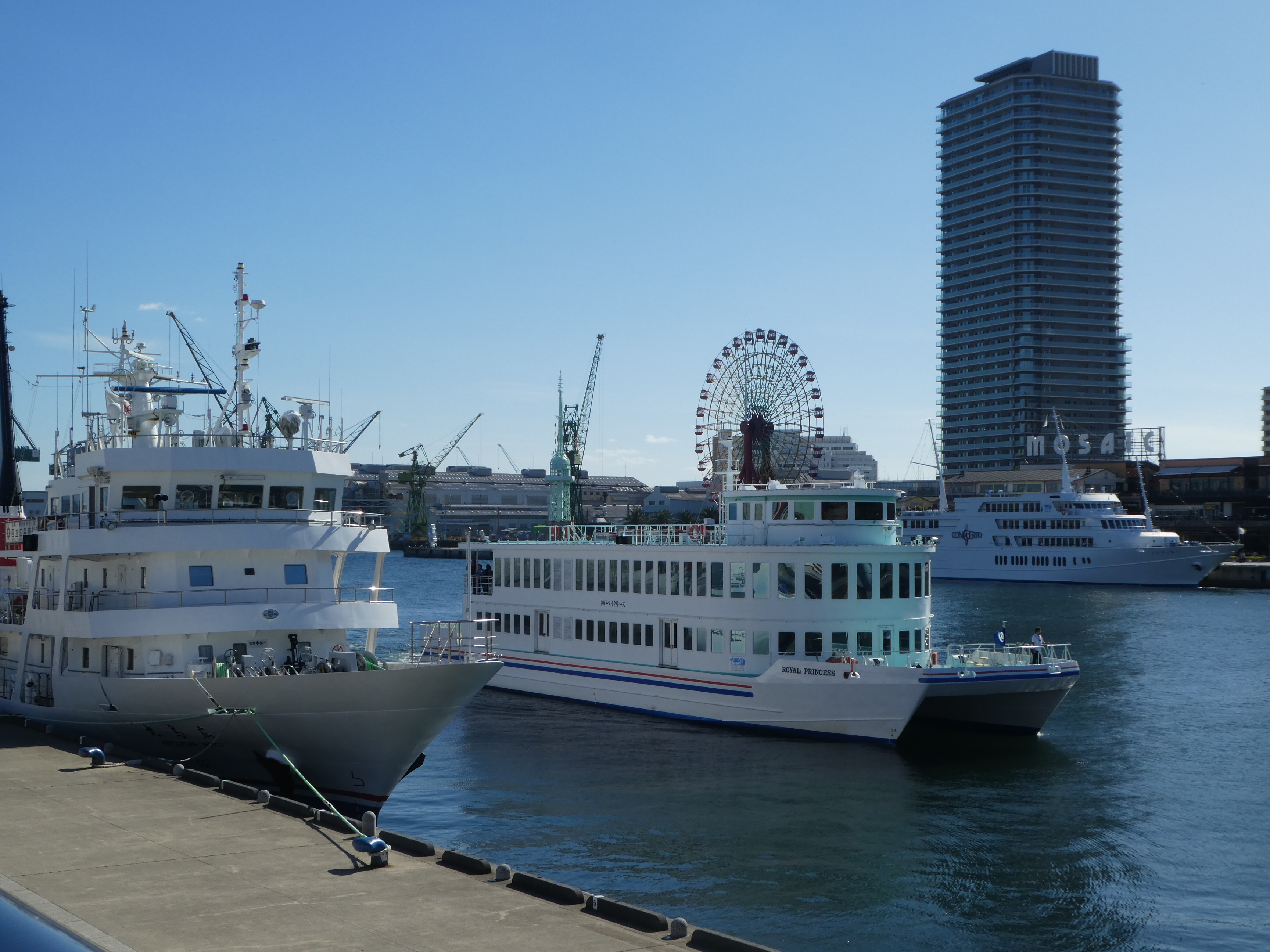
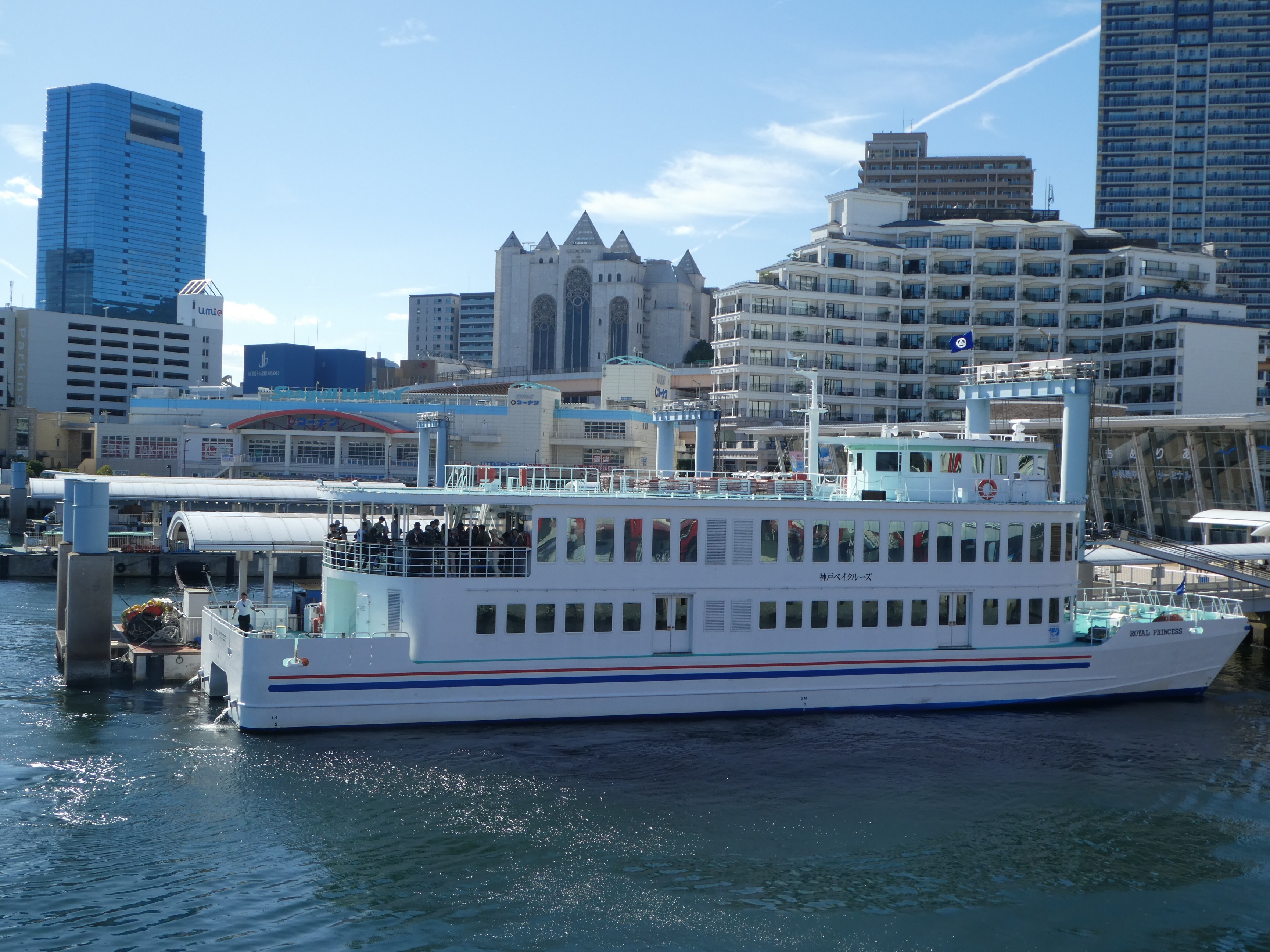
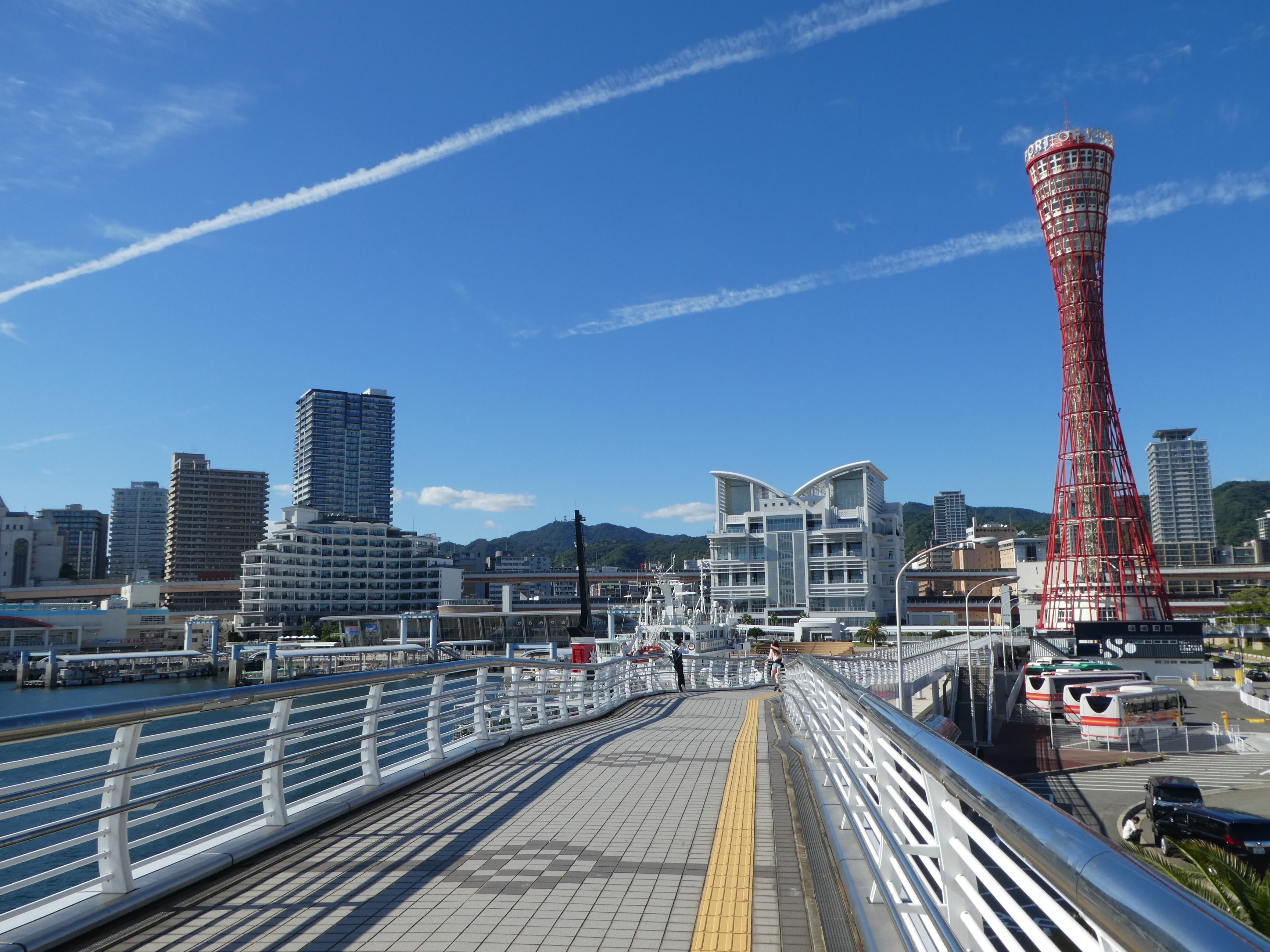
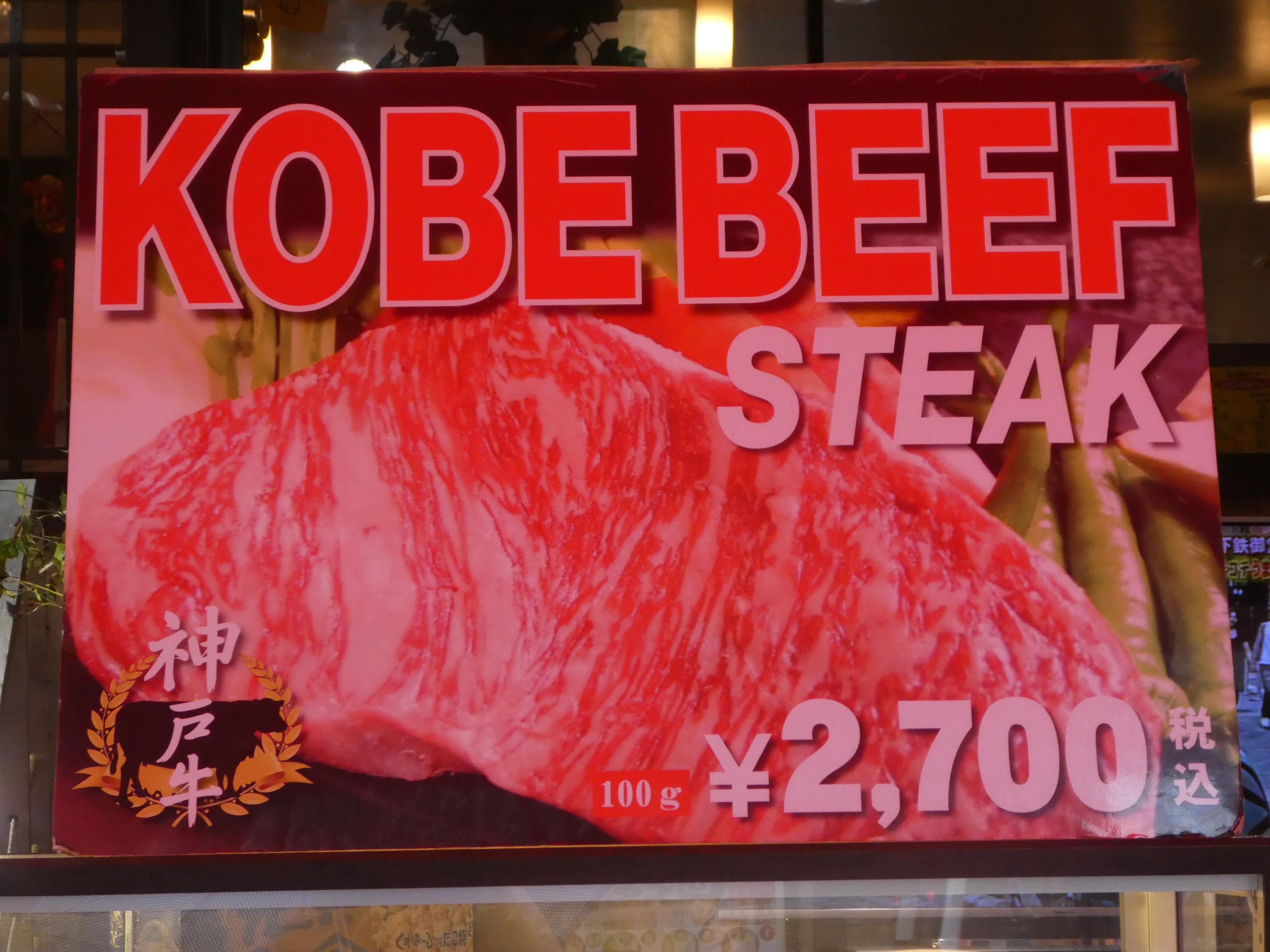
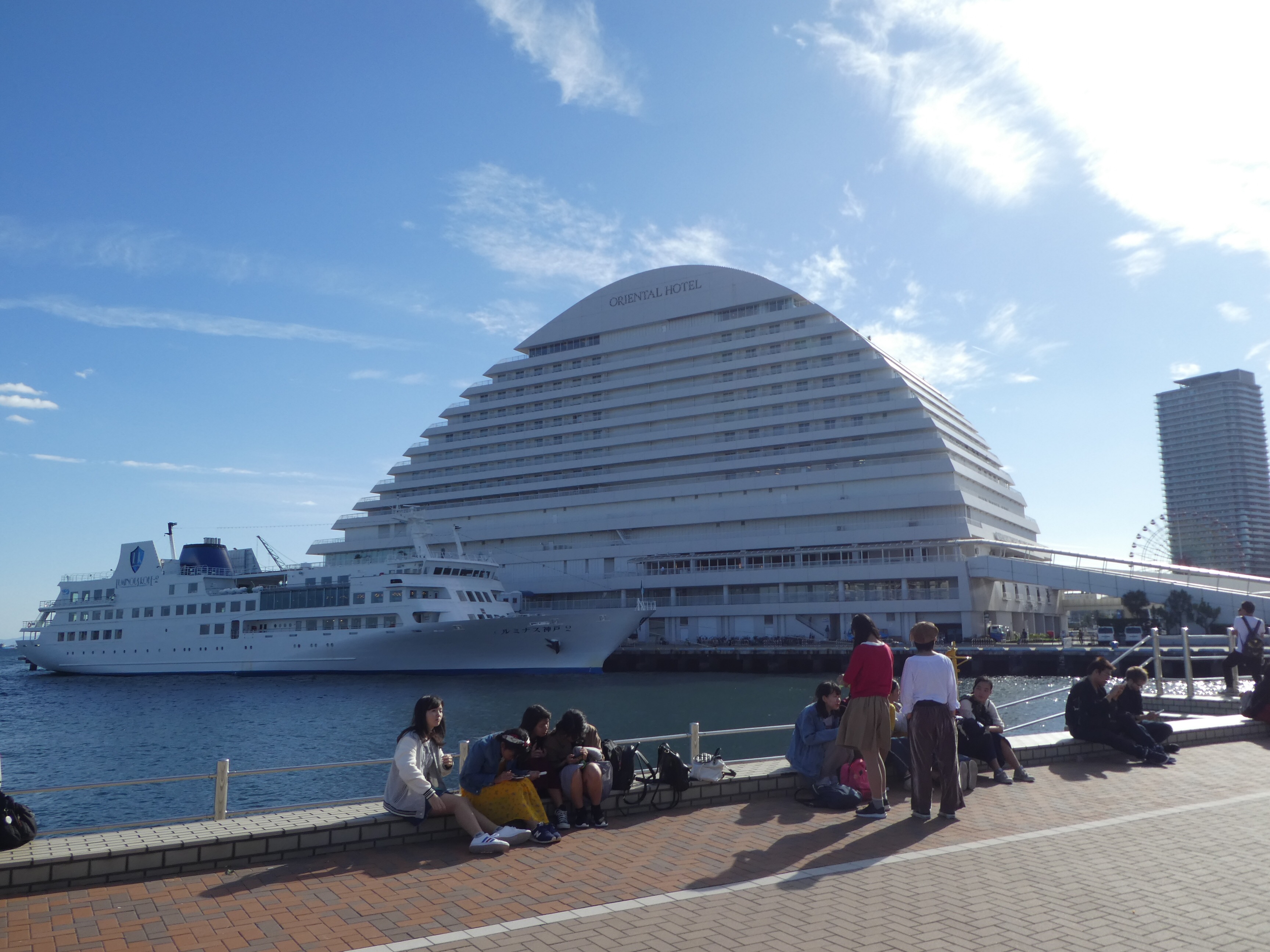
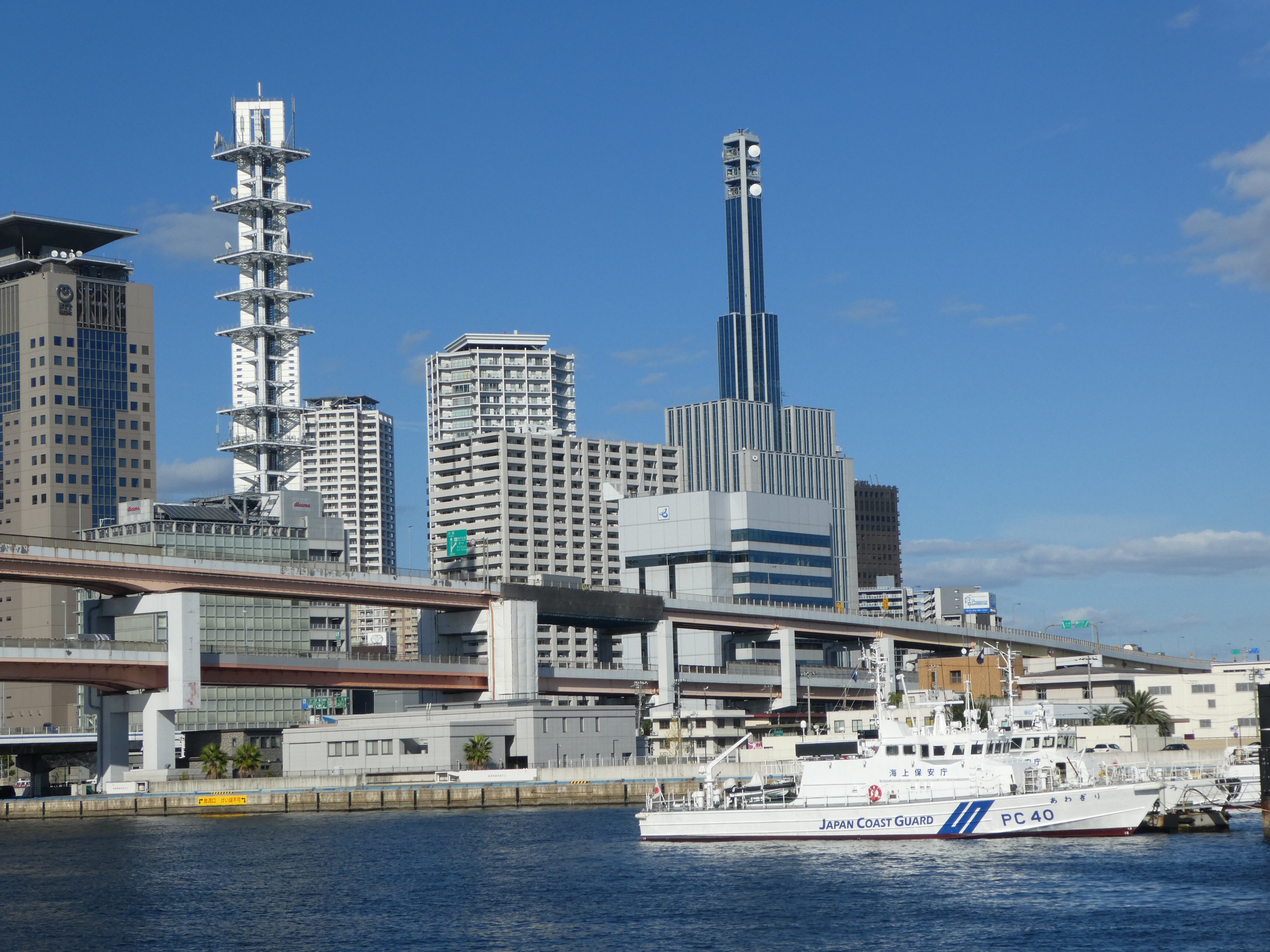
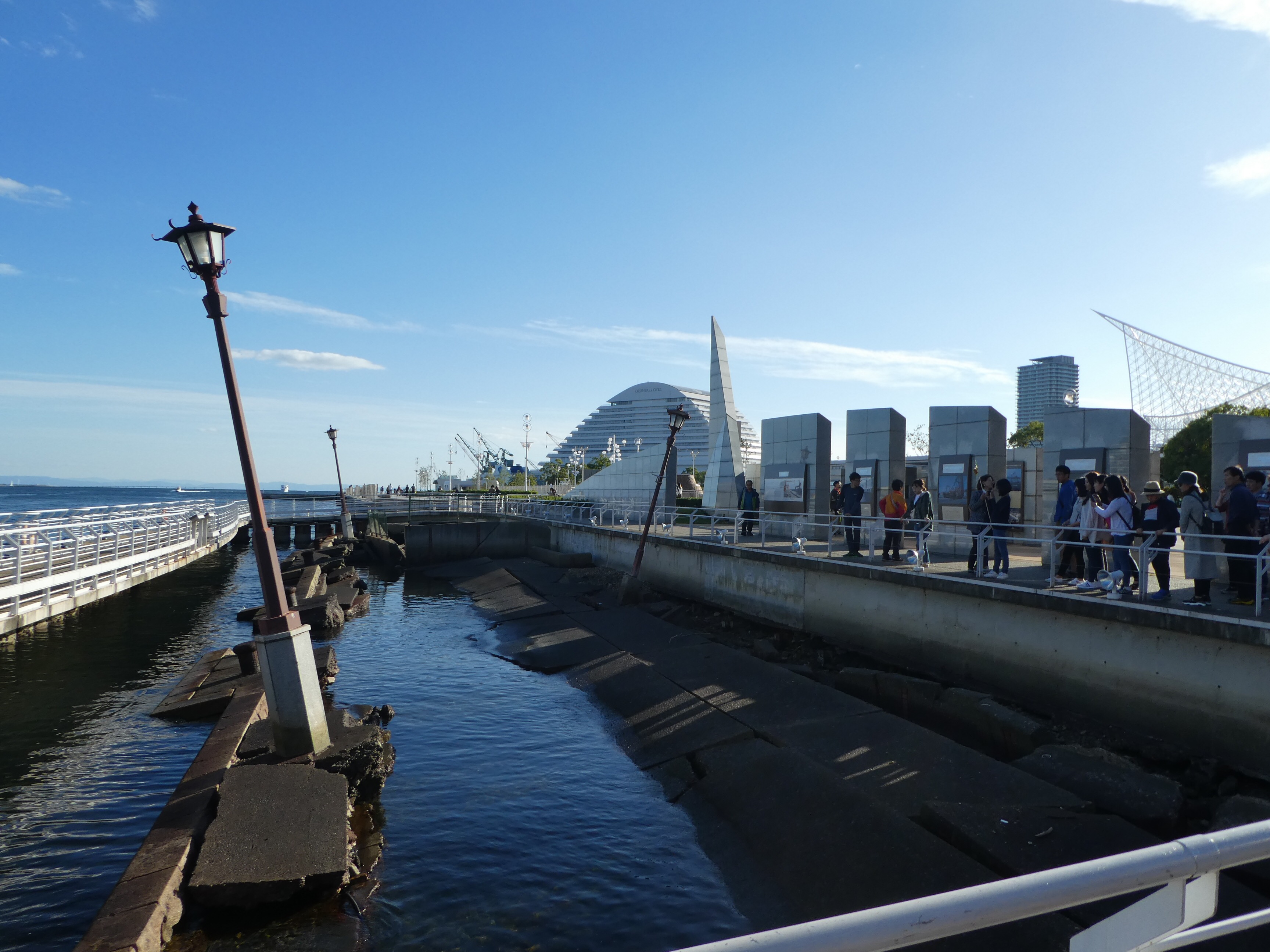
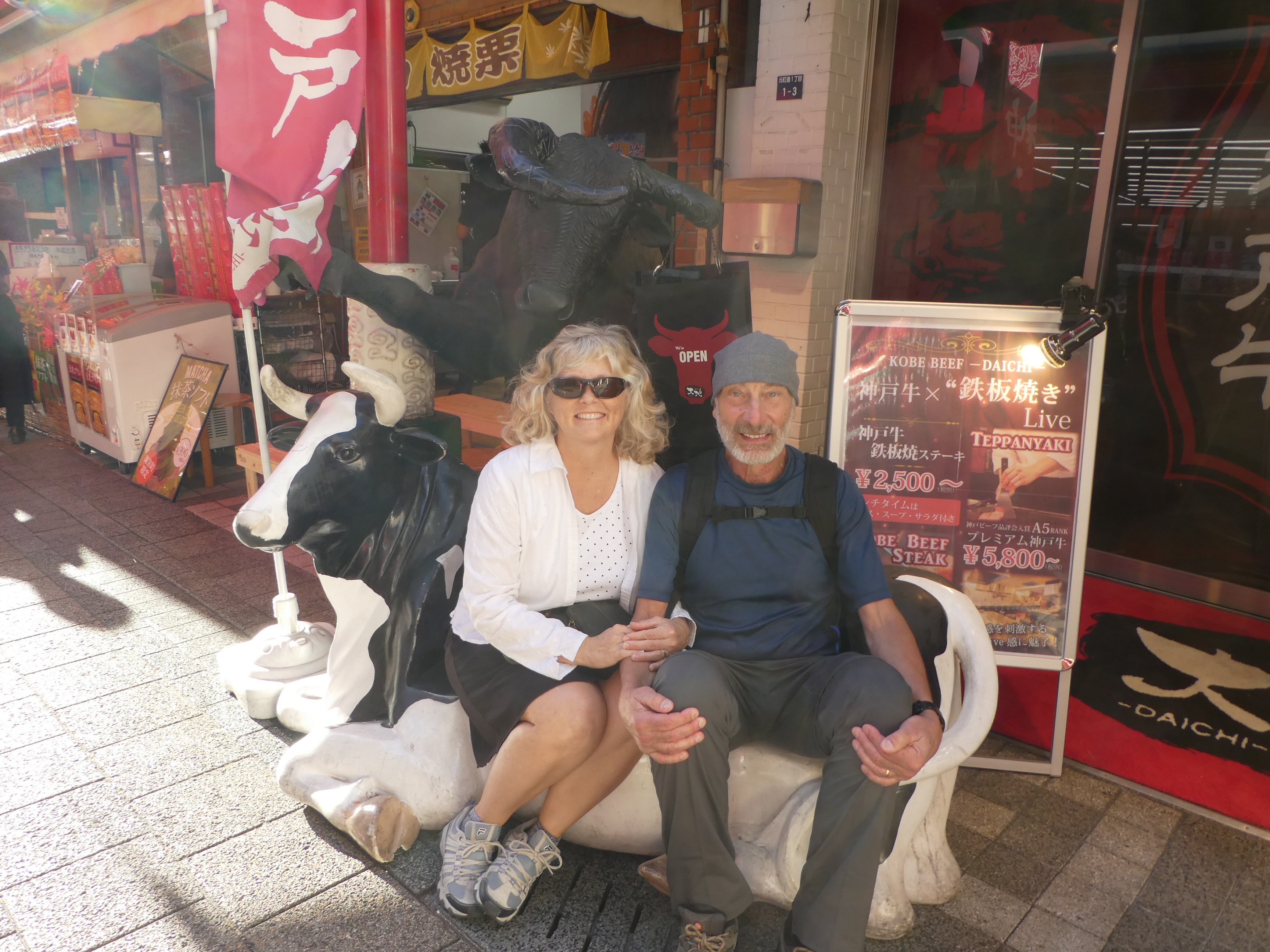
Kobe, a gorgeous port city, was fun to walk around. The city and the port were immaculate. We watched cruise ships come in. Streets are crowded at times, but not at all dangerous. You rarely hear the sound of a horn. People wait patiently at crosswalks for the light to change. A good natured spirit prevails. Most people are very fashionably dressed. Even backpacks are trendy and artfully designed. Lots of men carry soft leather briefcases, backpacks, shoulder bags, and even purses here. Kobe is famous for its beef, which is super expensive. It is marbled with fat that makes it very tender. We tried some, but it was a bit rich for us-pardon the pun! 😜 We saw a memorial for the 1995 earthquake that devastated Kobe and claimed more than 47000 lives.

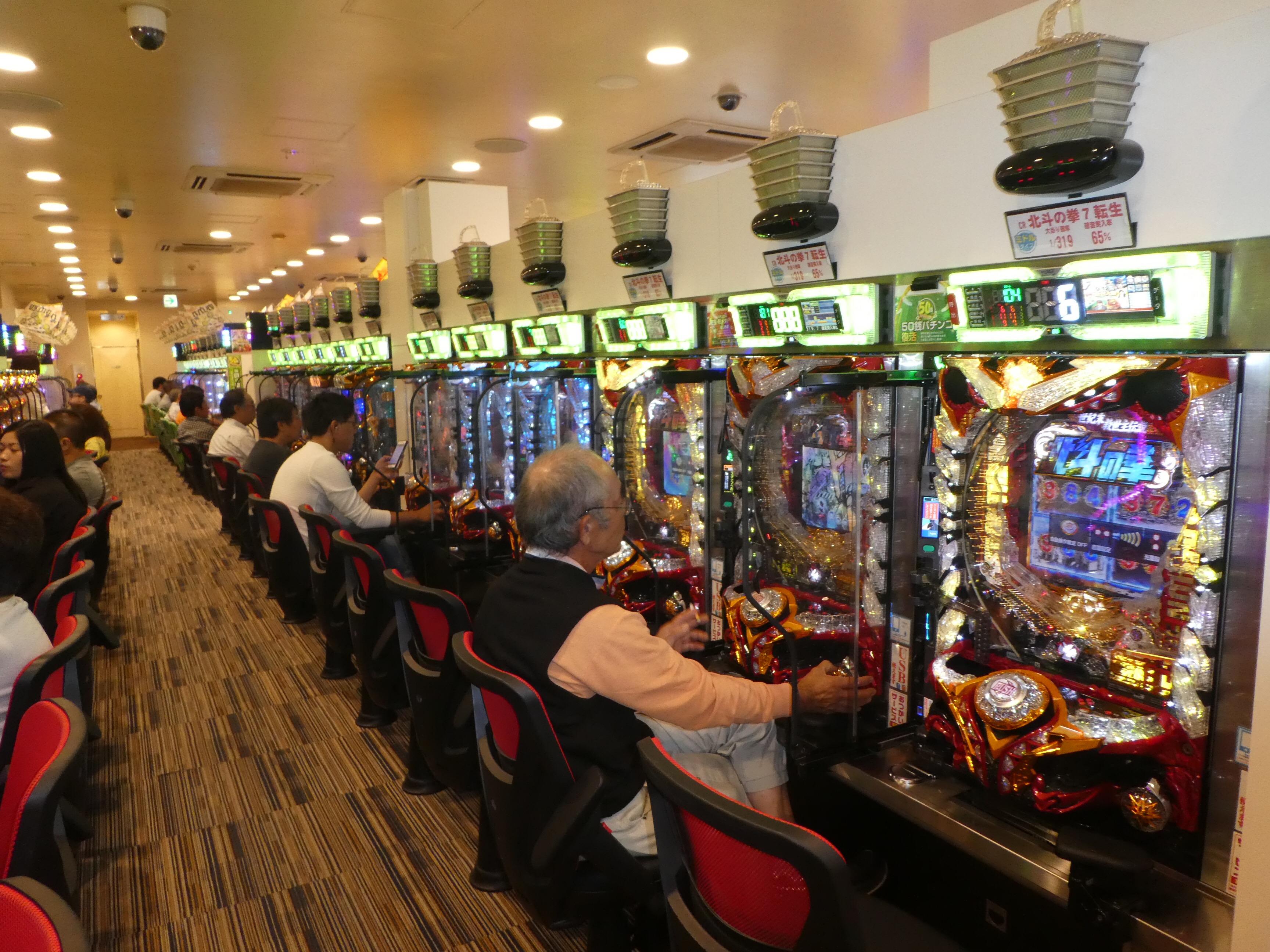
There are karaoke bars in every neighborhood and pachinko gambling halls here and there. We checked out a pachinko parlor and were overwhelmed with the smell of cigarette smoke. A Pachinko game looks like an upright pinball machine. When Bruce was here about thirty-five years ago, the prizes were cigarettes. Now, there are a variety of prizes available. Game places with rows of older electronic games like “Centipede,” are also popular.

We’ve enjoyed great, cool weather here in Japan. One day it rained and we loved it. We could not help but notice that it fell gently from the sky and landed softly… so very Japanese.

We are off to the airport this evening, for our flights to Laos. We’ll be in touch soon. Hope this finds you happy and healthy.

Love hugs,

BnL   

A World of Many Words (Post #2)

By Linda Moscovitch

I absolutely love international travel. The more foreign the culture, the more I like it. It tickles my senses. I love to taste new foods, seasoned with exotic spices, hear music that sets my toes tapping to a different rhythm, touch animals that I never knew existed, smell new flowers and plants along a beautiful mountain trail, and see people with unfamiliar features and clothes, going about their daily lives. I’m adventurous enough to try most things, and friendly enough to connect with people.

Of course, foreign travel comes with its obstacles. Non-Potable drinking water, uncomfortable accommodations, confusing modes of transportation, and language barriers are just a few of the challenges that come to mind. I speak English and passable Spanish, and a few words and phrases in various other languages. Most Europeans speak several languages, English included, and my Spanish has been good enough to get by in Central and South America. Tourism in Asia has grown in popularity and as a result, many people in the tourist industry speak passable English, and New Zealand and Australia are no problem, mate! With all of this English flying around, one would think that communication would be a piece of cake. But guess again…

There are spelling errors, translation errors, and conceptual errors aplenty. For example, in Spanish, fingers and toes are all called “dedos.” In English, we have names for our fingers and toes that are more specific. Do you remember the childhood song “Where is Pinkie?” which most of us learned in Kindergarten? I once knew a Spanish-speaking man with terrible ingrown toenails. He was moaning in pain one day. I asked him “What’s the matter?” He answered “Oh, my thumbs are killing me!” and pointed to his big toes. I thought it was hilarious, and he thought I was unsympathetic. I introduced him to his digits, and he forgave me for laughing.

I love Vietnam and Thailand, or “Thigh-land,” as my neighbor pronounces it. I find the foods delectable. The menus in Asia, however, can be confusing. I remember one menu that offered a choice of mice, lamb, or chicken. By “mice,” I think they meant “minced,” though I couldn’t bring myself to eat there. Then, there was the clothing store named “Body Nits” spelled “N-I-T-S.” I felt itchy as I passed it by! In the Netherlands, there are “Coffee Houses” that do not serve coffee. They sell marijuana! What does that have to do with coffee? I vote we change the name to “Cannabis Cafés.”

There are also a variety of language variations in different English-speaking countries. In New Zealand, the people call themselves “Kiwis,” not after the fruit, but after a flightless bird, the Kiwi, that is close to extinction. The first time I went to New Zealand, I broke my ankle while trekking. The emergency room nurse kindly offered me the use of her “batch” for a few days. I looked at her quizzically. “Oh, it’s quite nice,” she said, misunderstanding my puzzled expression. Her “batch,” it turned out, was a lovely vacation home on the beach. I’m pretty sure I’ve never encountered an unpleasant “Kiwi.” However, I once was seated next to an extremely friendly Kiwi sheep rancher at a rugby game in Wellington, whose accent was so thick, that when he spoke English, I could not understand a word he said. He smiled a lot as he spoke. I’m pretty sure he was a nice guy, but he could have been saying anything!

In England, we stayed at a nice Bed and Breakfast in Wimbledon. At breakfast, our hostess was moving slowly and asked that we excuse her. “What’s wrong?” I asked, “Oh, I have a dick in my knee” she said, as my husband choked on his toast. Later, she asked my husband to help her get a large box into her boot. “Your boot?” He asked. She led him to the trunk of her car. At breakfast, our hostess served our “brekkie” each morning apologetically with a “You know, my dickie knee!” We took the “Tube” around London and enjoyed simple things like trash cans labeled “rubbish” and bathrooms labeled “toilet.” It was fun to hear a robotic female voice remind us to “mind the gap” in a British accent when we stepped on and off the underground train. We passed a shop with a sign that read “Fancie a quickie?” My curious husband peeked inside. They were talking about a fast food lunch.

In Ireland, I shopped for a birthday card to send home to my mother. I was delighted to find several beginning “Happy Birthday, Mum.” I’ve met several distant cousins in Ireland and have enjoyed getting to know them over a couple of visits. They are fairly conservative Irish Catholics, so it shocked me to hear one of the ladies referring to a “feckin’” something or other. As time passed, I noticed the frequent use of this “F” word and finally asked one of my cousins about it. In Ireland, “feckin’” is not a substitute for our American bad “F” word. It is no worse than “dog-gone.” Though I’m fairly liberal, I still can’t bring myself to use this word for feckin’ anything here in the USA!

I’m aware of the reputation Americans have around the world for being loud and impolite, so when I travel, I make a conscious effort to use good manners and be a good American ambassador. I learn to say “hello,” “good-bye,” “please,” and “thank-you,” in the native language as quickly as possible. I watch how locals behave and try to be a part of the flow, rather than stand out.

When I went to Australia, I was thrilled to purchase tickets to a violin performance at the Sydney Opera House. As I entered the Opera House, I noticed signs forbidding the use of cameras. To my left, there was a room filled with people checking their coats and bags. I felt a little out of place in my informal travel attire. I thought I could at least check my fanny pack, which was bulging with my camera. I waited my turn at the rather long counter, where a man and a woman were assisting guests. I removed my bag and held it up to the woman “May I check my fanny pack?” Her jaw went slack and her cheeks turned pink. The man who worked with her behind the counter slinked away, to the opposite end of the room. Thinking she hadn’t heard me, I repeated myself in a louder voice. “May I please check my fanny pack?” I repeated. A hush fell over the crowd around me, as the woman held her finger to her lips to shush me. I knew I wasn’t dressed that well, and the bag was rather small compared to the designer bags, furs, and overcoats being checked. Still, it did contain my camera. I thought they might confiscate it at the scanner before entering the hall. “Please!” I persisted. “My camera is in there. I’d just like to check my fanny pack.” The uncomfortable woman was nearly purple by now and she fairly hissed at me “We don’t say that here!” The crowd around me had thinned by now. Many had moved to the other end of the long counter to be waited on by the man. “What?” I asked, bewildered, “fanny pack?” She nodded. “Why not?” I lowered my voice, “What does it mean?” She leaned in and with her hands cupping her mouth whispered back “a woman’s vagina!” It was one of those moments in life when you wish the floor would open up and swallow you! It turns out they call a fanny pack a “bum bag.” I think of this every time I switch things over from my purse to my fanny pack when I pack for a new adventure.

I am going back to Asia soon, where the people are soft-spoken and polite, and the food is delicious. My trip will culminate in a two-week trek through the Himalayas in Nepal. I will bring my camera, a back-pack, and a “fanny-pack.” I will “mind the gaps” on the mountains and use walking poles to avoid “dicks” in my knees. I will bring my sense of humor everywhere I go. If I’m lucky, I will meet new friends along the way, expand my knowledge of foreign cultures, and bring back tons of feckin’ souvenirs for my friends and family!

Off We Go Again! (Post #3)

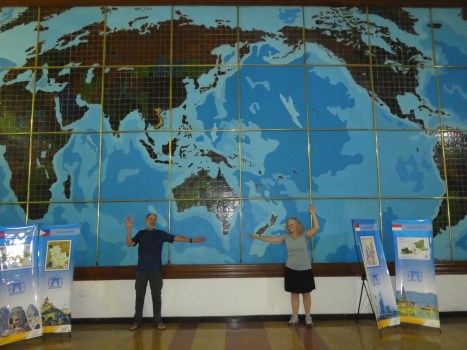
ABC MapBy Bruce Moscovitch
I was perusing the internet, looking for good airfares to Hanoi, Vietnam in the fall of 2017. Linda wanted to return to Hanoi, where we started our first Vietnamese adventure. This time she wanted to go north from Hanoi, instead of south to Ho Chi Minh City. She heard about some fabulous waterfalls and hiking trails near the Chinese border. Holy cow! I couldn’t believe my eyes! There was an open jaw round trip ticket available for $885 on Singapore airlines into Hanoi, Vietnam, and out of Kathmandu, Nepal! She’ll never go for something weird like that, I mused. “Honey”, I called out. “You want to go climb the Himalayas?” “Sure,” she cheerfully replied.

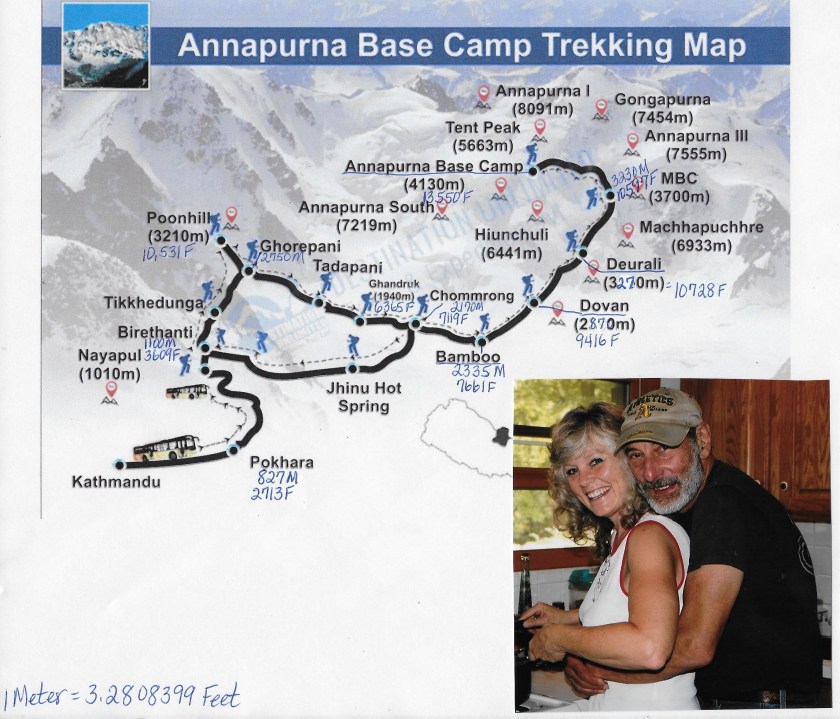
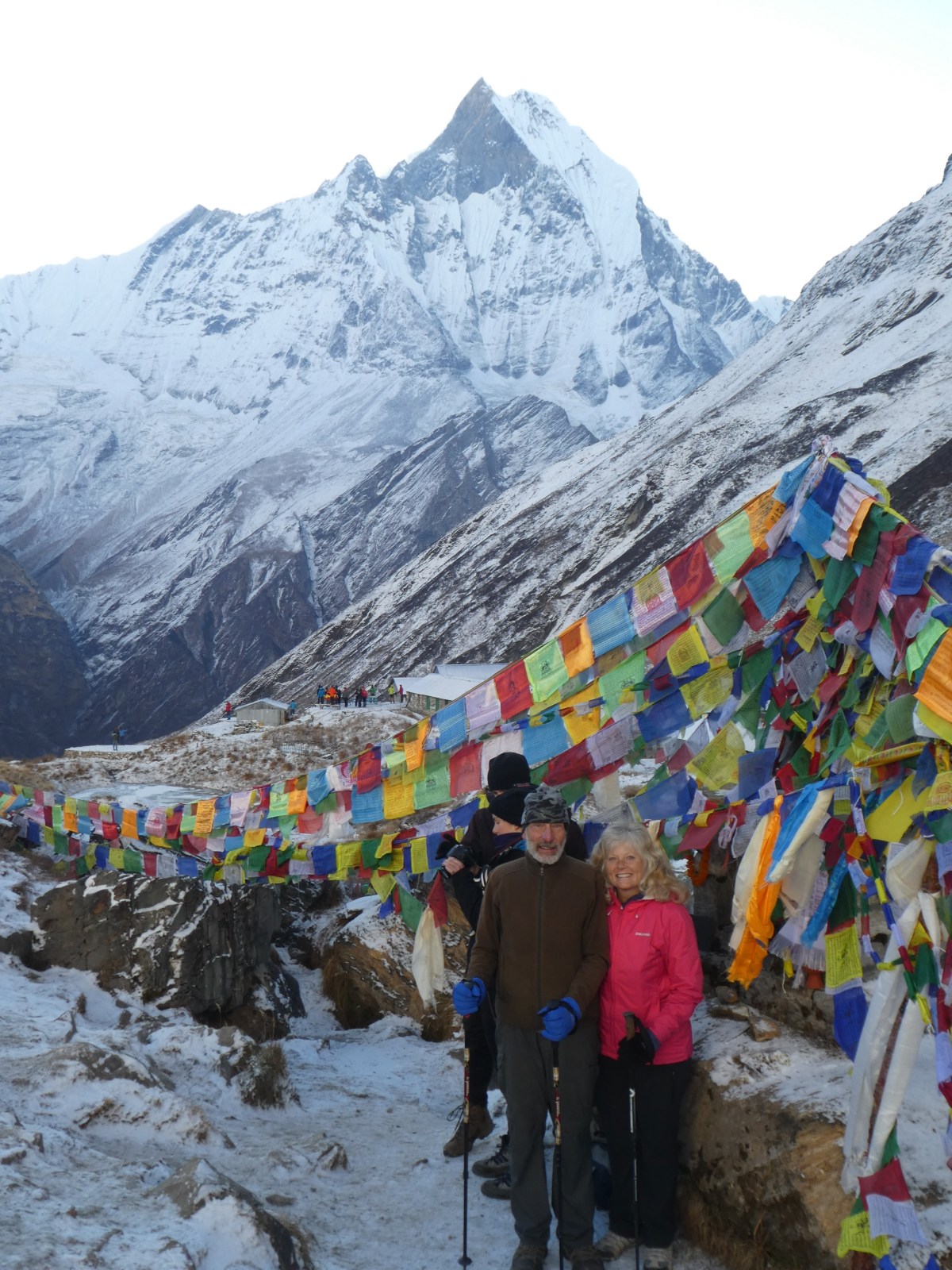
Surprise, surprise! She said yes. Linda loves hiking. Of course she said yes. I might have to book this thing. I began thinking of lots of reasons not to go to Nepal. It could get very cold up there. I might even die from altitude sickness. It could cost a fortune, what with guided hiking agencies demanding thousands of dollars for their package tours. Himalayan hikers subsist mostly on Dahl and rice. I am leery of spicy food. On the other hand, I’ve always loved the mountains. The Himalayas are the tallest peaks in the world; and we both loved reading Jon Krakauer’s “Into Thin Air.” So we checked out these Himalayan treks on the internet and that’s what sealed the deal. We haven’t been on an overnight hike in some years. We even thought we’d try a few nights on the Pacific Crest trail this summer. Well, this would be like taking the Pacific Crest trail to the next level. The treks on the net depicted beautiful trails, surrounded by gorgeous lofty peaks, covered with snow. We almost decided on the famous Annapurna Base Camp Trek, and then backed away from this arduous ~130 mile, 13 day adventure. Maybe we should try the shorter, easier Poon Hill- Gorepani trek. But it’s only a 7 day hike. Our flight itinerary gives us 19 days in Nepal, before returning to San Francisco via Singapore Air. We finally decided on the Annapurna Base Camp Trek. It may be a shortened version. In fact, we hope so and also hope that we don’t have to reach the 13550 foot summit of this trek. Meanwhile, we’re training for this experience by mountain hiking 5 miles, 3 days a week, and bicycling 30 miles, 3 days a week.

We did some reading and got some guidance from a manager at an REI sporting goods store. He’s been to the Himalayas 15 times and loves it there. He gave us some contacts, one of which included Pushpa Guest House, in Pokhara, Nepal. Pokhara is a torturous 7 hour bus ride from Kathmandu. It’s where most people stay before their trek. Raj, the manager of the guesthouse, has been so helpful to us. He’s getting us a porter/guide and will design a 13 day Annapurna circuit trek to our liking. He’ll also get us necessary permits and bus tickets. I know he’ll want money for his services. But I don’t think he’ll want that much. I heard from the REI manager that this approach to the trek can be far cheaper than an agency sponsored tour, and it helps support the local economy. Blogs also indicate that many people trek more or less independently. Two trekkers and a porter can easily find mountain village home stay lodging; and yes, most meals will be Dahl and rice, until it’s coming out of our ears. That’s O.K. I’ll get used to it.

I booked 3 nights at Pushpa Guesthouse to assure Raj of our commitment. Raj seemed genuinely grateful for the booking. He seems like a happy family man who really enjoys introducing people to the Himalayas. We are hopeful this will be a wonderful adventure. Then again, we may never make it up the mountains. Maybe we’re asking too much of our decrepit old bodies. Let’s hope for a fabulous experience that we can both handle. Let’s hope for spiritual enlightenment in the glorious Himalaya Mountains. Let’s hope our bodies hold out until we leave the states and get stronger as we approach the beginning of the trek.

In Touch (Post #1)

We are ready to explore the world! Read on, to see what we’re up to…

Dear Friends and Family,

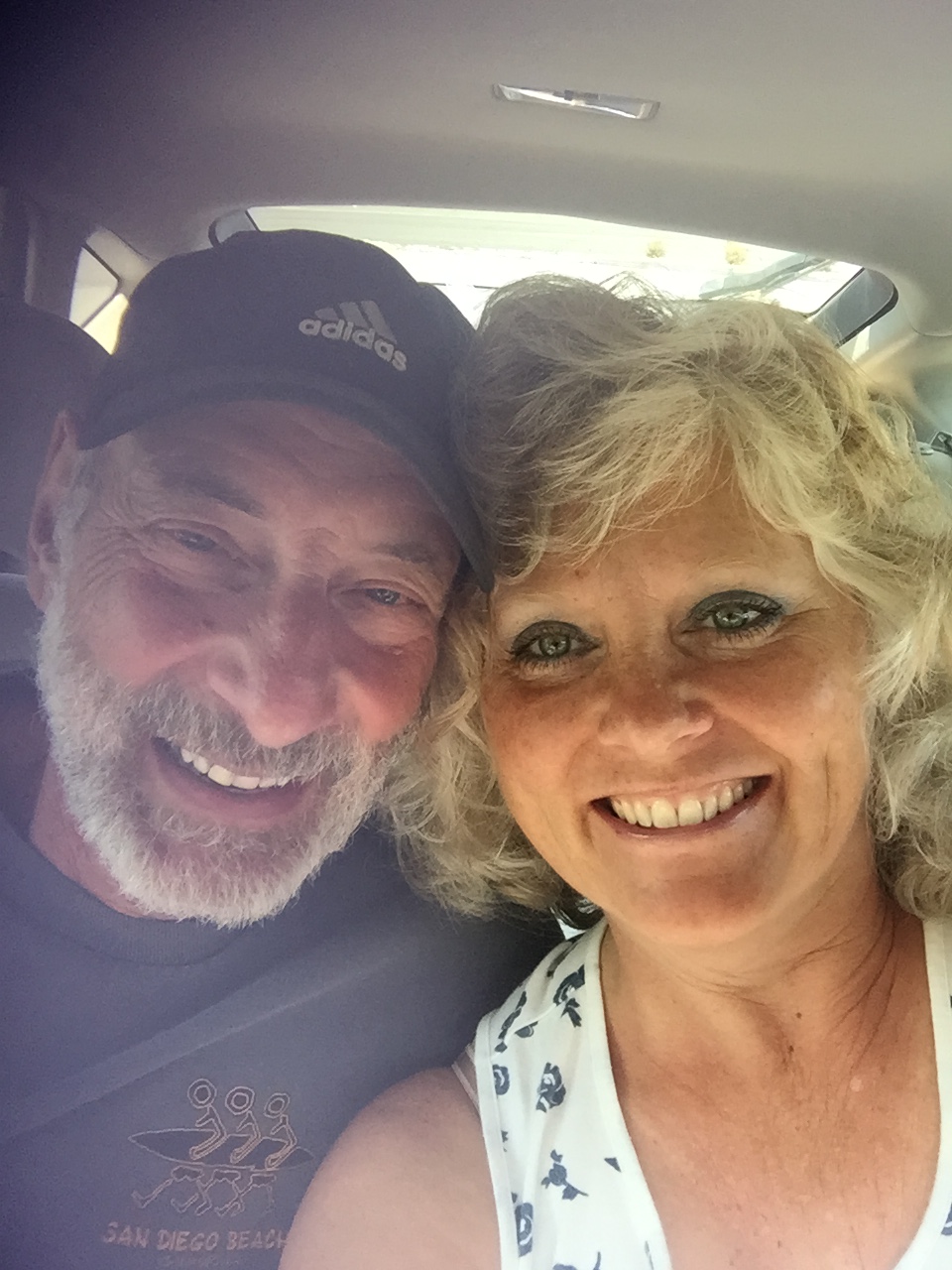
As you know, we love to travel! Retirement is great, but we feel it’s even greater when we are off exploring the world. We certainly do miss some things while we are away- own cozy bed, our cat, certain foods, and the peace and quiet we enjoy at our mountain home on the beautiful Klamath River, but most of all we miss you…our family and friends! This blog is brand new to us and we are going to try to keep in touch by posting our travel tales and photos here.

We are Bruce and Linda and either one or both of us have travelled to the following 48 countries: Argentina, Australia, Austria, Belgium, Cambodia, Canada, Chile, China, Columbia, Costa Rica, Croatia, Czech Republic, Estonia, France, Germany, Guatemala, Hungary, India, Indonesia, Ireland, Israel, Italy, Japan, Laos, Latvia, Liechtenstein, Lithuania, Malaysia, Mexico, Monaco, Nepal, Netherlands, New Zealand, Panama, Peru, Poland, Russia, Singapore, Slovenia, South Korea, Switzerland, Taiwan, Thailand, Turkey, United Kingdom, United States, Vatican City, and Vietnam.

We love to try new foods, bargain hunt for unique souvenirs, and meet fellow travelers who also enjoy exploring foreign cultures and people. The experience opens our minds and hearts in ways we never thought possible. It also kills stereotypes we’ve grown up with, and has helped us realize that people are the same the world over.

Until now, we’ve used email to keep in touch. We have met new friends around the world through our travels, who like to keep in touch too, so our email list of friends and family has grown to around ninety people. Some readers have super busy lives and enjoy looking at the photos we attach, then reading about our adventures later. We thought this blog would be a better way of communicating without filling up your inboxes with photos and stories. We hope you’ll continue to travel with us and keep in touch! It is wonderful to hear back from you when we are so far away. Know that you are always in our hearts, and we wish we could fit you into our backpacks!

Stay tuned for our next adventure!

post

Love, BnL