Lovely Okayama, Japan

Dear Friends and Family,

Konichiwa!

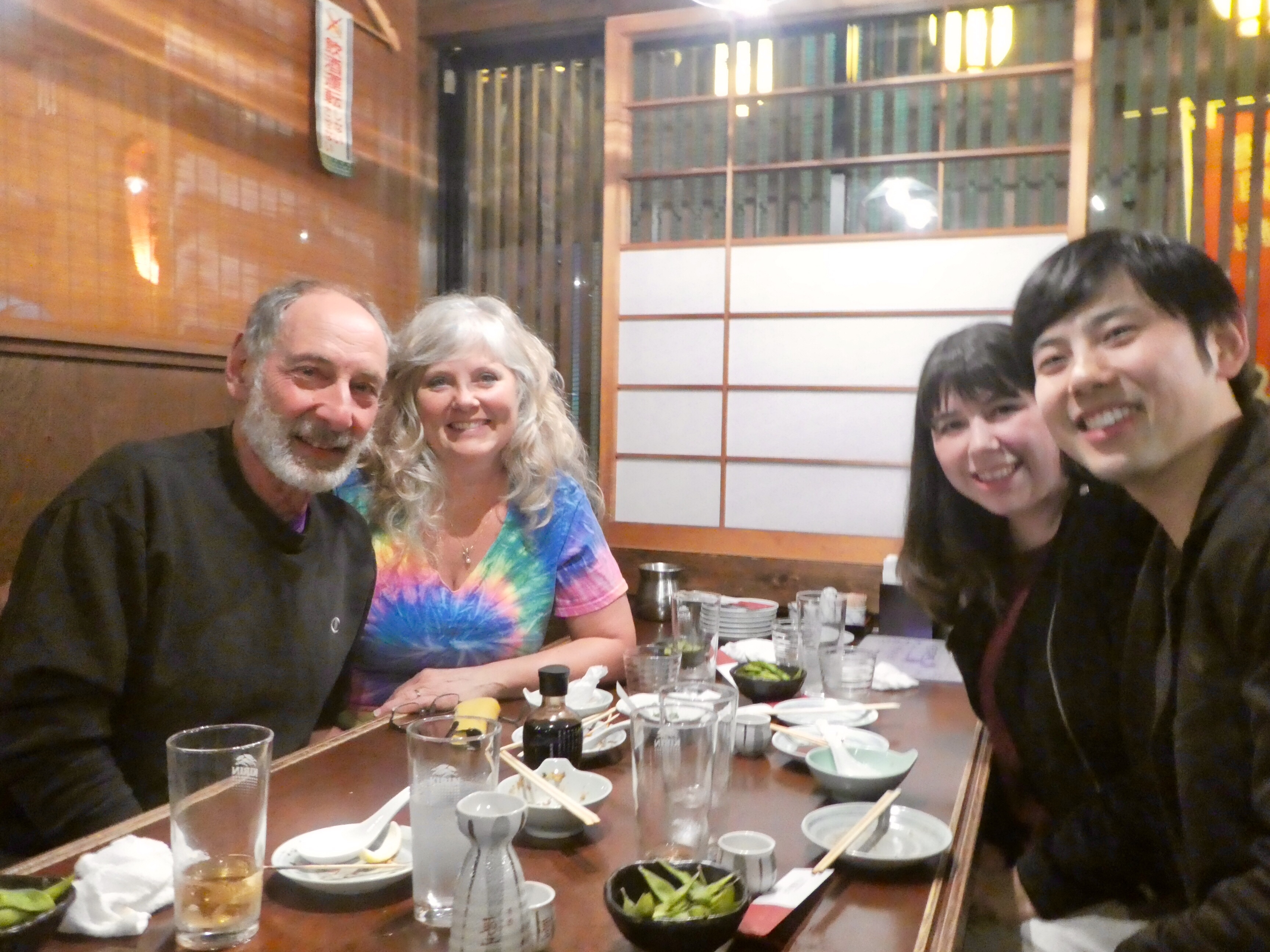
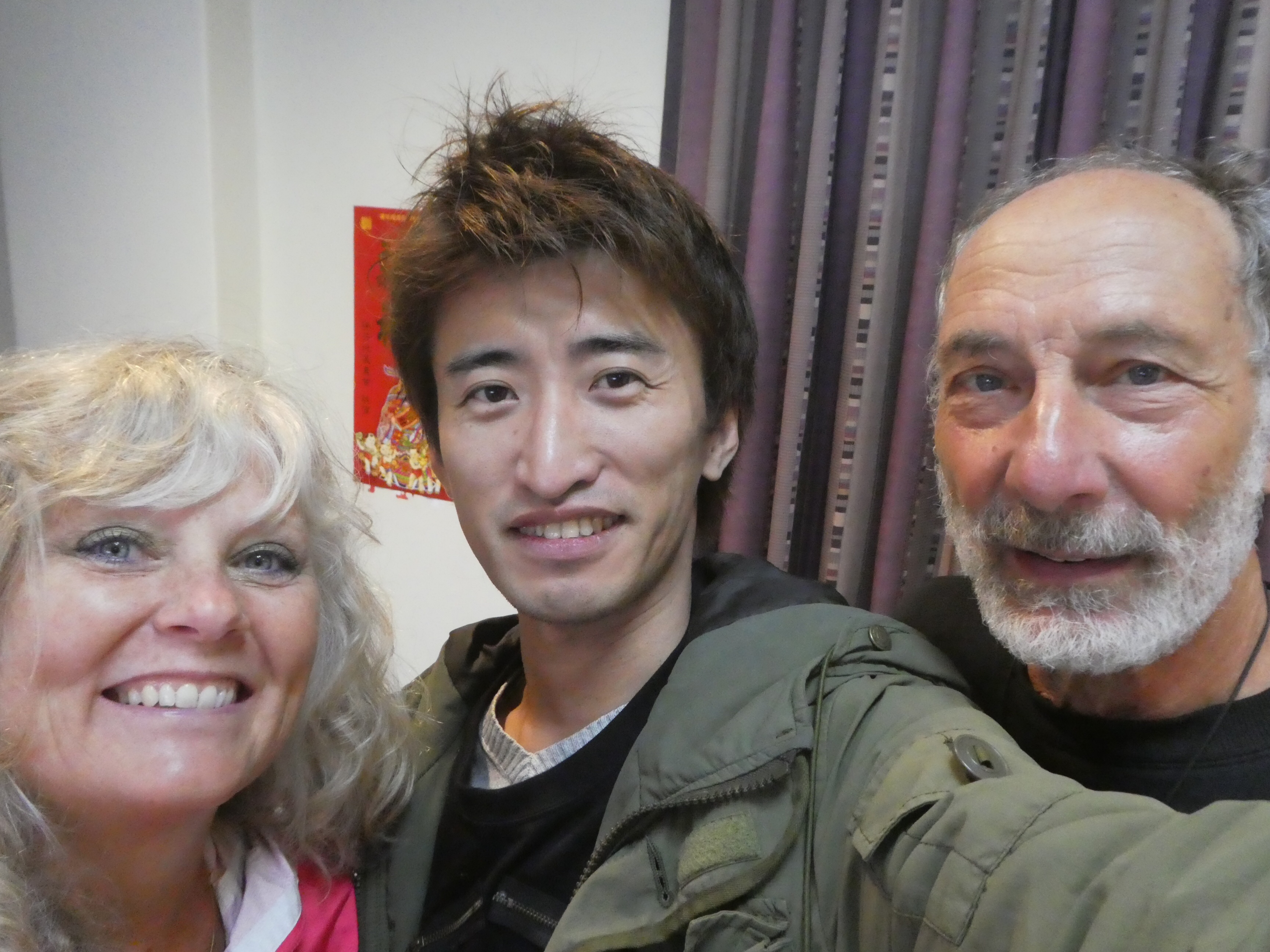
Okayama, on a rainy day, gave us a chance to rest and relax after six weeks of travel. We had dinner with a young Japanese man and his American girlfriend. We shared sake, several traditional dishes, and wonderful conversation with Takayawada and Astrid, an English teacher. They’re planning to teach English in China, save money, and travel abroad for several years.

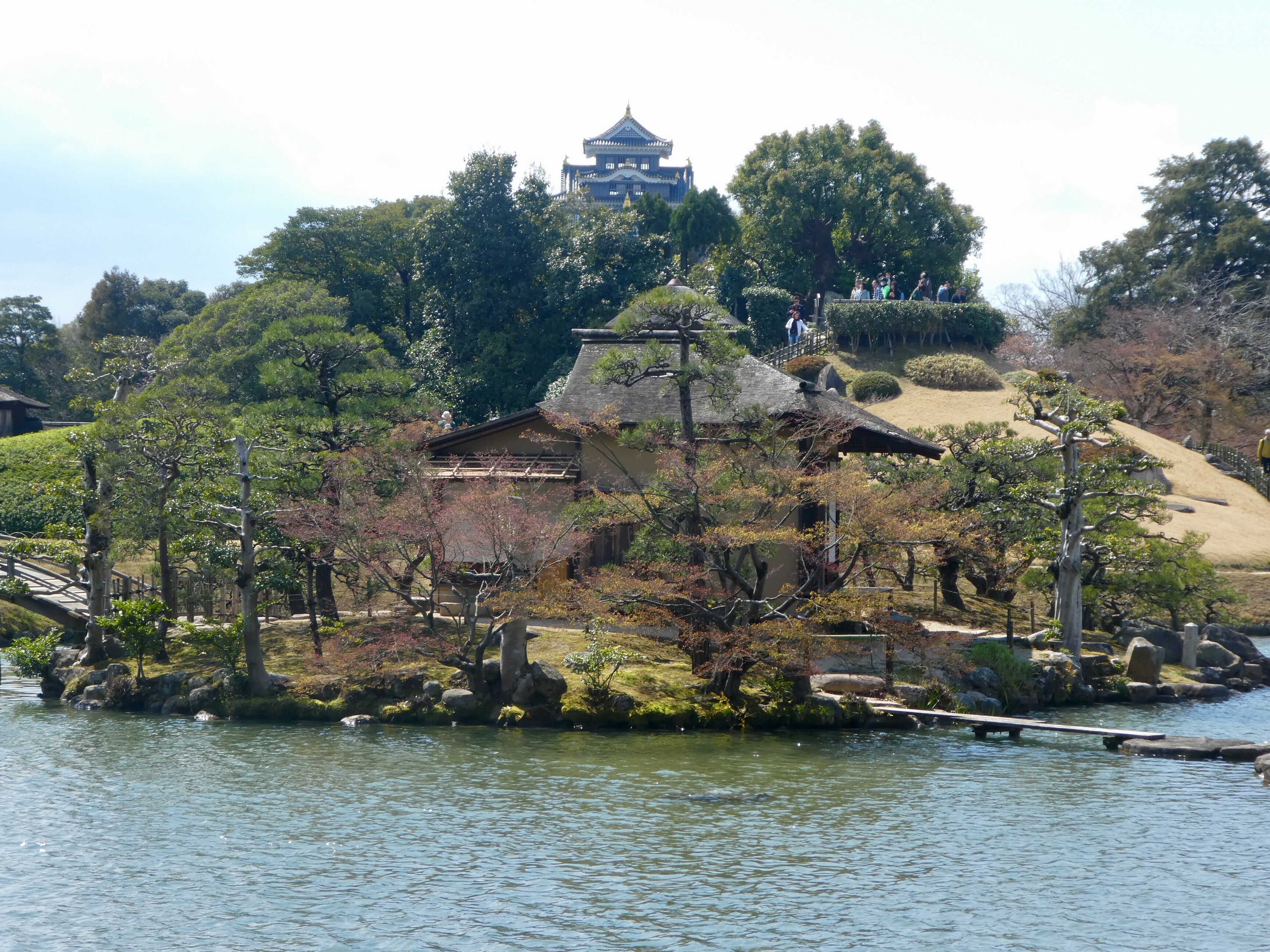
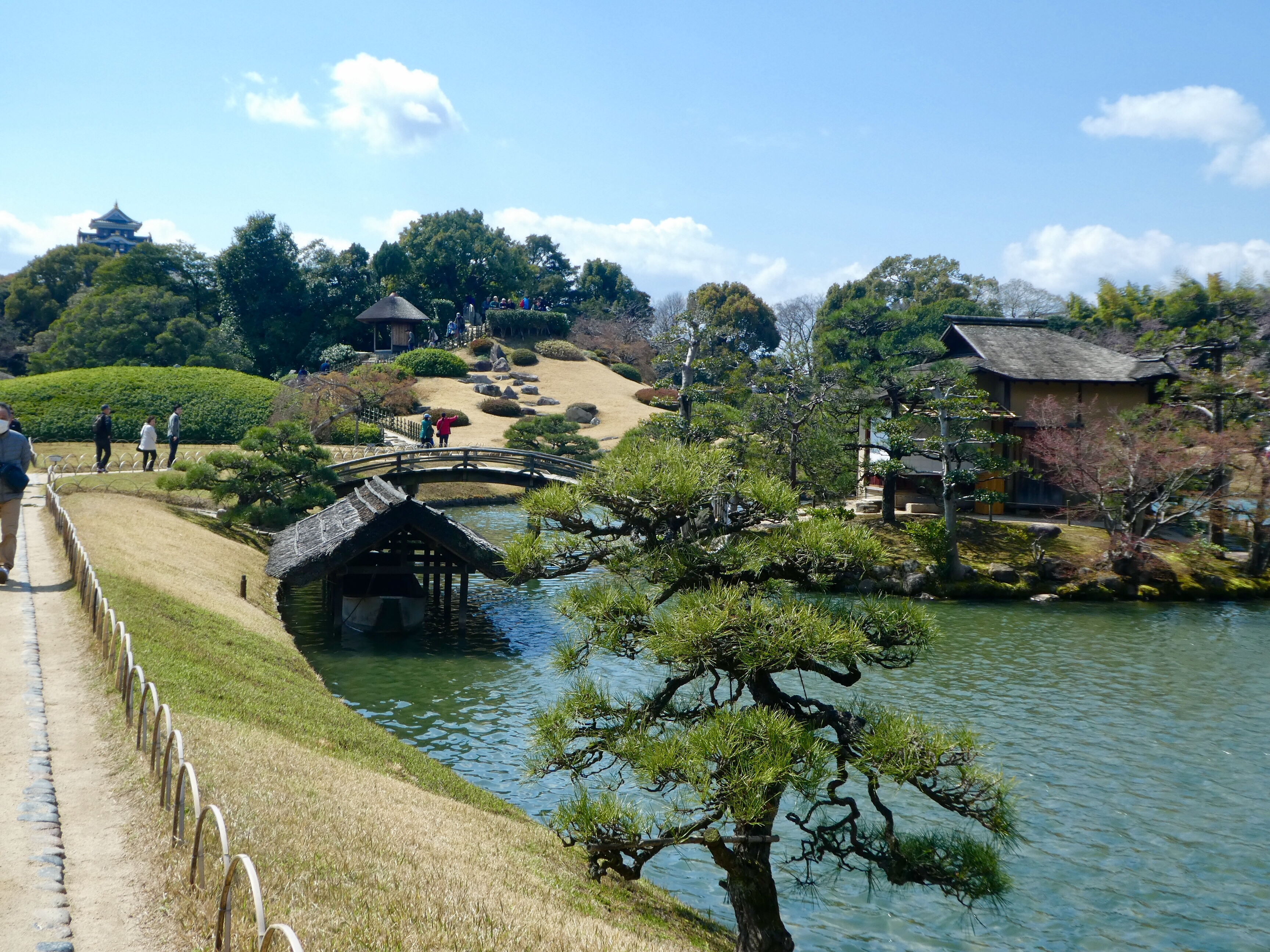
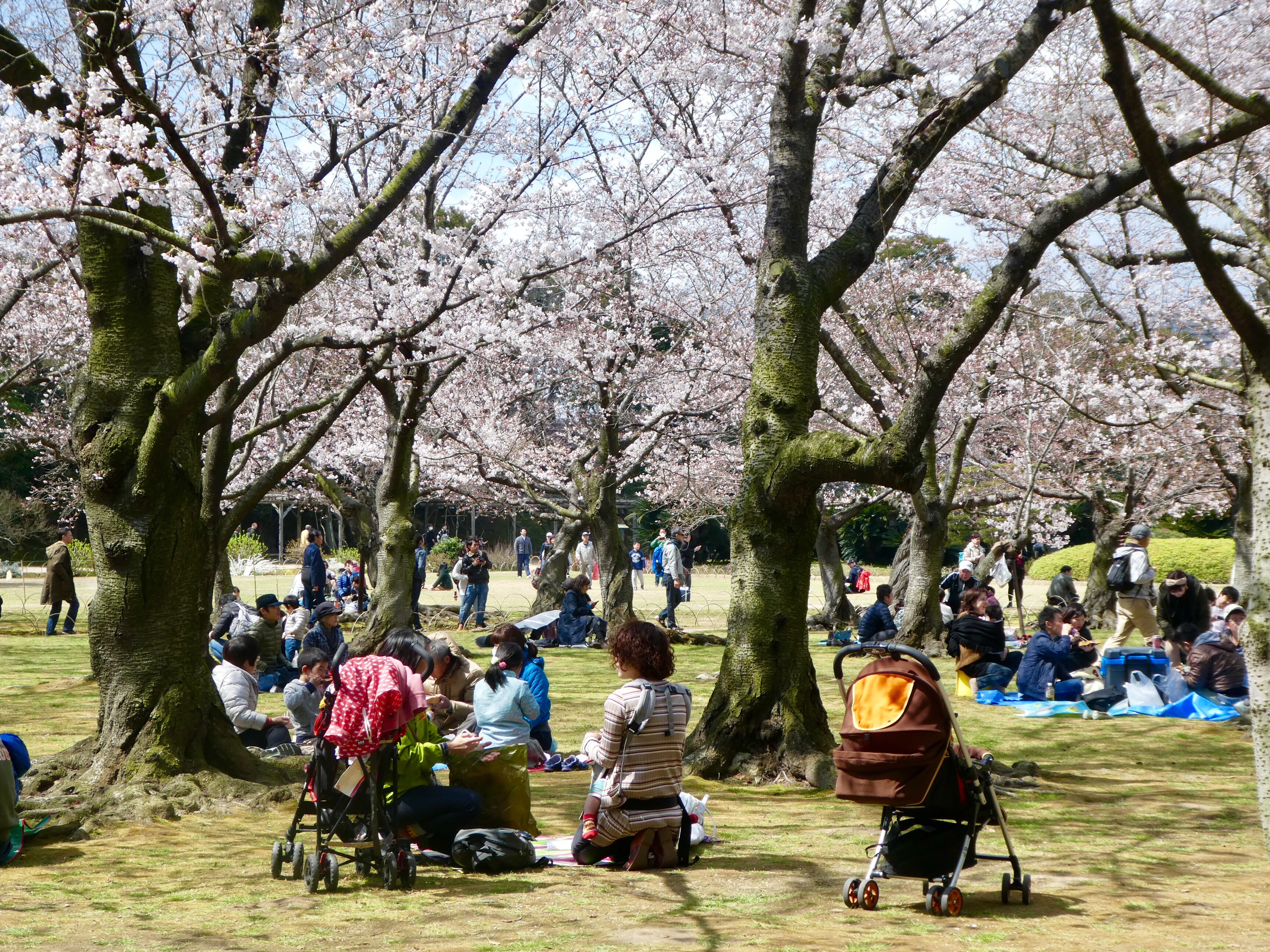
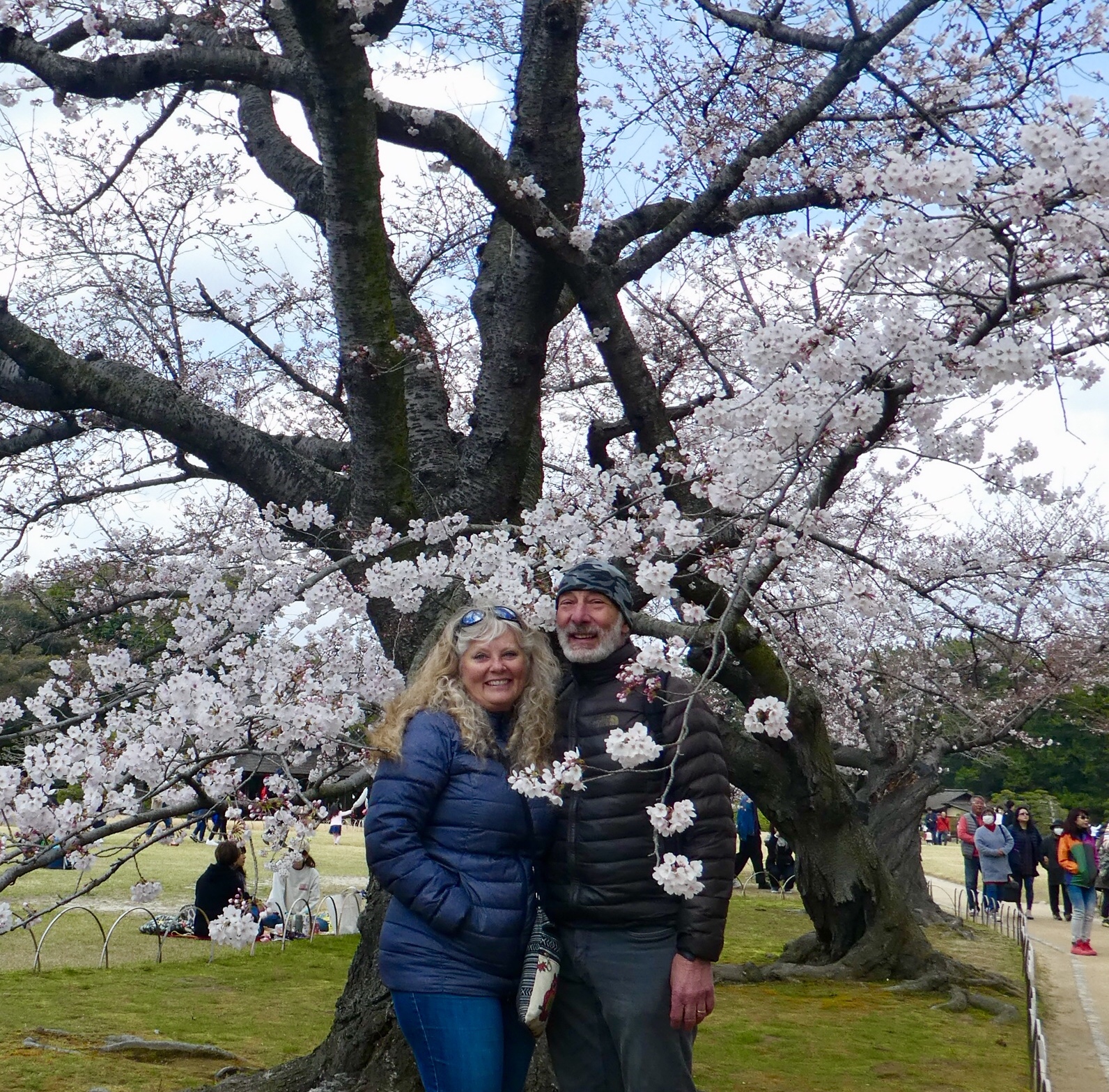
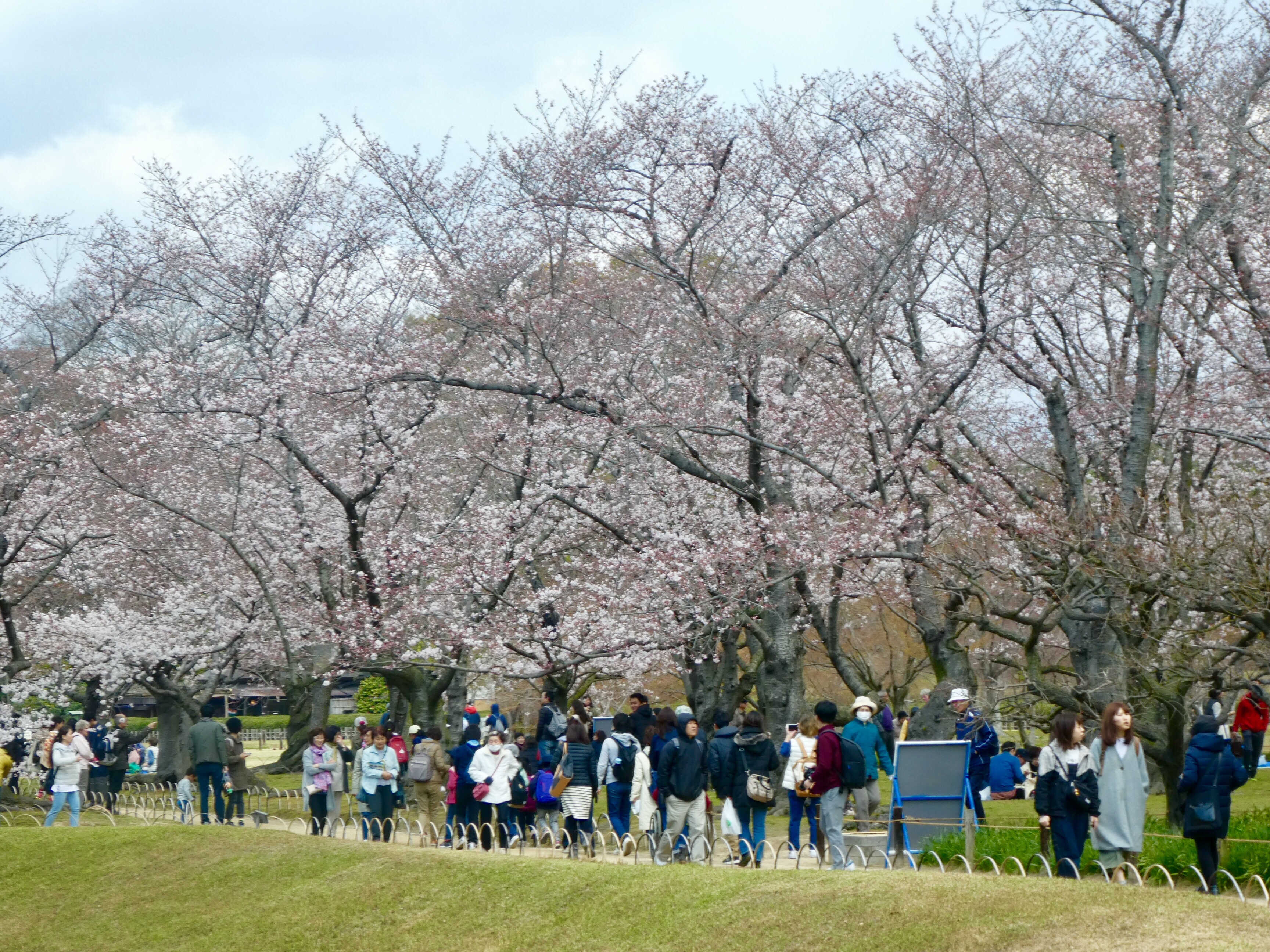
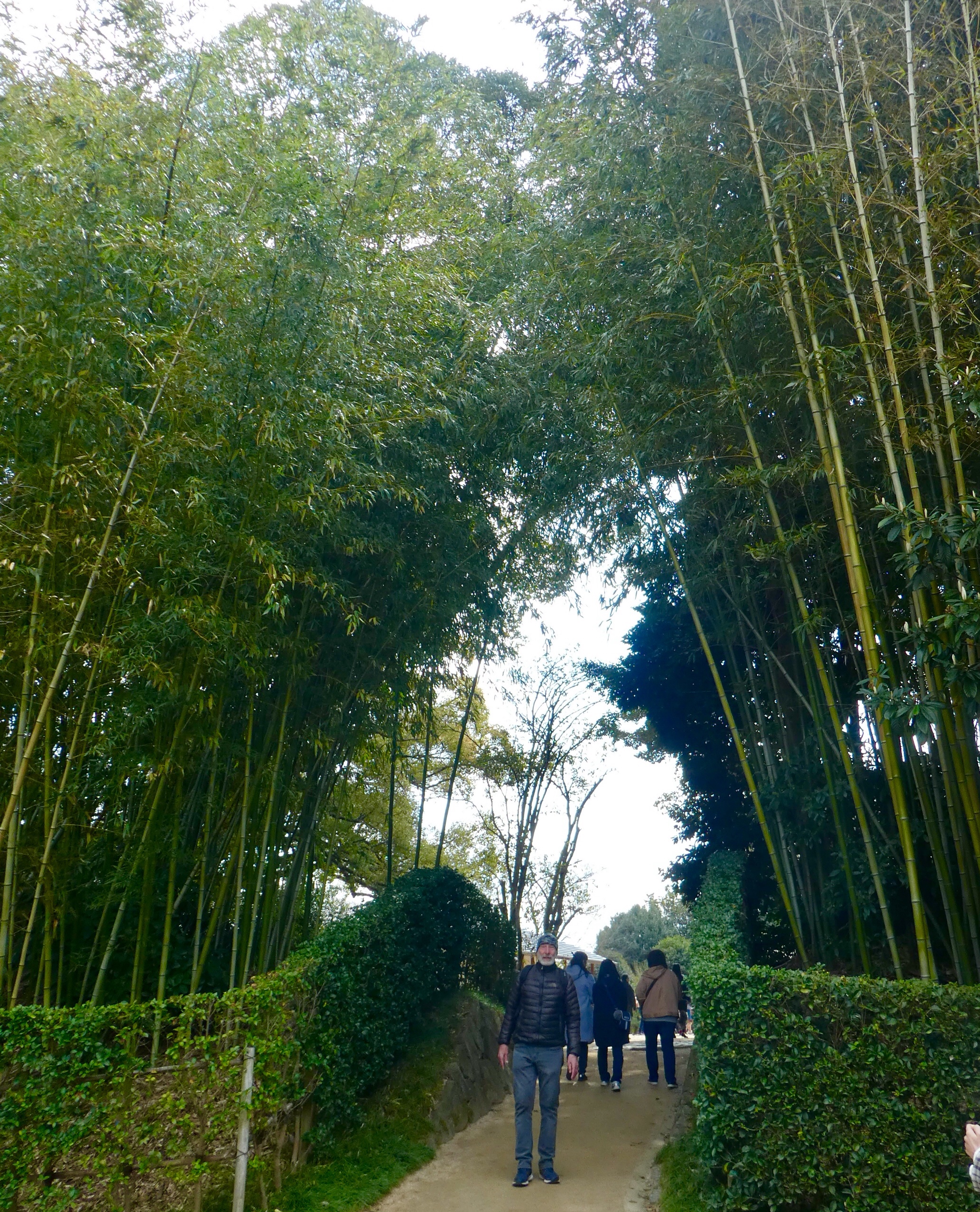
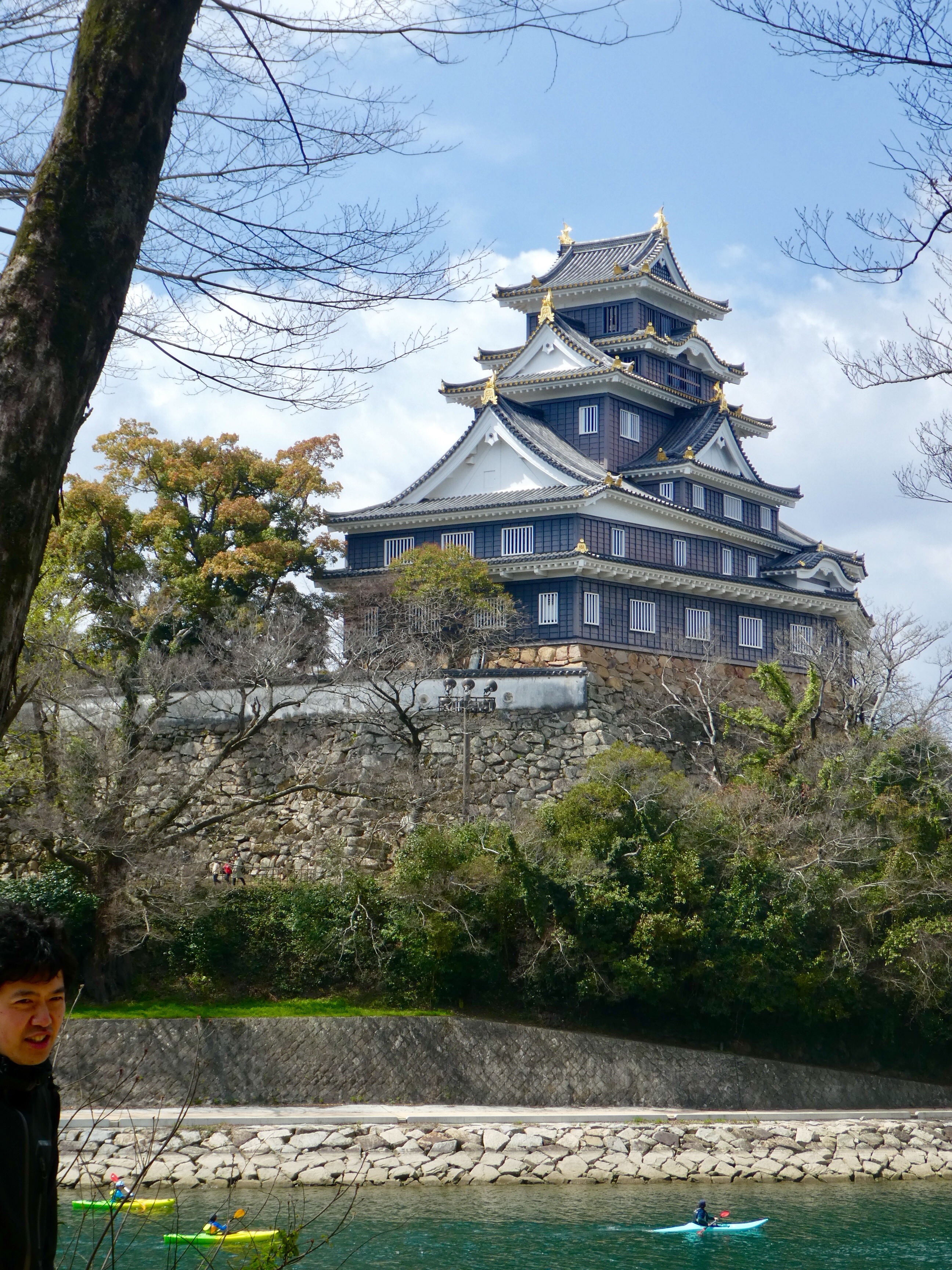
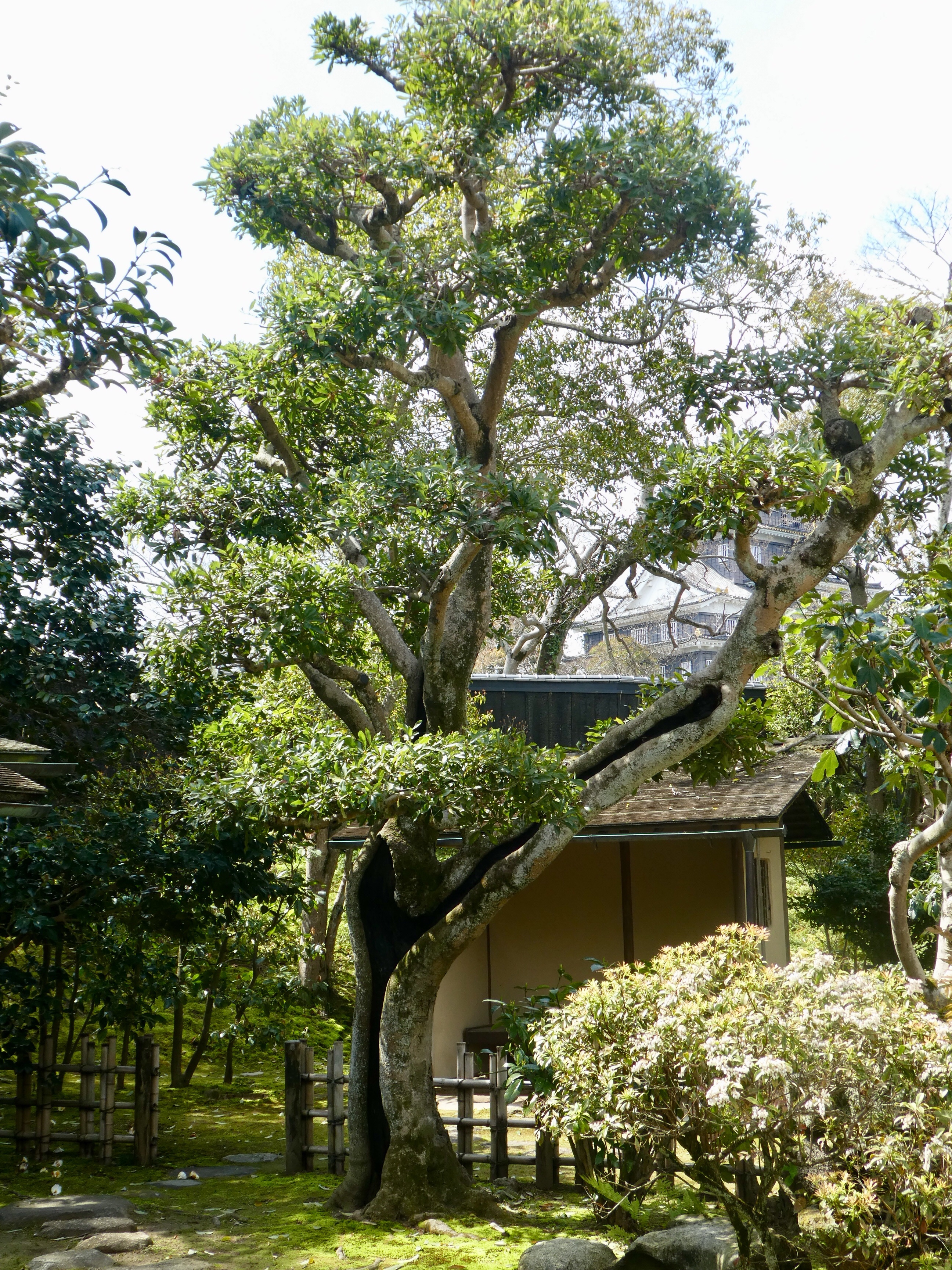
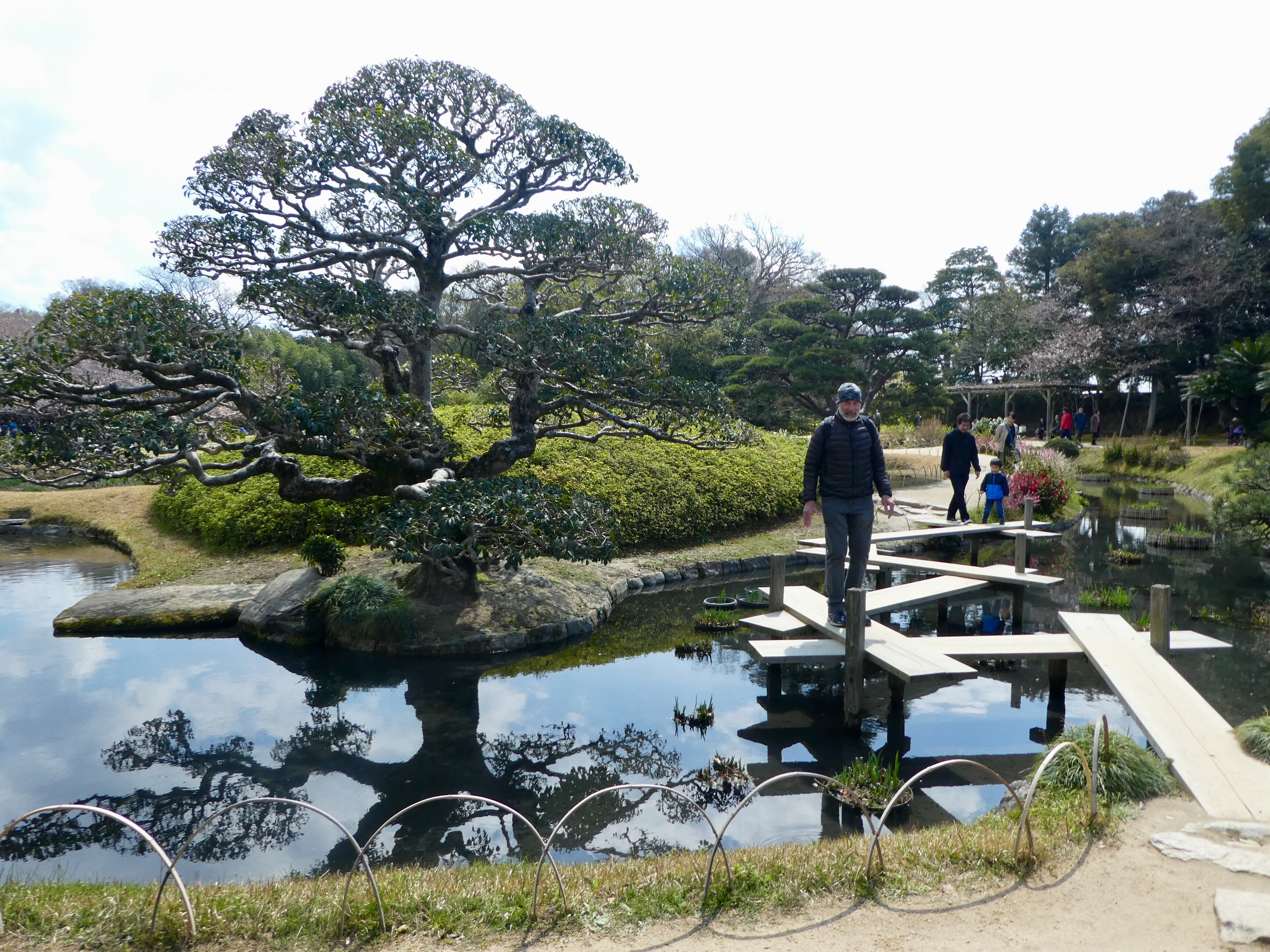
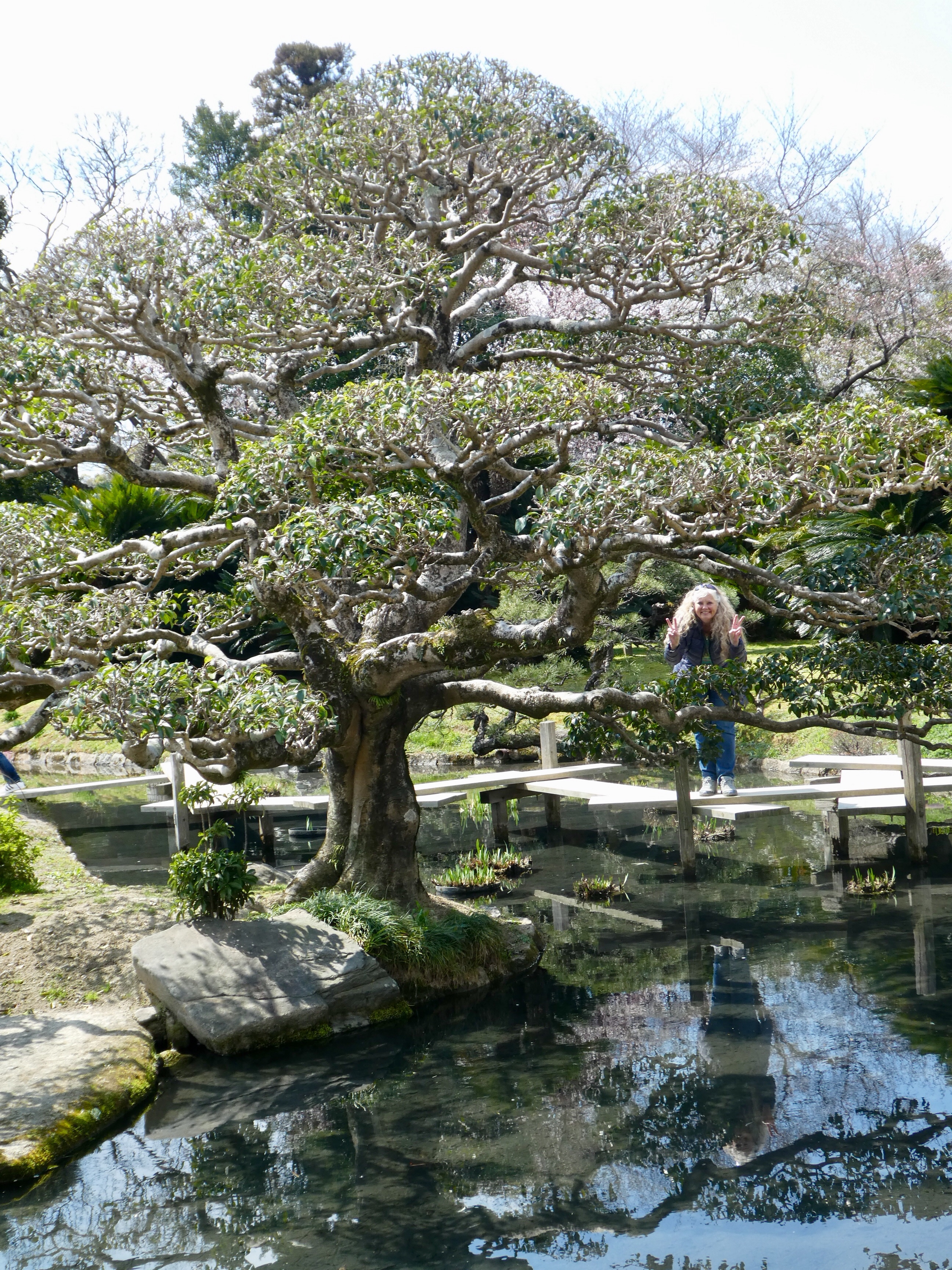
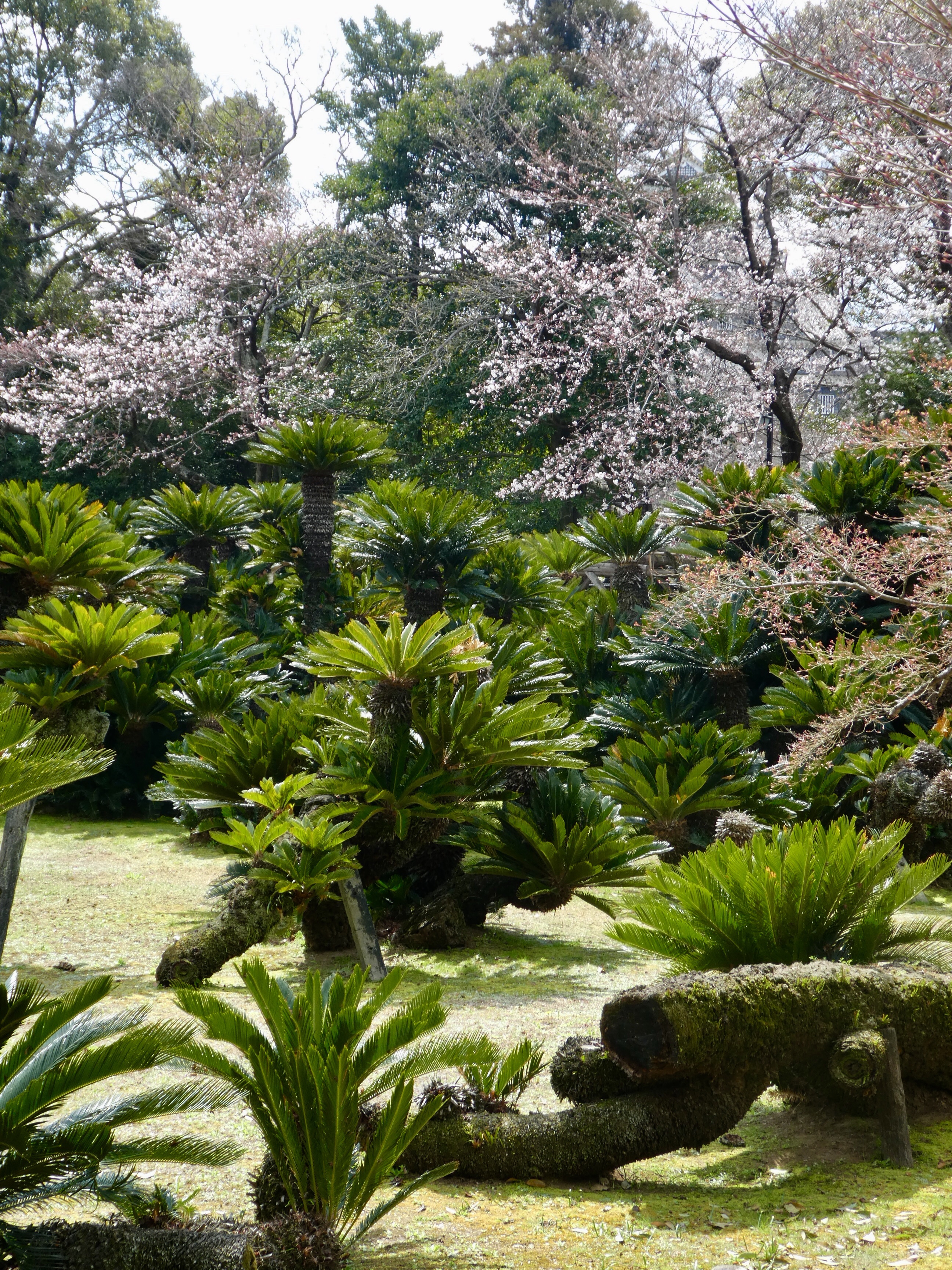
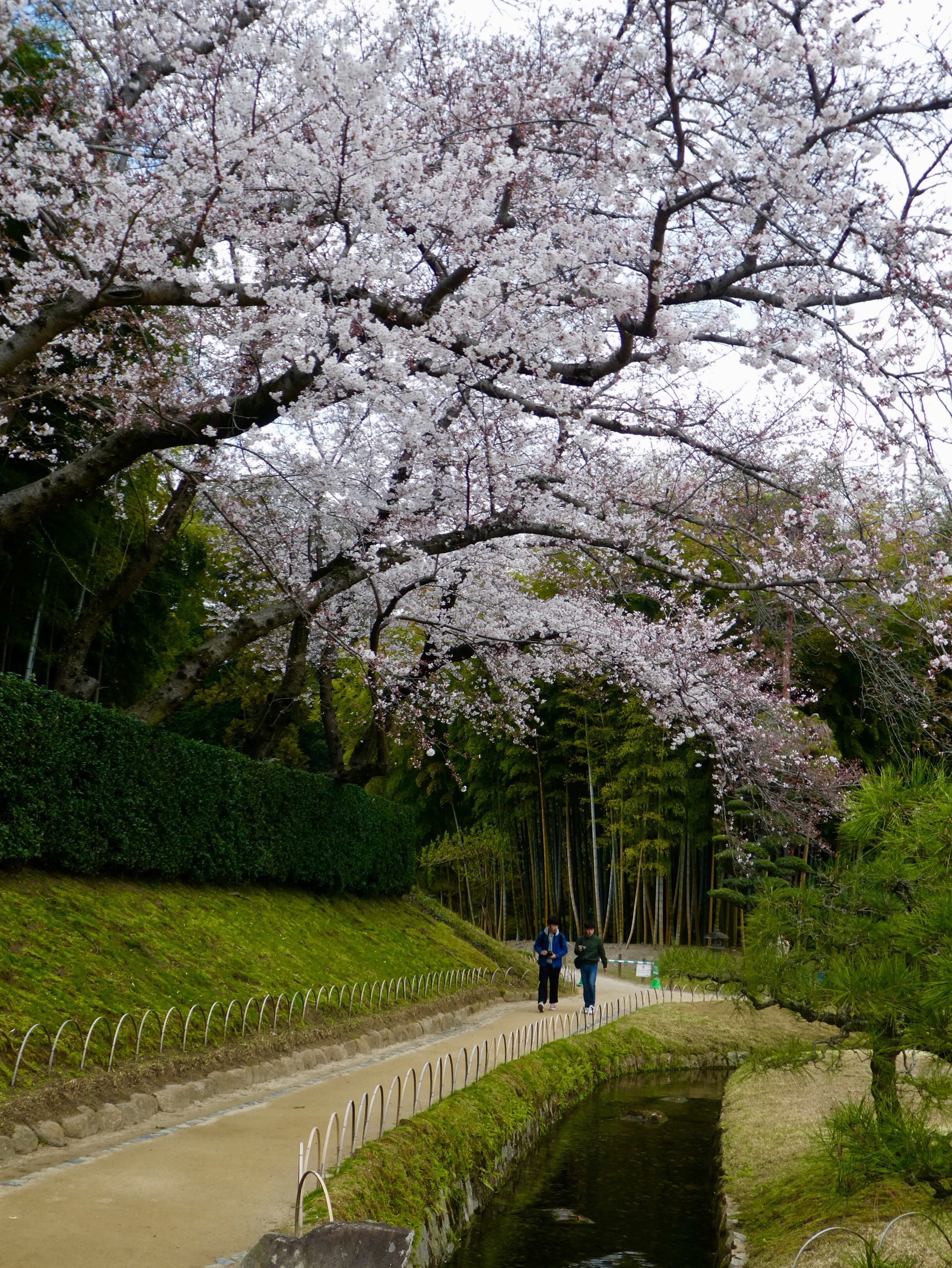
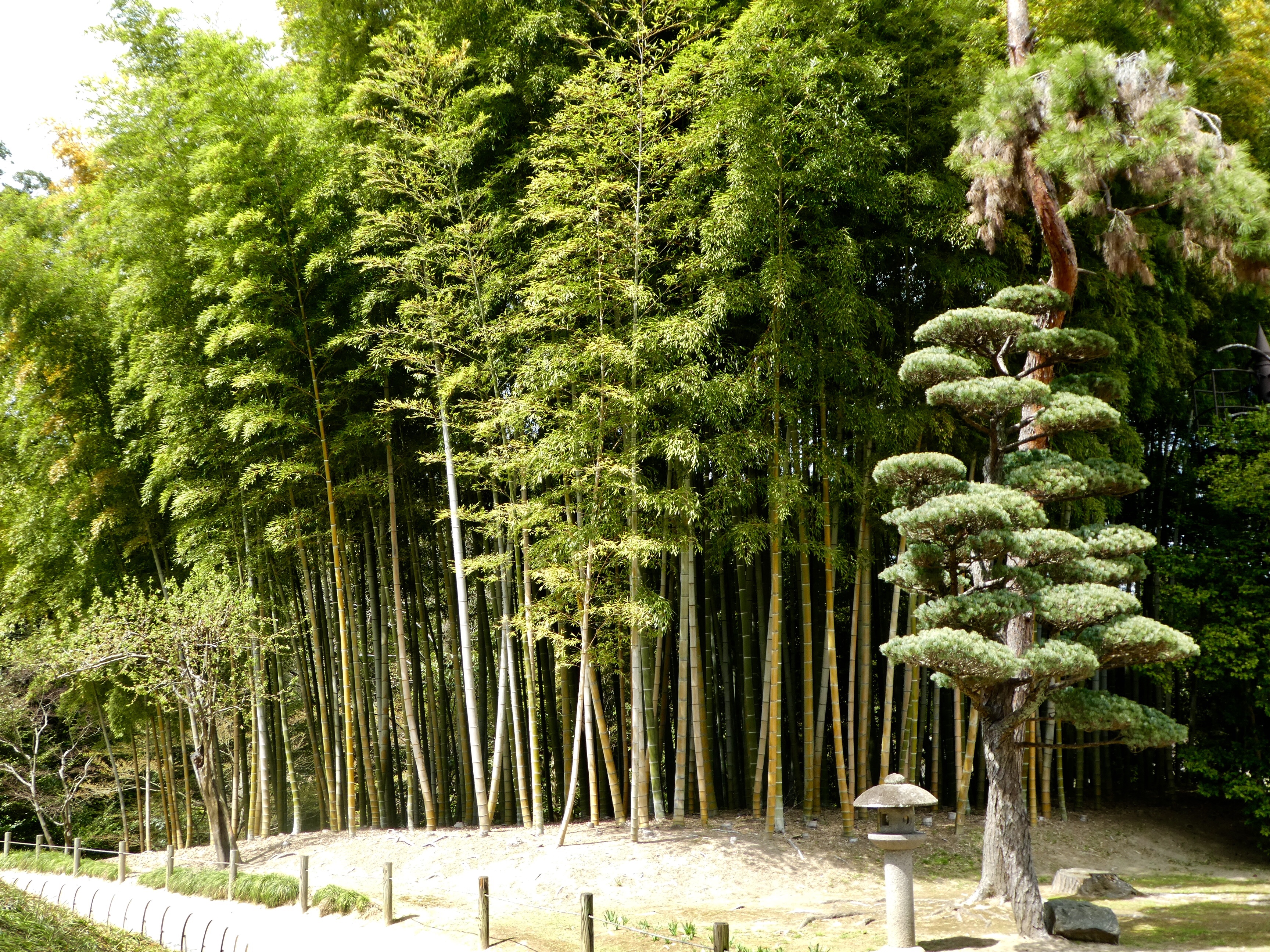
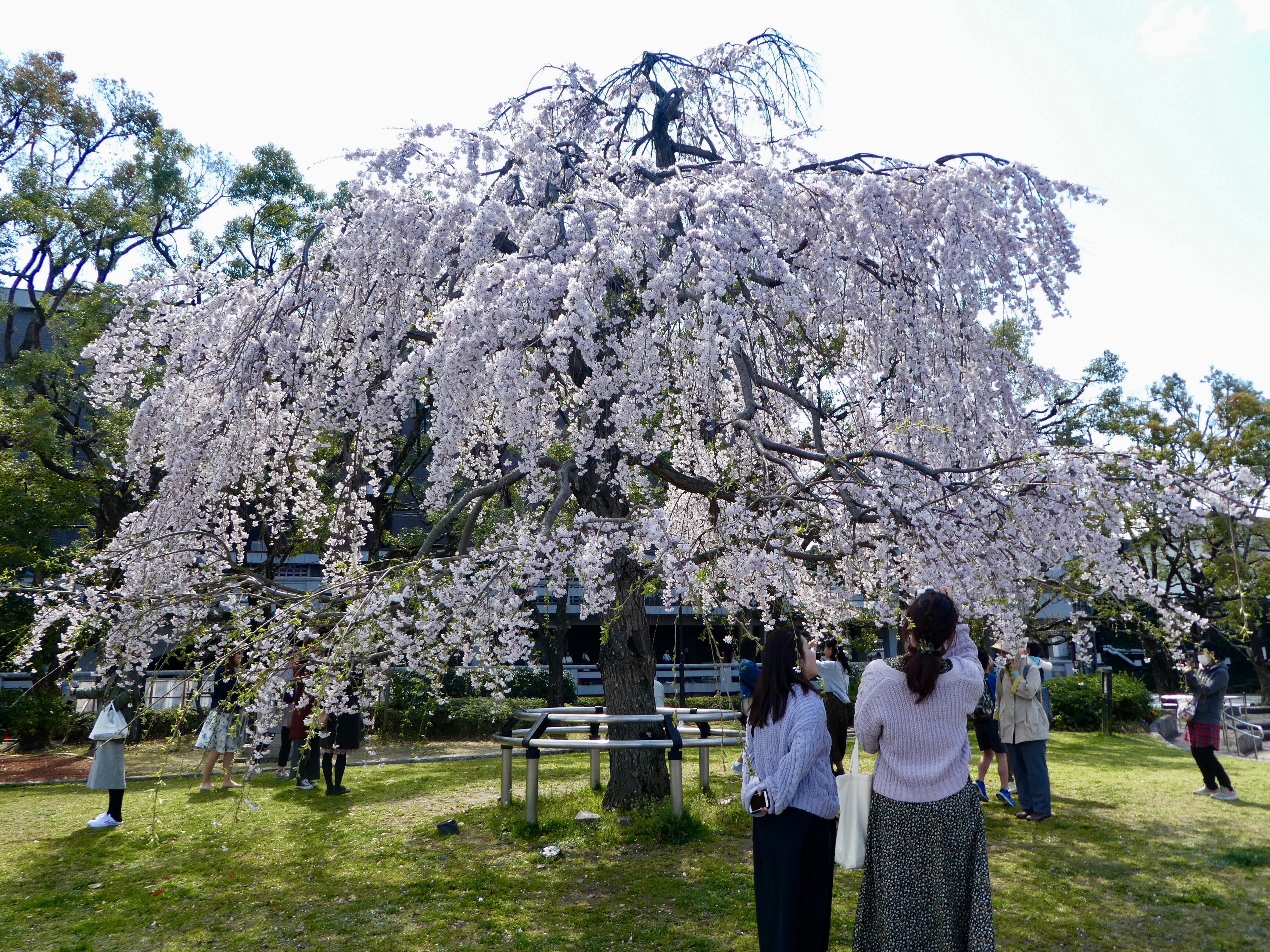
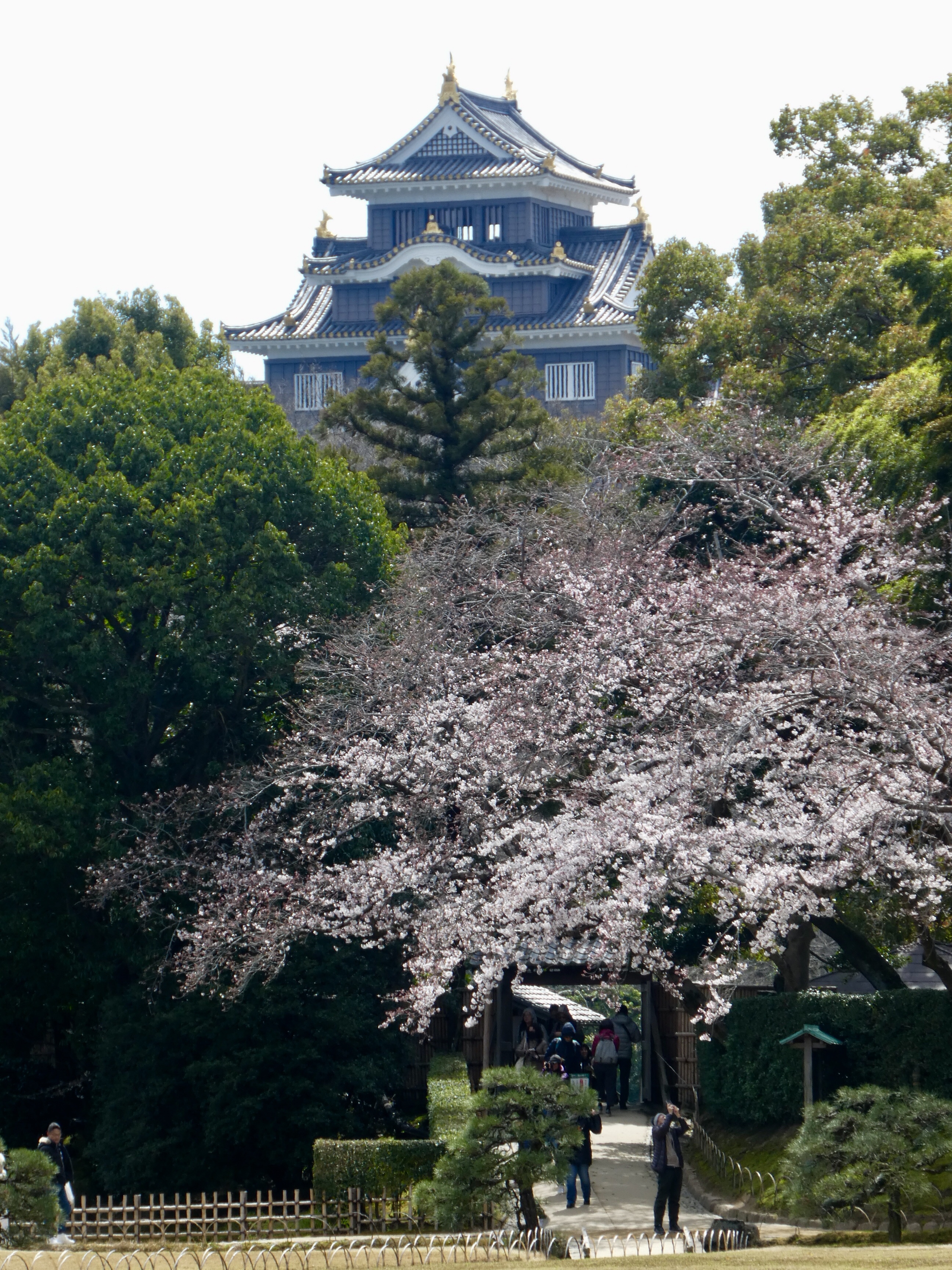
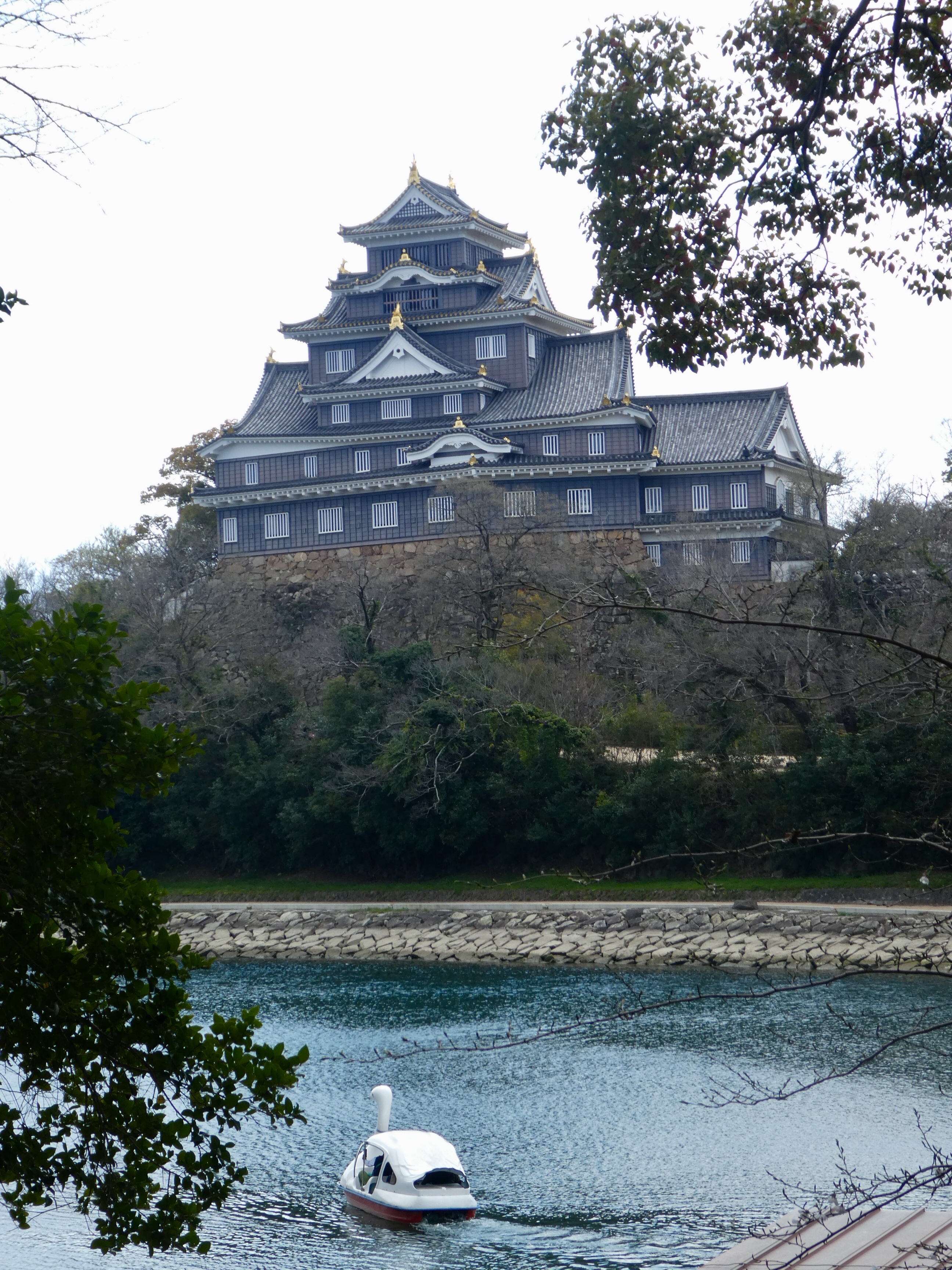
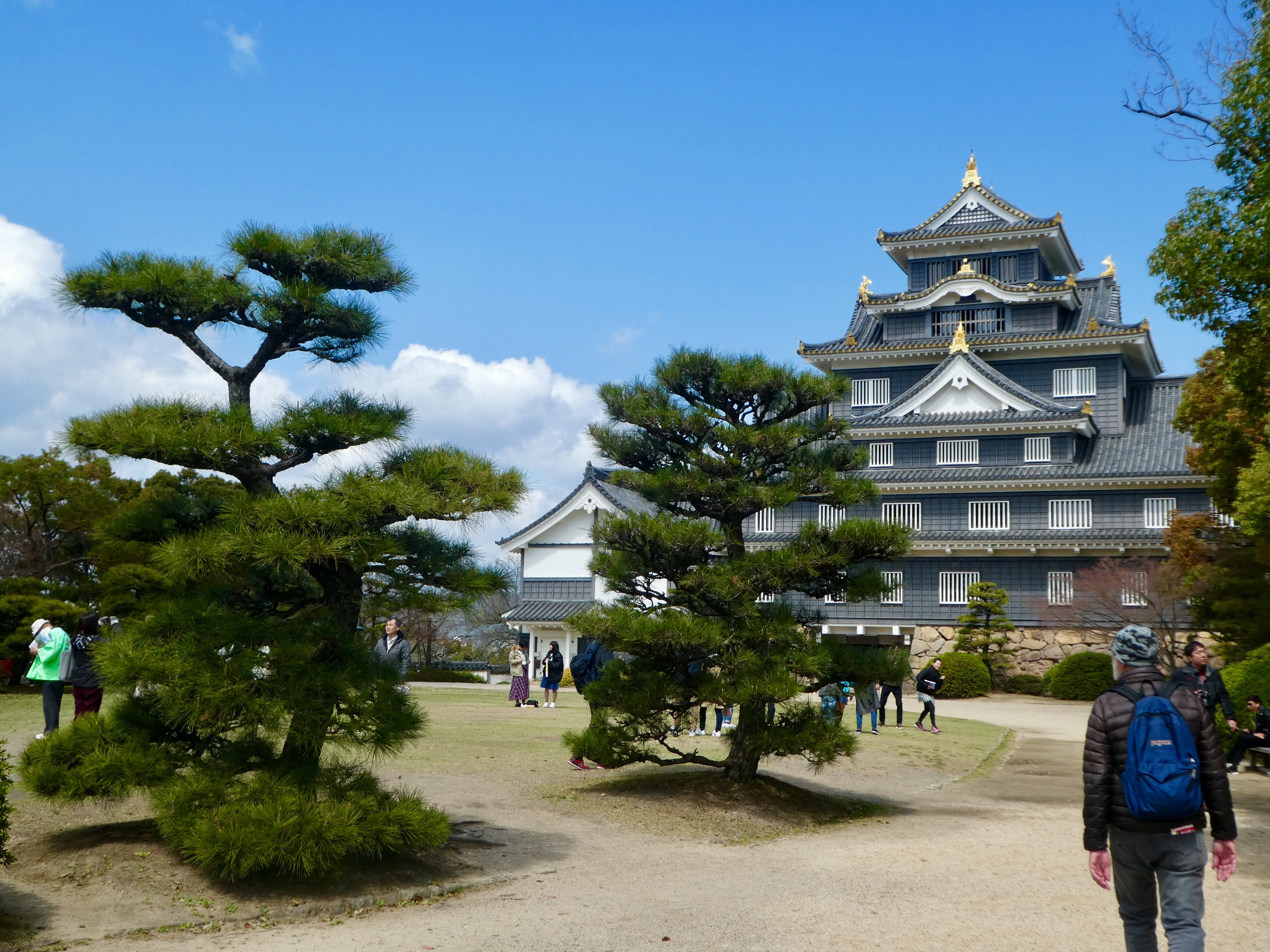
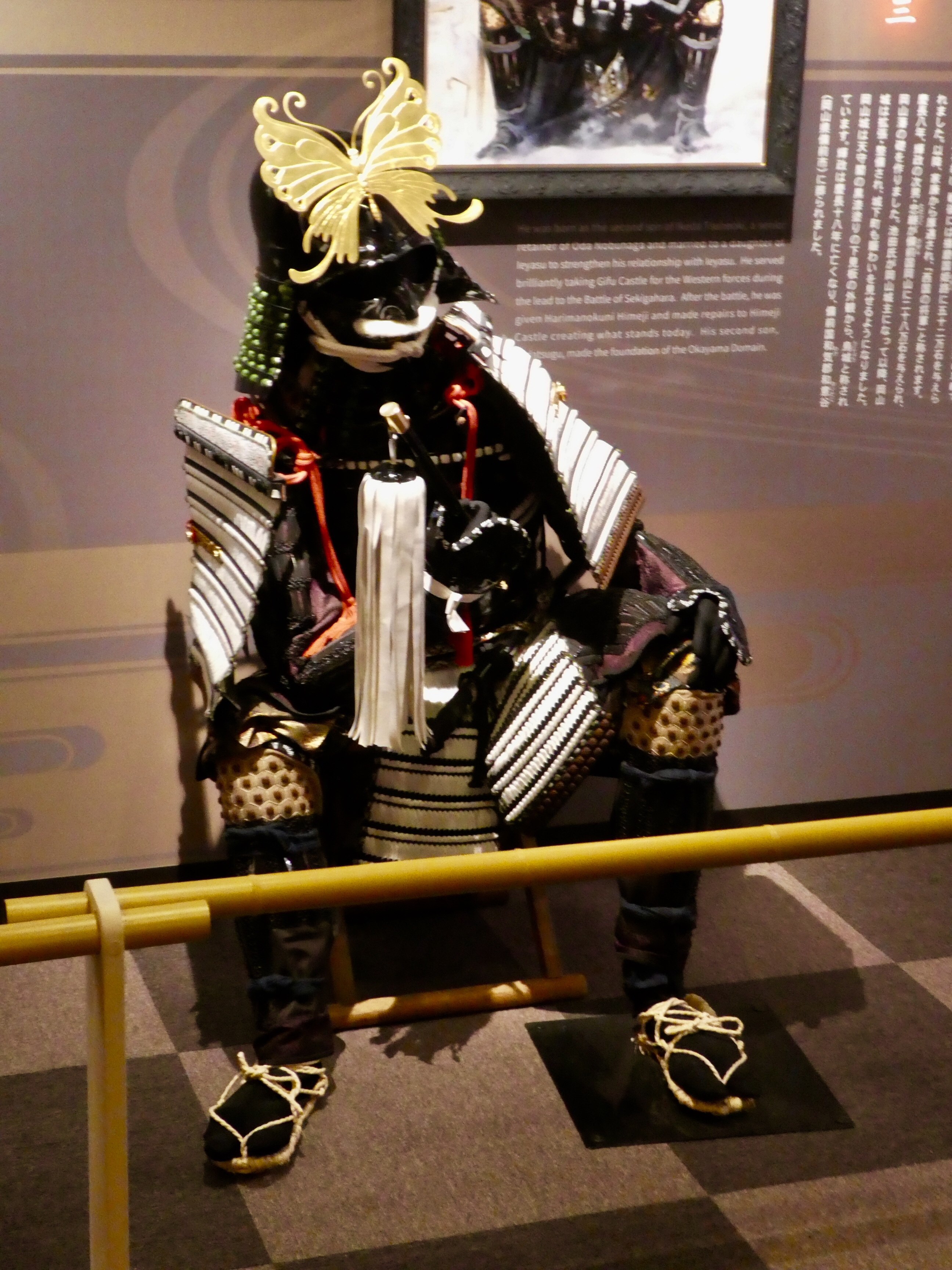
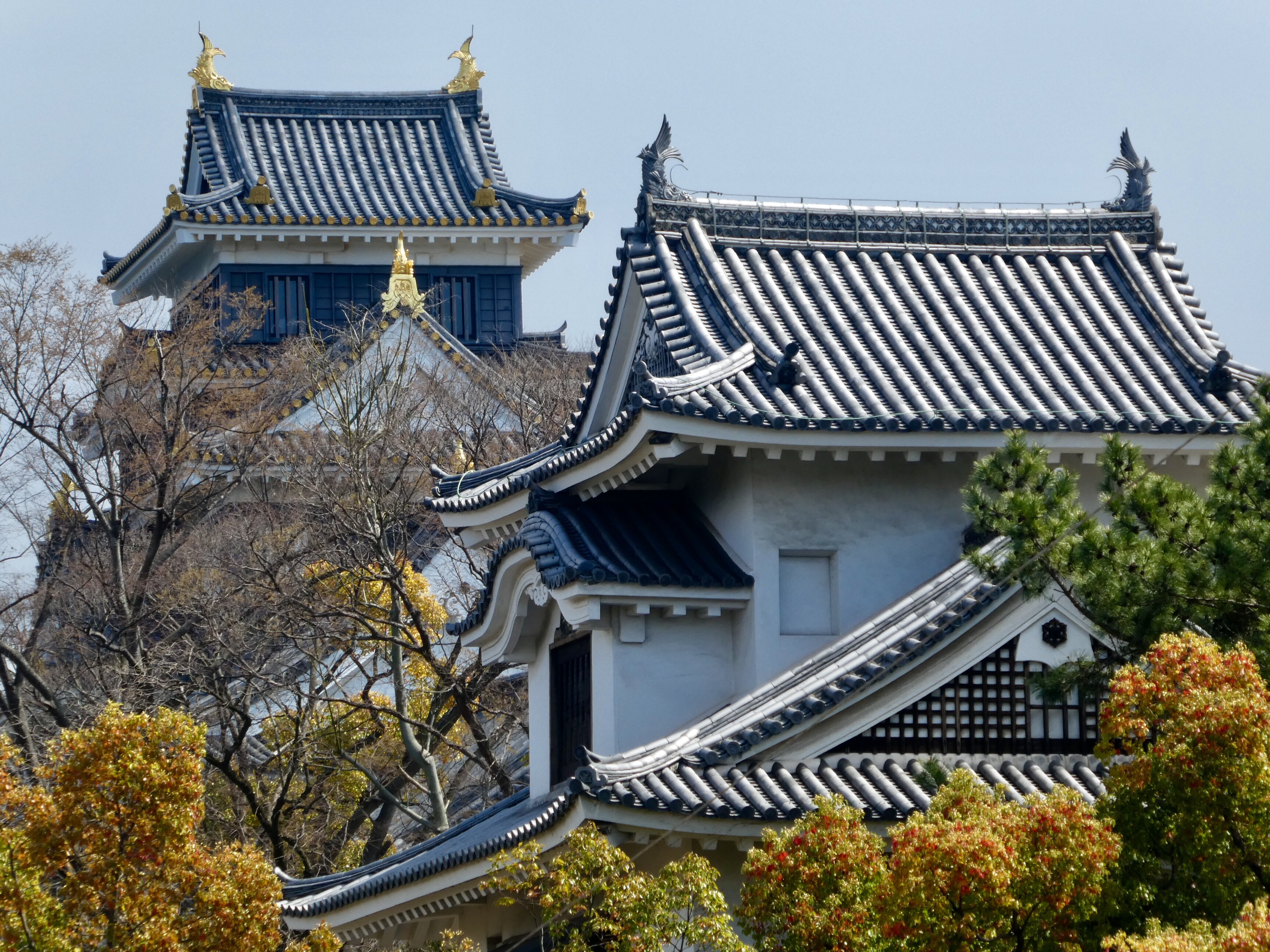
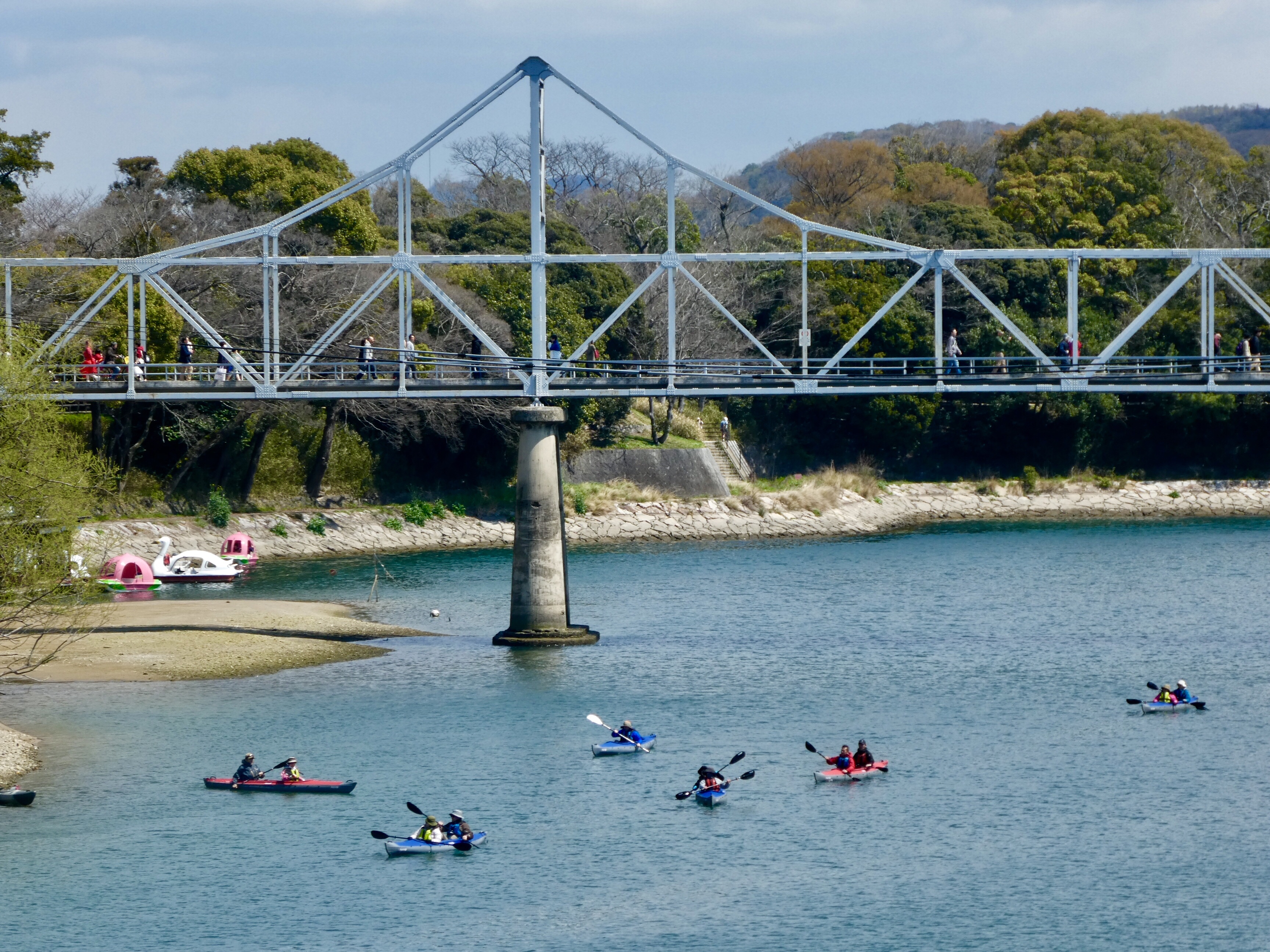
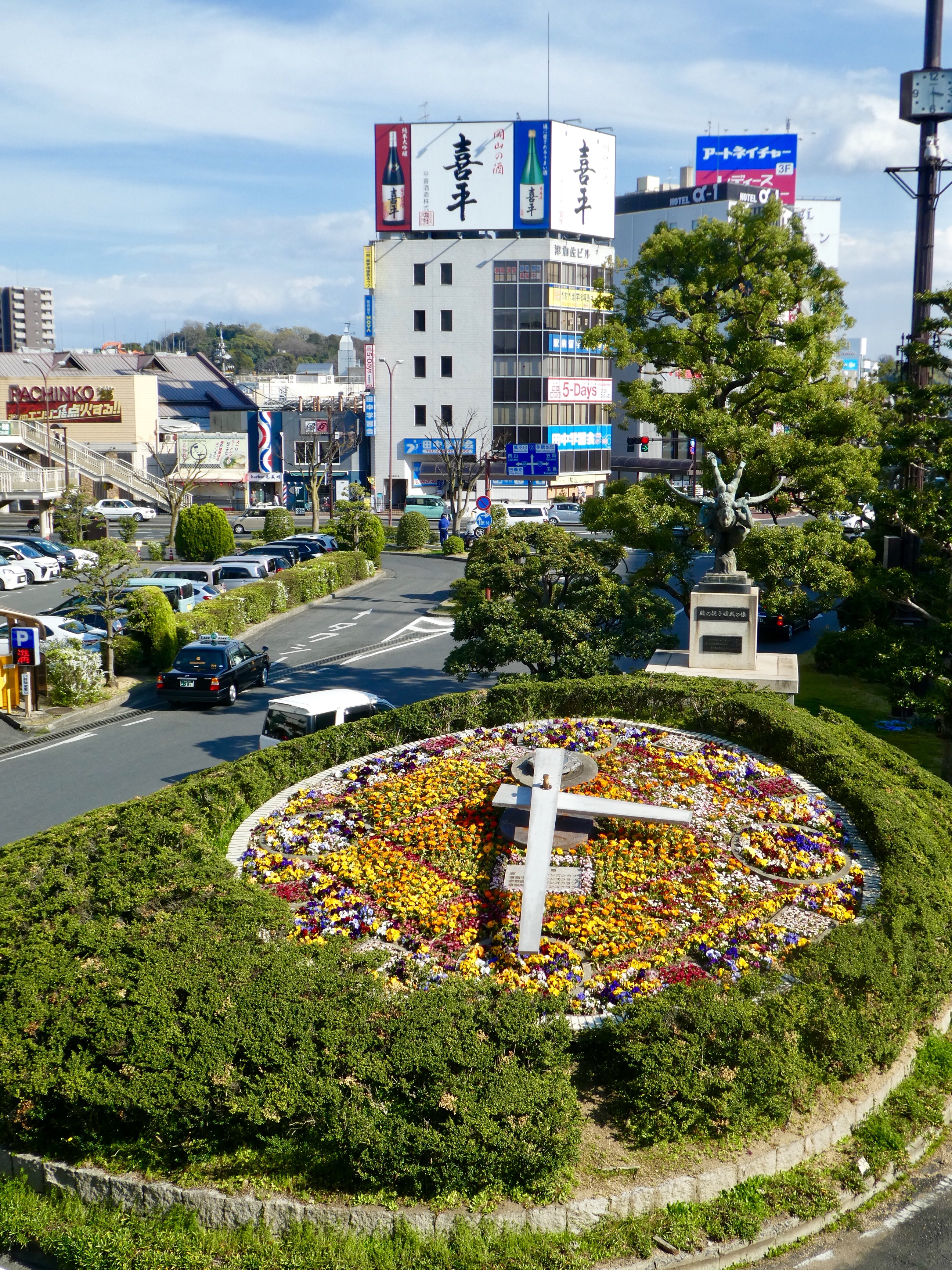
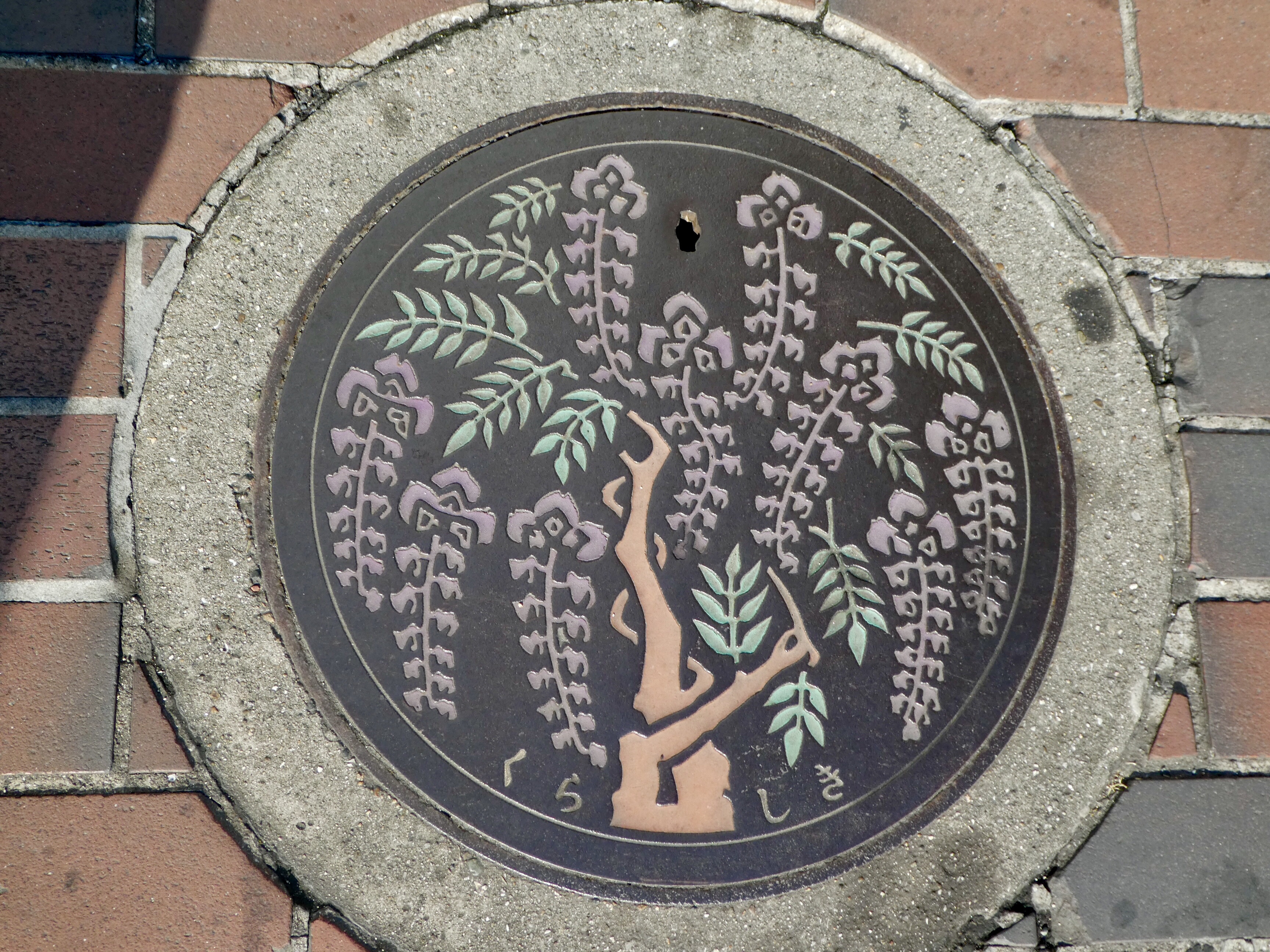
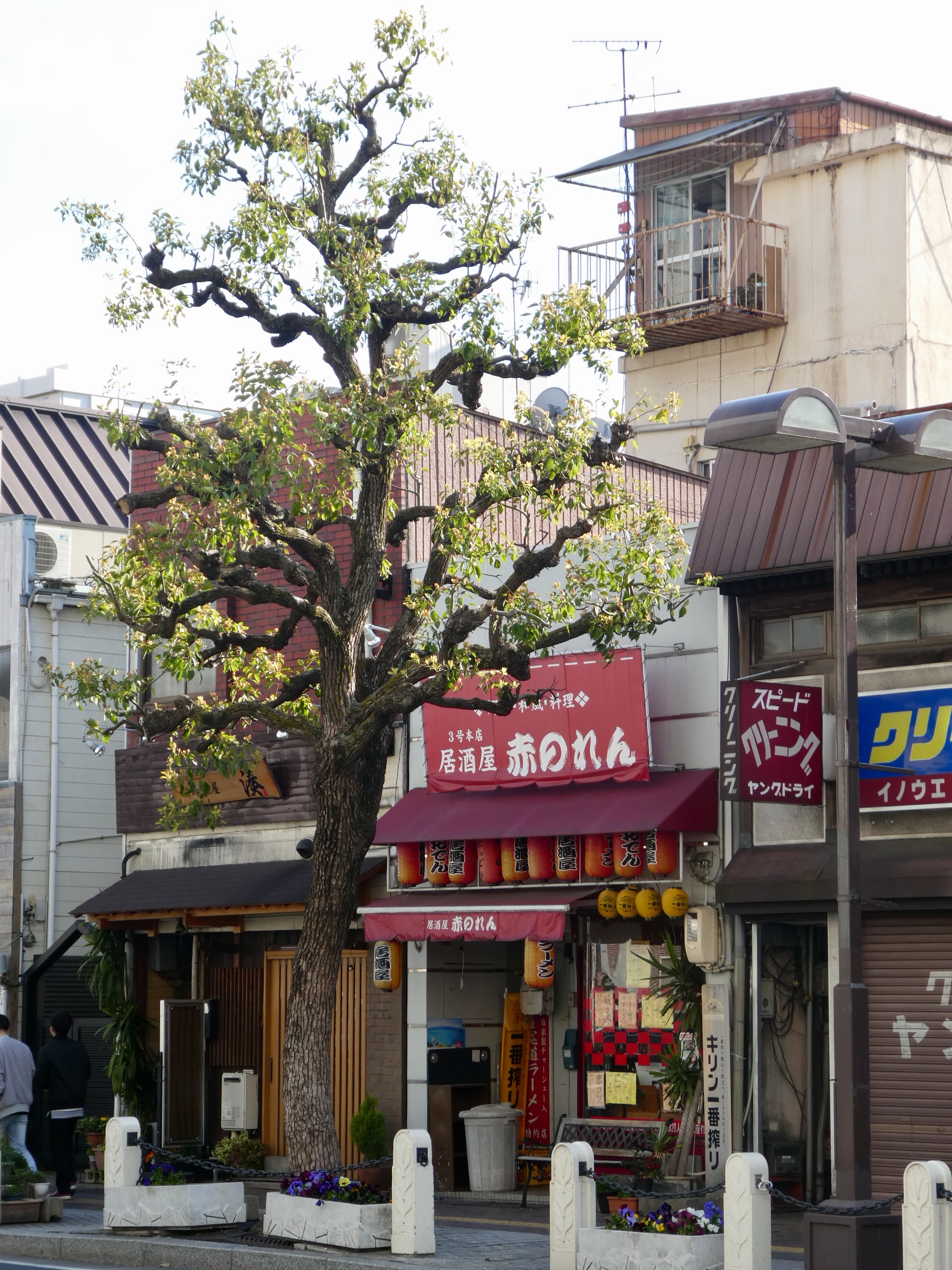
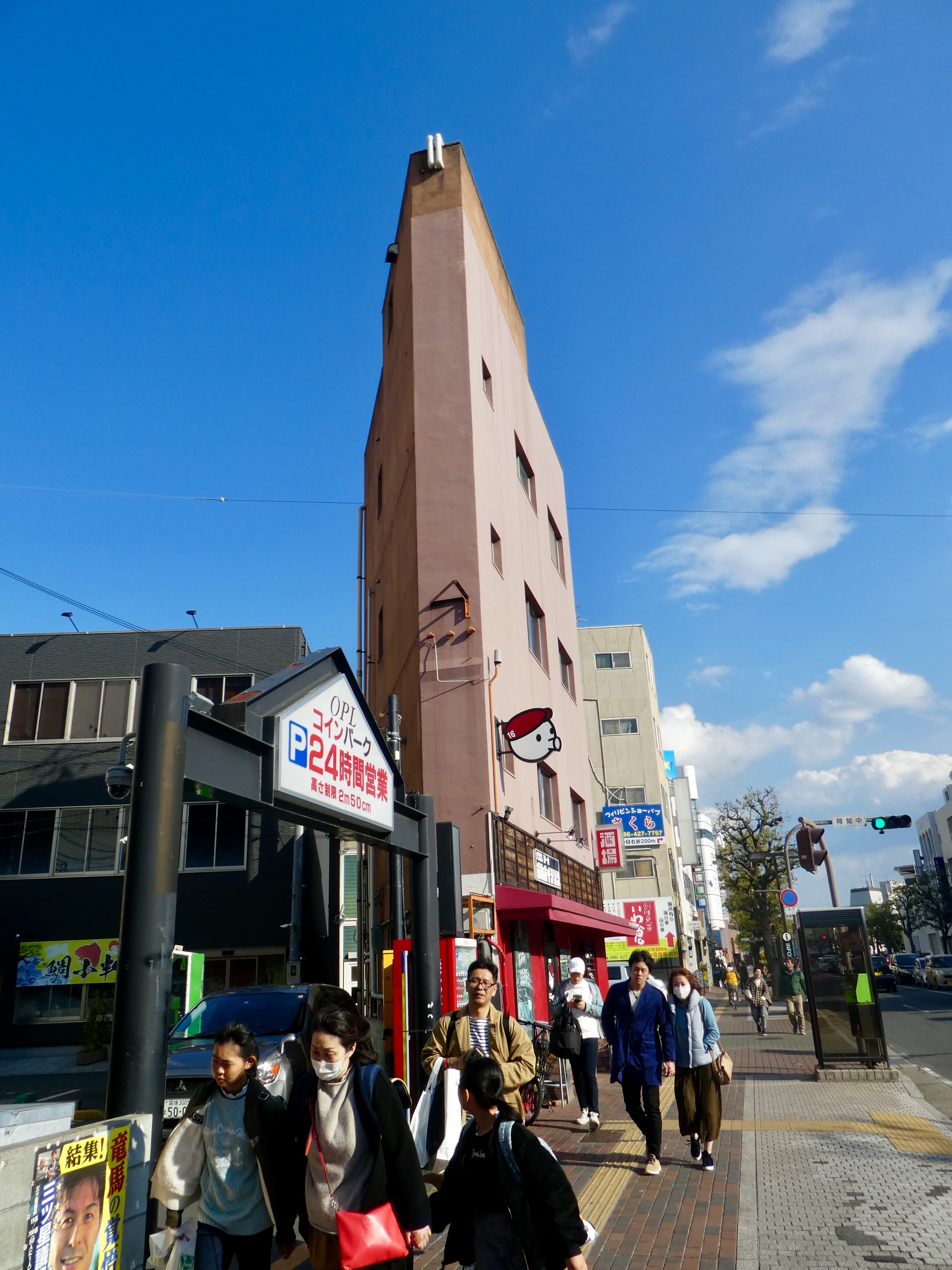
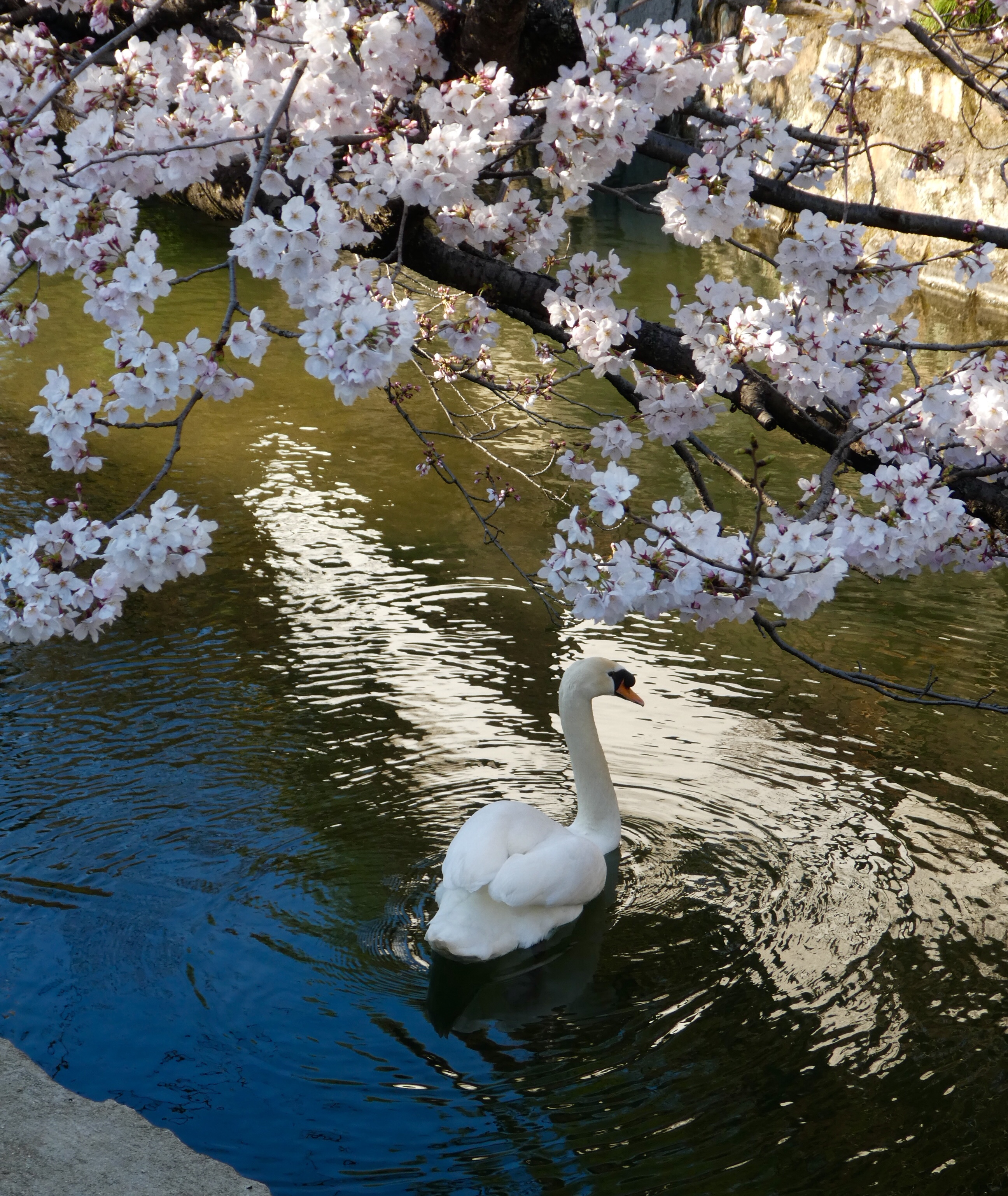
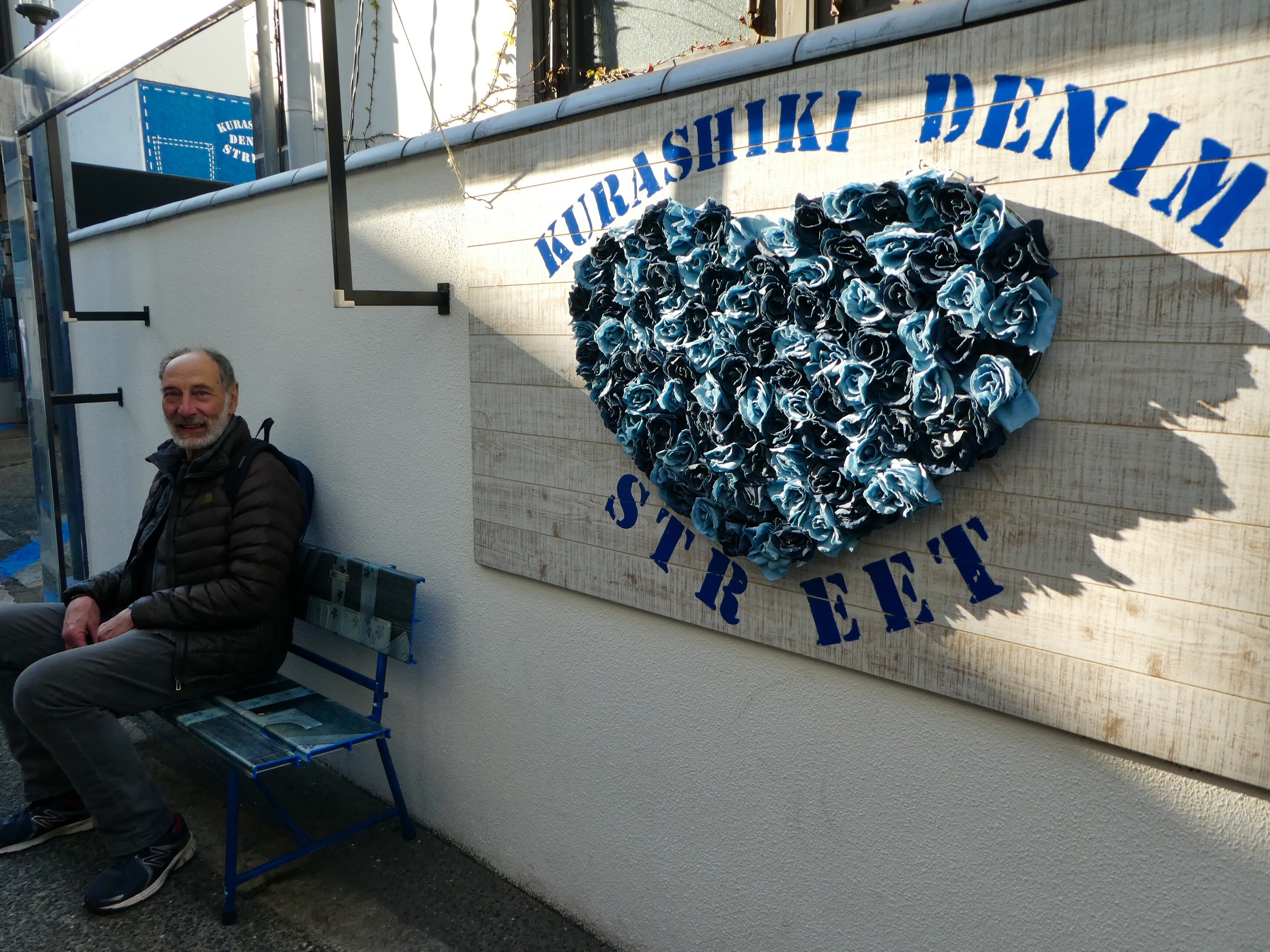
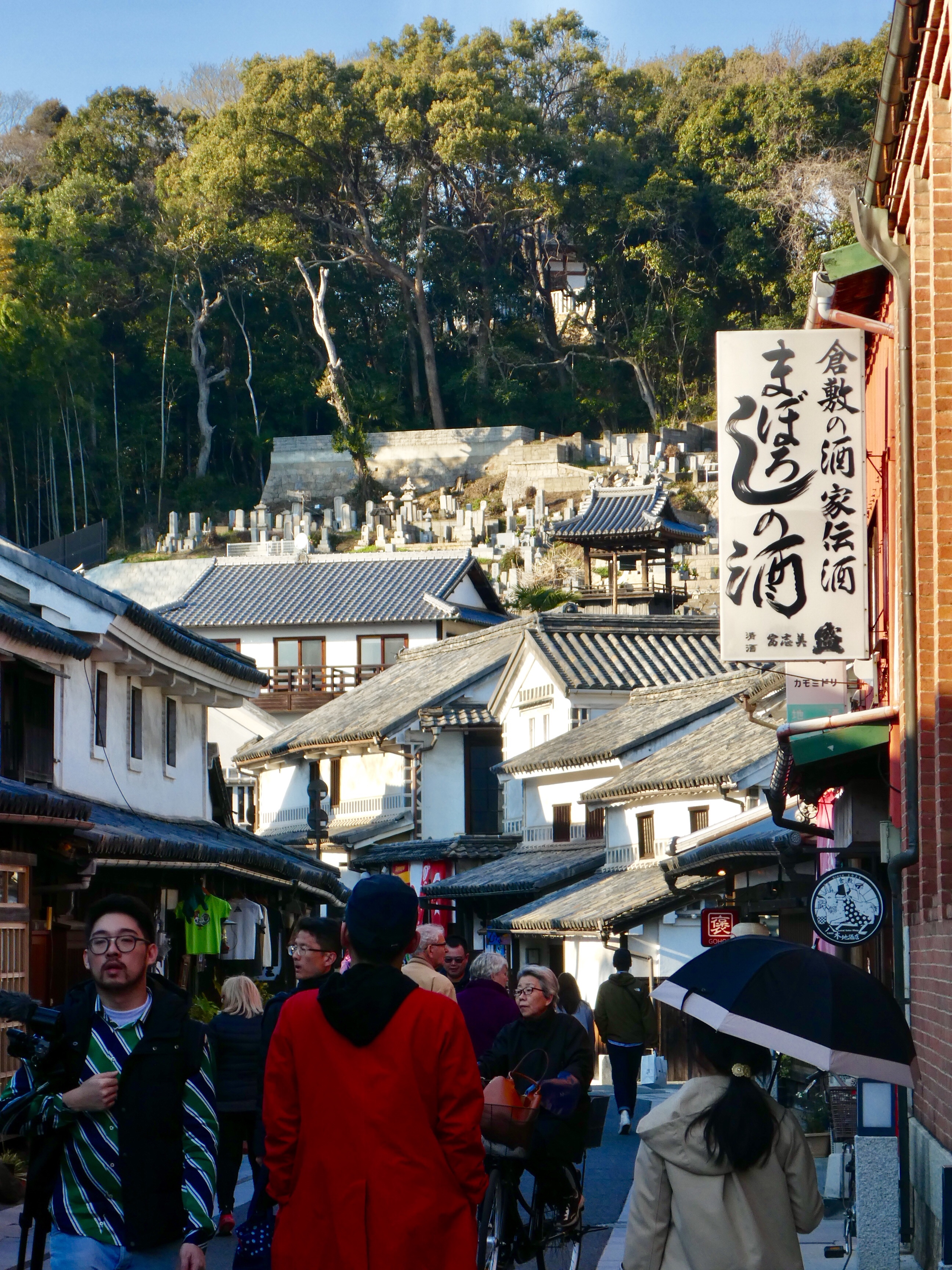
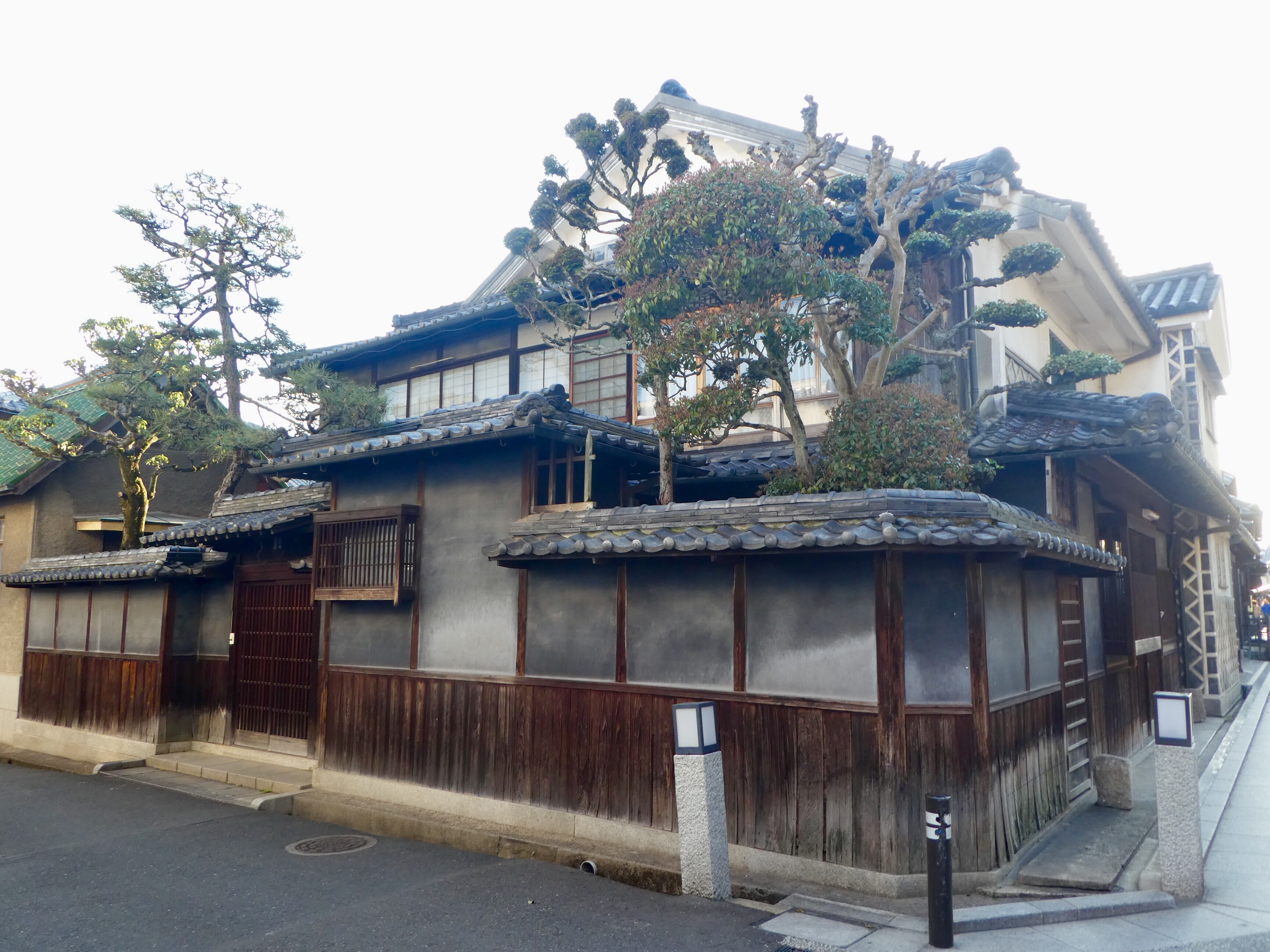
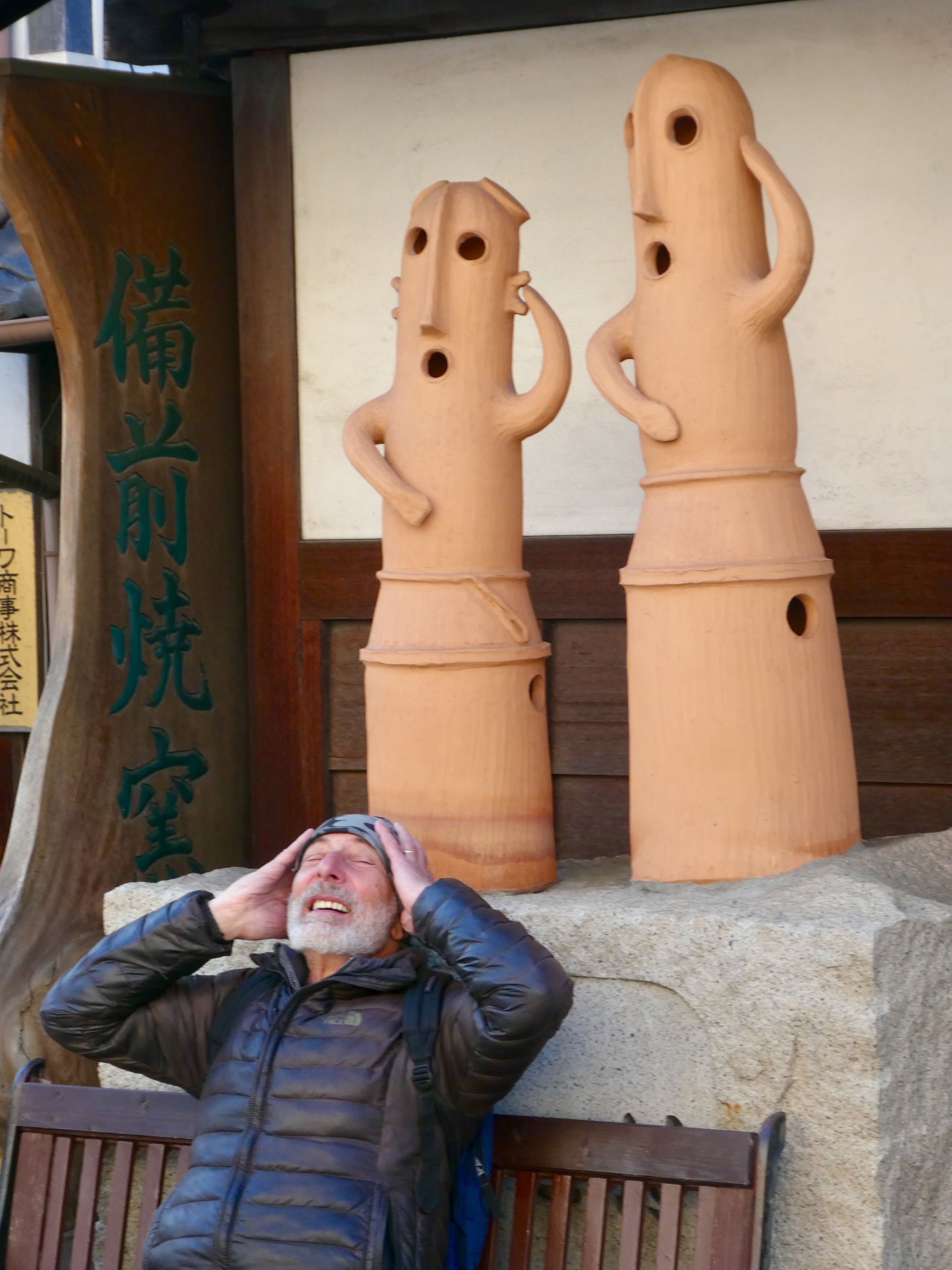
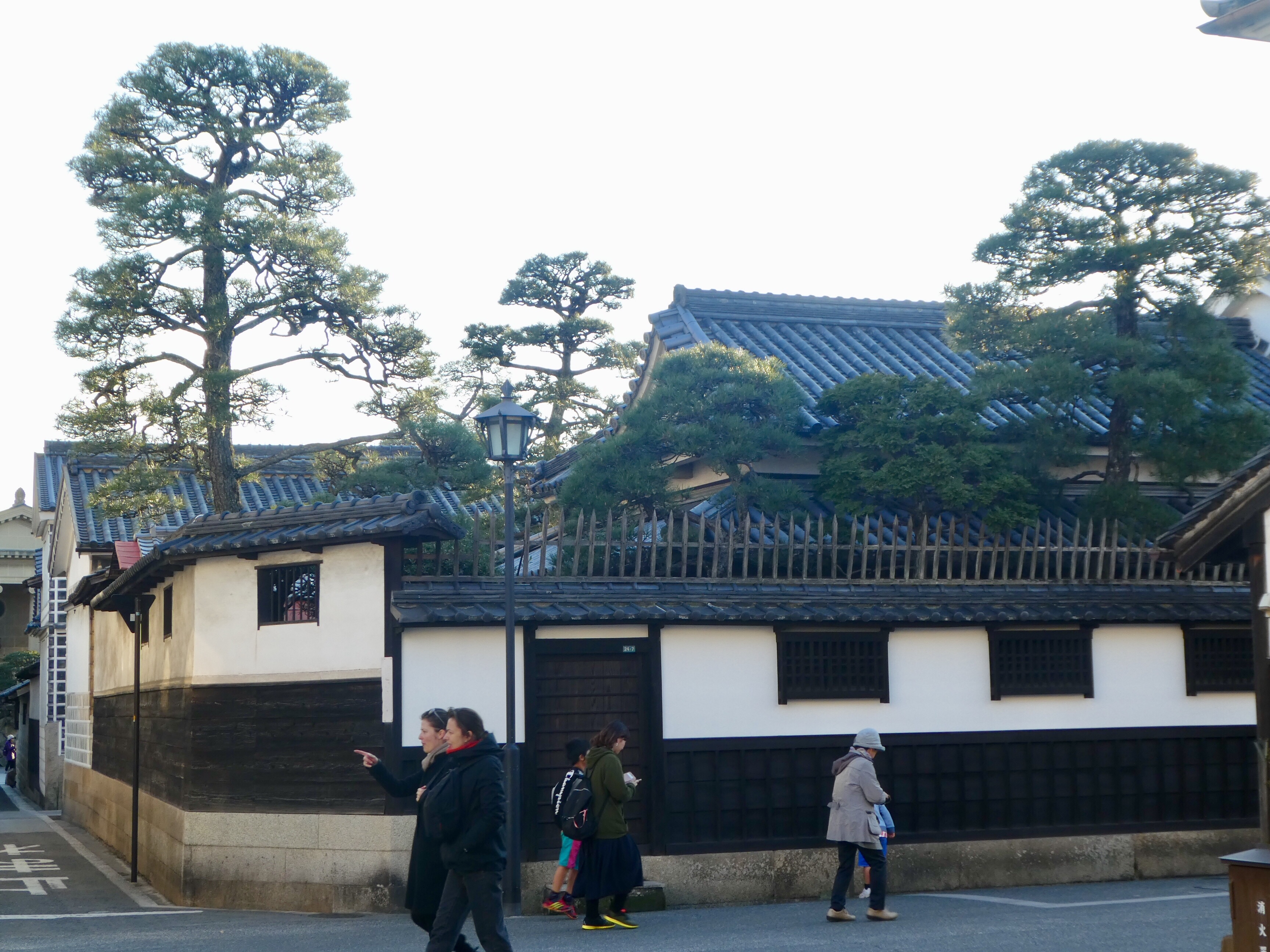
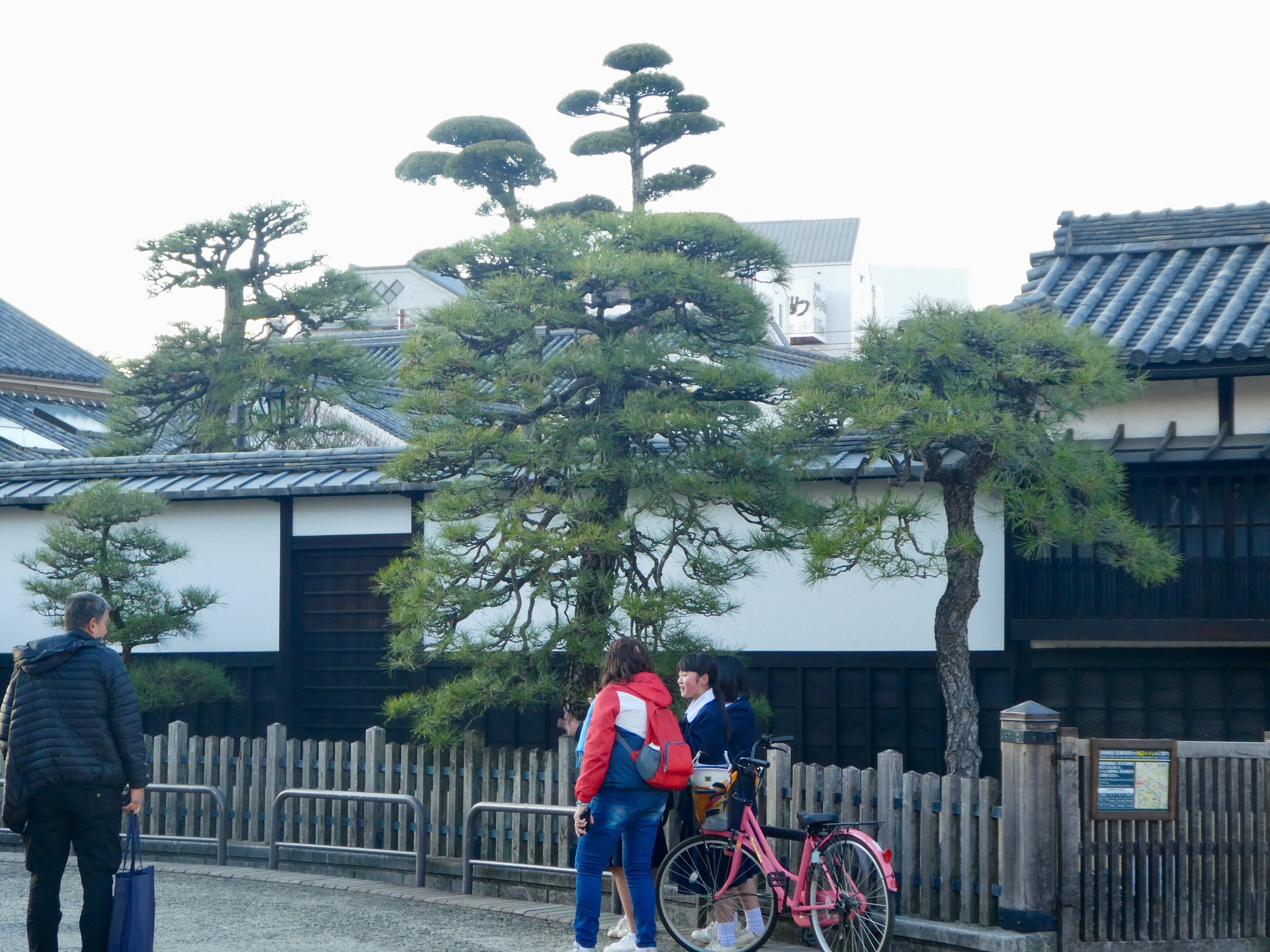
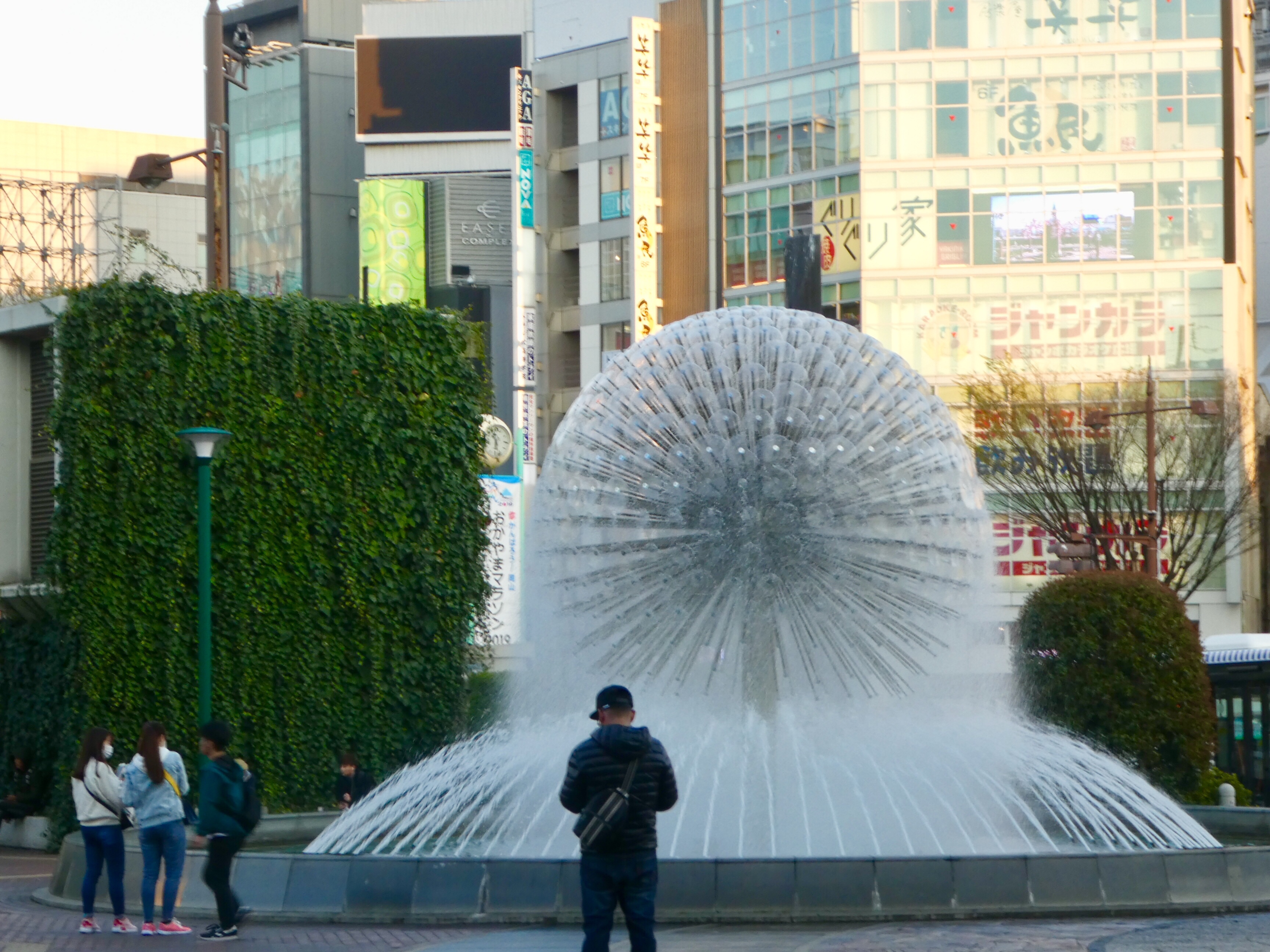
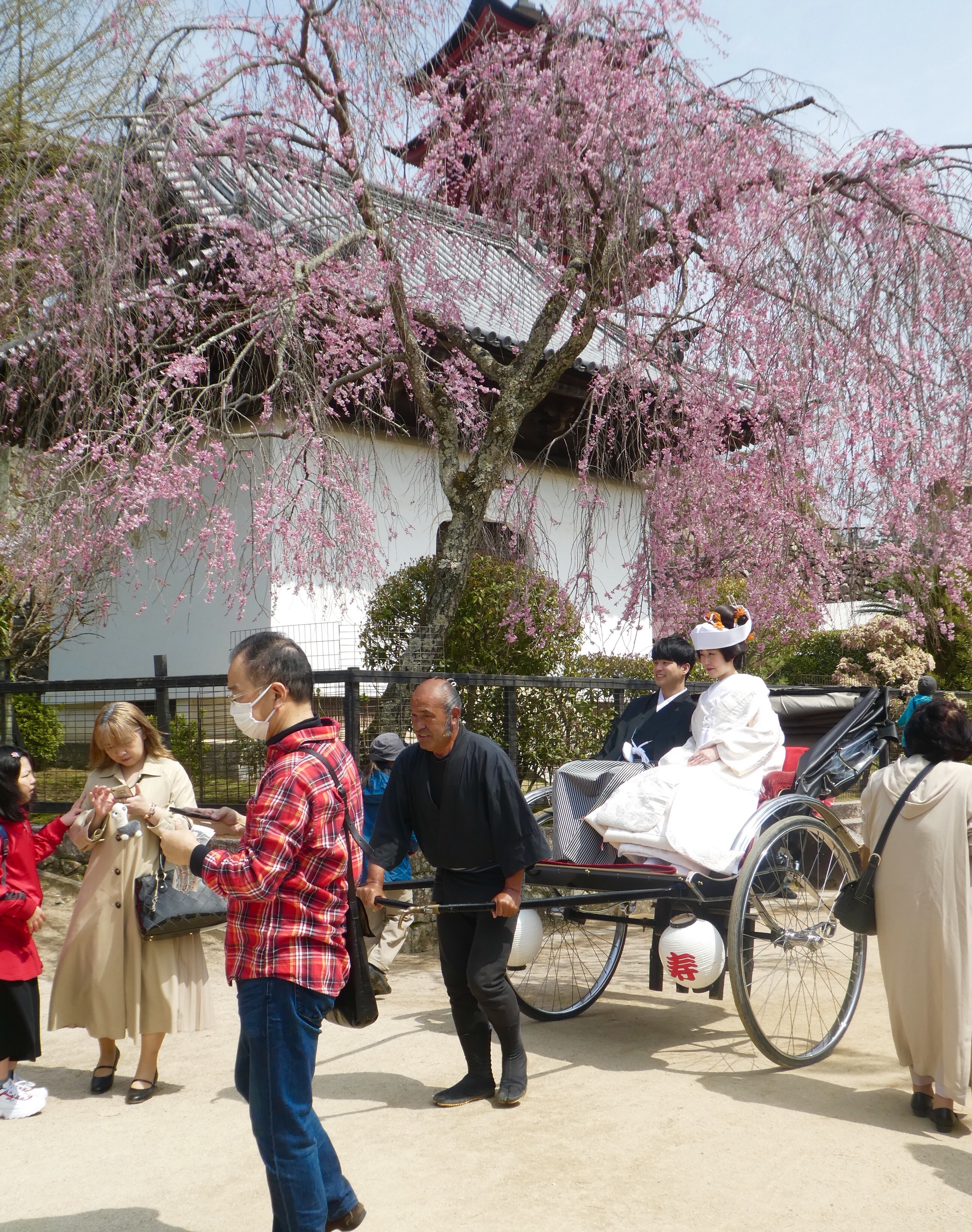
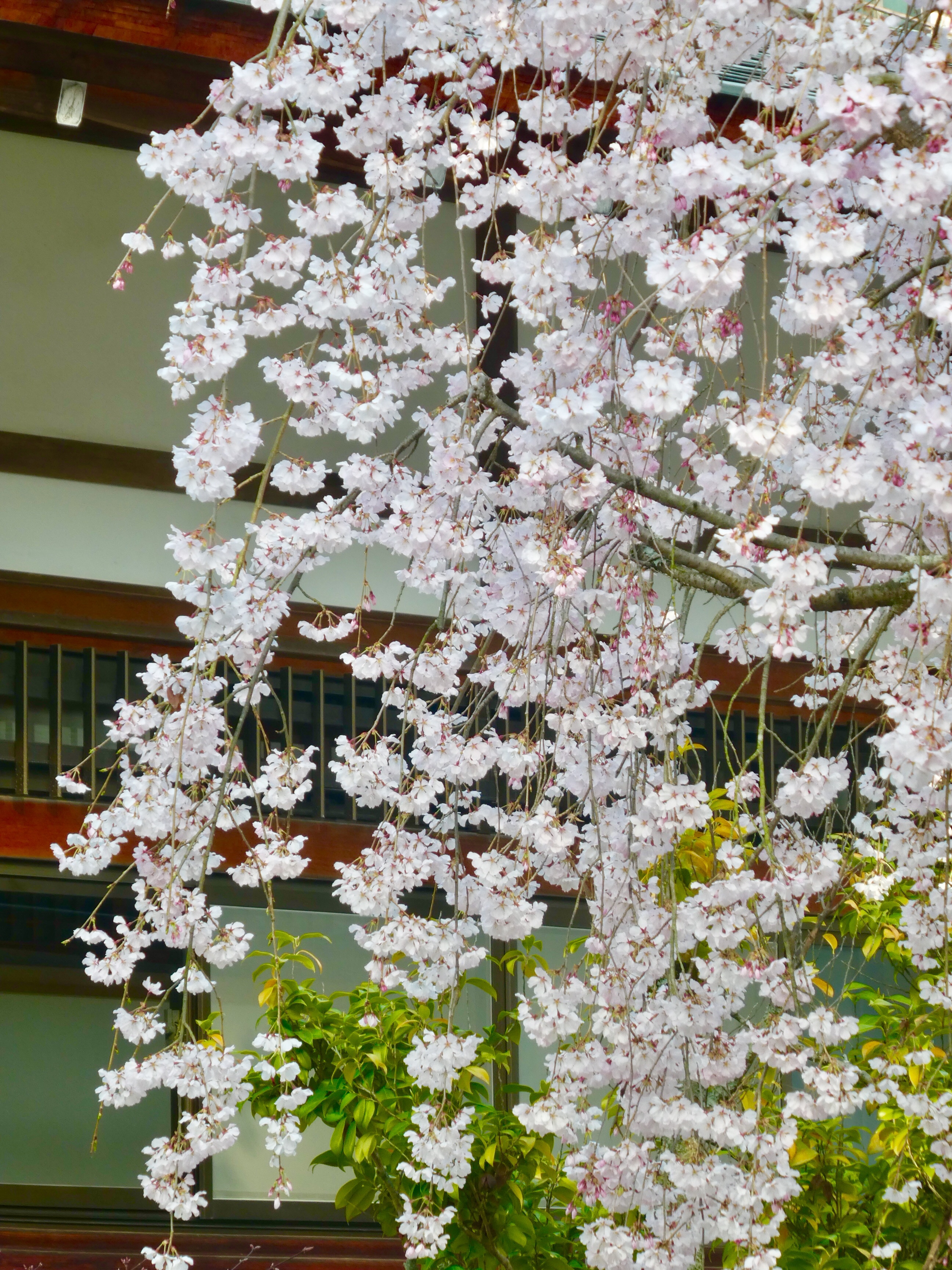
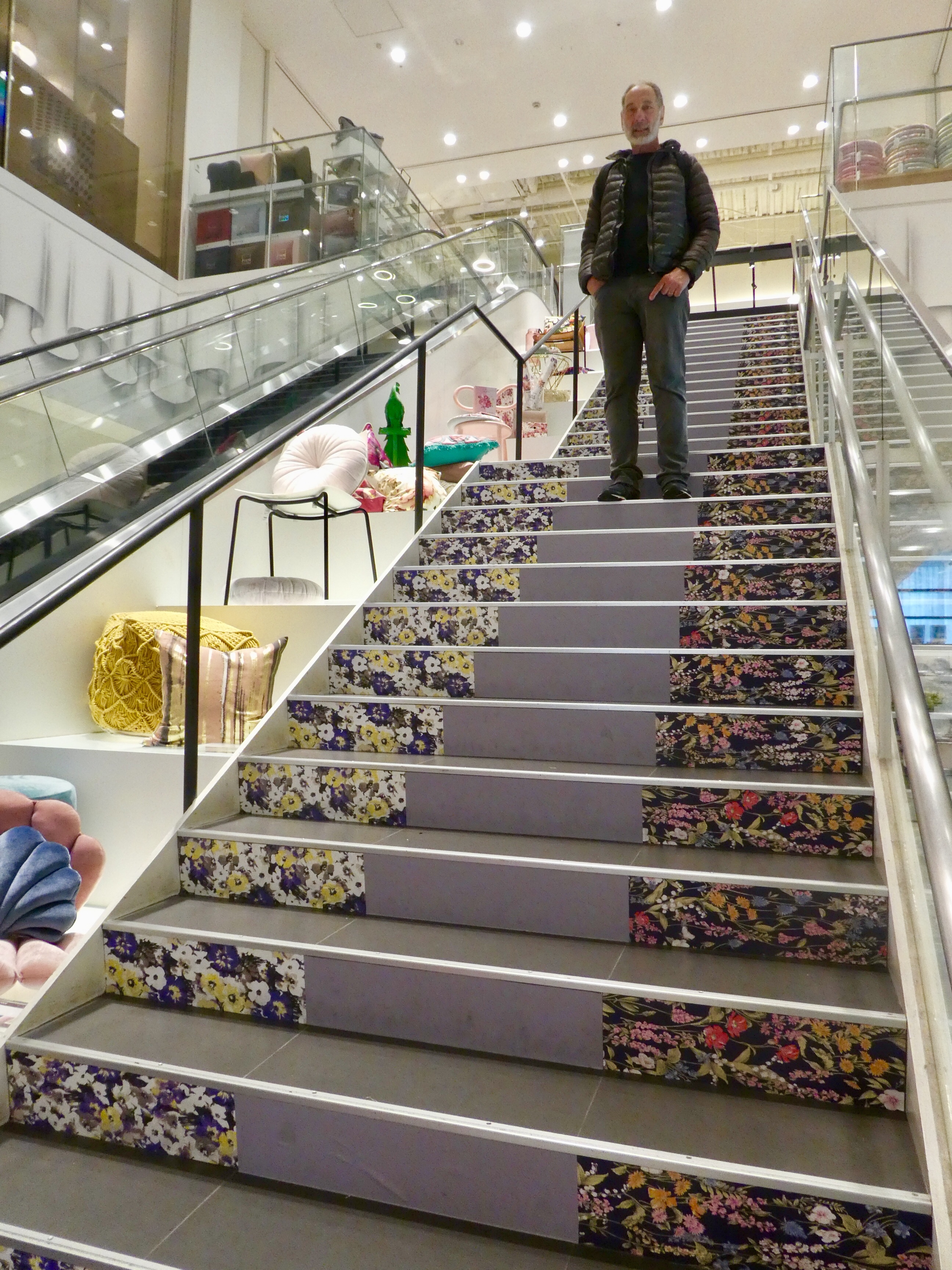
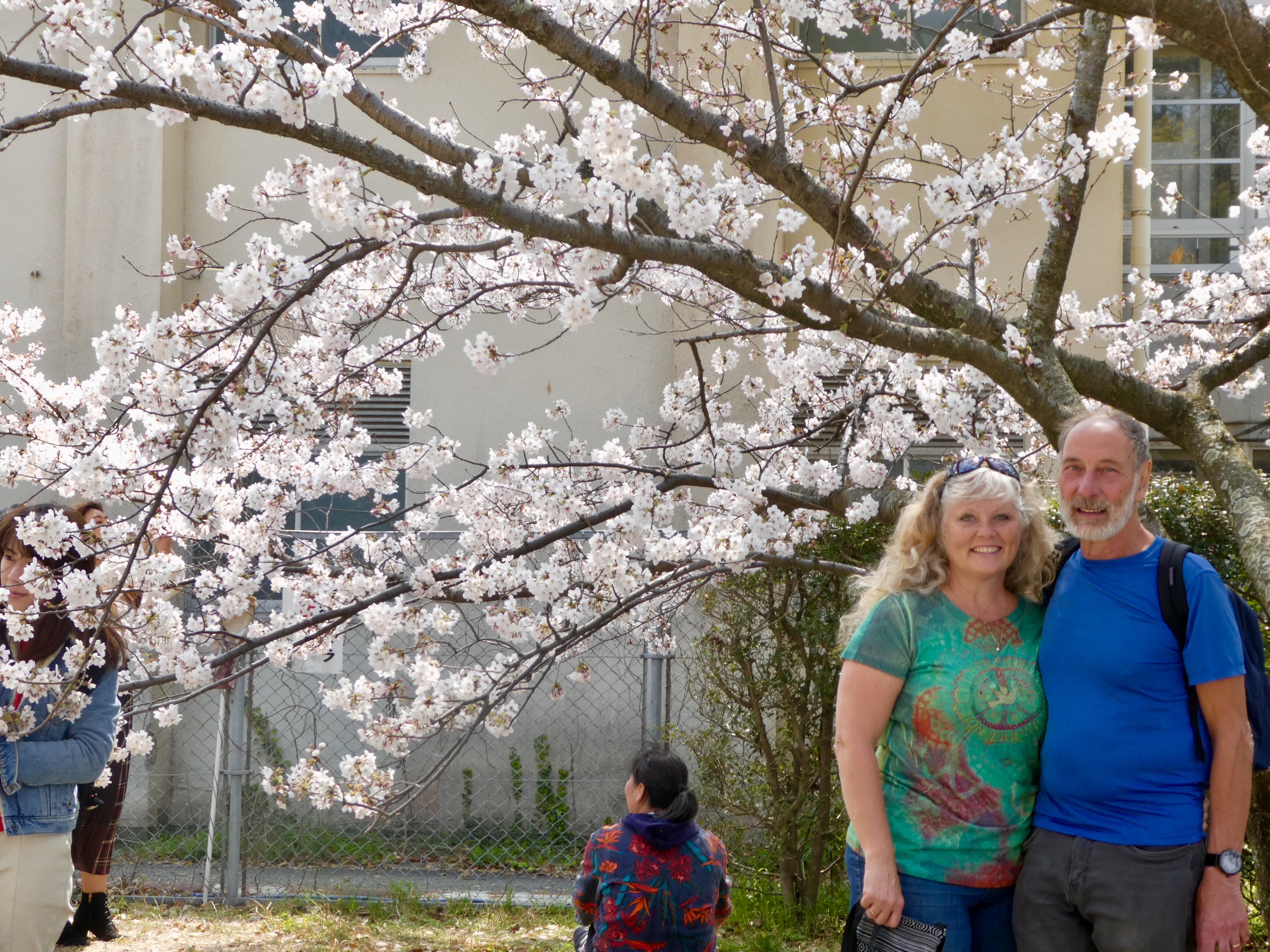
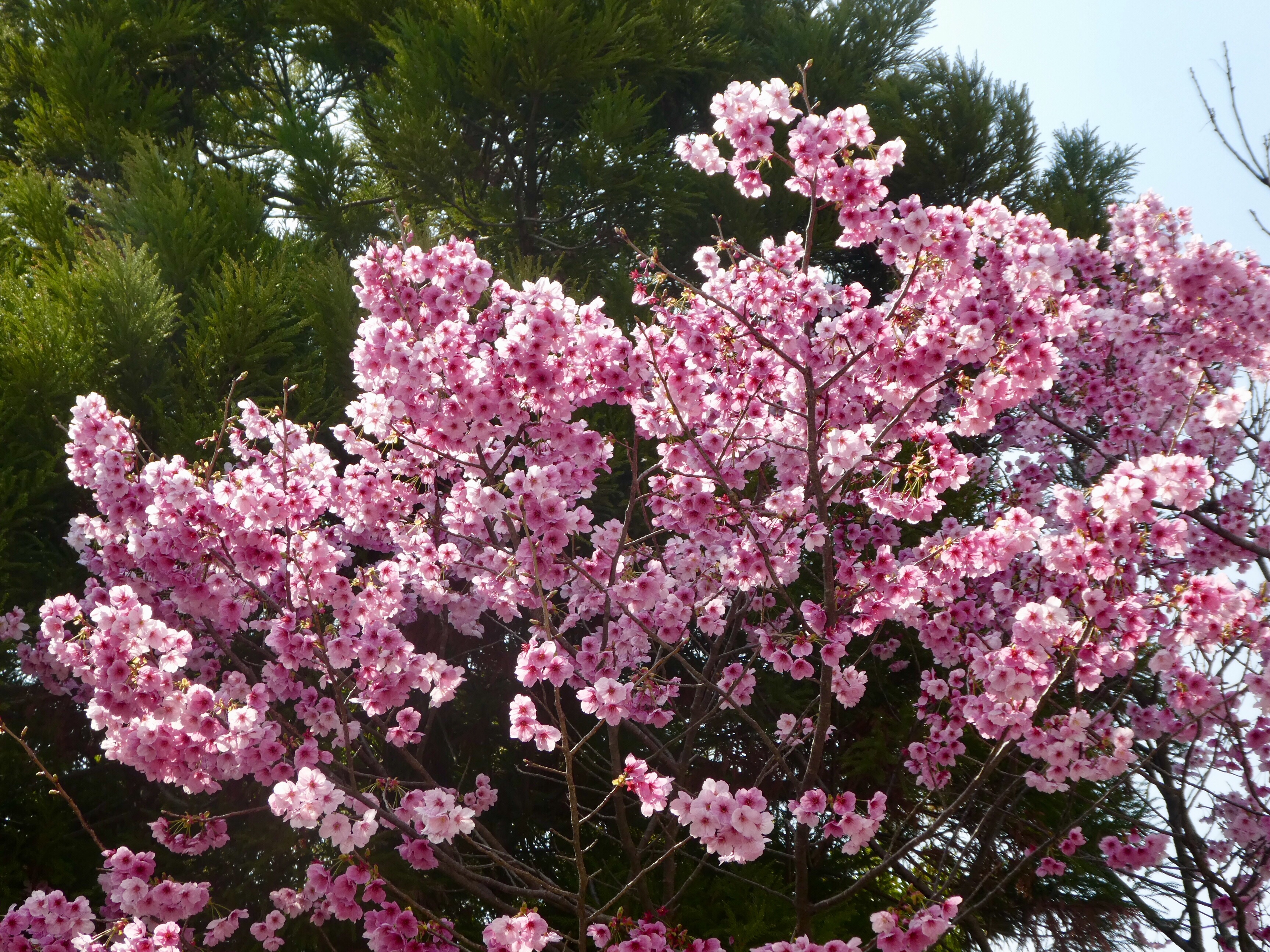
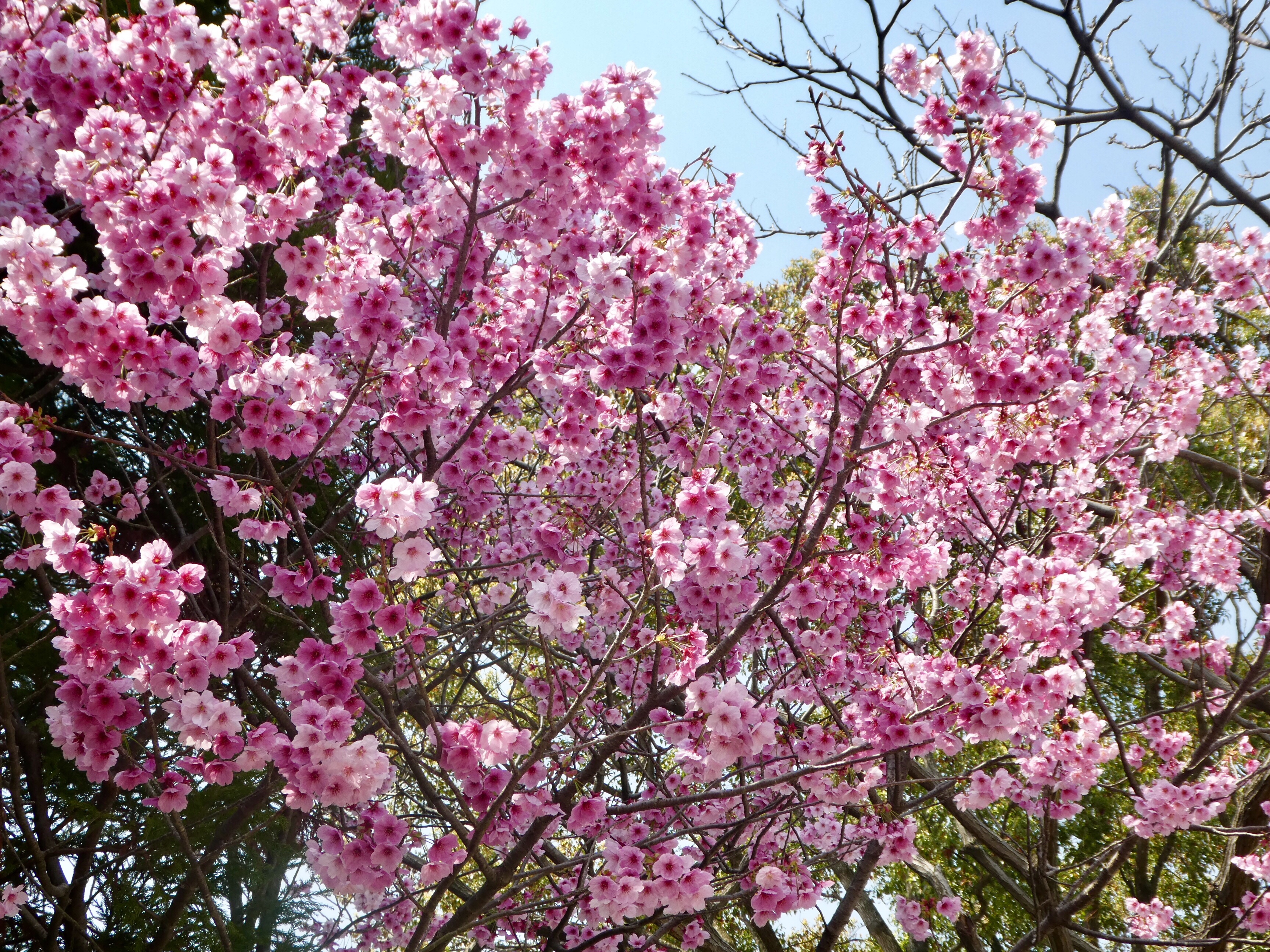
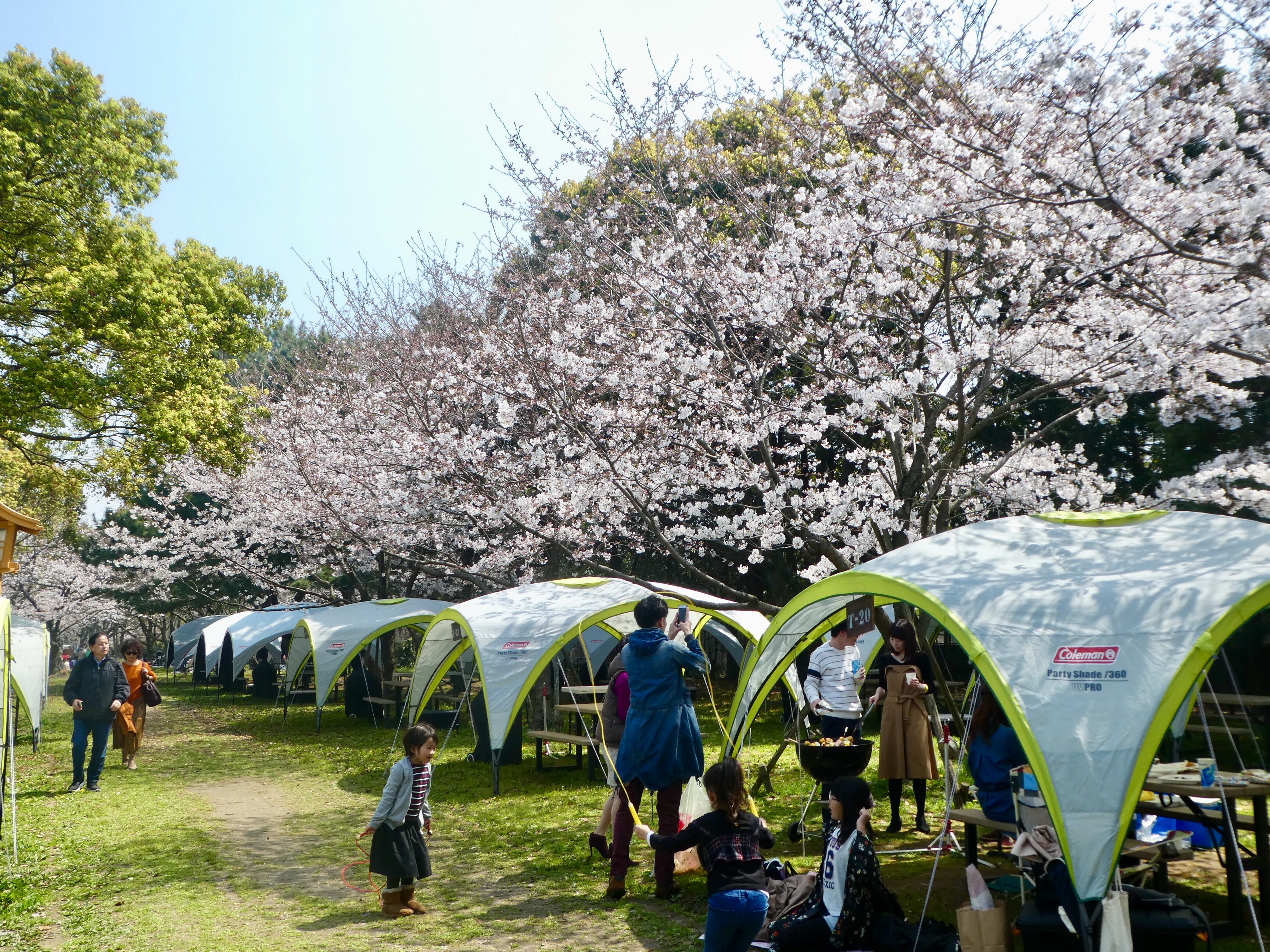
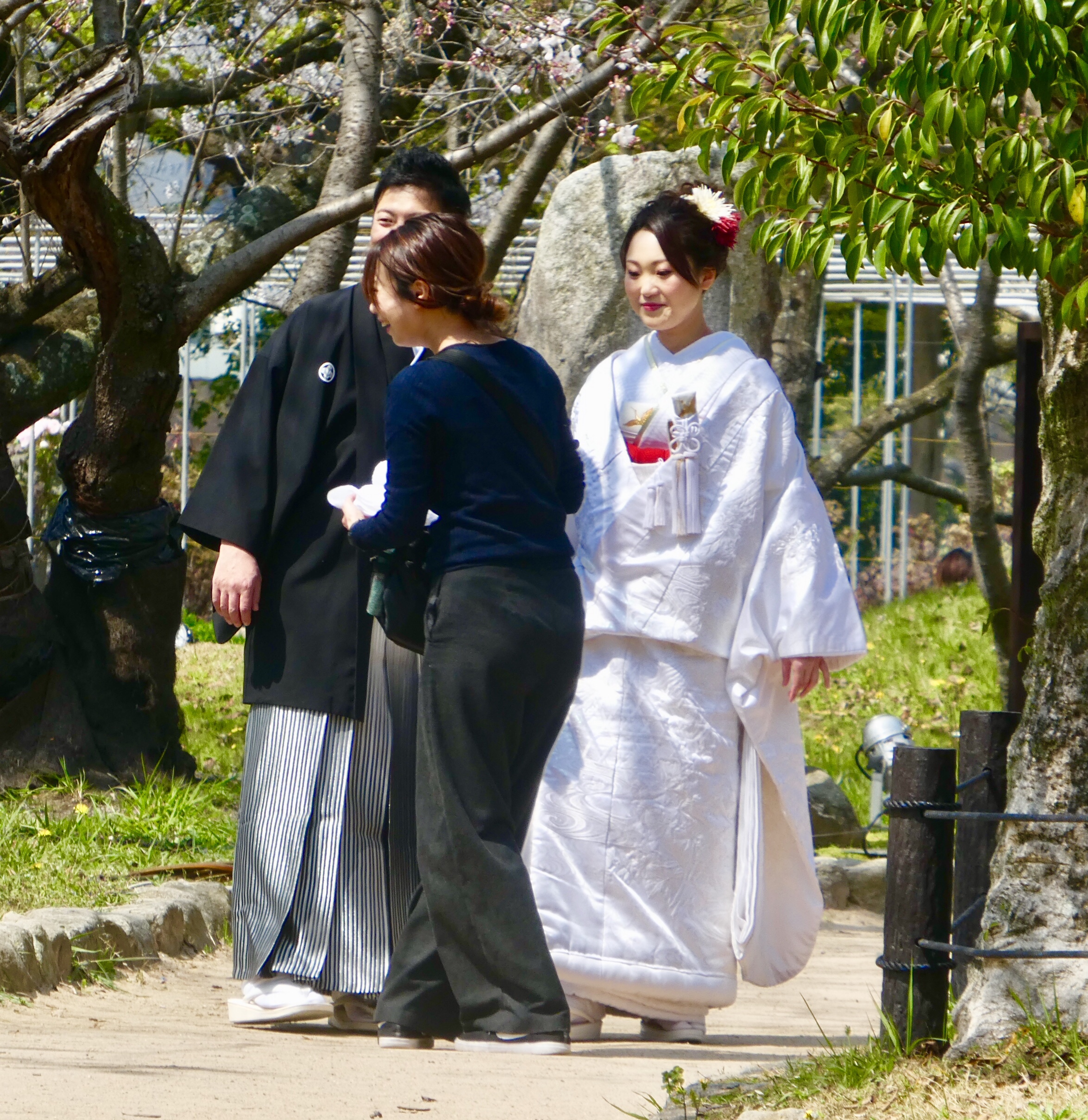
The next day was a perfect spring day for exploring the area. We visited the Korakuen gardens, Okayama Castle, and old-town Kurashiki. Okayama Castle is a reconstruction of the original castle built in 1597. It is surrounded by the Asahi River. The river used to serve as the castle moat. It is filled with kayaking sightseers today. The castles overlooks the beautiful Korakuen Gardens. The sakura (cherry blossoms) was in bloom, the bamboo was the tallest we’ve ever seen. There were some really lovely reflective ponds. We took a train to old-town Kurashiki, where traditional homes and businesses have been preserved. Tourists and tourist venues are everywhere.
We’re spending our last two days in Osaka before flying home to California. In a few weeks, we’ll have our own cherry blossoms back home on the river. We look forward to seeing you soon, dear family and friends.

Sayonara, BnL

Hiroshima, Japan

Dear Friends and Family,

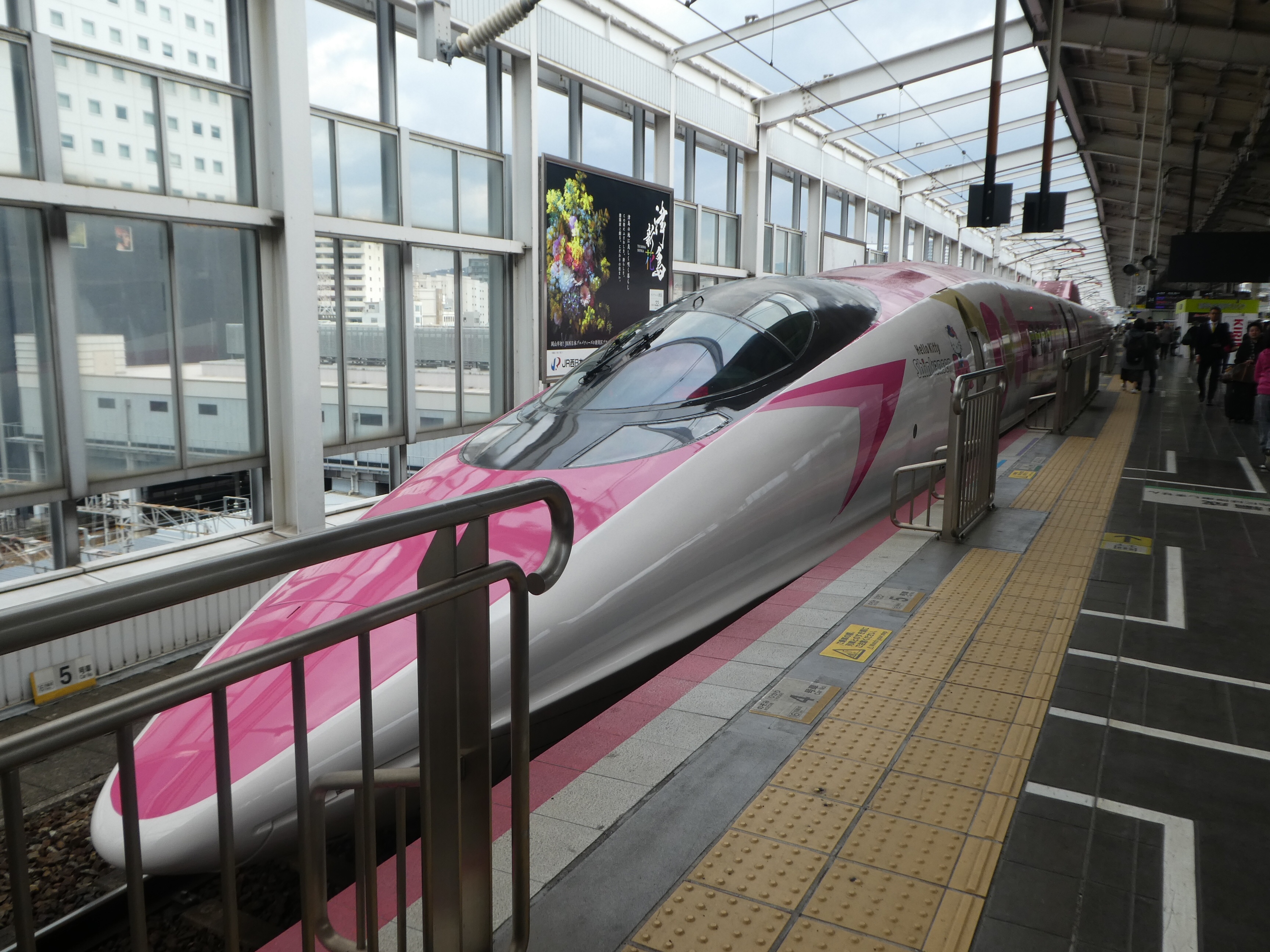
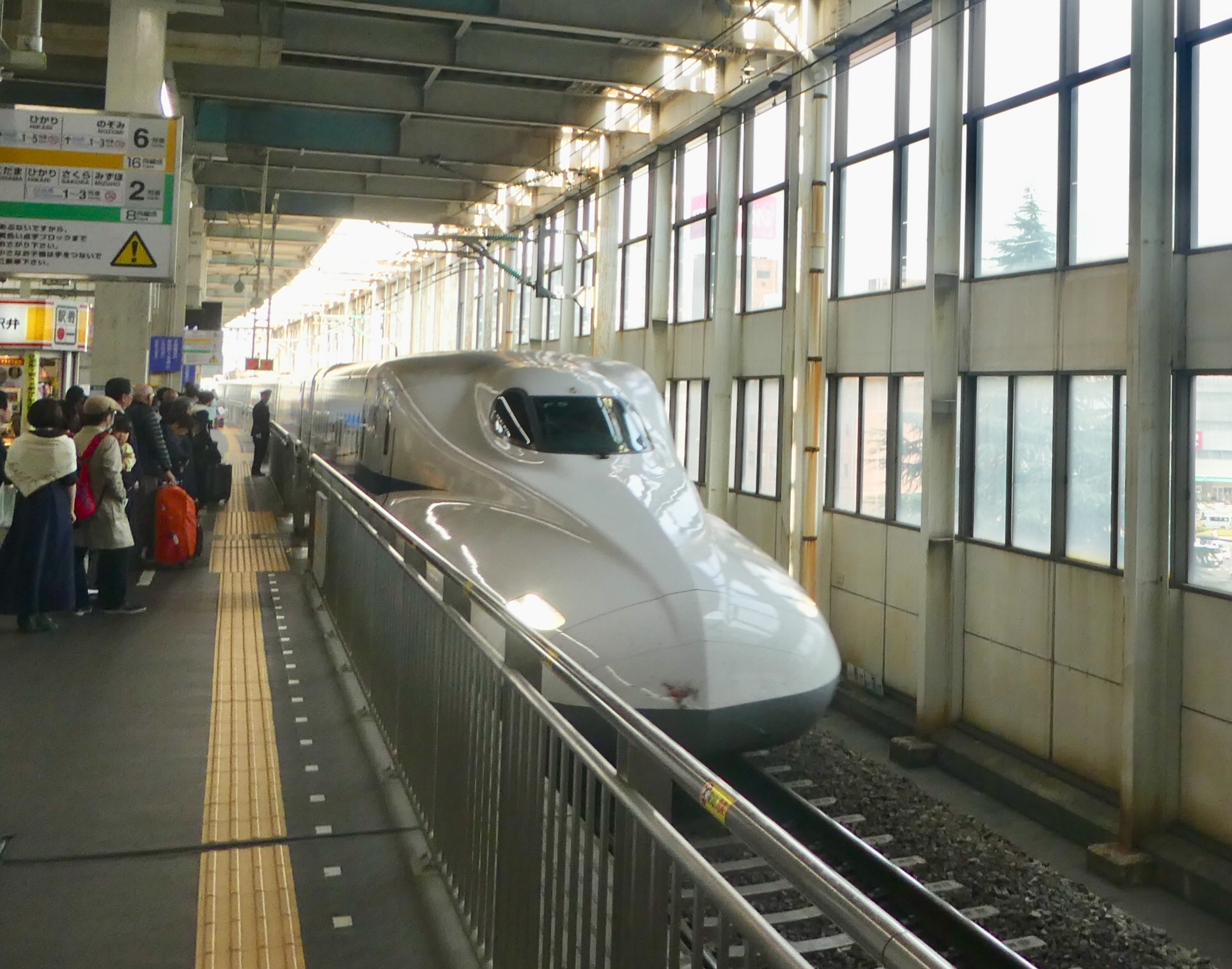
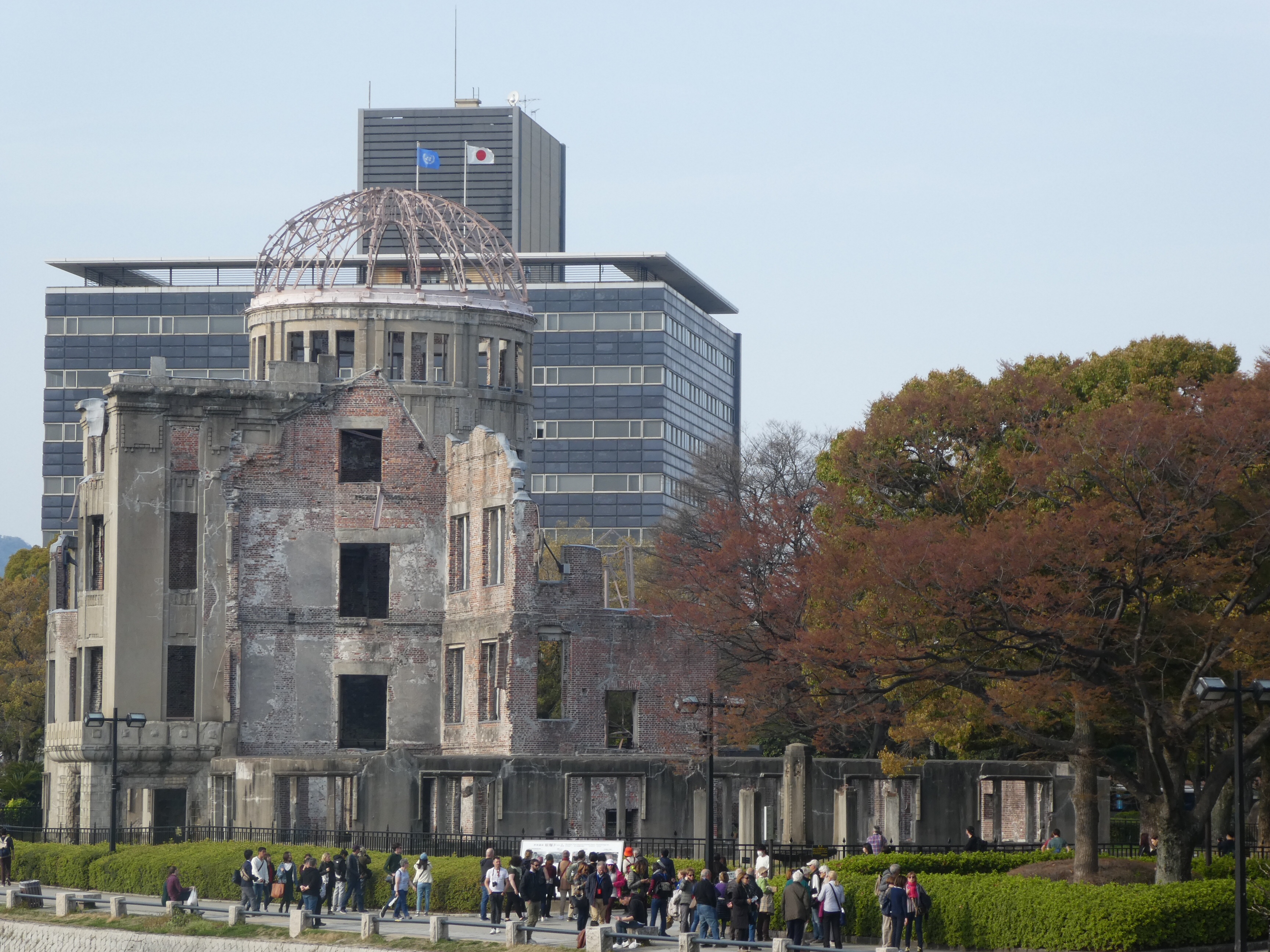
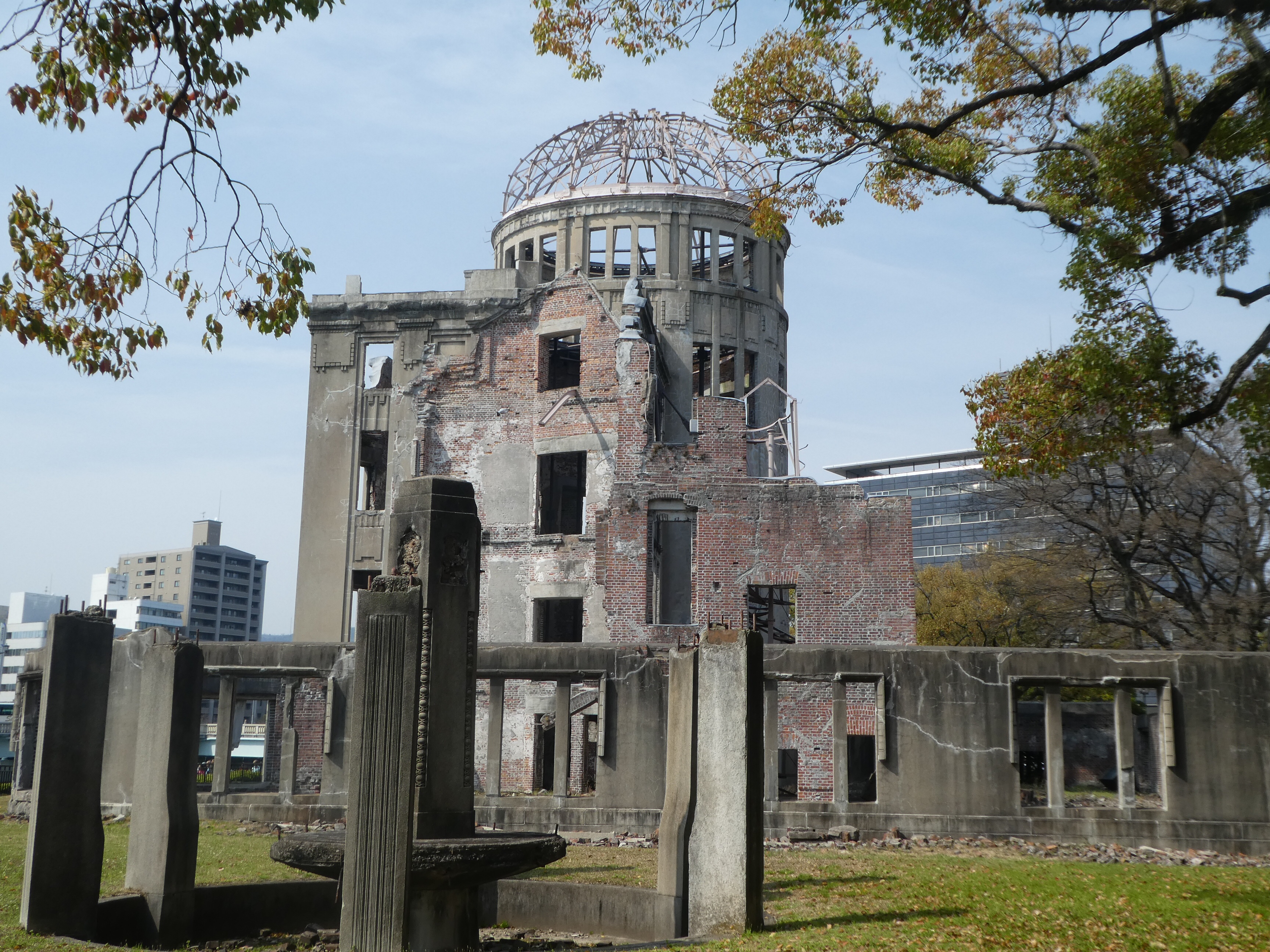
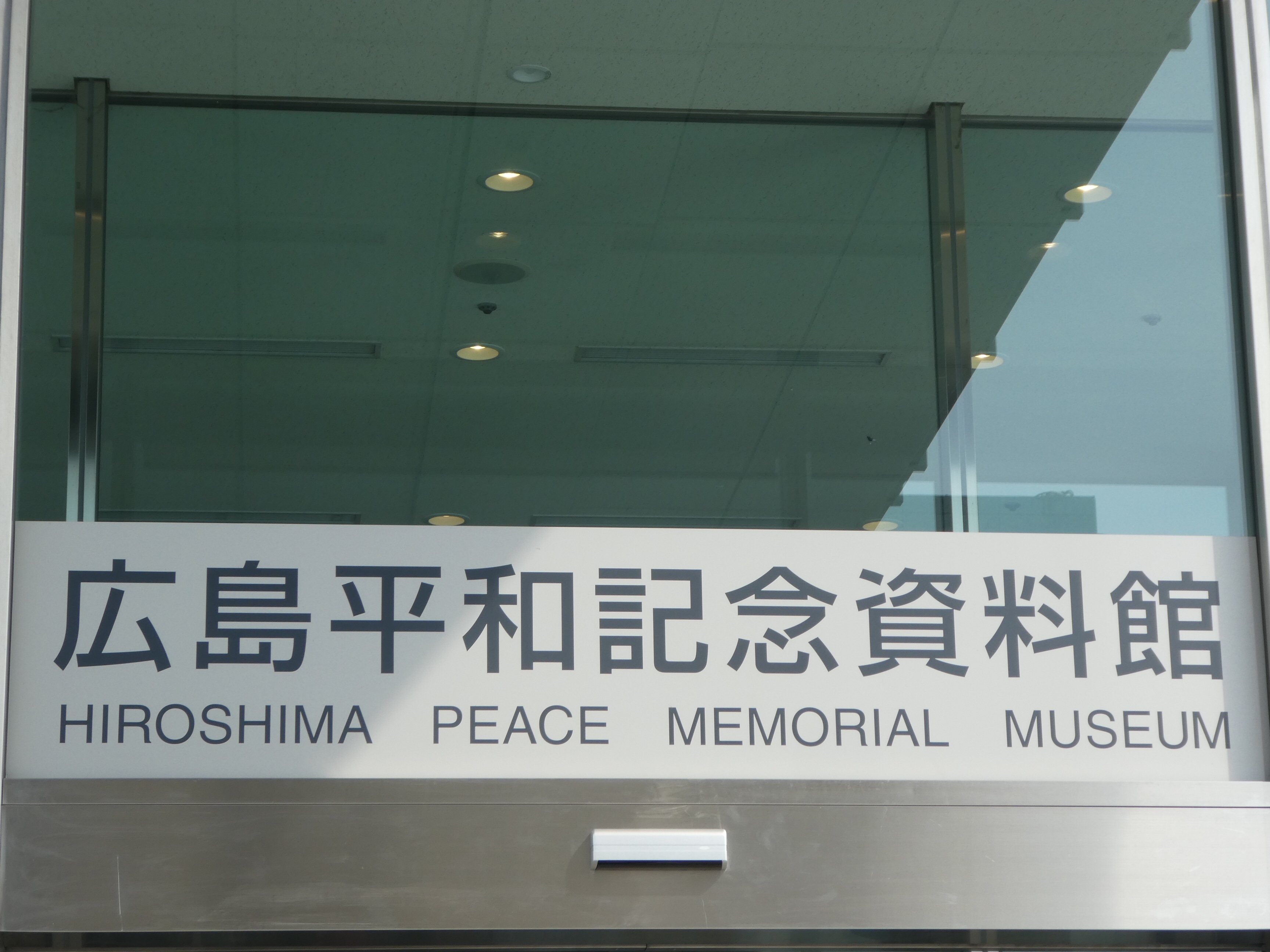
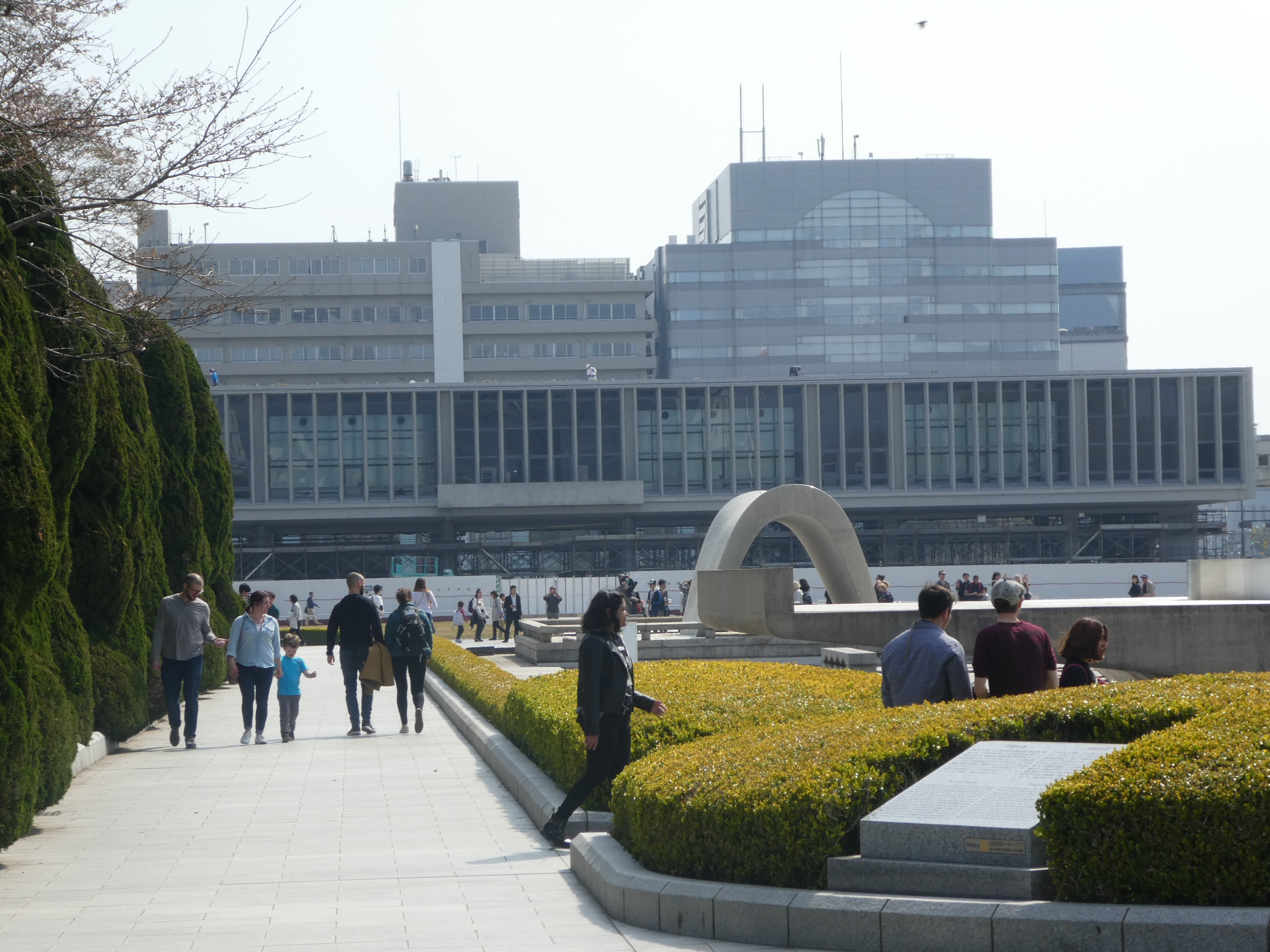
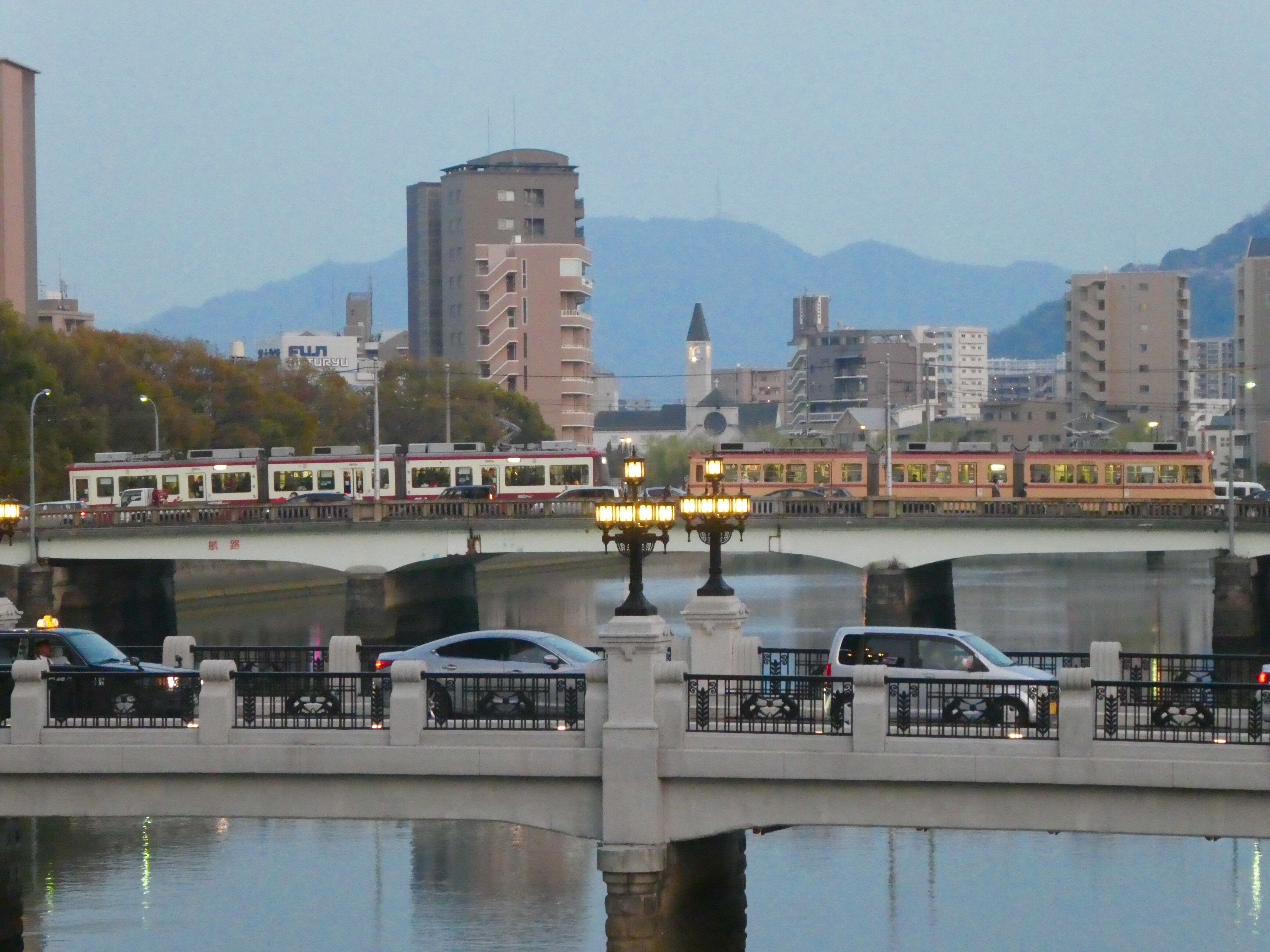
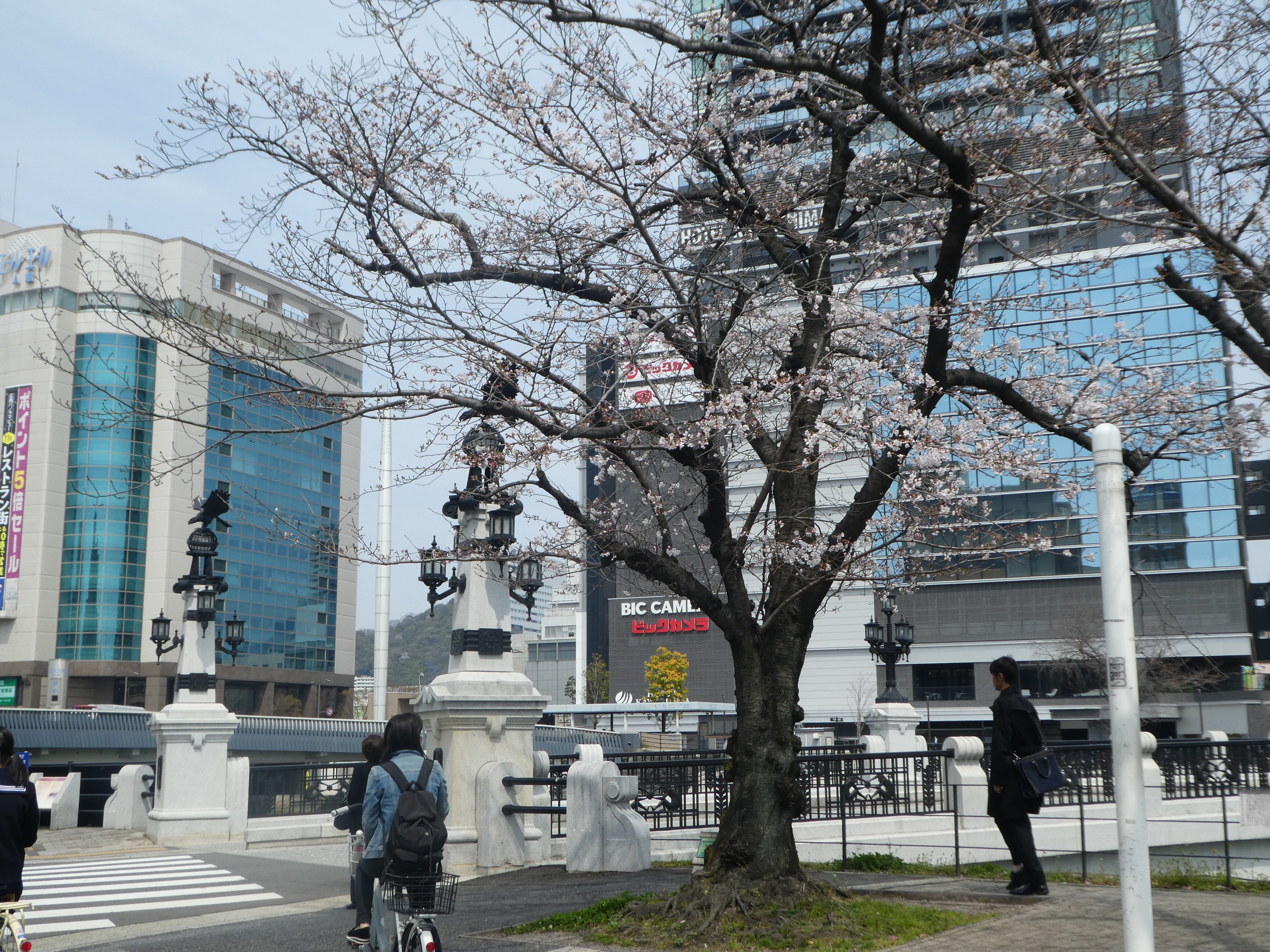
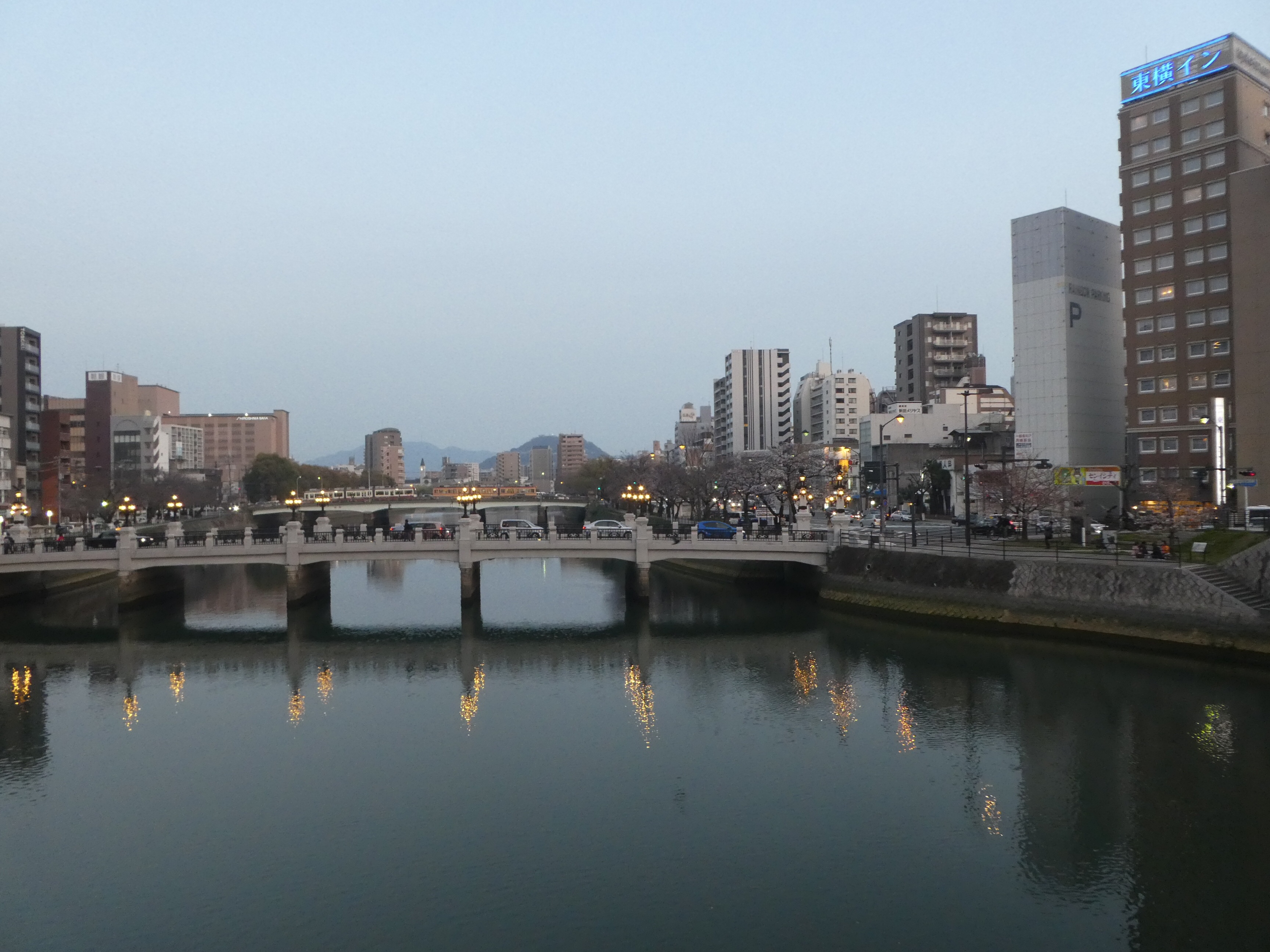
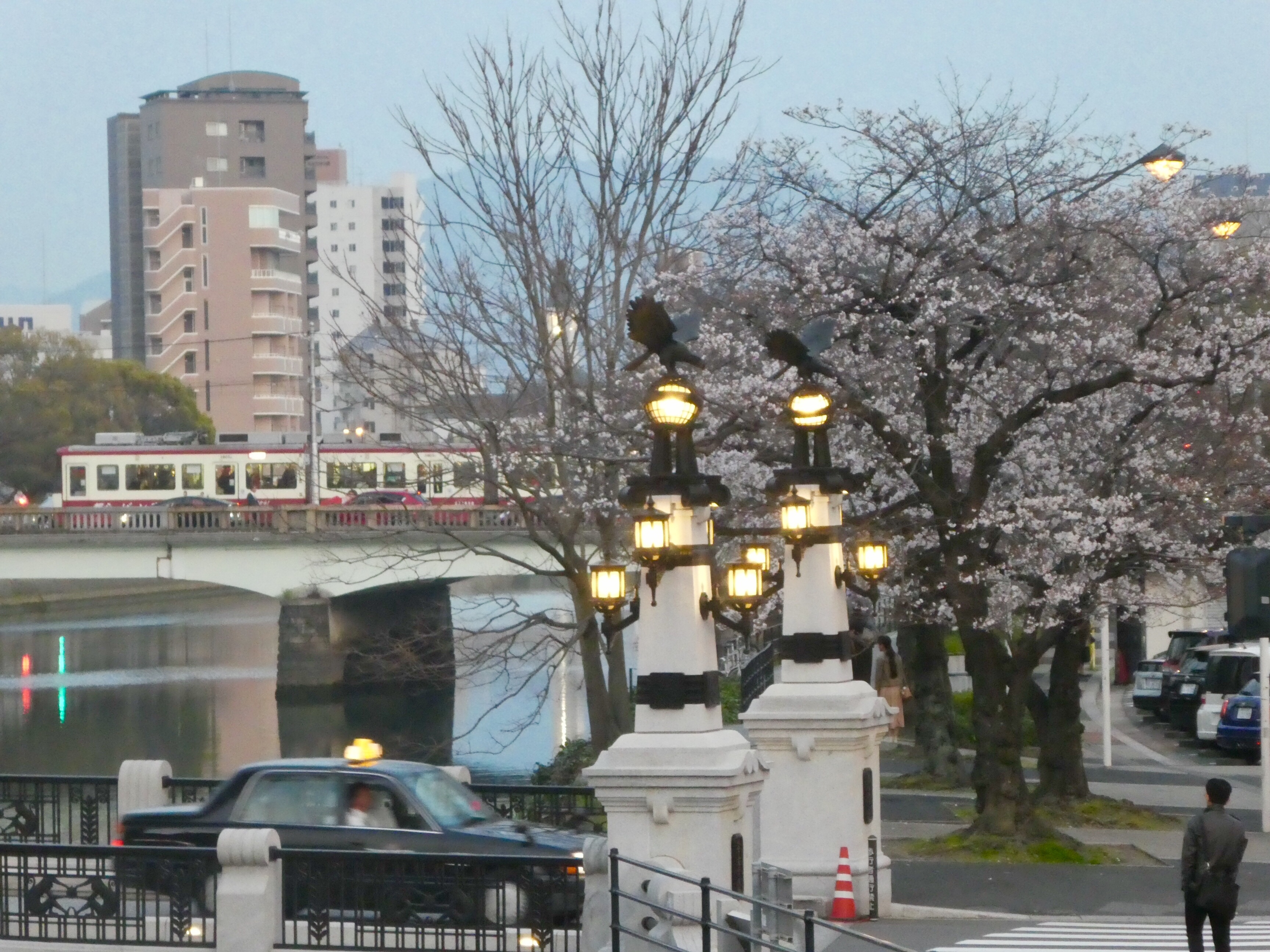
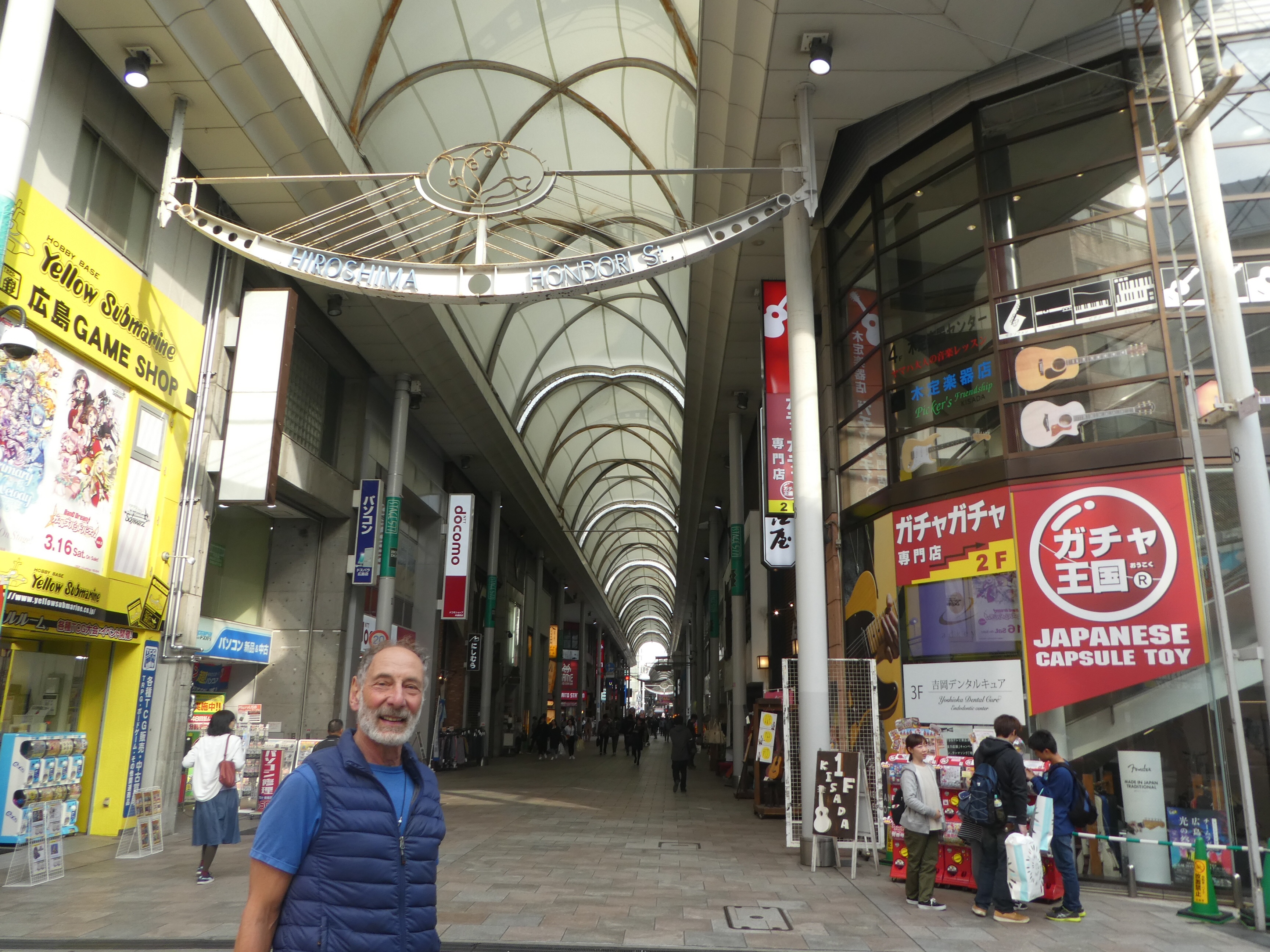
The bullet train reduced a 4.5 hr train ride to Hiroshima to only one hour. With its picturesque canal bridges, Hiroshima resembles a modern day Paris. We saw lots of Sakura, cherry blossoms, in bloom. With only 2 days here, we spent one day at the UNESCO designated Peace Memorial Park, which includes the A-Bomb (Genbaku) Dome, and Peace Memorial Museum. We spent the our second day on Miyajima Island.
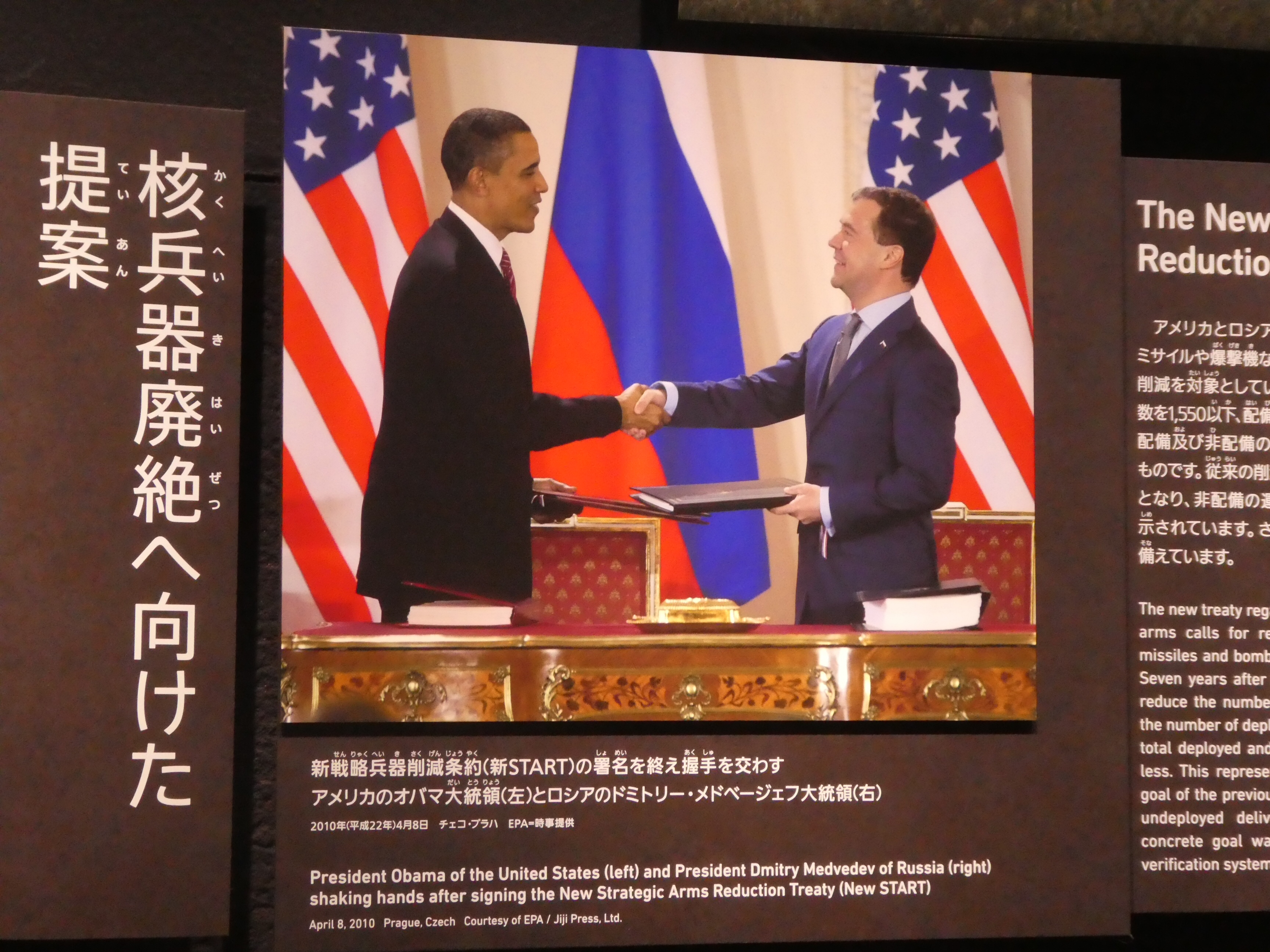
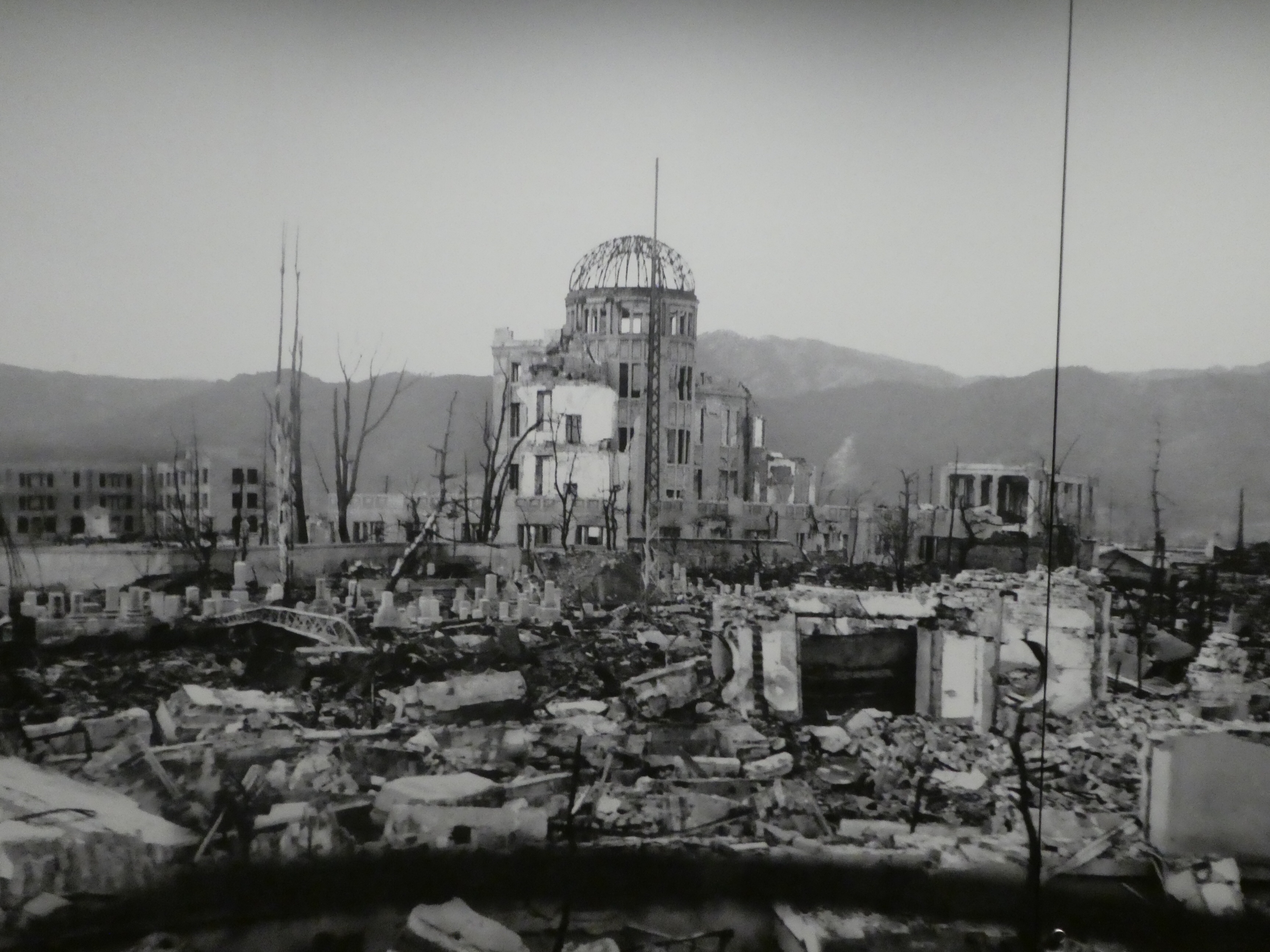
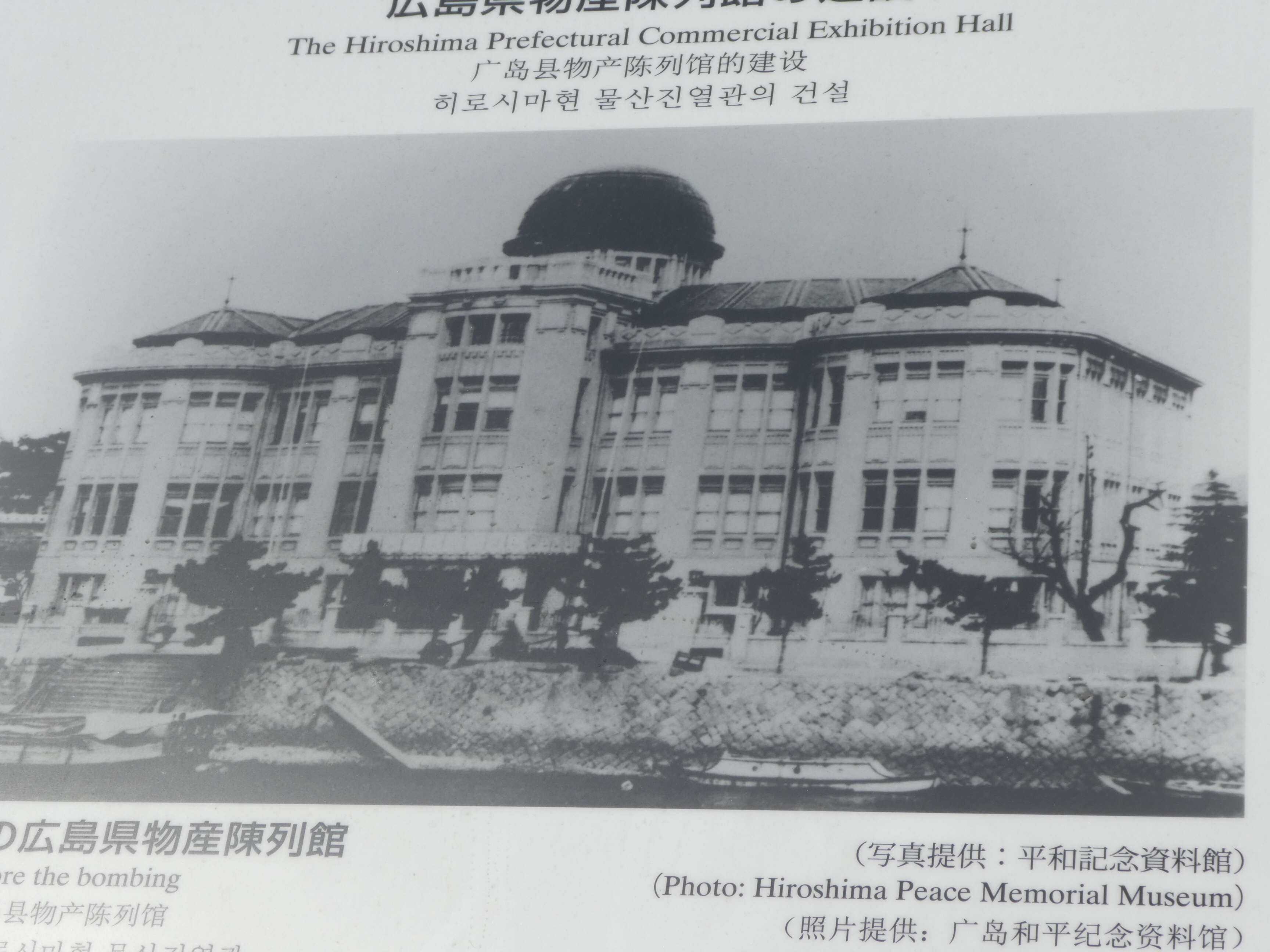
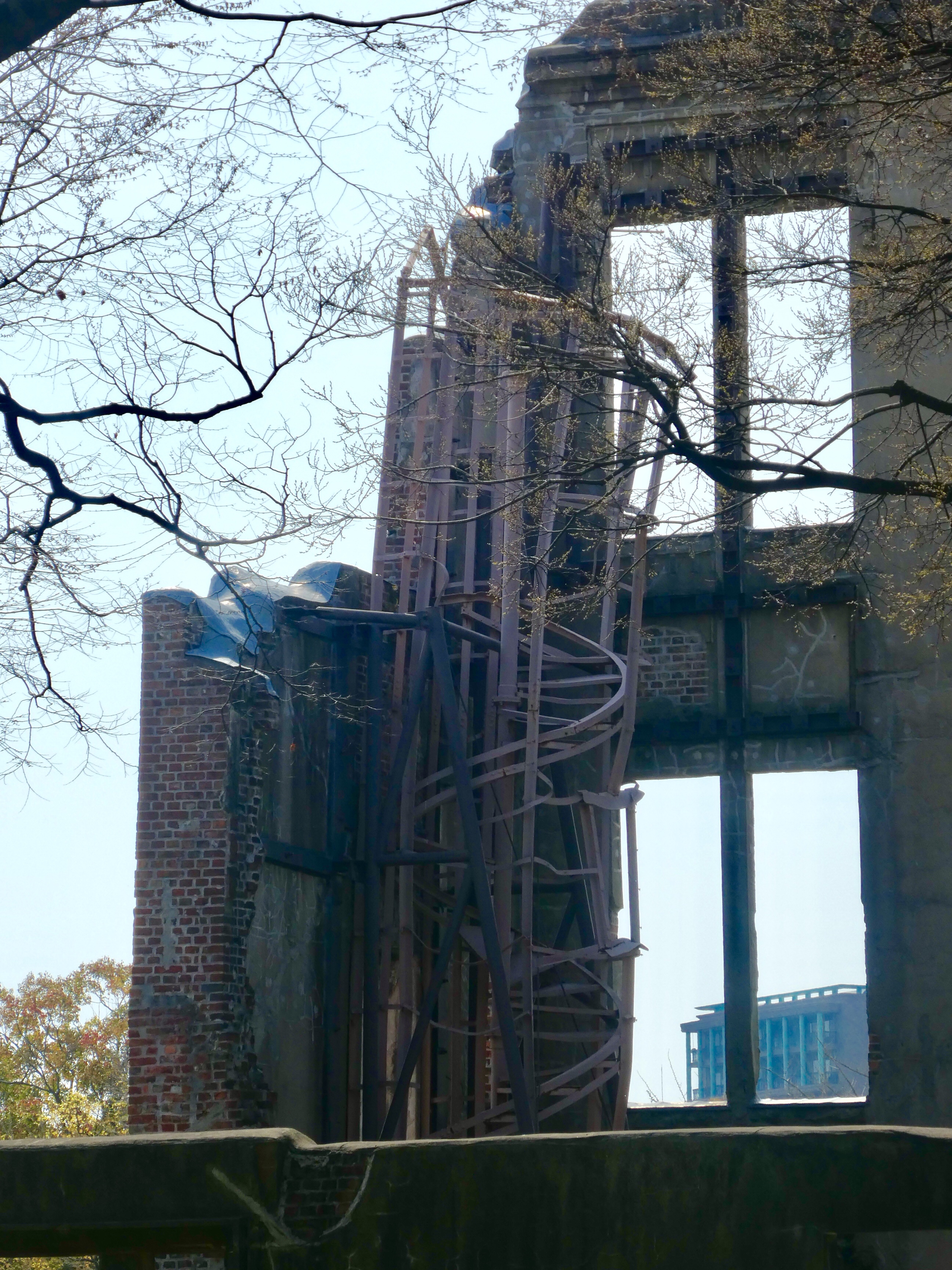
The devastation and horror of the atomic bomb is revealed in before and after photos, video accounts from survivors, and a visual reenactment, depicting the bomb going off, and how it instantly incinerated a wide area. There was no blame placed here, only the horror of it all, with 200,000 dead within one year, and much of the city wiped out in less than two minutes. The A Bomb dome was the only structure left standing within a 2 km radius of the epicenter. The building was eventually reinforced and fenced off, preserved as a memorial to the bombing. The dome, park, and museum exist to promote world peace.
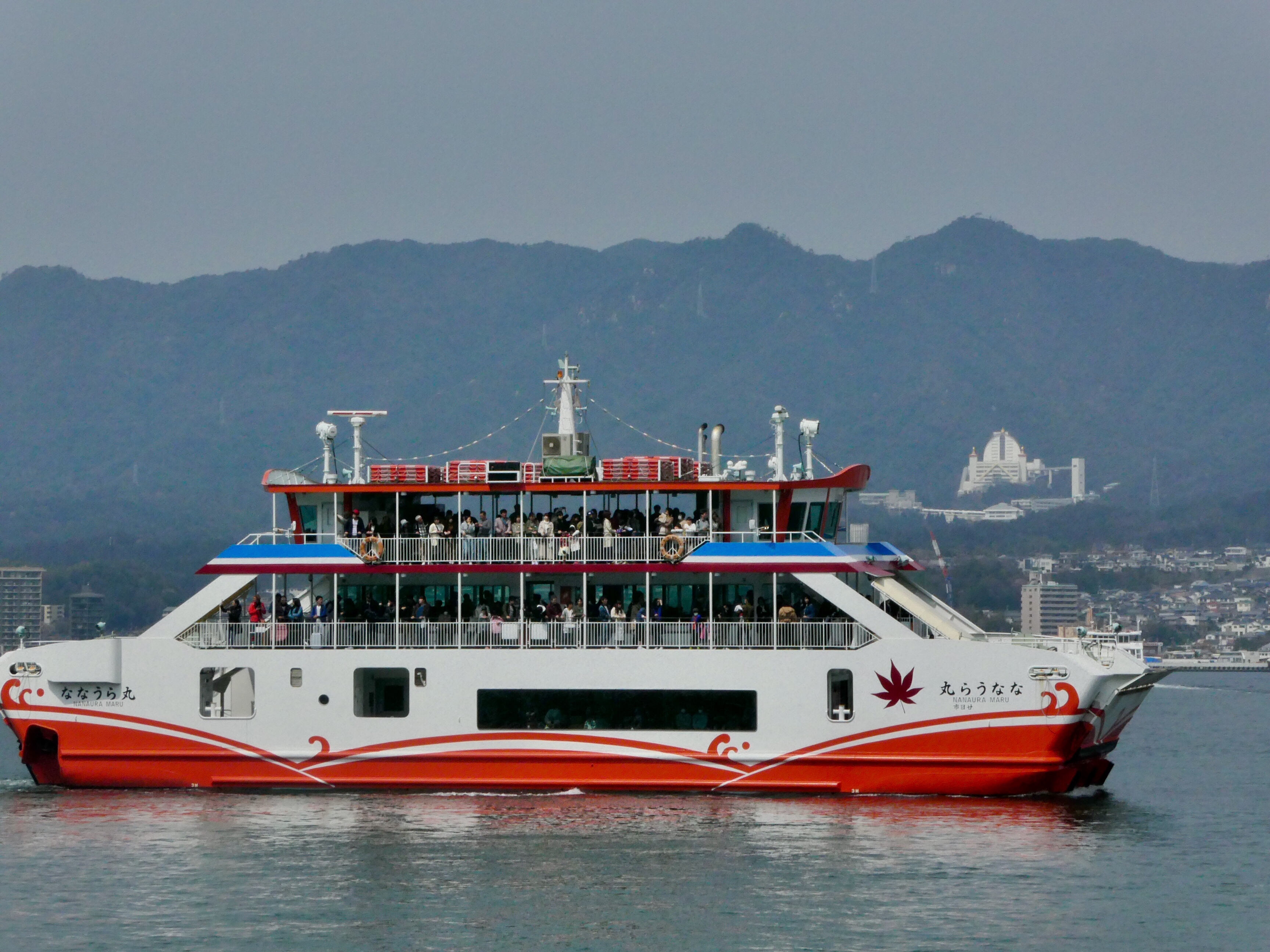
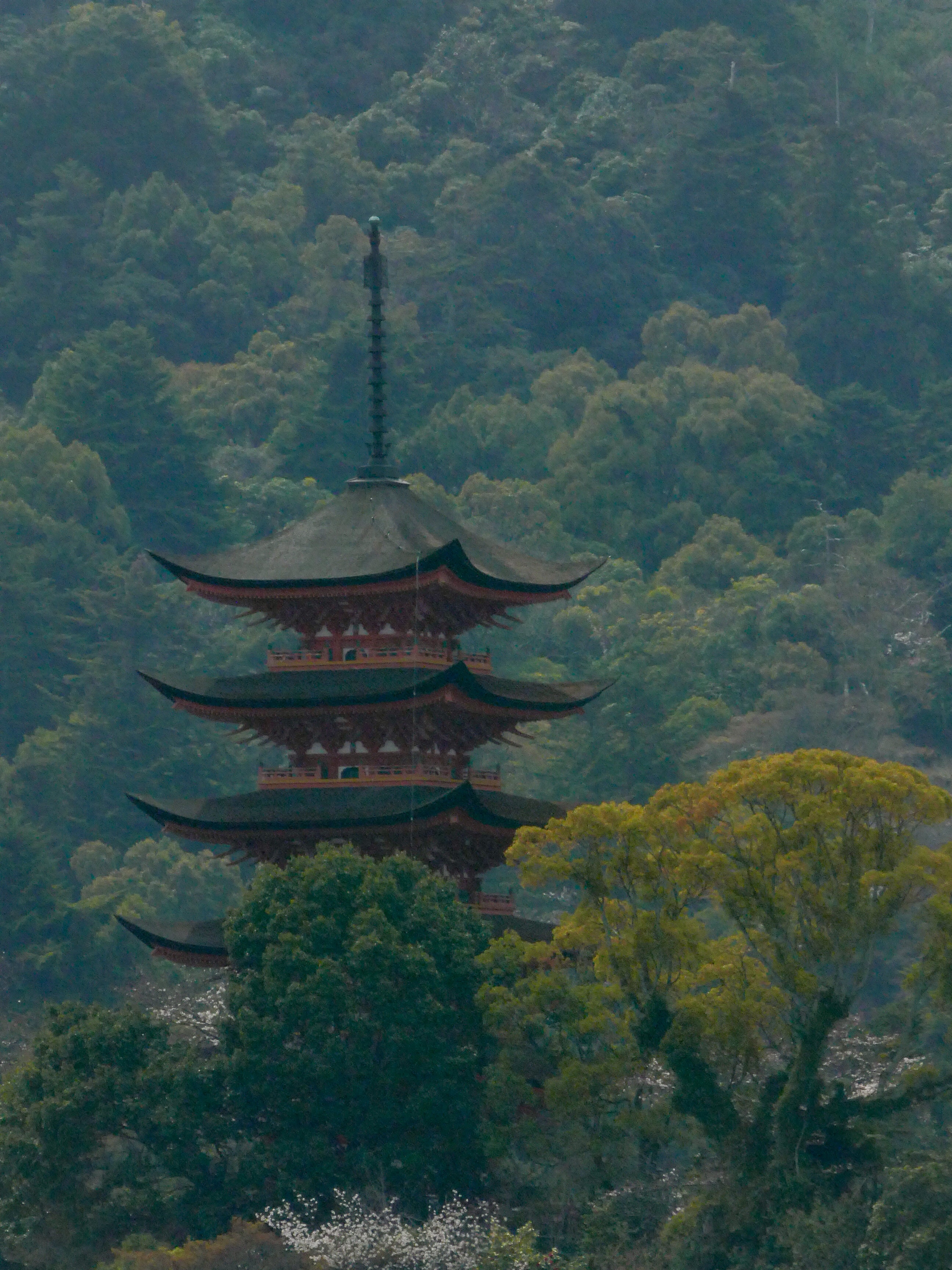
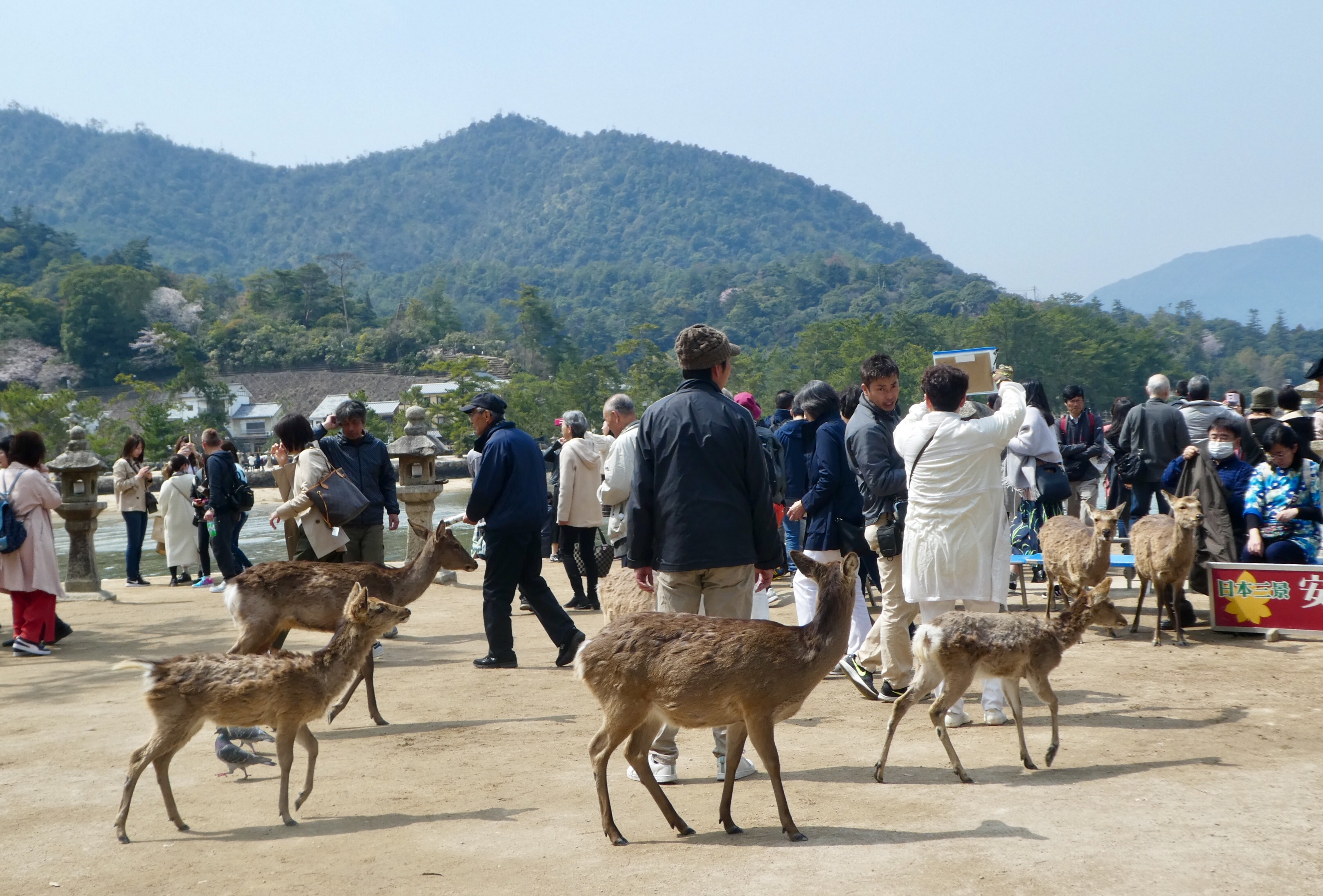
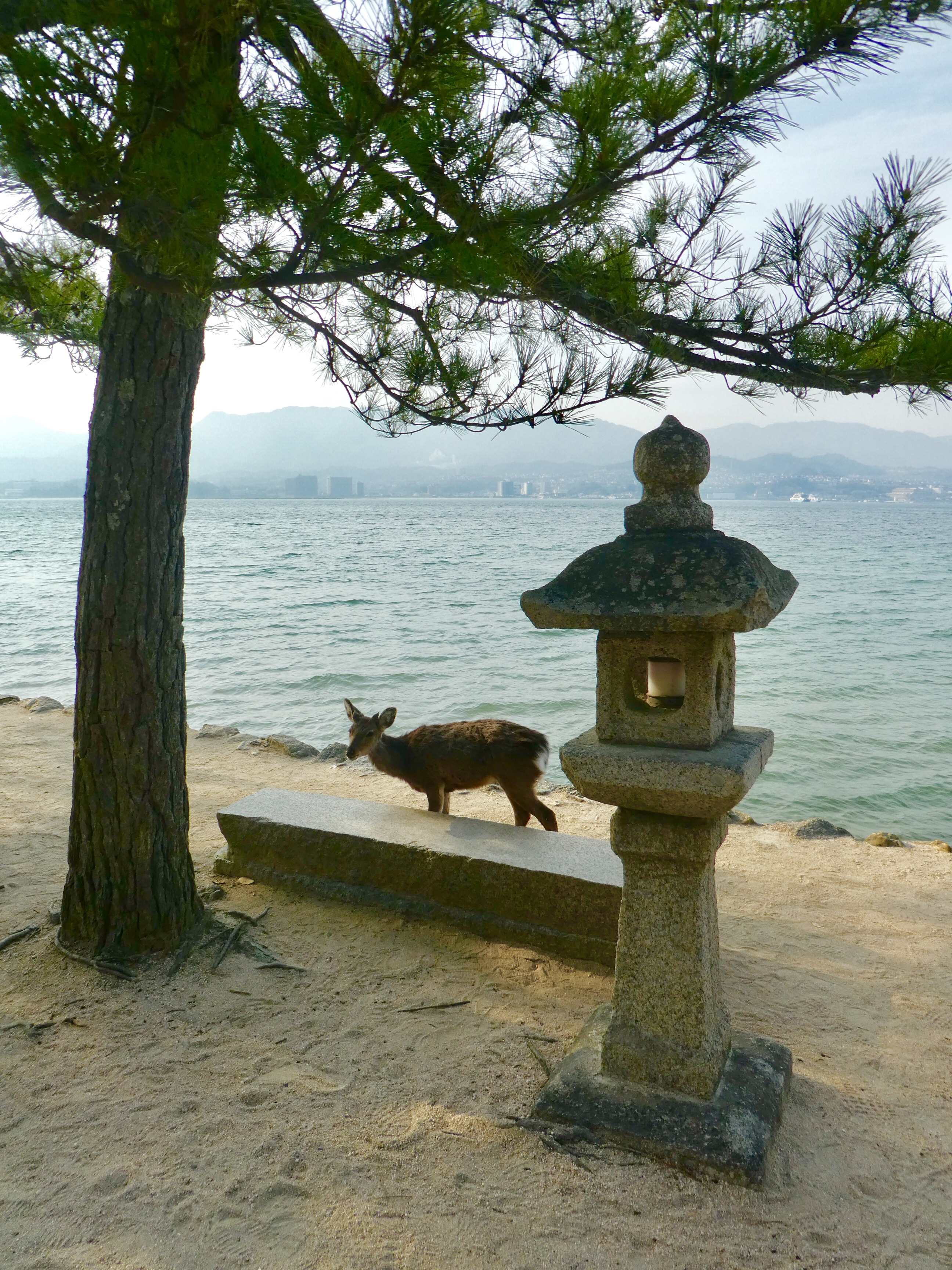
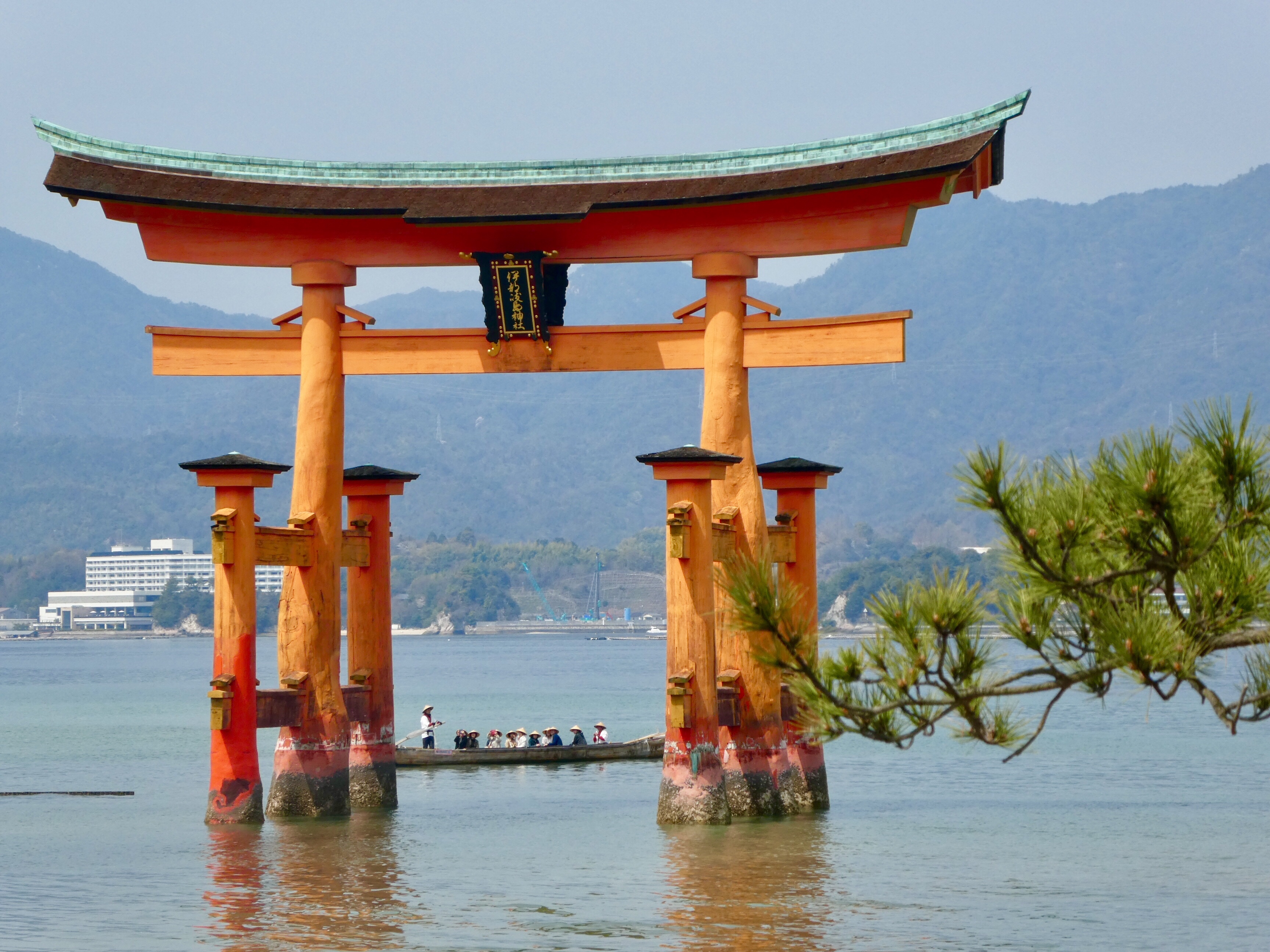
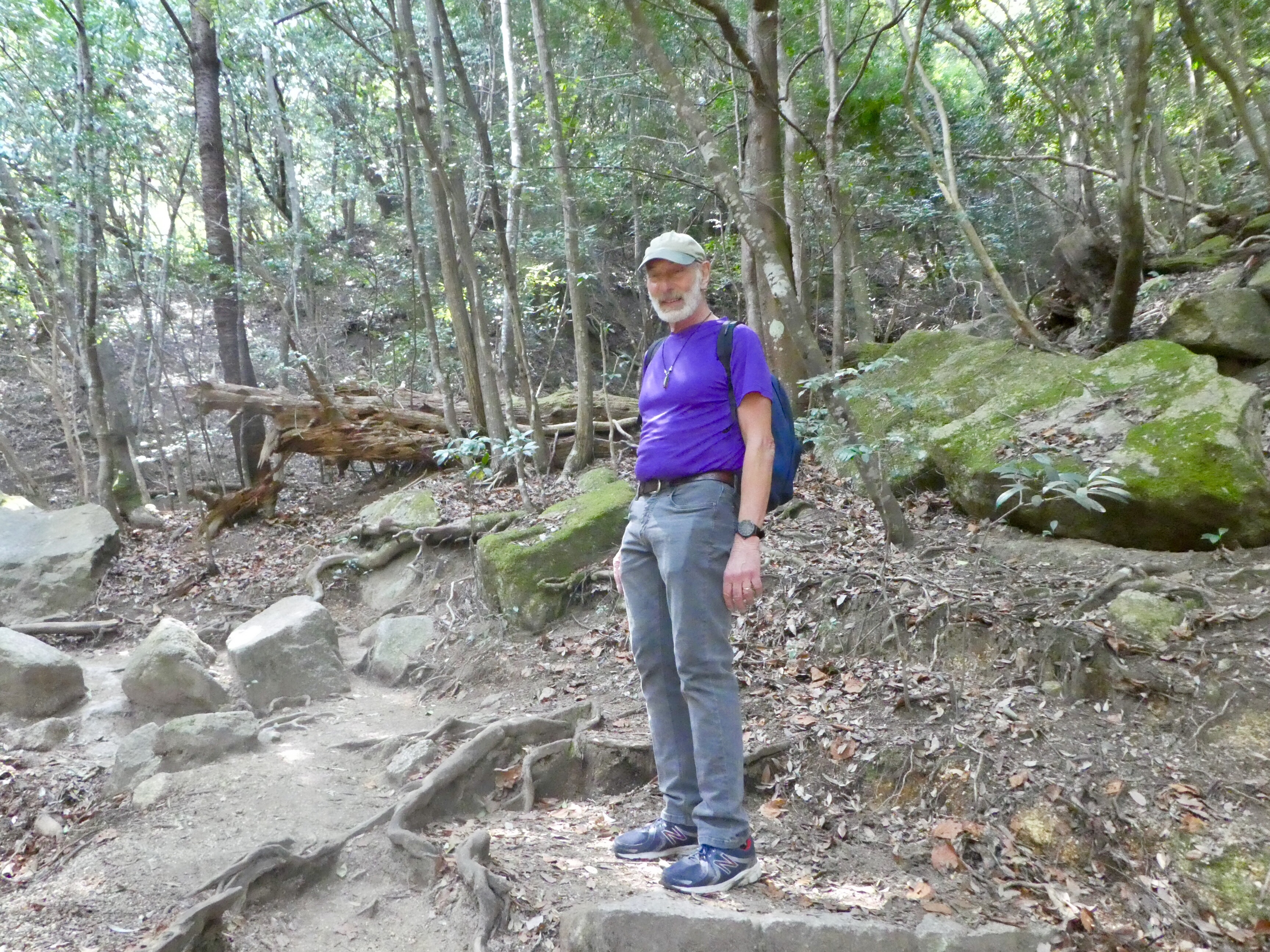
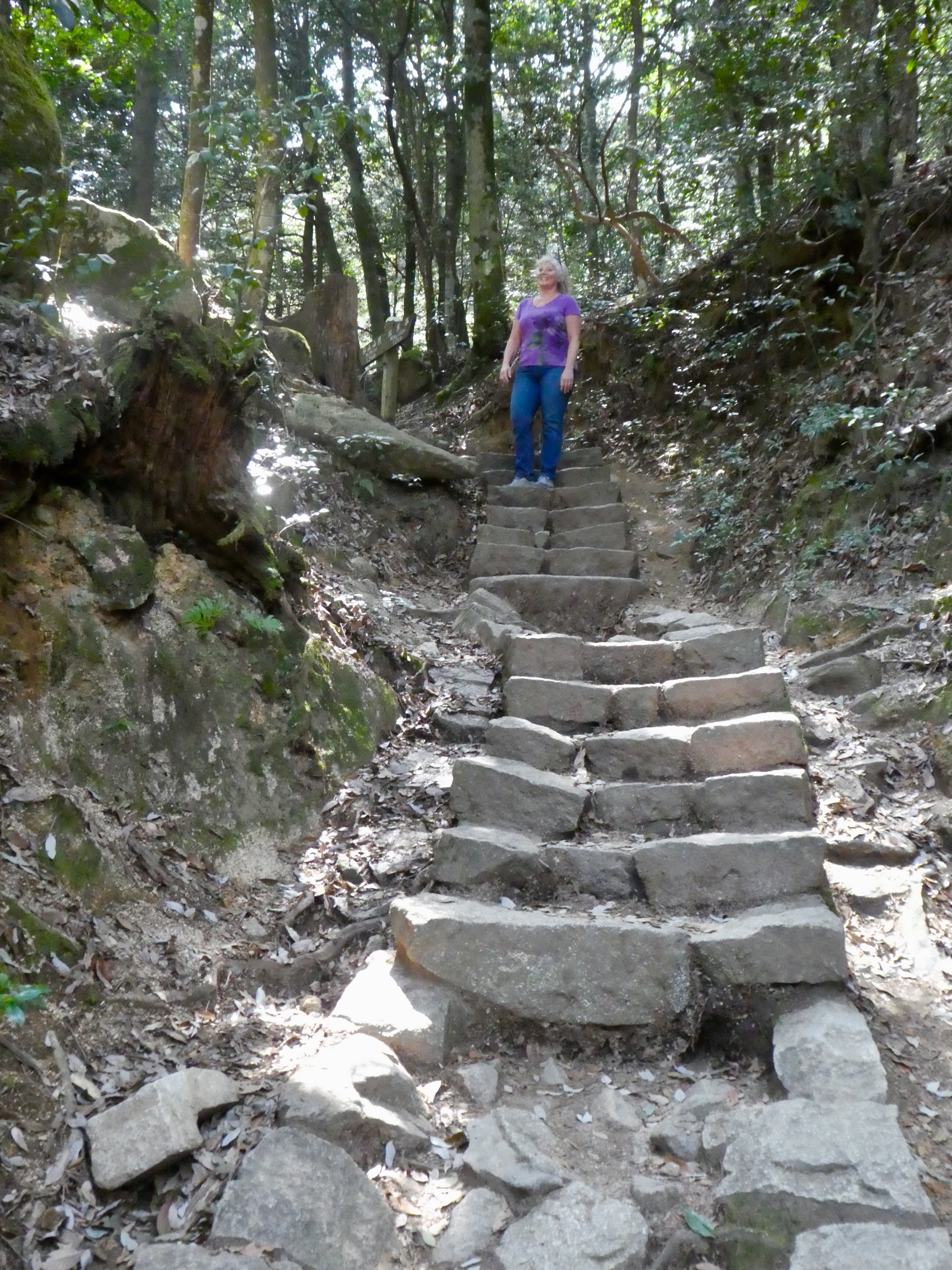
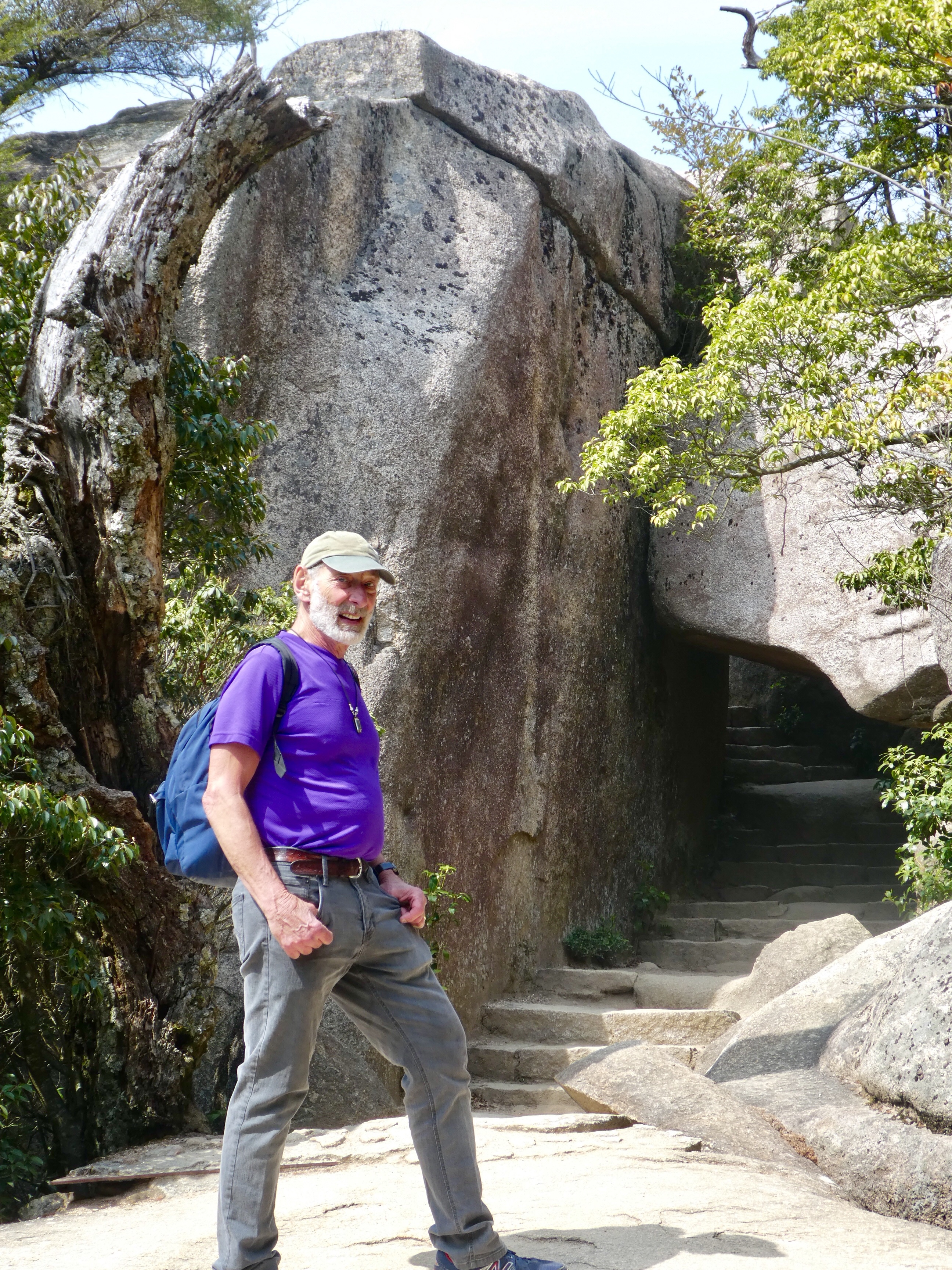
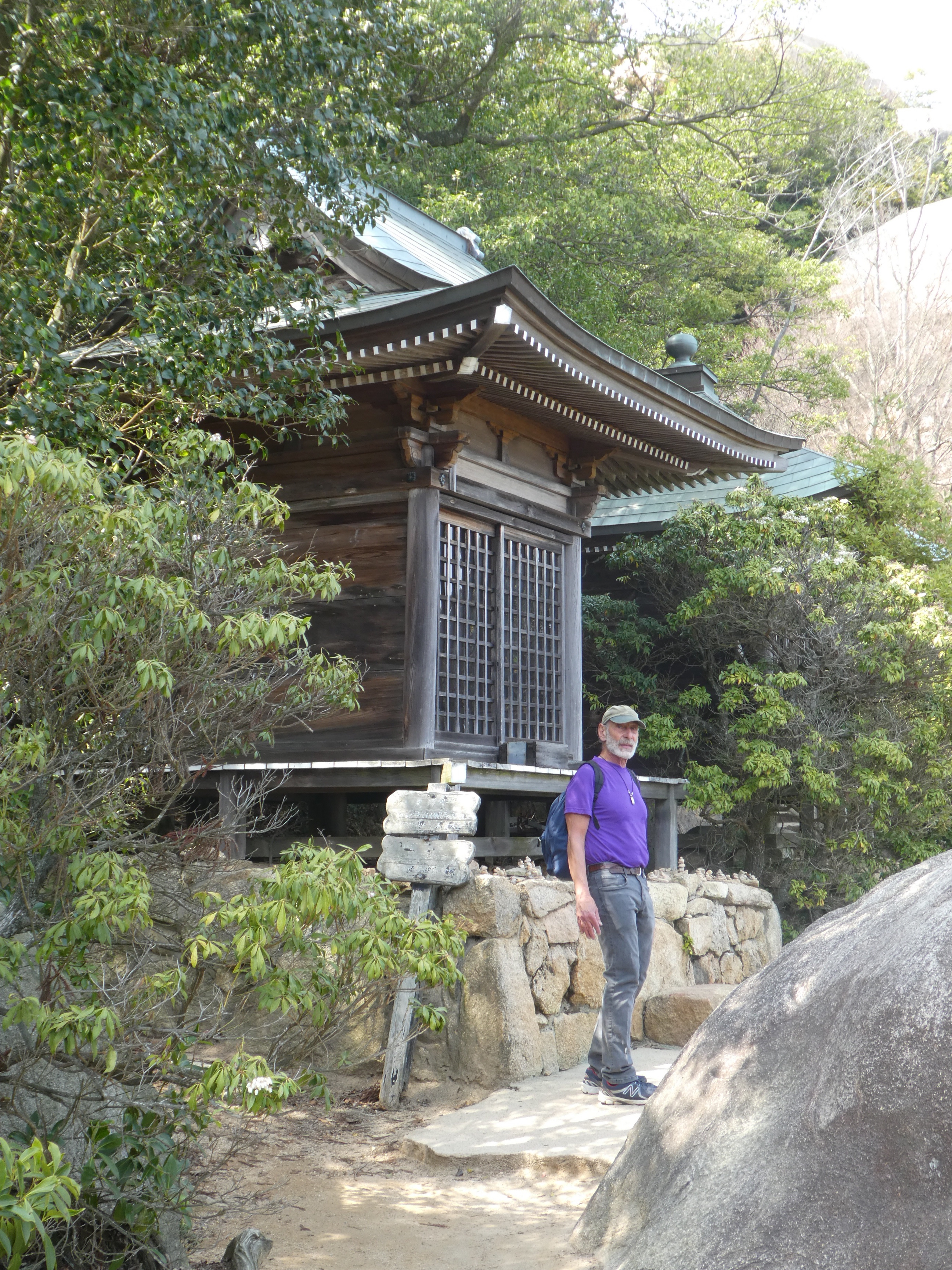
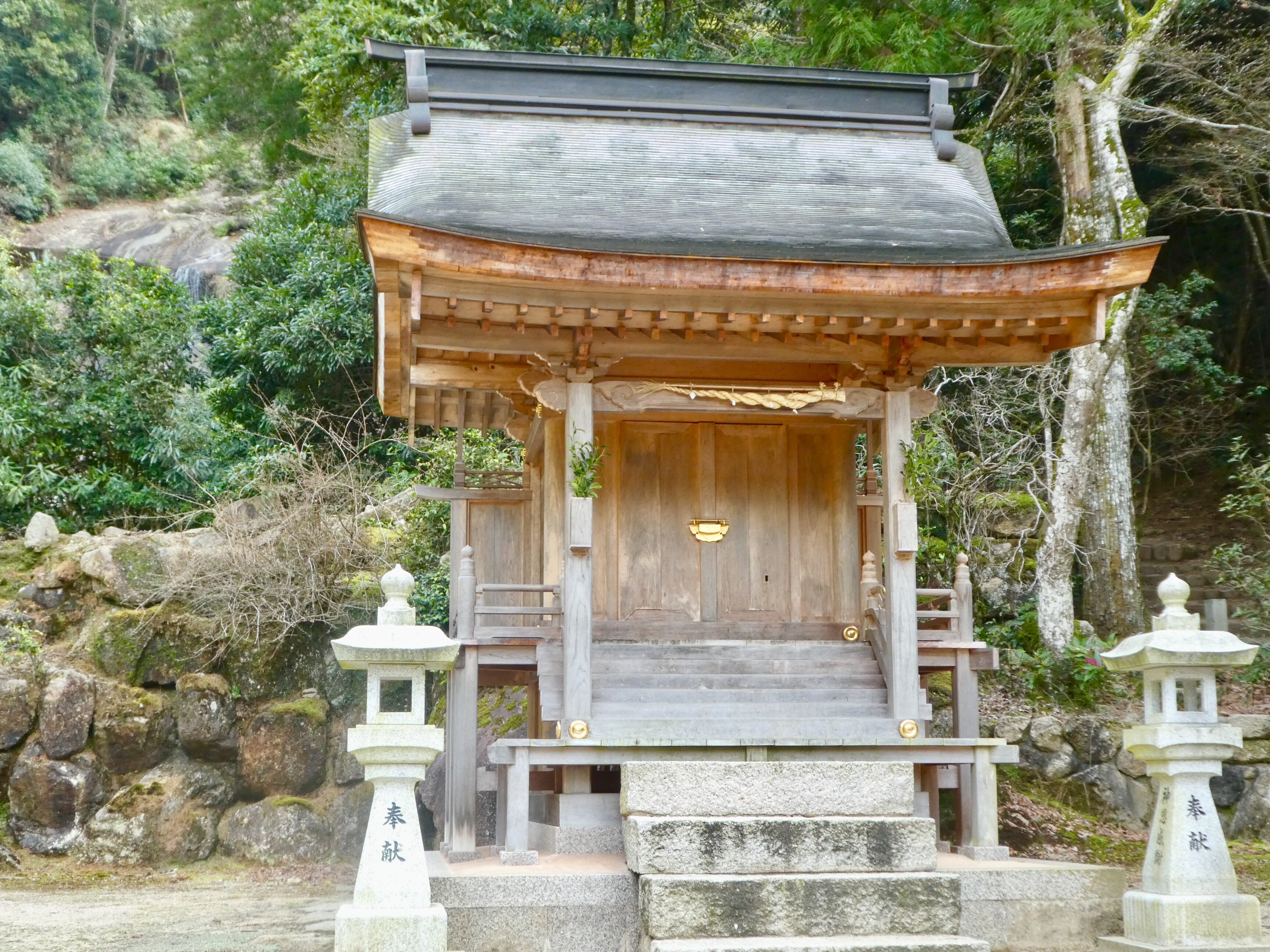
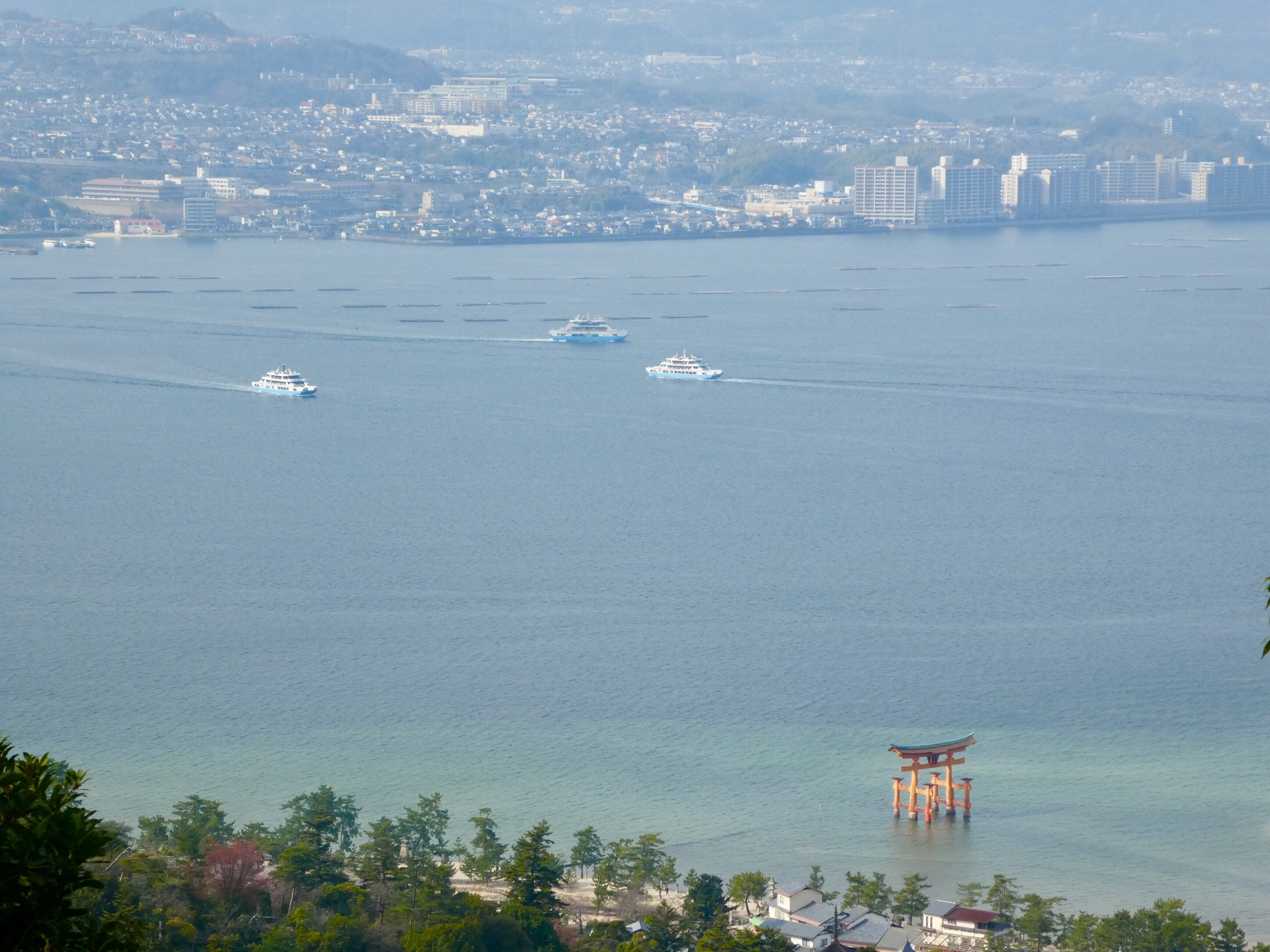
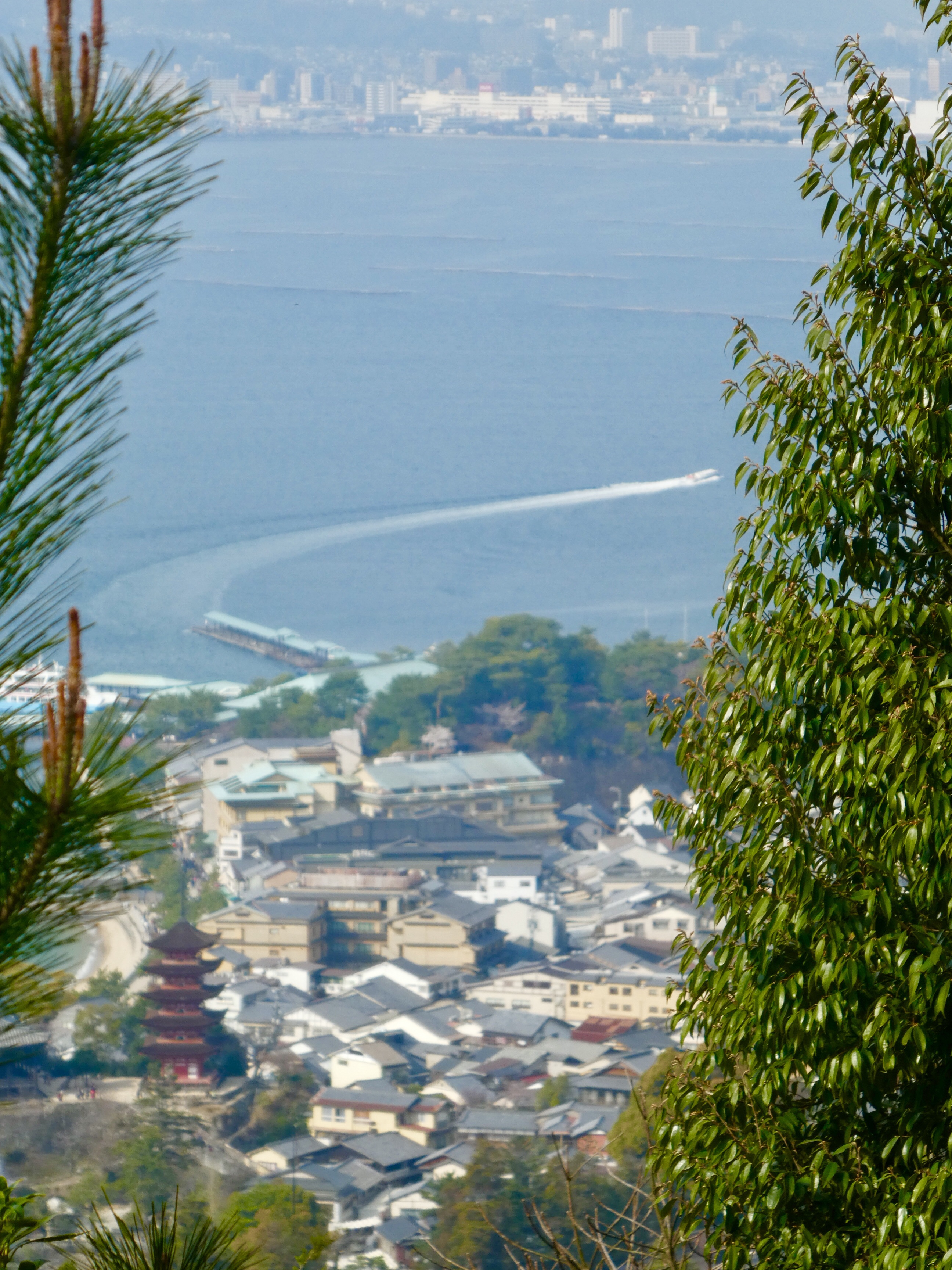
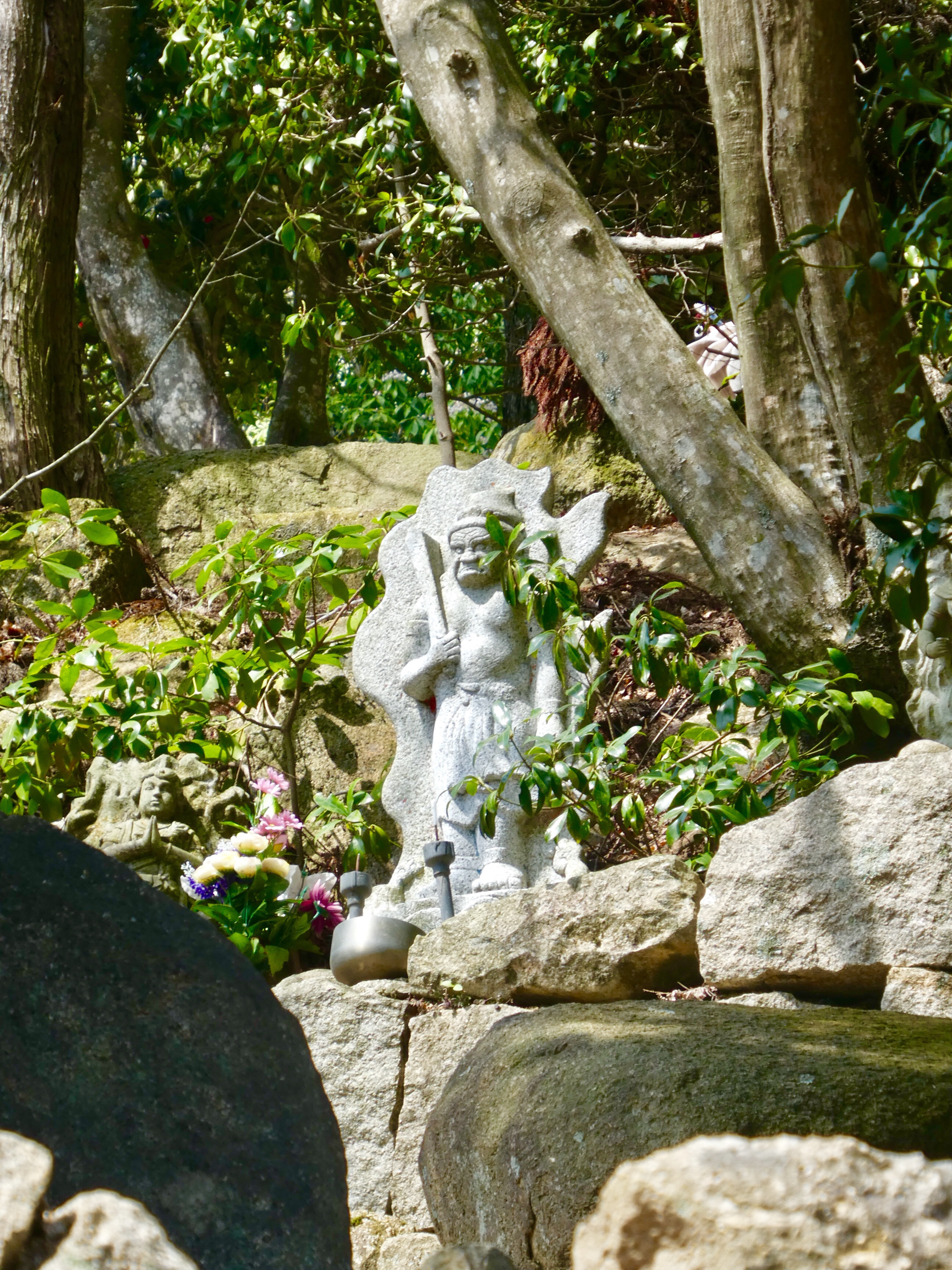
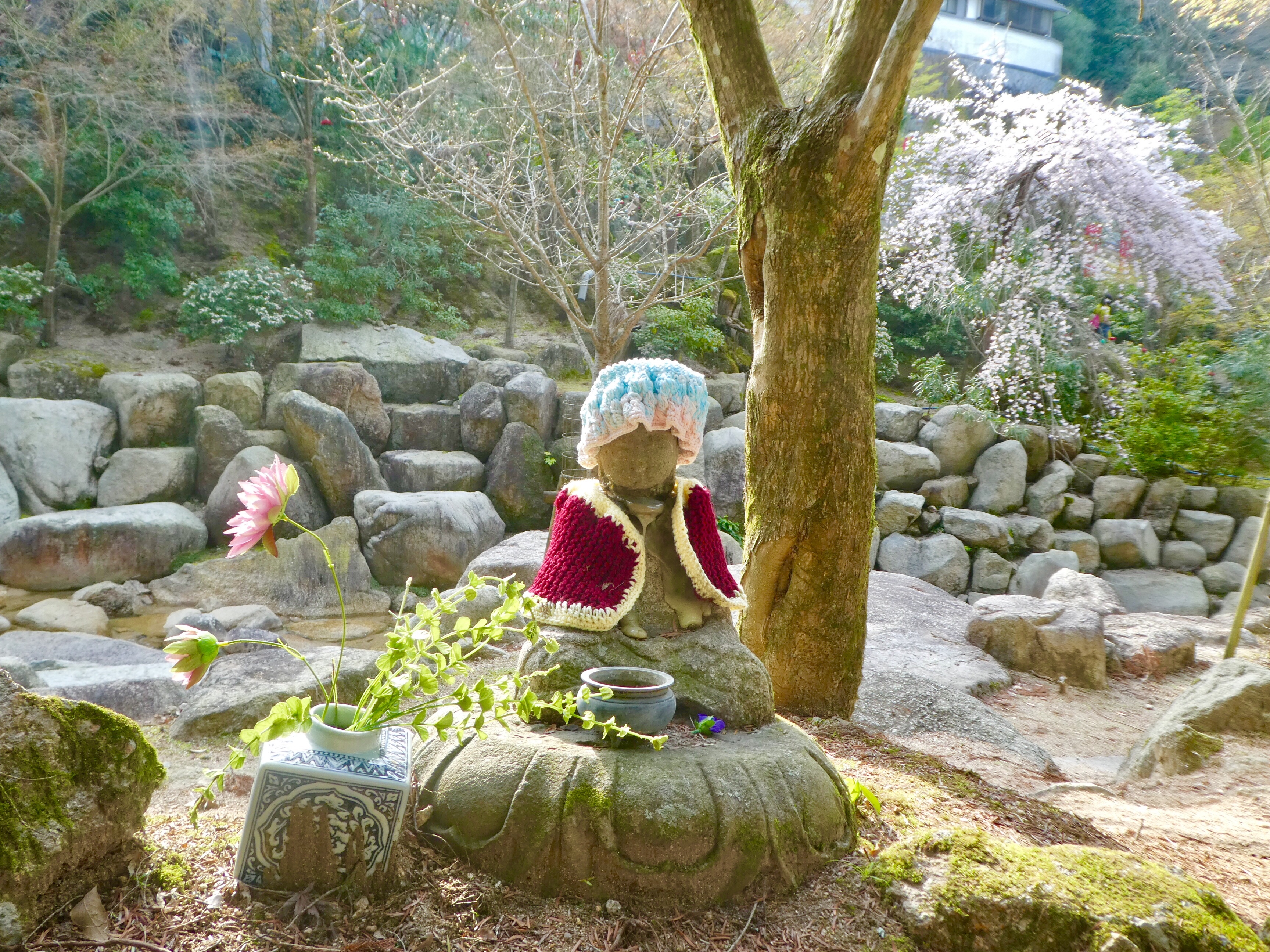
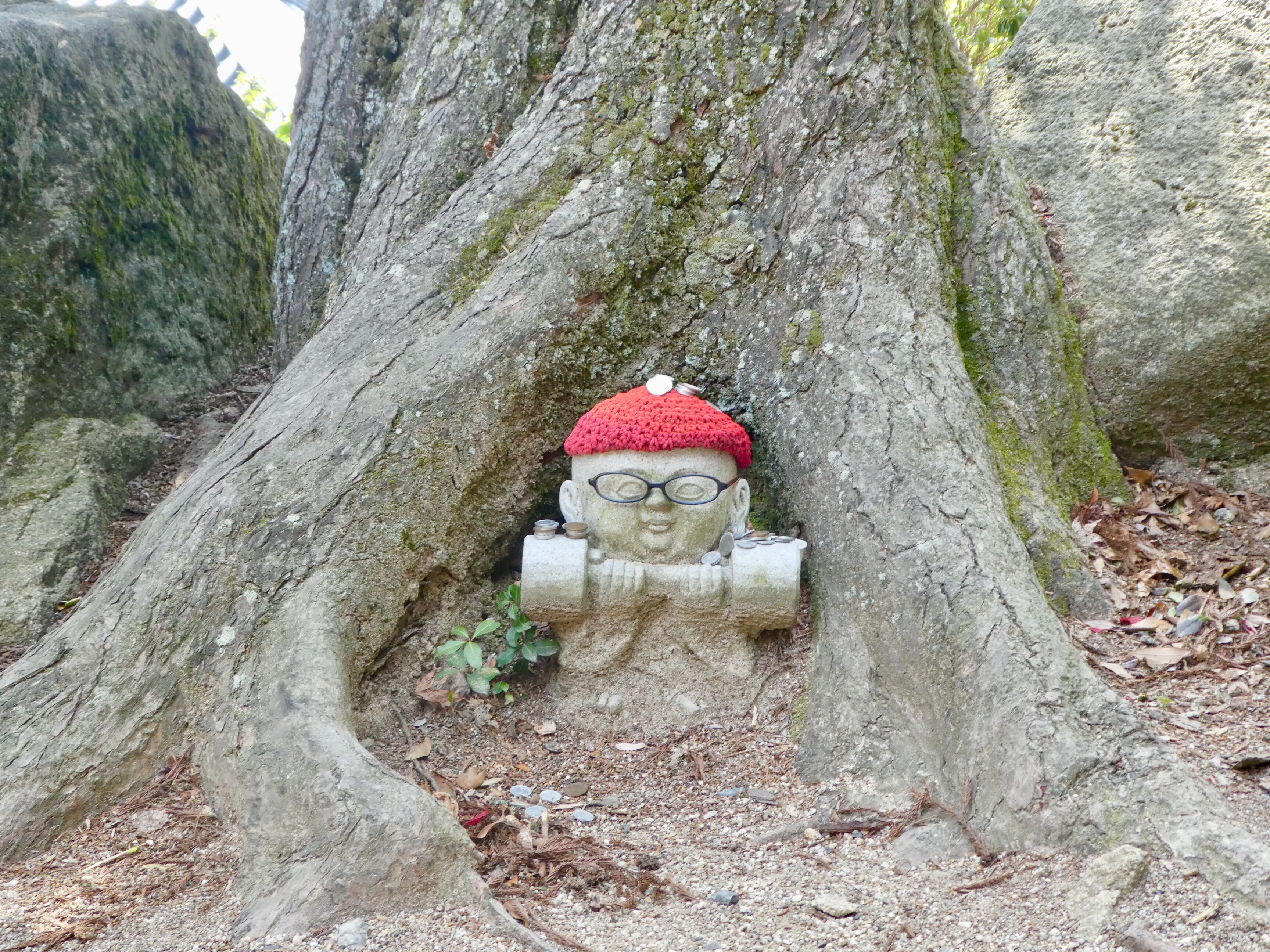
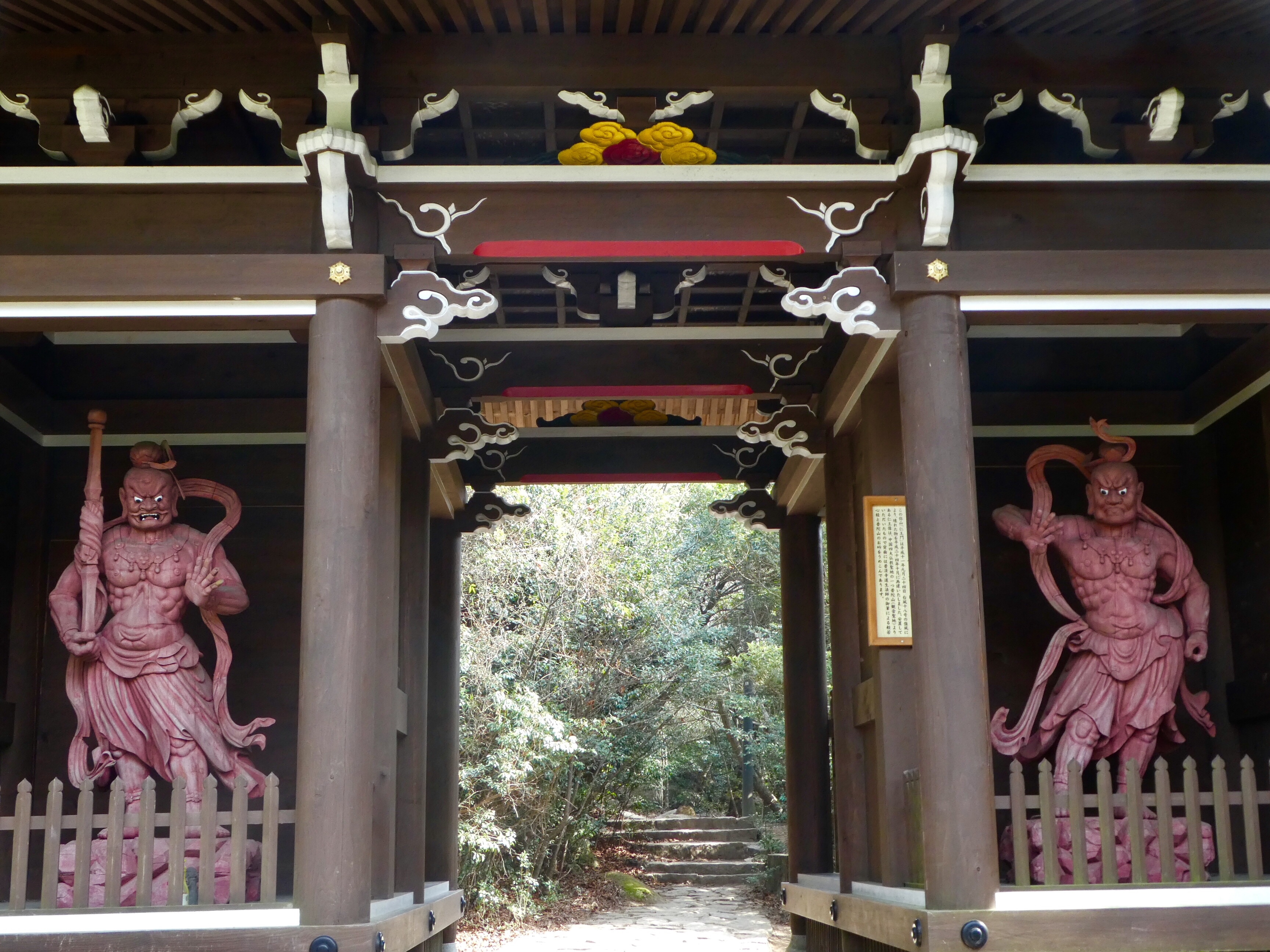
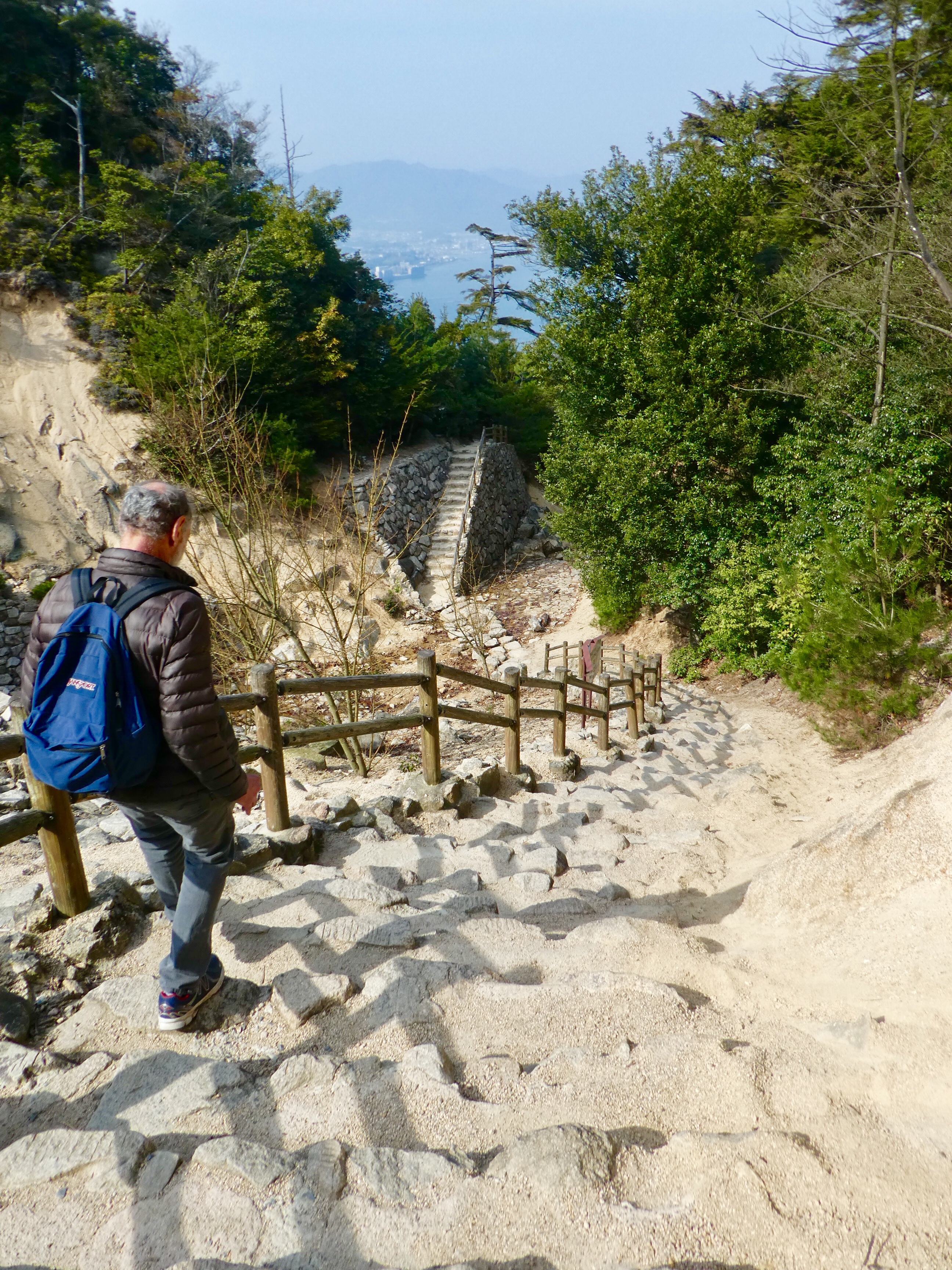
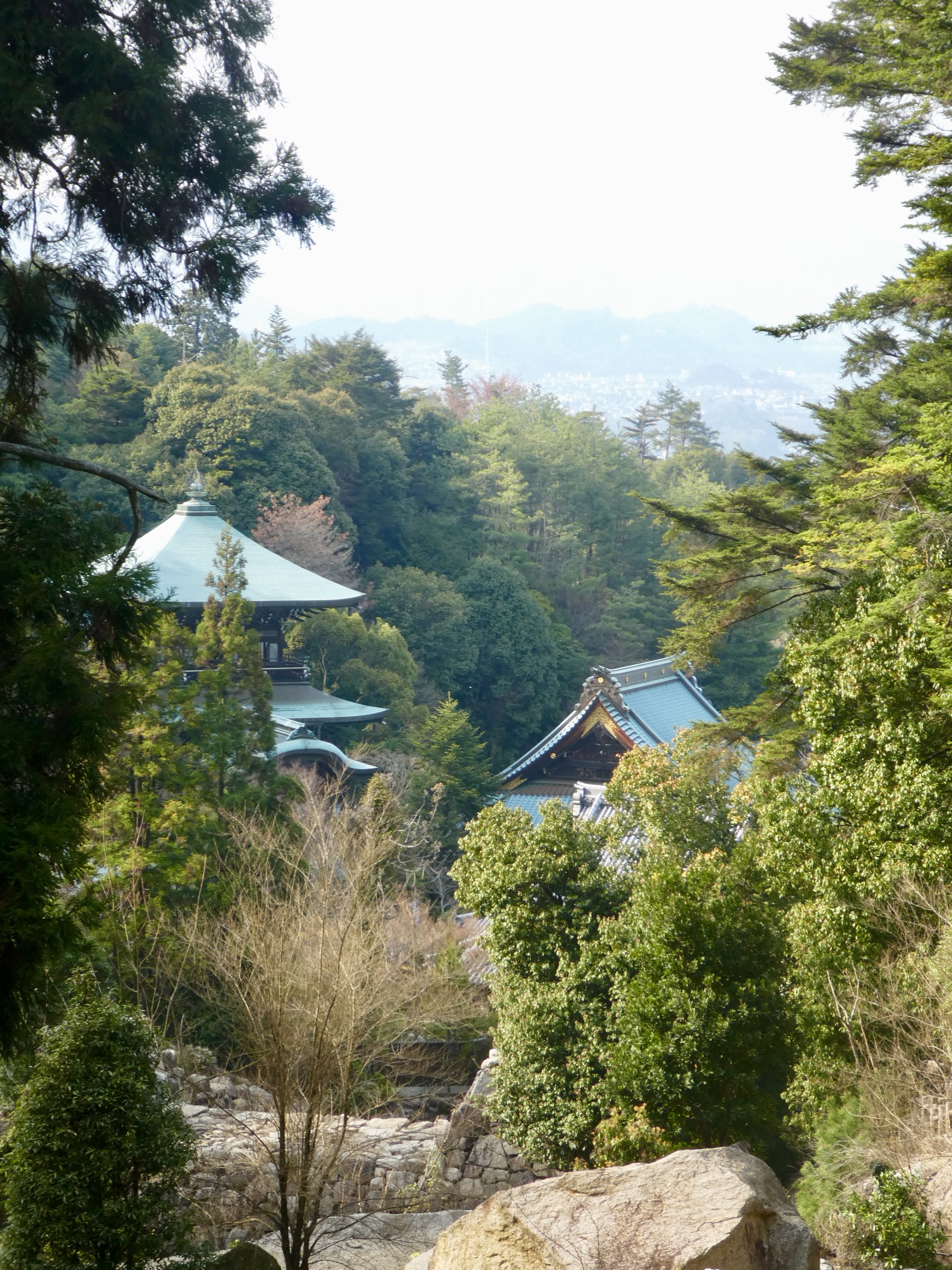
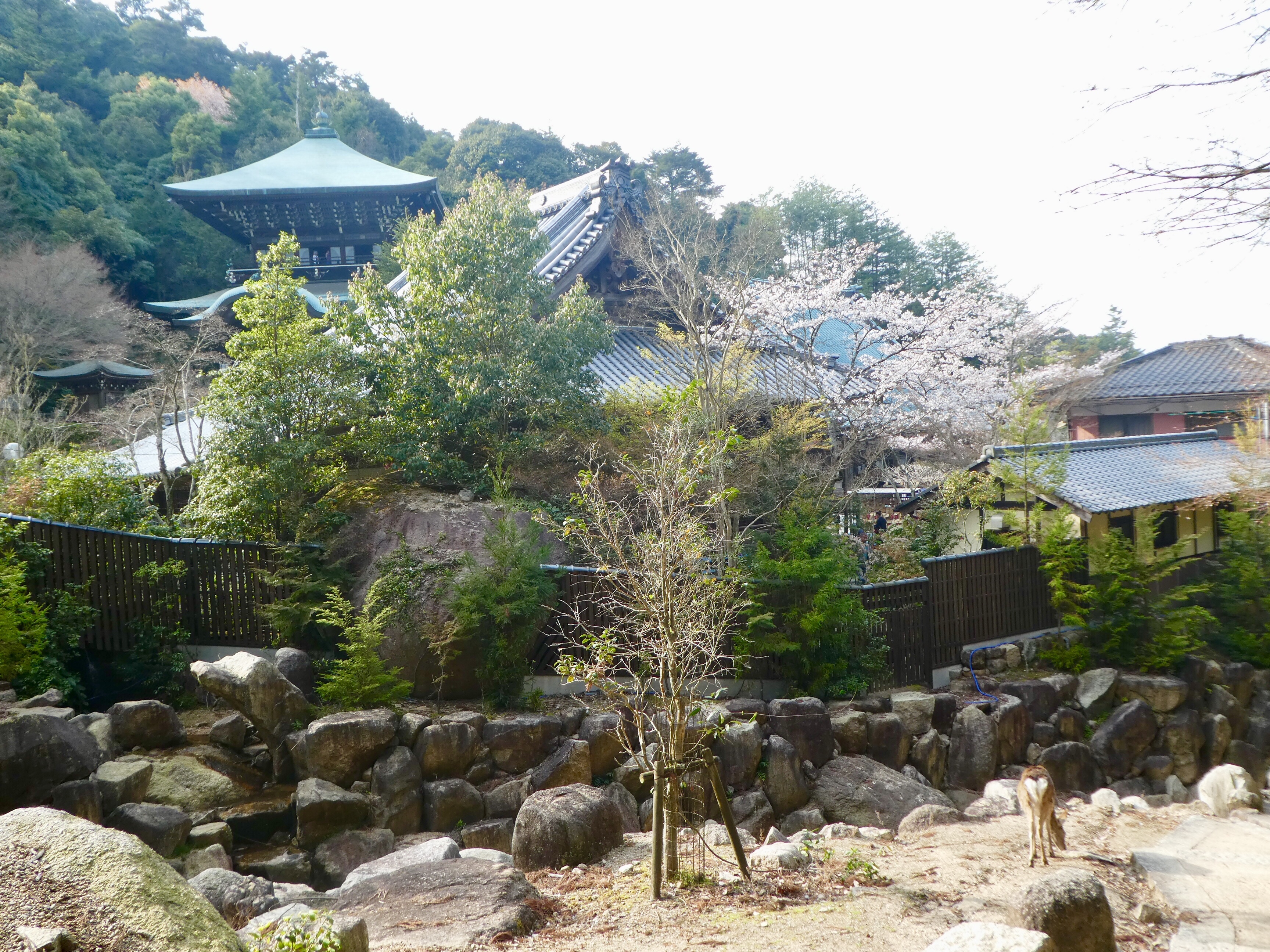
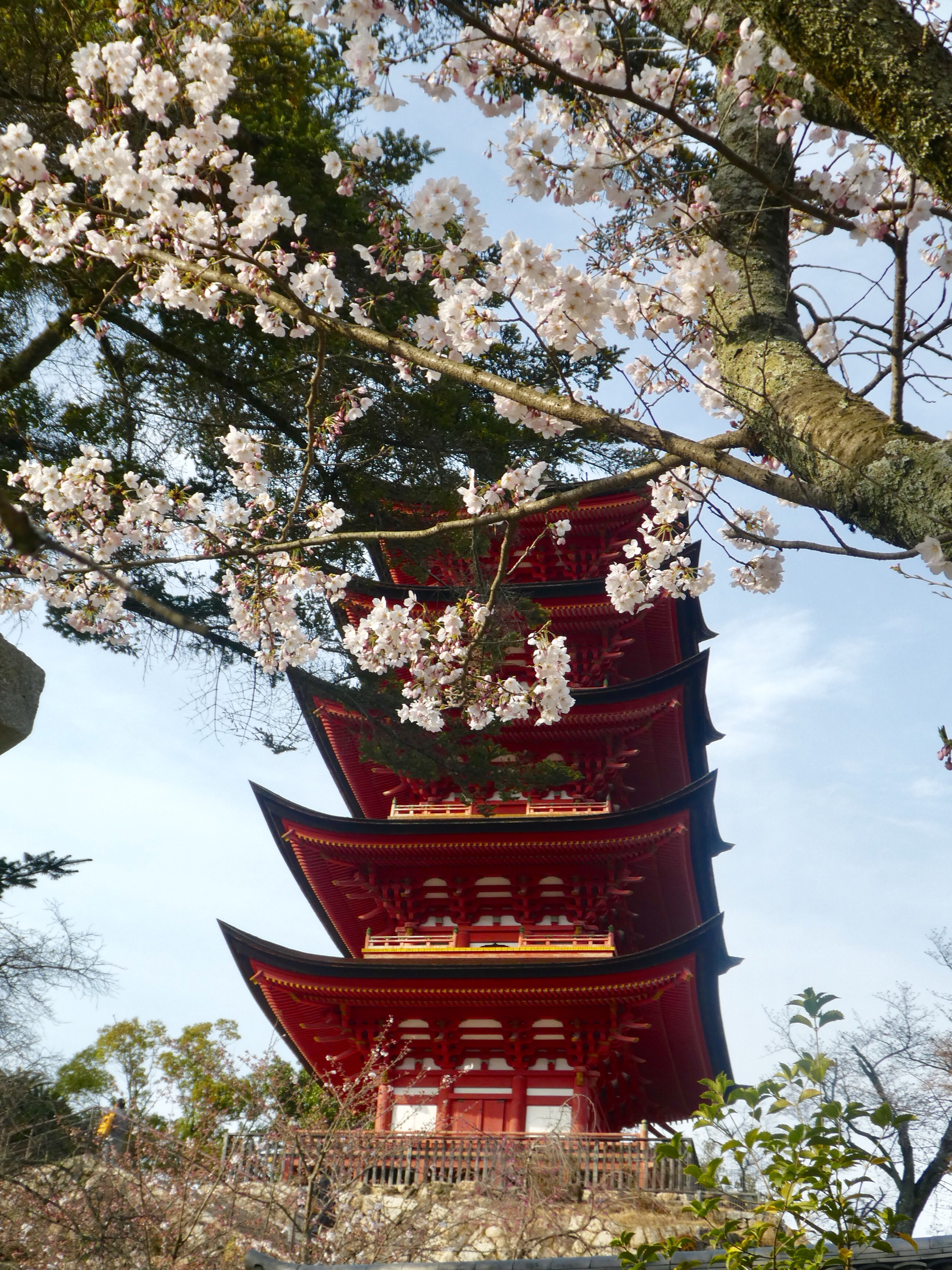
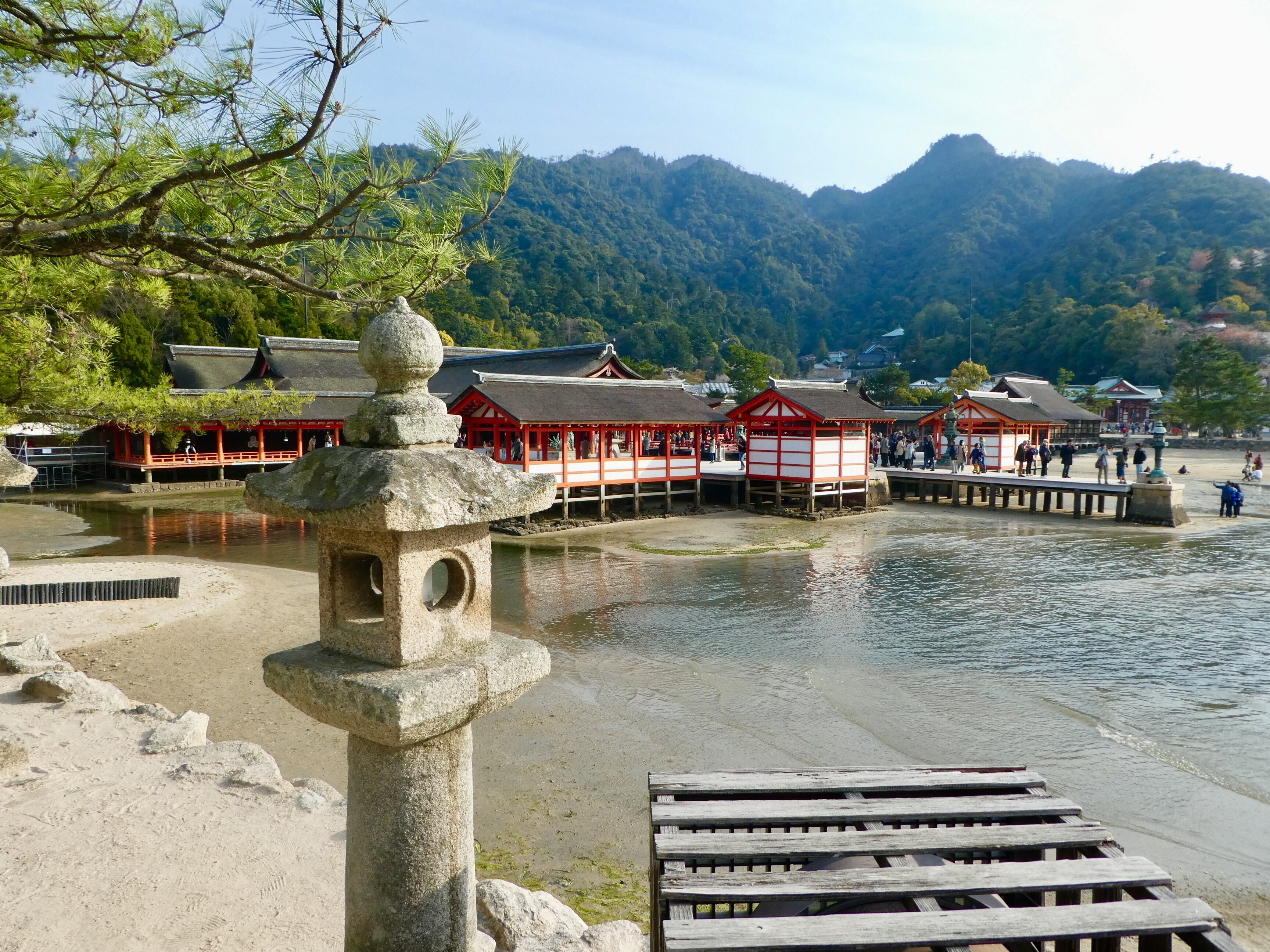
Our next day was a completely different story. Miyajima Island is one of Japan’s scenic wonders. After a train and short ferry ride to the island, we found ourselves in a sea of tourists. There were deer at the seashore, wandering amongst the people, hoping to be fed. We hiked 2.5 km up the steep Momijidani Trail to Mt. Misen summit for a great view of the bay and Hiroshima in the distance. We overlooked a five-story pagoda, built in 1407, the sprawling Itsukushima Shrine, and the famous O-Torii gate. The O-Torii gate, a Shinto shrine, is believed to be the boundary between humanity and the spirit world. It sits in the water just offshore. At high tide, it looks like it’s floating. We took the 2.5 km Daishoin Trail down the mountain. We passed many small shrines and Buddhist statues covered in clothing and coins on our hike.

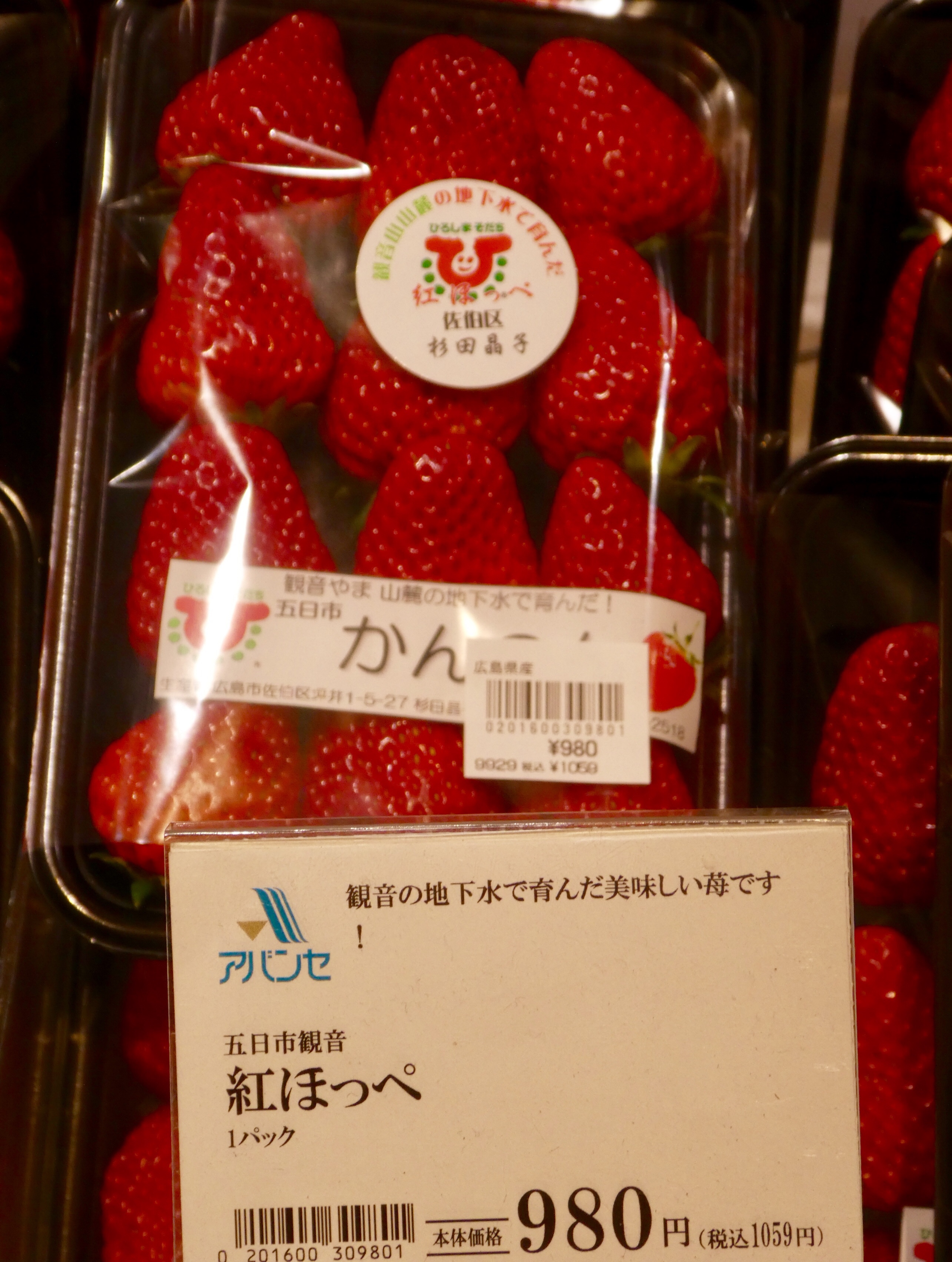
We are now in Okayama, a 45 minute bullet train ride north of Hiroshima, recovering from our hike. We miss our California fruit and veggies! Apples, oranges, and grapefruit are from $3-7 APIECE, and one dozen strawberries cost about $9.50! (USD)

We miss you too!

Love BnL

Spring Fever in Fukuoka, Japan

Dear Friends and Family,

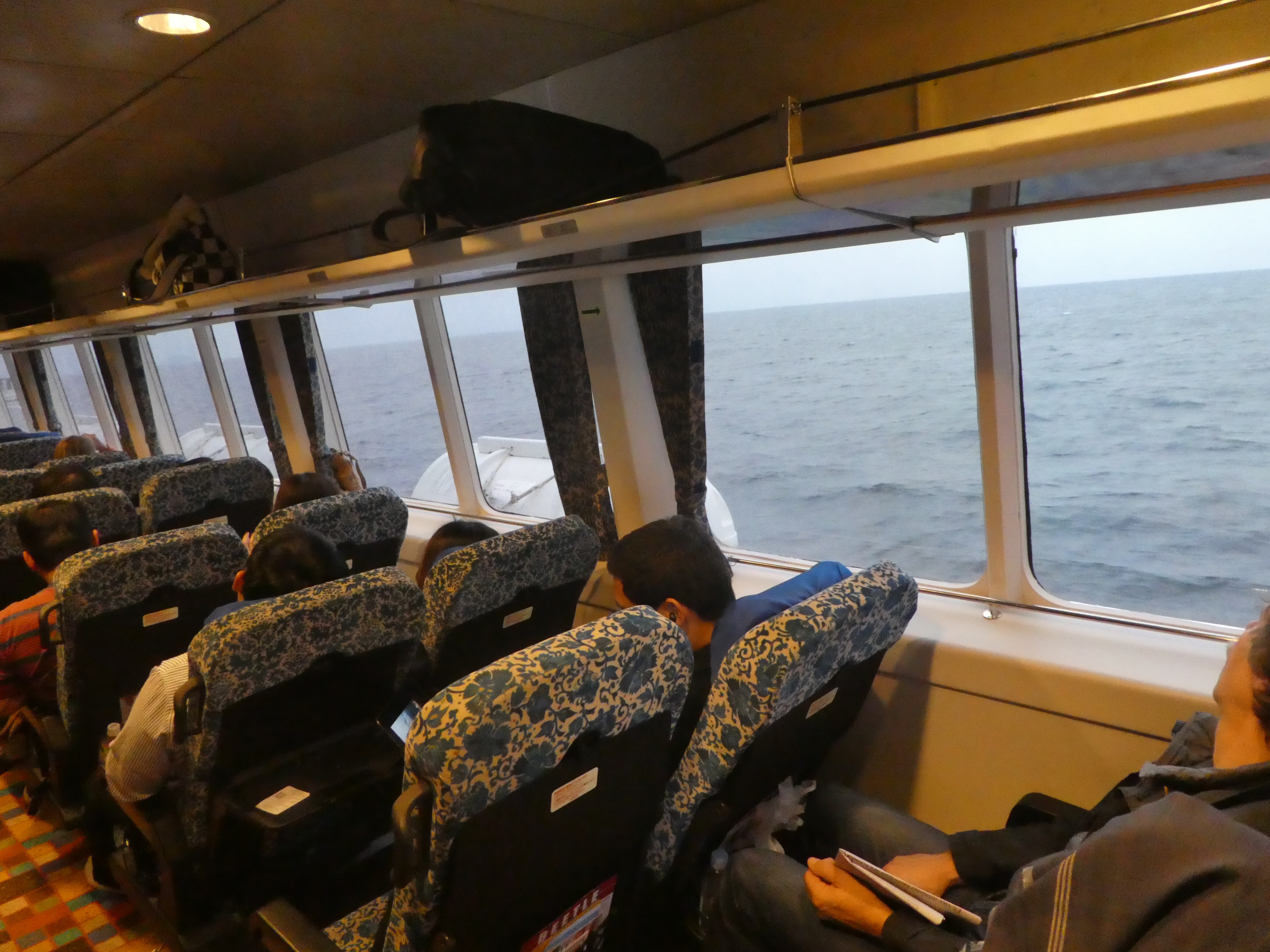
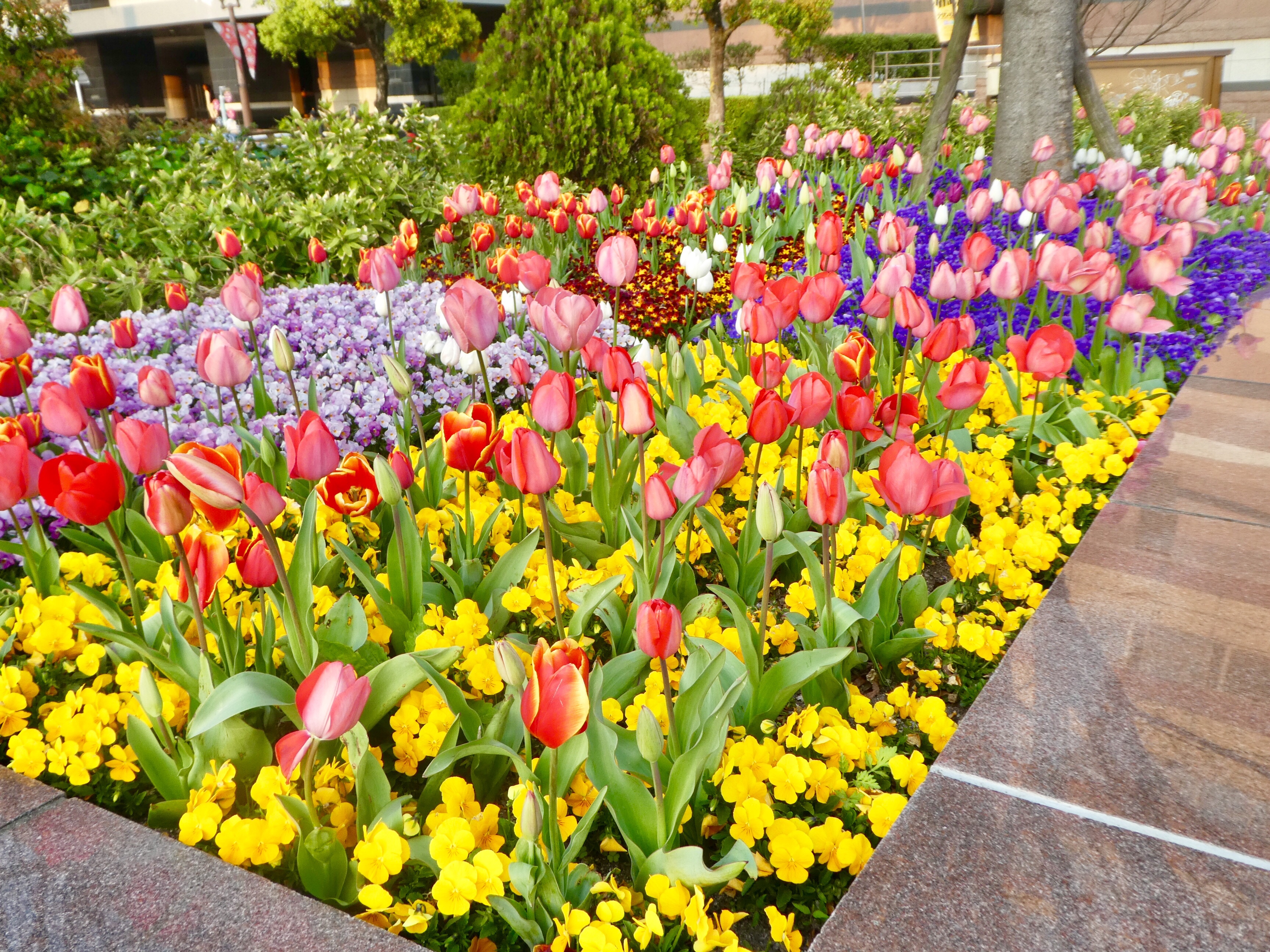
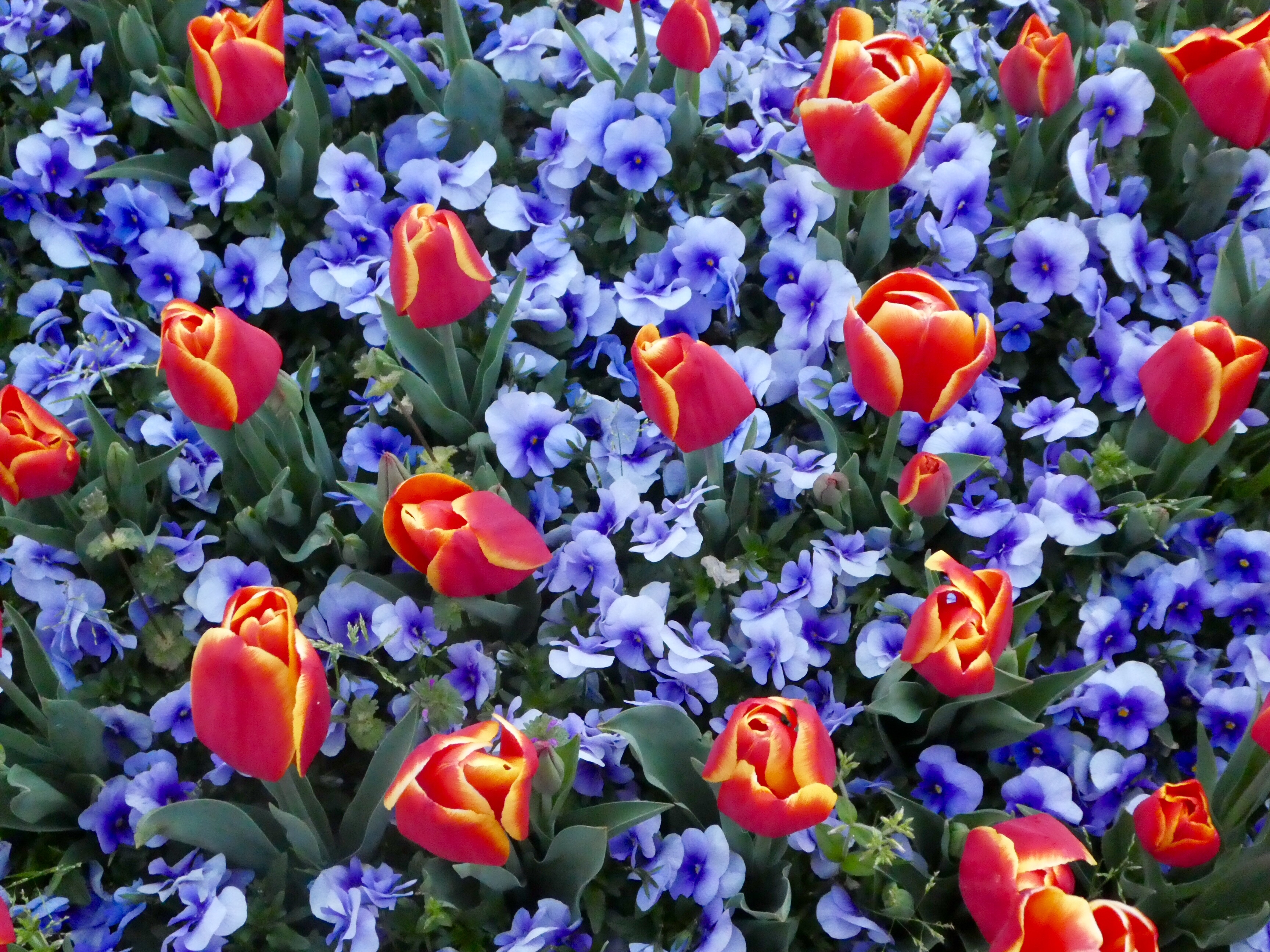
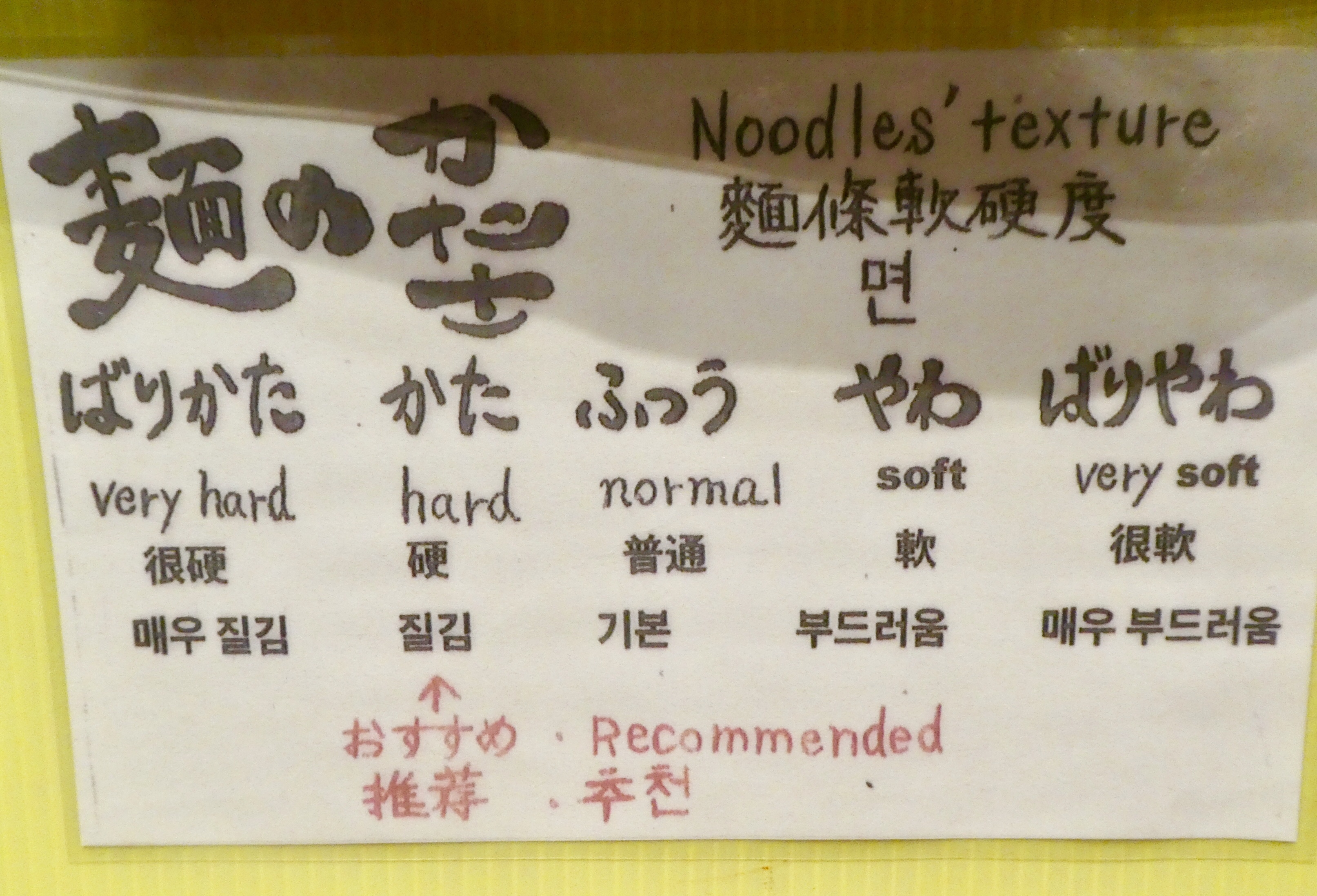
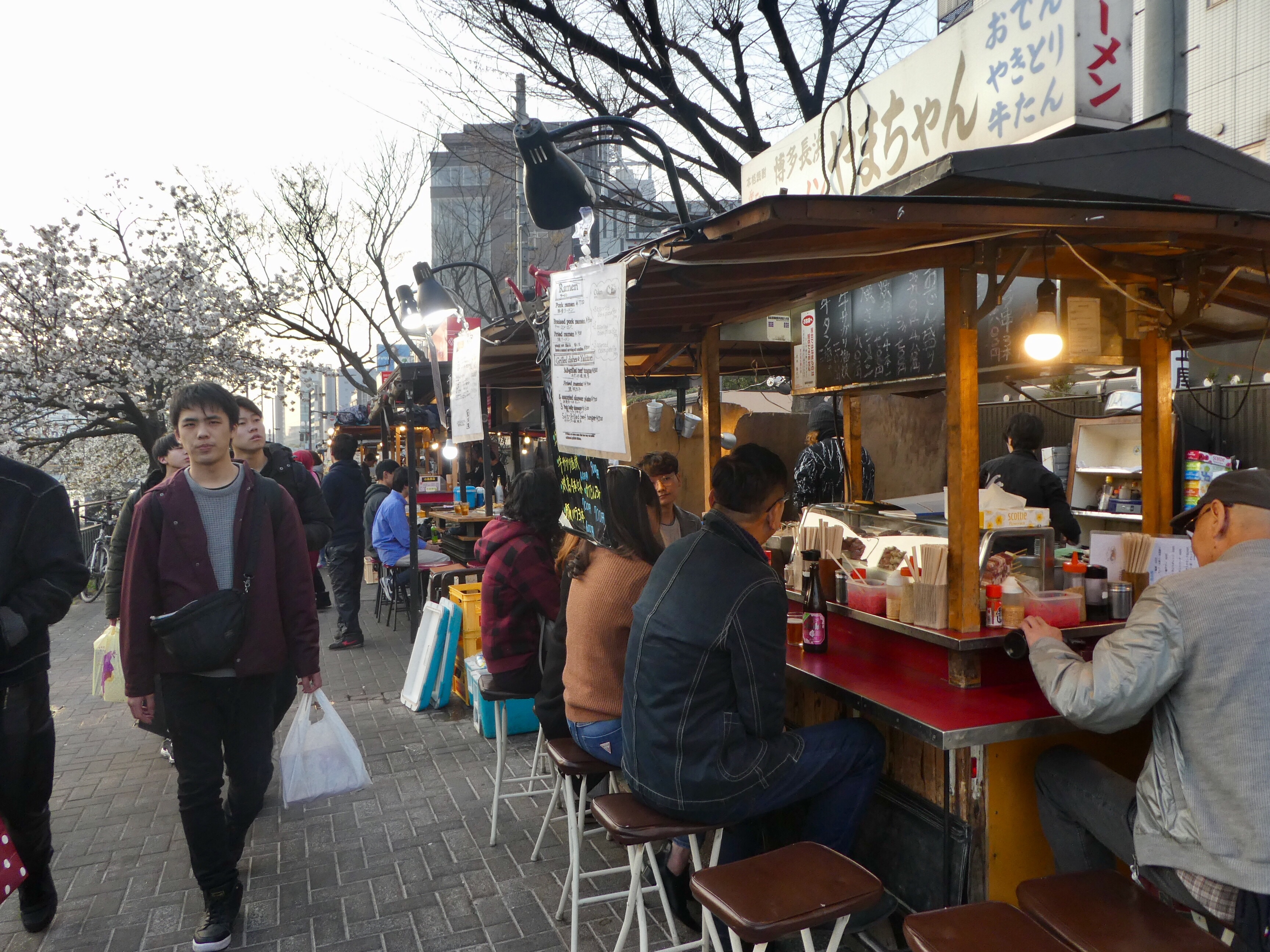
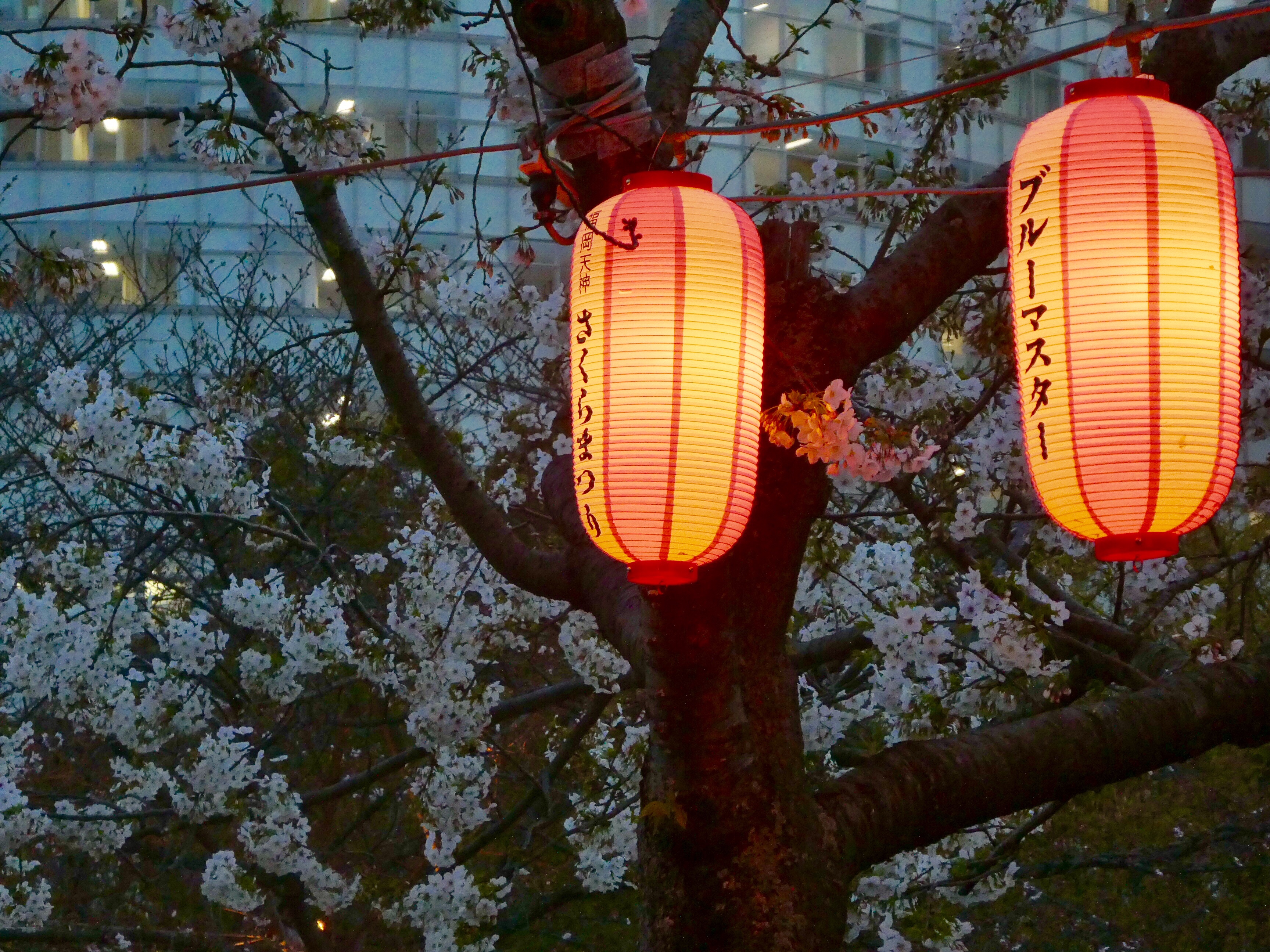
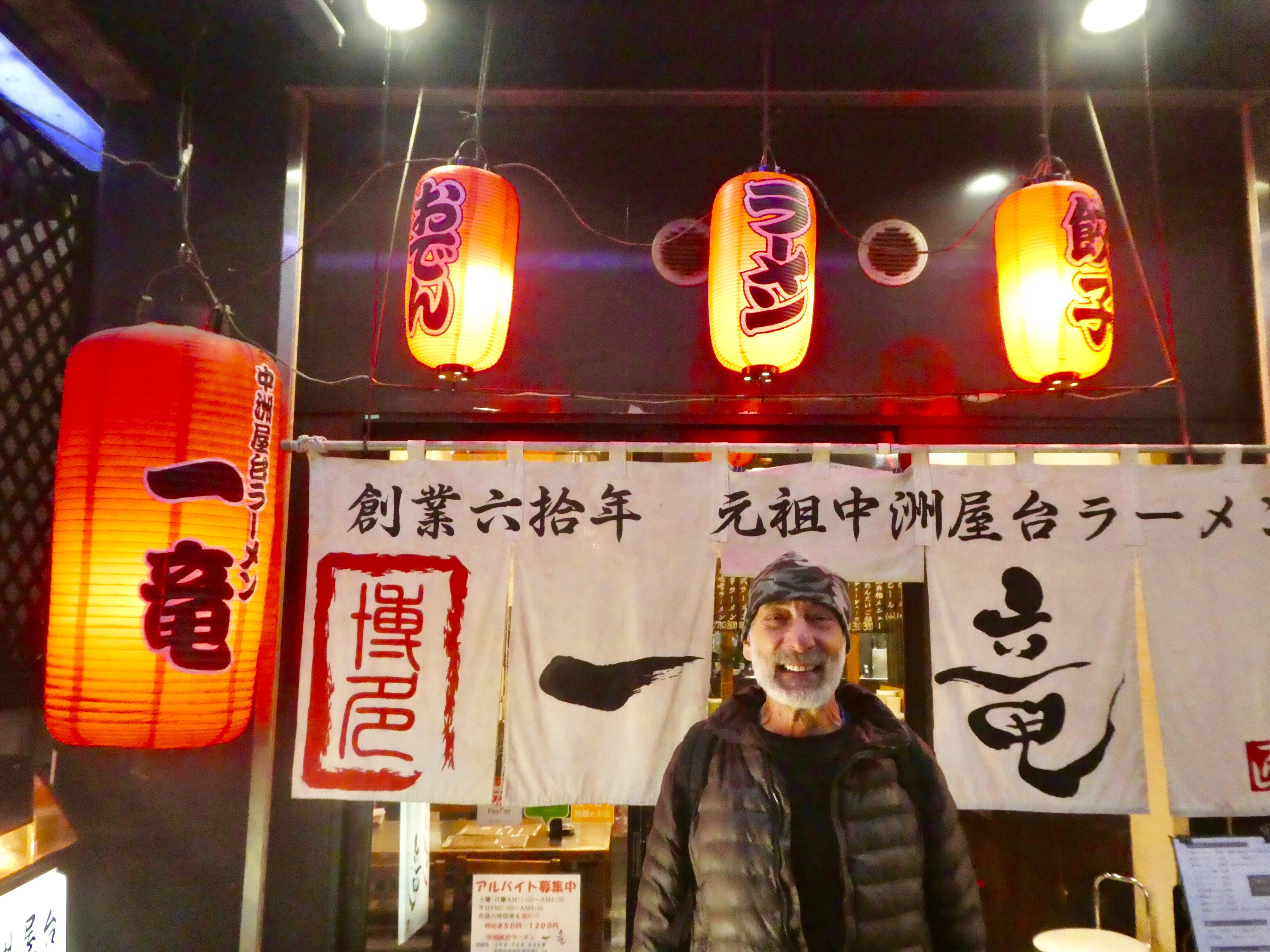
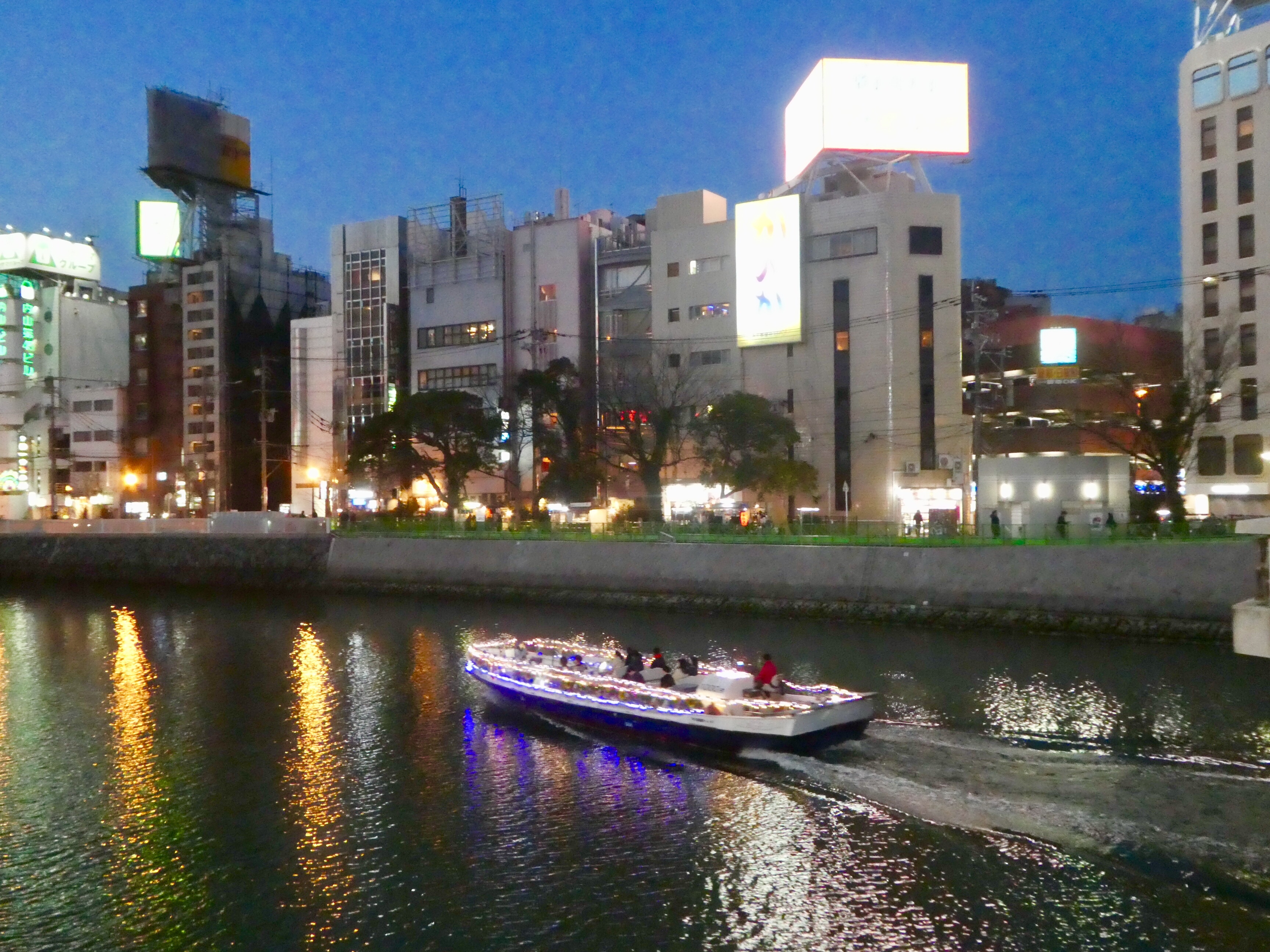
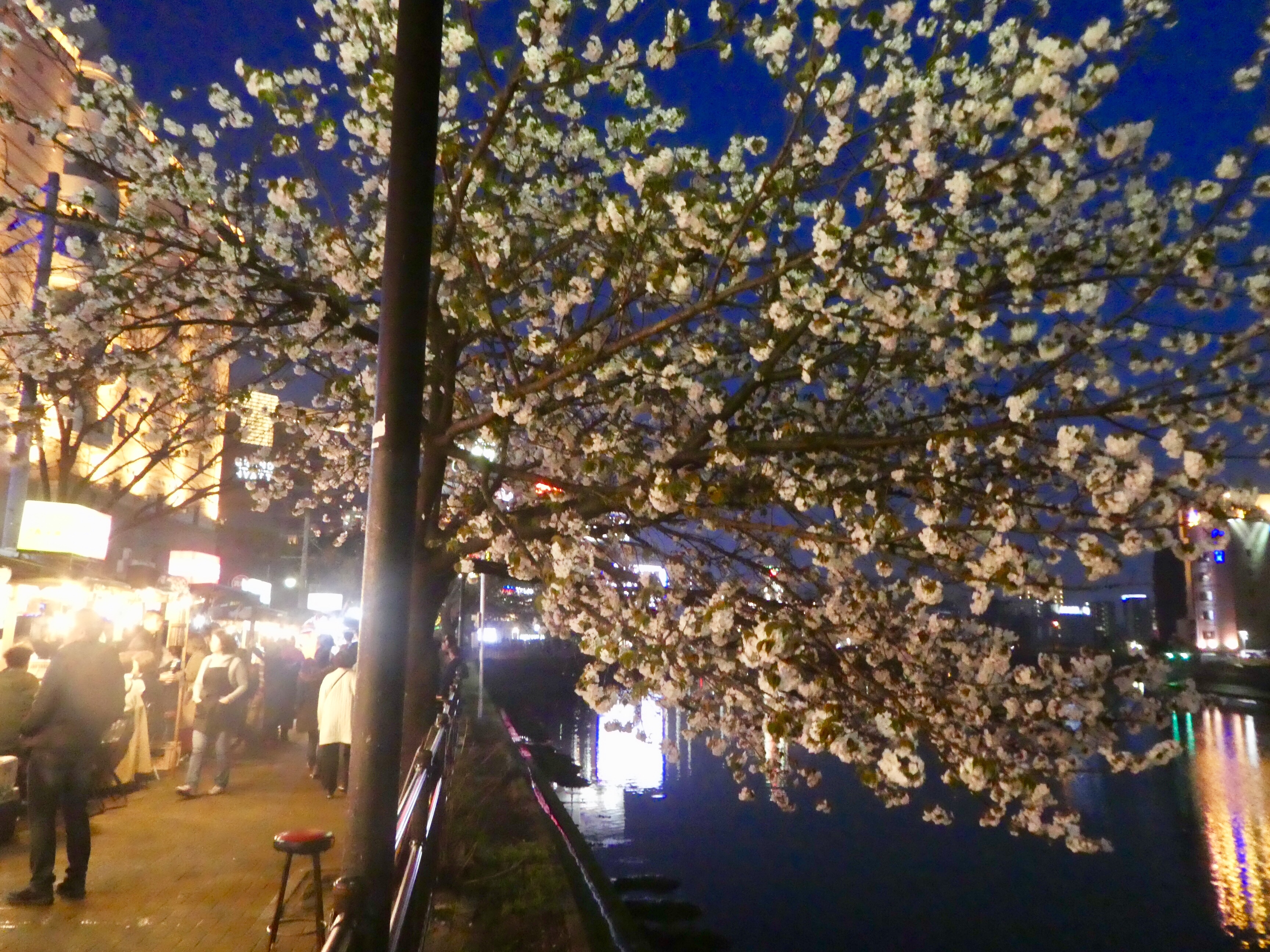
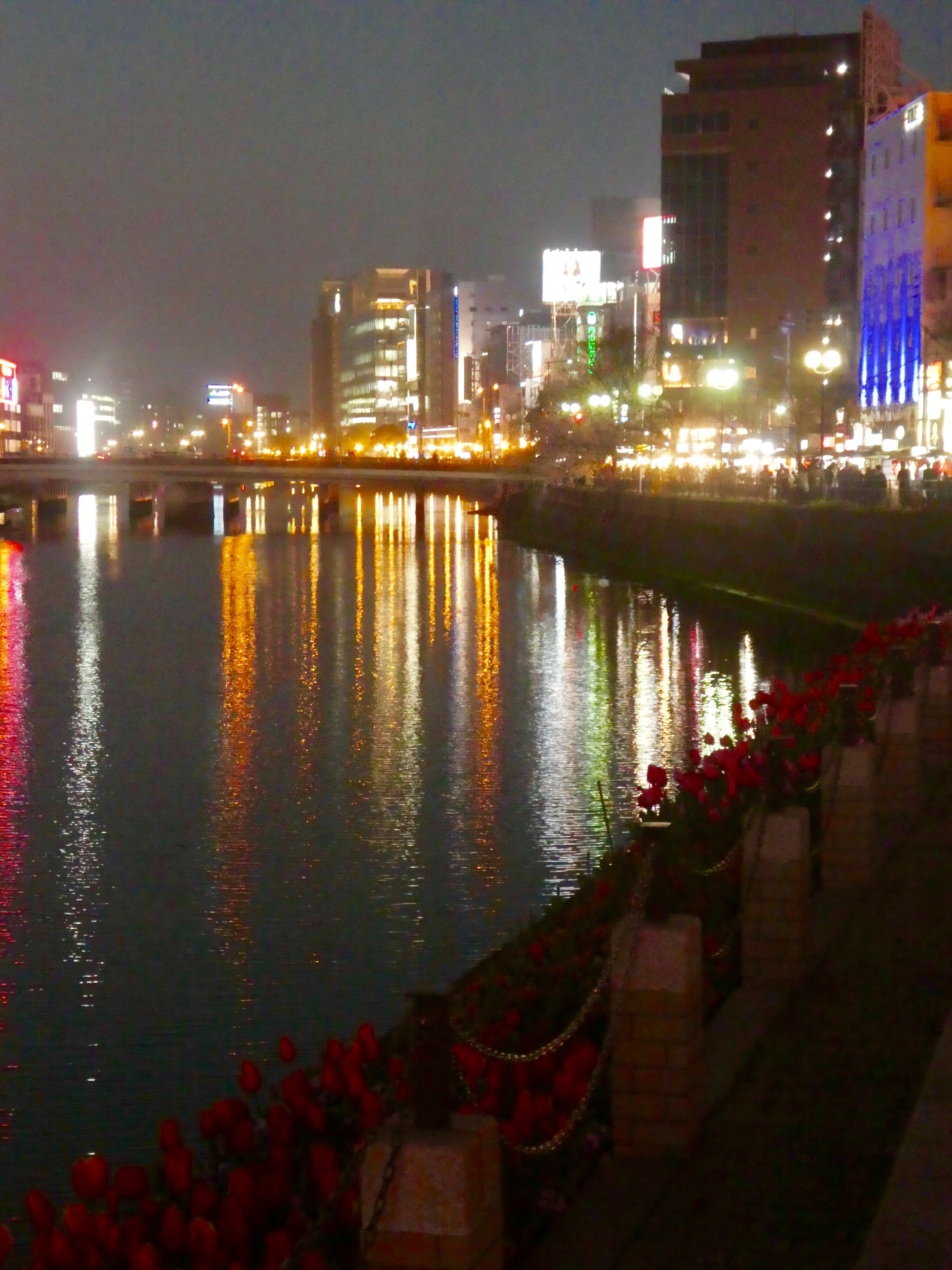
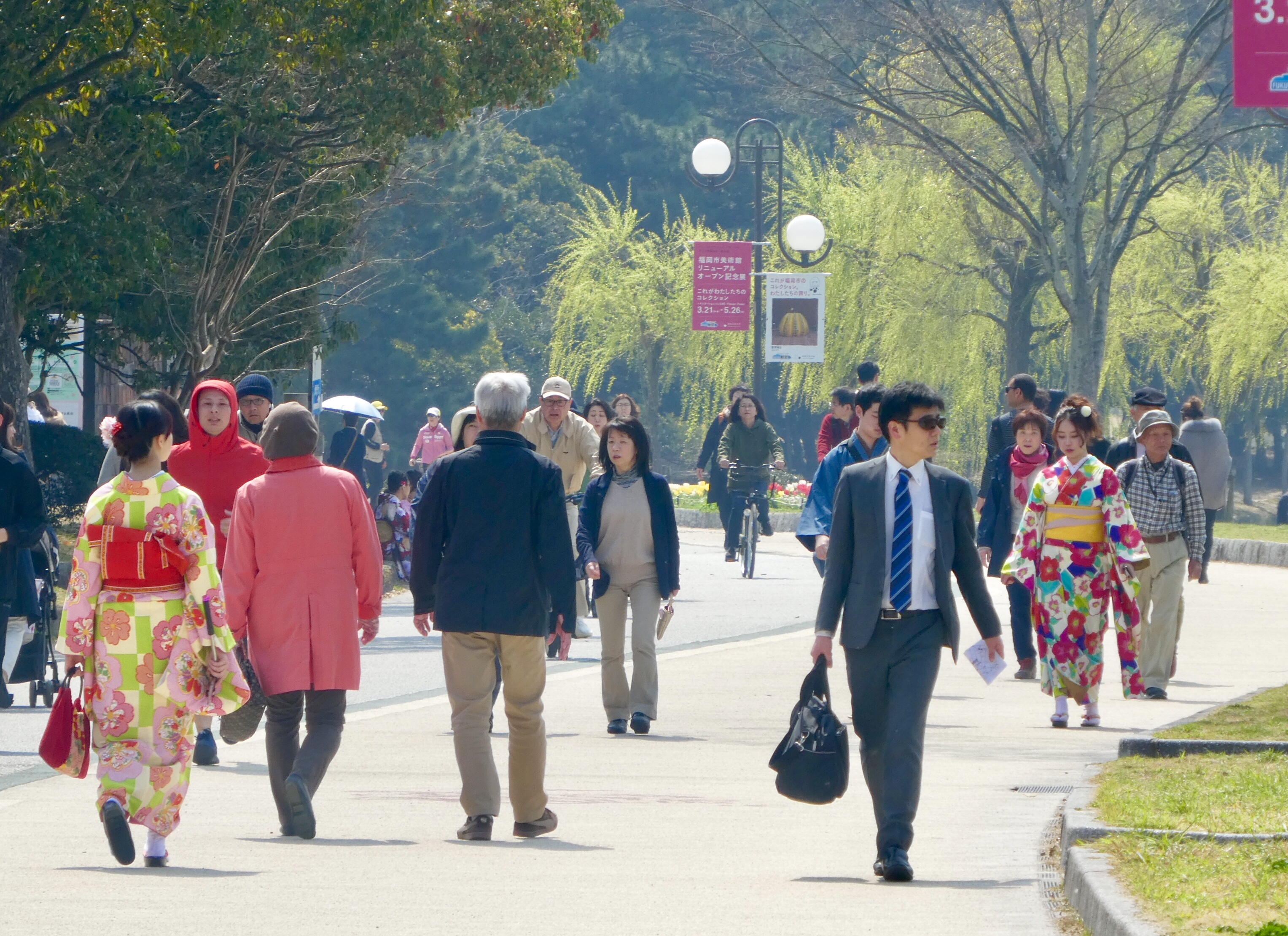
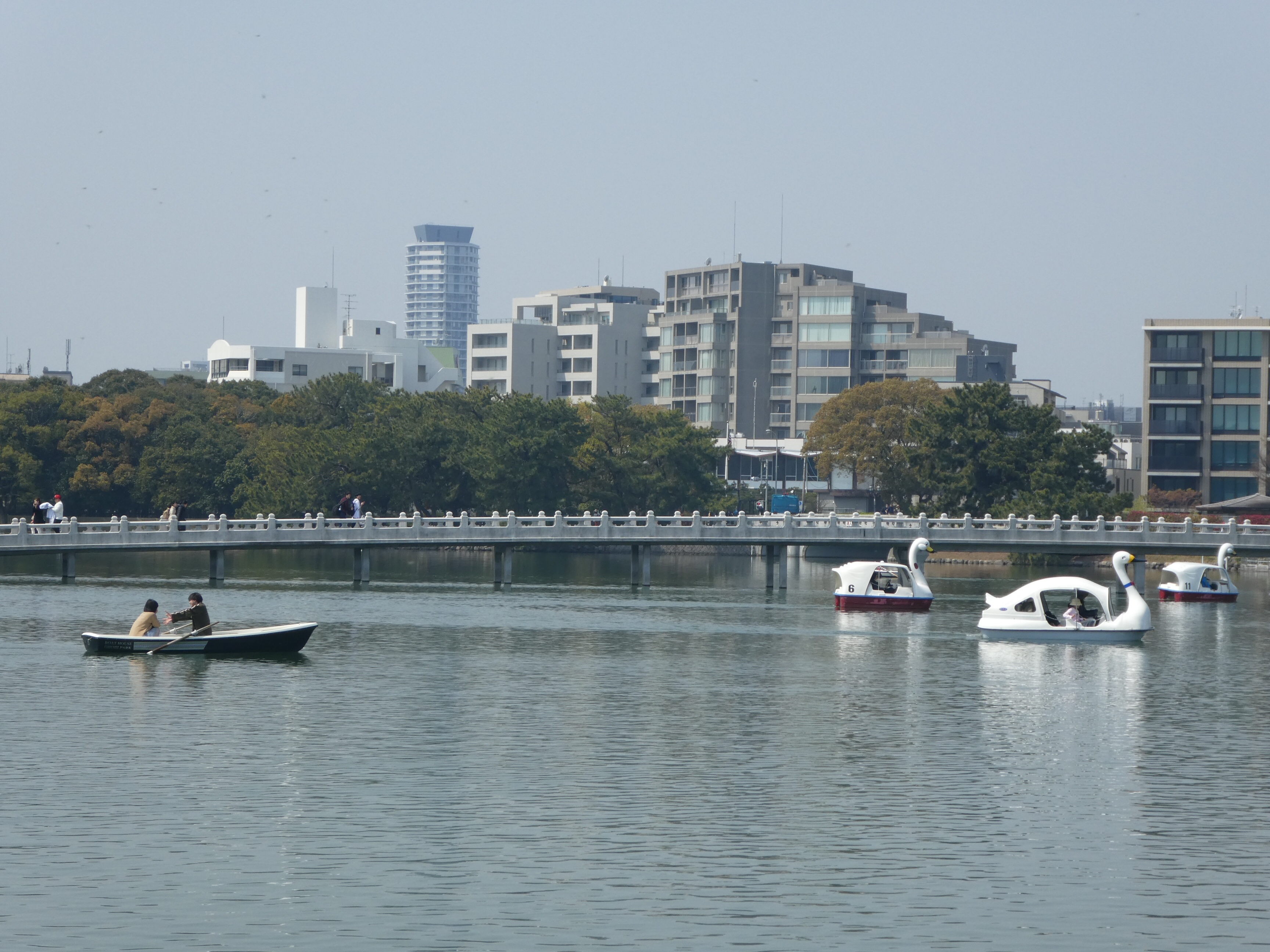
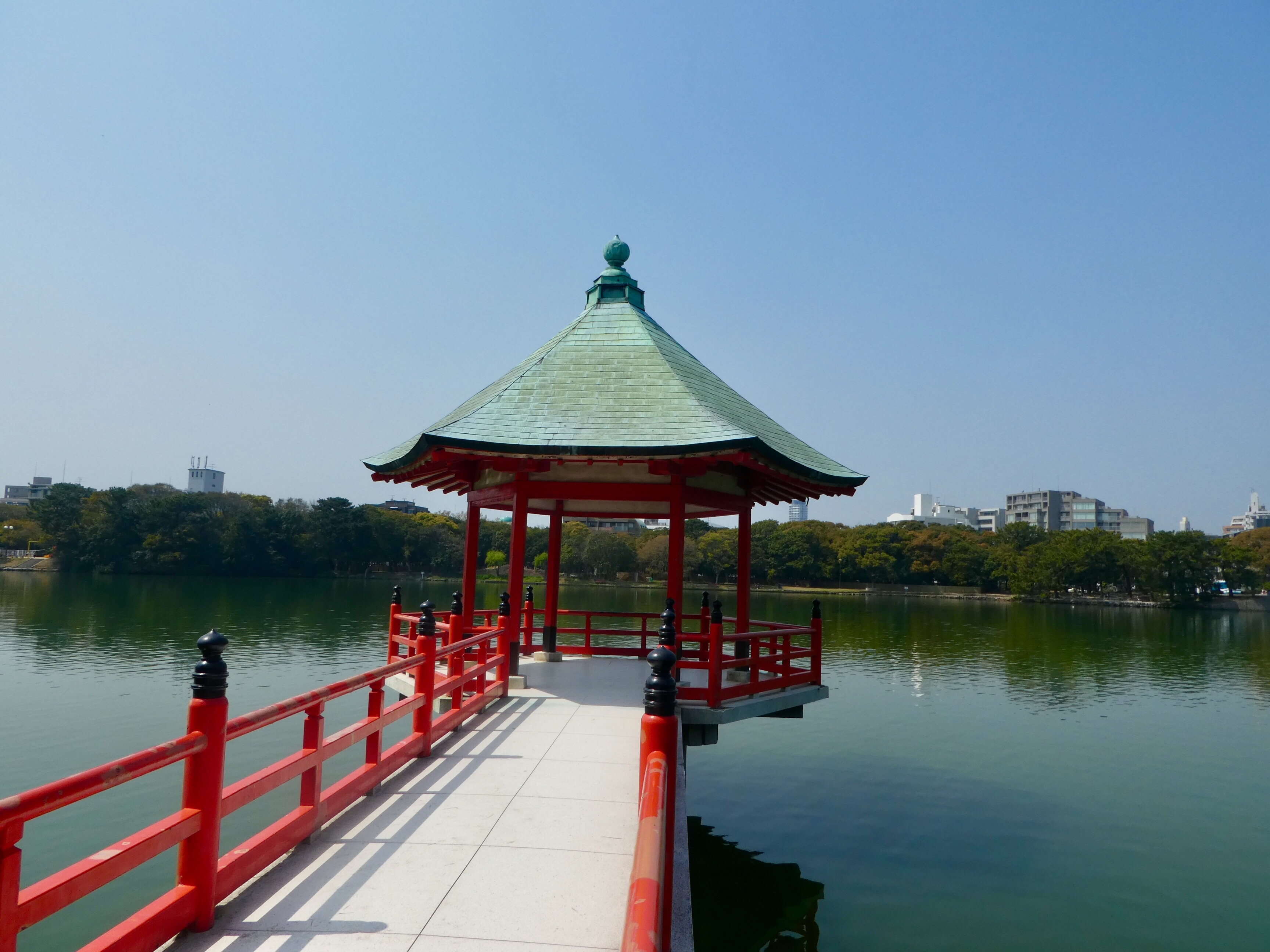
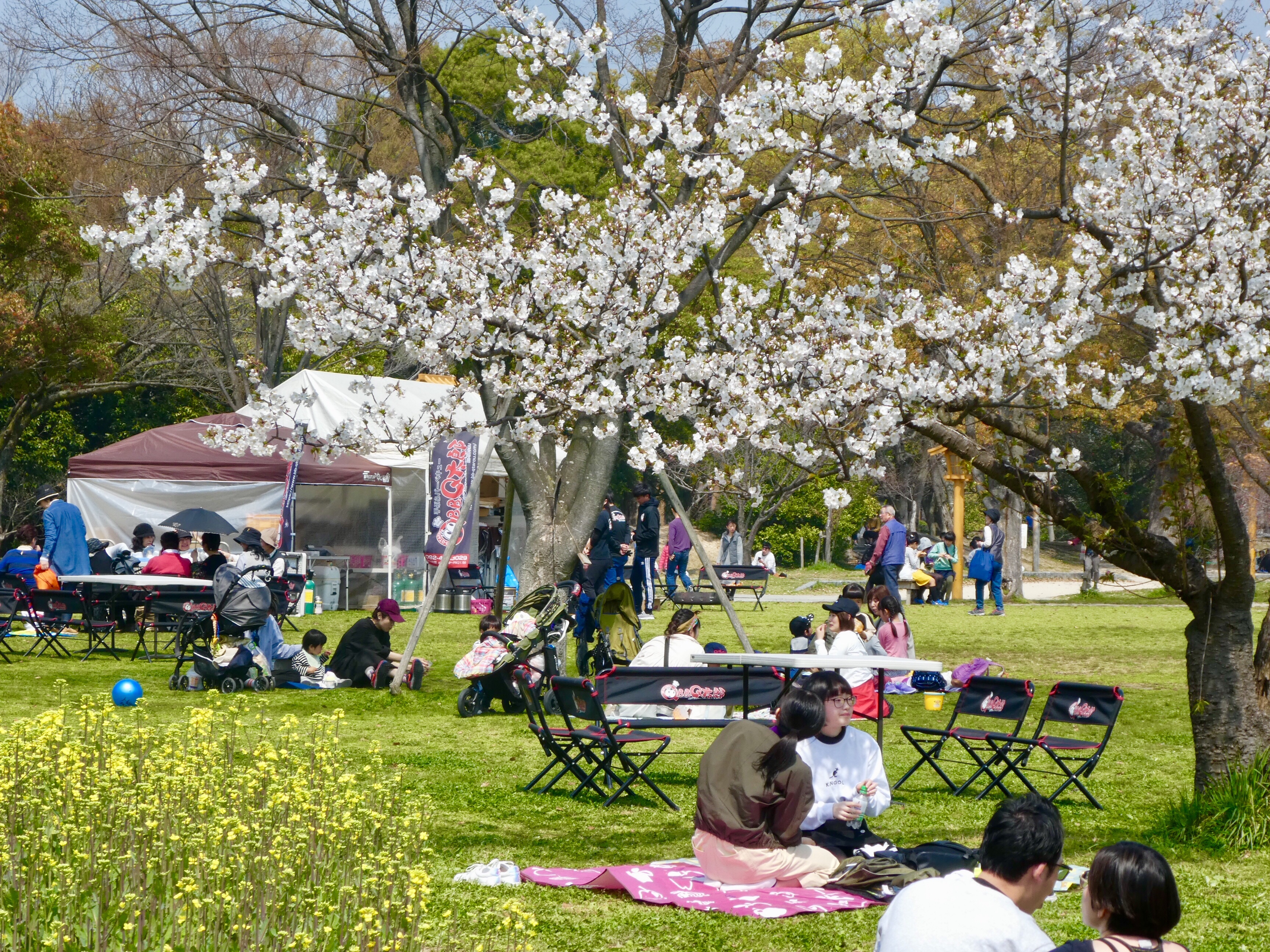
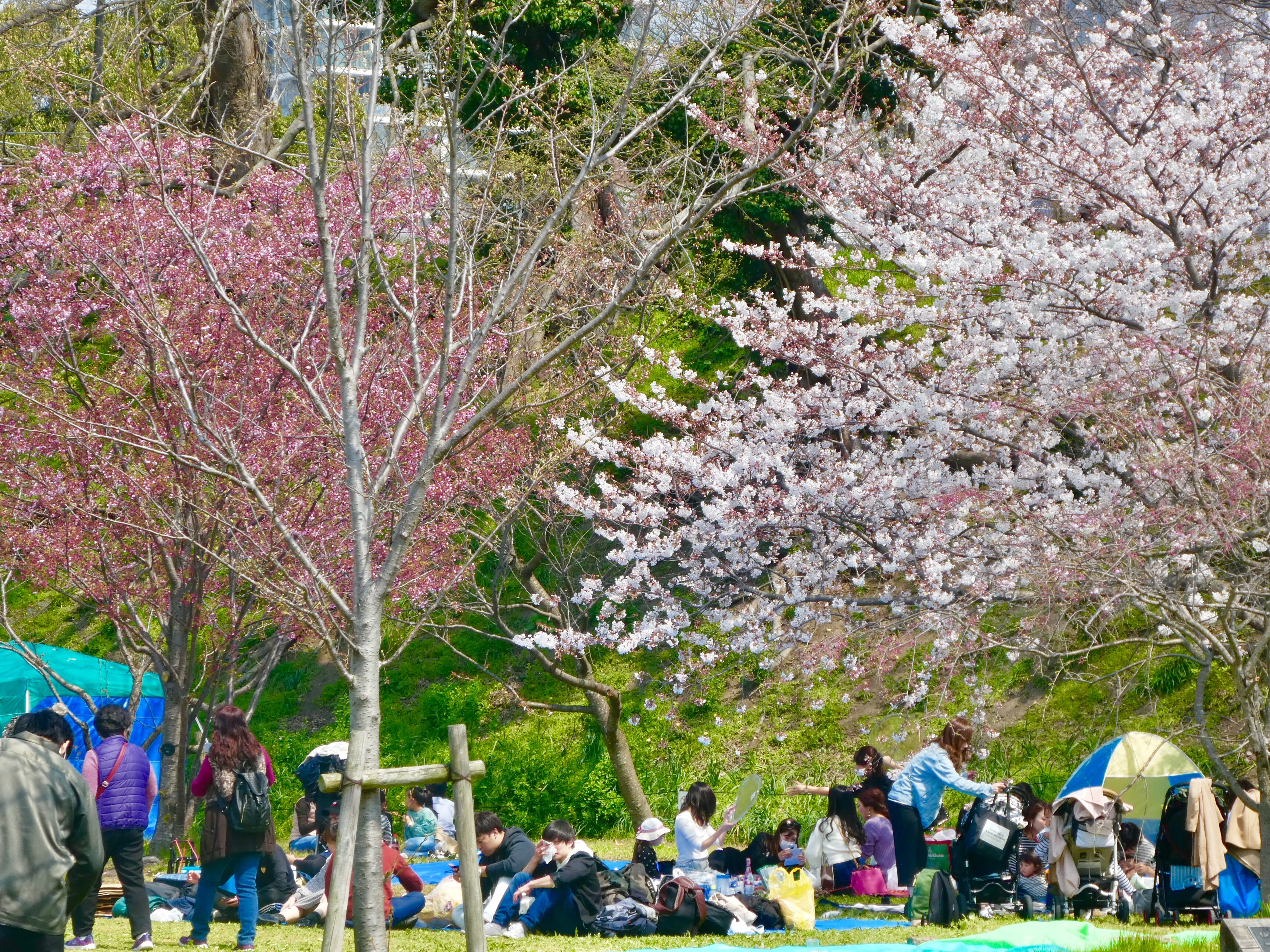
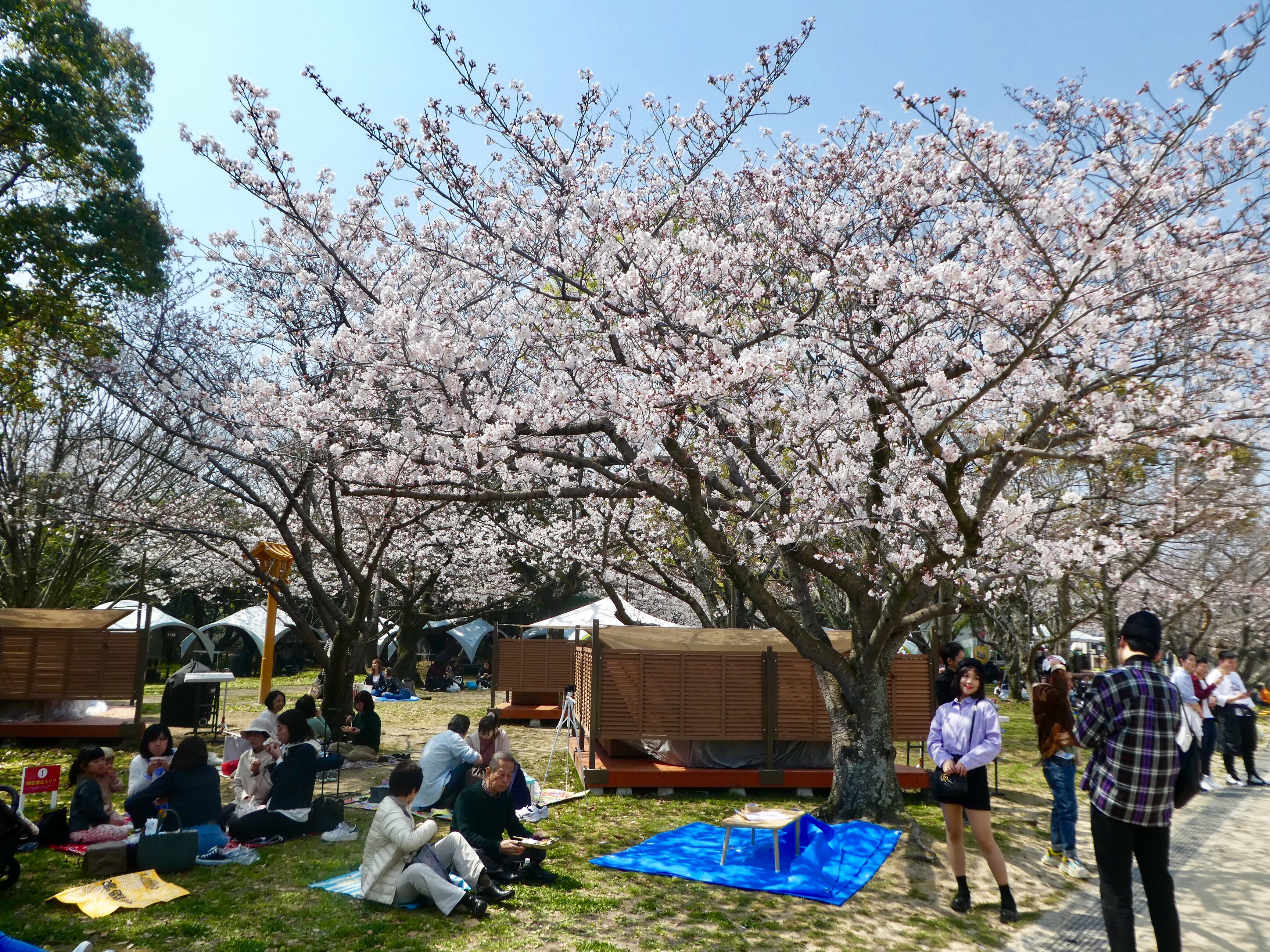
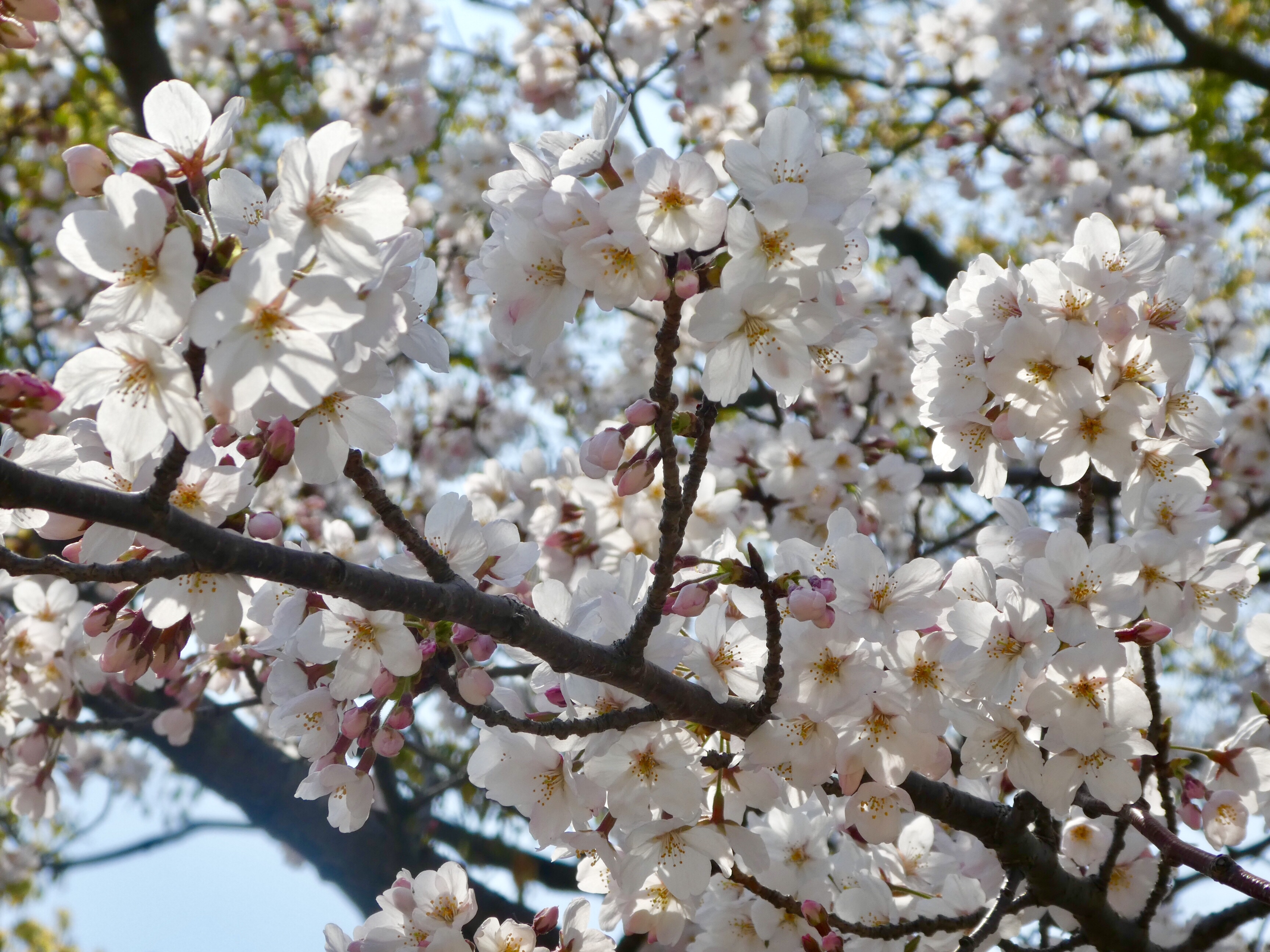
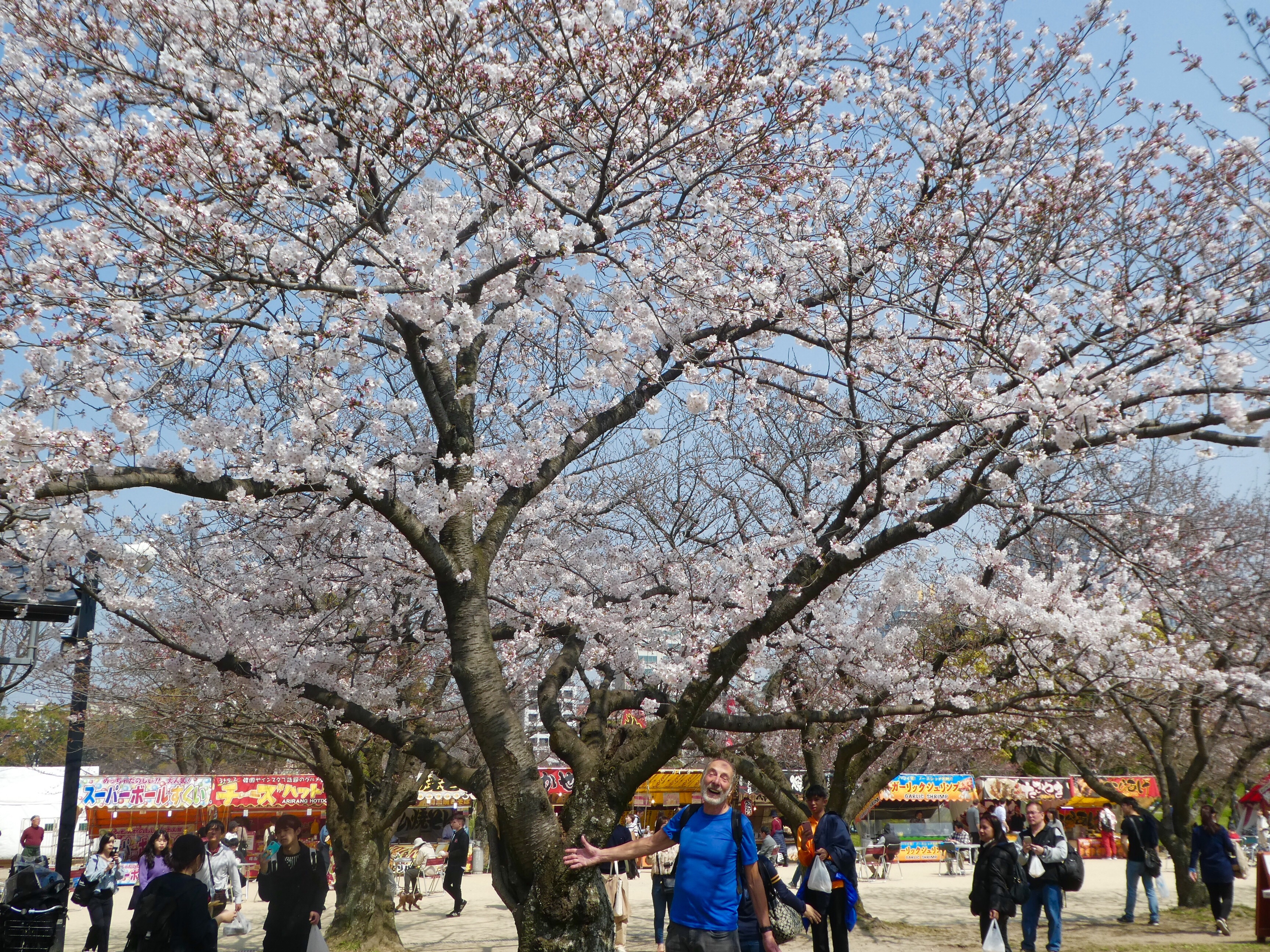
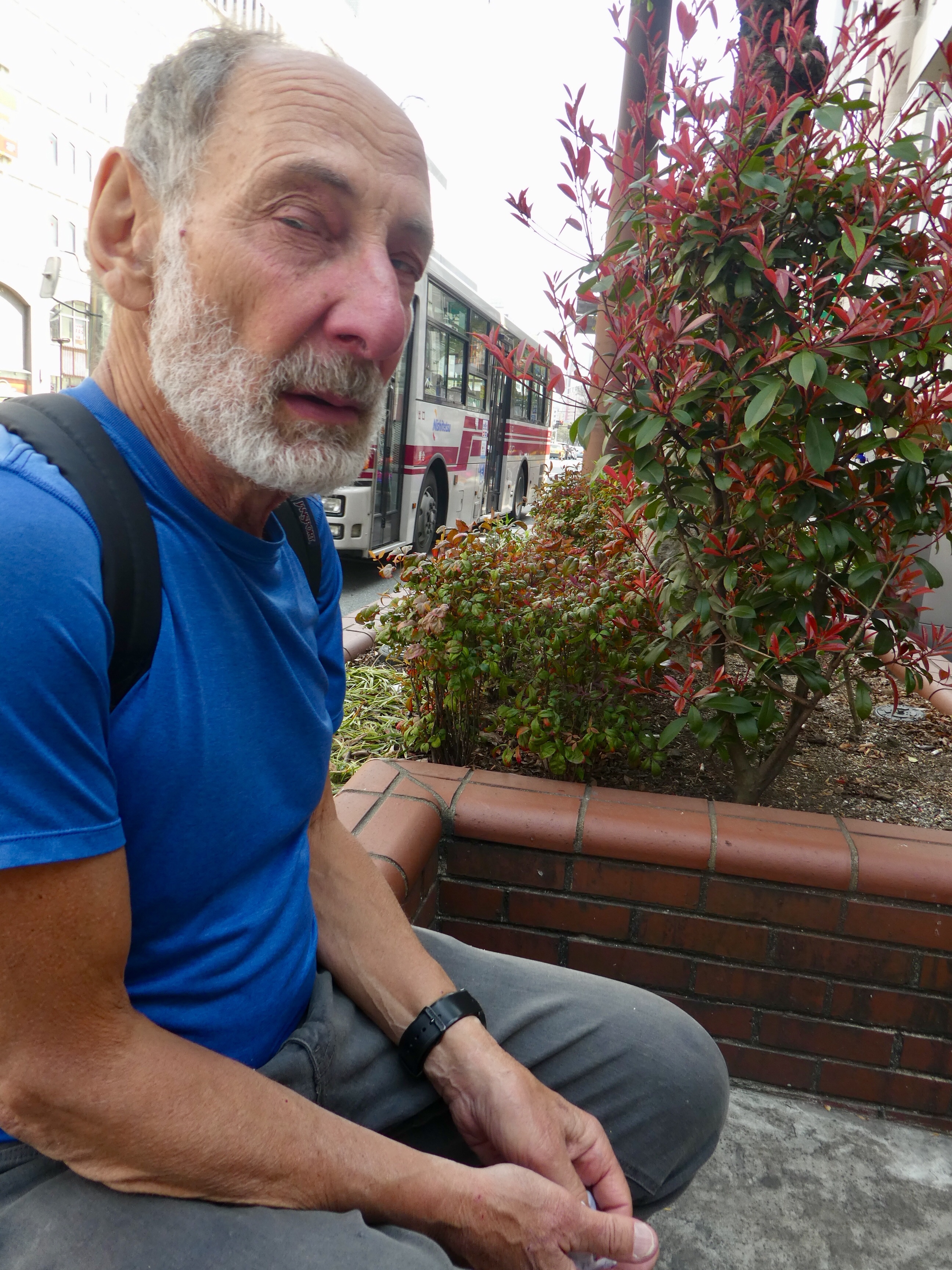
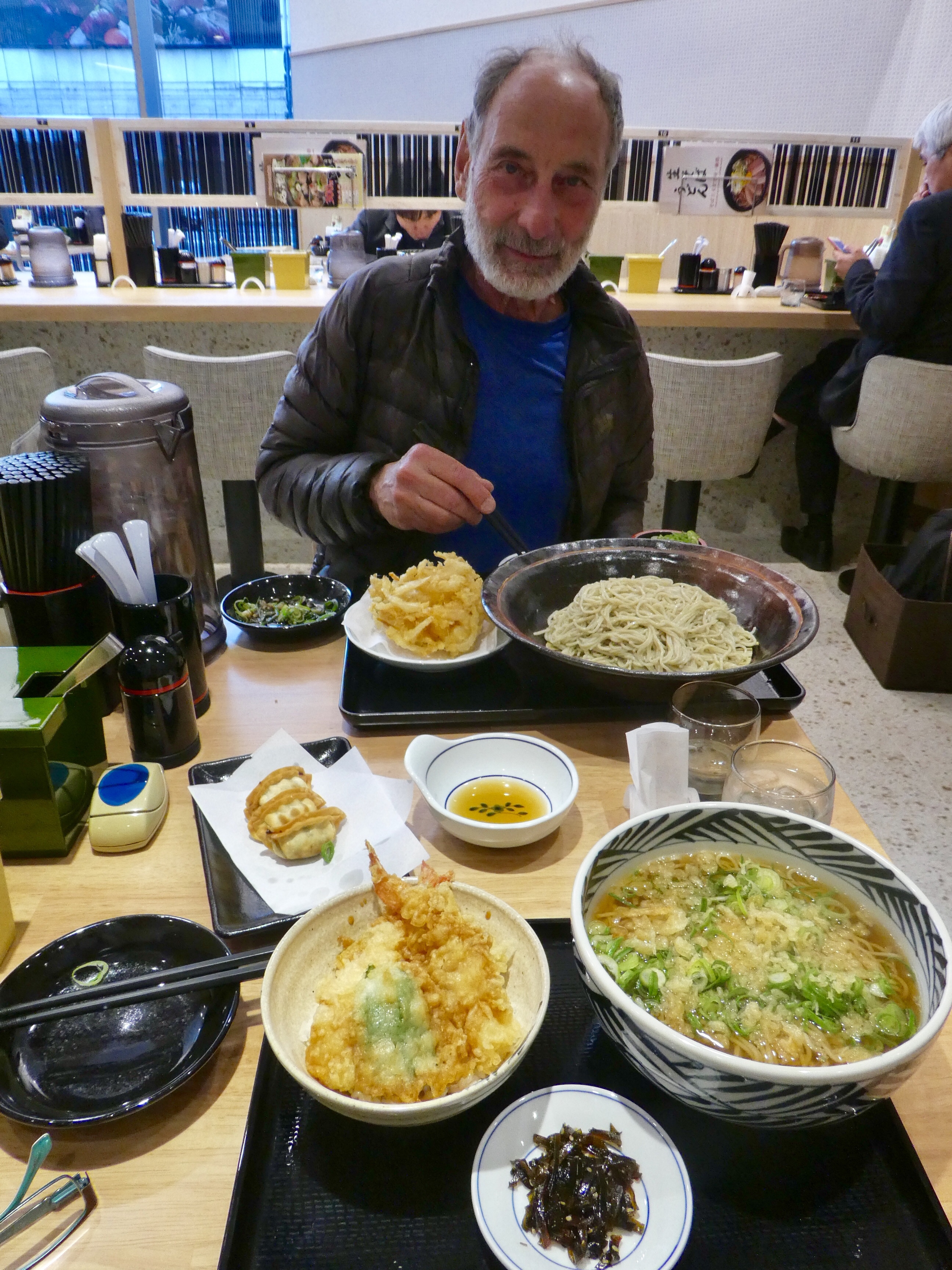
We took the 4.5 hr speedy ferry ride from Busan, South Korea, to Fukuoka, Japan, hoping to see the first cherry blossoms of spring, and we’re not disappointed. The trees were just beginning to blossom. They gorgeously adorned the walkways of Ohori Park, where couples and families frolicked and picnicked under a warm spring sun. The flowers were in bloom and, unfortunately, so were Bruce’s allergies. Ohori Park was colorful, with lake boats, pagodas, bridges and families enjoying food in the fine weather, amid the blossoming trees. We took the subway five stops to get to the park and then walked back to get a feel for the city. We saw the Fukuoka castle ruins at Maizuru Park, and got a bit lost between the mix of modern tall buildings and smaller, traditional buildings in the Tenjin neighborhood. It was getting dark by the time we crossed the Naka River on the outskirts of our neighborhood, Hakata. We passed a row of Yatai, open air food stands, along the river, under a long line of cherry blossoms. We ate some great soba (buckwheat noodle) and tempura when we stopped for a break in our long walk back to our Toyoko Inn hotel near the busy Hakata railway station.

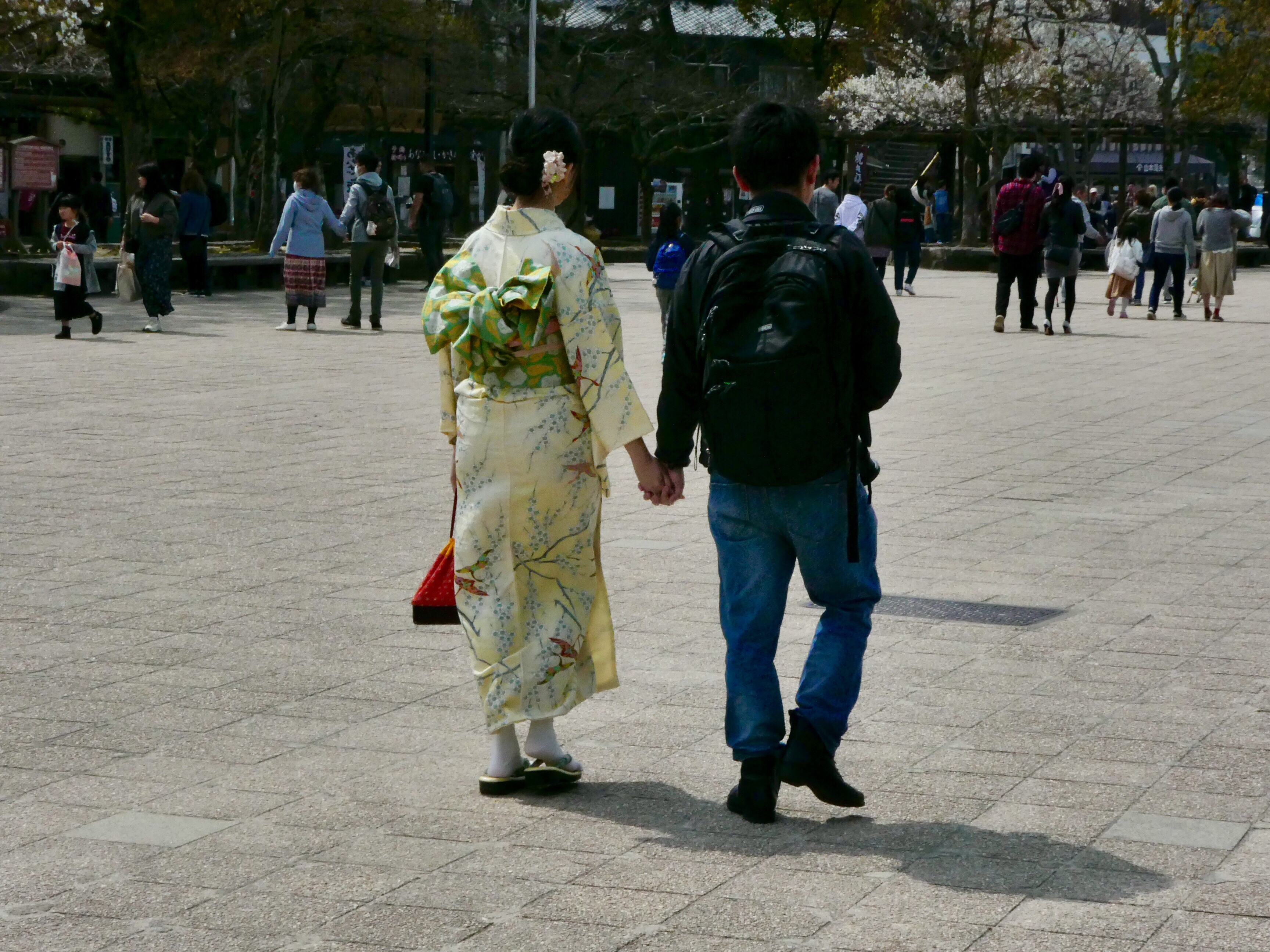
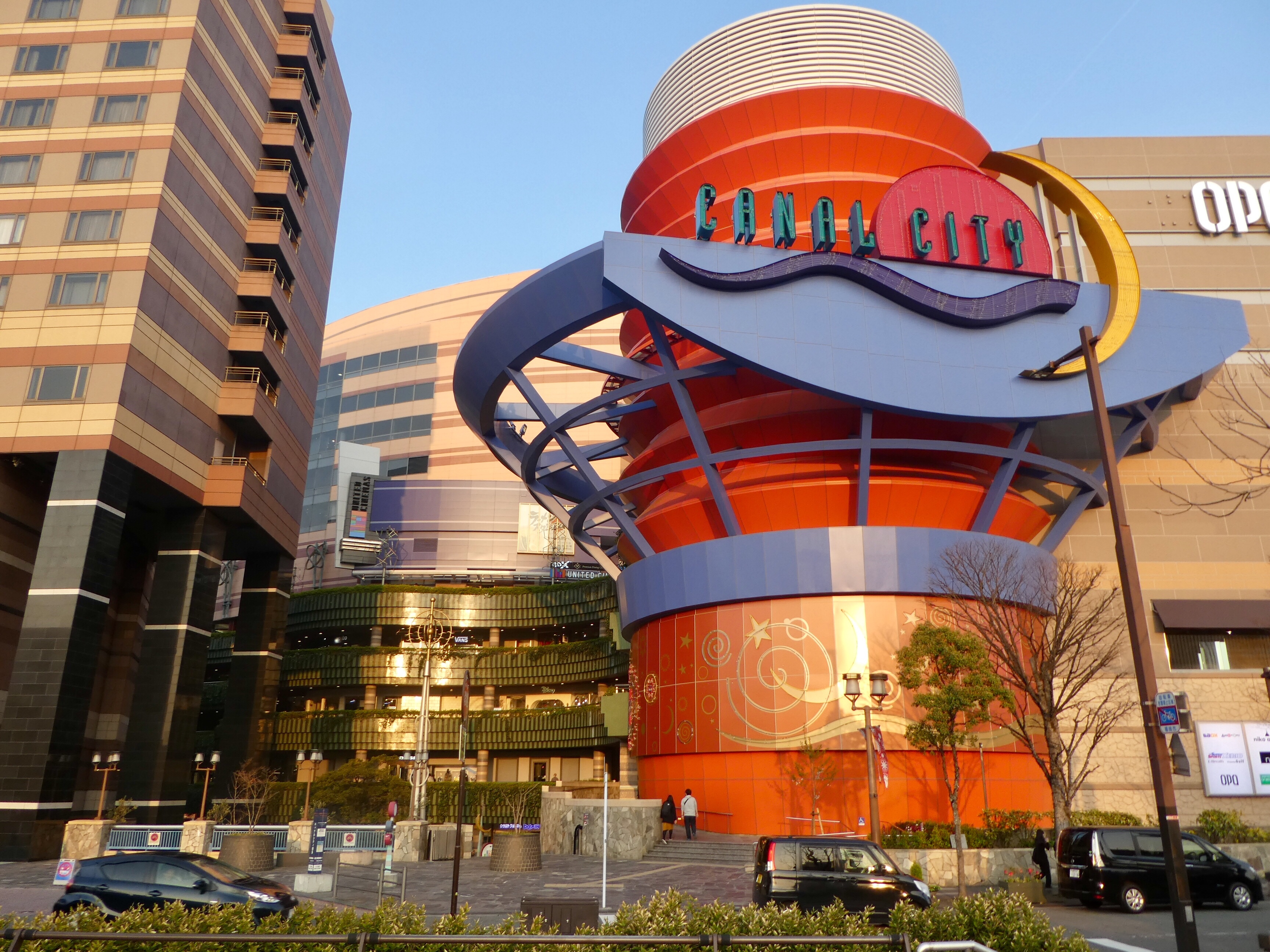
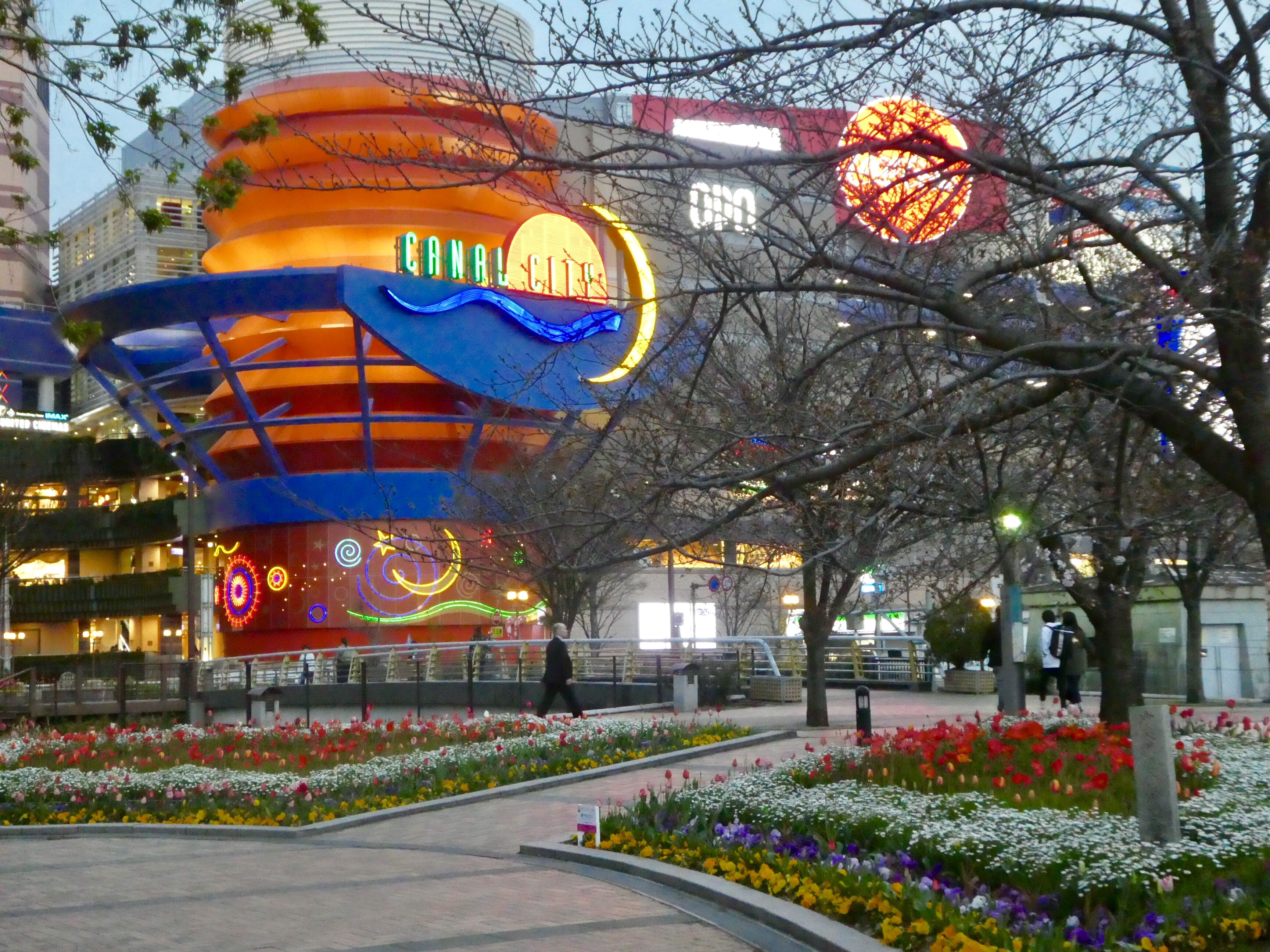
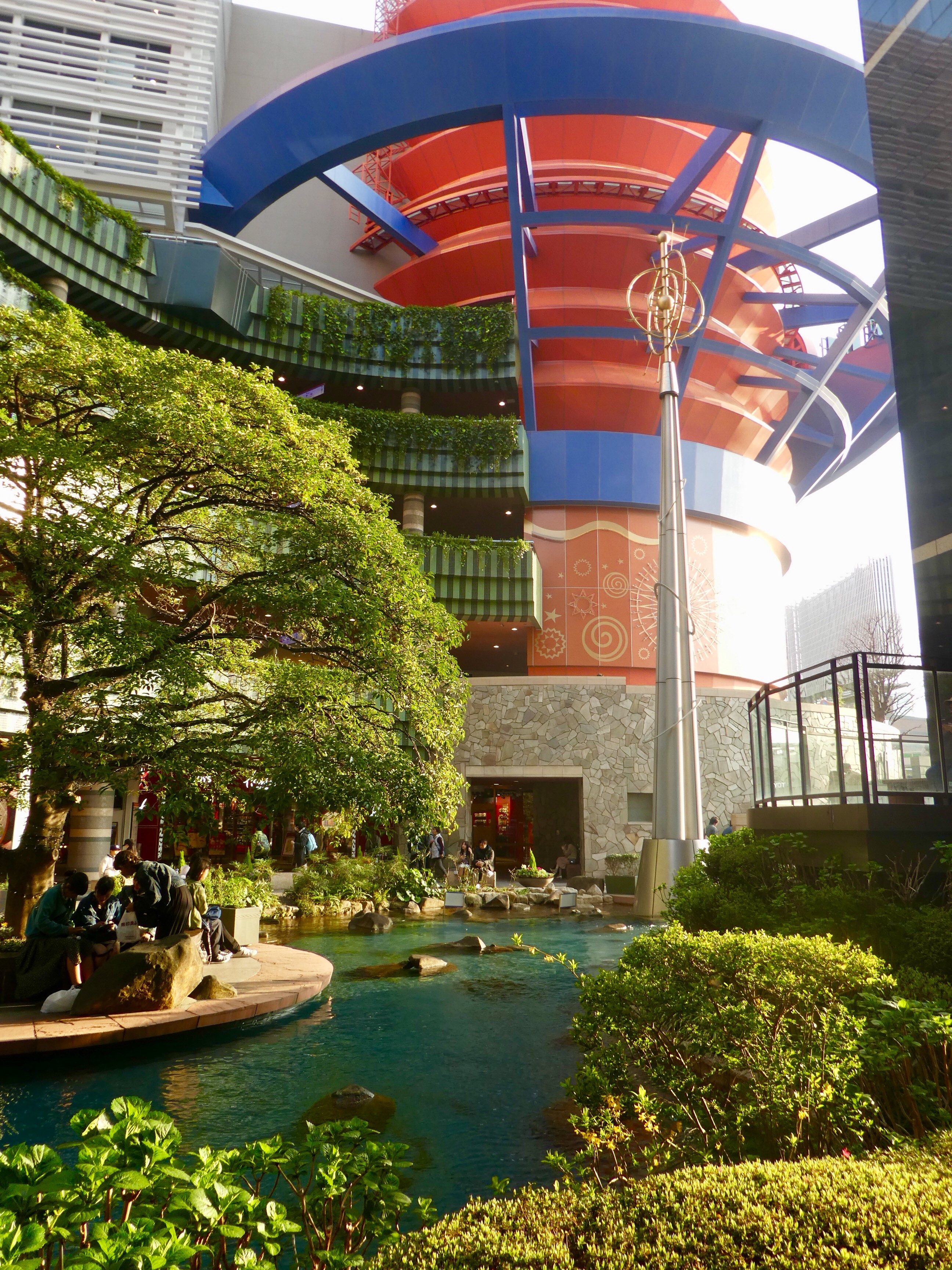
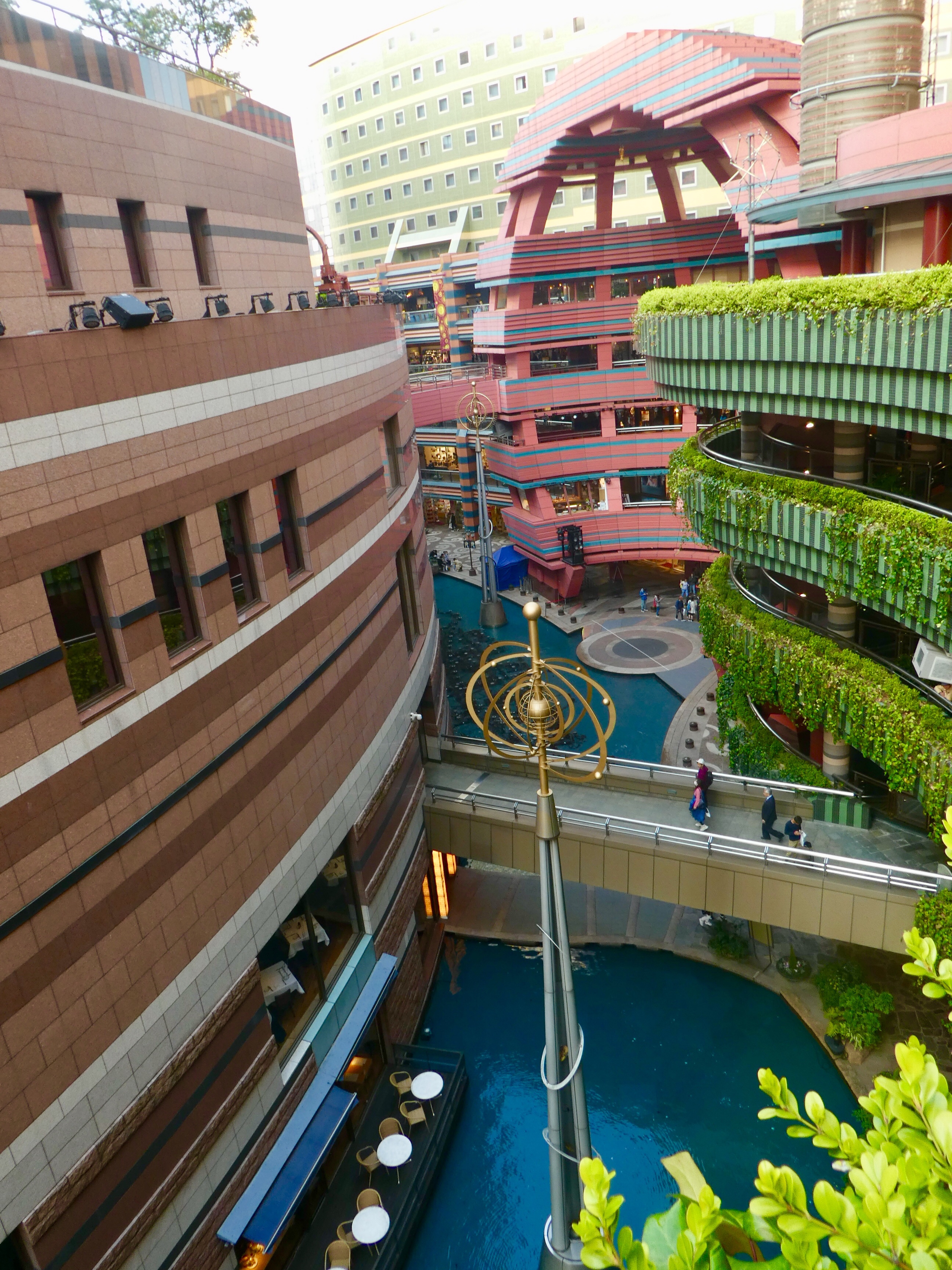
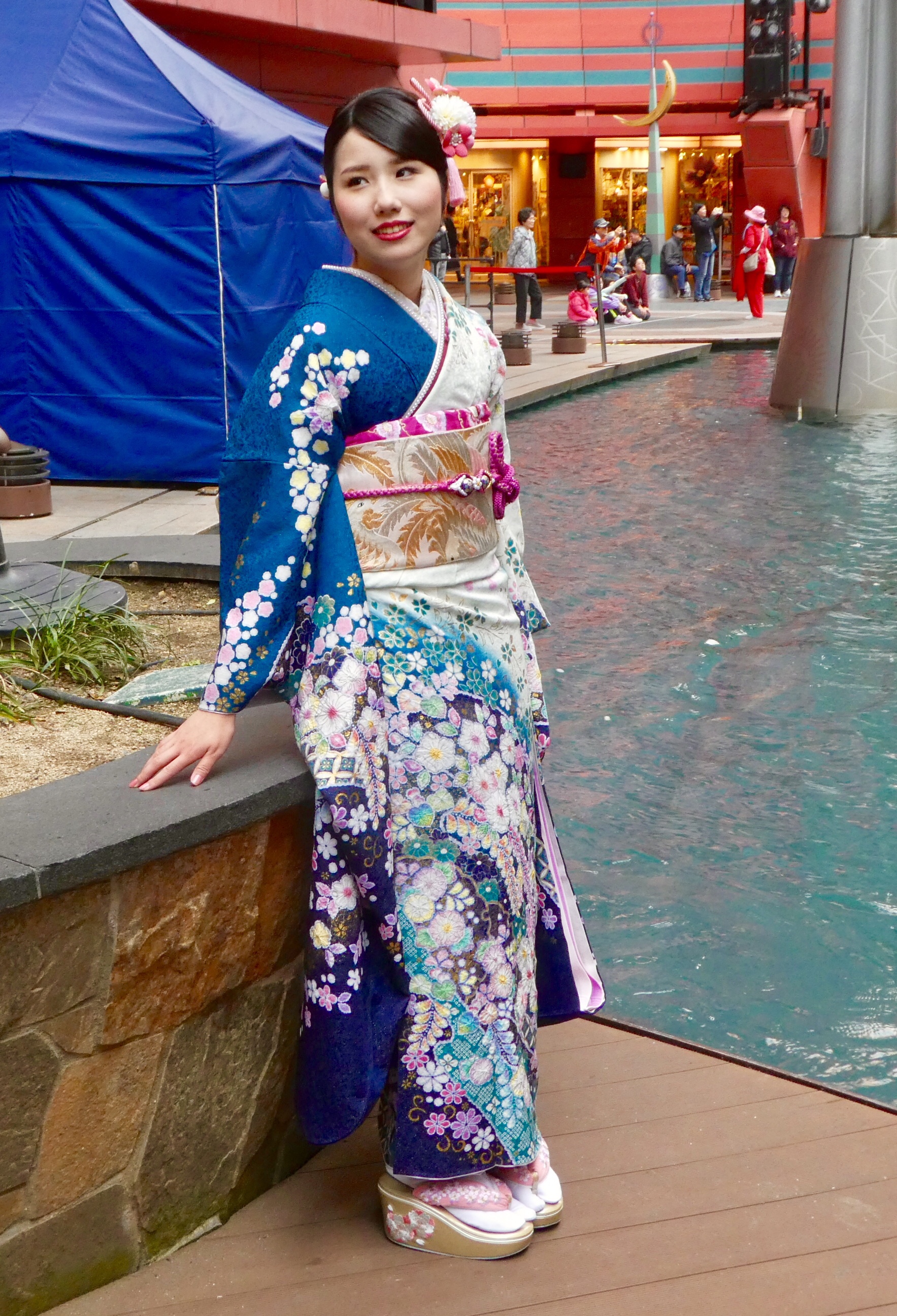
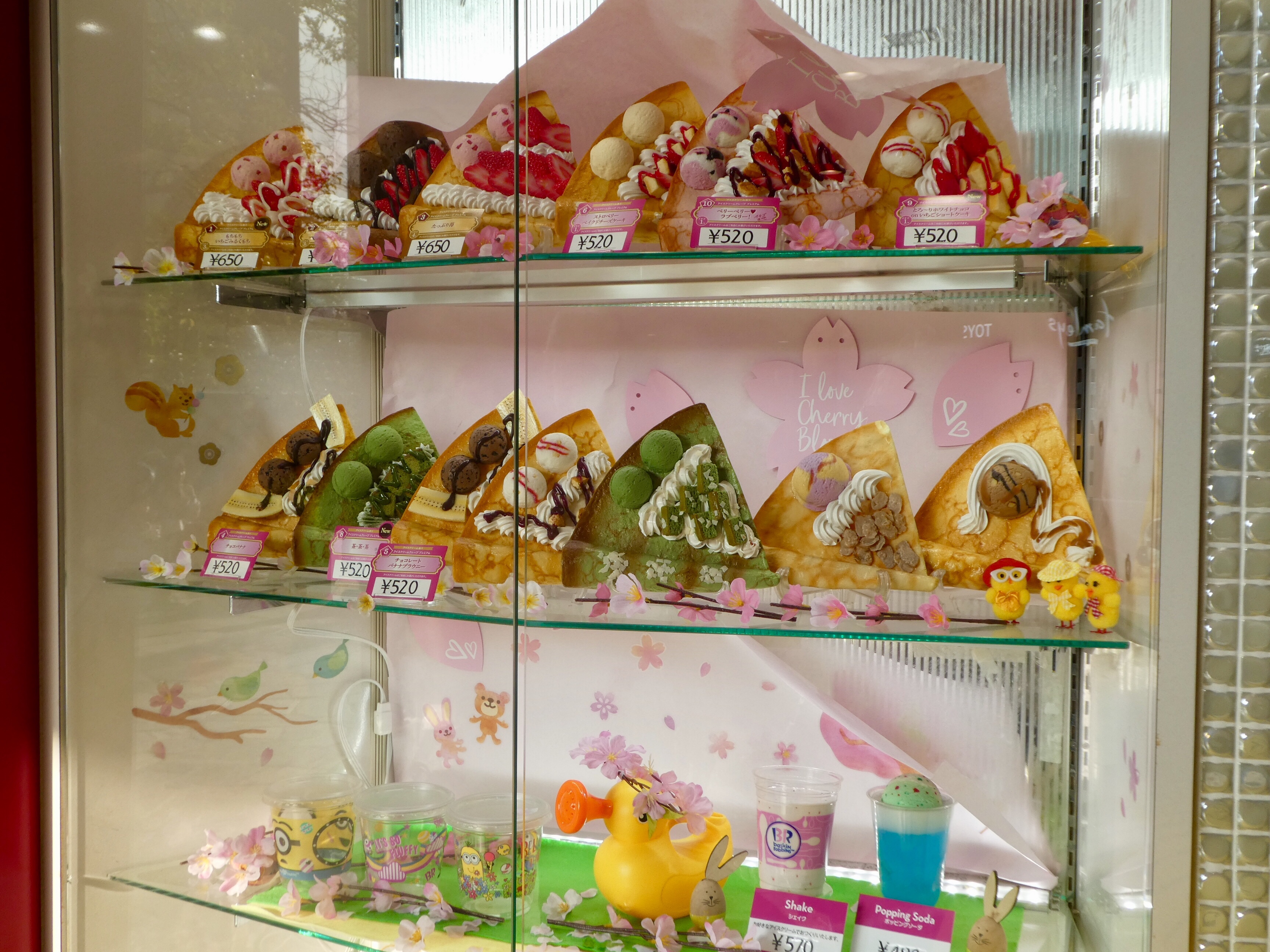
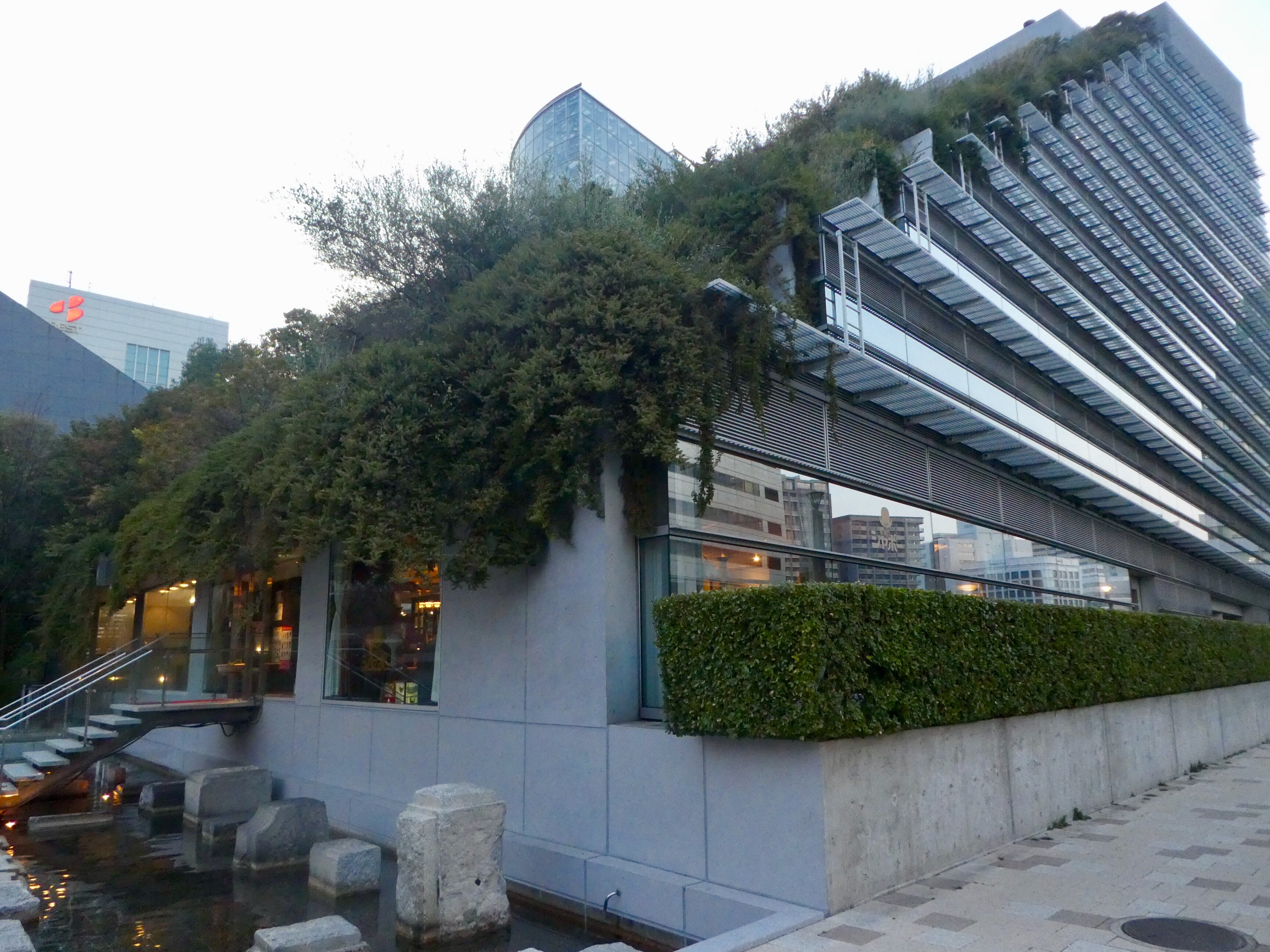
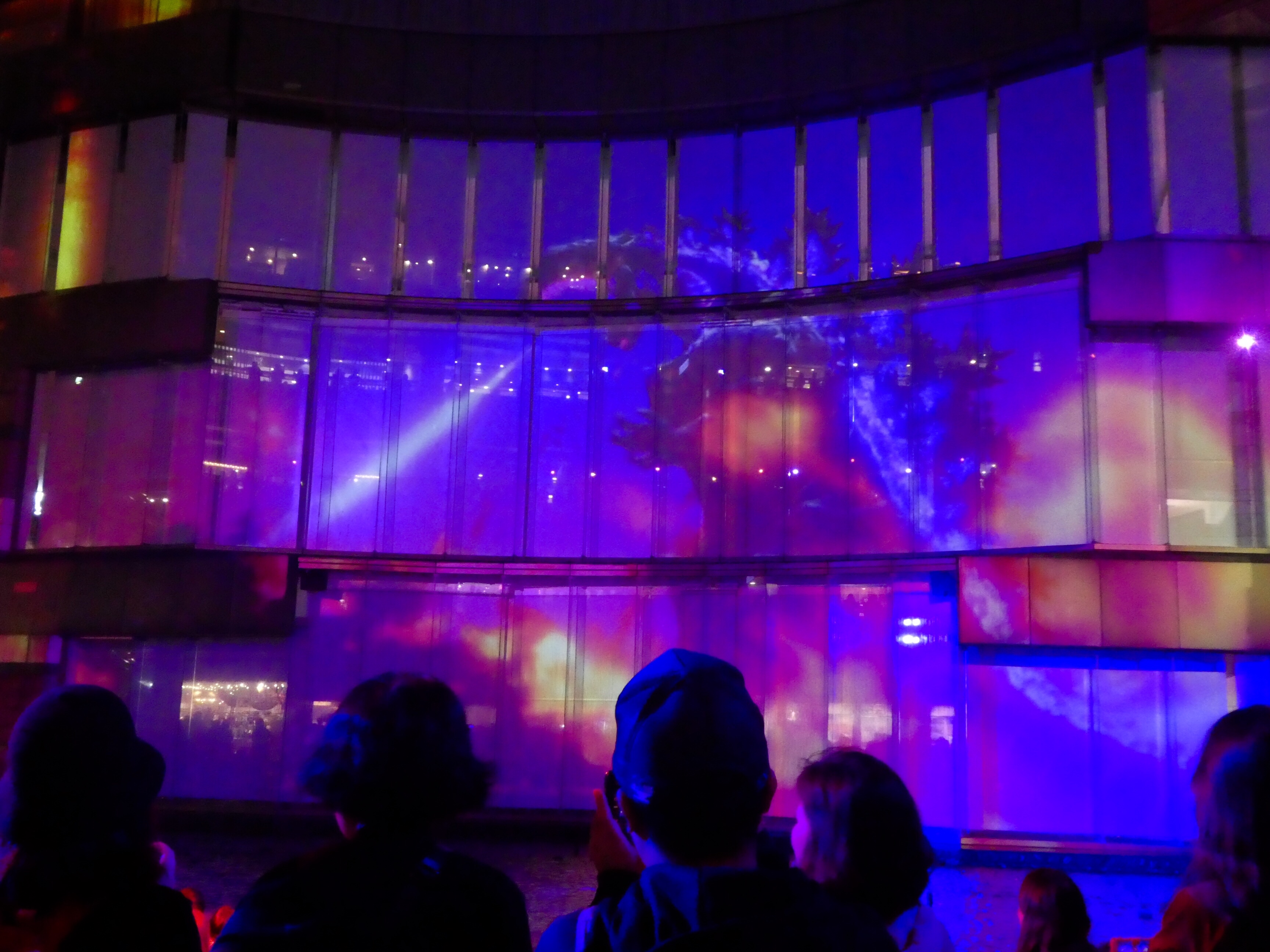
We found more spring flowers at Canal City, a 250 store complex with the Grand Hyatt hotel adjacent to it. A canal cuts through the complex. When it’s water show time in the evening, the curtains come down at the Hyatt to form a screen on which attacks of Godzilla and aliens are simulated, set to lights and music. The audience cheers and claps and uses their smart phones to encourage victory over the bad guys. Canal City is interactive in other ways too. The toys stores have play areas set up for kids. There are overhead walkways connecting different sections of the complex, circular staircases, and fountains here and there. We found a Baskin-Robbins selling green-tea (matcha) ice cream.😁 There were stores with Kimono rental, similar to tuxedo rental stores in the US. We had fun exploring Canal City, which covers about four square blocks.

We bought train passes for the super high-speed bullet train, the Shinkansen, which reaches a speed of 320 km/ hr, (199 mph)! We’ll be using the bullet train at least four times over the duration of our trip. We’re making the most of each day of our last week. Hope that you are making the most of each day as well!

Love n hugs, BnL

The Port City of Busan, South Korea

Dear Friends and Family

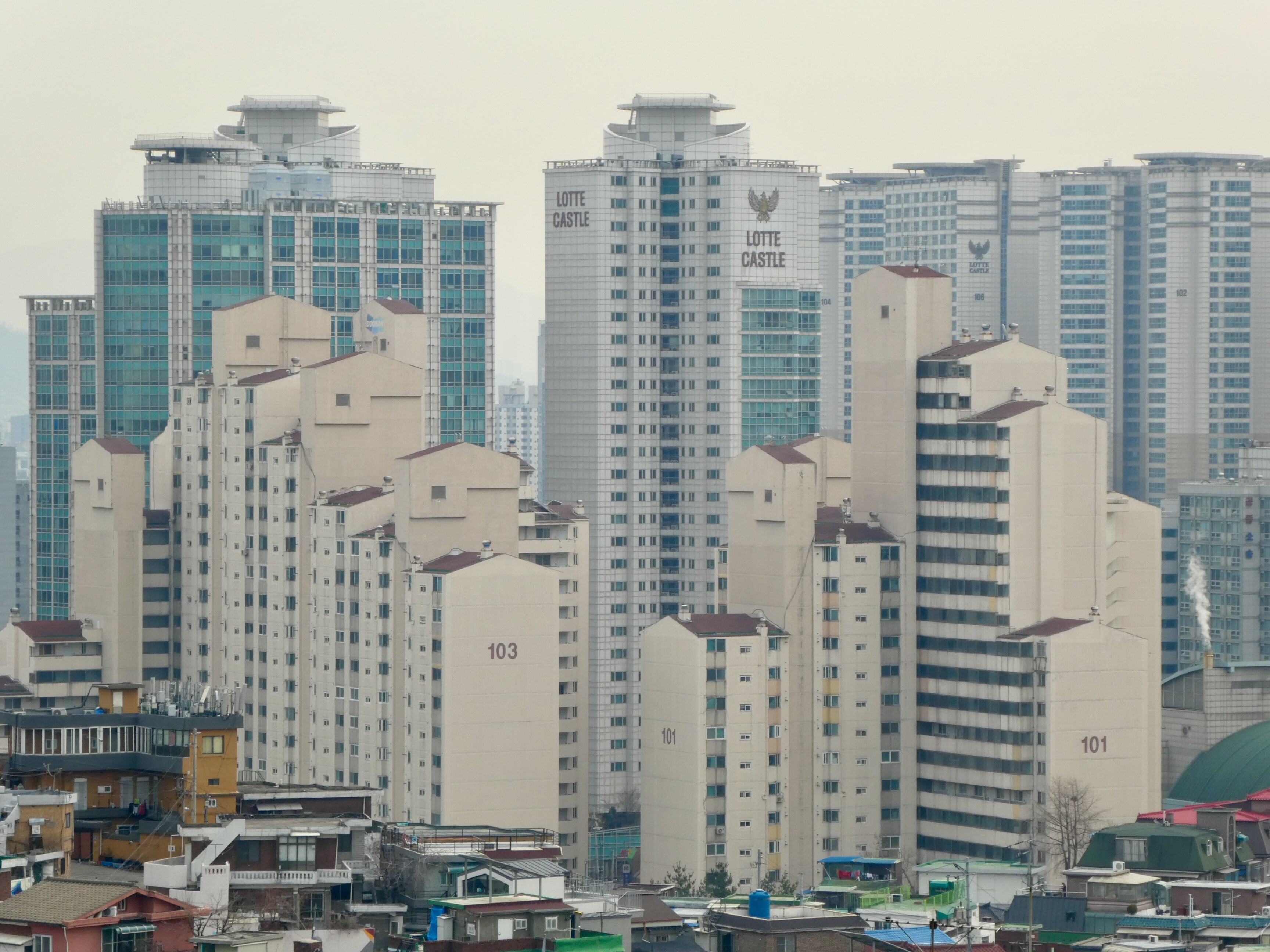
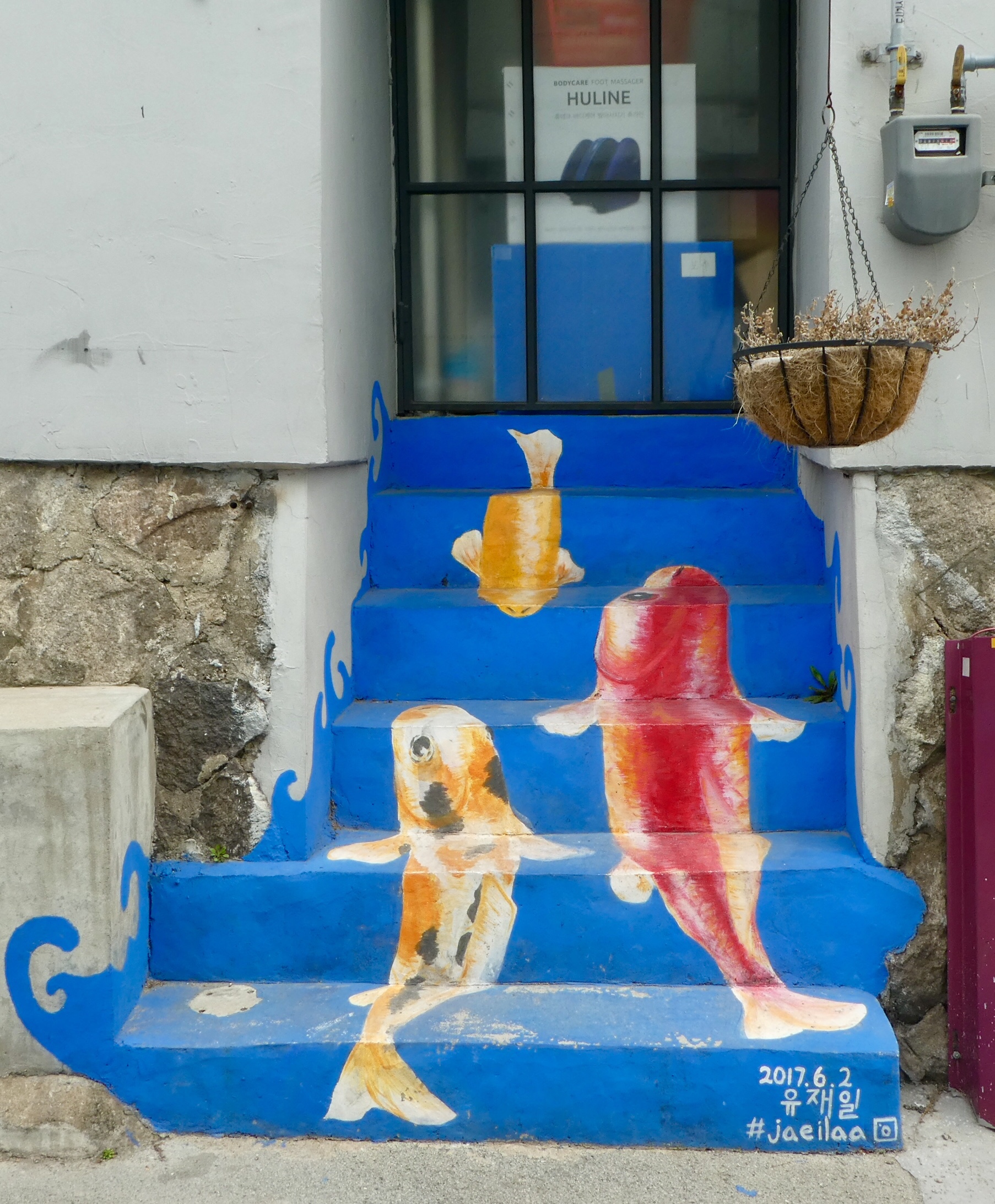
We took a train 3hrs from Seoul to the far southern port city of Busan, South Korea. Busan has great infrastructure, clean, wide sidewalks and streets, and a much more relaxed, friendly population. It is also much more colorful than Seoul or Inchon, with their mostly white or gray buildings. It’s busy and crowded but lacks the frantic intensity and aloofness of Seoul. The atmosphere here is brisk, cheerful and respectful. When they bow to you out of respect, you feel their sincerity. We also think the locals are more used to tourists.

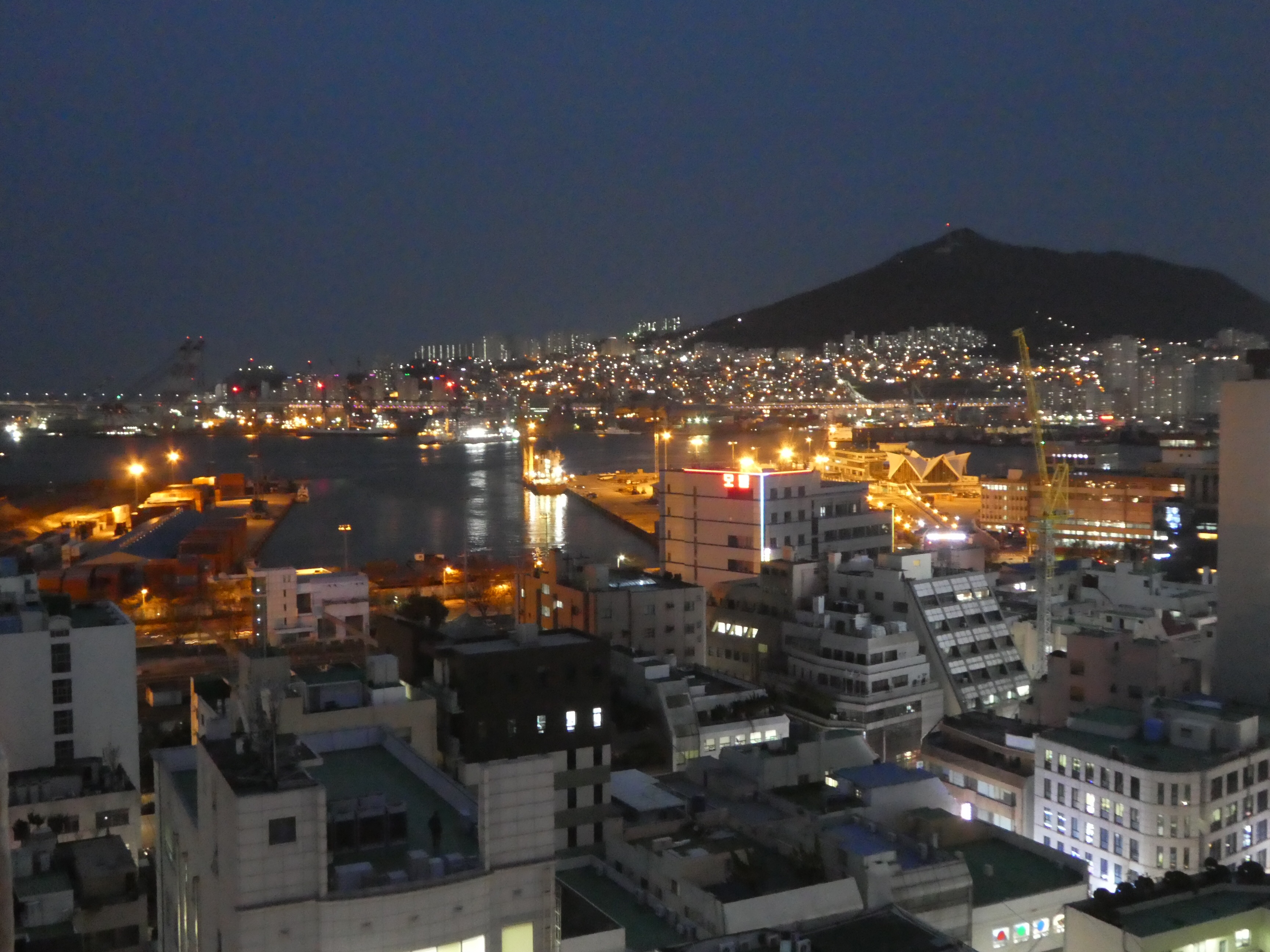
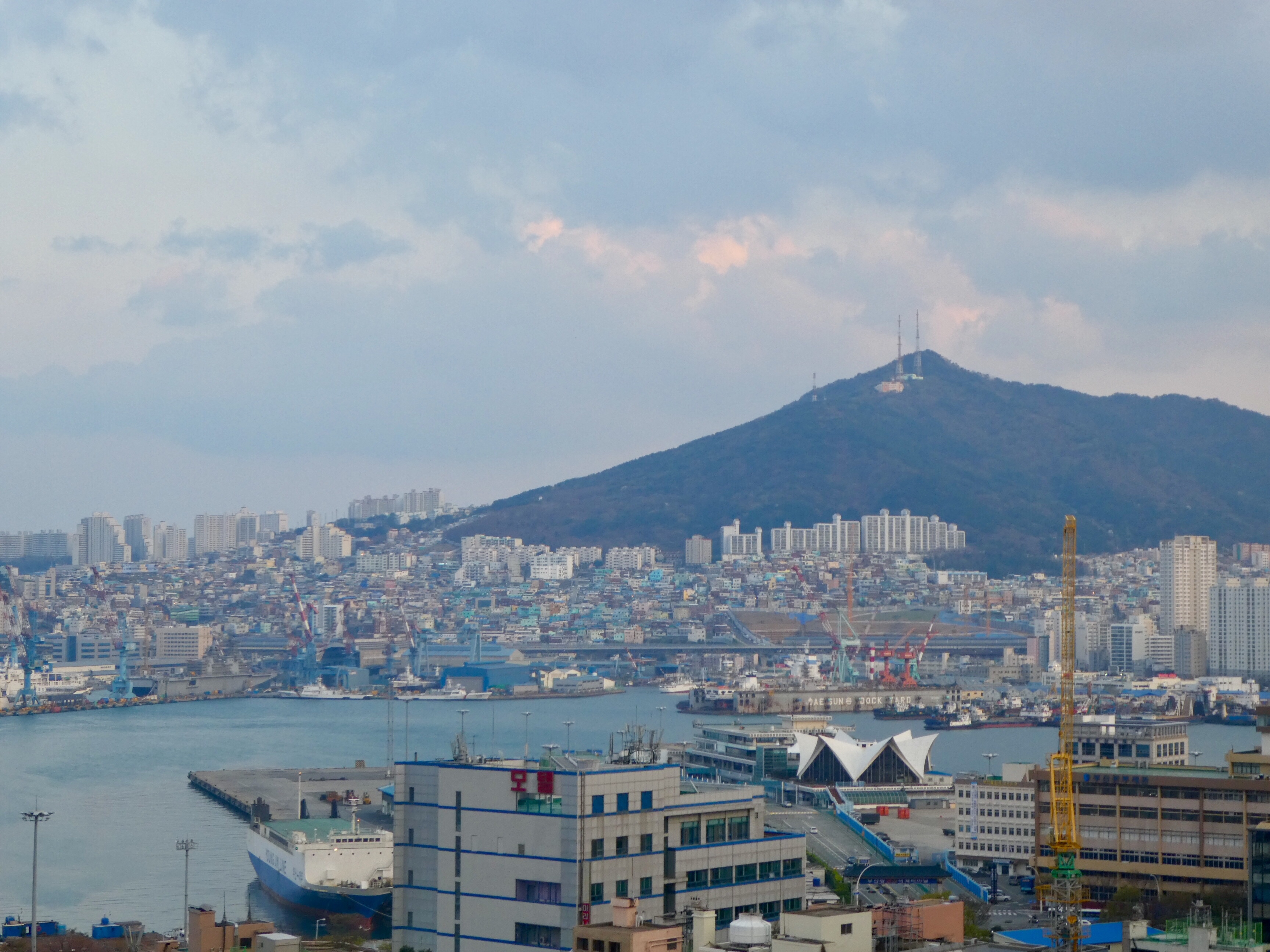
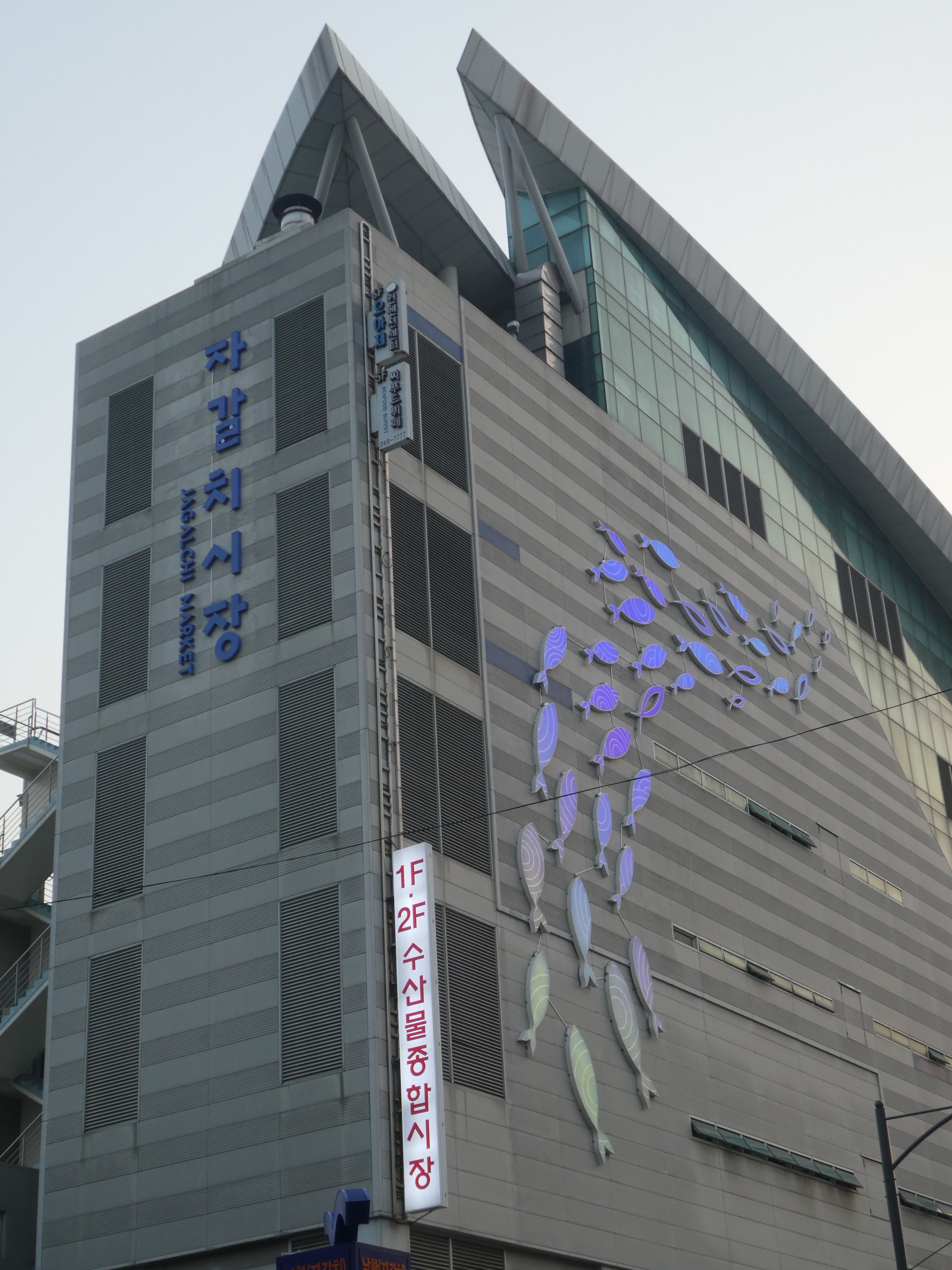
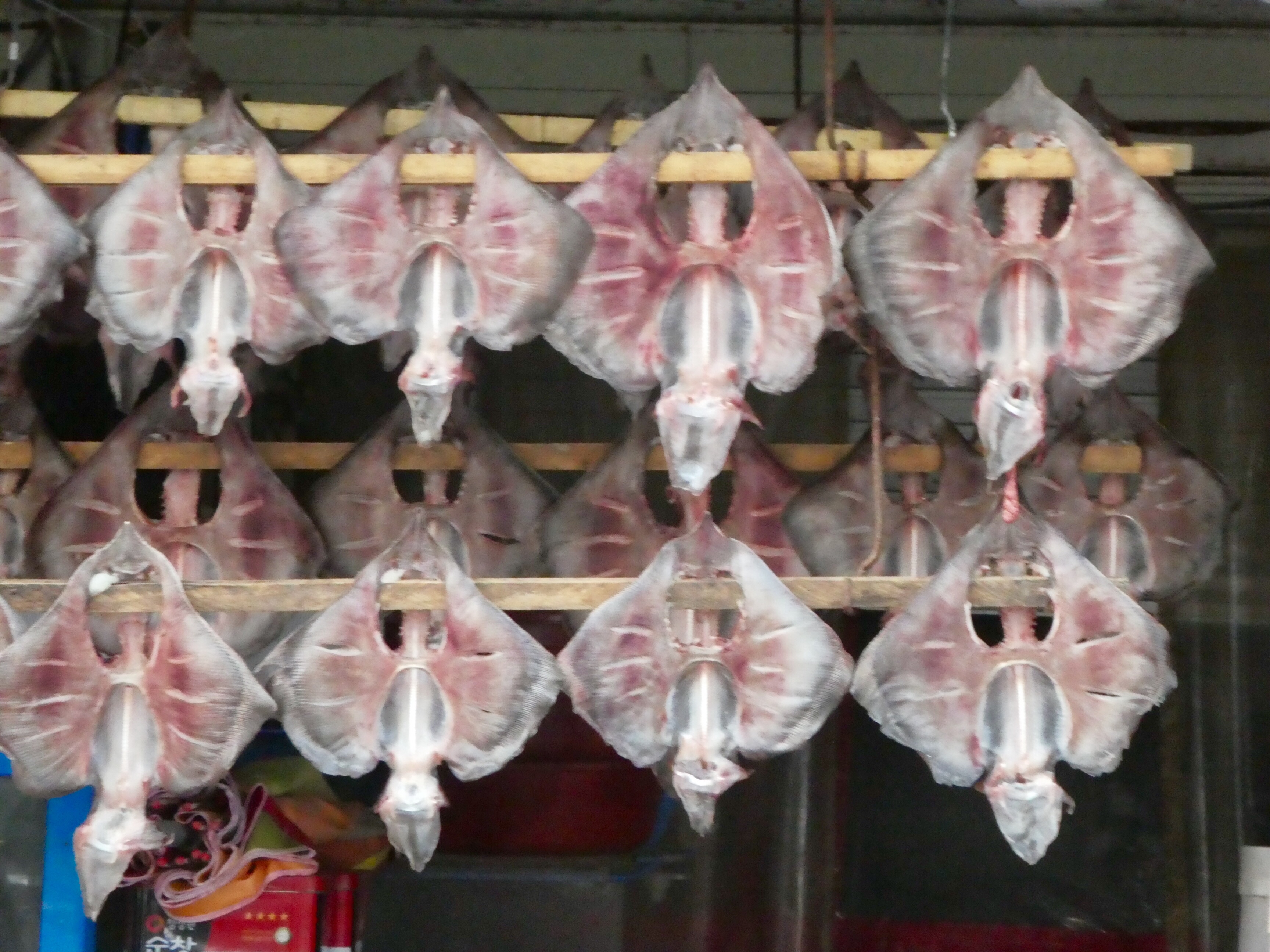
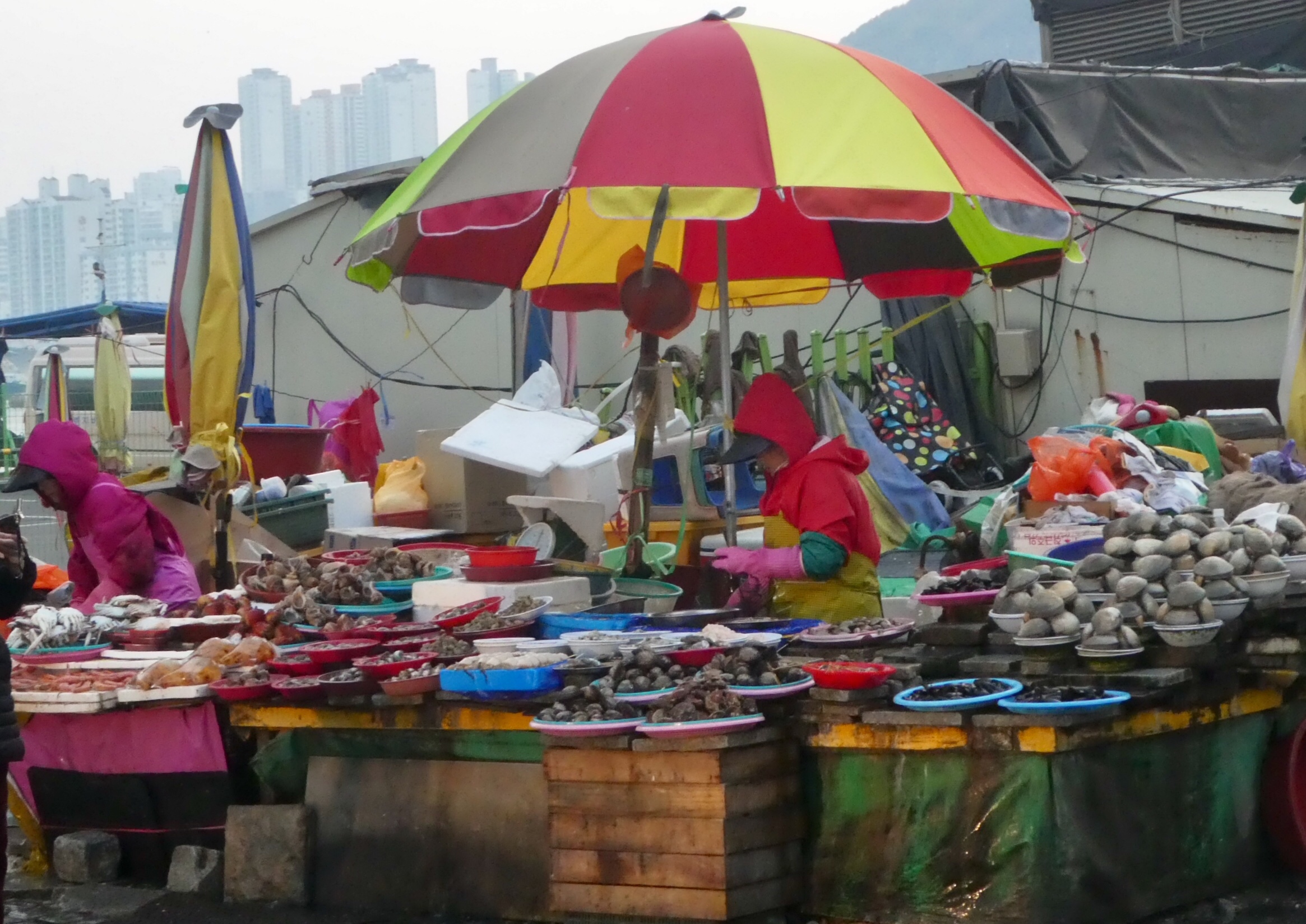
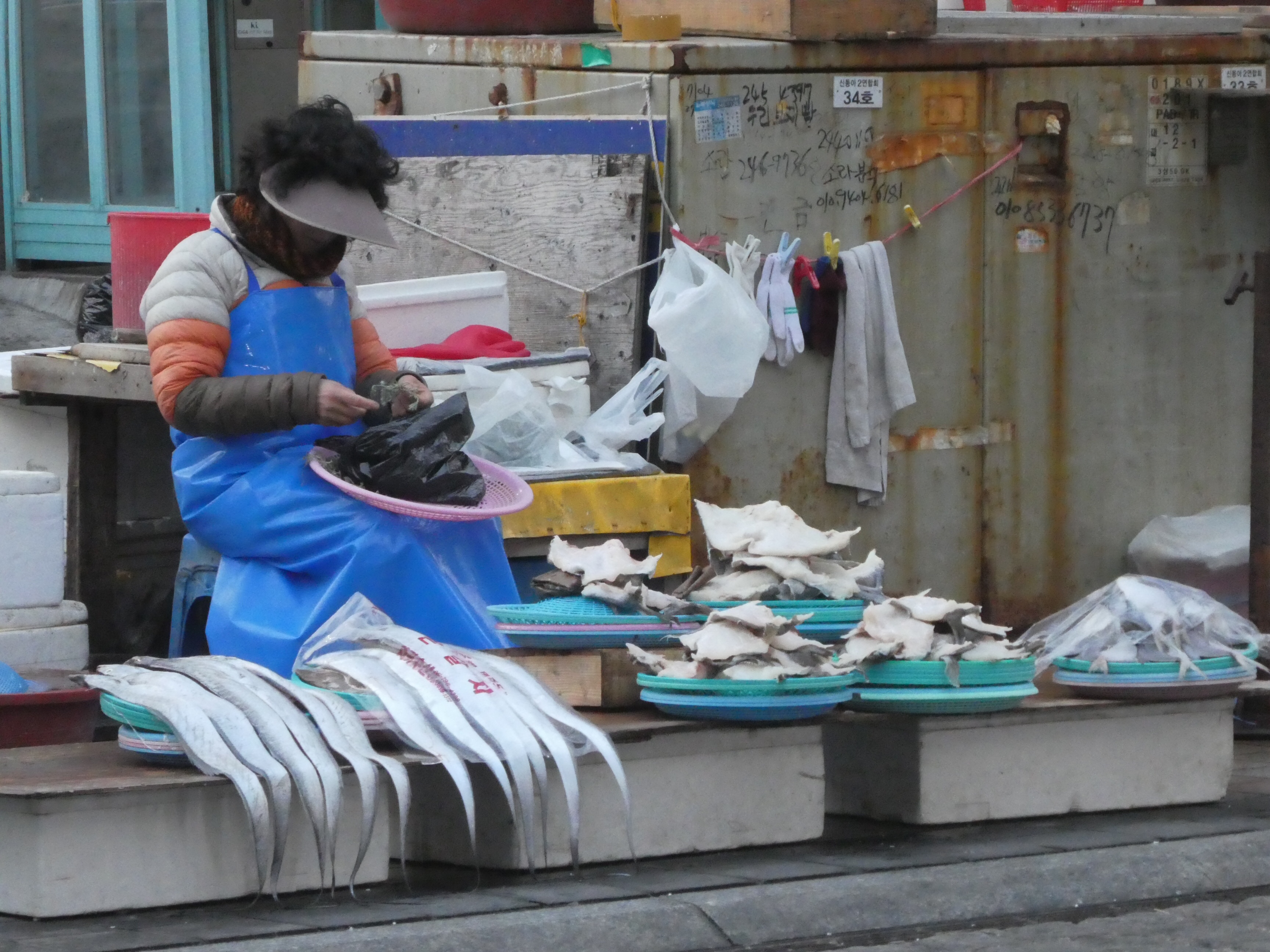
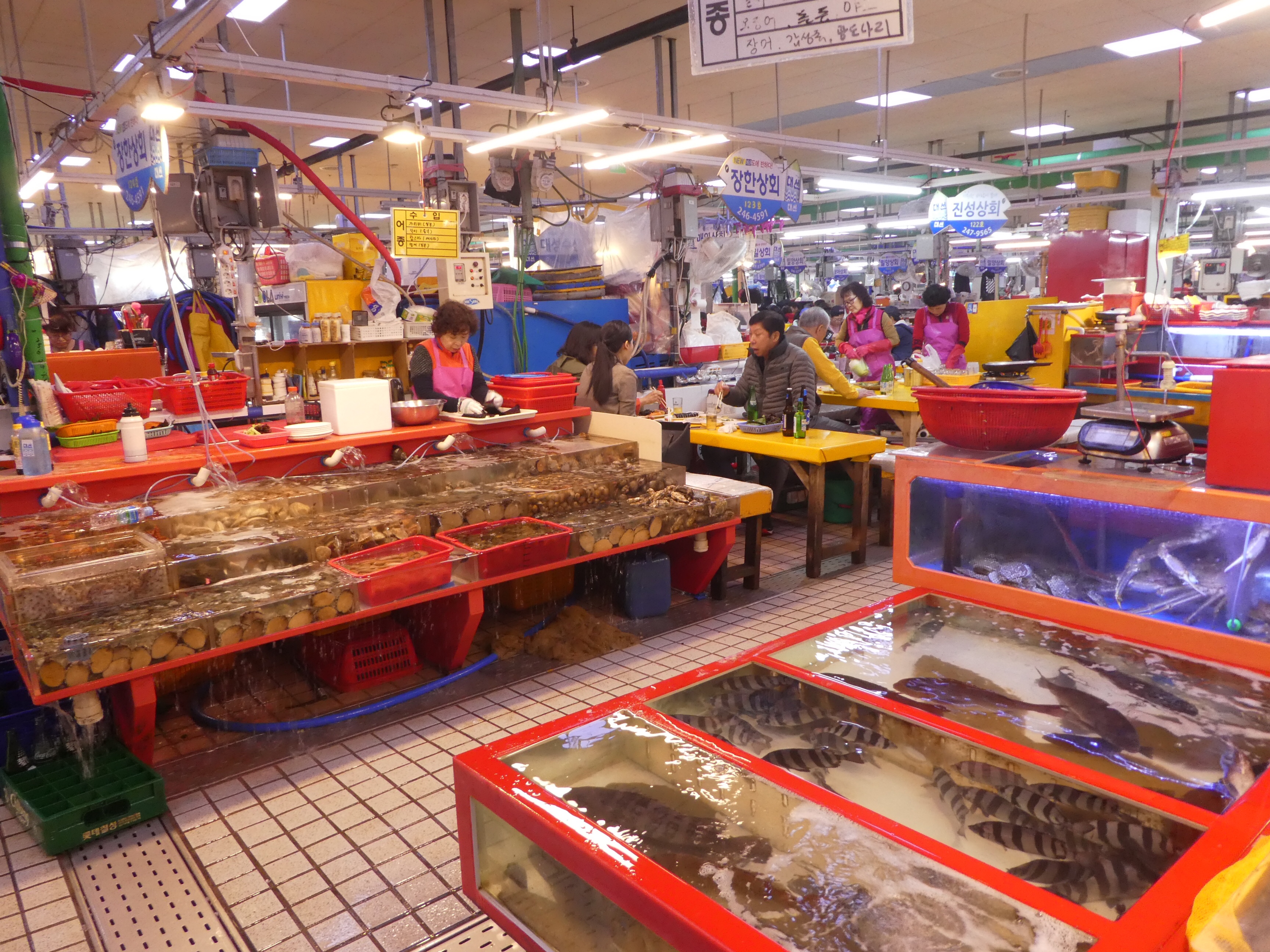
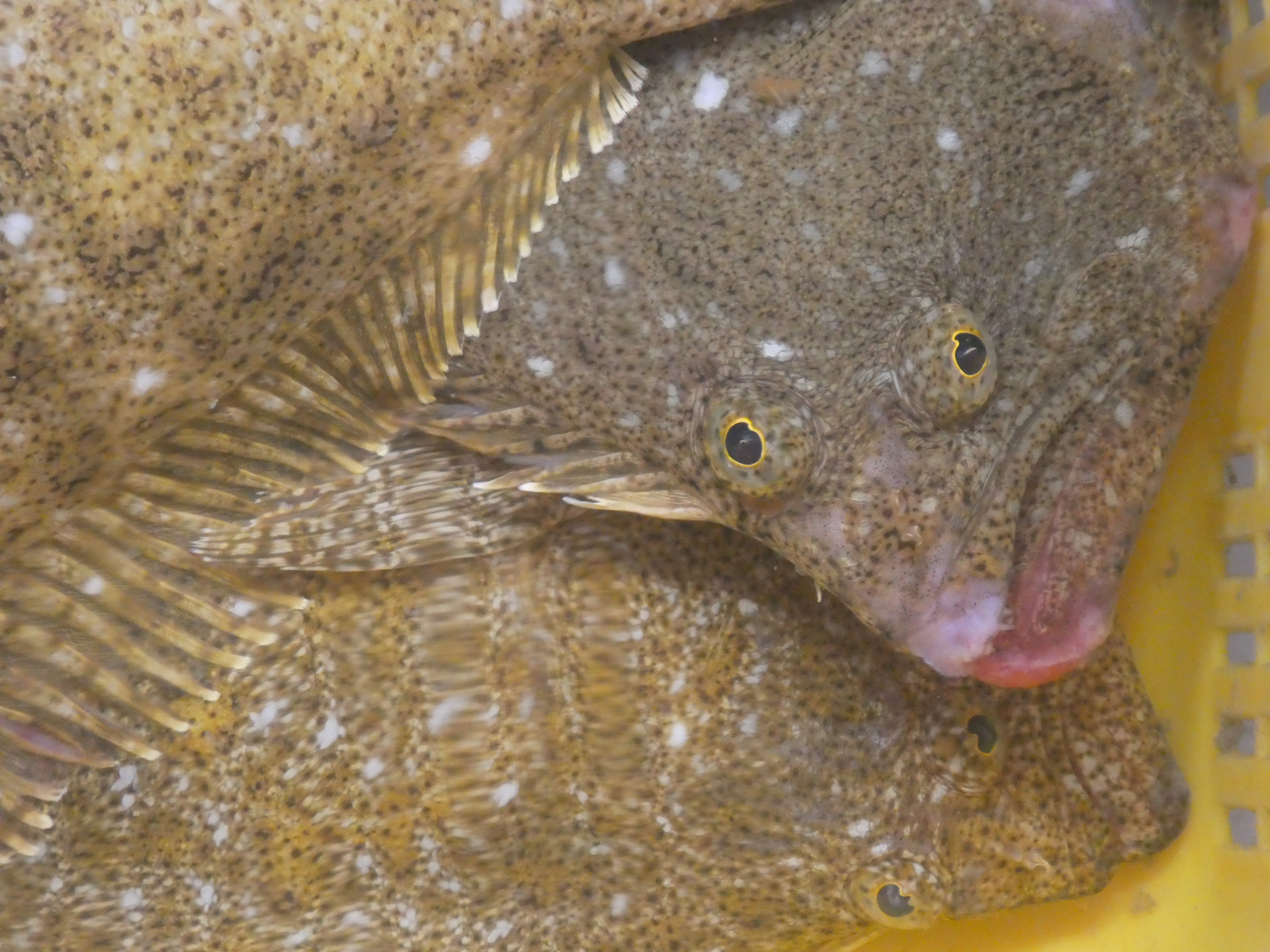
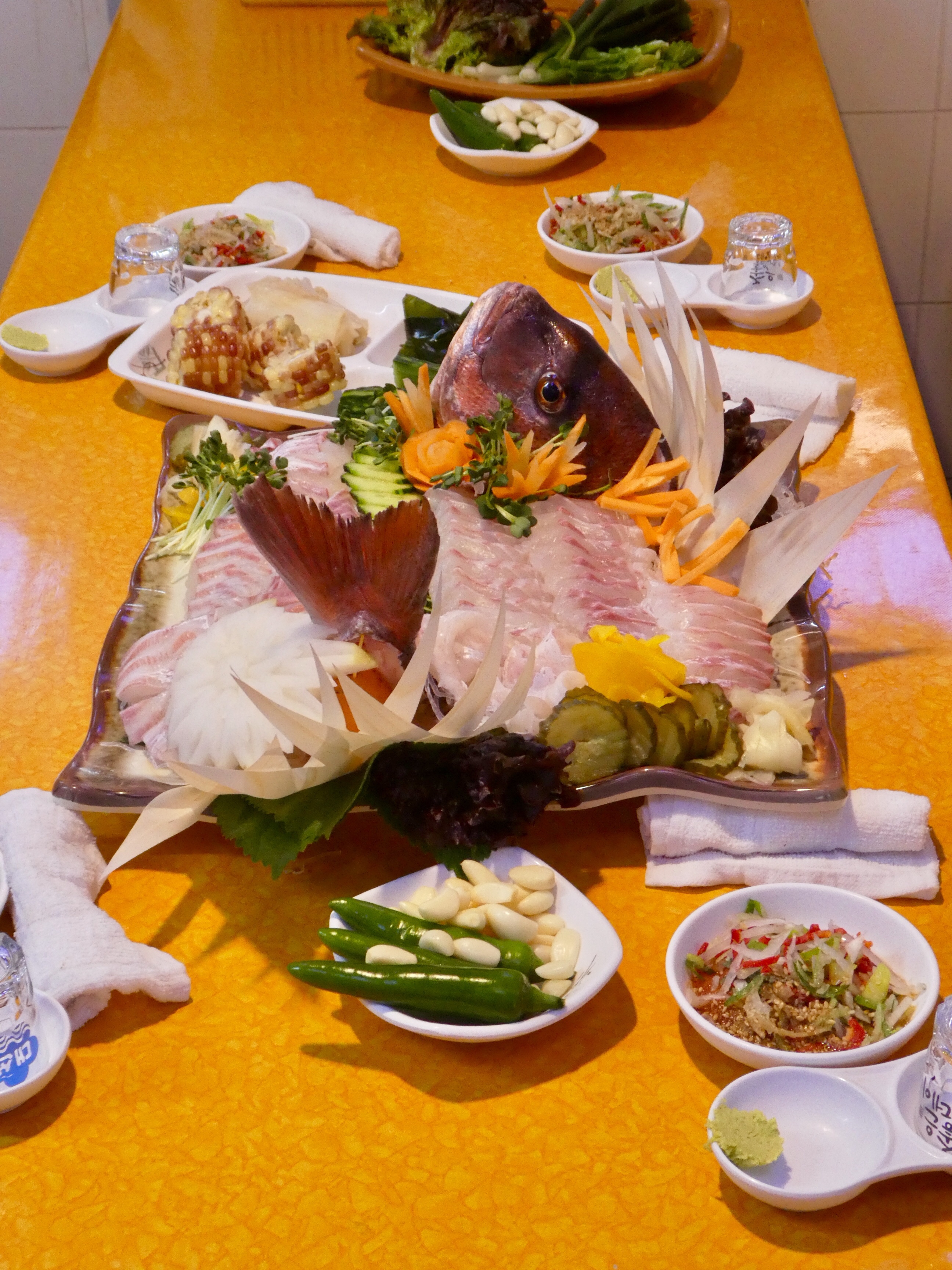
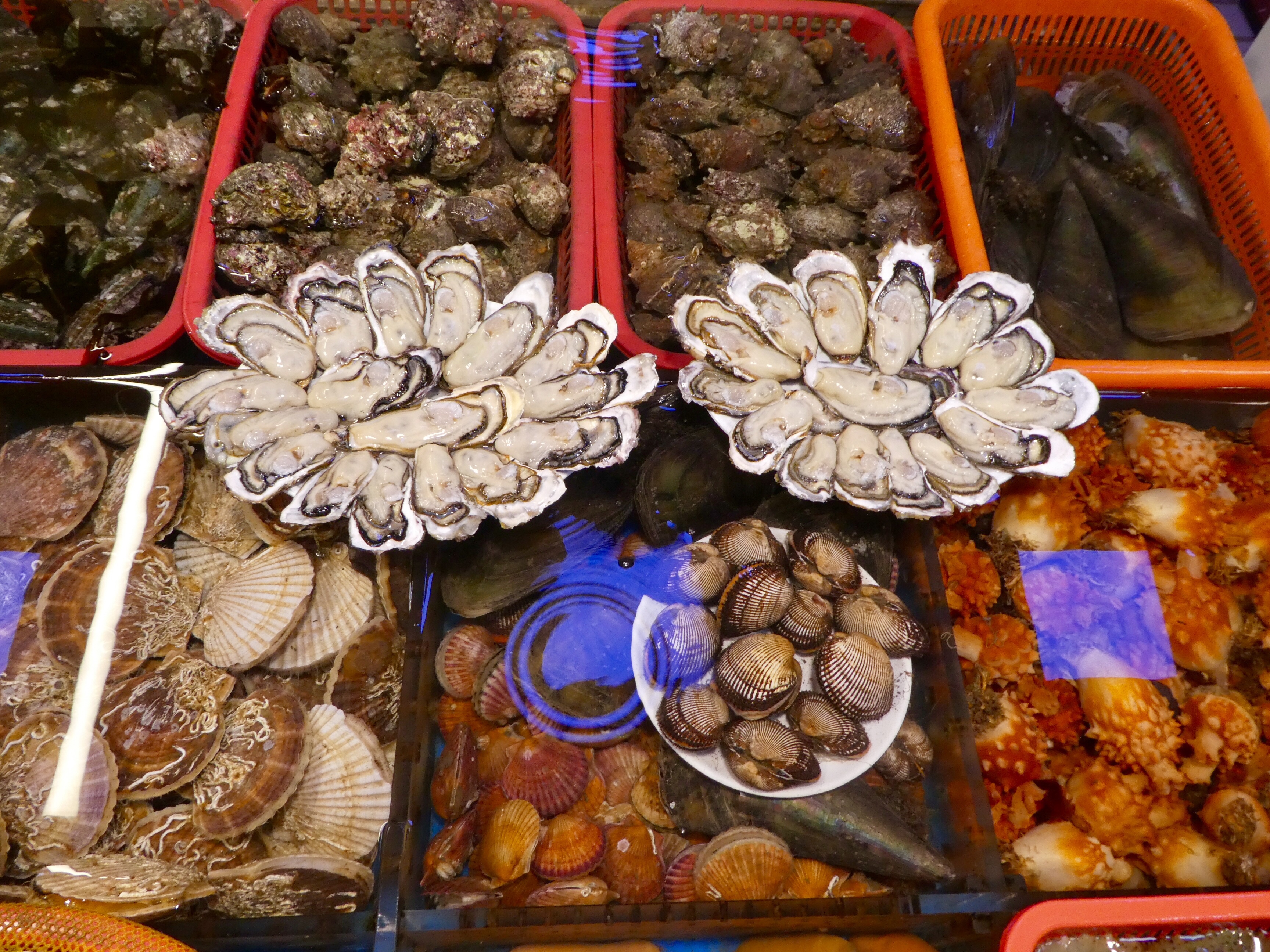
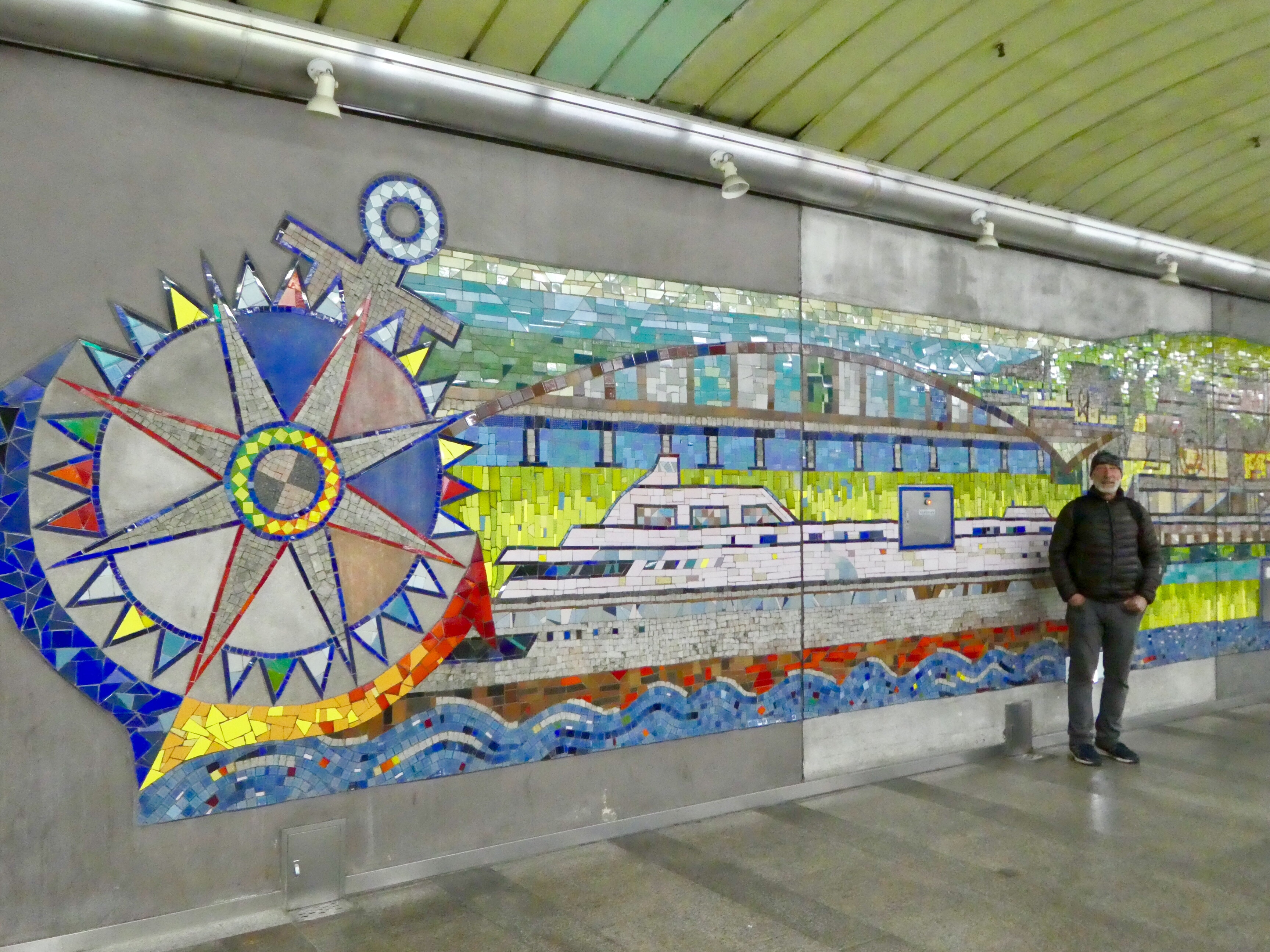
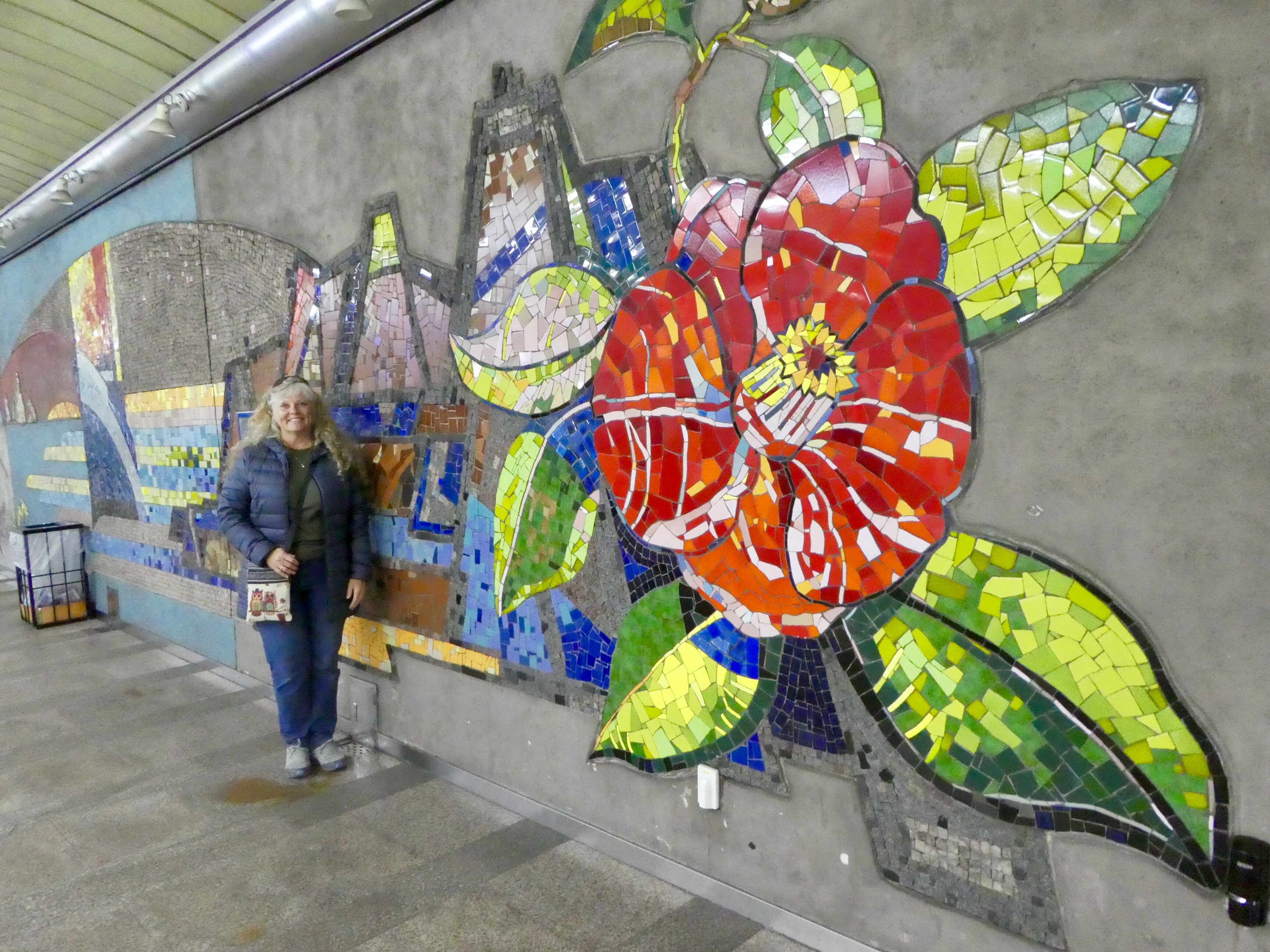
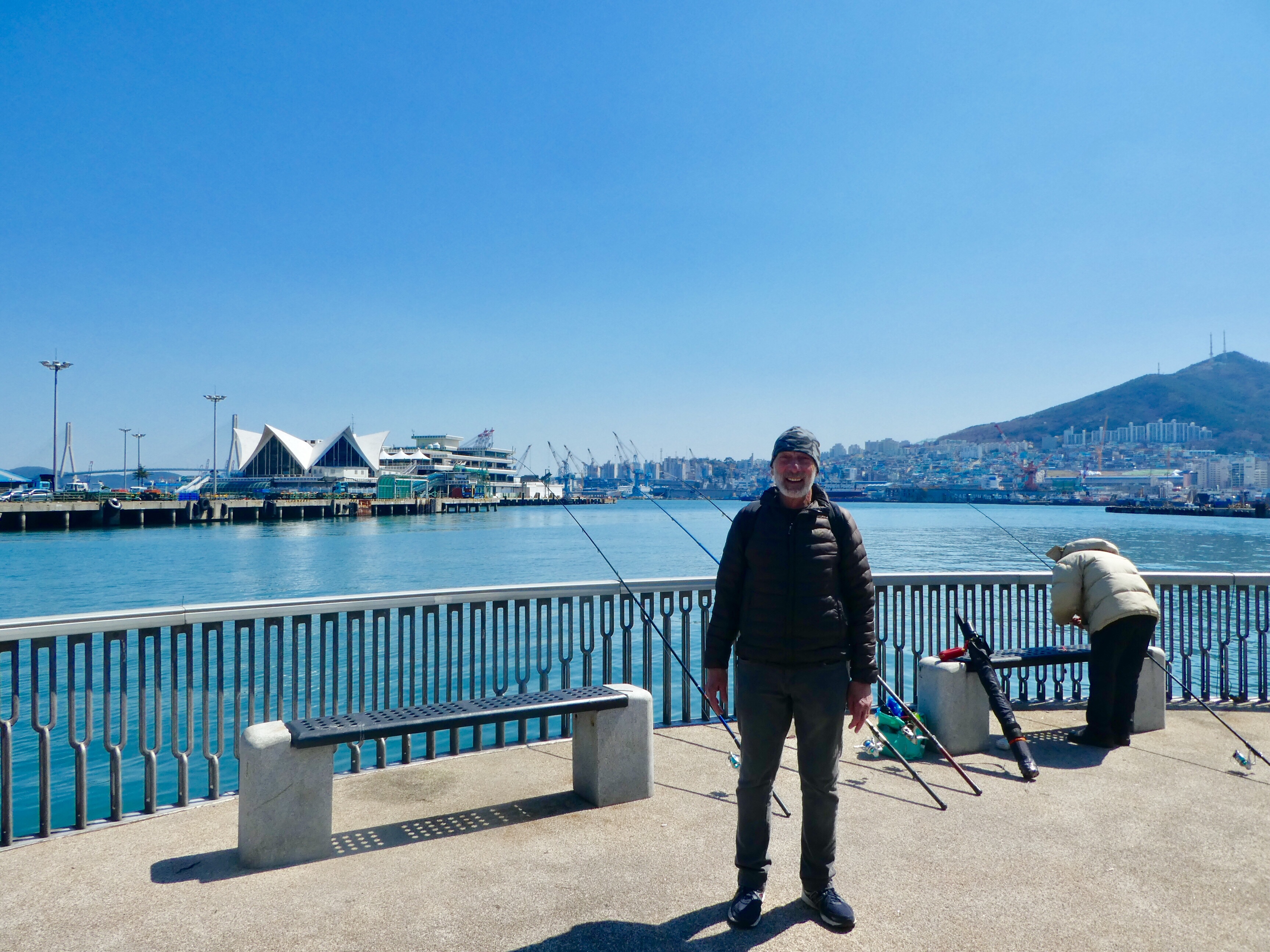
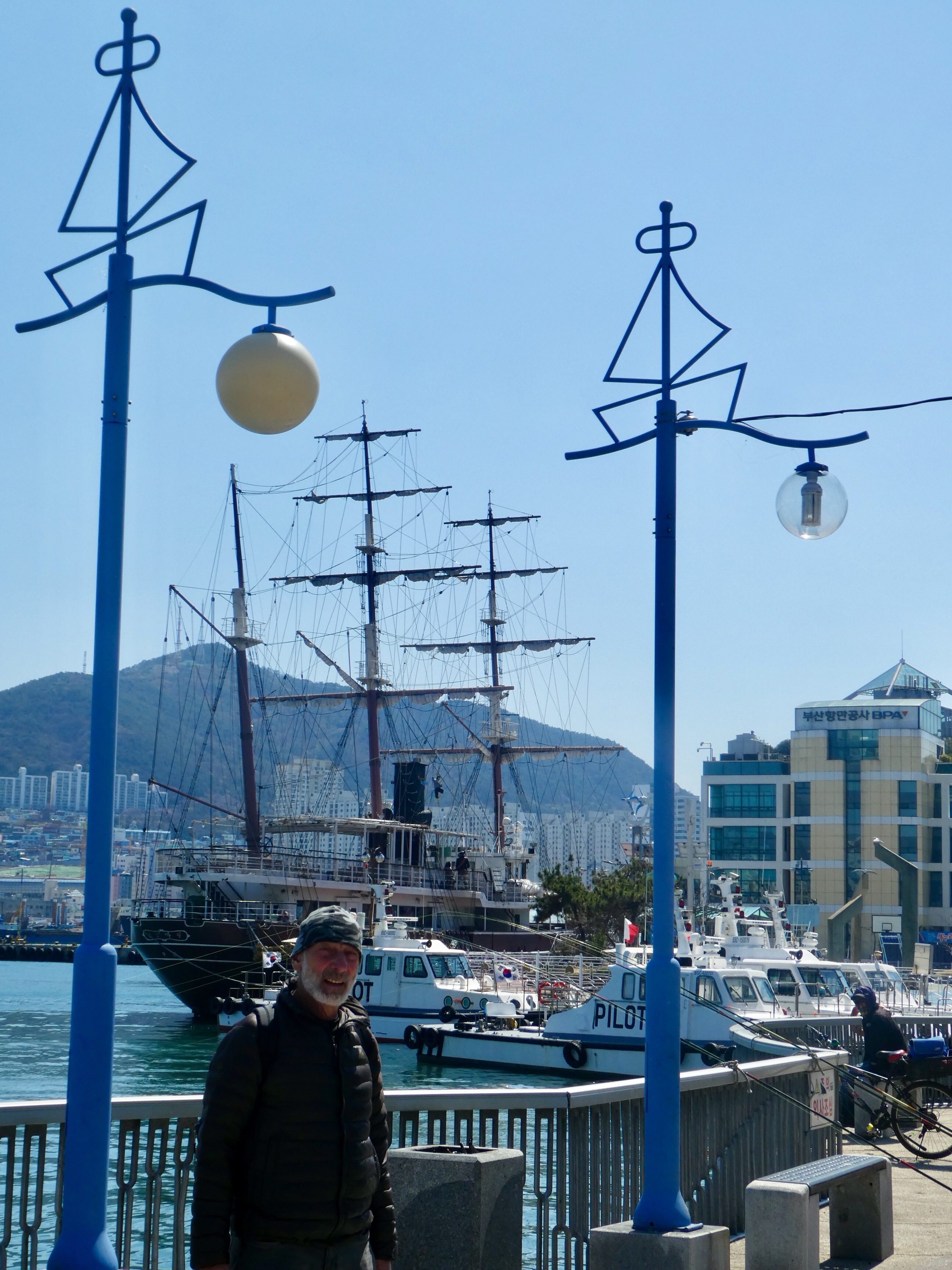
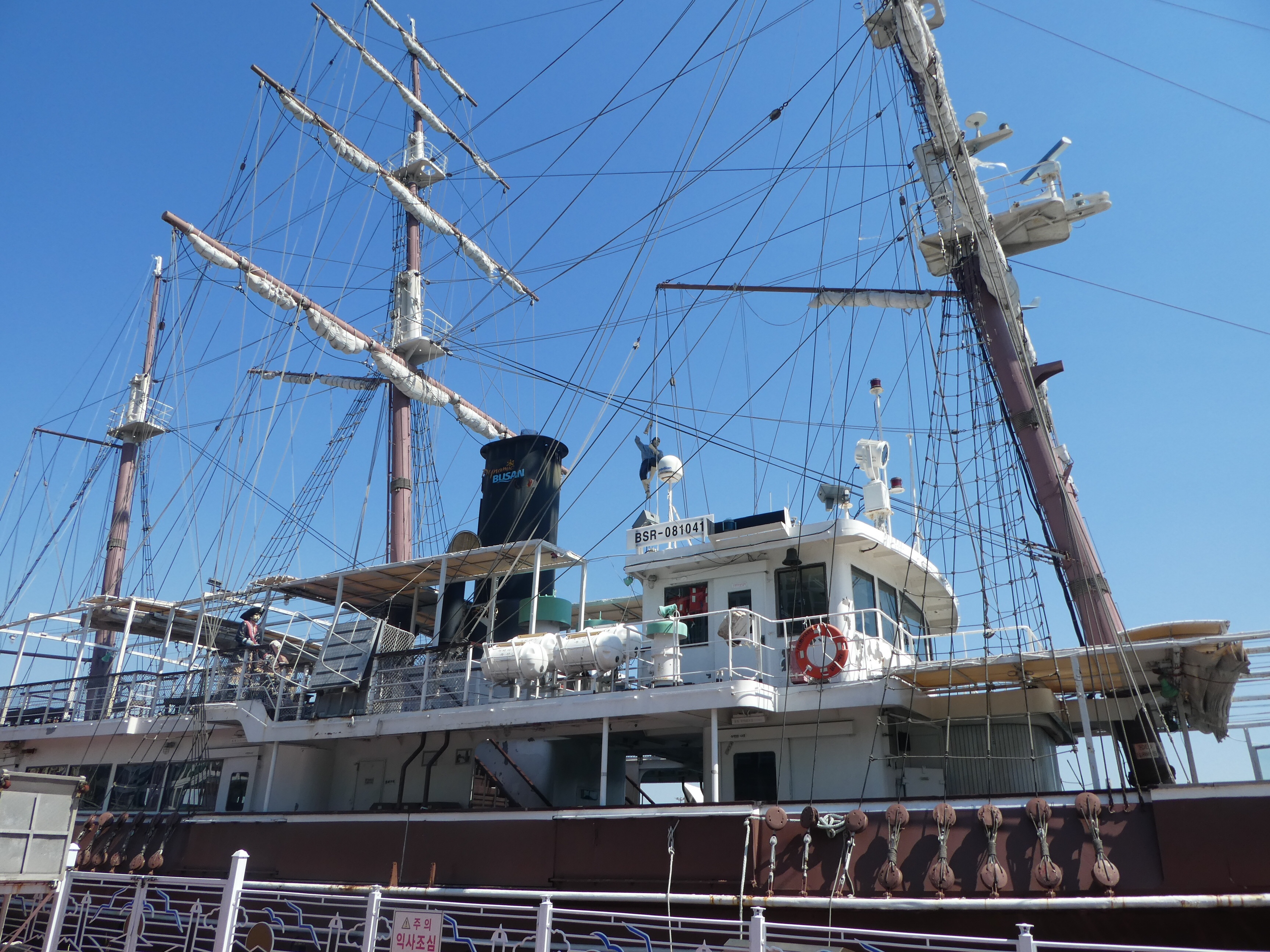
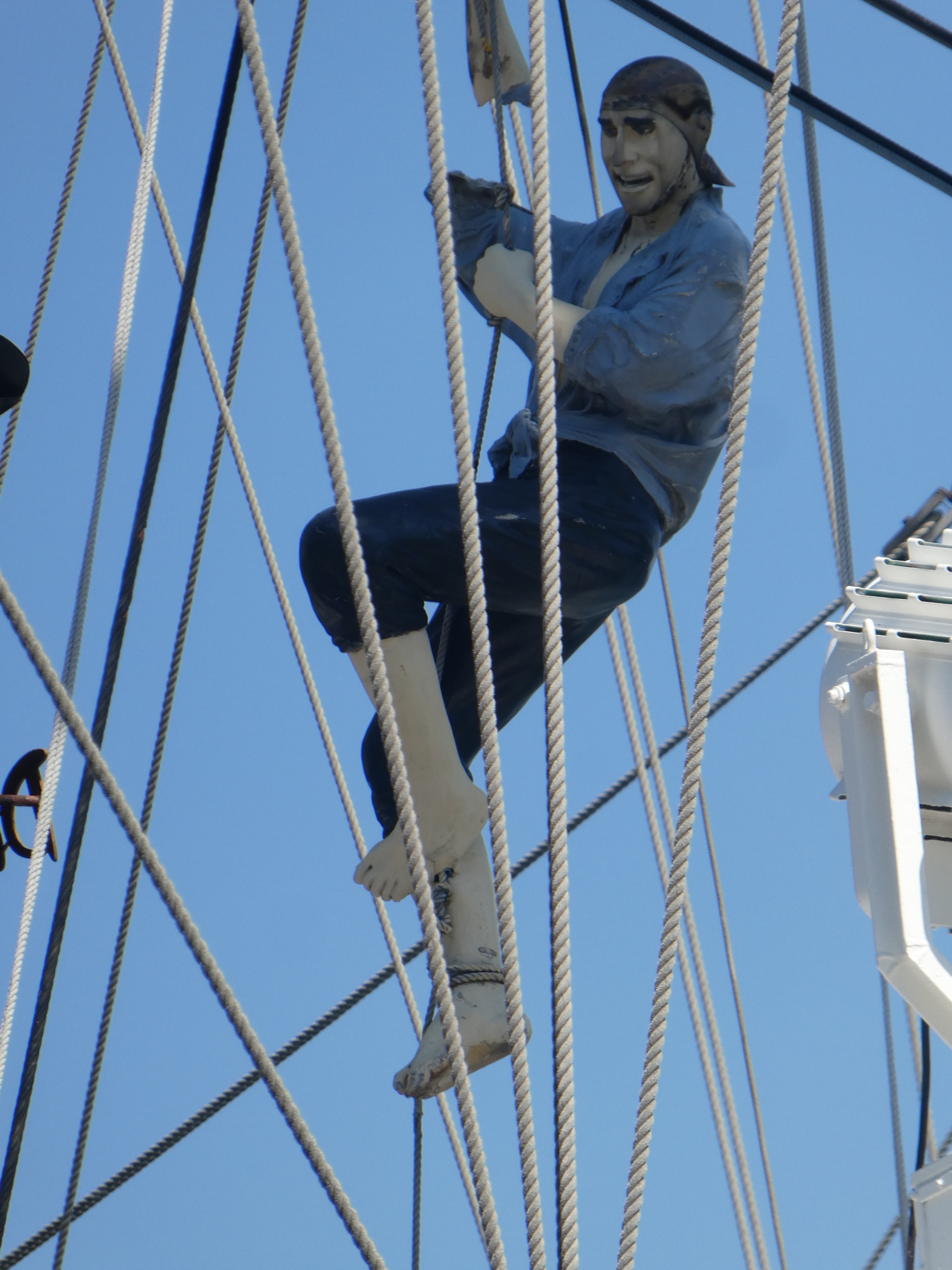
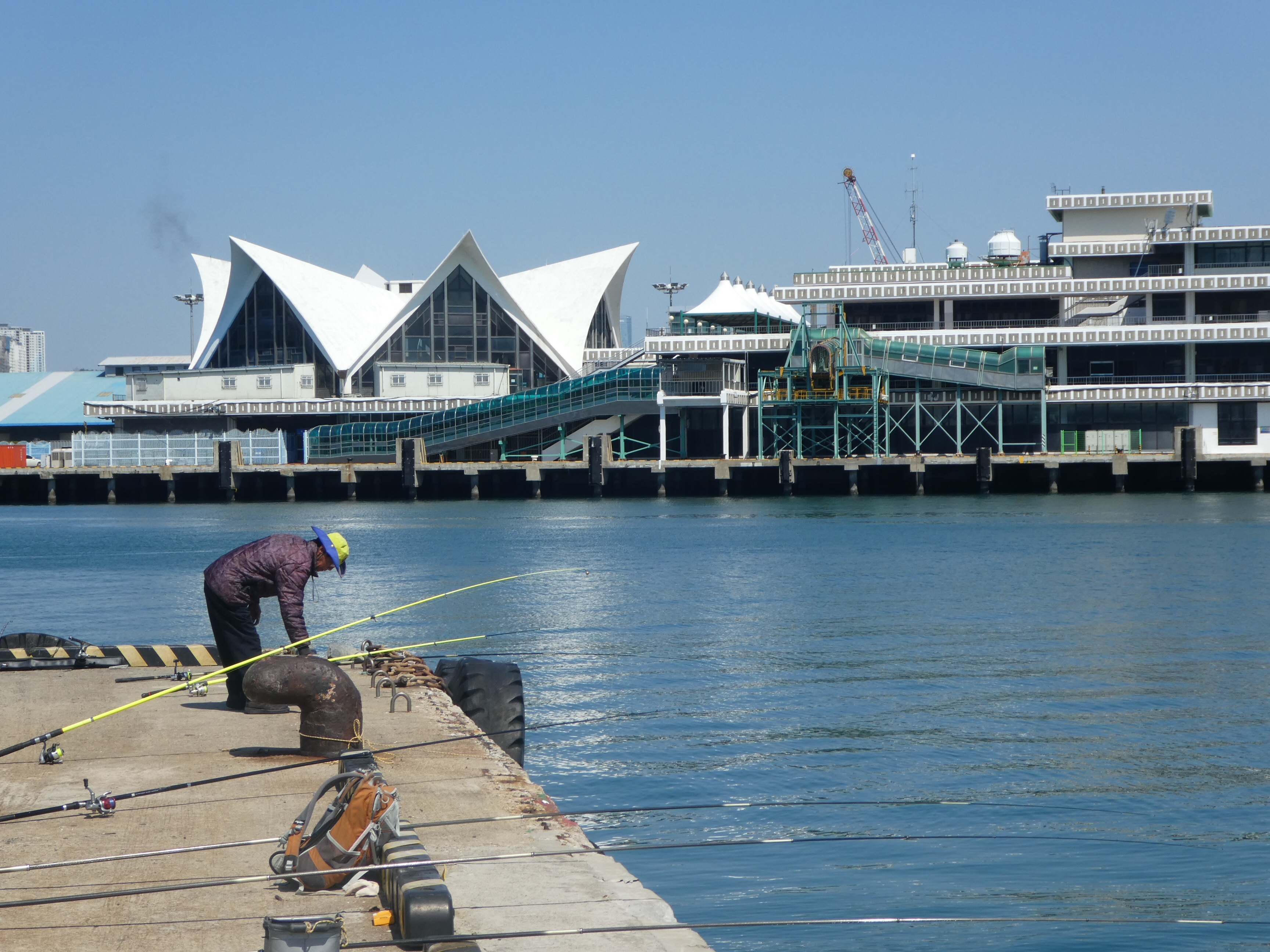
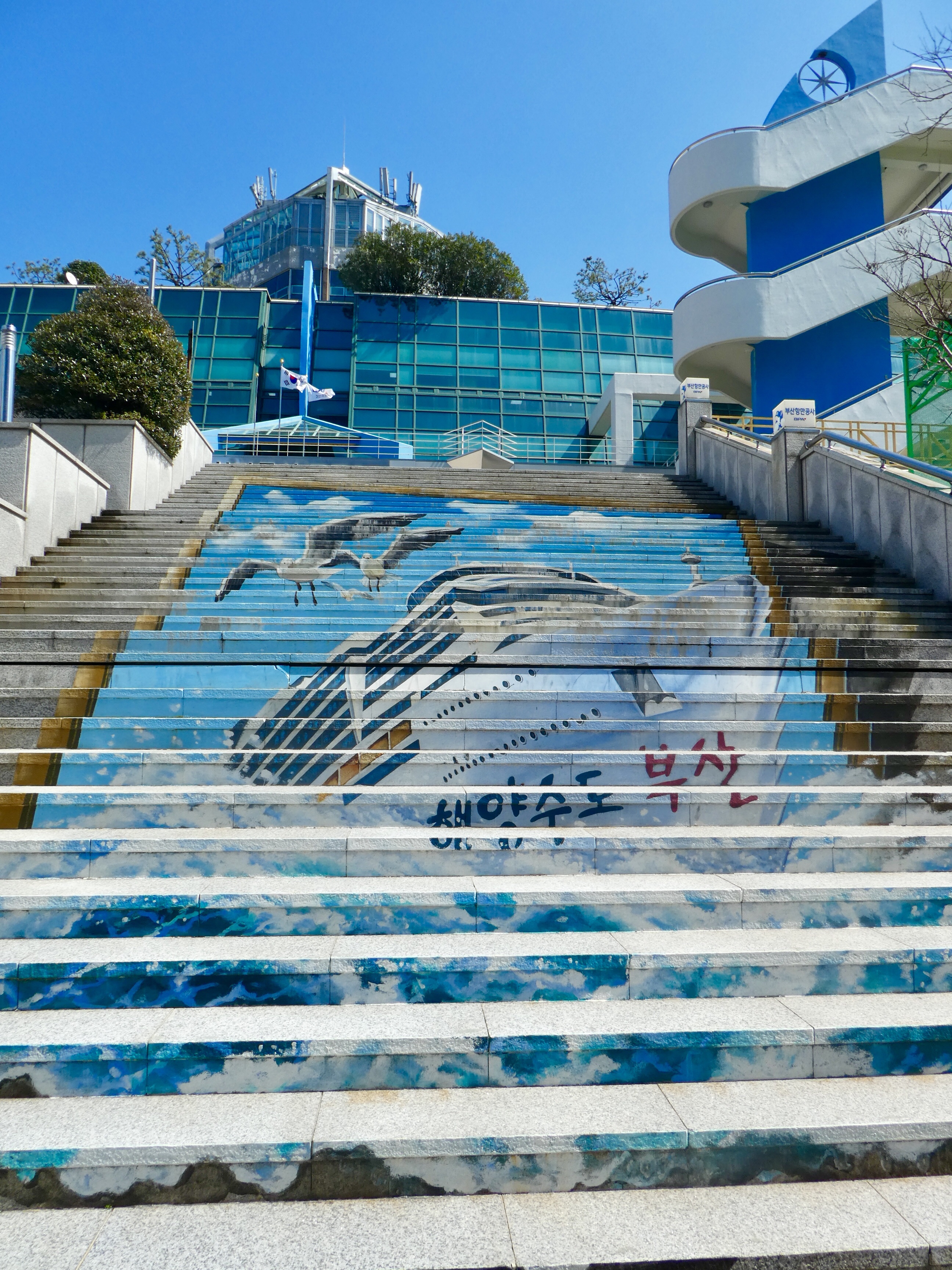
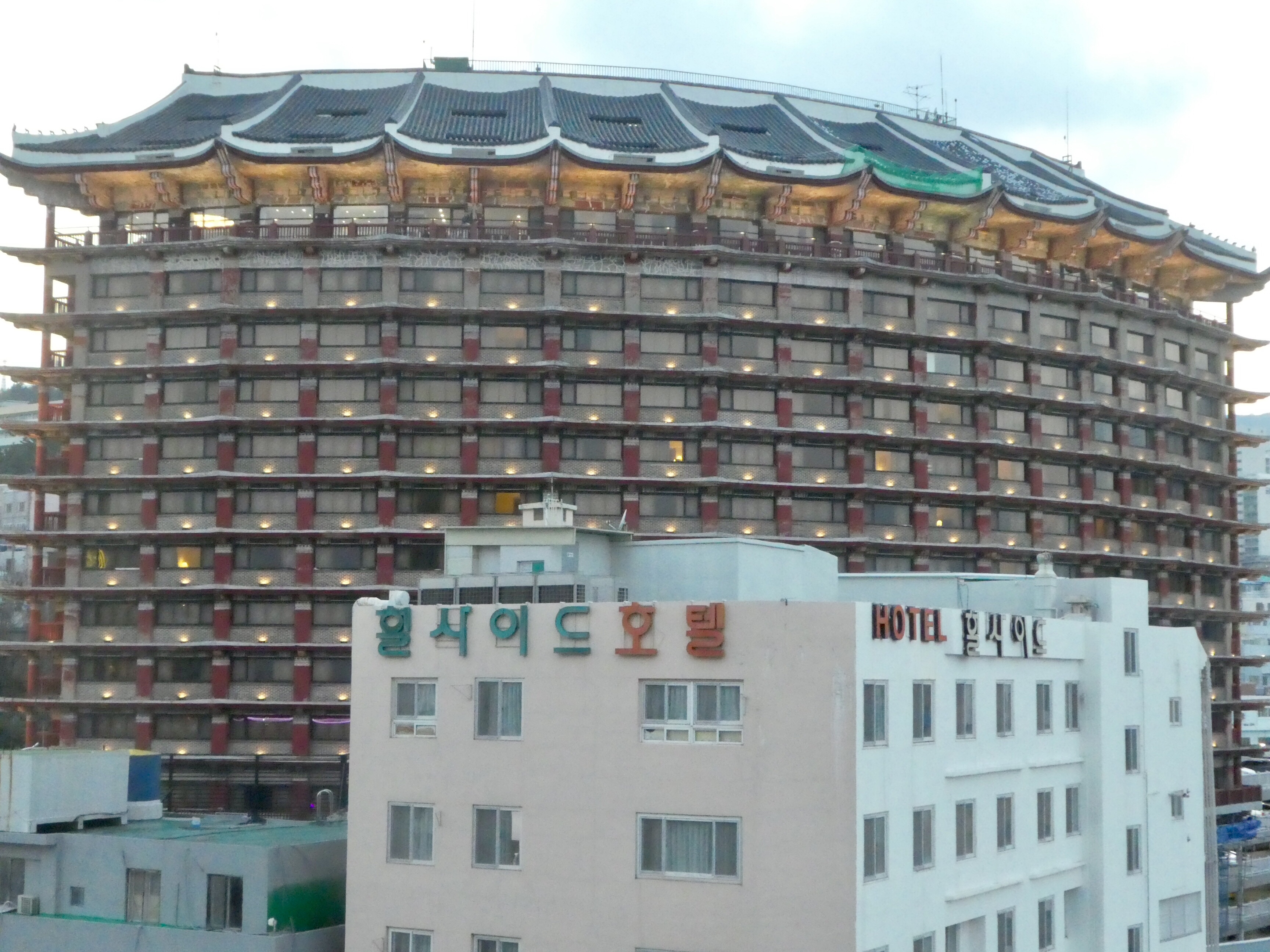
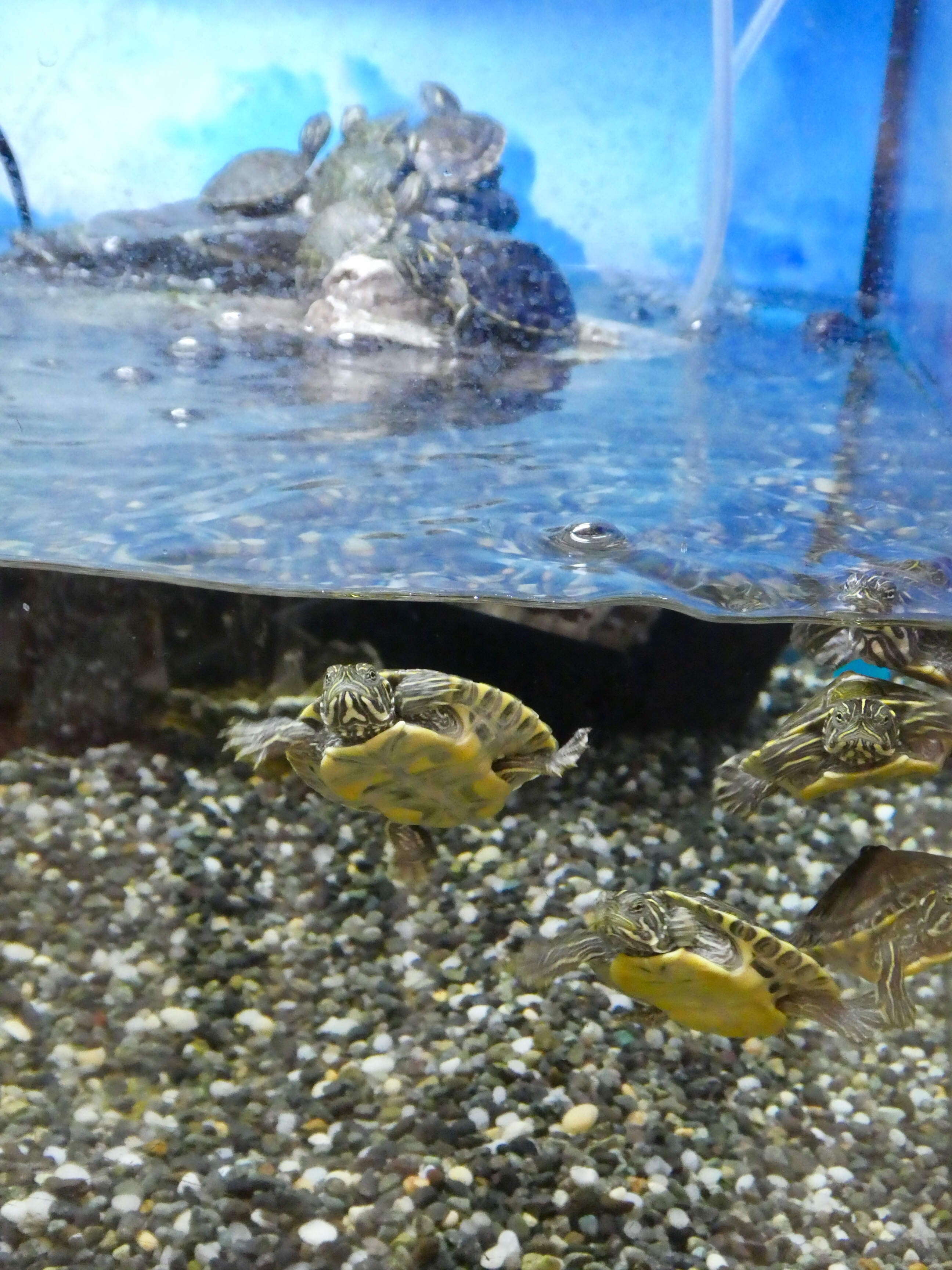
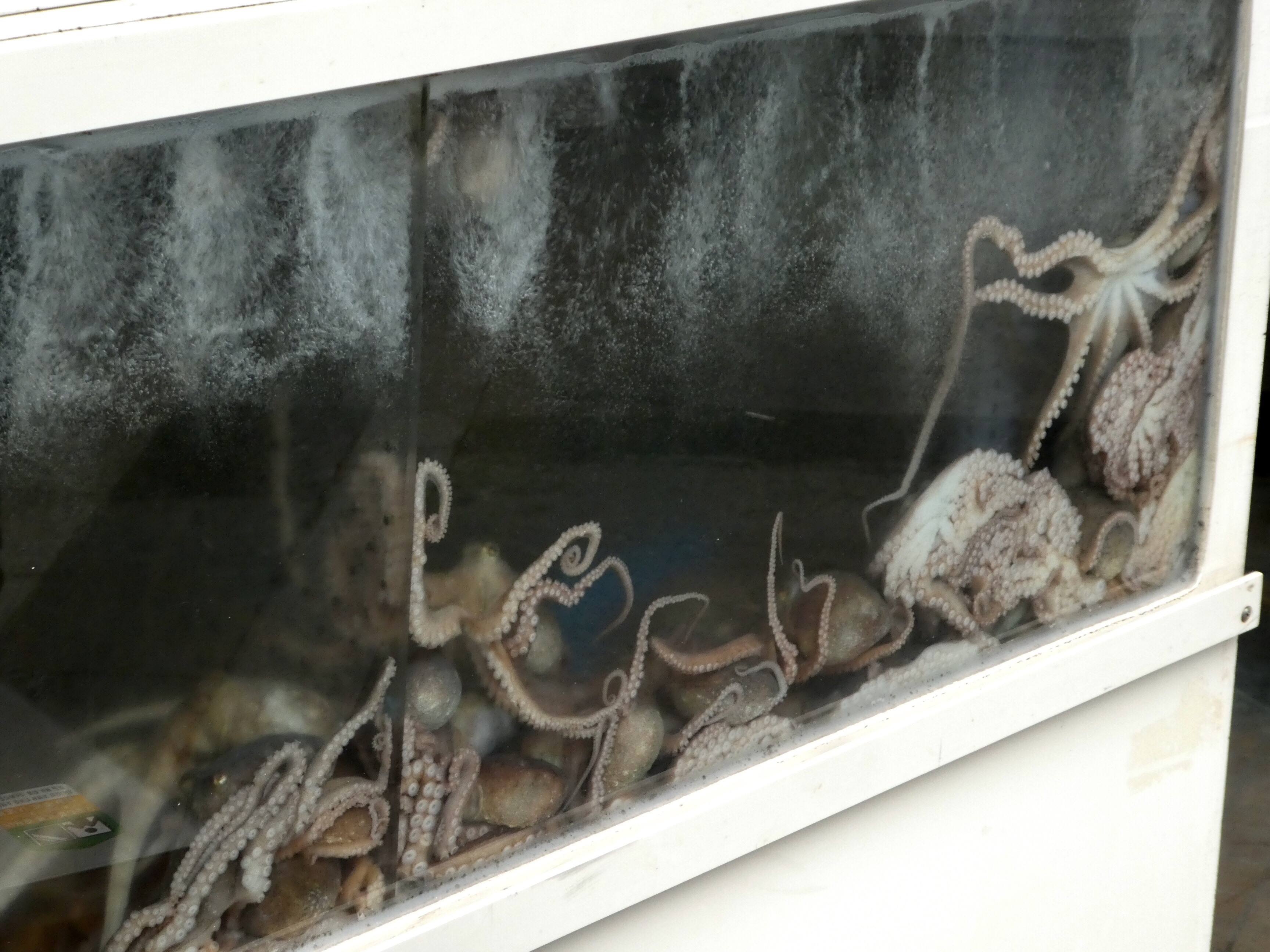
The port itself is impressive, with boats, ships, fisherman, and street art. We had a great view of the port from our hotel’s 18th floor. The nearby Jalgachi fish market is the largest fish market in the world. We were surprised how clean the fish market was. Also, the market didn’t smell fishy! We saw some really cool live fish, waiting to become someone’s sushi dinner! There were flat fish that blend into the sand at the bottom of the ocean. Both eyes were on the same side of it’s head! There were restaurants where people chose the food they ate from fish tanks. Bruce picked out his own plate of fresh oysters. There is also wide variety of dried fish for sale in bags and boxes.

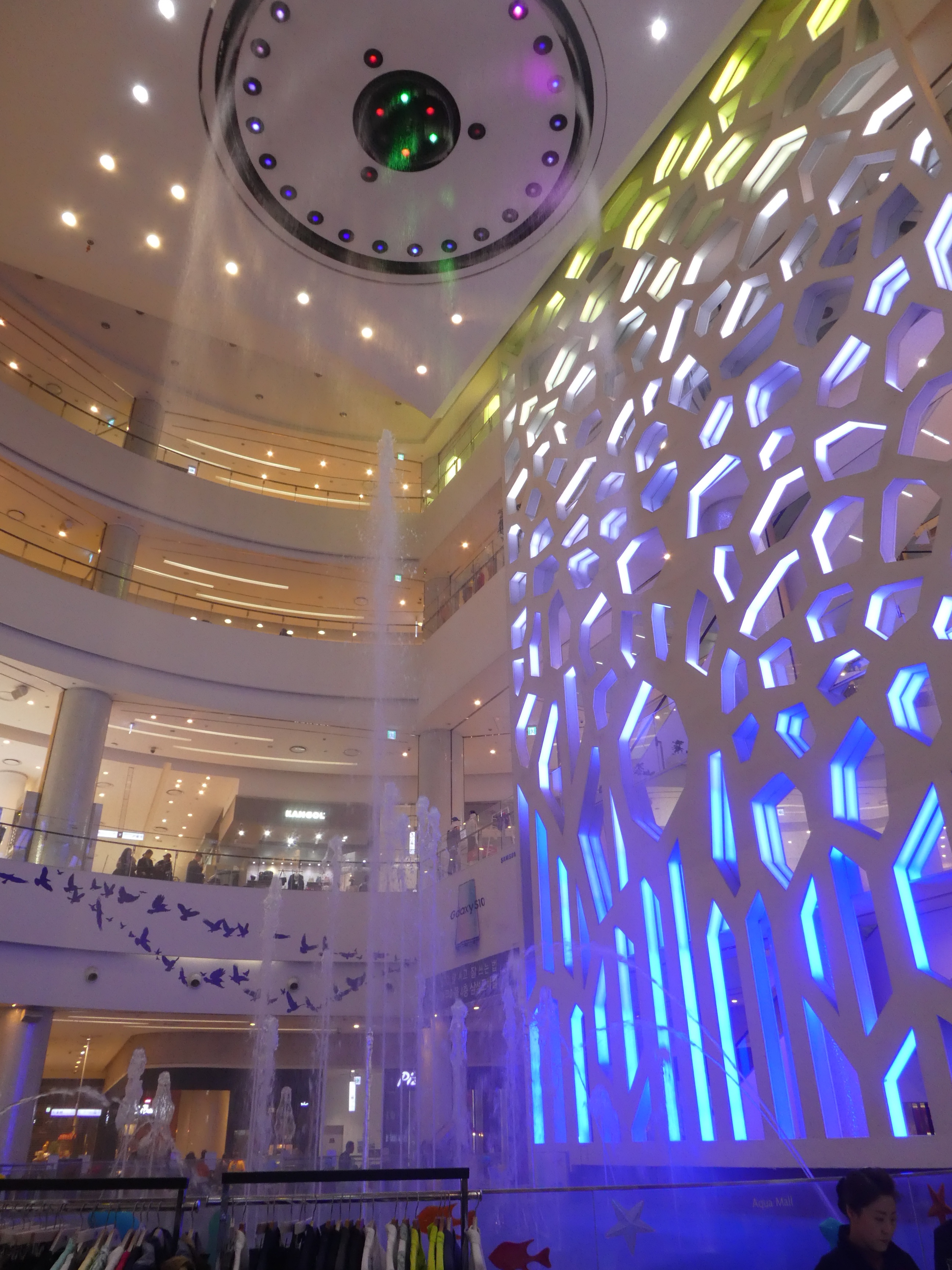
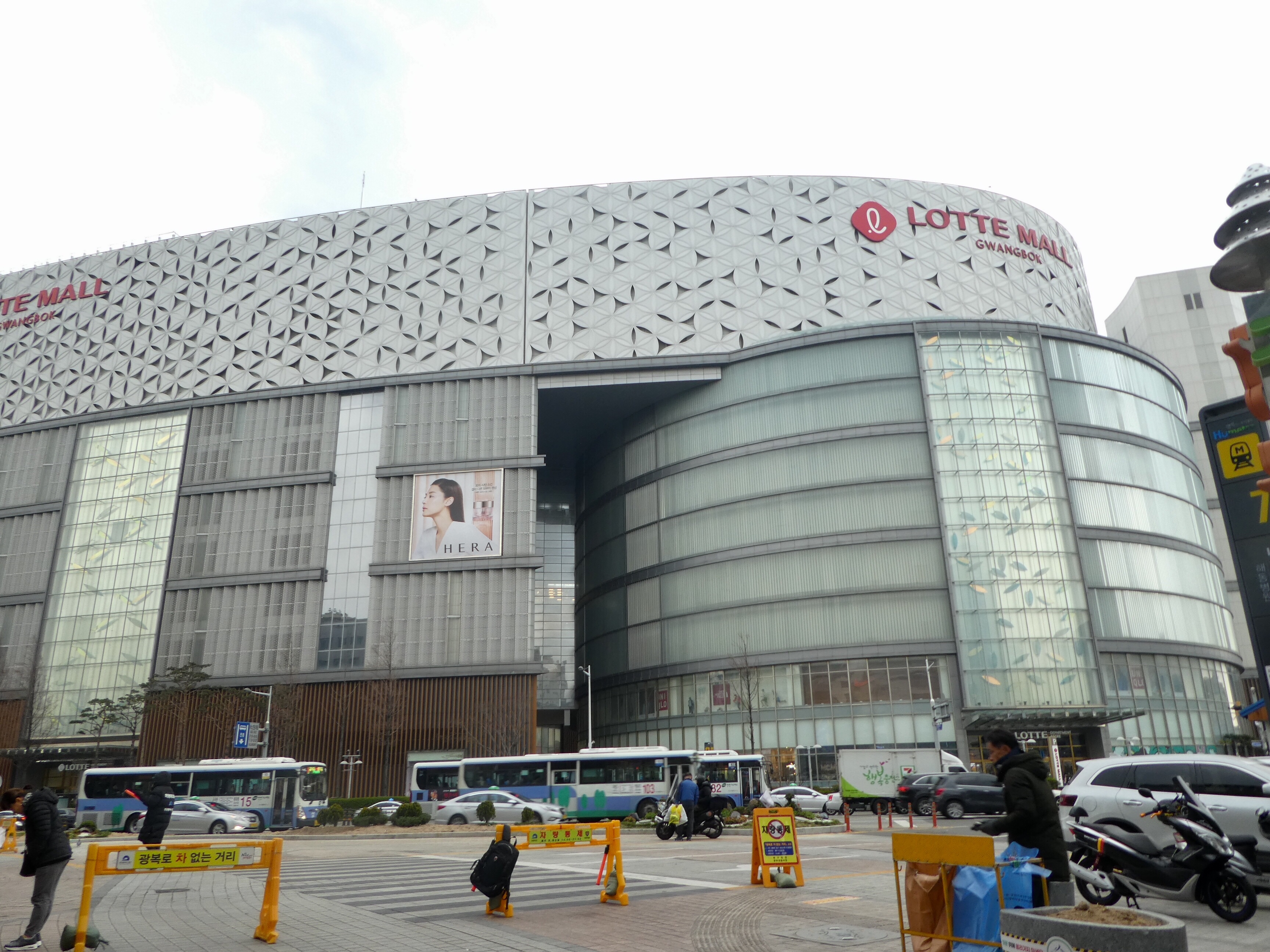
Latte Mall is near the fish market. It is one of the largest malls we’ve ever seen. It rises 9 stories above ground and 5 stories underground. There’s a water show set on a stage in the center of the mall. Fountains shoot up to the beat of loud music and colorful changing lights, while a stream of rain falls from the ceiling in circular patterns. A grocery store in the mall sold 10 chicken eggs for $5 USD! We can understand why they’re not on the breakfast menu in our hotels! We accessed the subway from the underground levels of Latte. We also had to go underground to cross the wide city streets because there are very few crosswalks. In fact, from the sidewalk, we had to walk down 56 steps to reach the subway.

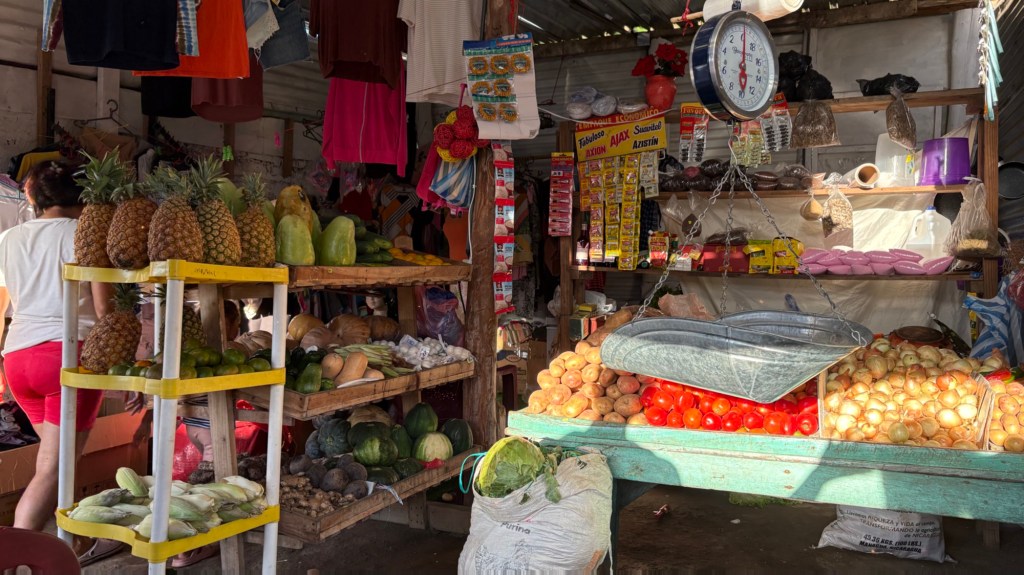
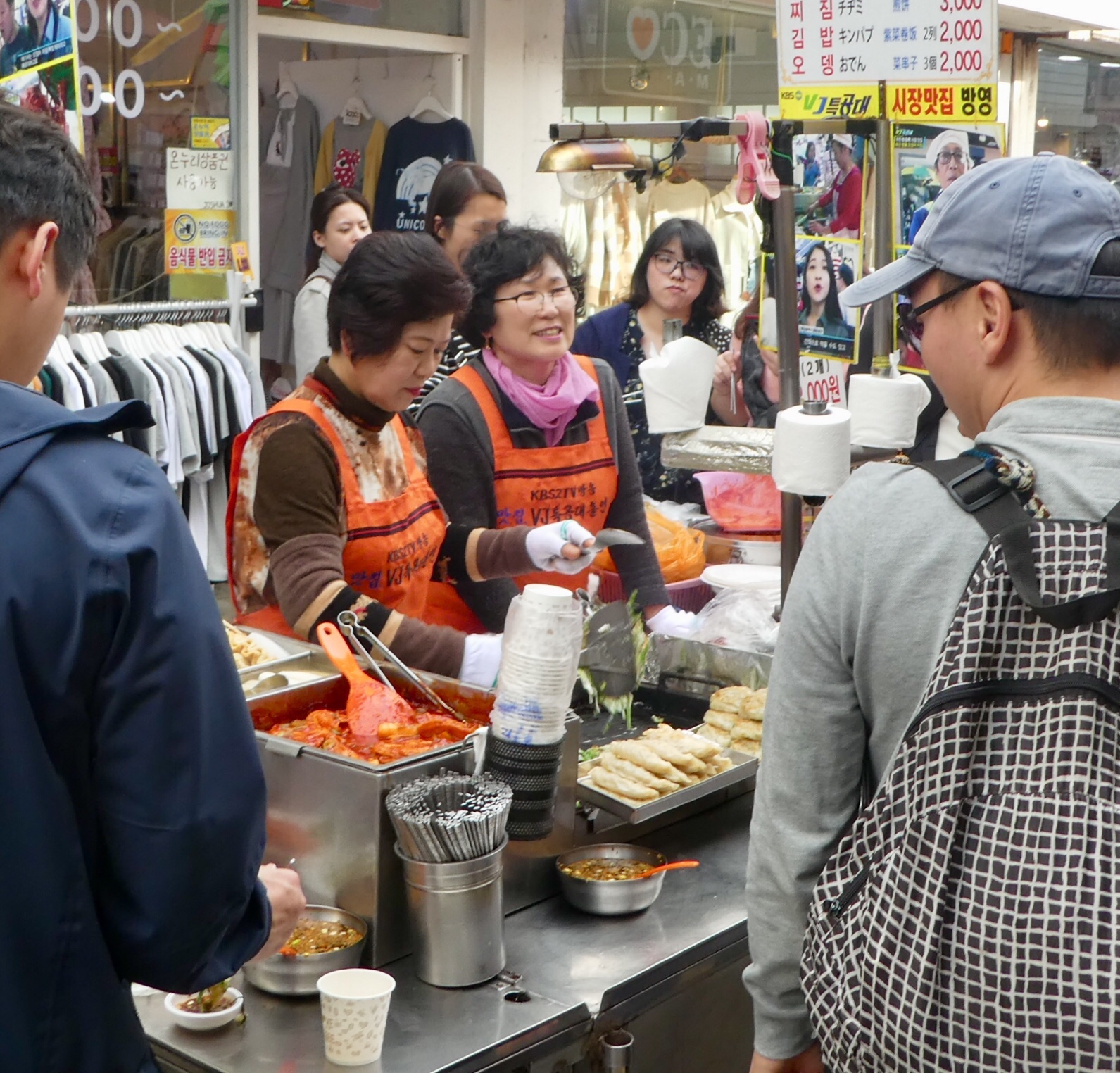
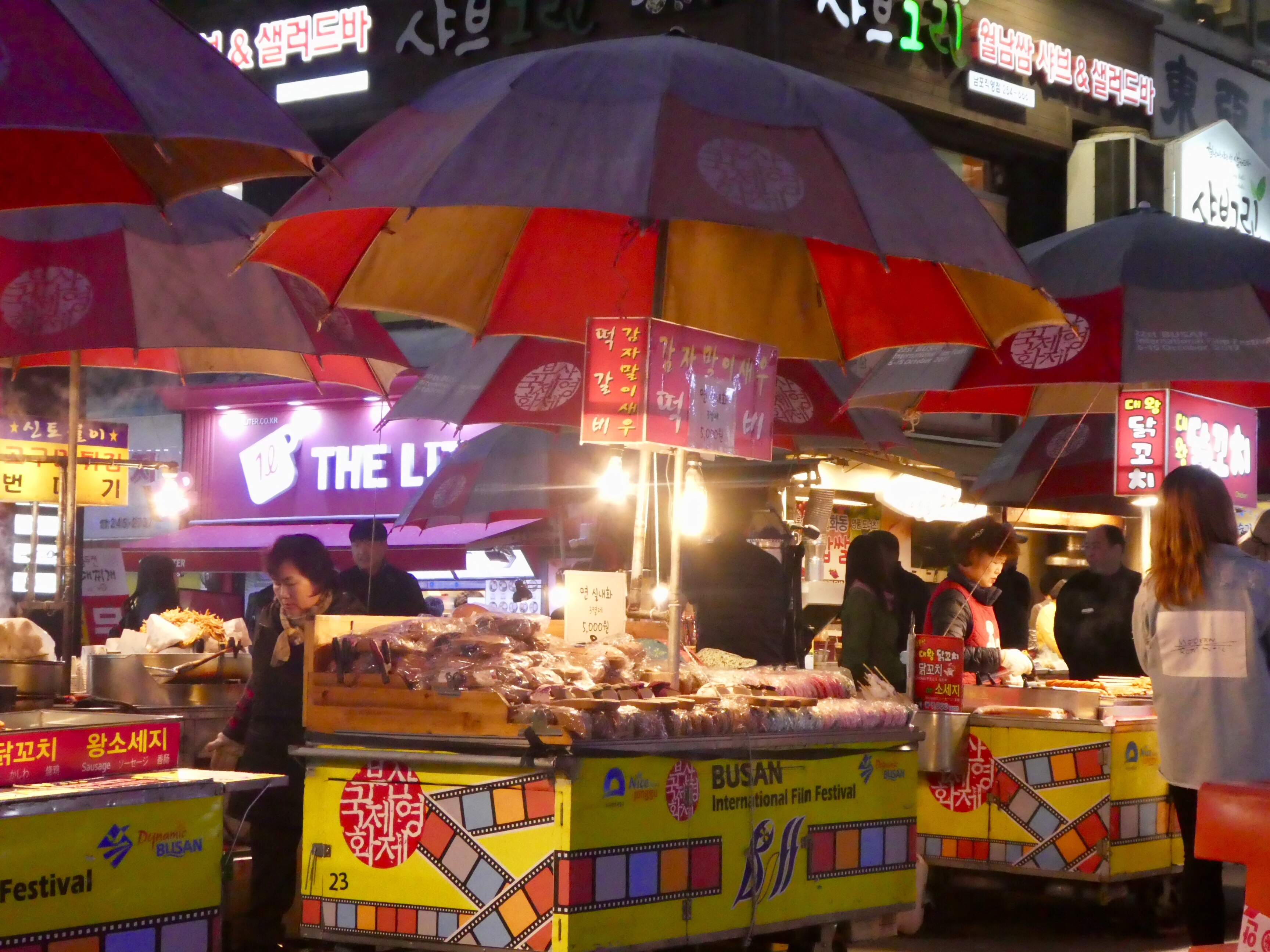
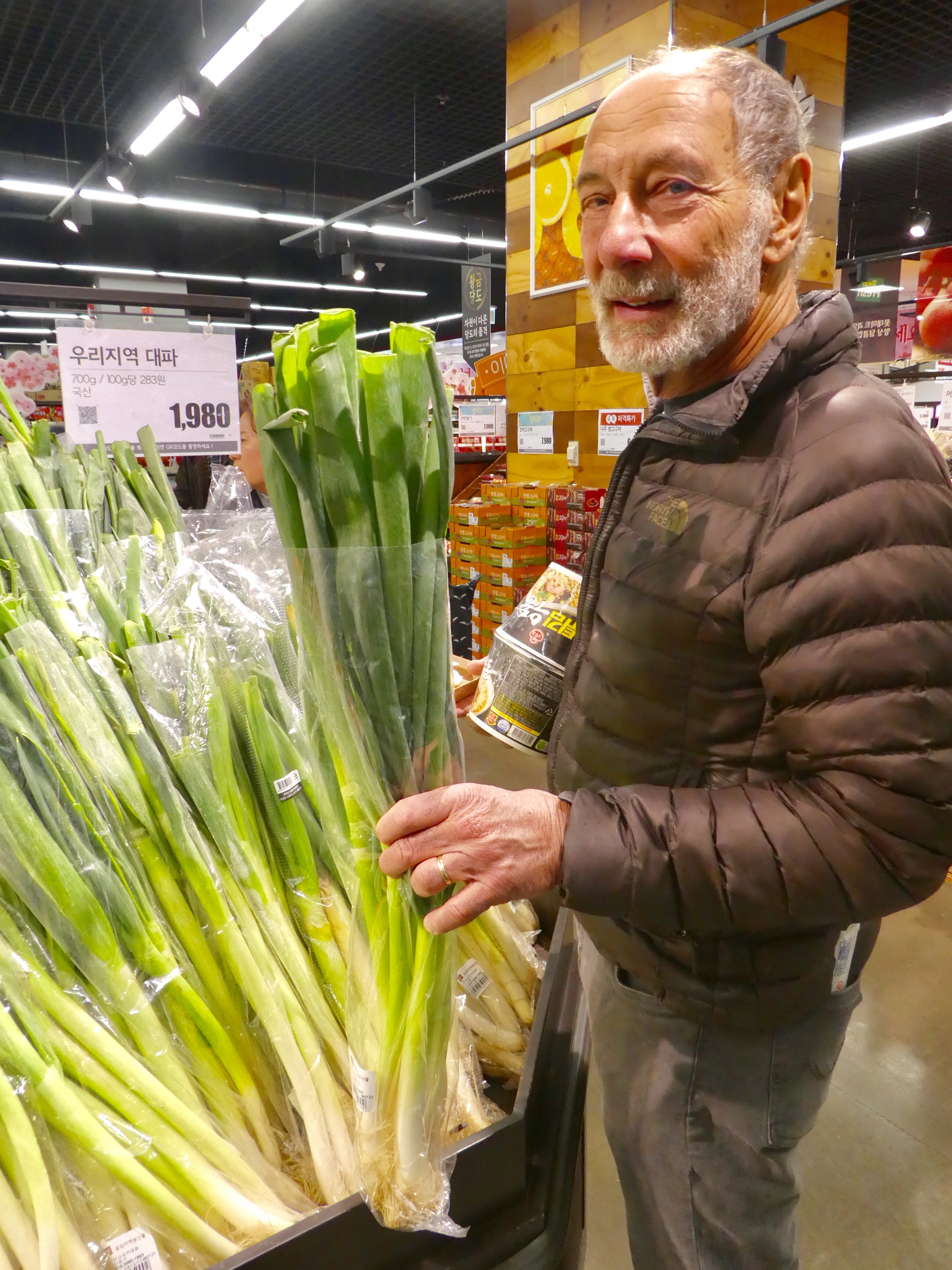
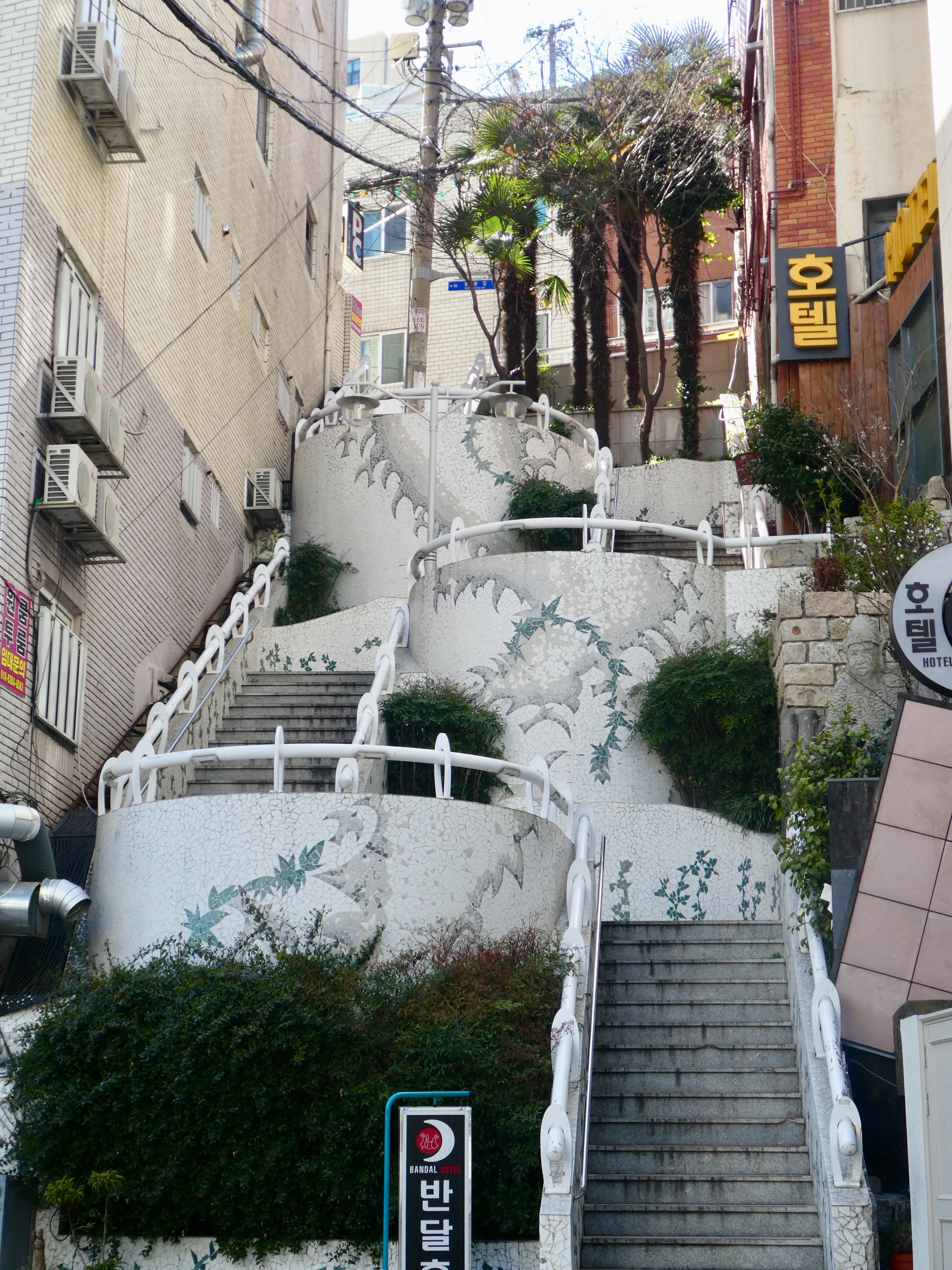
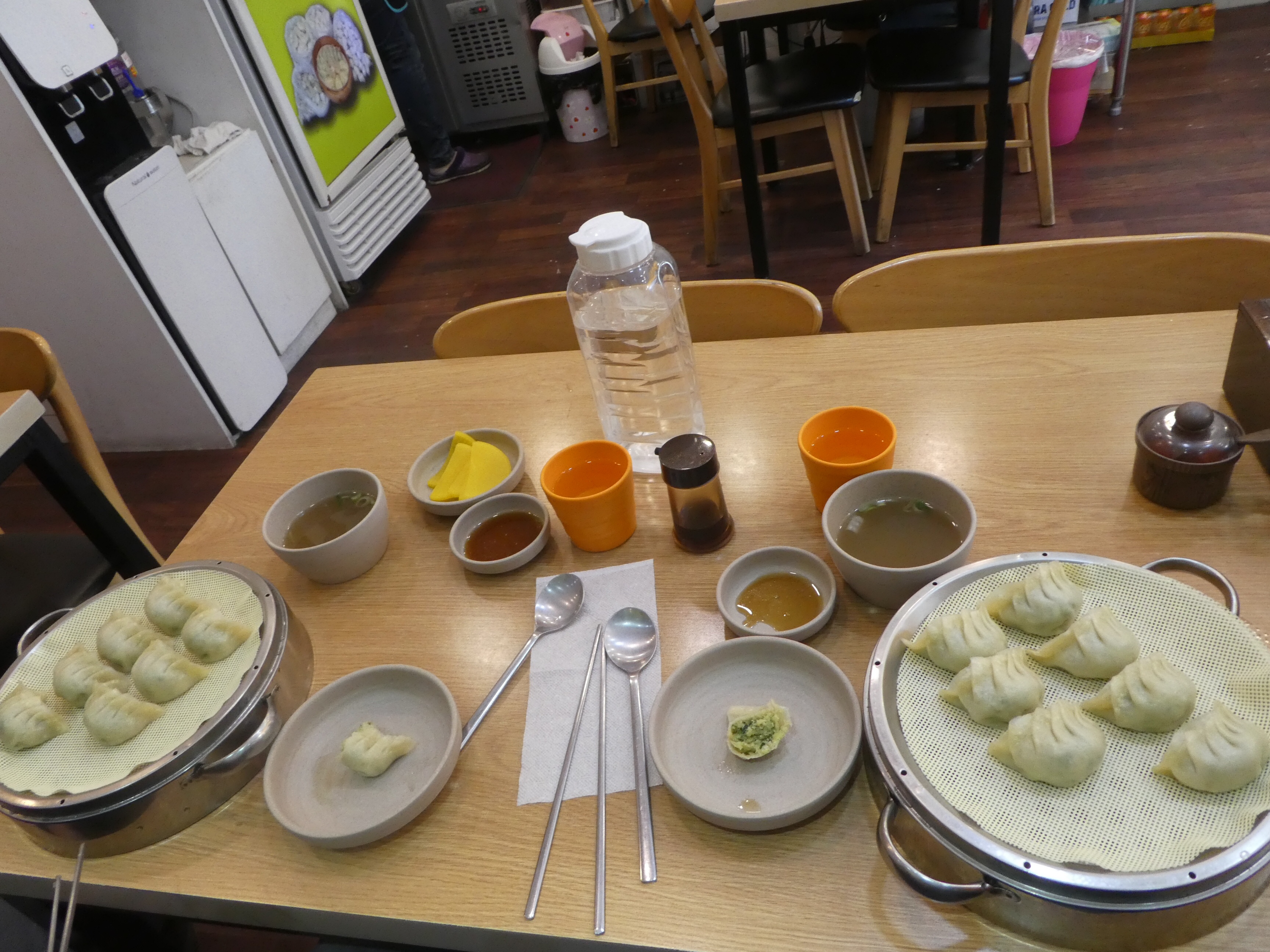
Above ground, we found several neighborhood markets. We were looking for a good, inexpensive restaurant, but Bruce found himself shanghied into eating from a food cart at one of these markets. As Bruce peered into the action, a young man handed him a pair of tongs and a piece of tempura sweet potato to sample. He placed an order for seafood and vegetable tempura. Meanwhile, Linda ordered pork dumplings and spring onion pancakes, a local specialty, from the next cart over. Bruce joined her, somehow finding himself eating with 2 sets of serving tongs. As he ate, the cart lady gave him the evil eye. He thought she was angry about where he was eating. In fact, Bruce had accidentally swiped the cook’s serving tongs from the other food cart. He returned the tongs to the first cart lady who acted indignant and offered him a fork. To these people, Bruce seemed like the stereotypical Caucasian who could not handle chopsticks, while, of course, he can. Everyone laughed when Bruce used chopsticks to finish his meal.

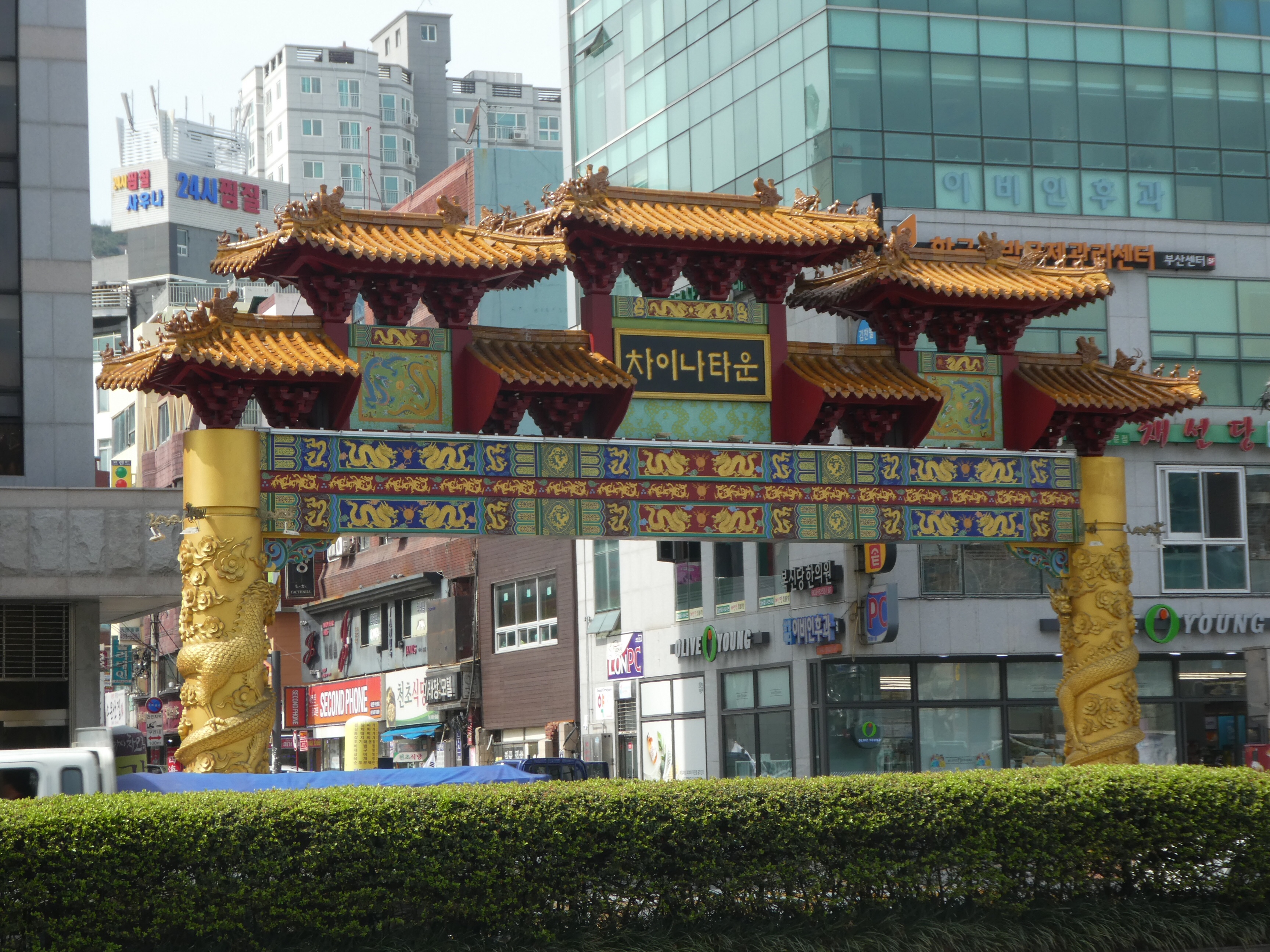
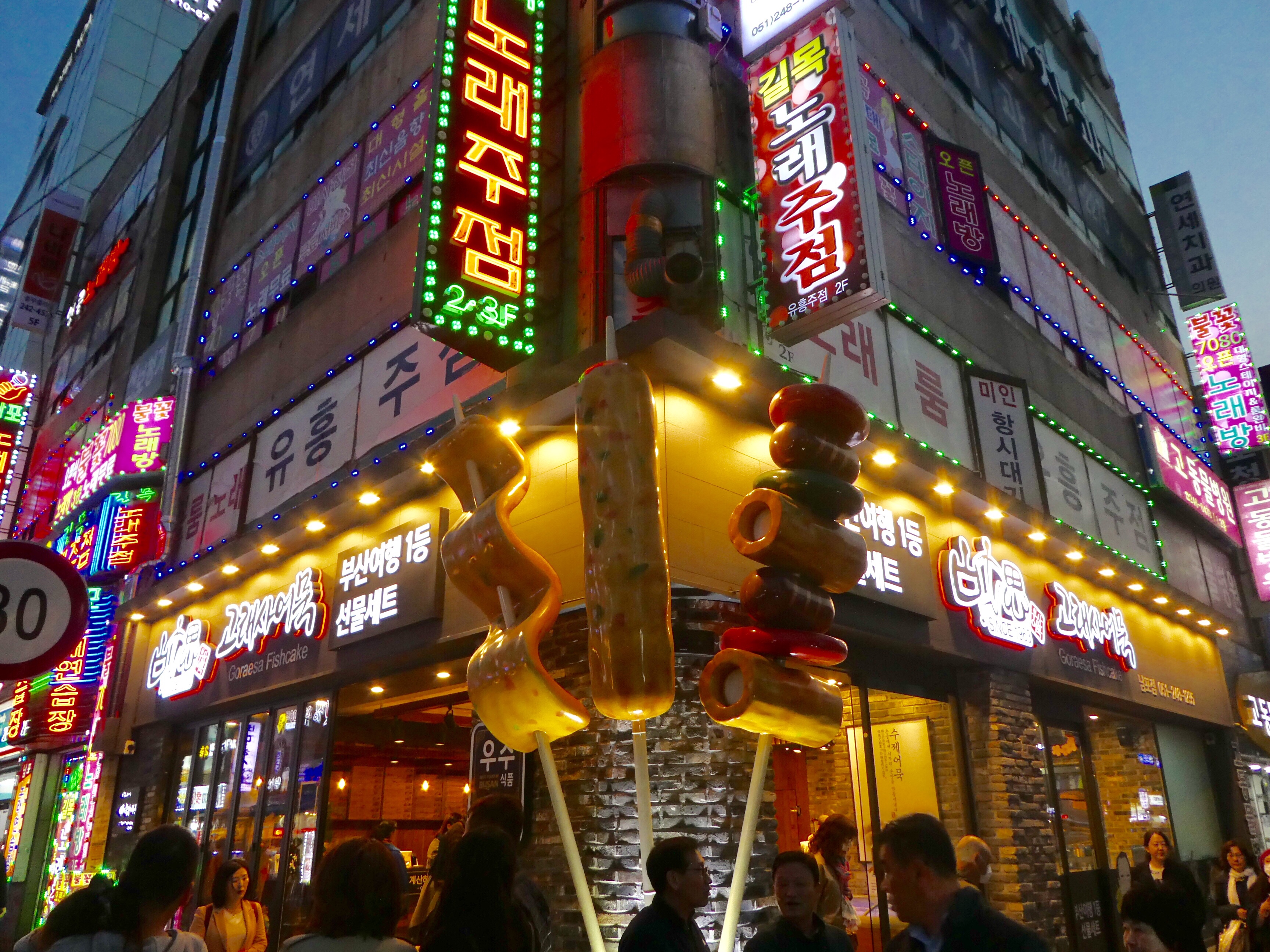
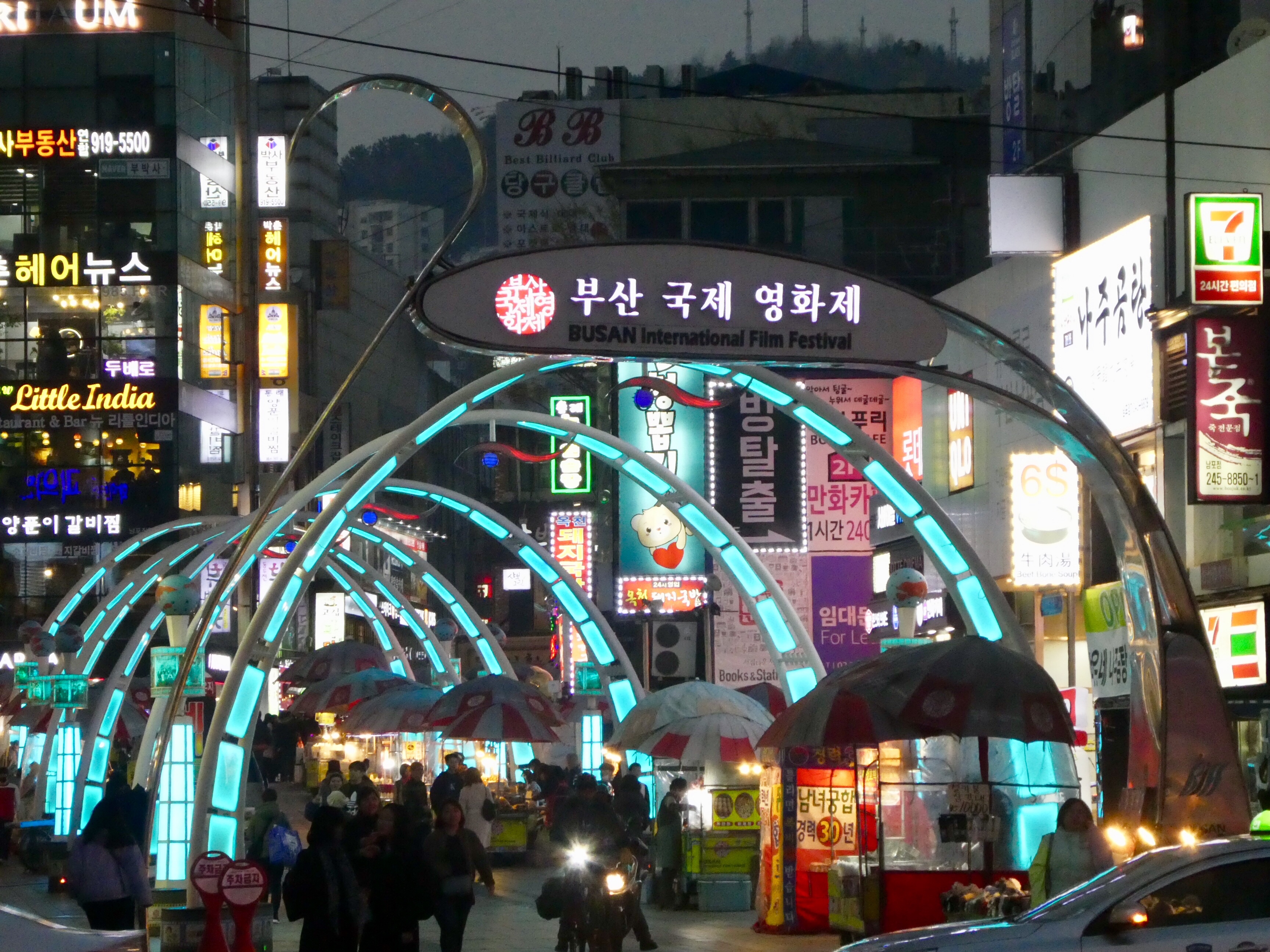
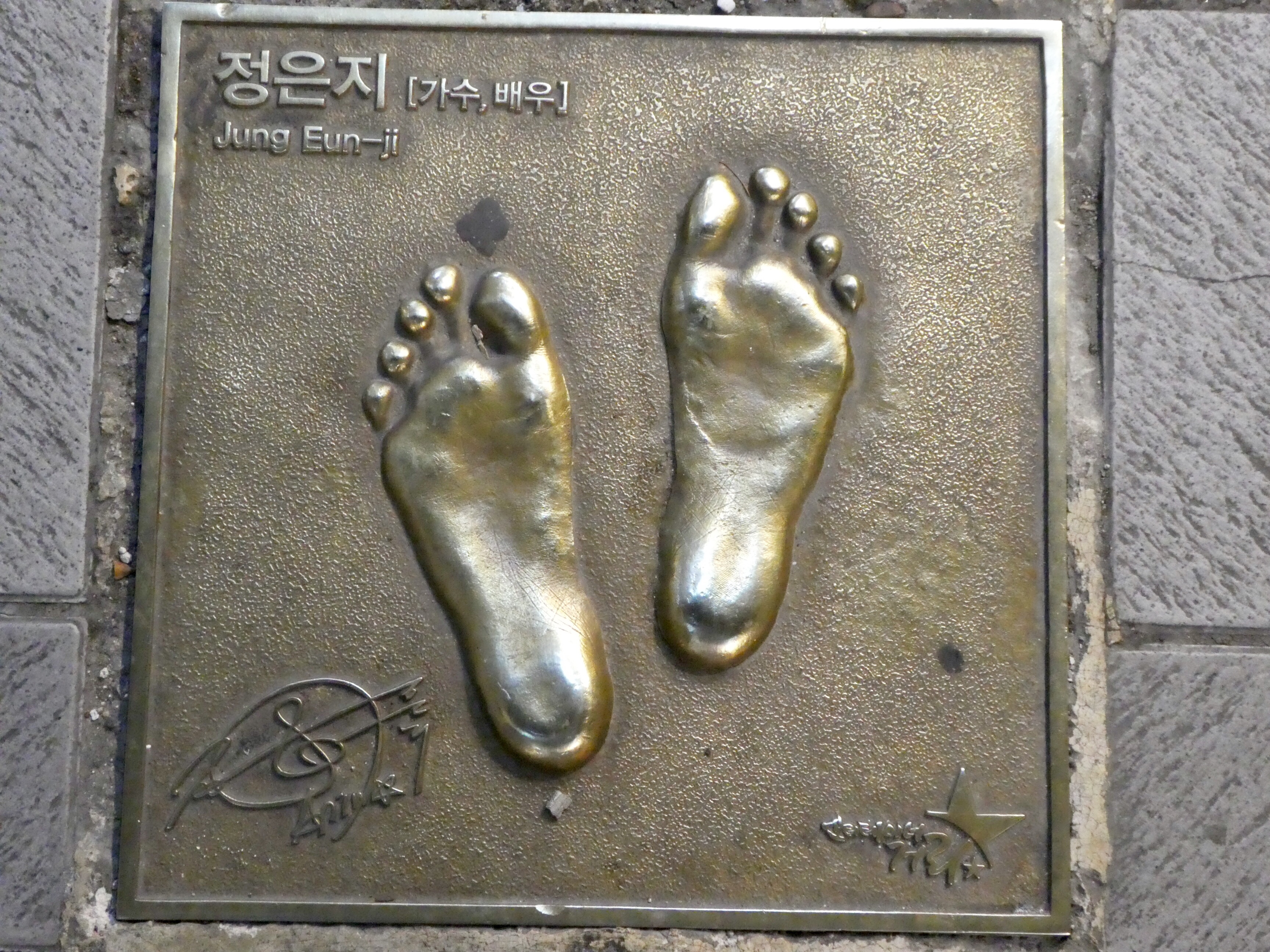
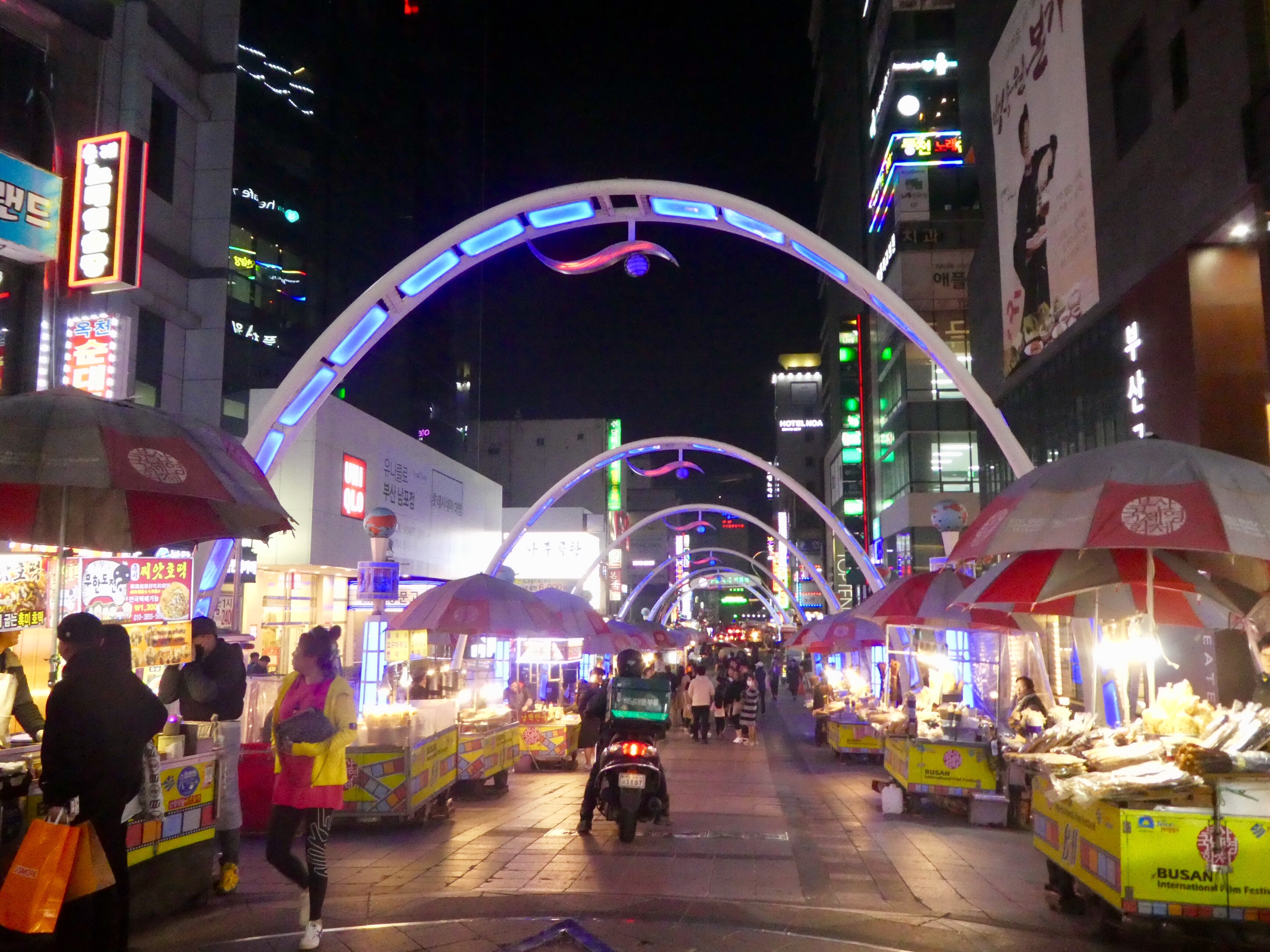
There is a movie neighborhood in Busan with a museum, a tour of different movie scene locations, an International Film Festival, footprints of the stars, and other movie related tourist lures. More than a dozen Korean movies have been filmed in Busan. The streets are lined with arches that light up at night and filled with shopping stalls and food carts. Fish cake on a stick is a popular specialty.

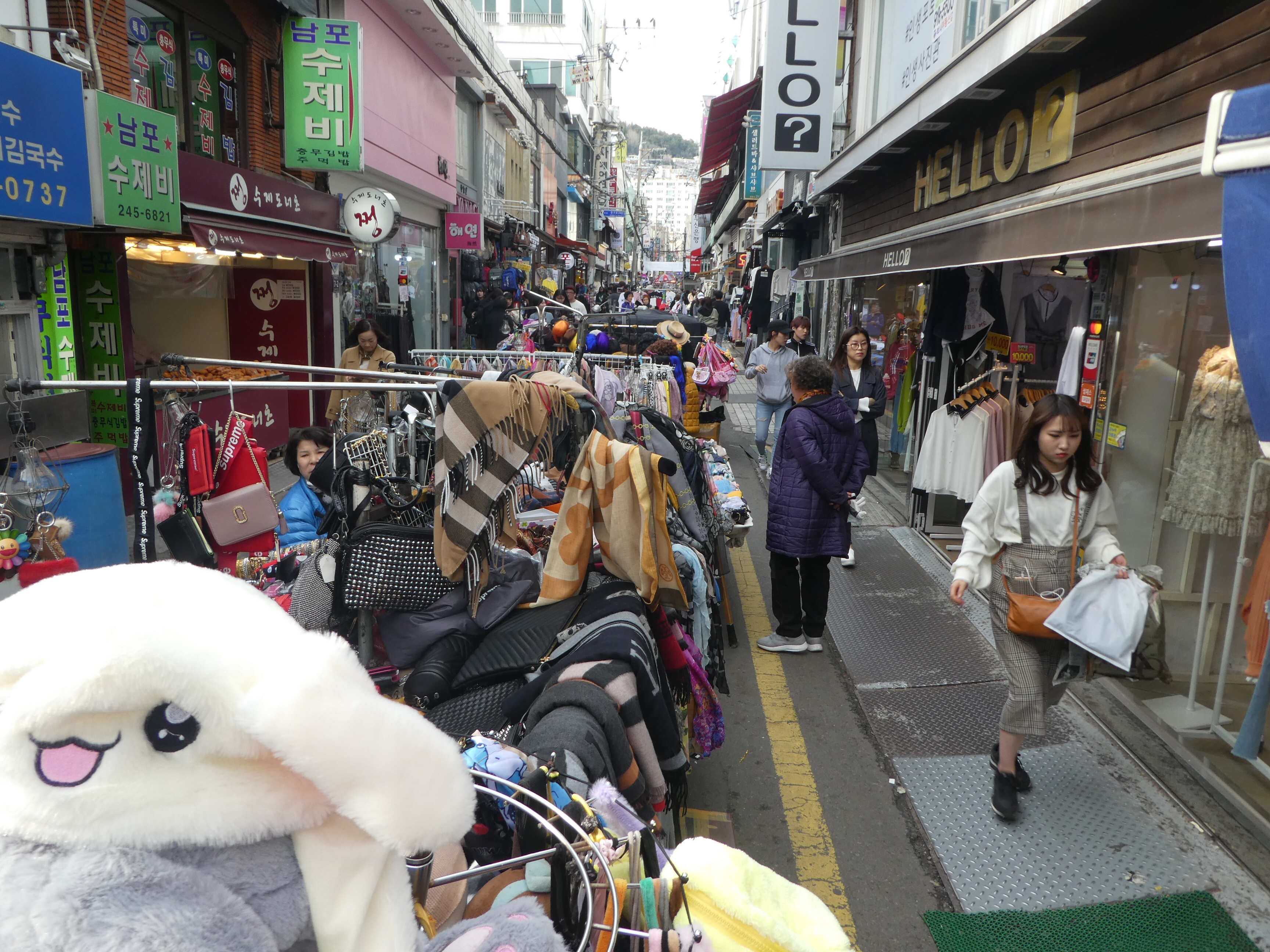
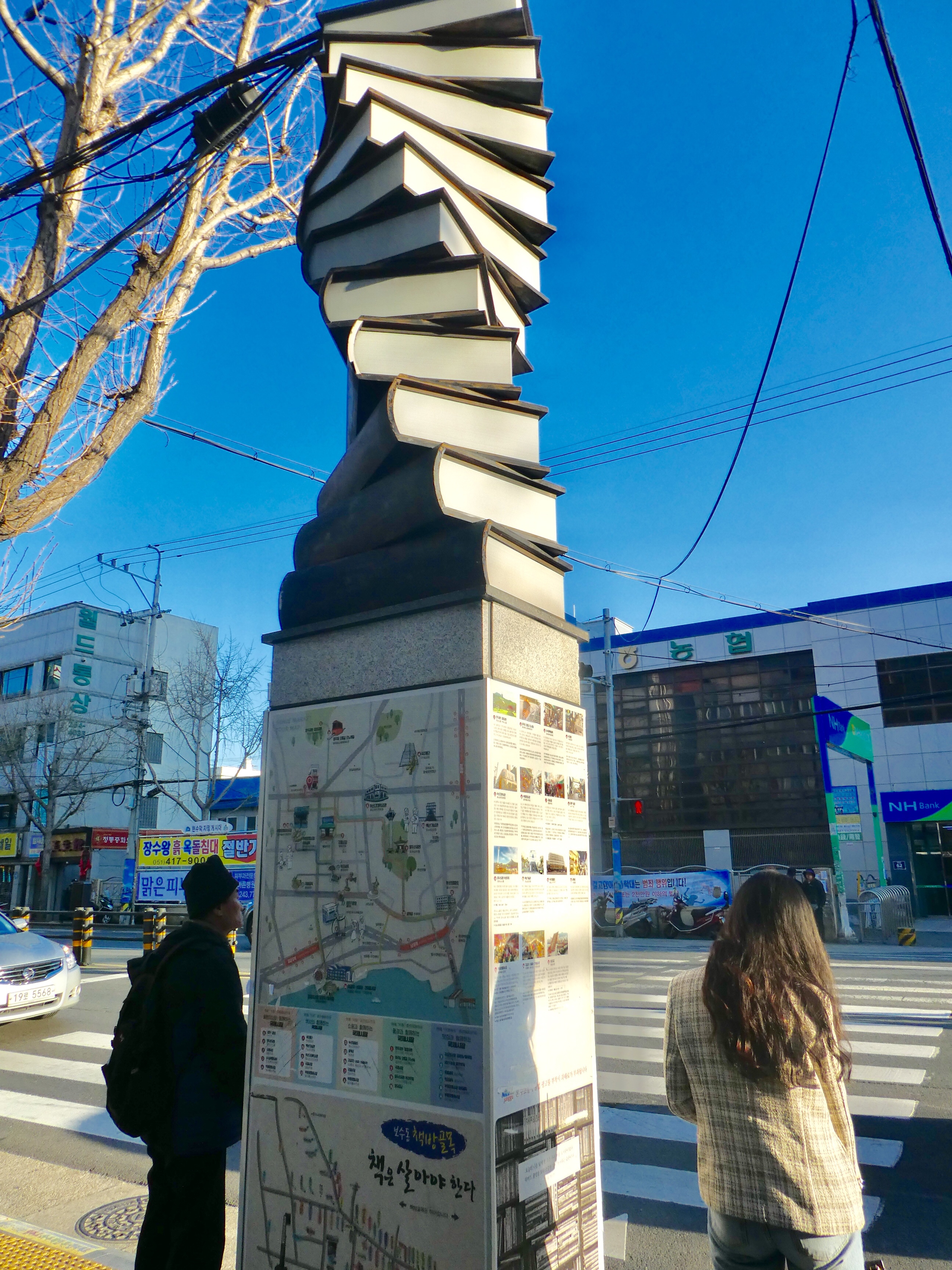
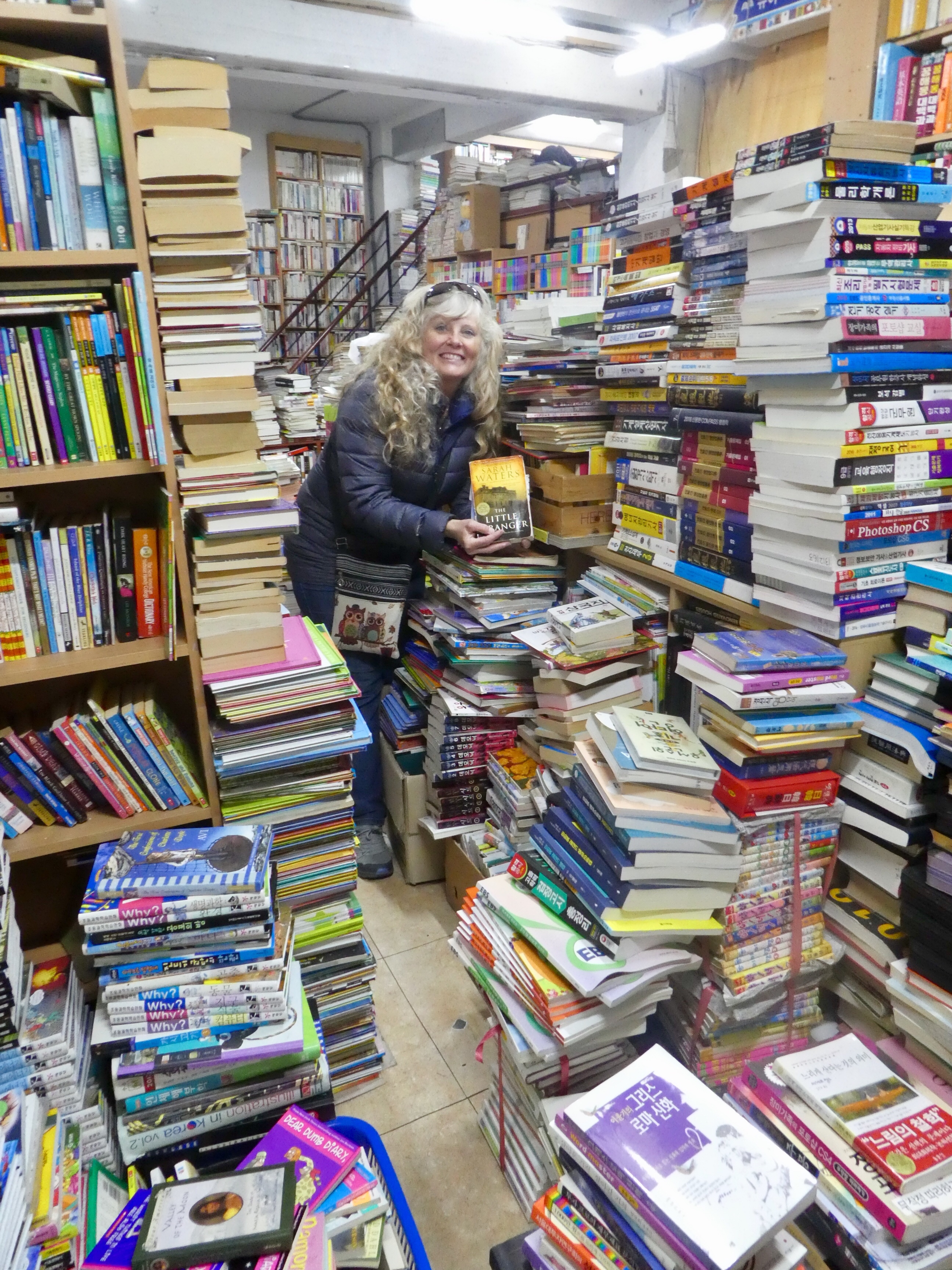
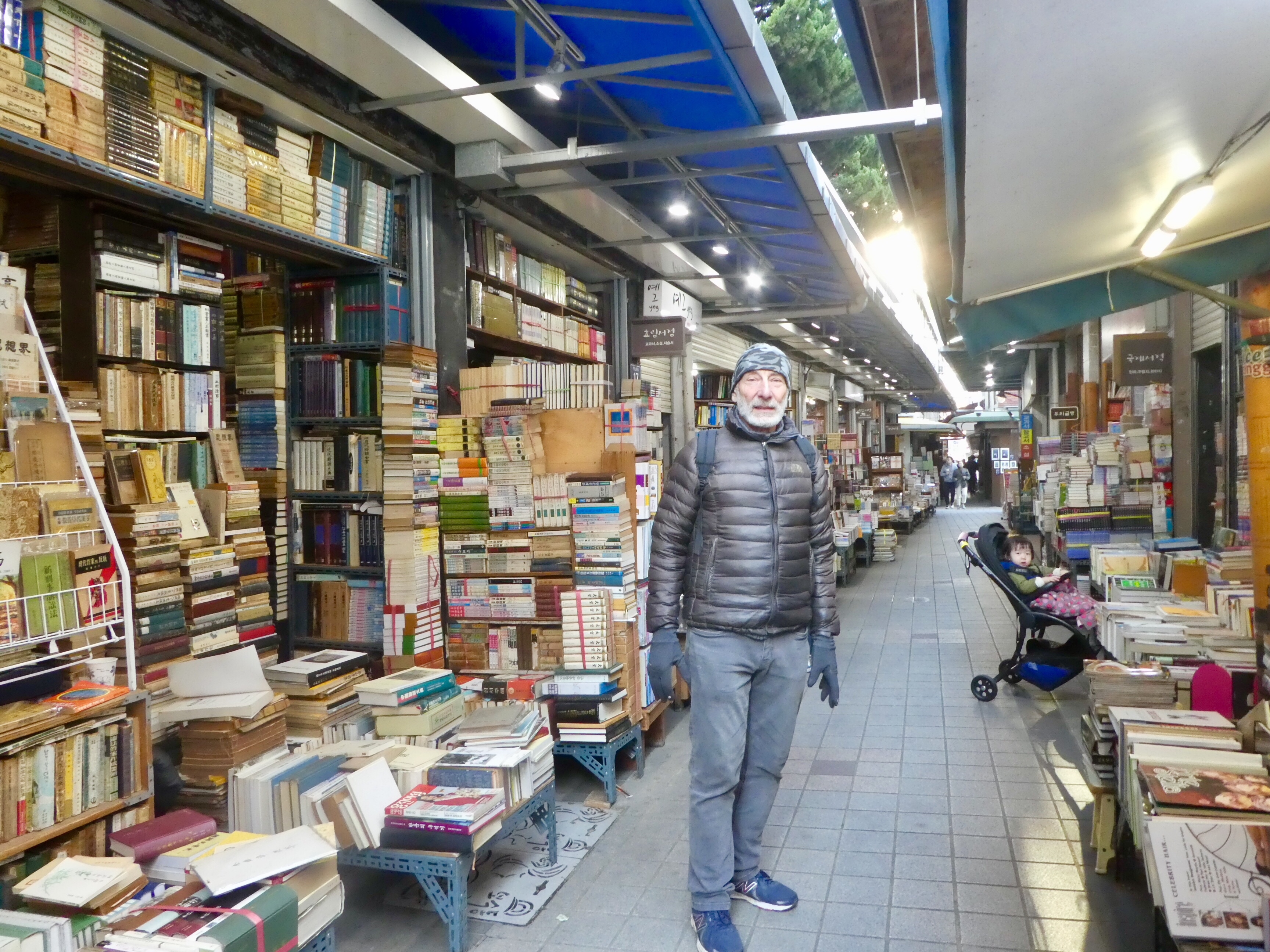
There’s a “Book Street” that is lined with bookstores on both sides. The stores contain book cases and stacks of books, mostly in Korean, piled everywhere. Linda was lucky enough to find a shop with a small selection in English.

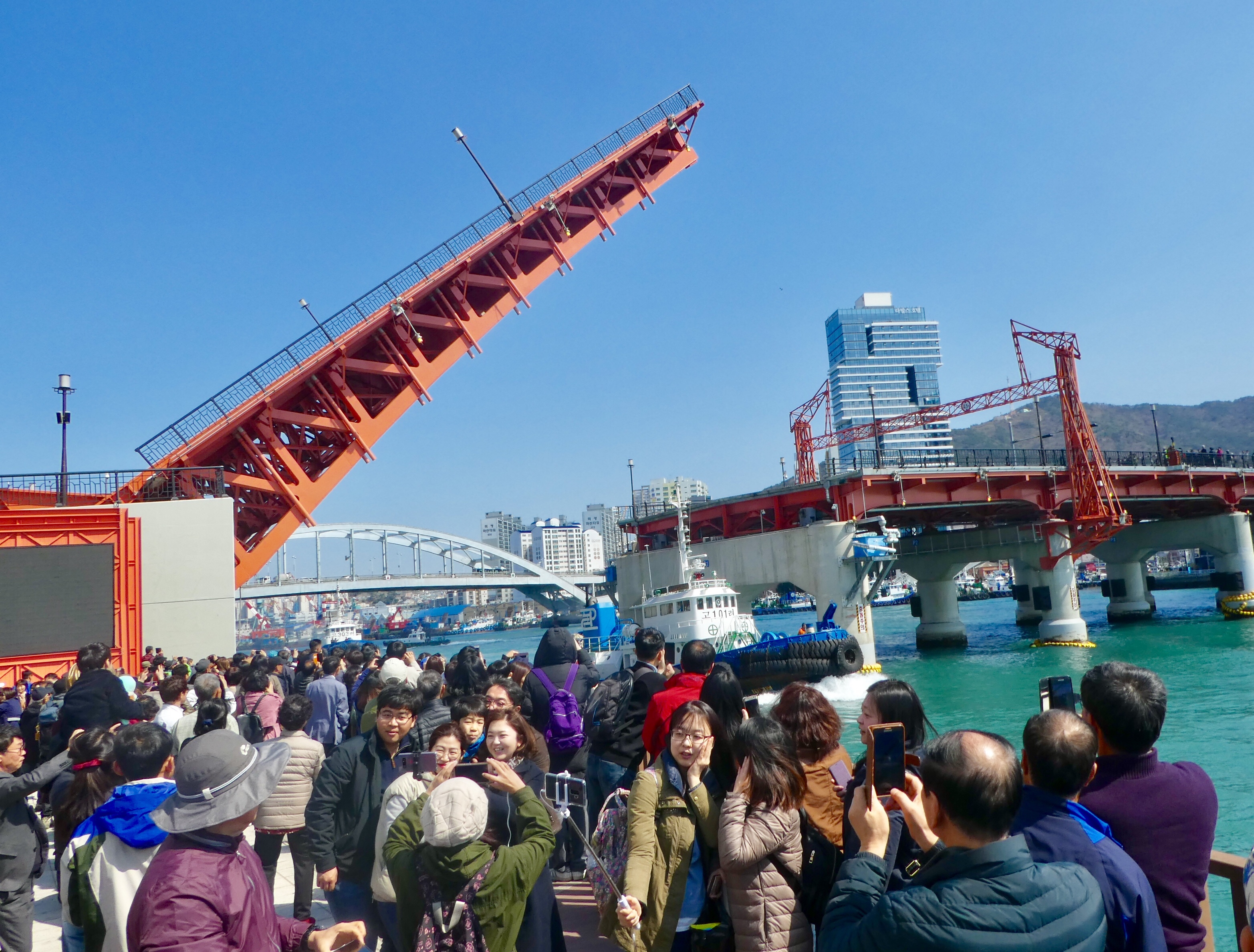
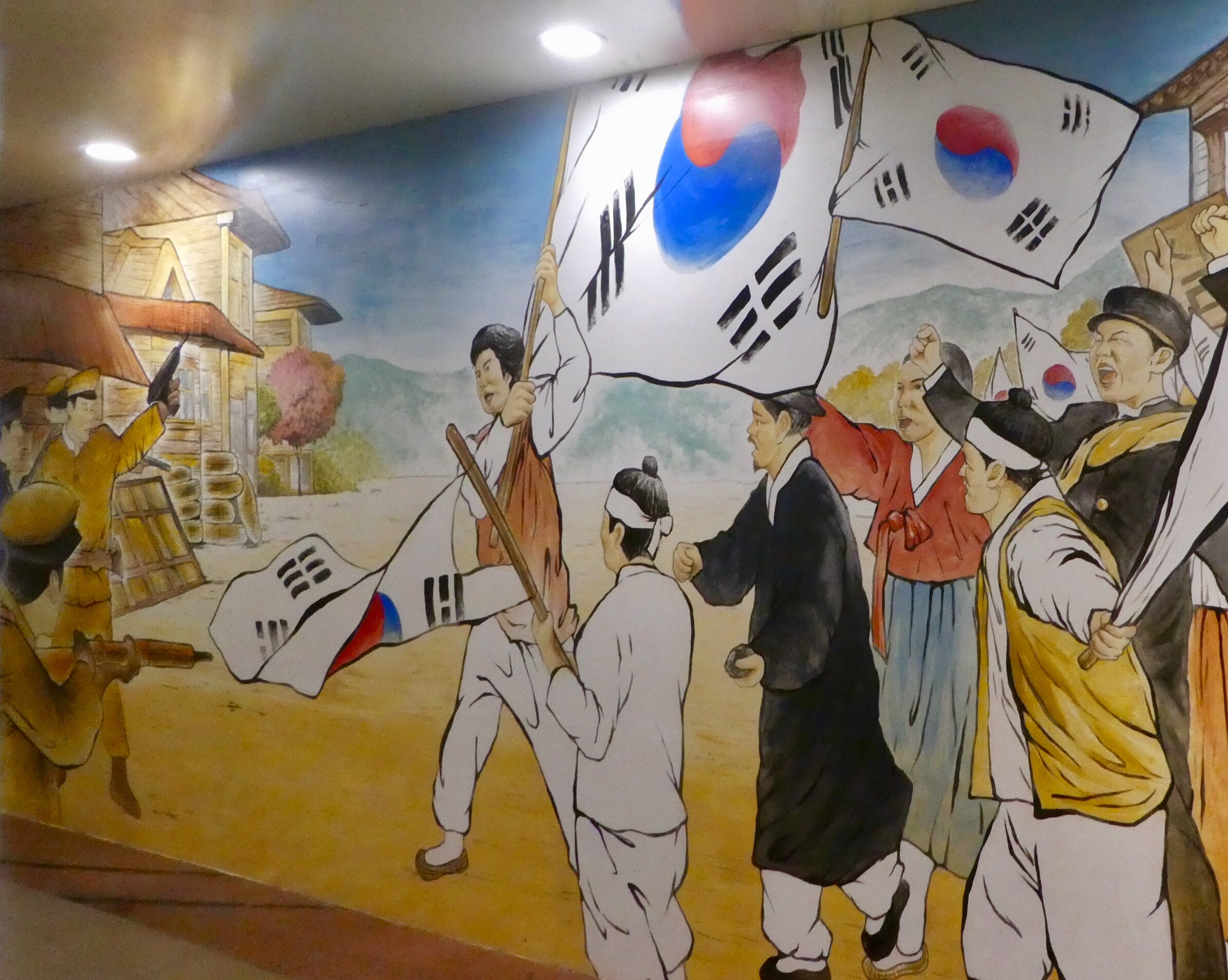
We spent a couple of hours in the nearby Busan Modern History Museum, which focused on Japanese imperialism in Korea. We joined a huge crowd that was watching a drawbridge open to allow ships through. It is only raises once a day at 2 pm. Professional photographers were offering pictures with the bridge in the background. There was music blaring. People were on the ships waving to the crowd like celebrities. 😁 On the way back to our hotel, we stumbled upon a pretty street lined with cherry blossoms.We hope to see more of them after we ferry across the Sea of Japan to Fukuoka.

We’ll write again from Japan. Hope you are well. Love, BnL

Surviving Seoul, South Korea

Dear Friends and Family,

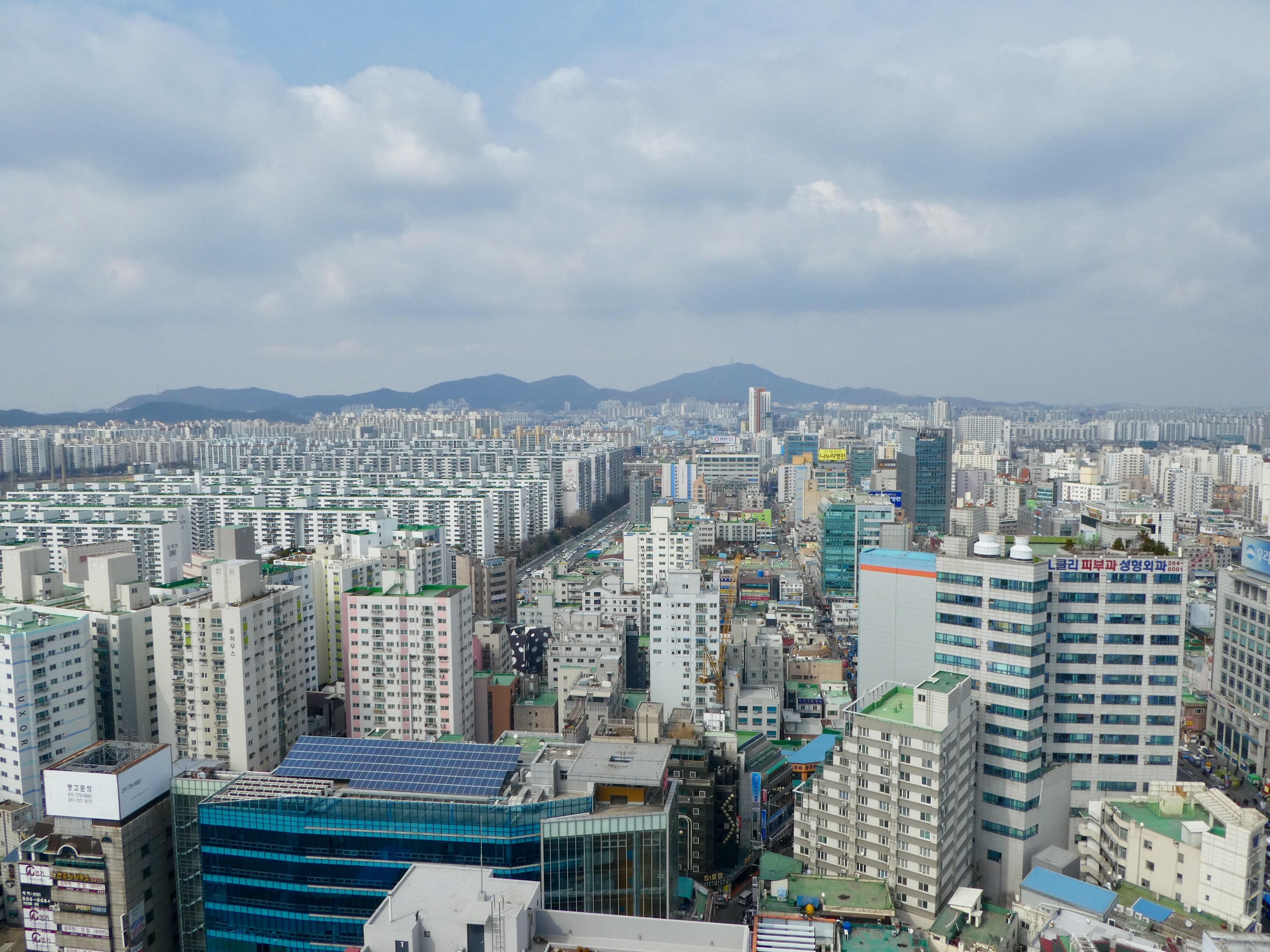
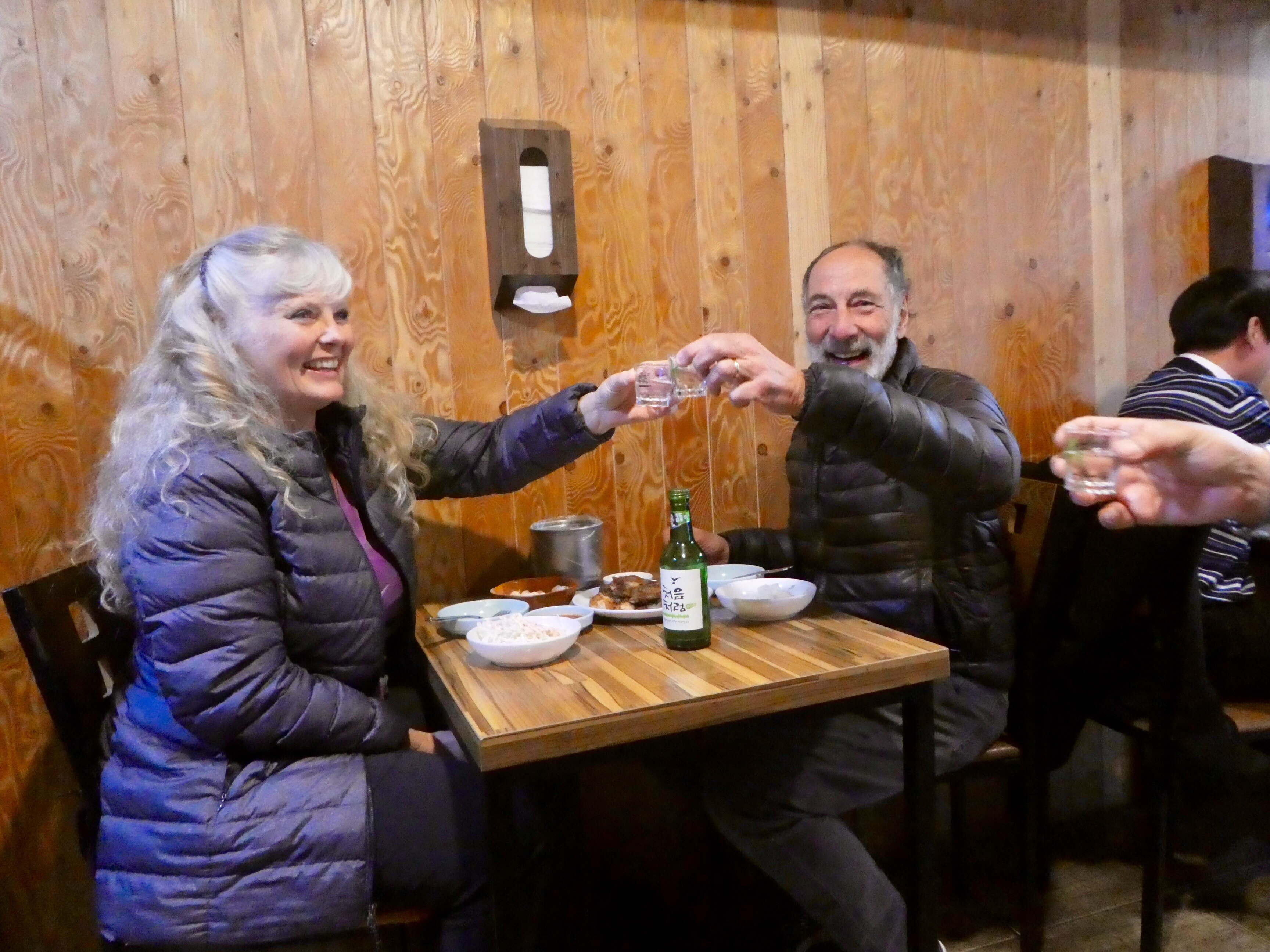
We flew from Taipei, Taiwan to Seoul, South Korea, landing at Incheon International airport. We stayed in Incheon, which at just under 3 million people, is the third largest city in South Korea. After a long day of travel, we crashed just after arrival, around 11:30 pm. Our eighteenth floor hotel room overlooked a sea of pretty nondescript buildings. The next evening, we enjoyed a Korean style BBQ chicken dinner and tried soju, a popular South Korean rice liquor. Our time there was otherwise uneventful. Two days later we arrived in the capital city, Seoul, South Korea.

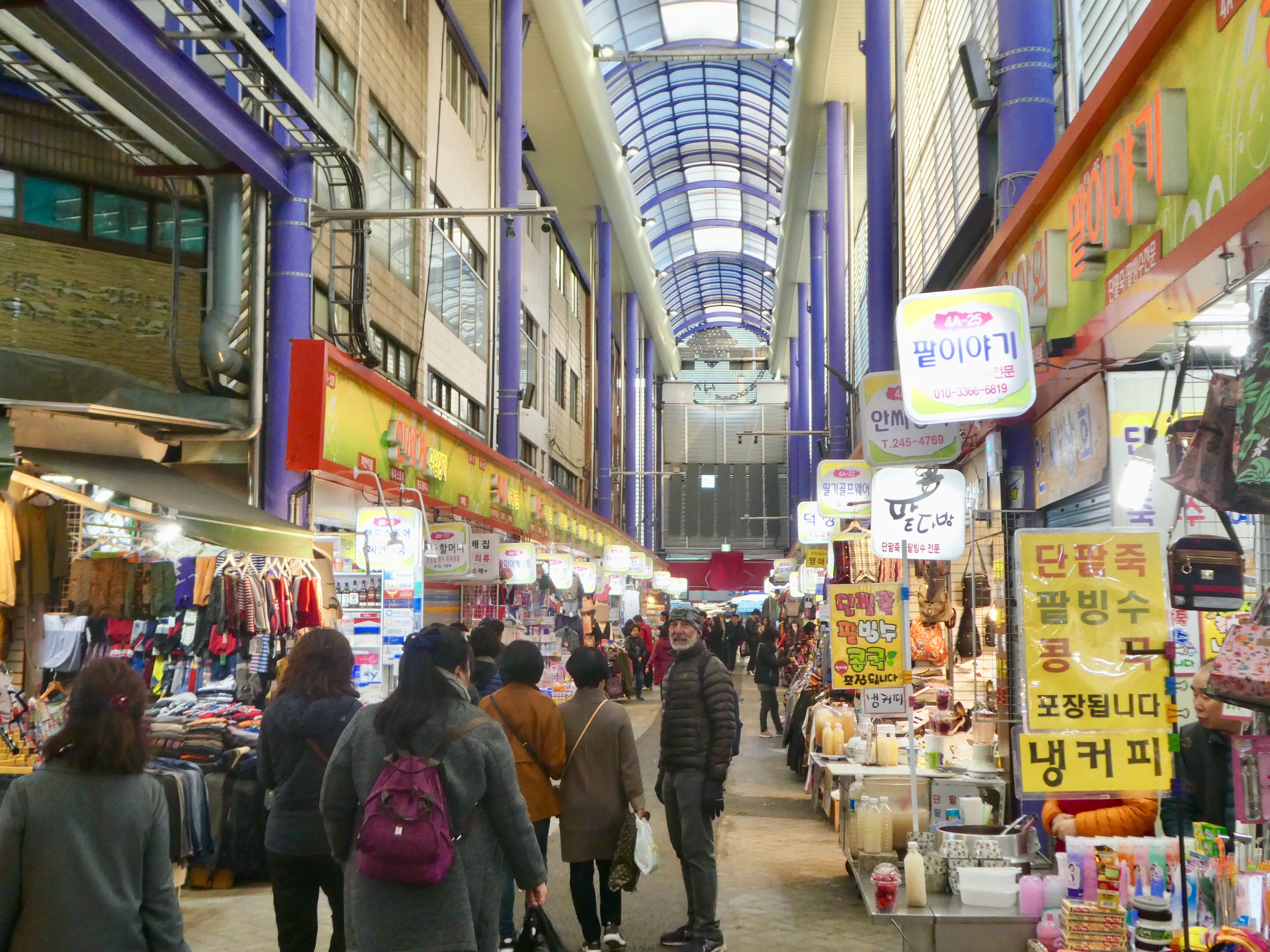
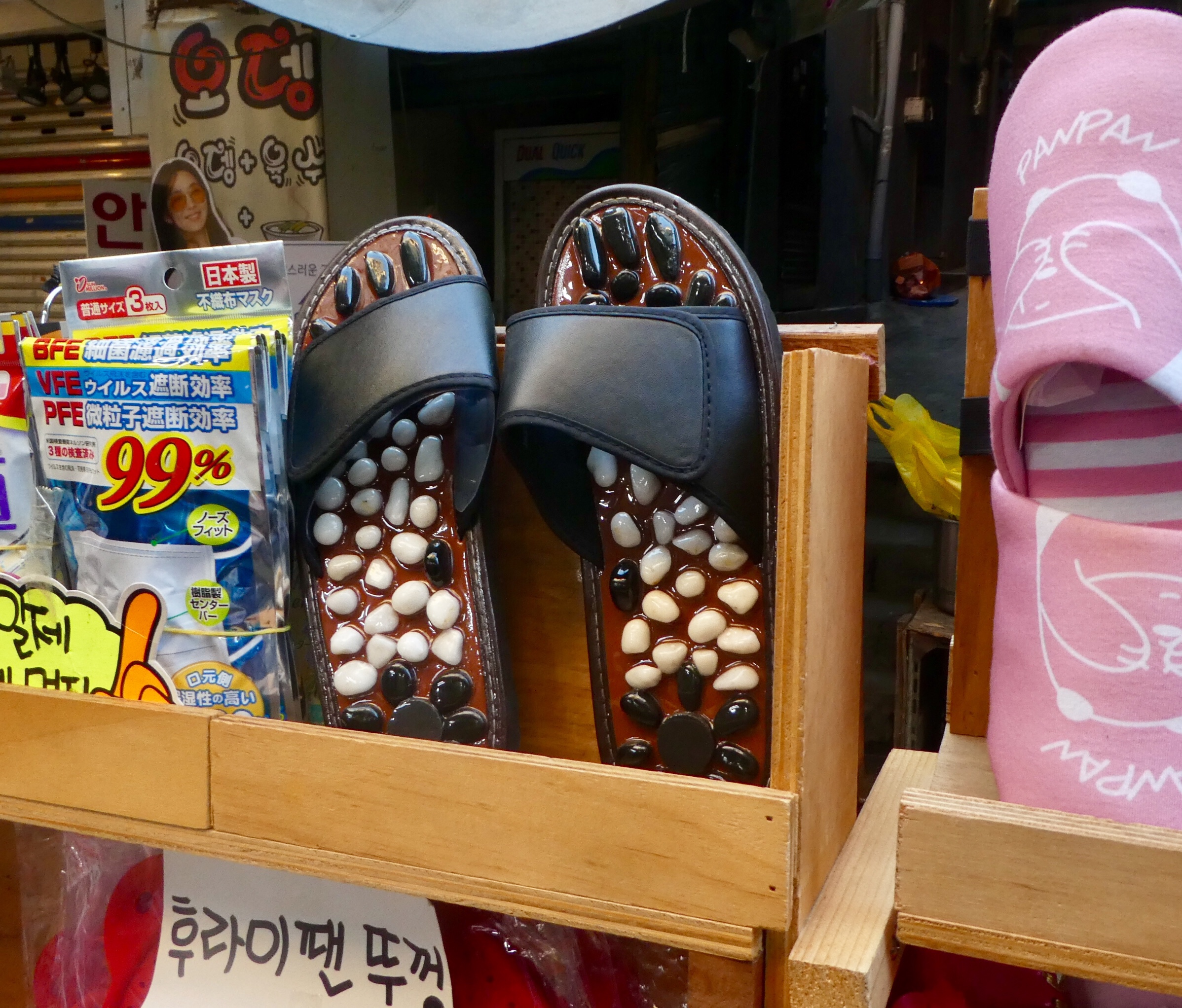
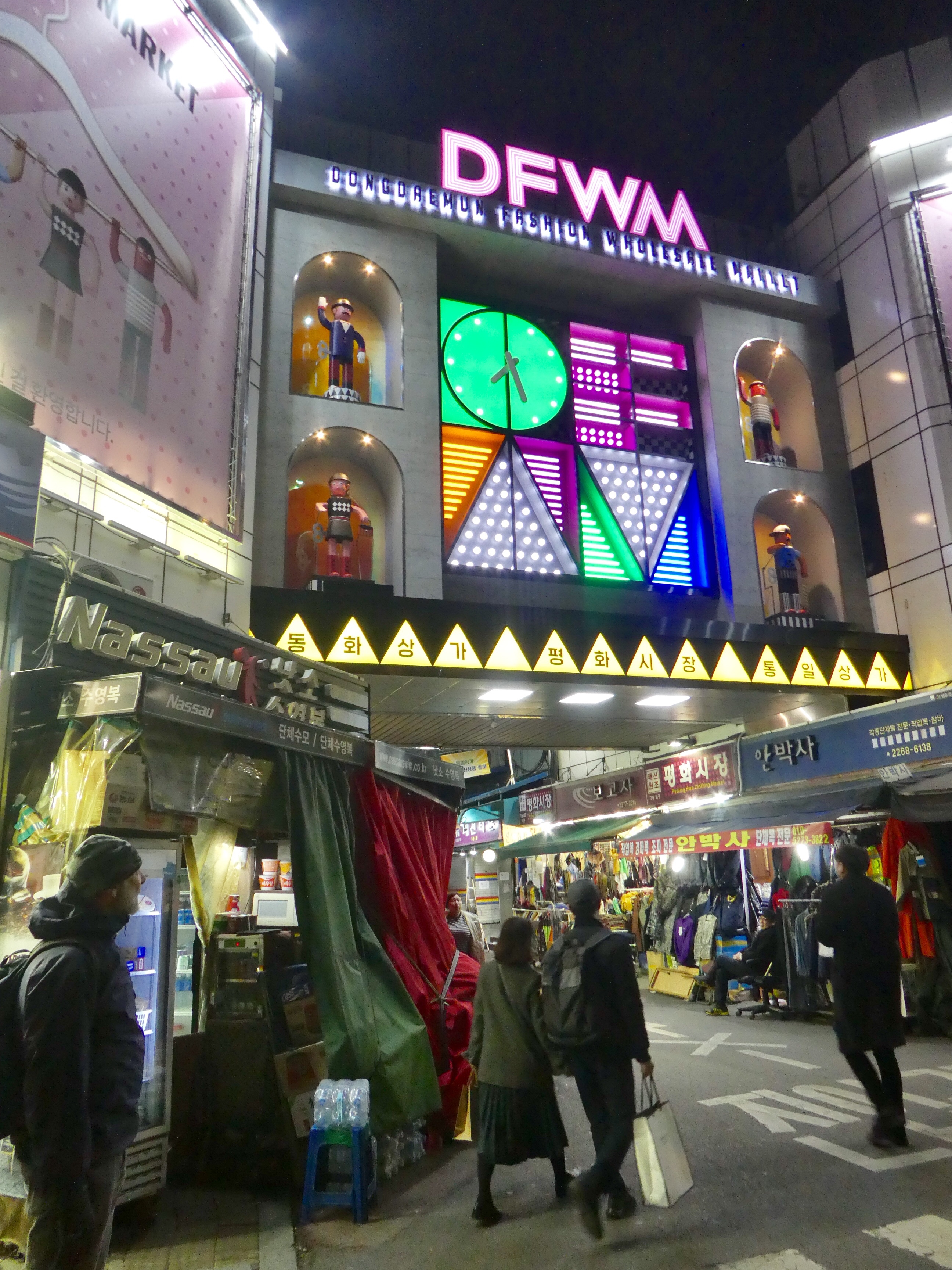
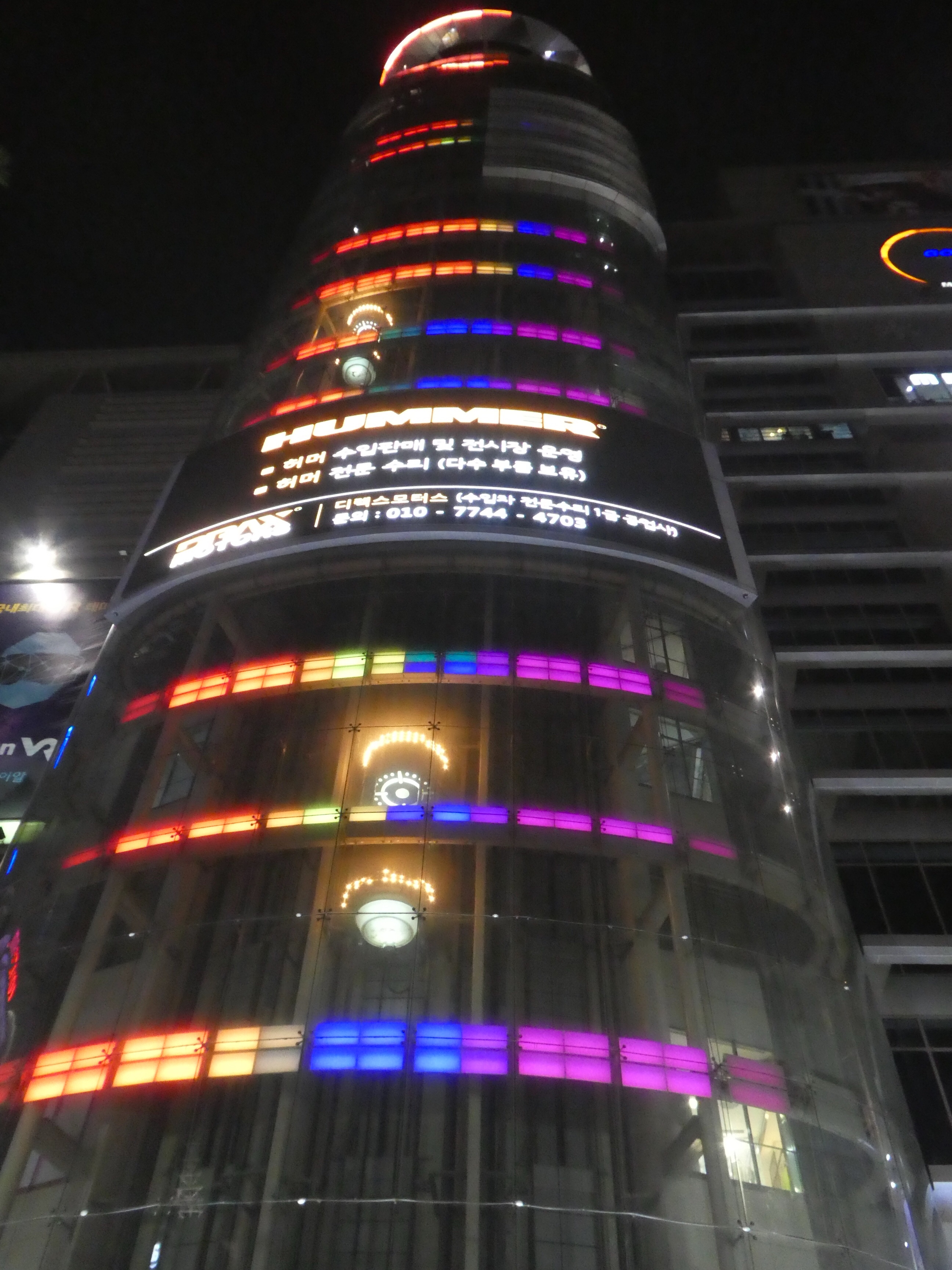
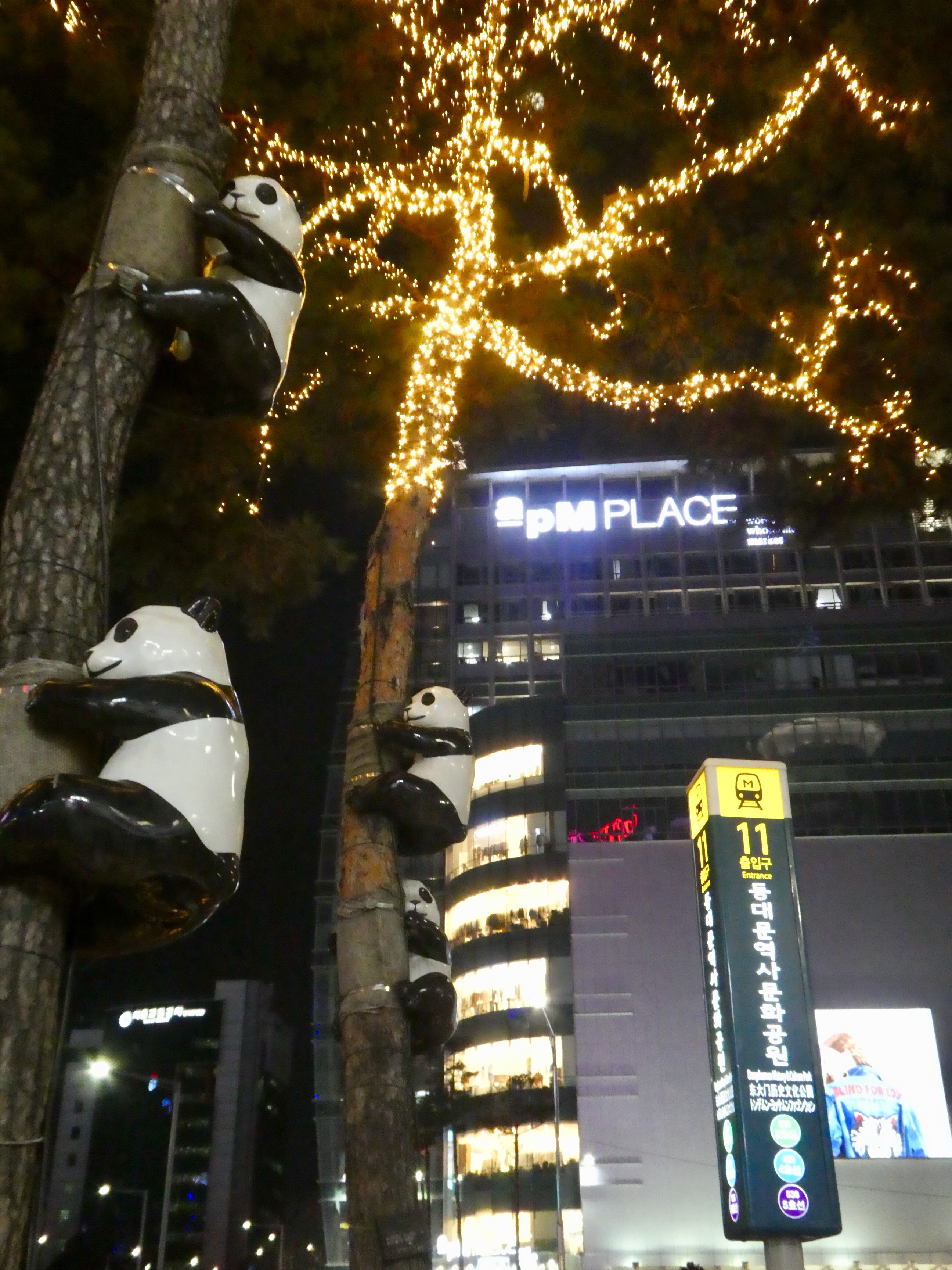
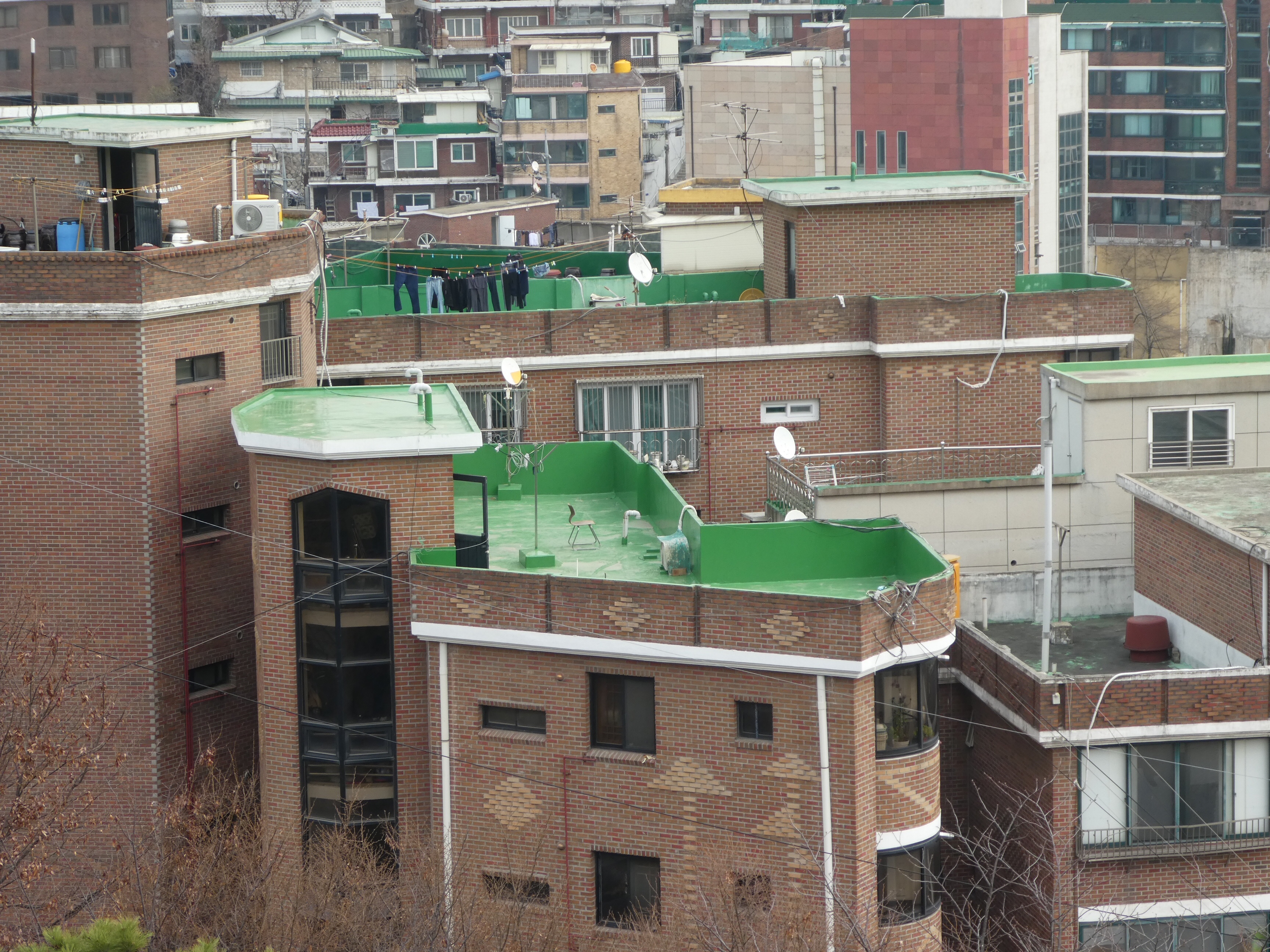
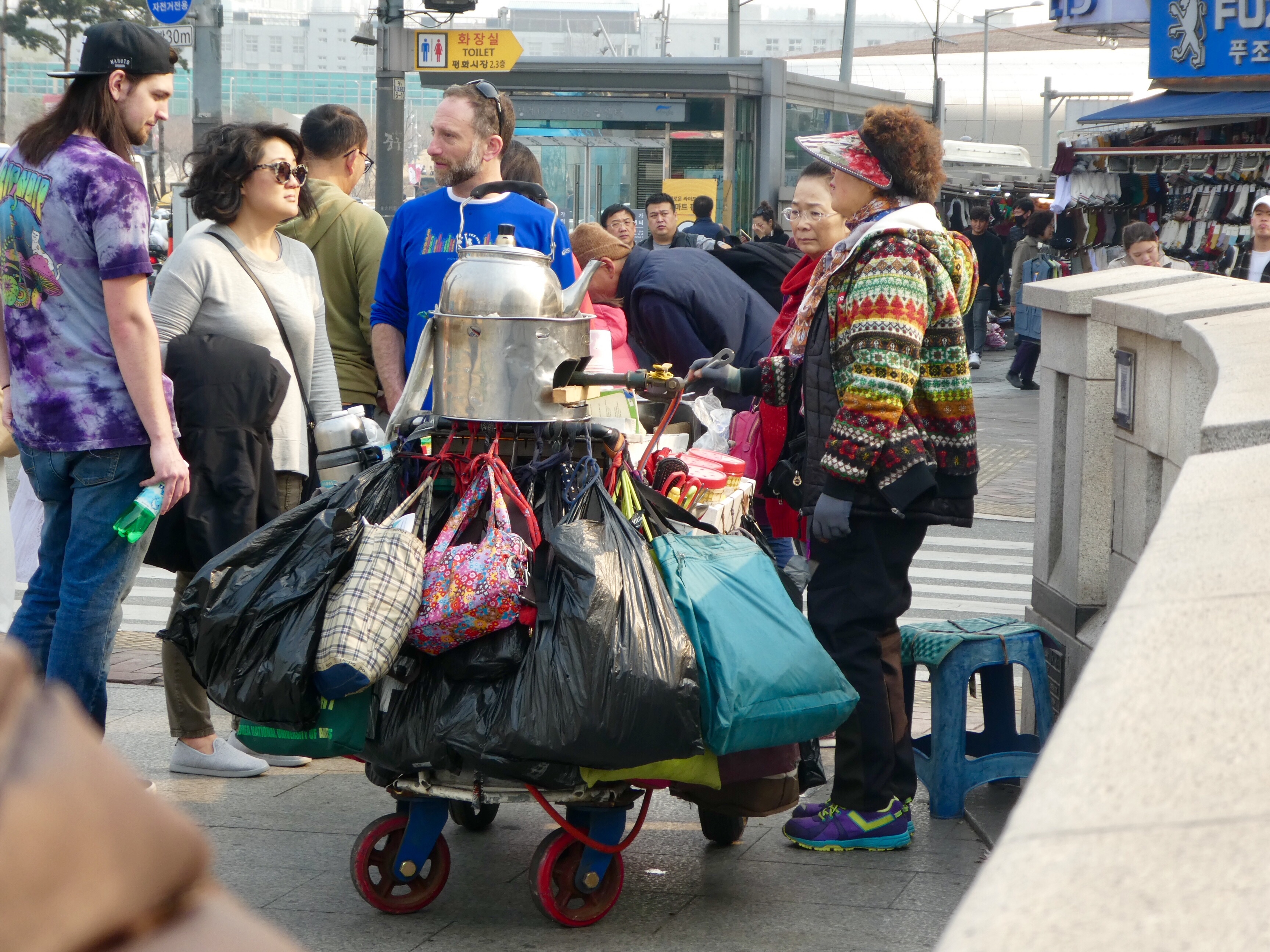
Seoul has a resident population of 10 million, but a daily population of around 25million! Compare this with Los Angeles at 4 million, or New York City, at roughly 8 million. We stayed in Dongdaemun, the hub of Seoul, like Broadway is the hub of New York City. There were numerous high-end fashion malls there, brimming with expensive name-brand and designer clothes, teeming with well-dressed, fashion-conscious shoppers. We rode escalators to the top of one such mall, “Doota,” and immersed ourselves in the madness. There were two floors just dedicated to perfumes, face creams, powder, and make up. There were gadgets to exercise the face, “Facial fitness Pao,” ($USD 224!) A large video demonstration made us chuckle. Just thirty seconds, twice a day, will firm your sagging jowls in no time! A salesclerk zipped over to assist us, but we just lifted our jowls in a polite smile and said “No, thank-you!” Another floor was filled with expensive giant sunglasses. There were floors with seas of shoes: platform shoes, flats, spiked heels, name brand tennies, boots up to your hoo-ha, rain boots, and sensible shoes. Rhinestones studded everything imaginable. There were practical business suits for men, and men’s suits that shimmered. There were jeans shredded in just the right places and dresses and blouses in every style . We were exhausted after exploring this trendy mall, but it was pretty trippy for a one-time visit.

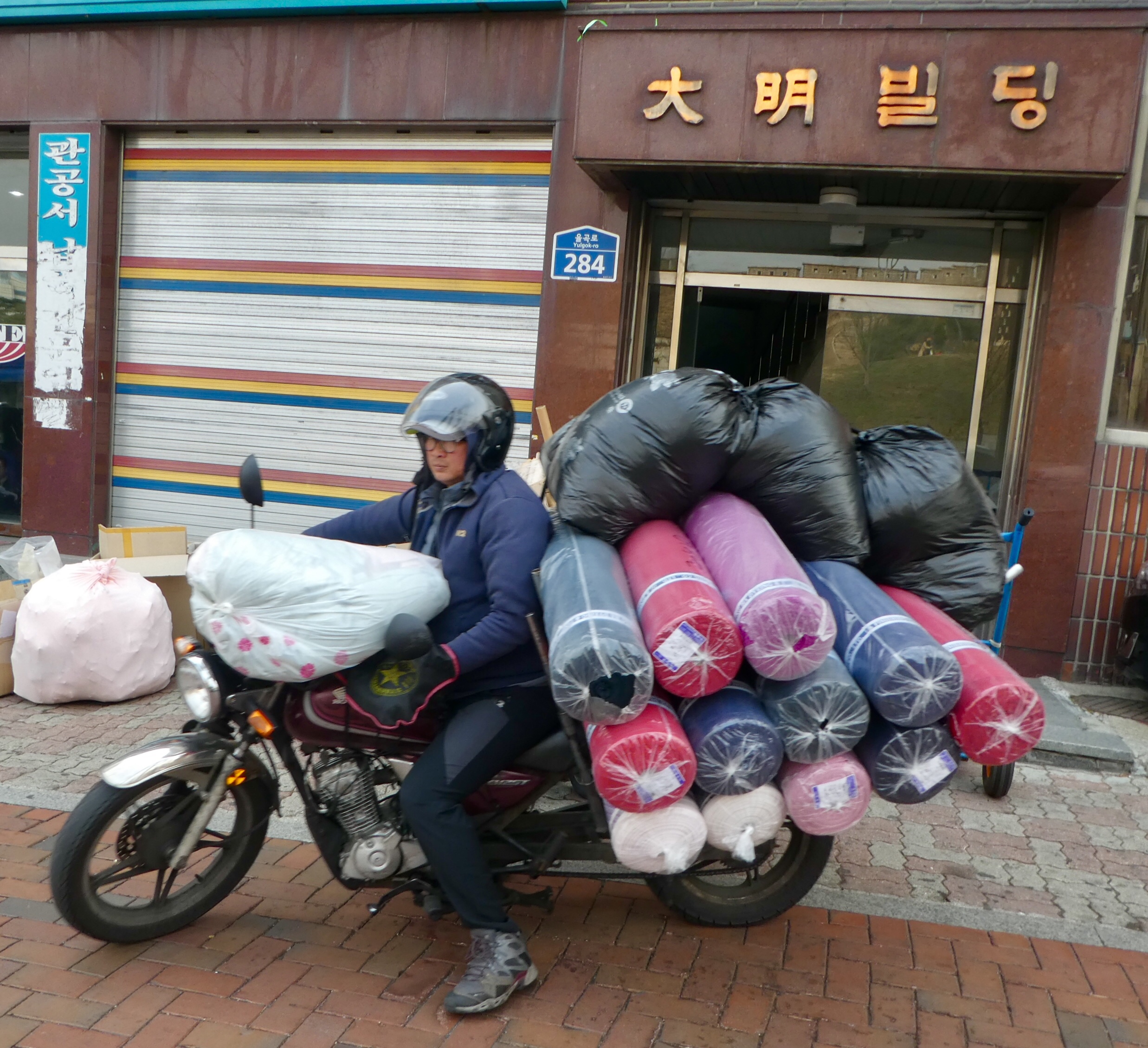
The wholesale market malls are another side of this fashion frenzy. They are not fancy, but talk about busy! During the day, things are pretty quiet, but at night, the wholesale buyers/sellers PACK the stores. The halls are barely passable, piled high with stacks of bagged clothing, labeled and ready for pick-up and delivery.

Koreans seem really shy. They seldom made eye contact with us or with each other. They don’t usually even acknowledge the presence of strangers. Several times when sharing an elevator ride, Koreans stood facing a corner, rather than risk interacting with us. Locals apparently avoid us because they mostly do not speak English, and we don’t speak Korean. We met a few people willing and able communicate, including a young man fluent in English who was forced to return to Korea for two years of mandatory military service. We would have felt lonely if we didn’t have each other.

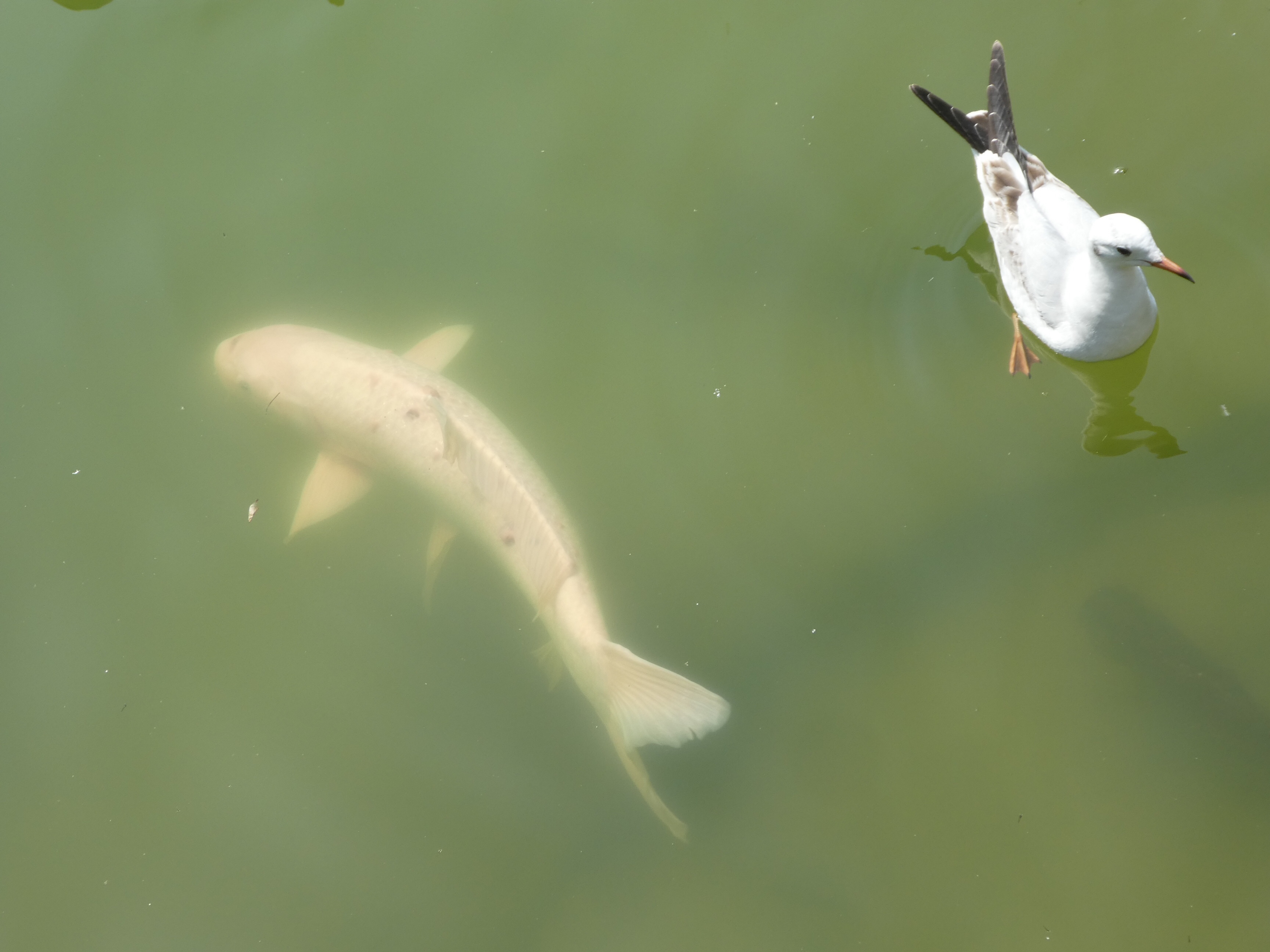
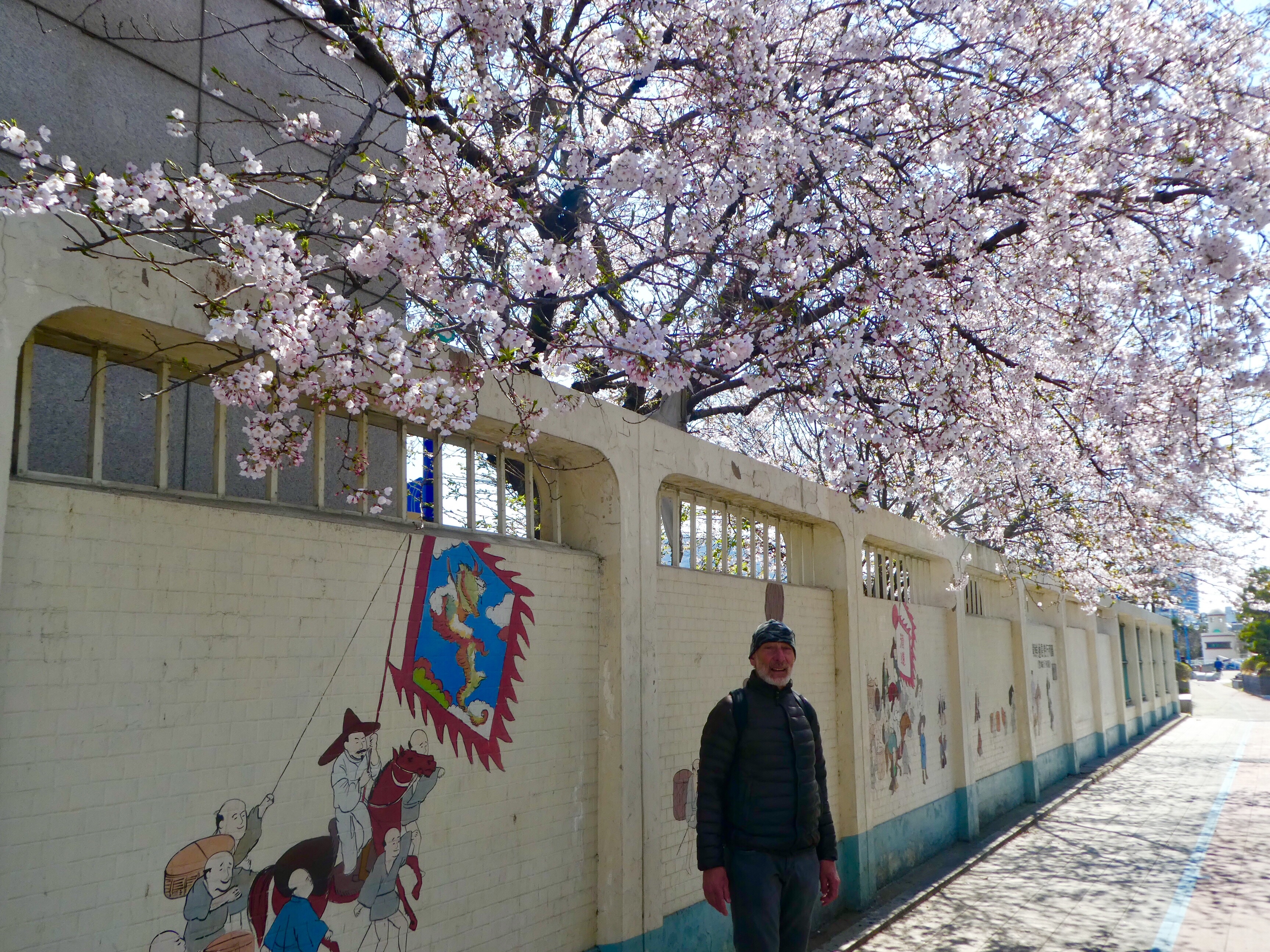
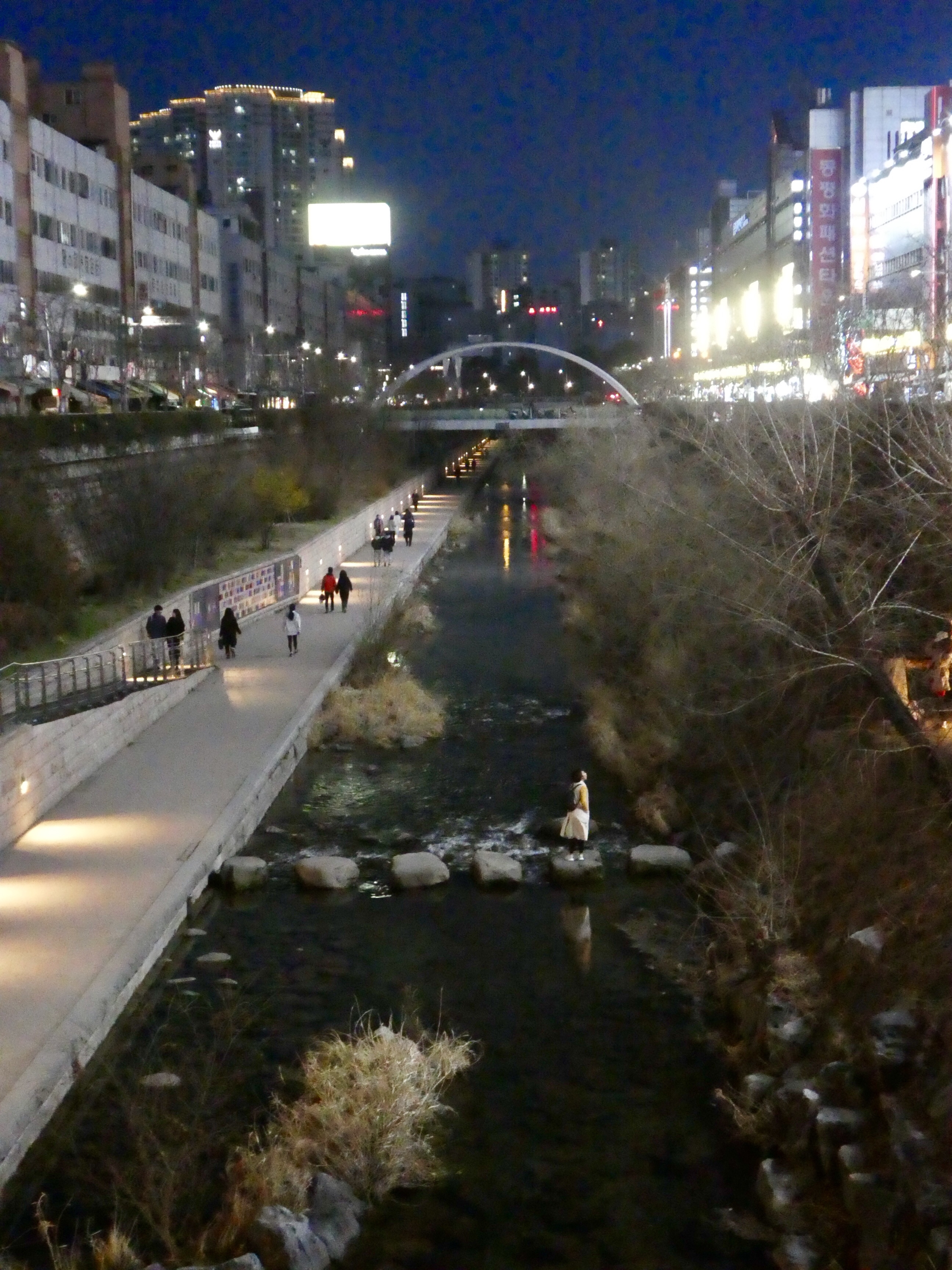
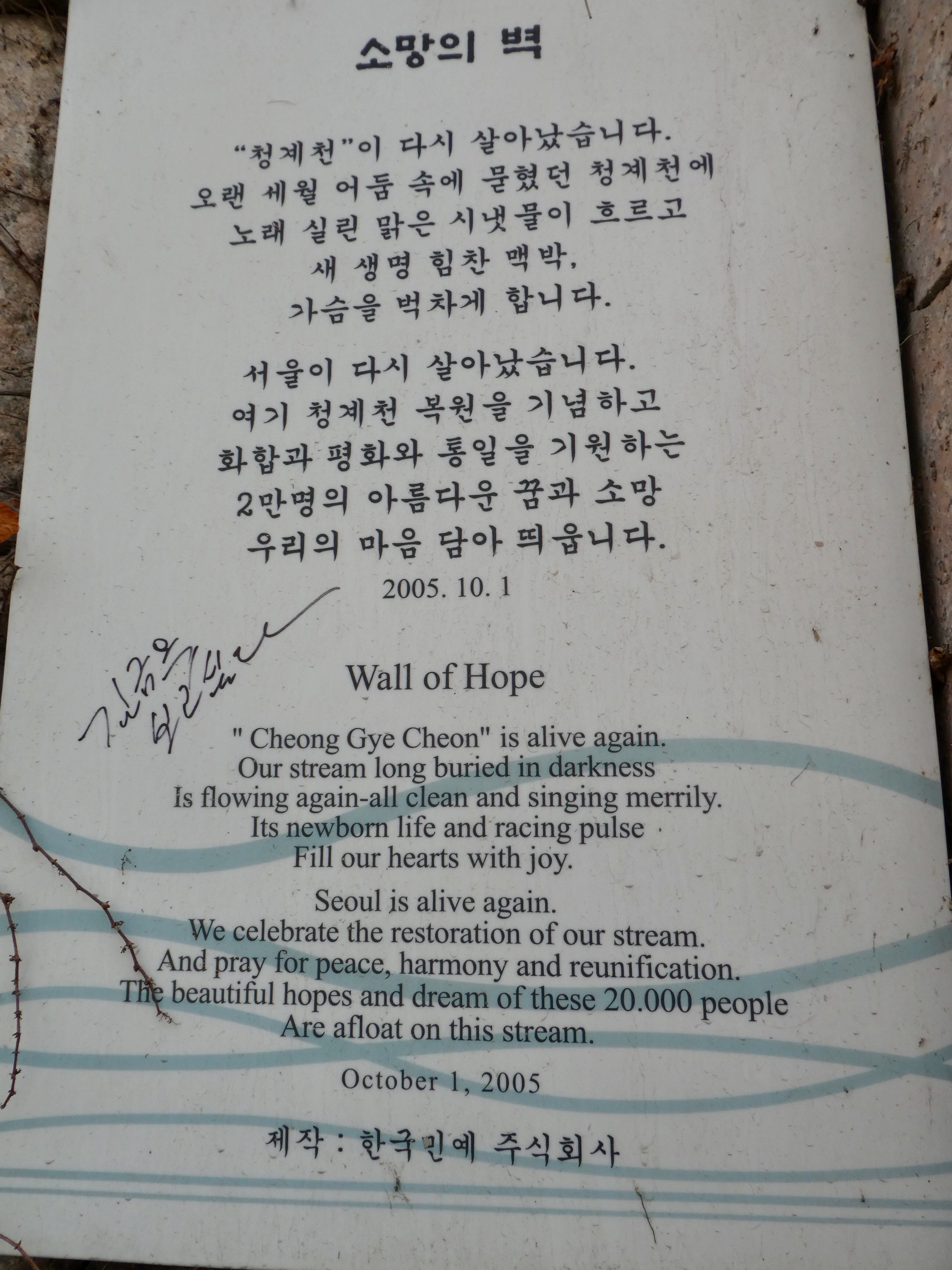
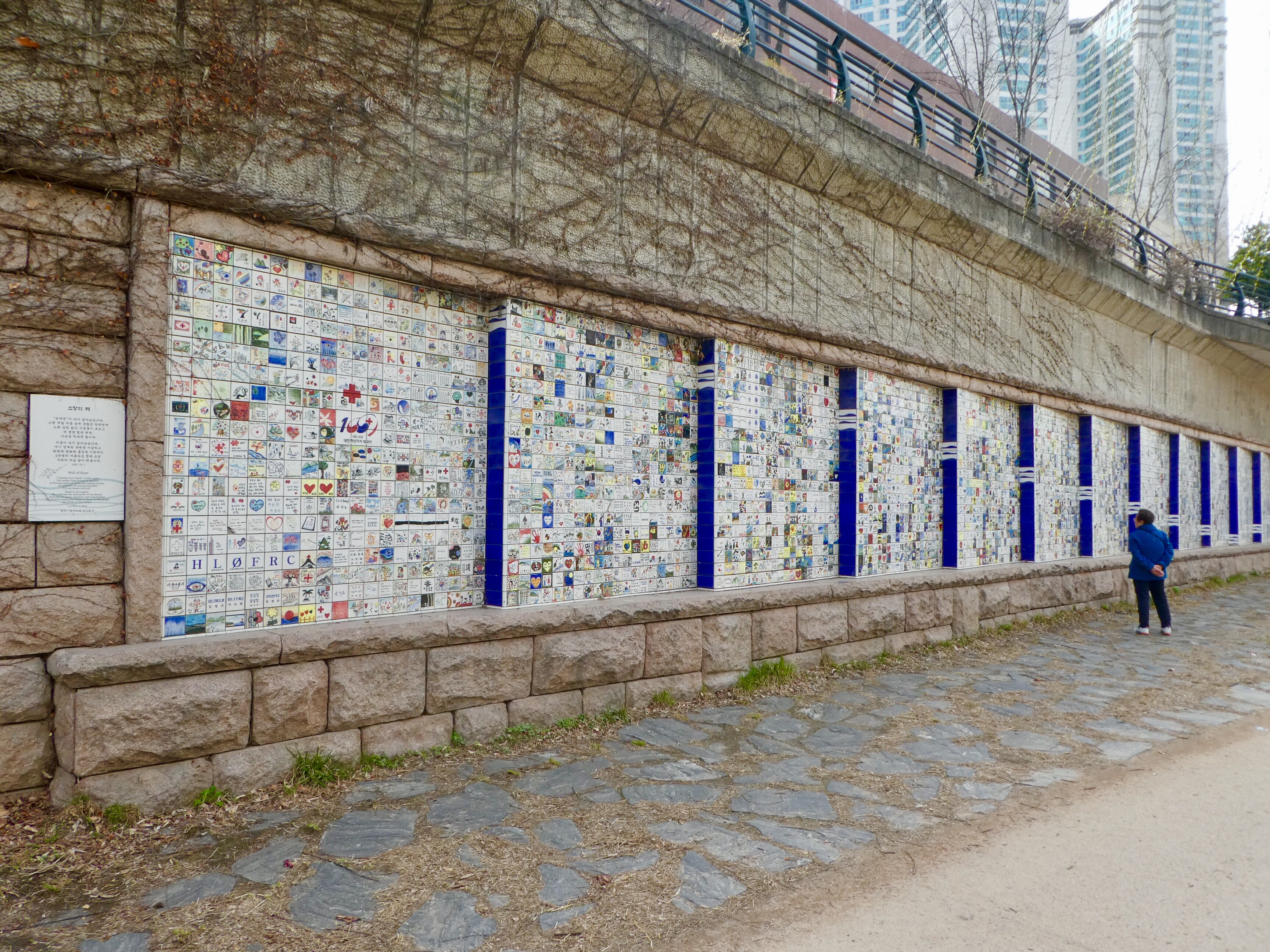
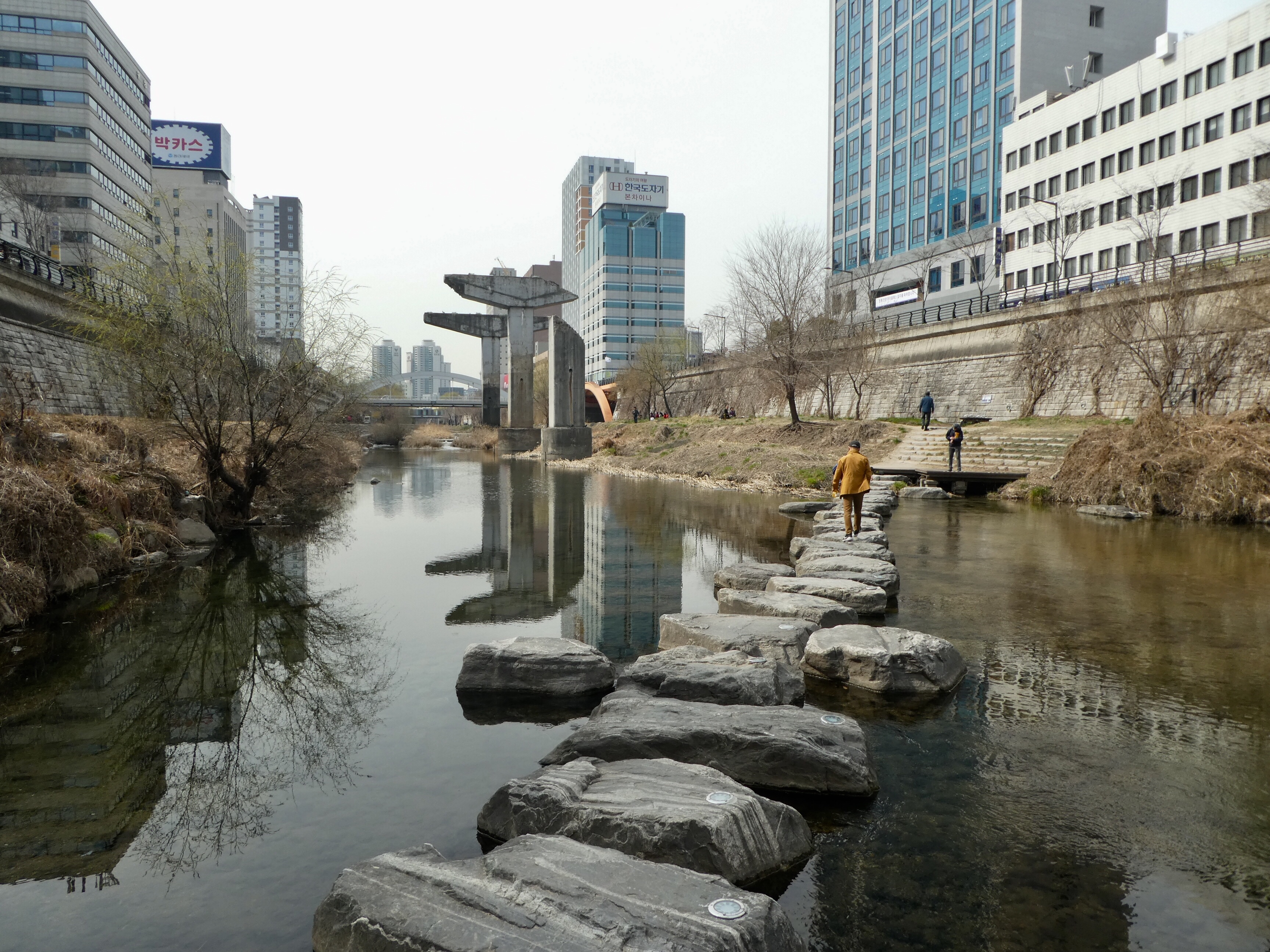
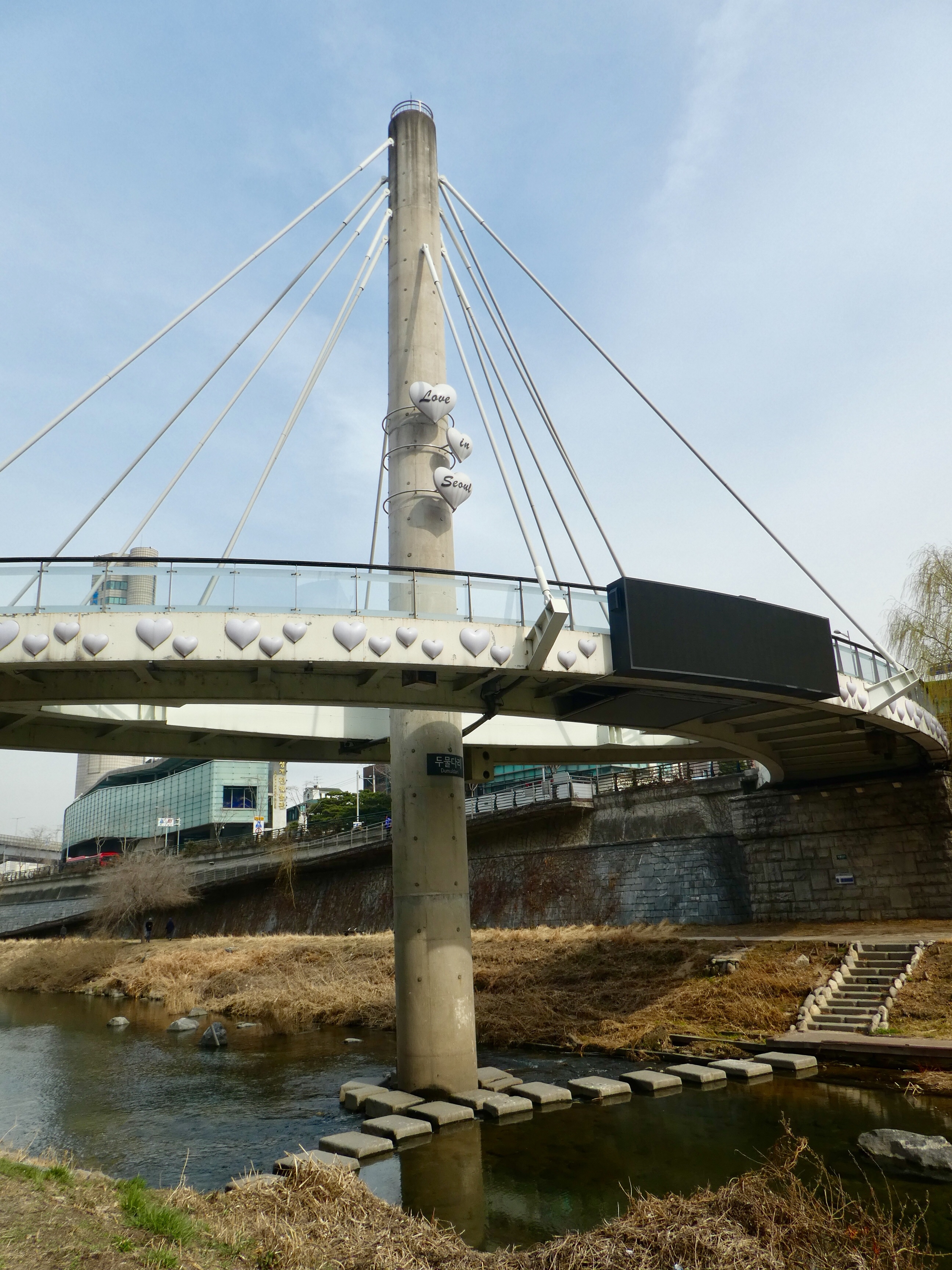
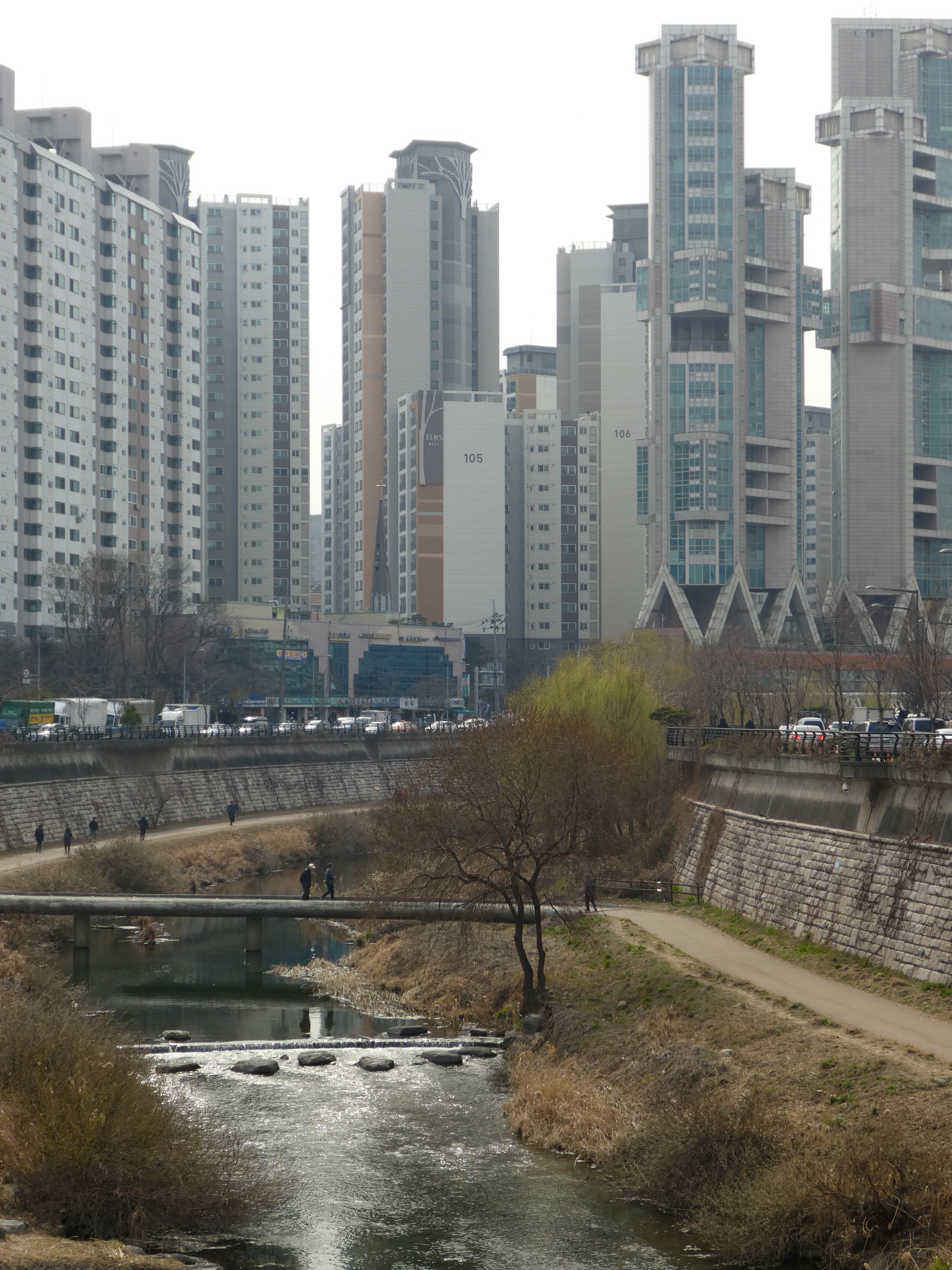
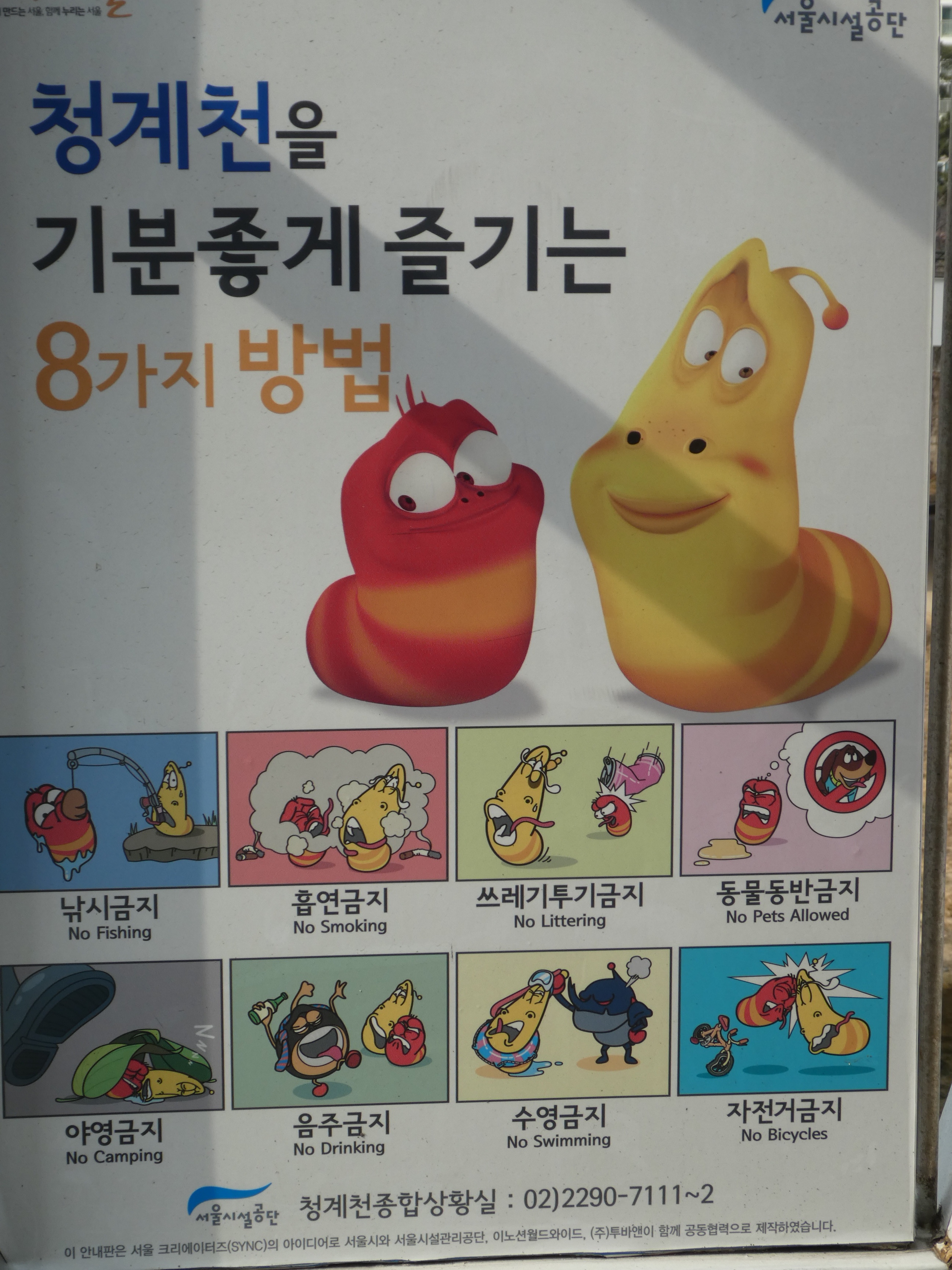
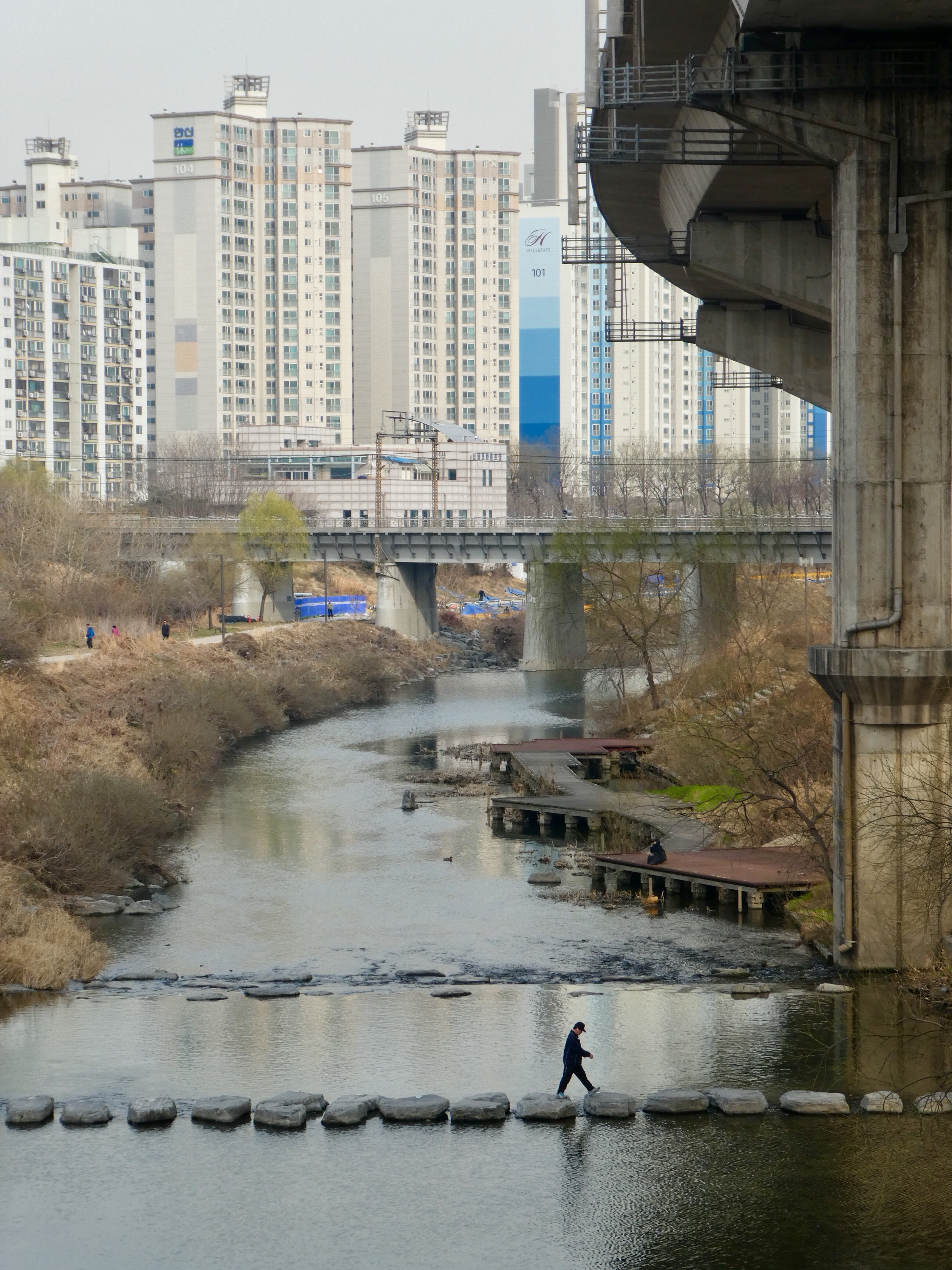
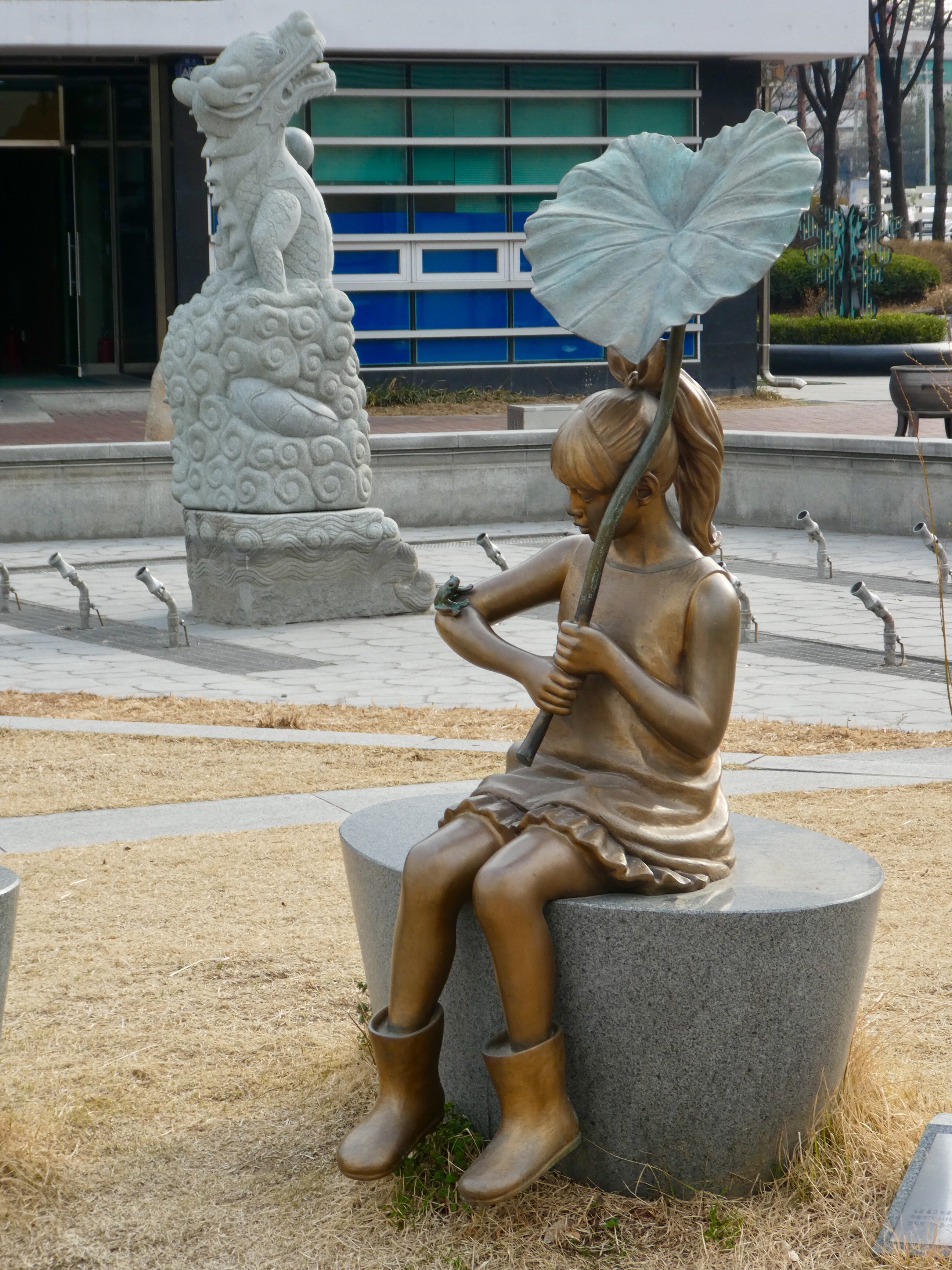
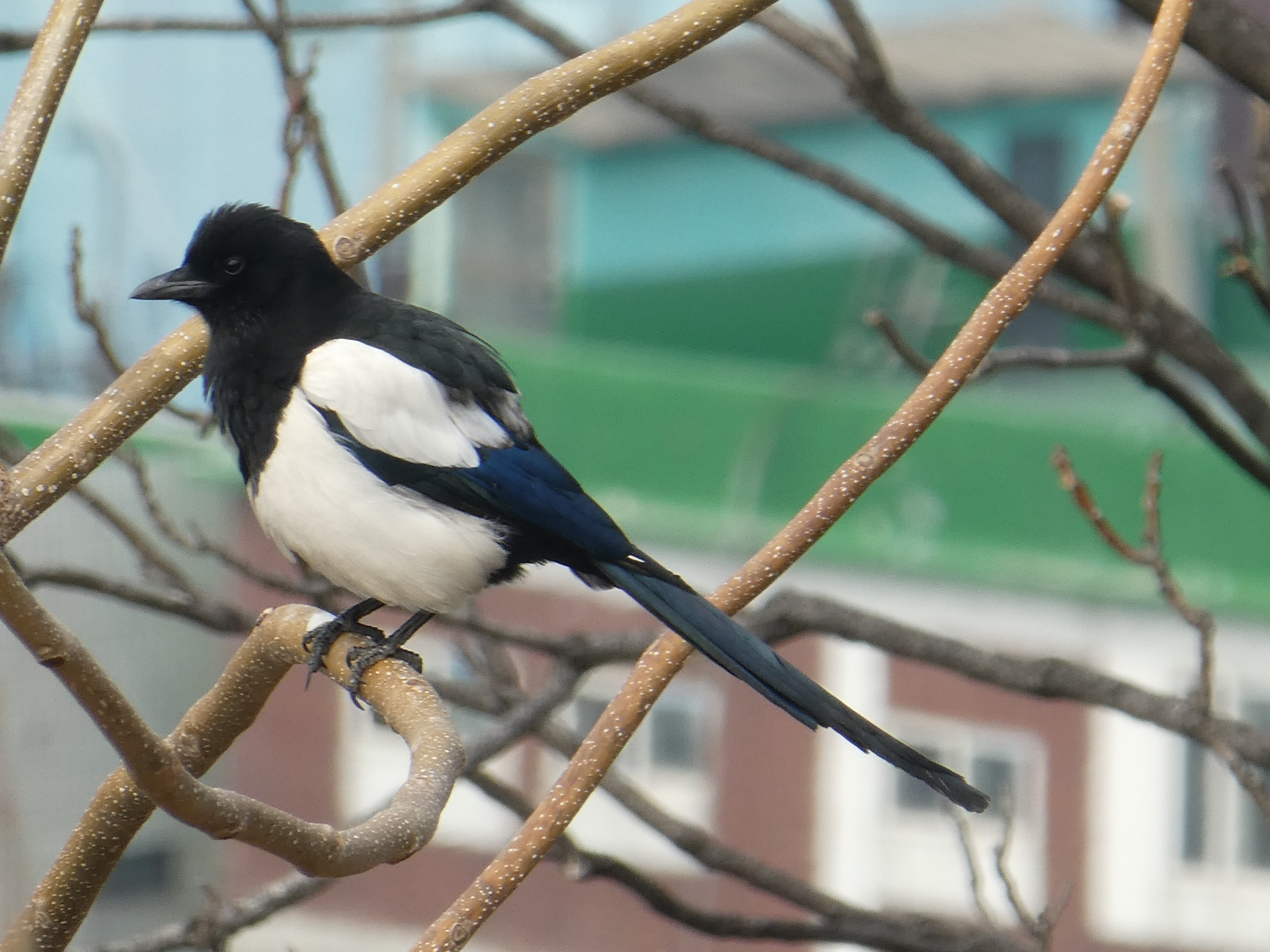
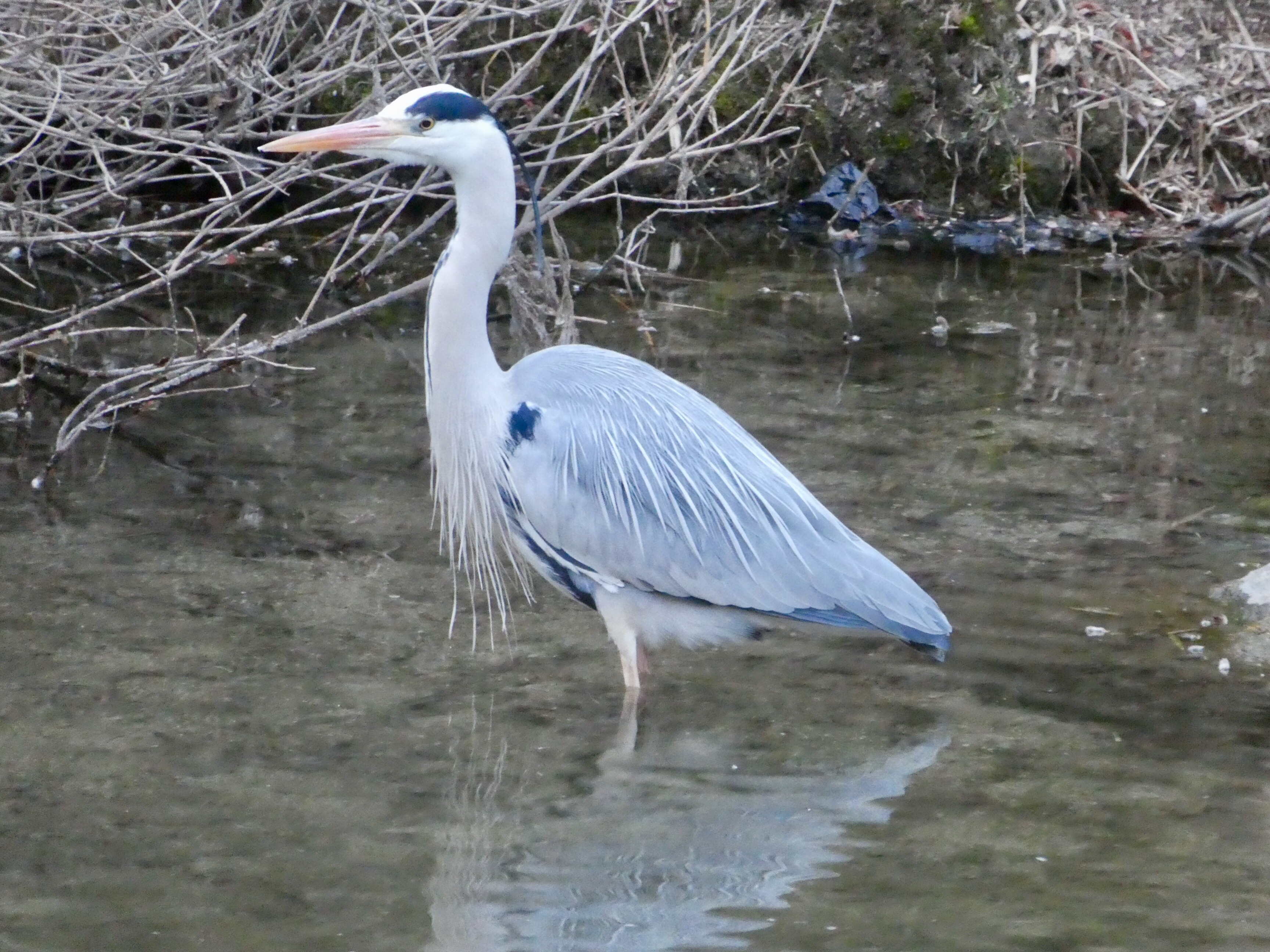
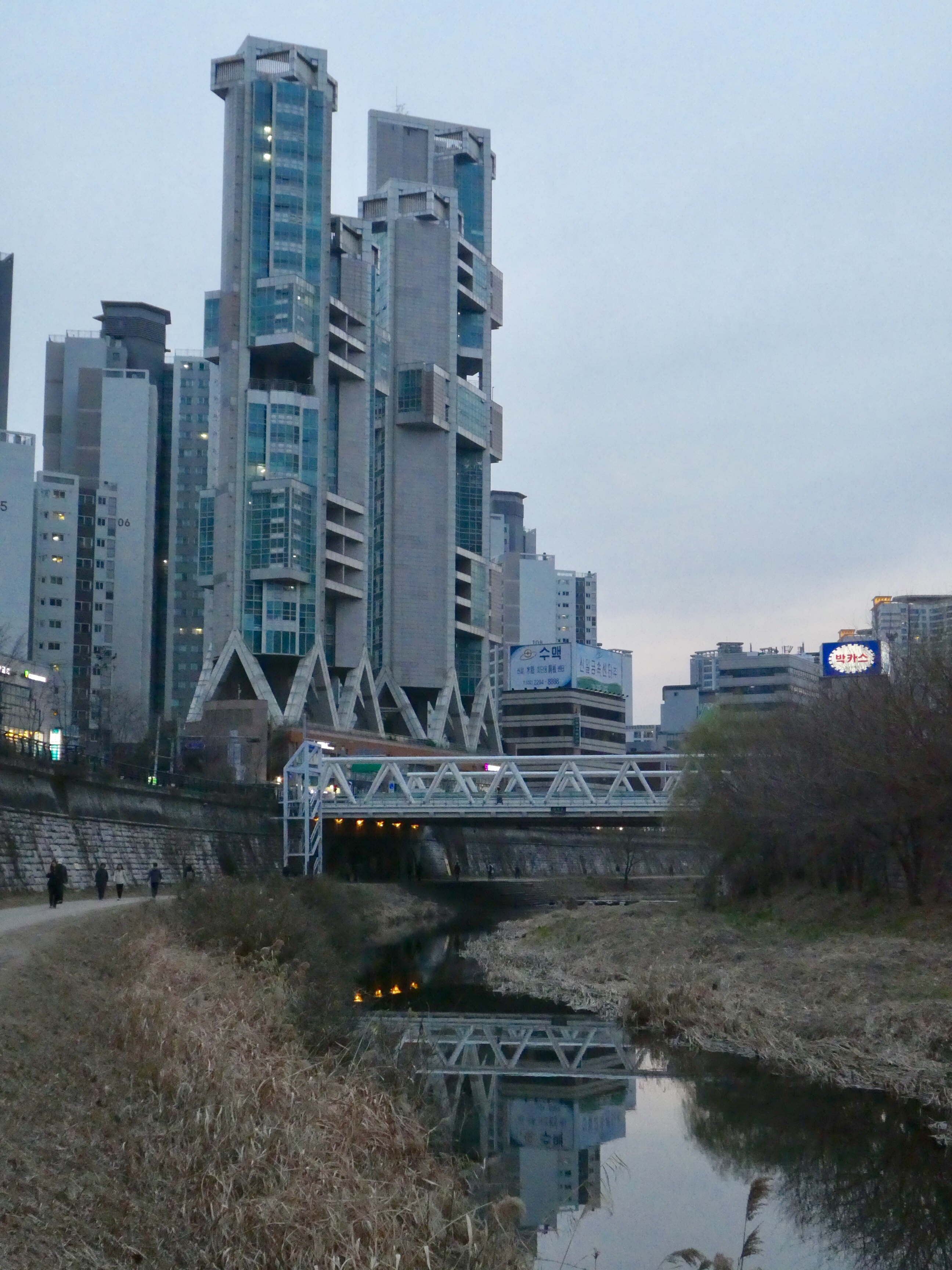
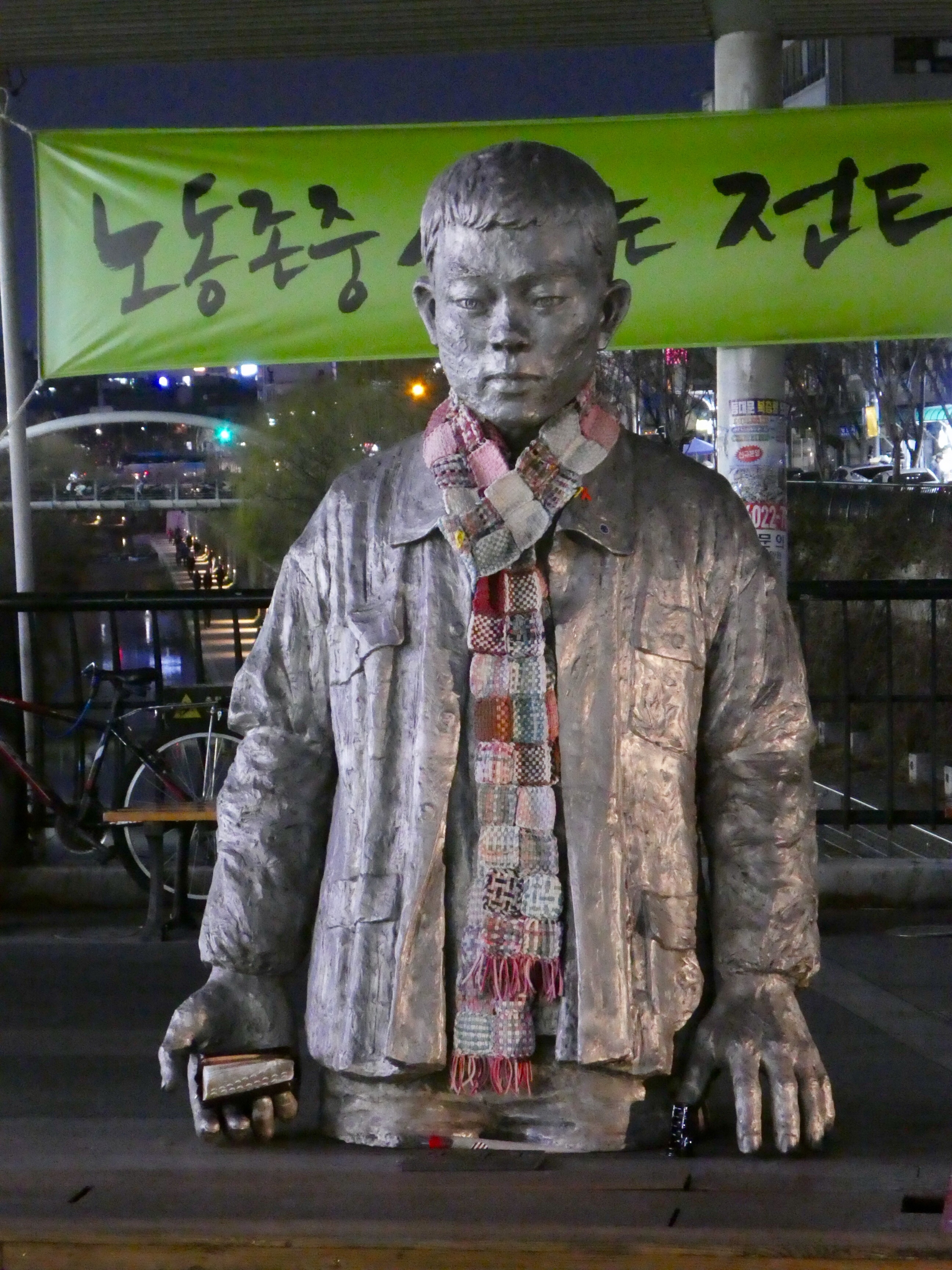
We enjoyed taking long city walks together. It was easy to walk along the 11 km Cheonggyecheon stream that runs through Seoul and find our way back to the downtown area and our Toyoko Inn hotel. The stream flowed during the Joseon Dynasty (1392-1910), but was later covered by an elevated highway and neglected. The city of Seoul tore down the highway and restored the stream to reintroduce nature and remind residents of their cultural heritage. We saw lots of coy fish, magpies, the national bird of South Korea, and a beautiful grey heron. The stream is lined with a nice pedestrian path. There are large flat stepping-stones across the water here and there, bridges, statues, and decorated stretches of wall. It is well-lit and patrolled after dark.

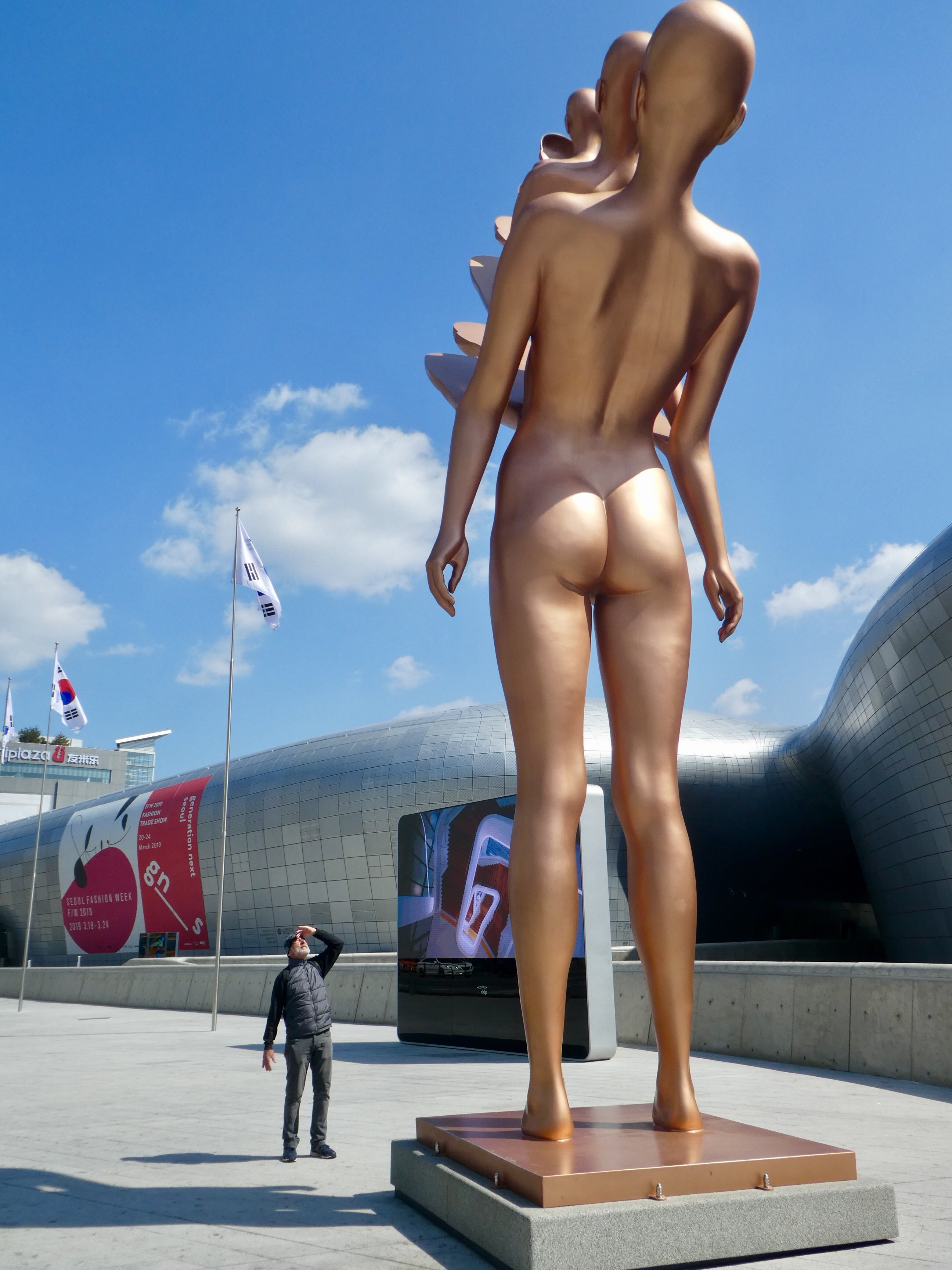
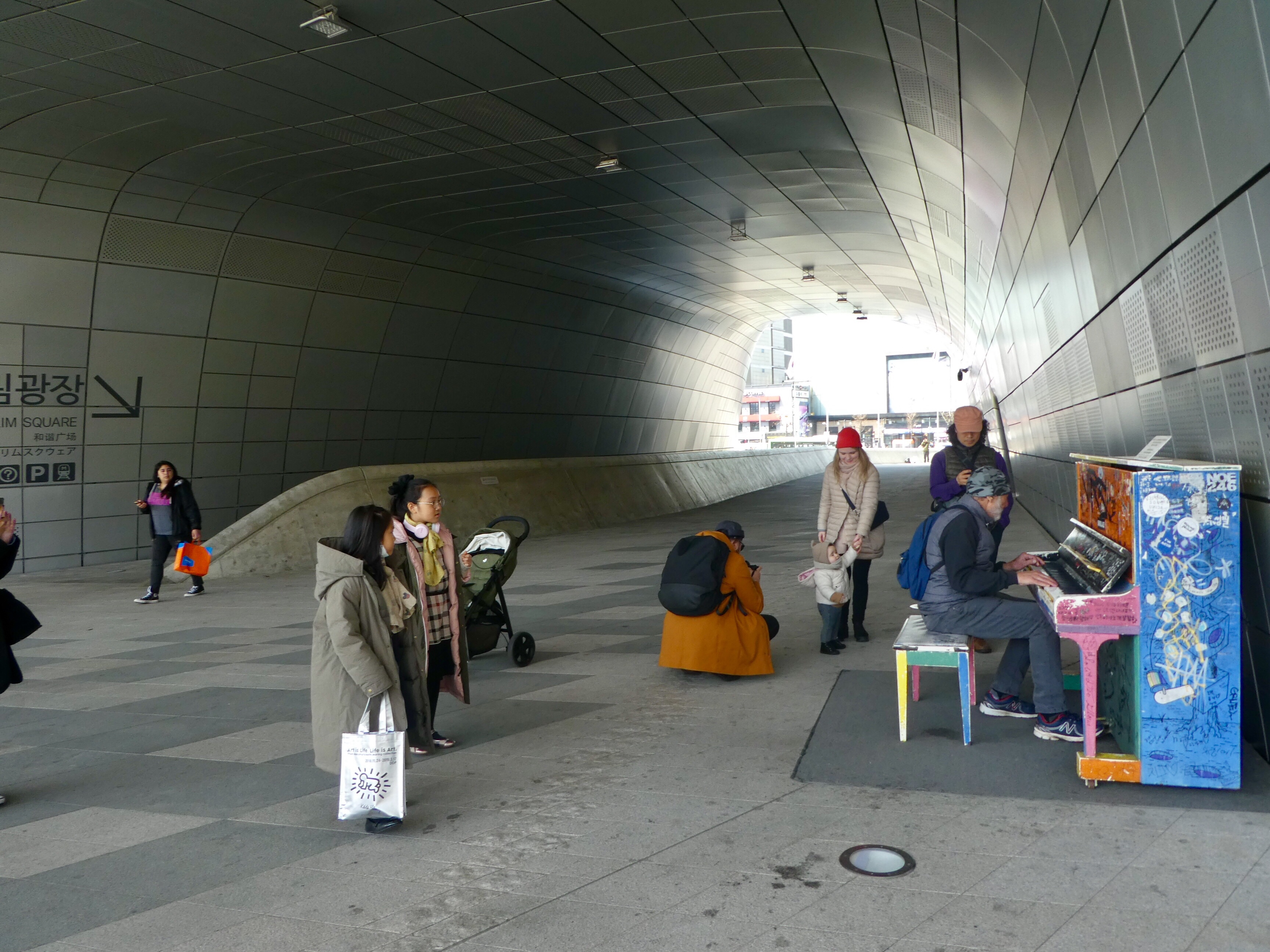
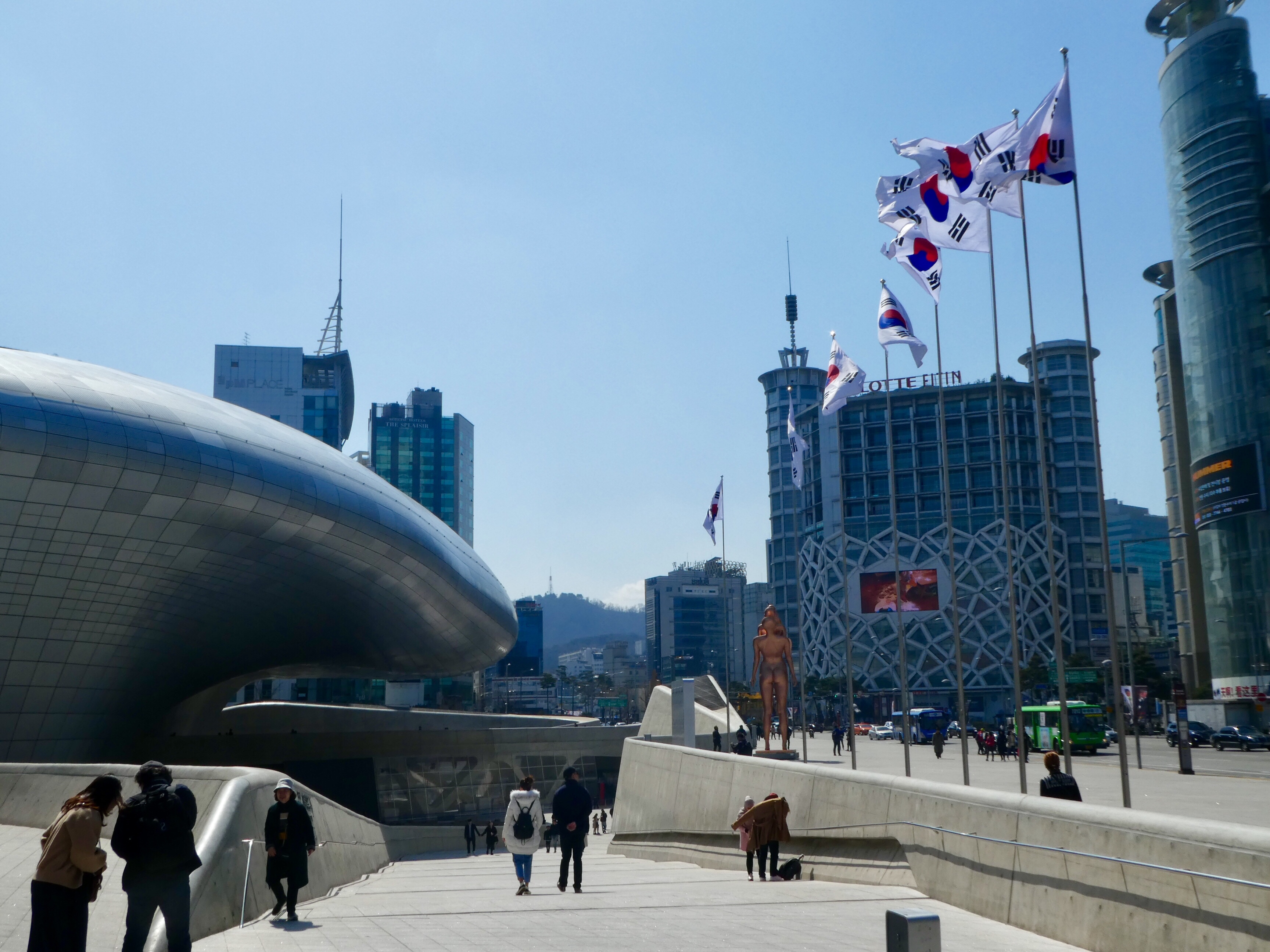
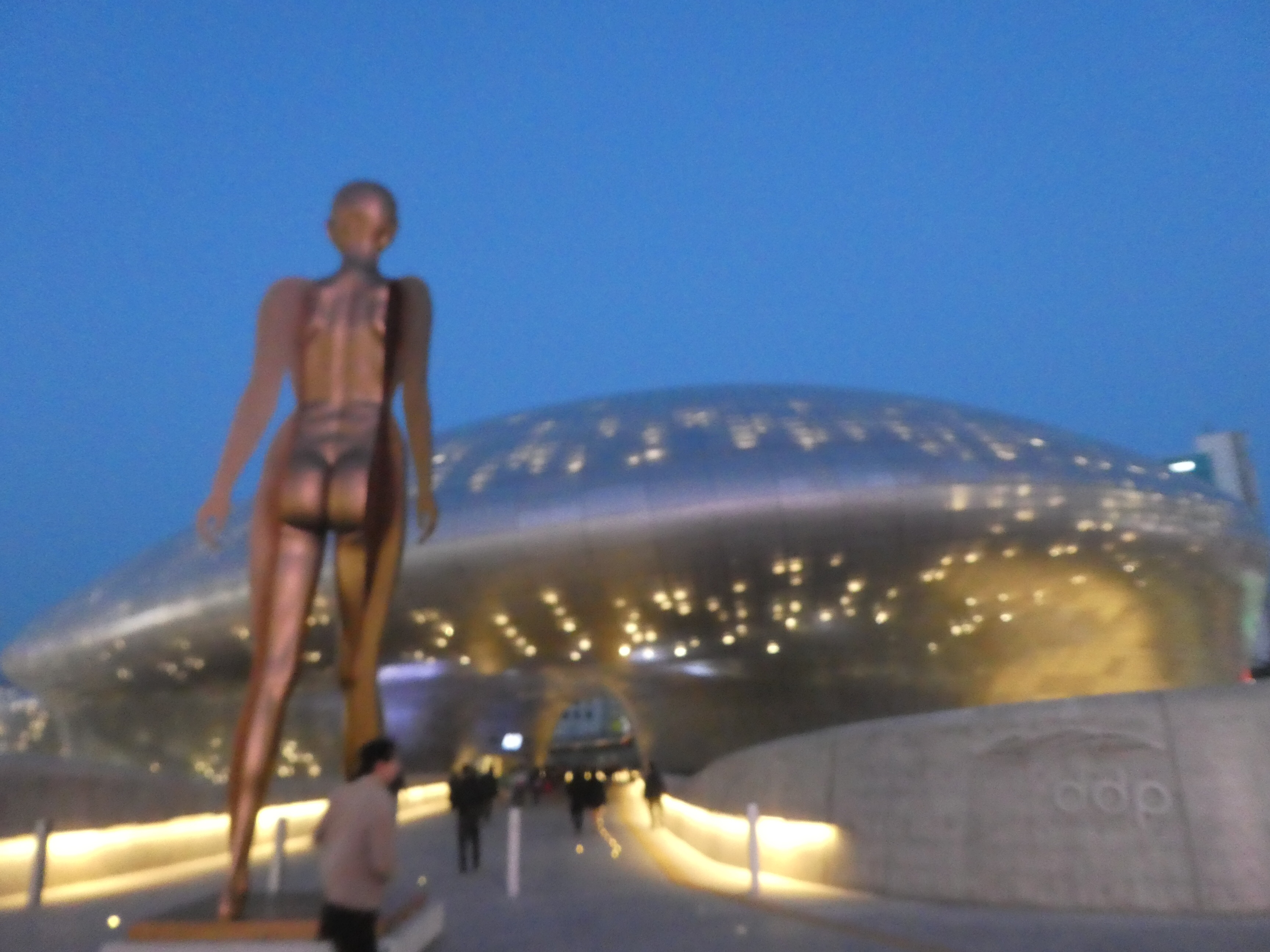
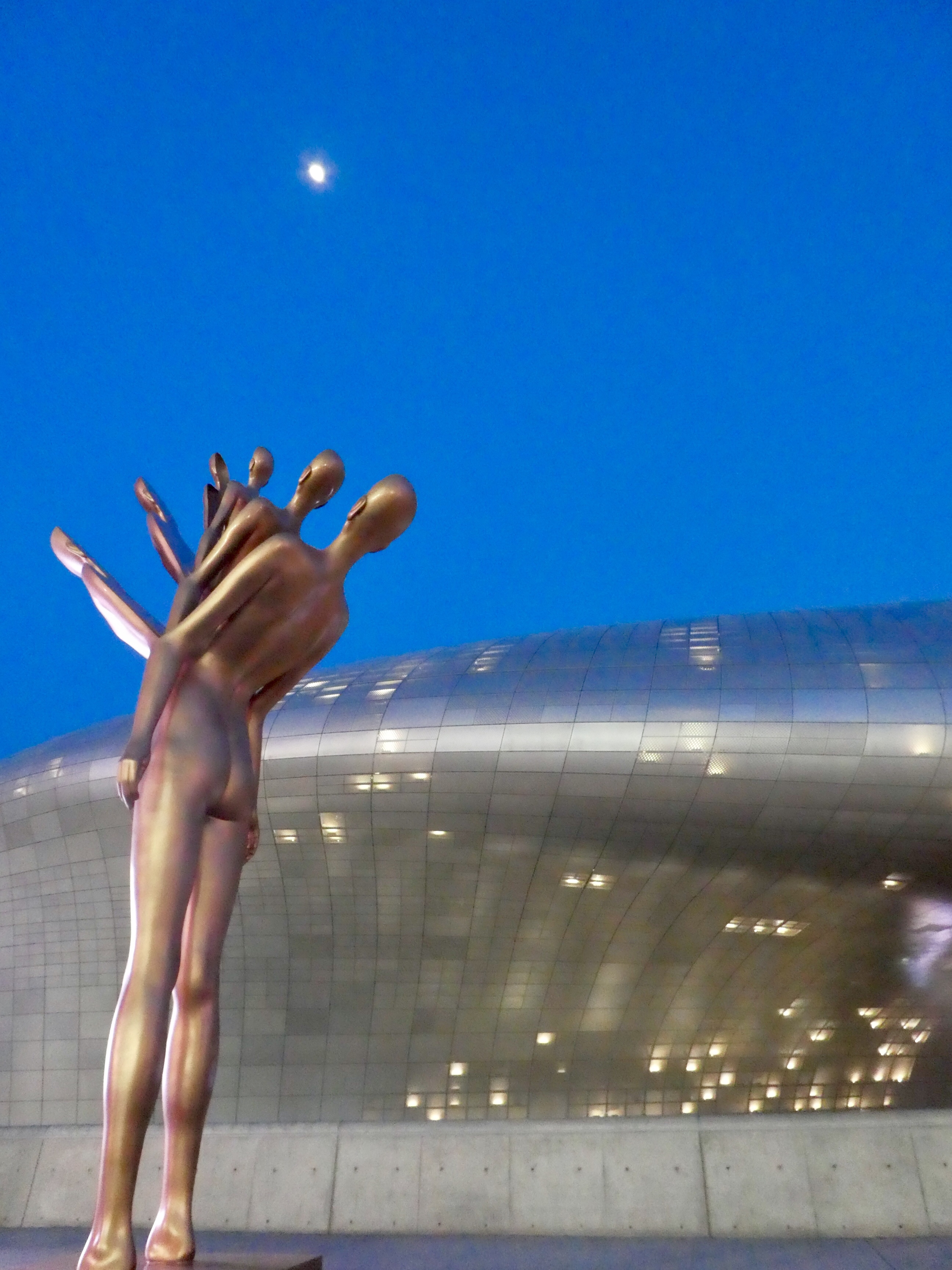
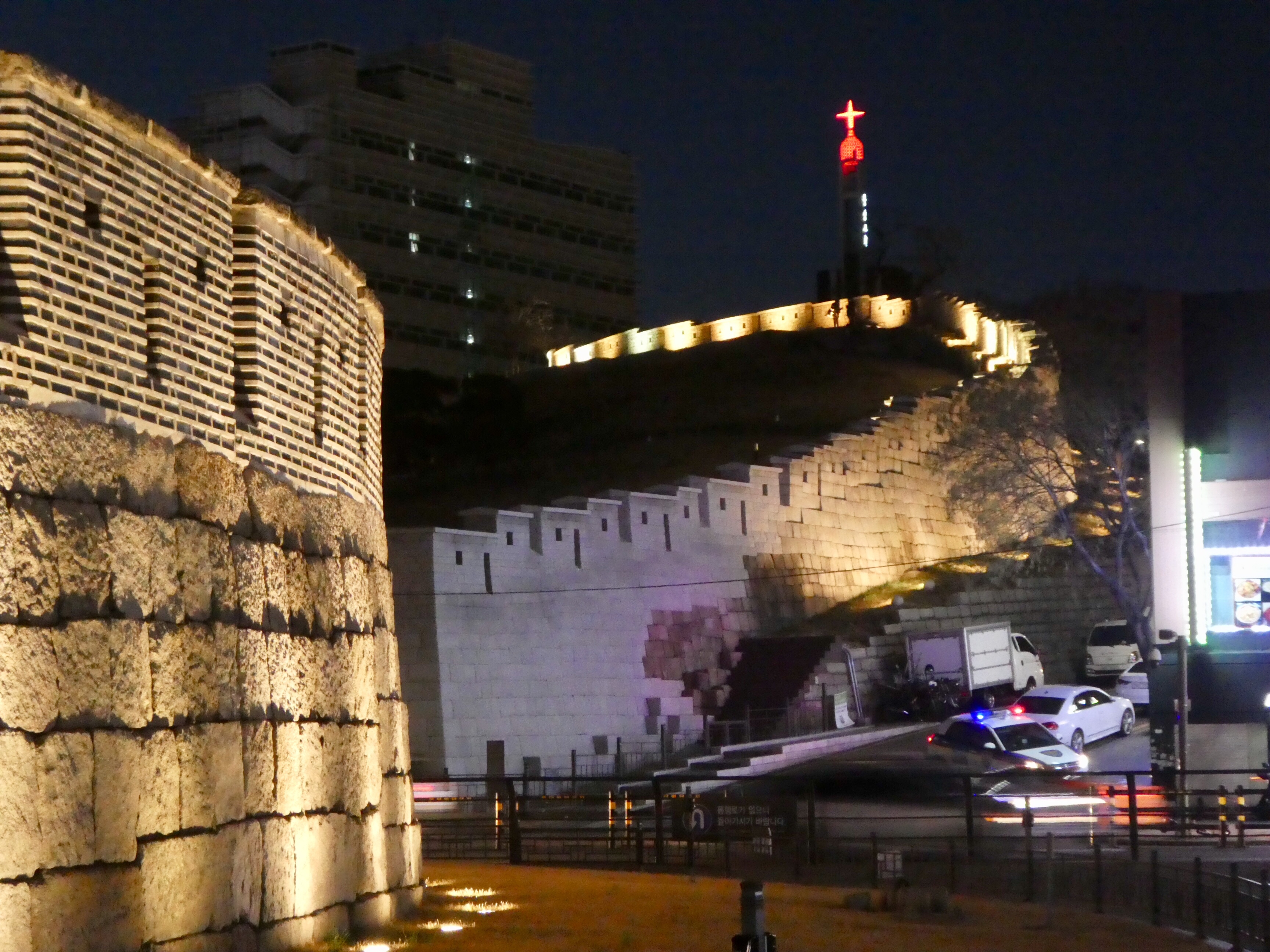
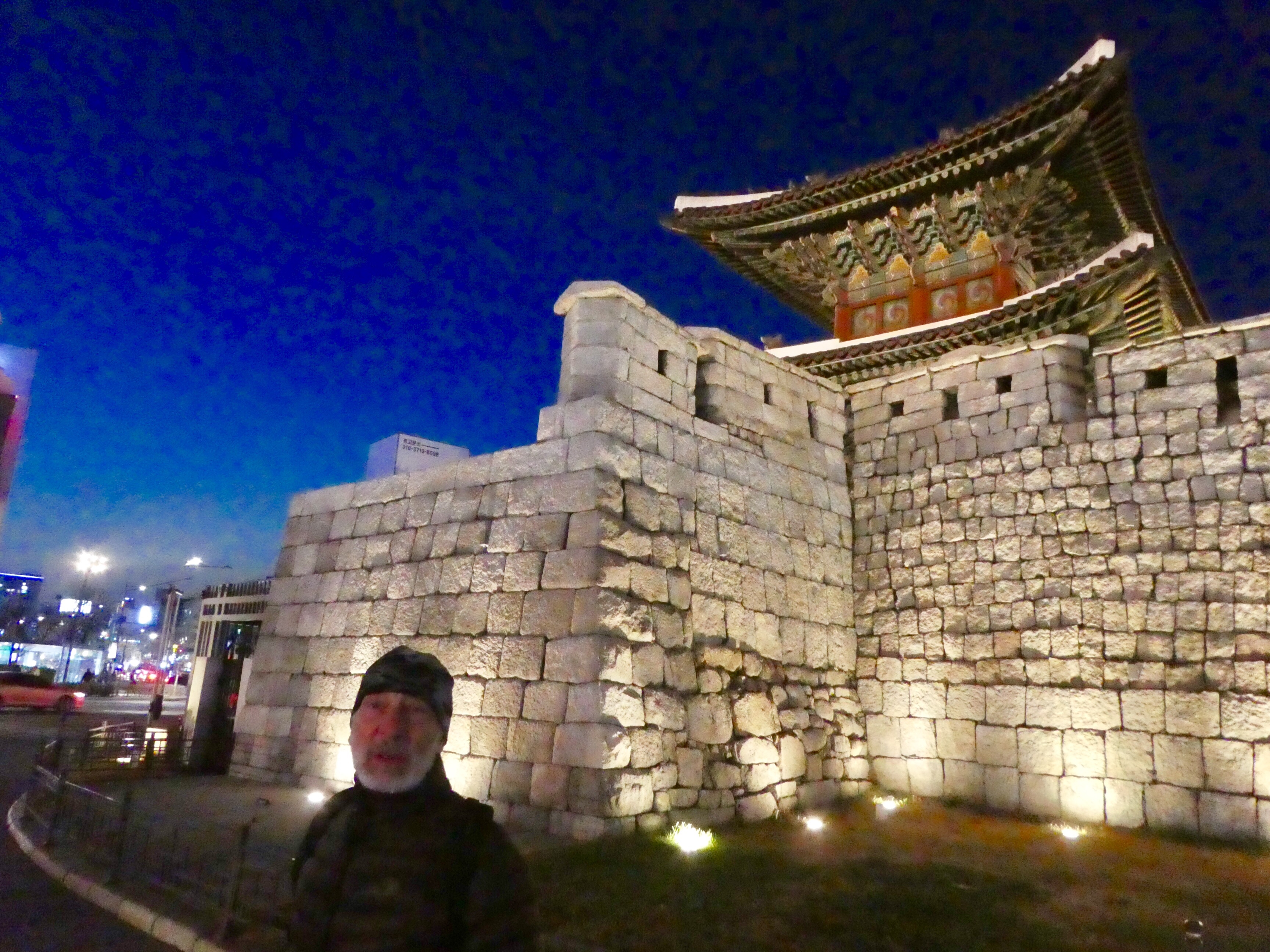
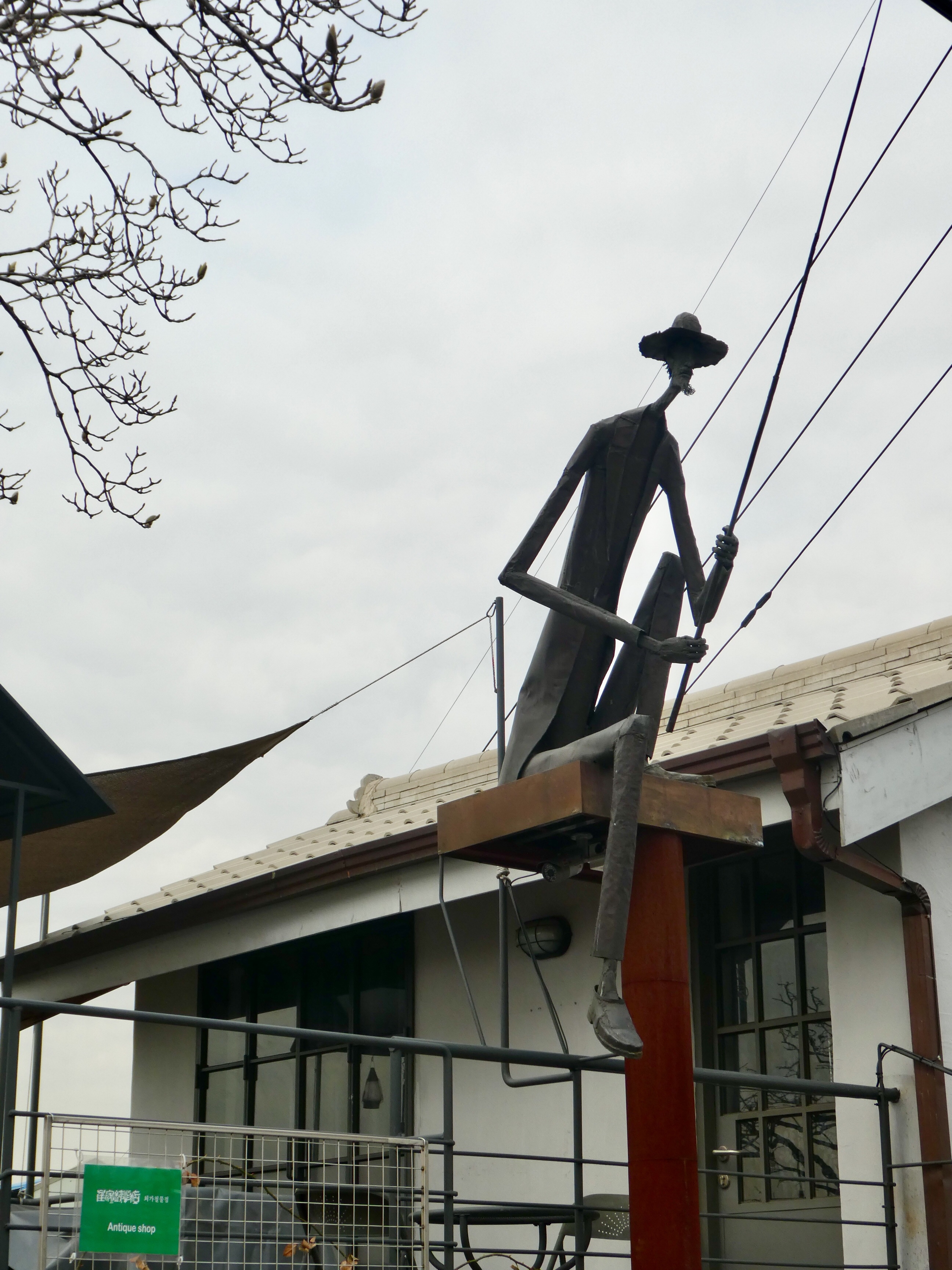
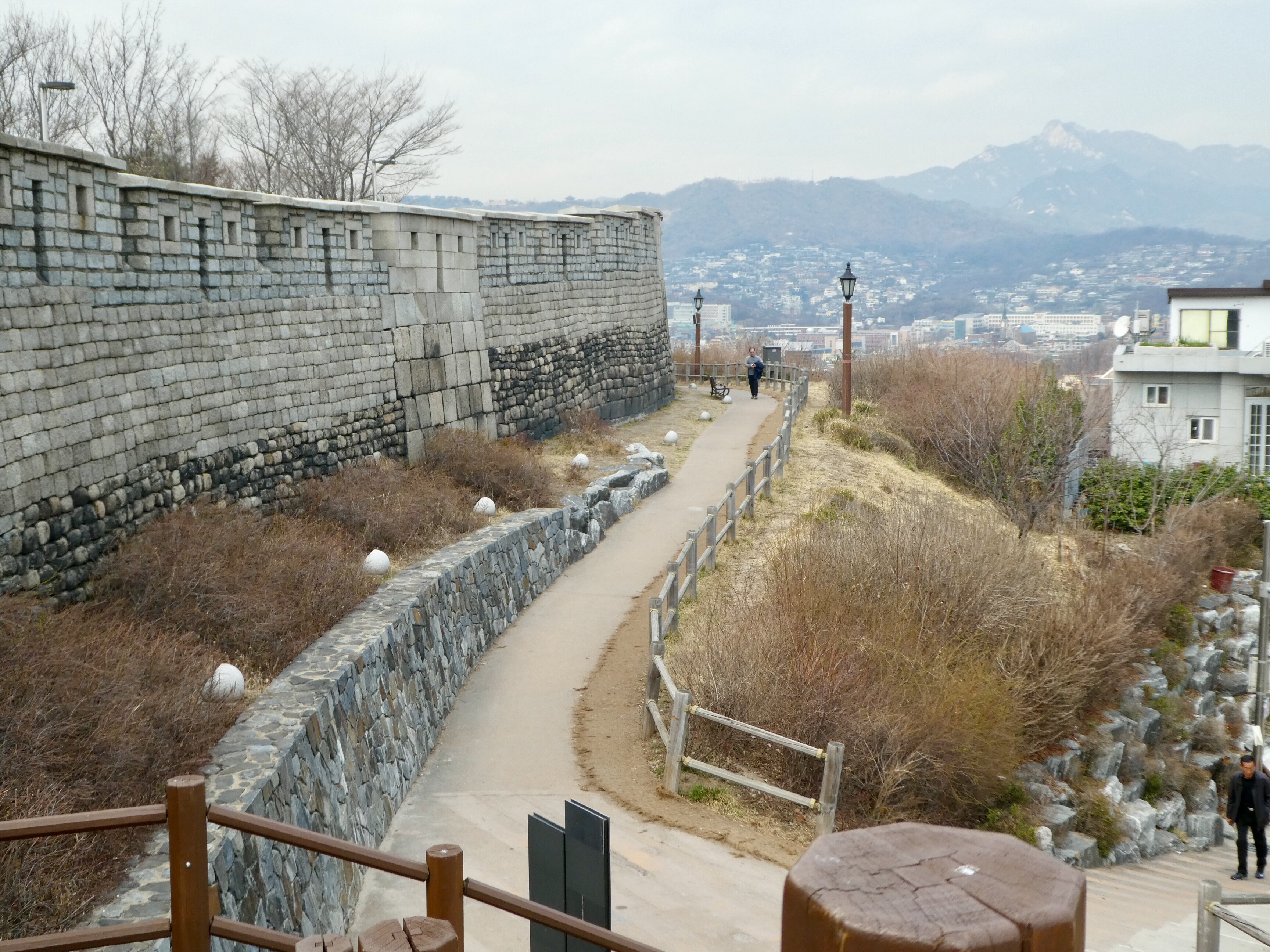
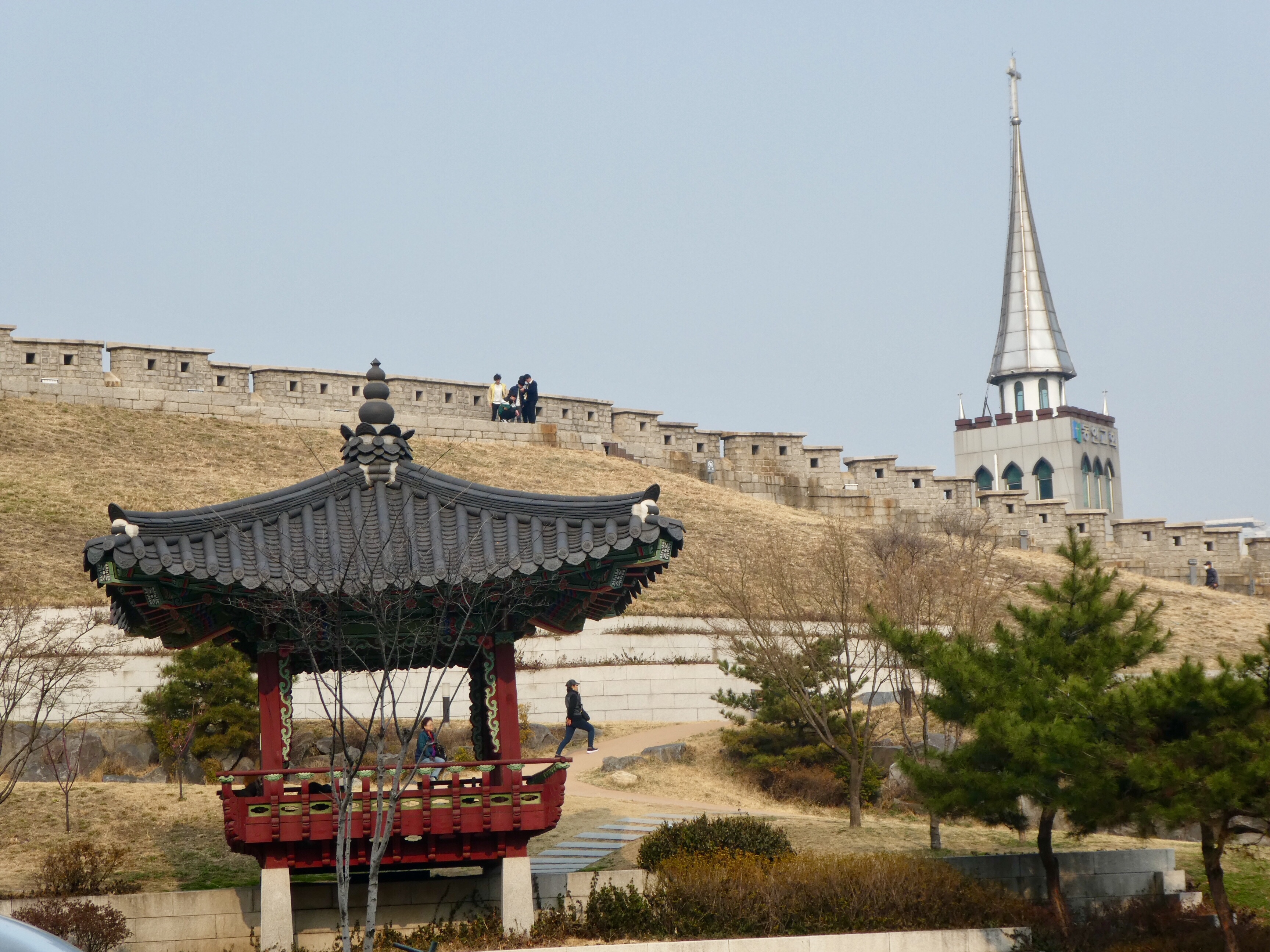
Seoul was founded in 18BC, and was declared the capital in 1392, under the Joseon Dynasty. The ancient city was enclosed by a fortress wall and gates in 1396 to protect it from invasion. It has been restored and maintained for over 600 years. The Japanese almost completely destroyed it when they ruled Korea from 1910-1945. We hiked along the wall for a couple of hours, beginning at Heunginjimun Gate in Dongdaemun. We experienced a bird’s eye view of Seoul from Namsan Park. The fortress wall and gate are lit up at night. From Namsan, we could see most of the Dongdaemun Design Plaza, DDP, a very famous building shaped like a gigantic silver slug. It is an eight story aluminum panel covered building that contains a library, a museum, convention center, design halls. It hosts numerous design exhibitions. There are futuristic statues around the DDP that looked to us like sleek aliens. At night, with the lights twinkling, and the moon nearly full, they seem to be boarding their spaceship.

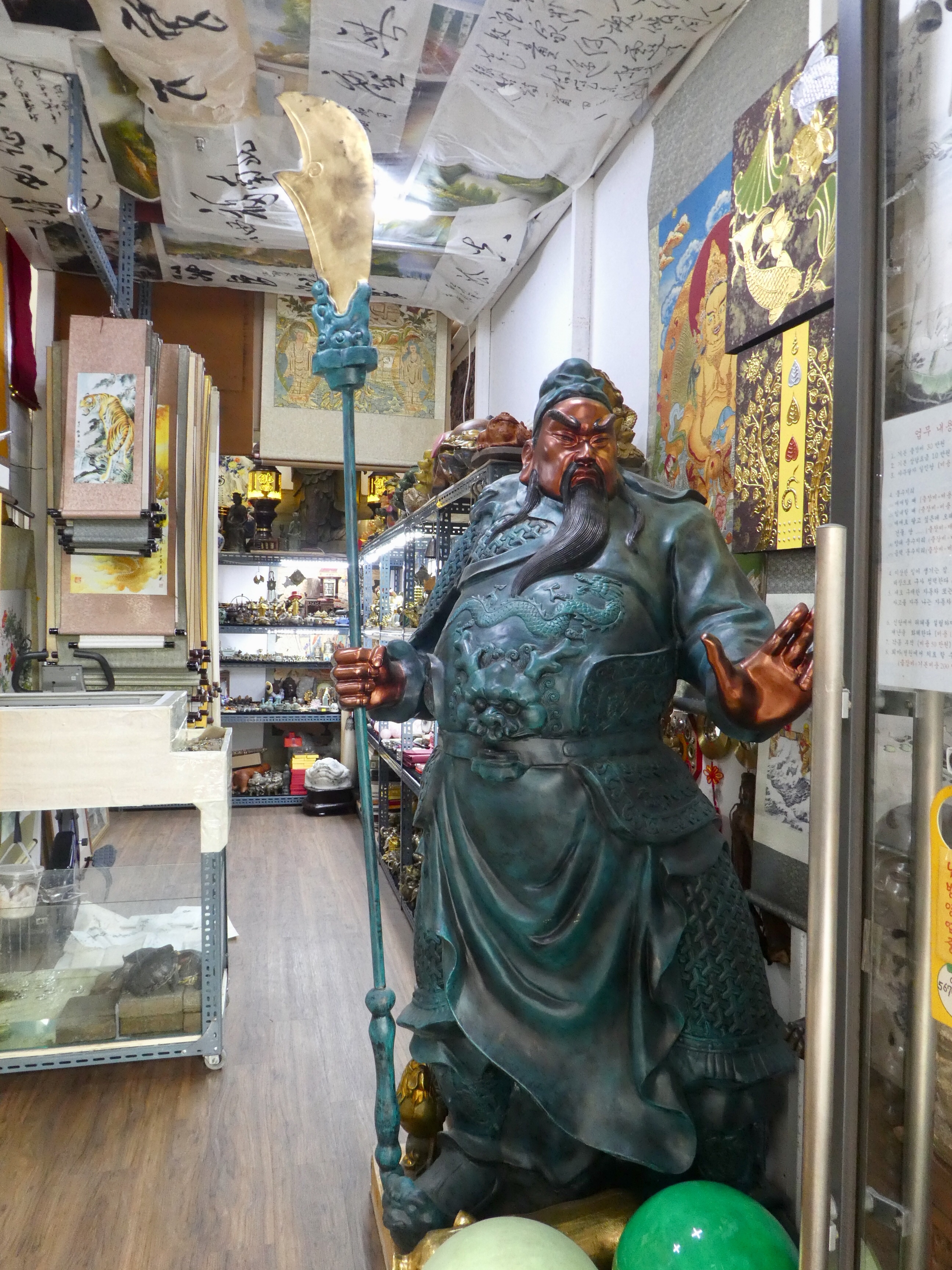
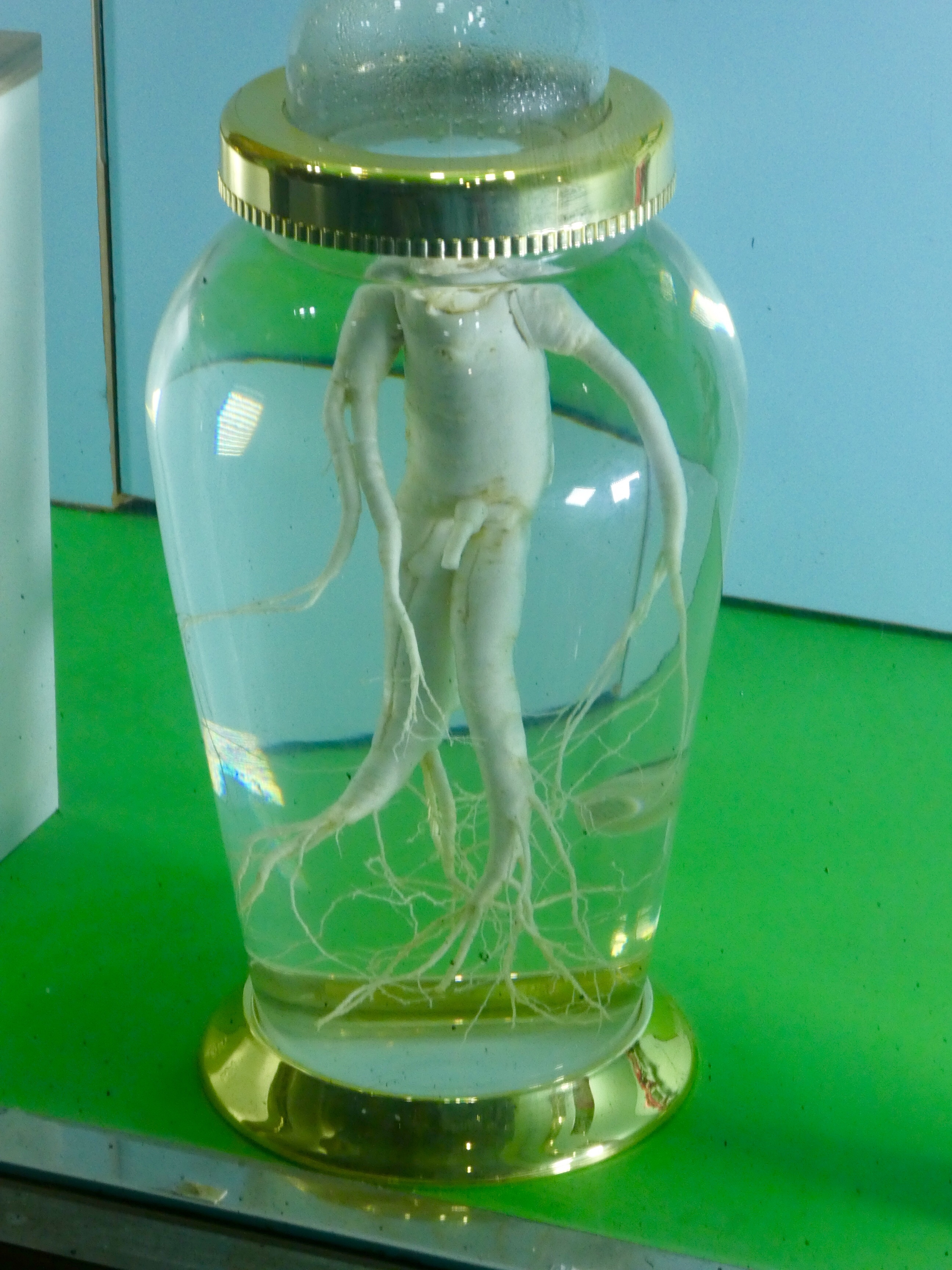
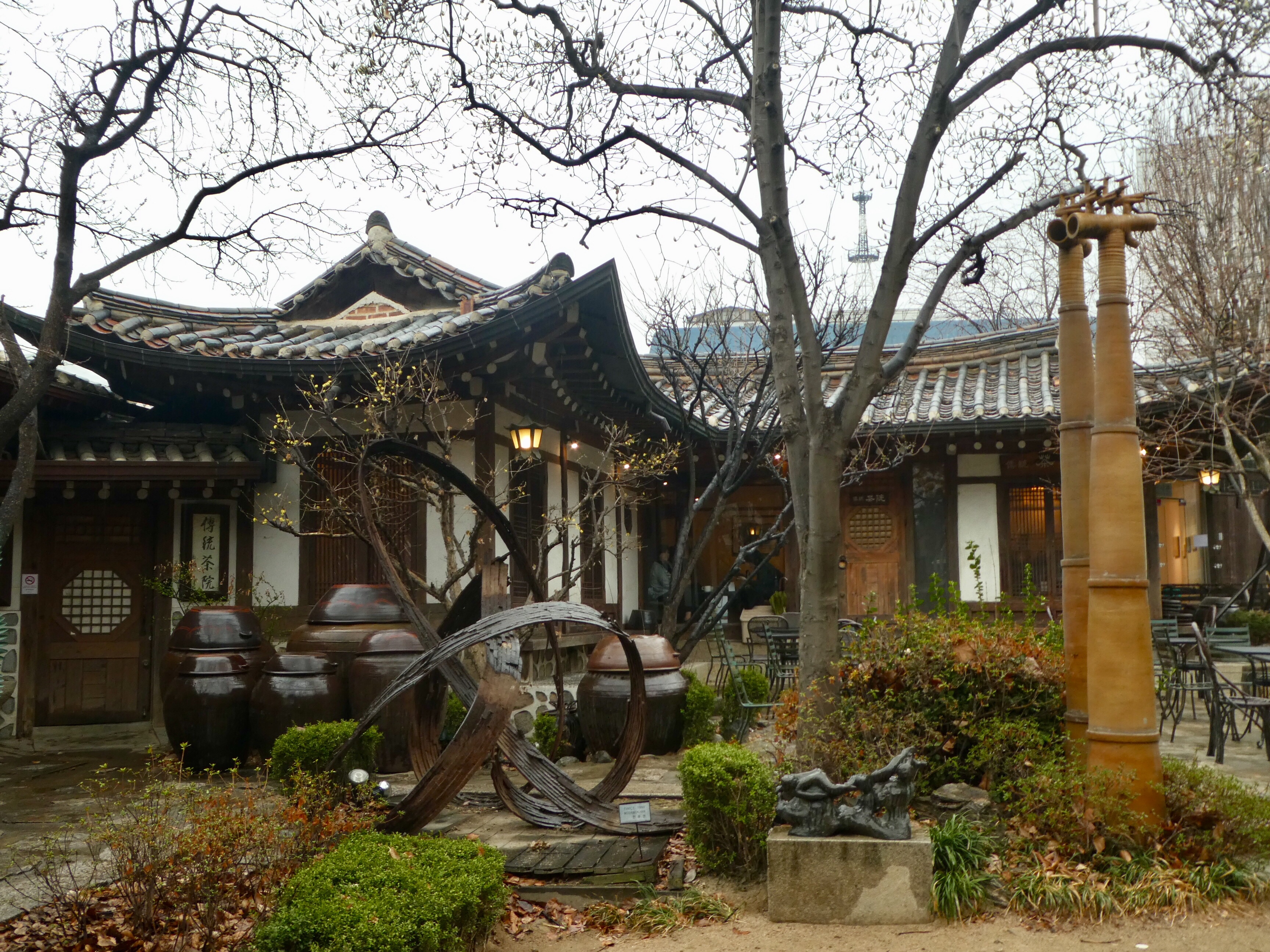
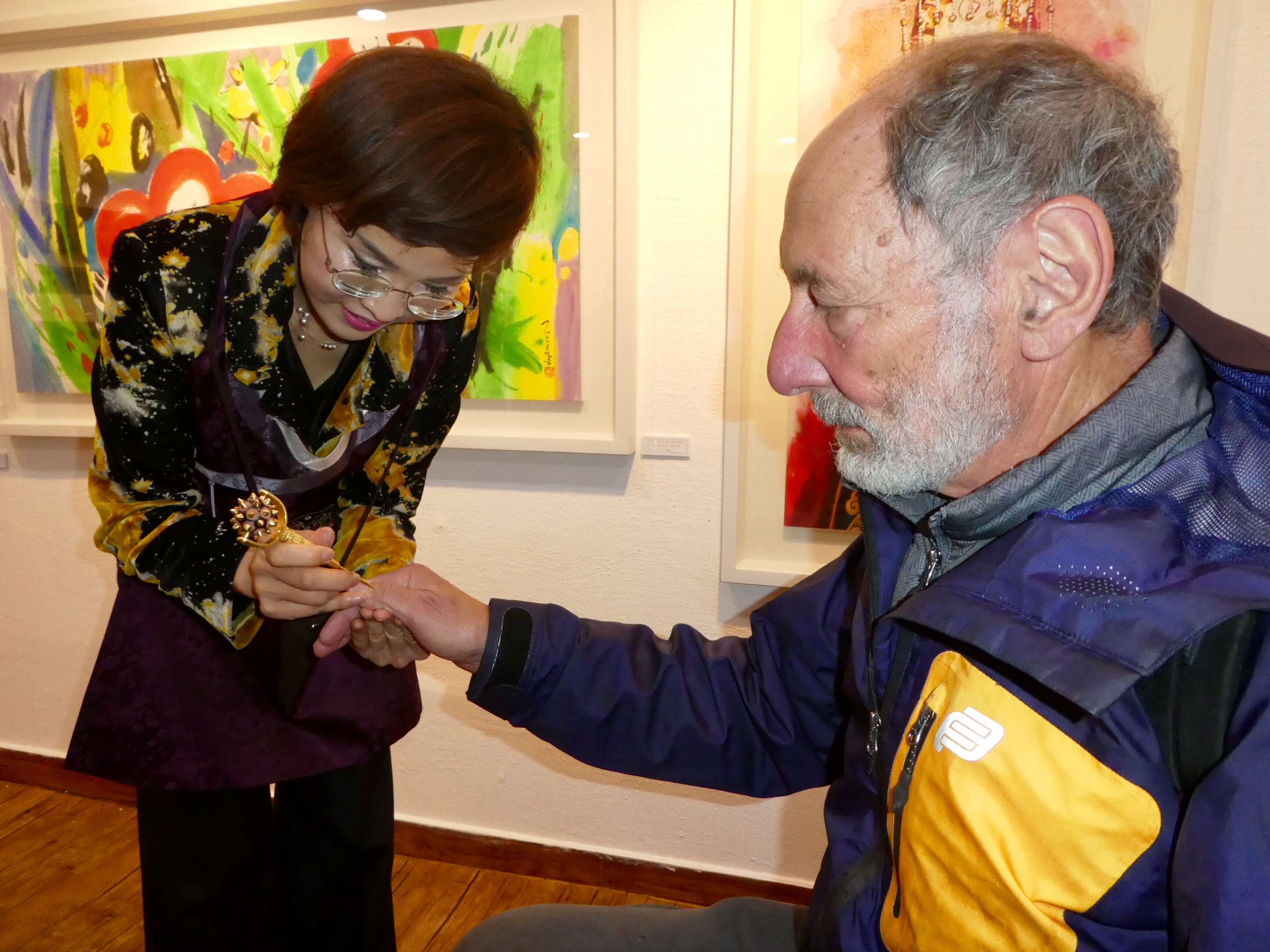
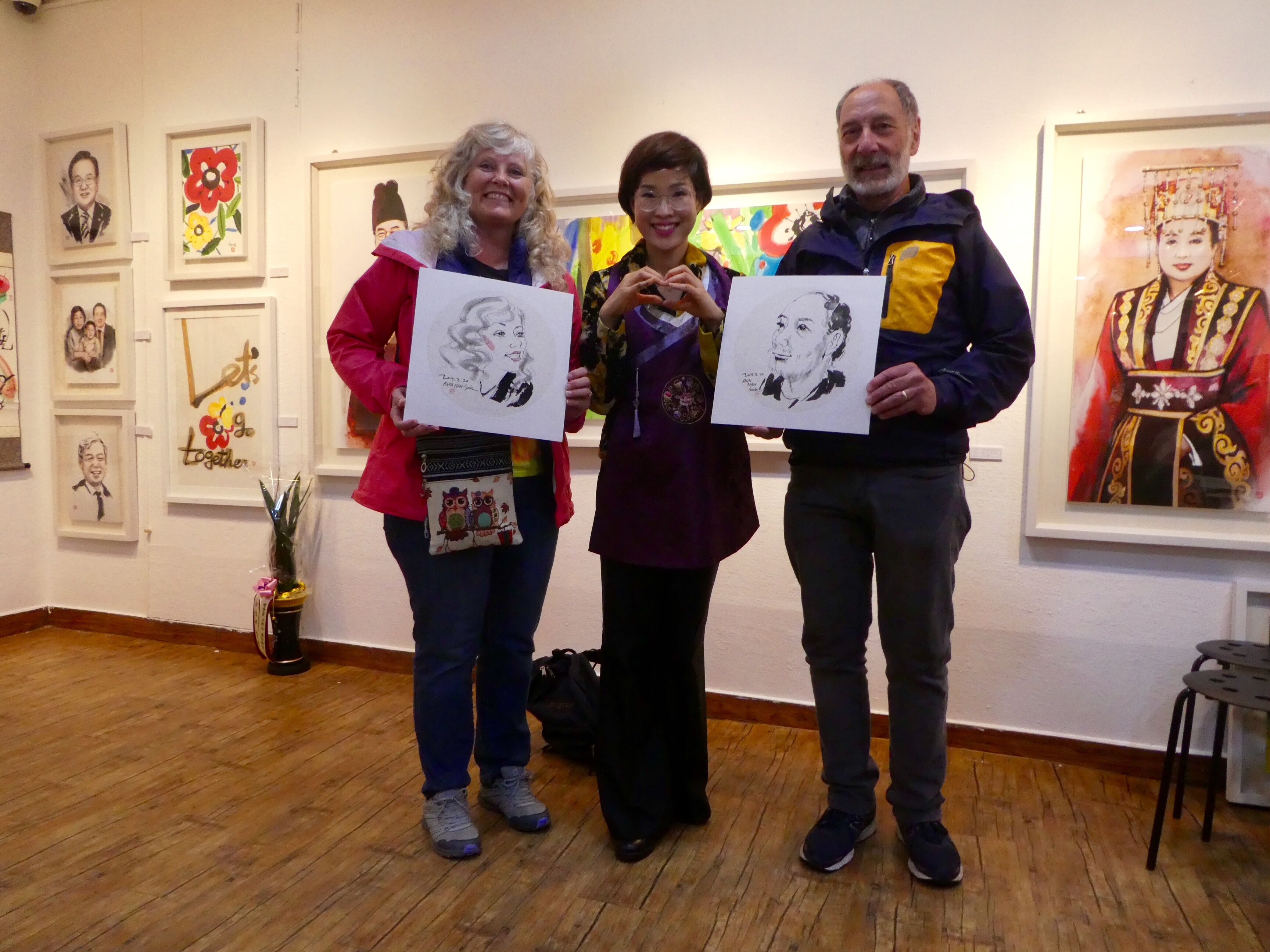
We spent a great day in Insadong, the art and crafts area of Seoul, where we took a 2 hour culture tour. Our tour guide took us to an artist’s courtyard with several studio exhibitions. We were especially drawn to the work exhibited by Ahn Nam-Sook, an internationally-acclaimed award-winning artist. She has even painted the president of South Korea! We lingered to see her colorful paintings. She seemed captivated by us as well, and, after taking photos with us, poked our fingers with an acupuncture tool to improve our health. There is a lot of Chinese/herbal medicine practiced here. A large crowd gathered around to watch Ahn, as she painted caricatures of both of us and gave them to us as a gift of good luck and love. Cameras were flashing. We felt like movie stars in her presence, and were honored by her gift. We bought one of her painting imprinted cups and promised to show her around the Bay Area and wine country, if she visits the west coast.

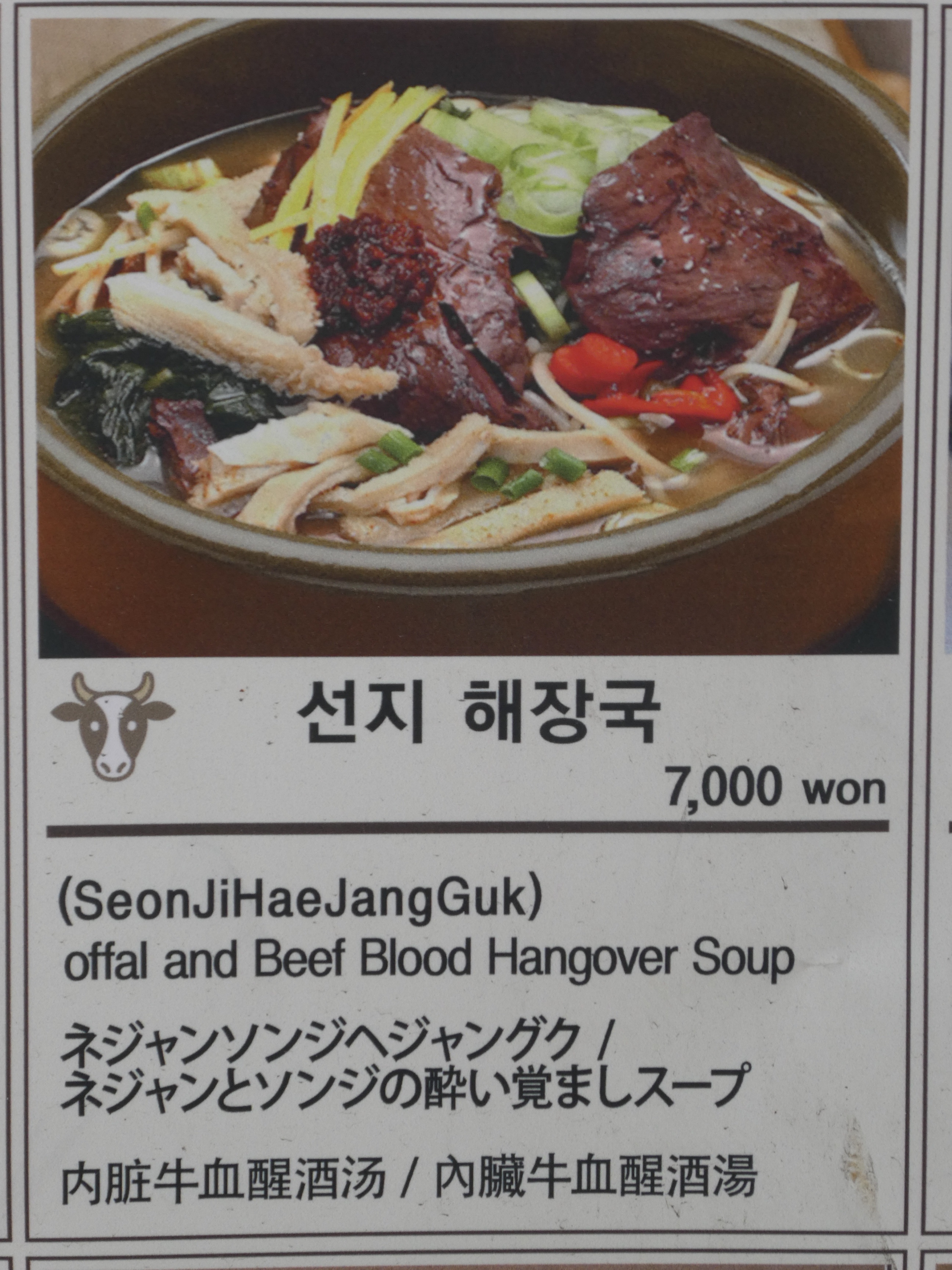
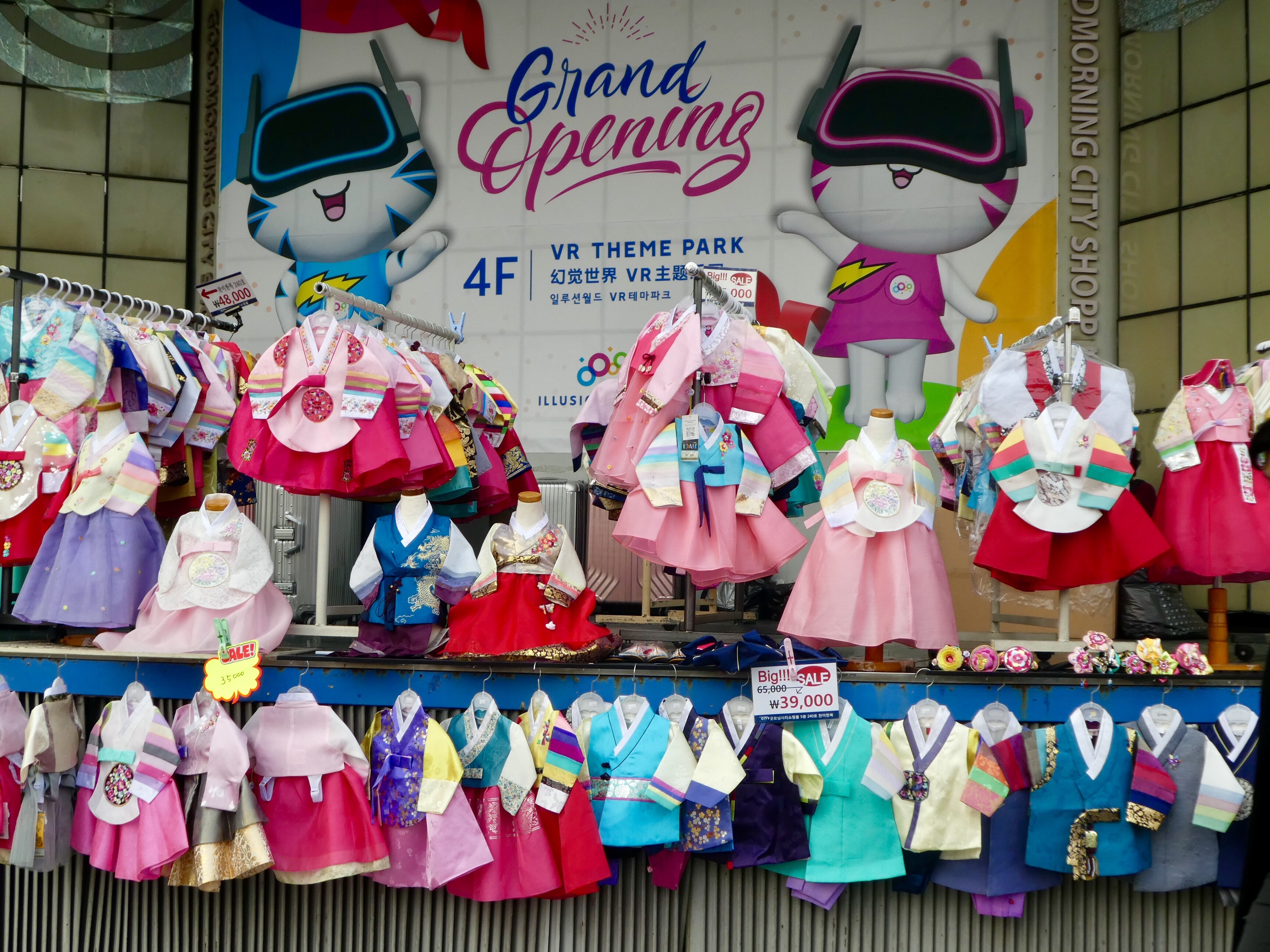
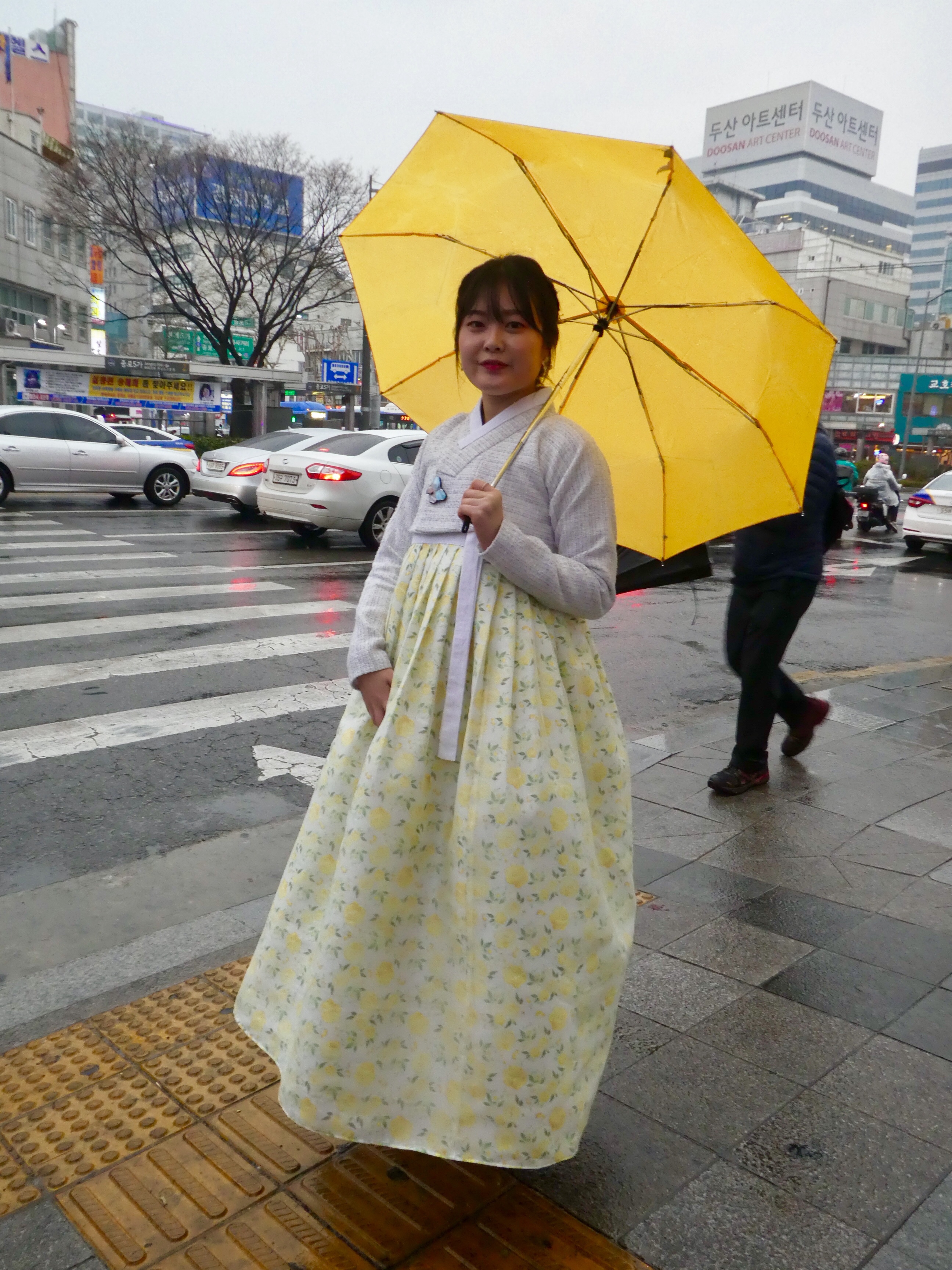
We walked back to Dongdaemun slowly in a light rain. We had a scrumptious dinner of steamed pork dumplings and hot noodle soup on the way. We passed a lady in traditional Korean dress who kindly posed for a photo. We saw a huge gathering of older men playing a Korean game called “Go,” at Topgol Park. The neighborhood caters to retirees on fixed incomes and has lots of little “hole-in-the-wall” restaurants, an in-expensive movie theatre, and a nice street market. Bruce bought a piano tuning kit at a music store there and plans to tune our piano himself when we get home. 👀

Next we will travel via high-speed train to the southern port-city of Busan, South Korea, where we’ll spend four nights/five days. Hope this finds you healthy and happy!

Love n hugs, BnL

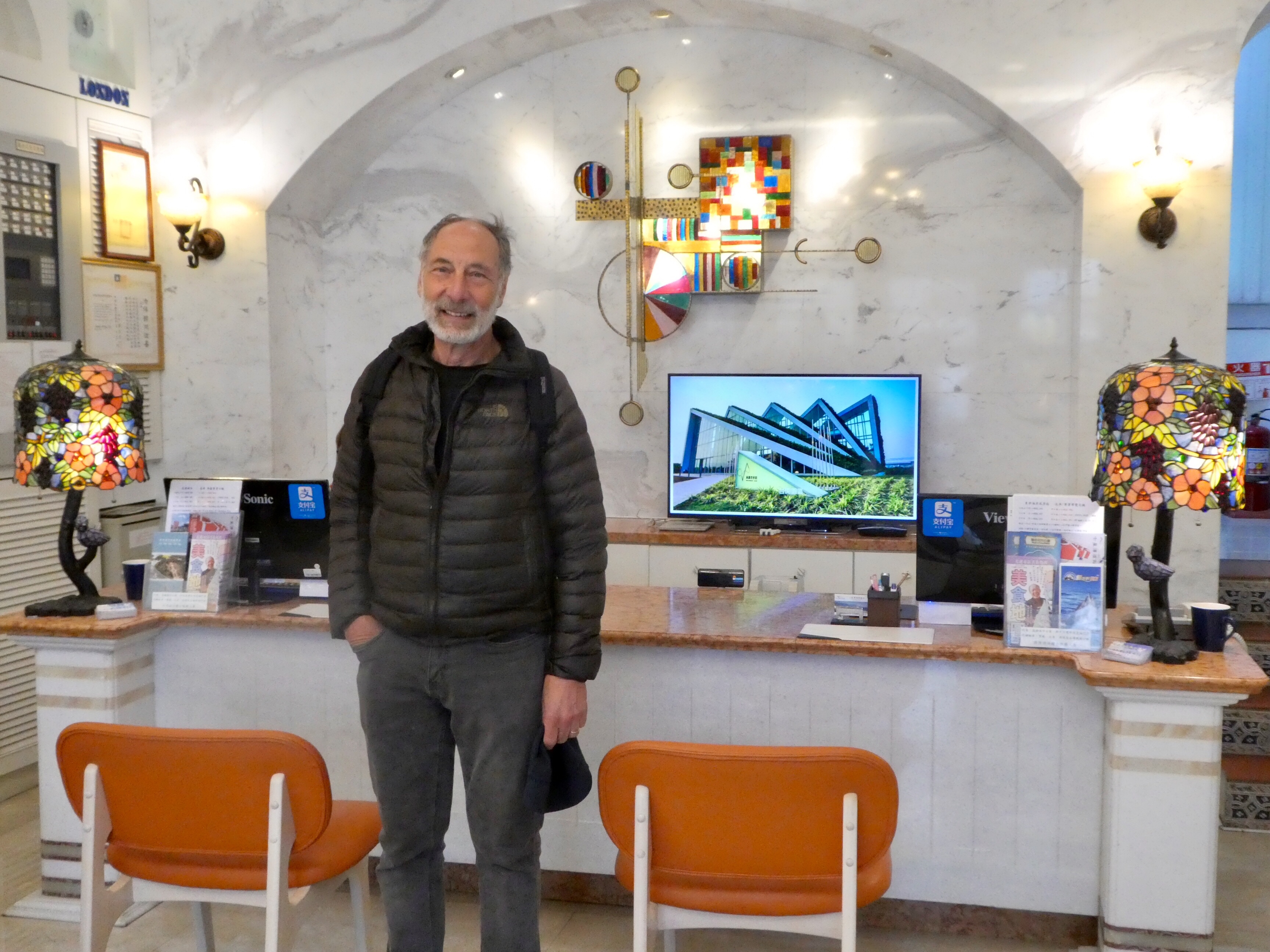
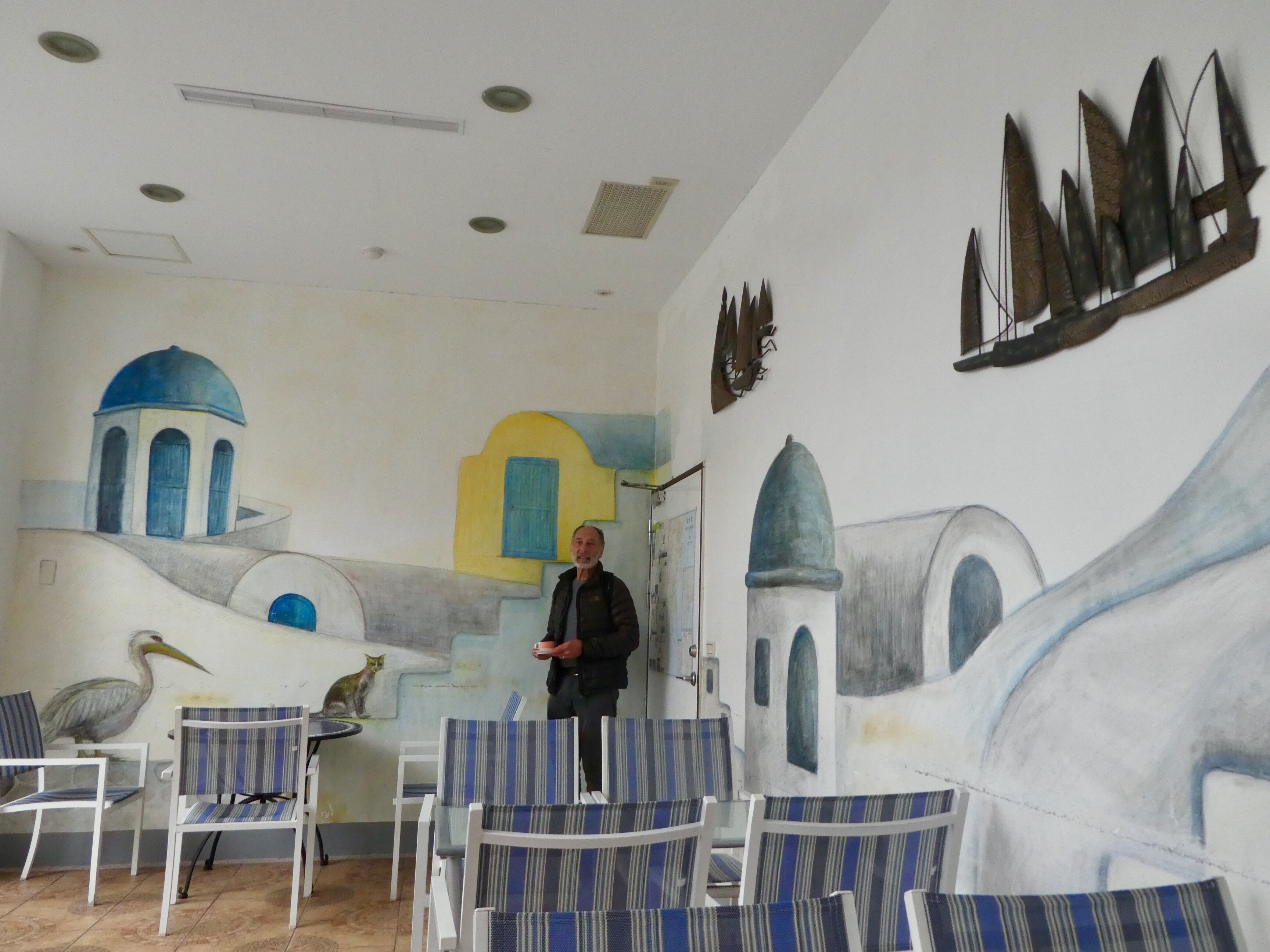
Hualien, Hotel Bayview, and the Taroko Gorge

Dear Friends and Family,

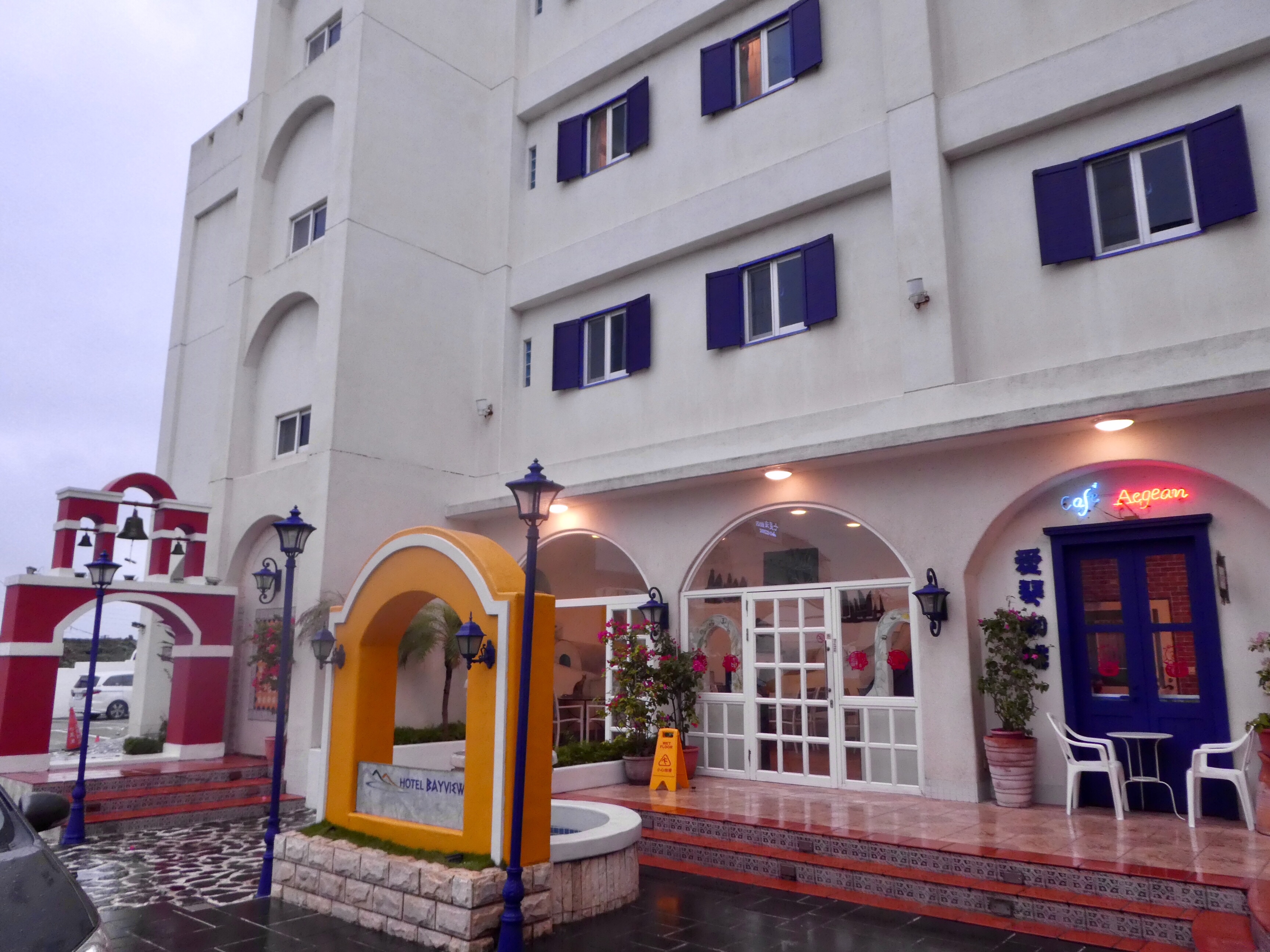
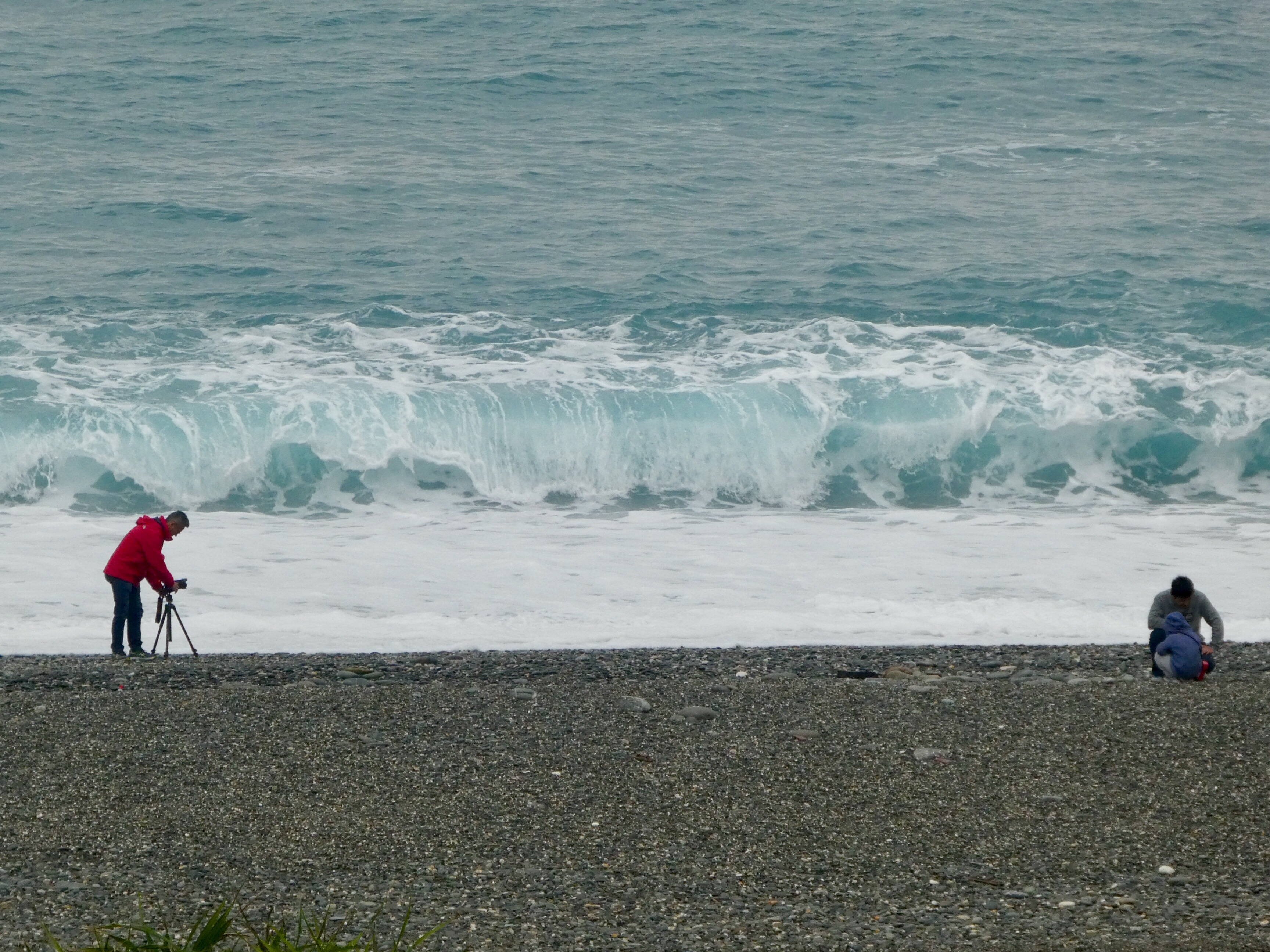
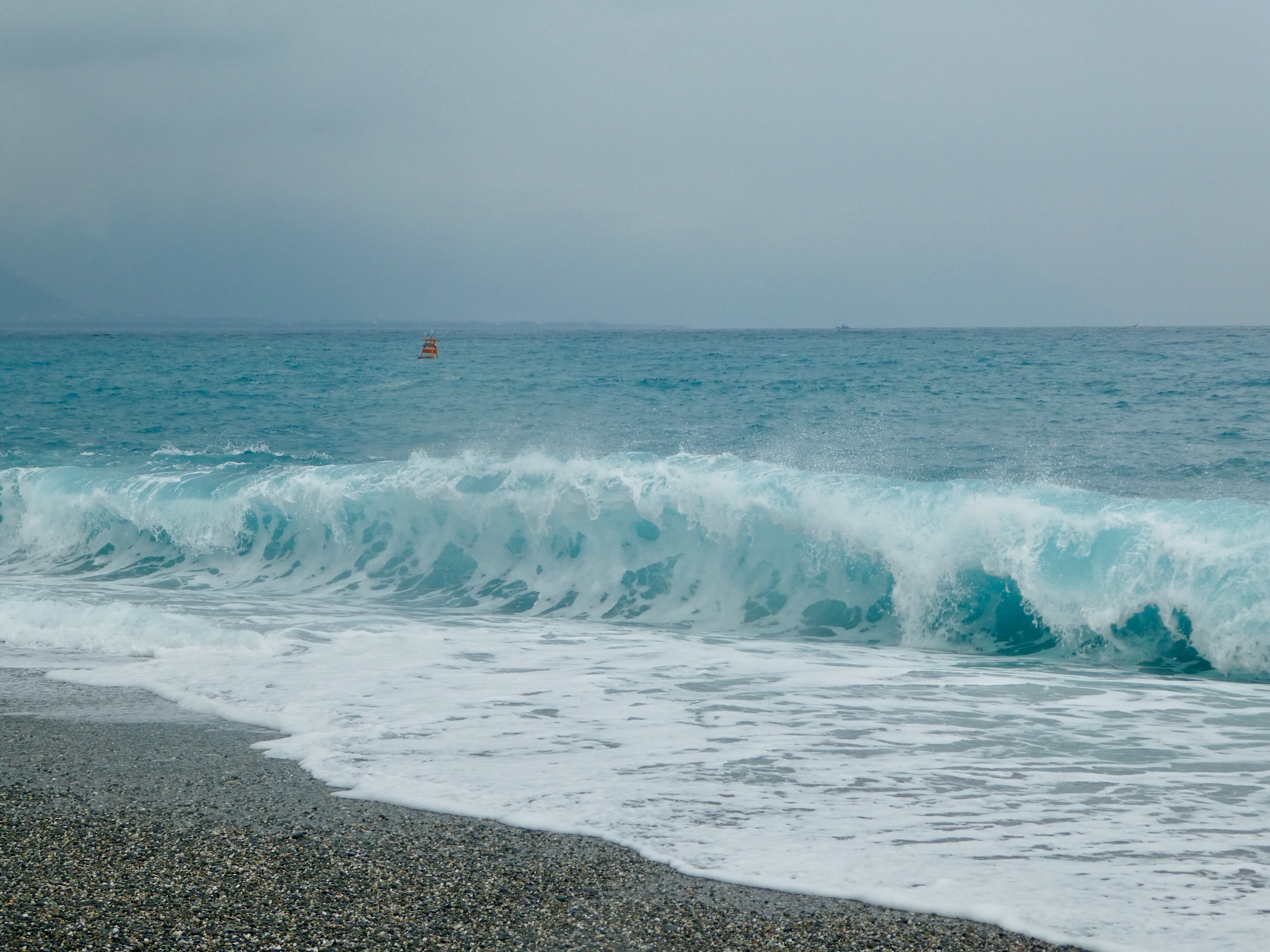
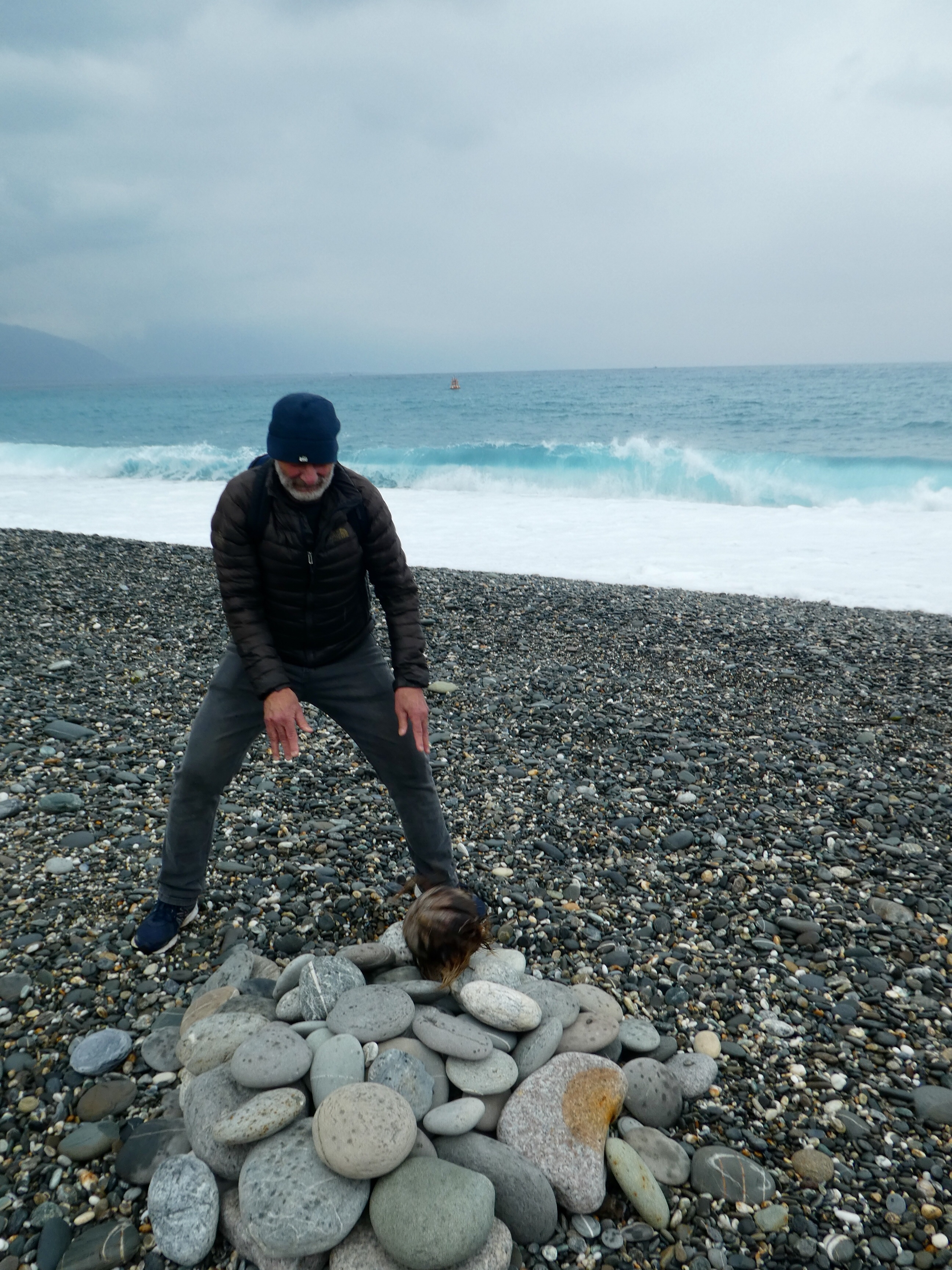
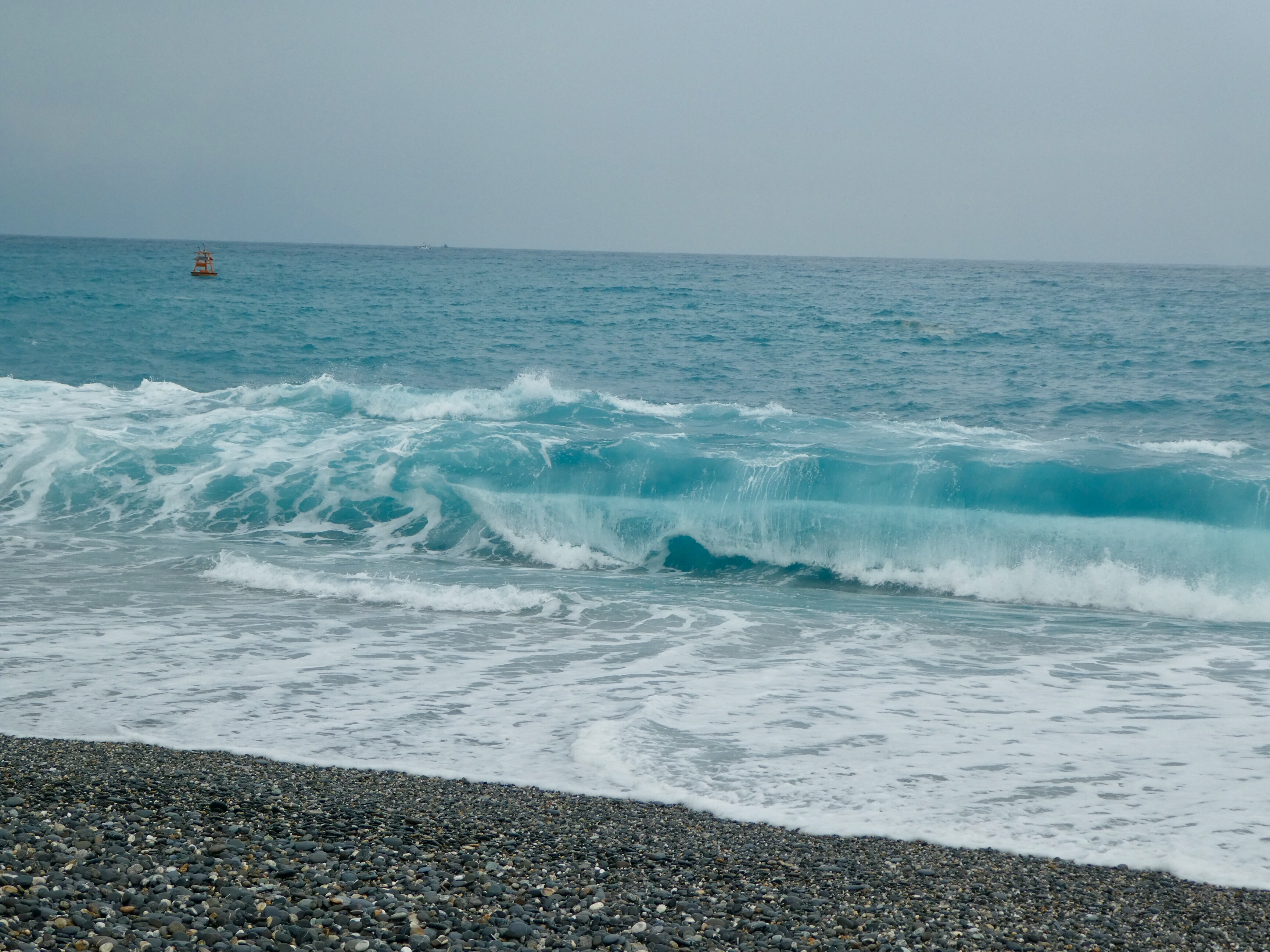
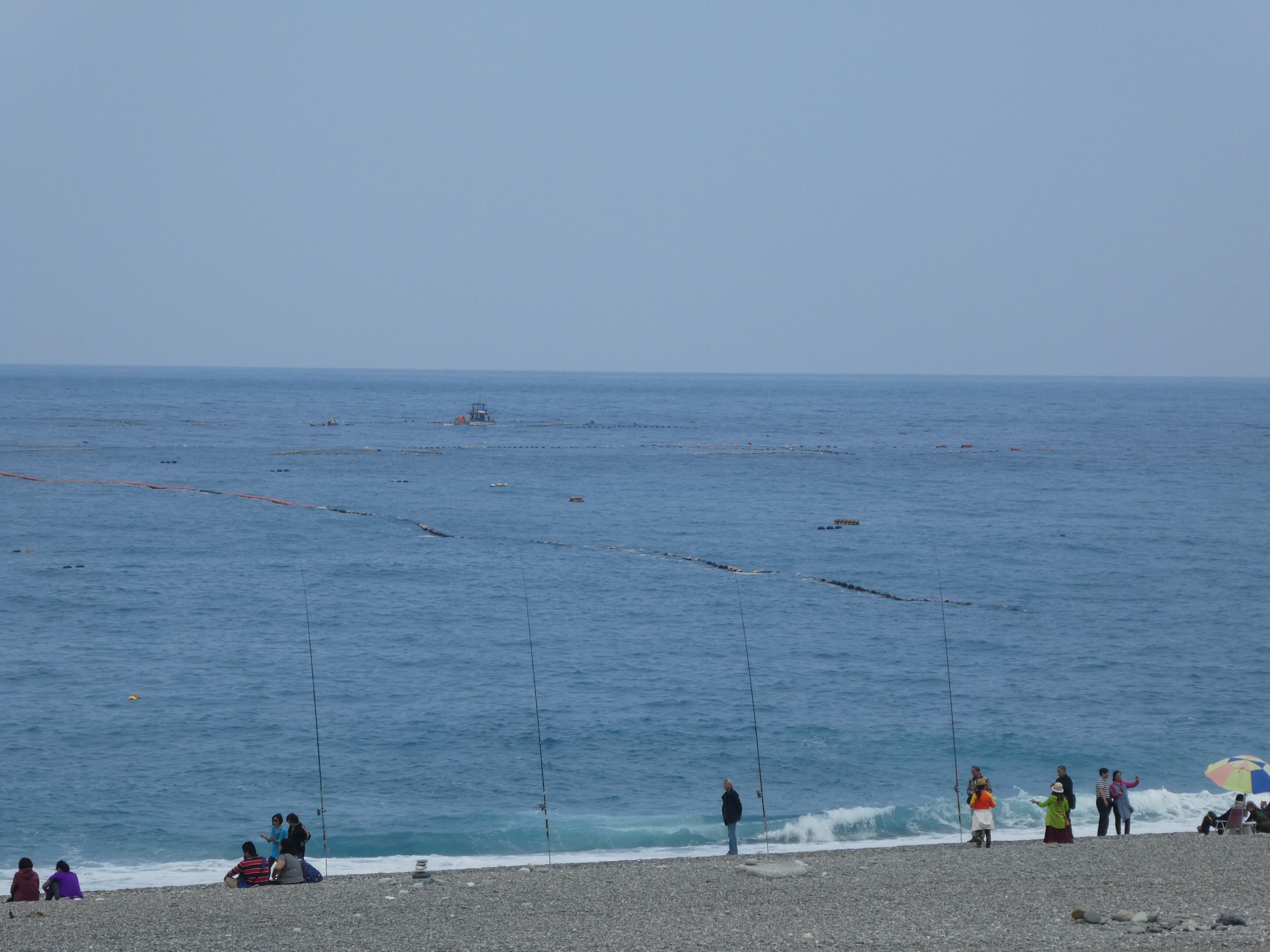
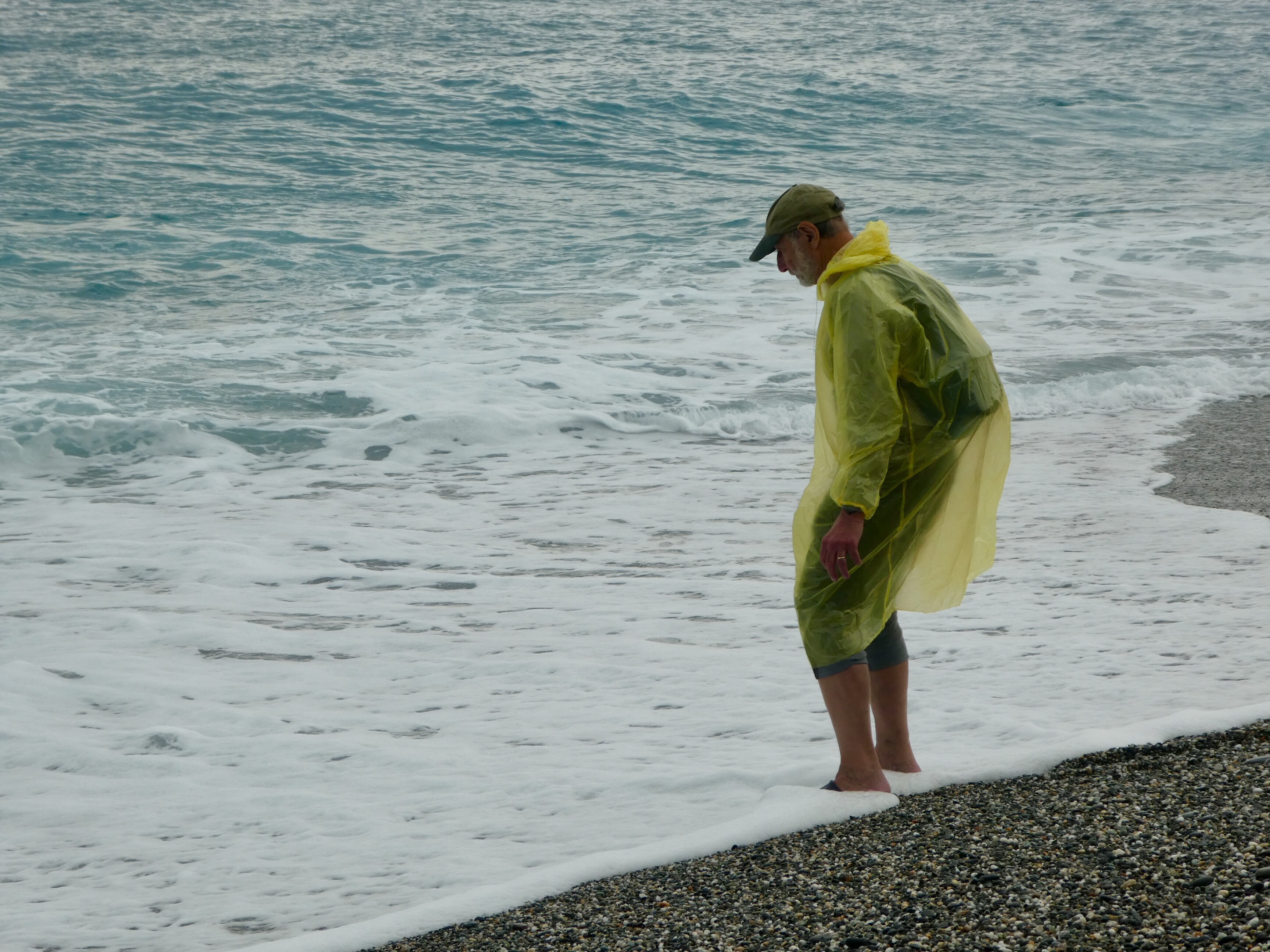
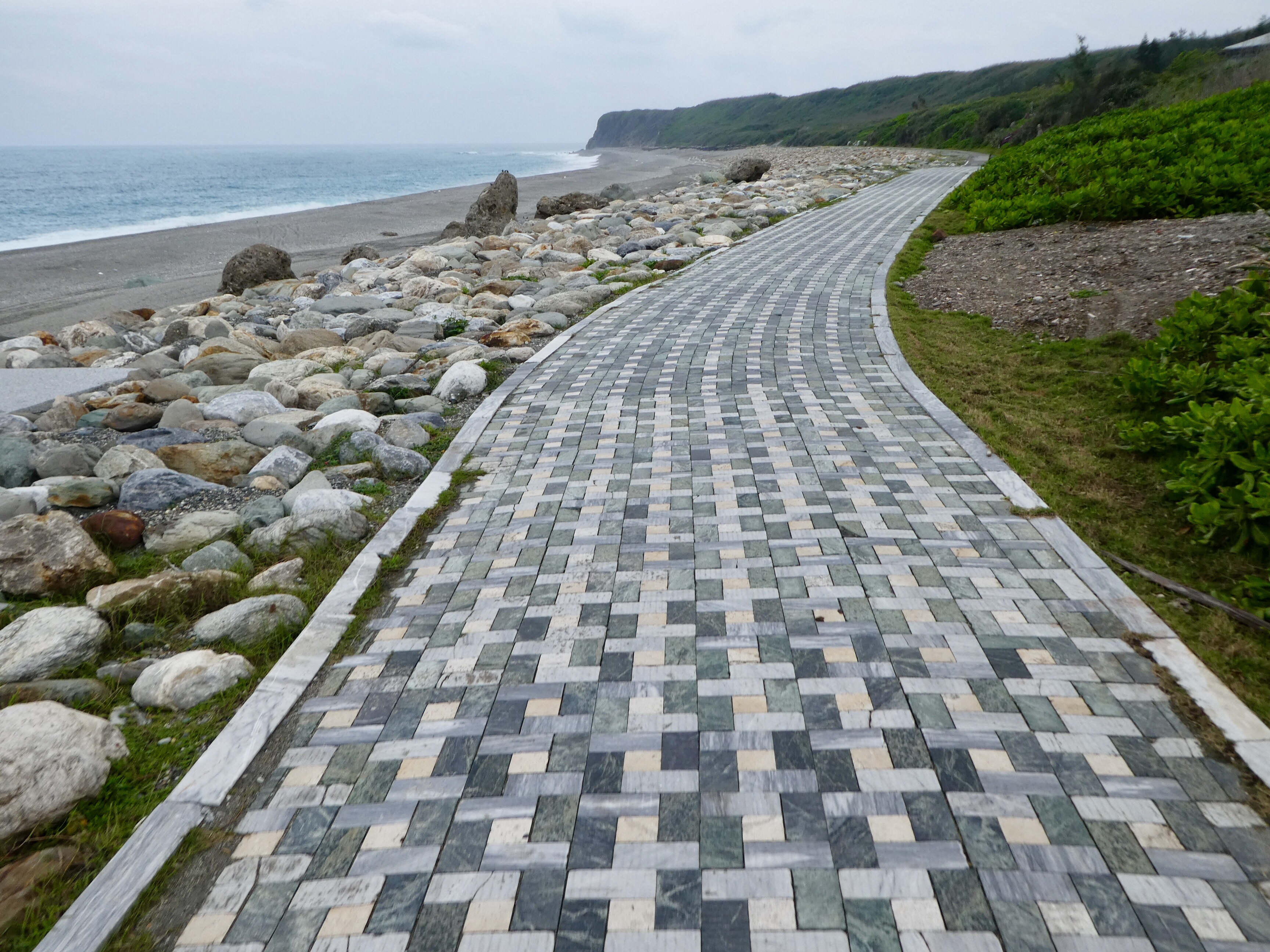
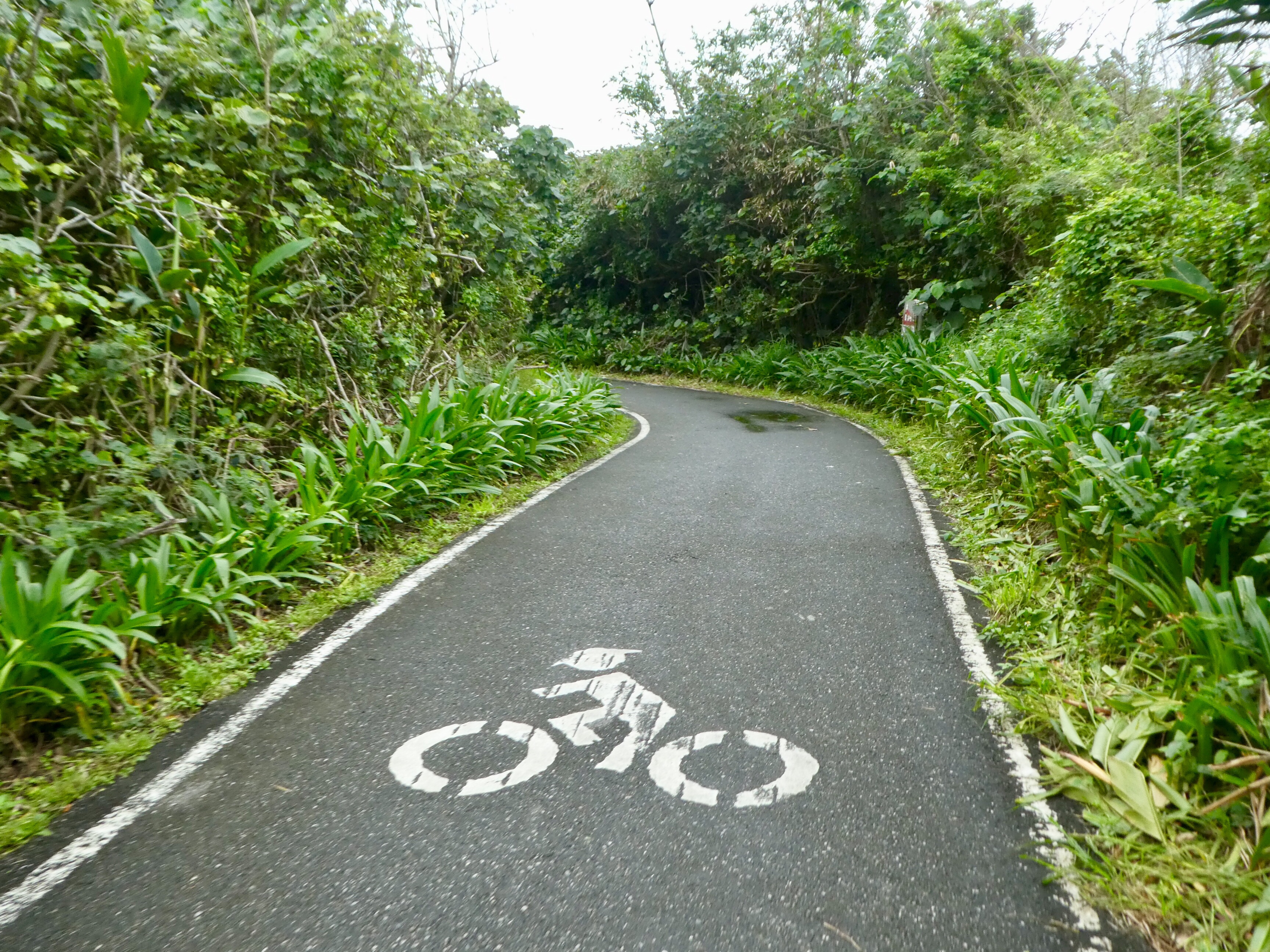
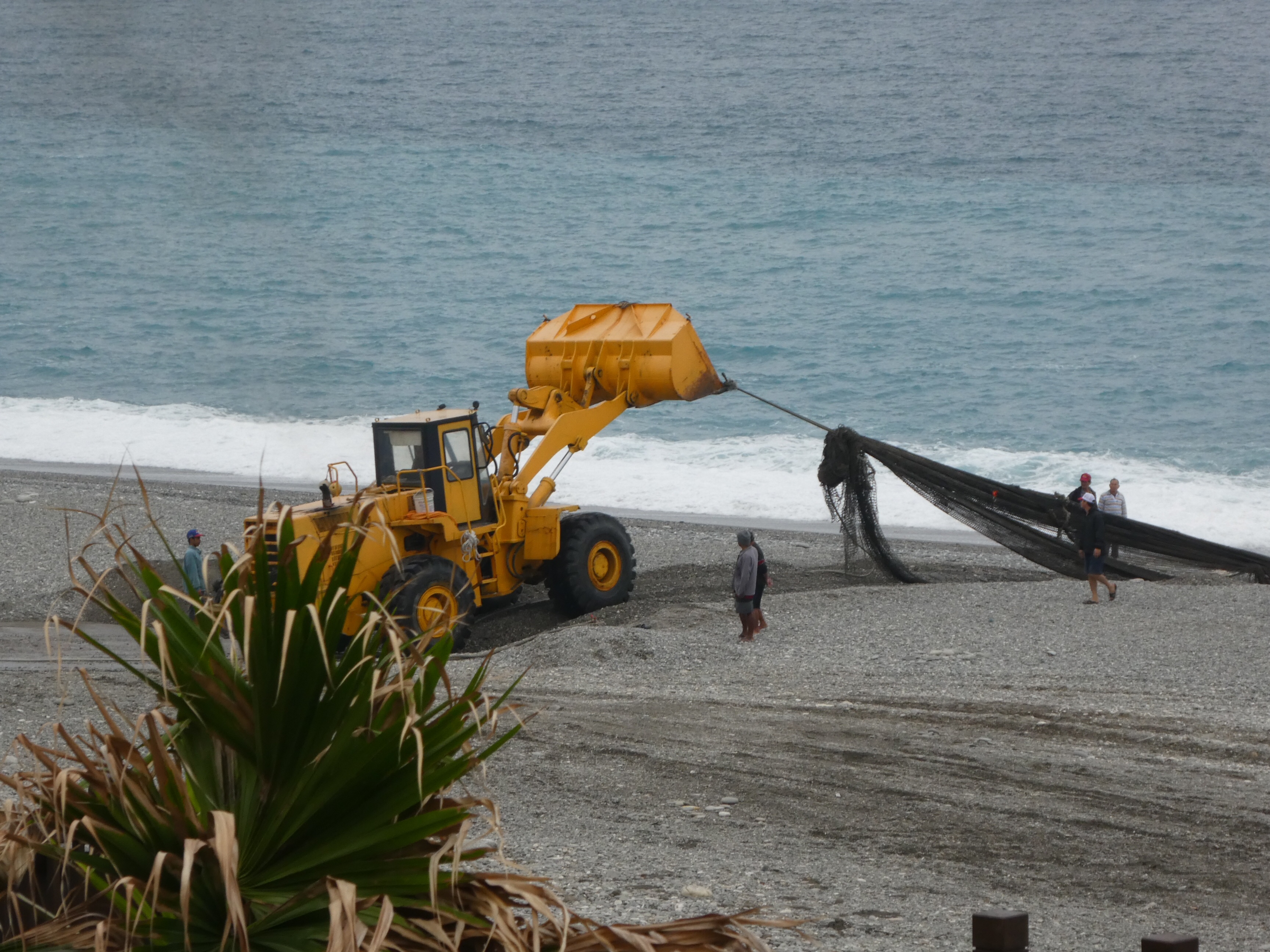
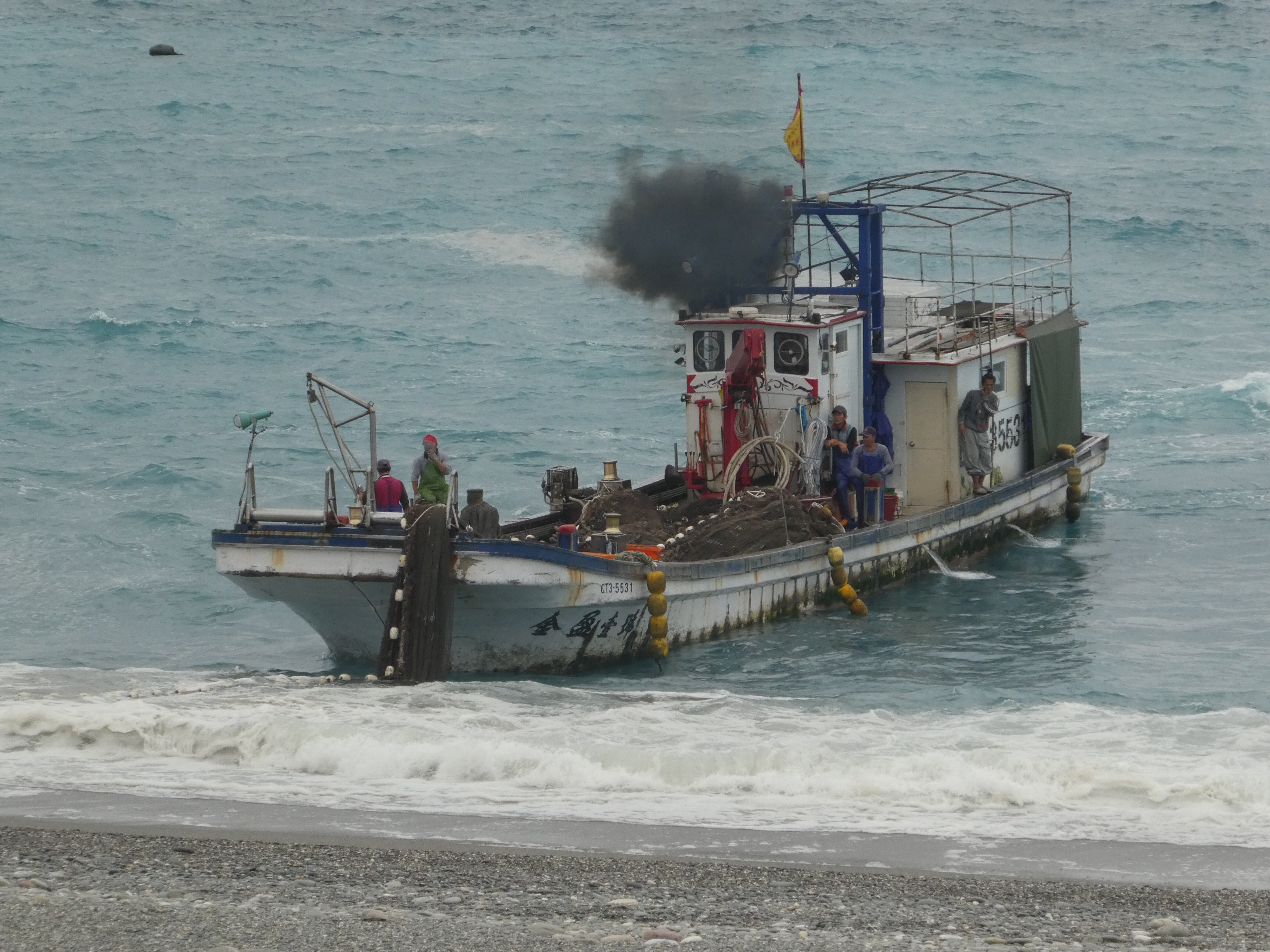
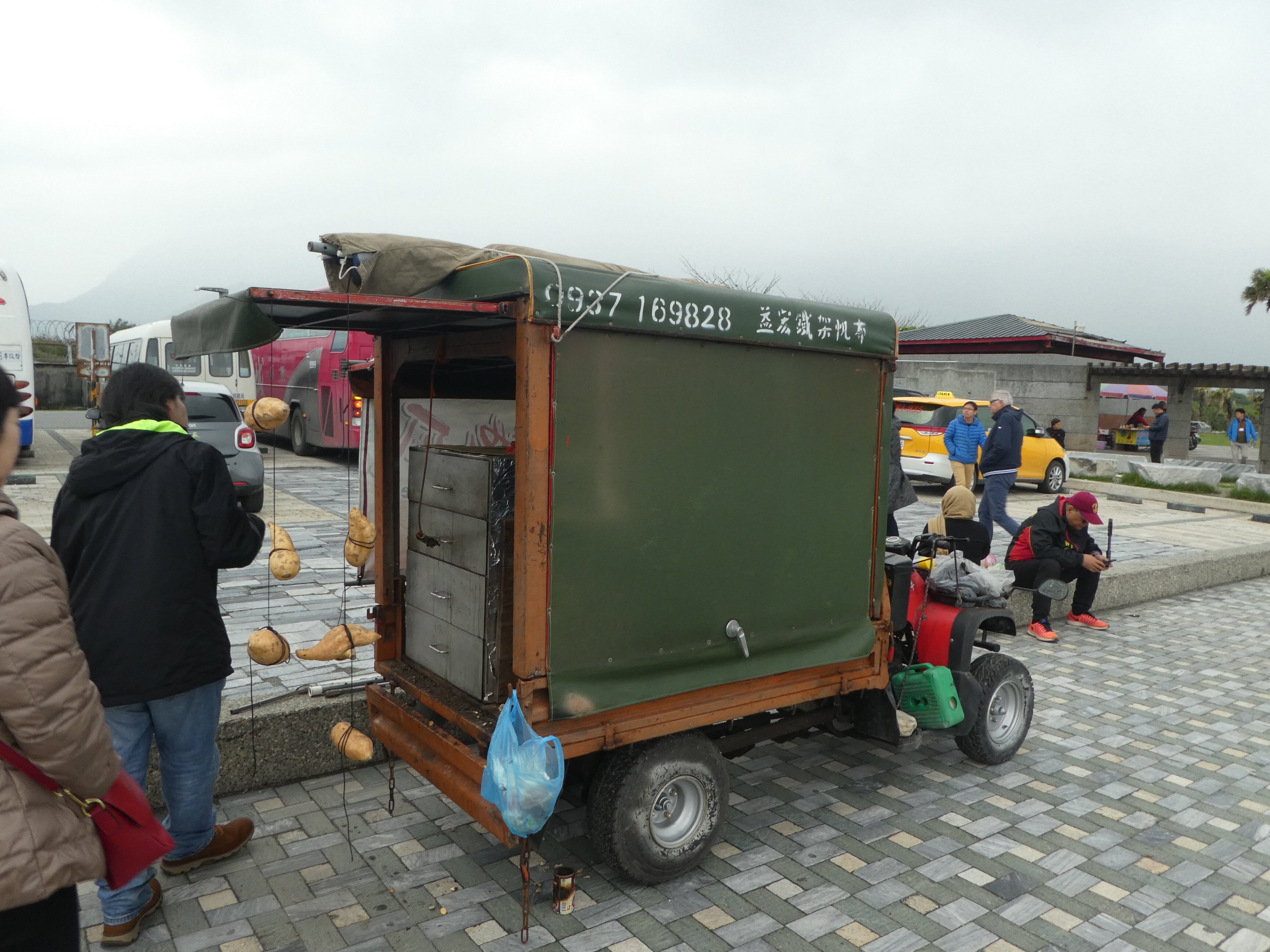
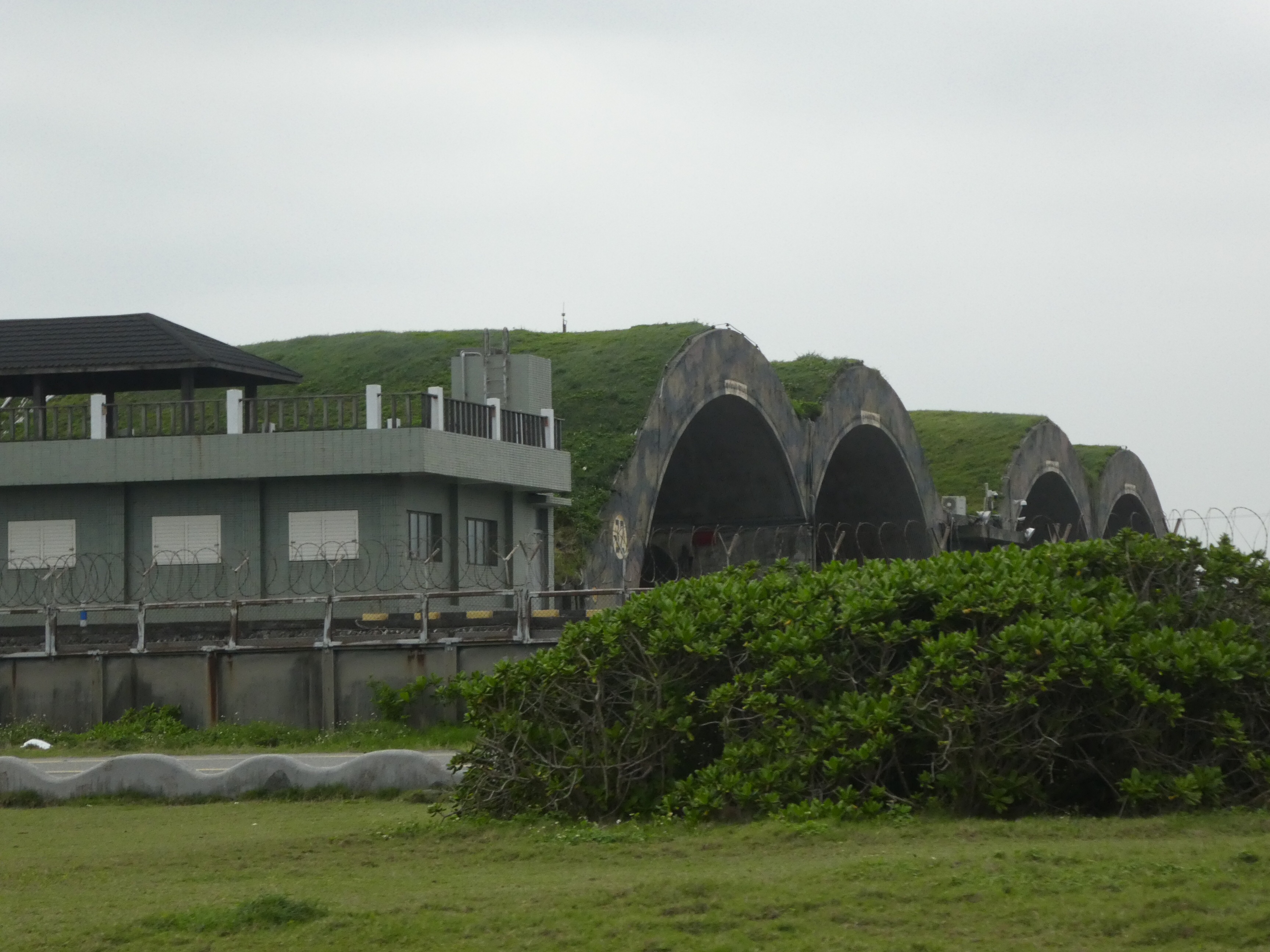
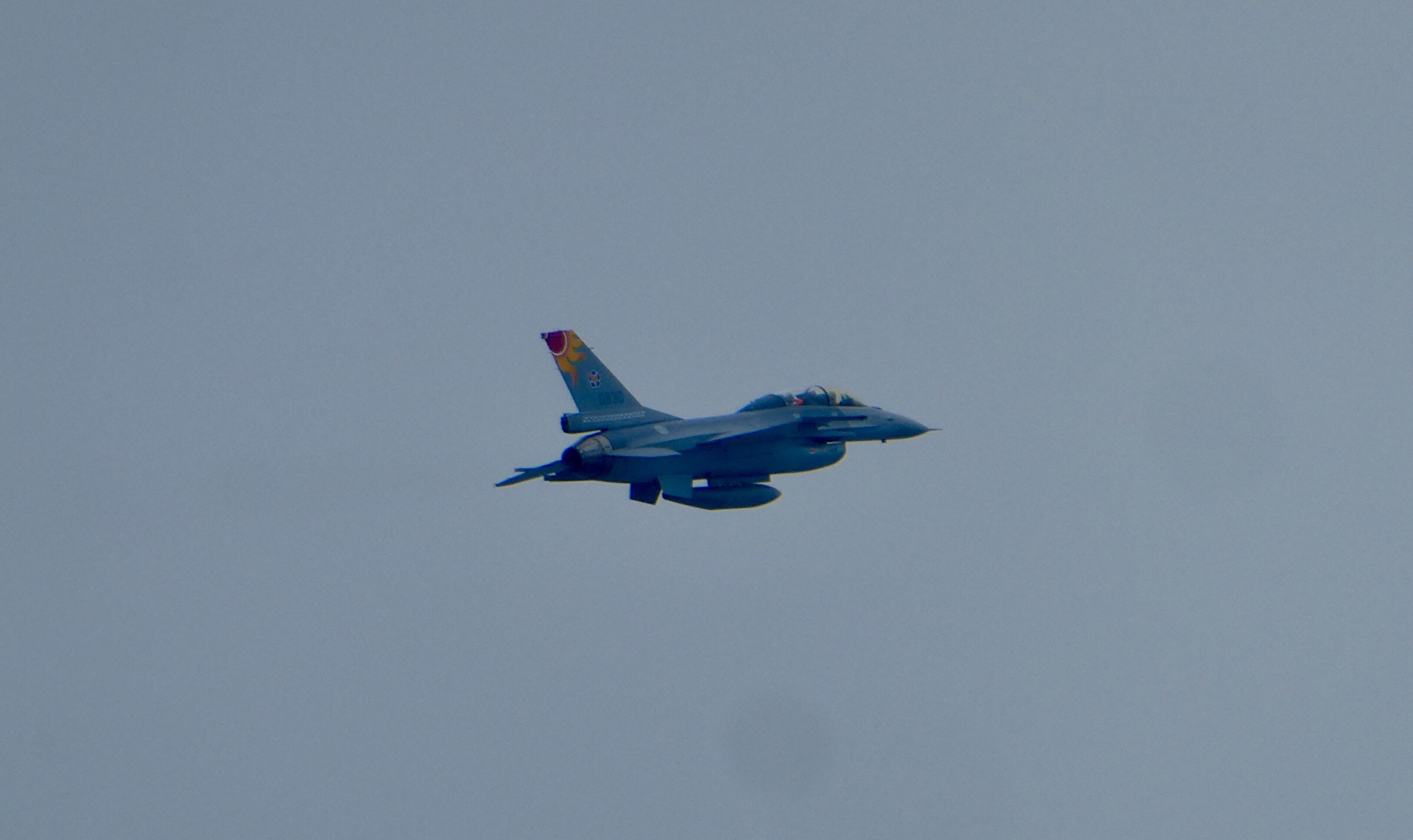
After a lovely three hour train ride south along Taiwan’s eastern coast, we arrived in Hualien, Taiwan. The countryside is mountainous, lush and green. We passed several huge factories, including a Crayola Crayon factory, with huge towers in crayon shapes of primary colors. We passed miles of flooded millet fields. They look very similar to rice paddies. Our Hotel Bayview driver was waiting for us at the train station and took us to our darling accommodation, 15 minutes outside of town, on a gorgeous, pebbly stretch of Qixingtan beach. The hotel upgraded us to a beachfront room. It’s the sweetest little boutique hotel, right on the water. They provide complimentary shuttle service, bicycles, a nice buffet breakfast, beverages and snacks 24/7… at $66 per night…unbelievable! Our hotel is adjacent to an Air Force base, and we’ve enjoyed watching fighter-jets take off and land…such a powerful show of force. We walked on the beach as far as we could in each direction and collected colorful smooth stones. We watched bulldozers pull heavy nets from fishing boats. We enjoyed roasted yams from a roadside truck, and sausage on a stick from another stand. The ocean is gorgeous and the waves are really strong. When the water recedes, you can hear the rocks clicking as they drop back down on the shoreline.

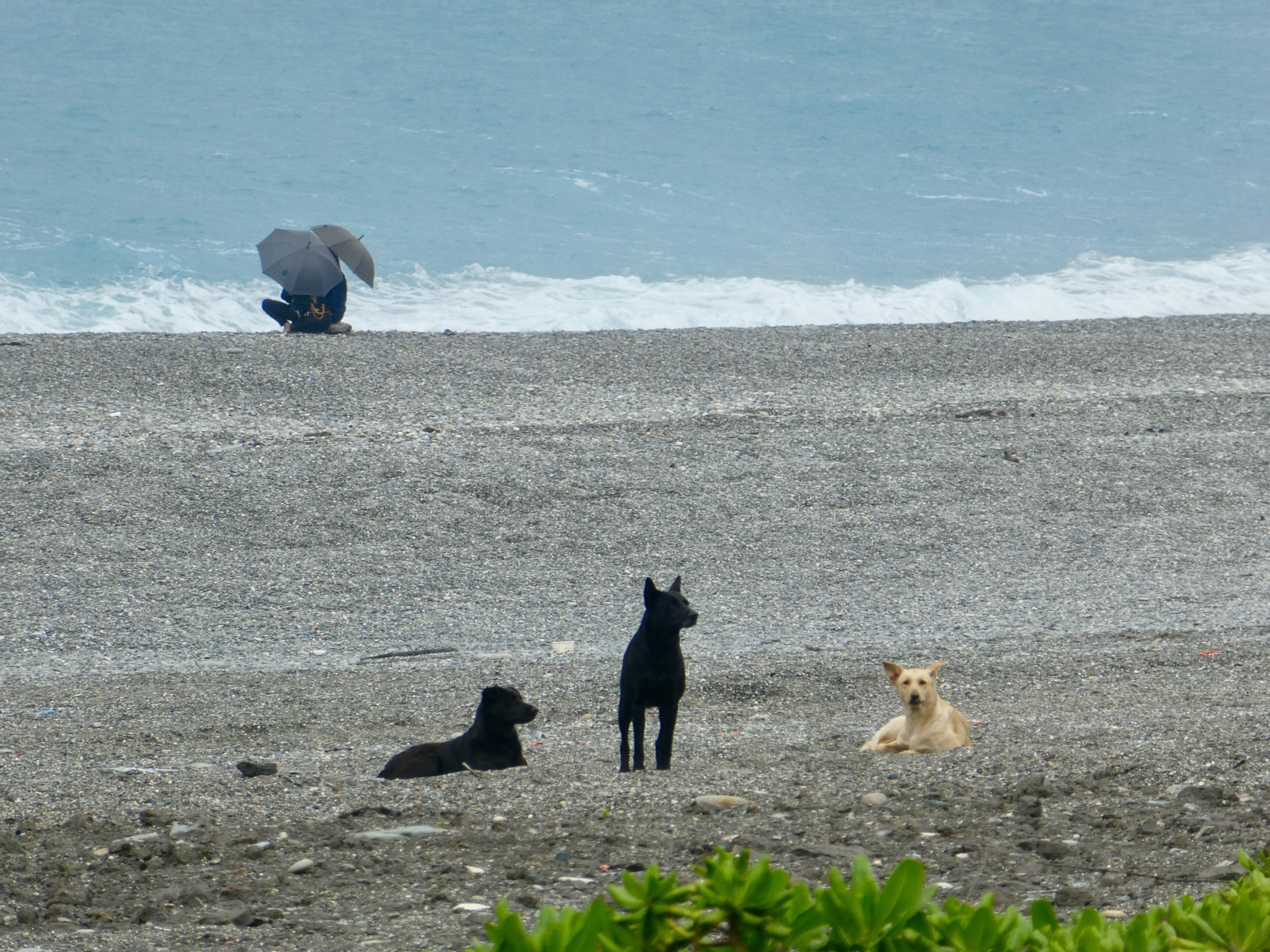
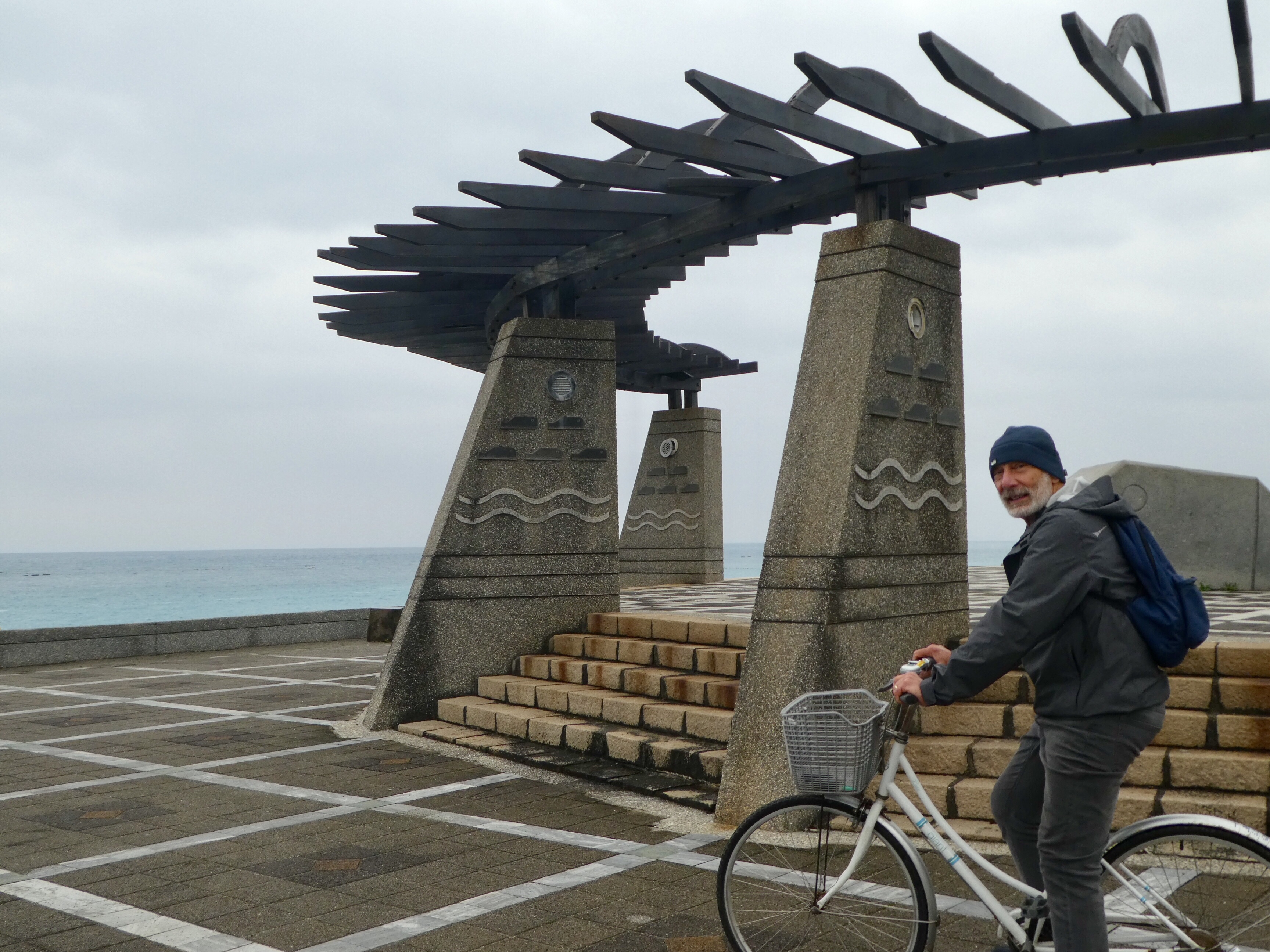
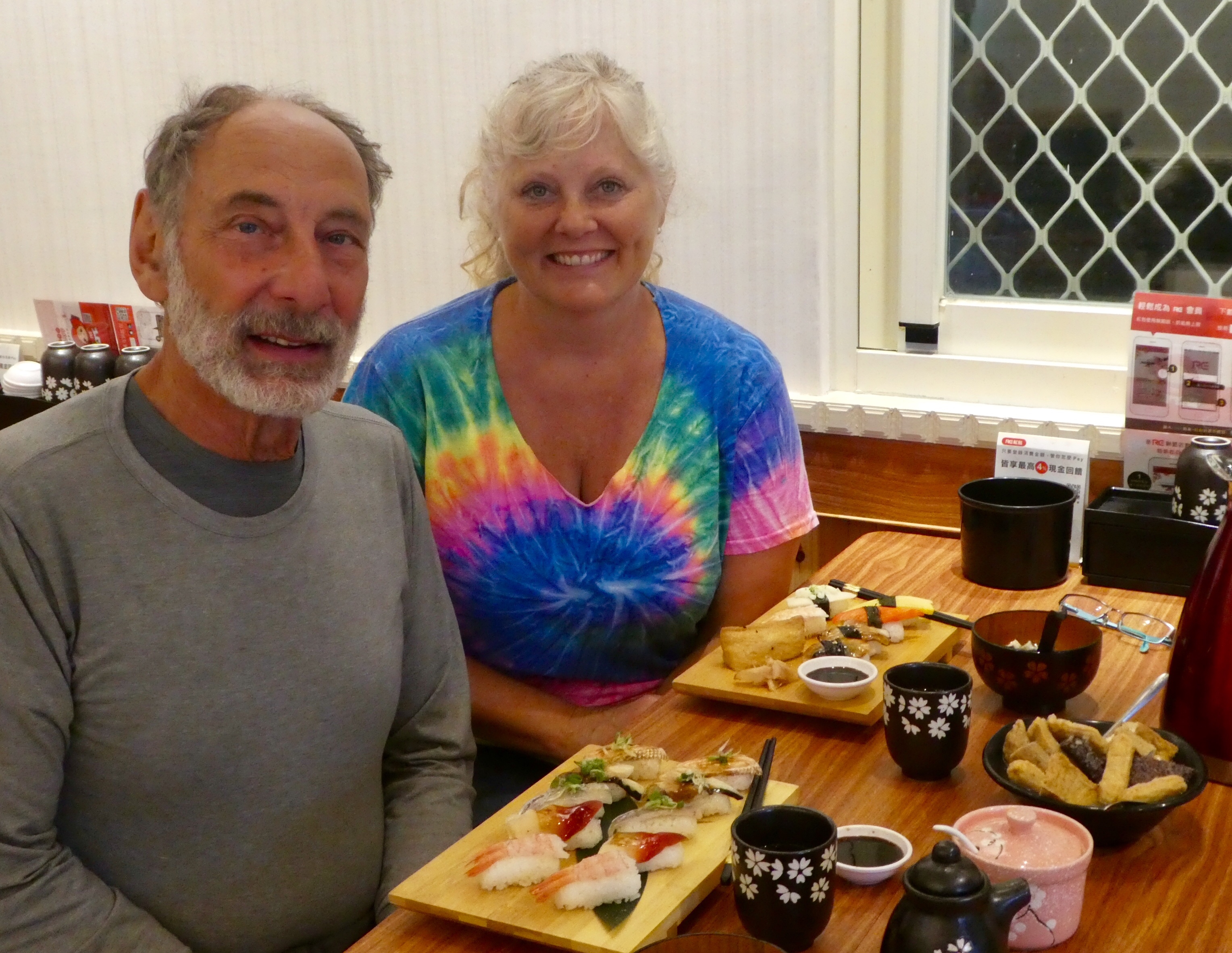
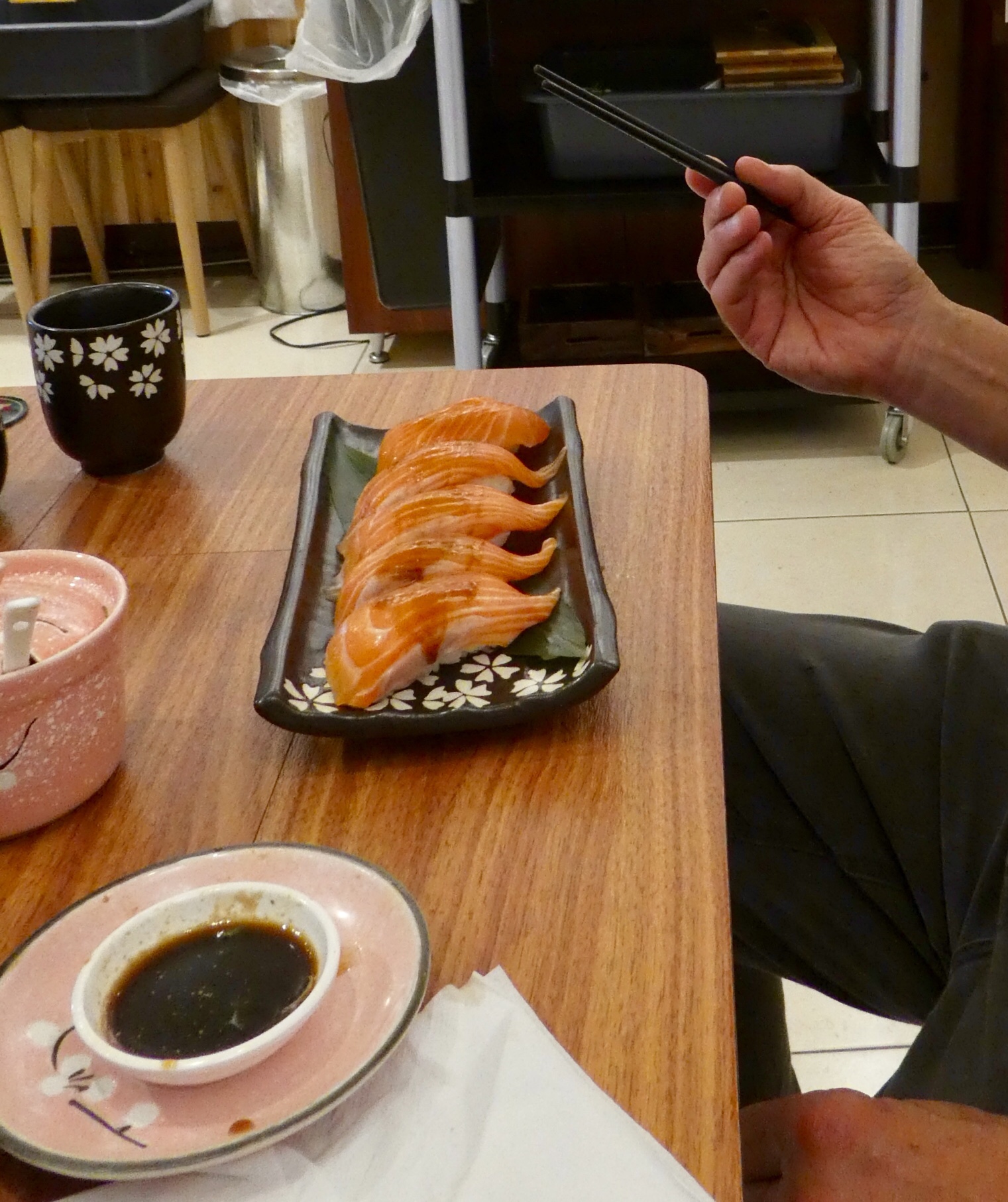
We took a 10 mile round-trip bike ride along a beach promenade into Hualien. There were wonderful ocean views along the way. We had a great lunch at a Japanese style sushi restaurant. We ate 24 sushi, miso soup, a tofu tempura bowl, and drank tea for only $19! We were in sushi Heaven. There are stray dogs and cats running loose everywhere. Locals feed them. They all seem to get along with each other and with the tourists.

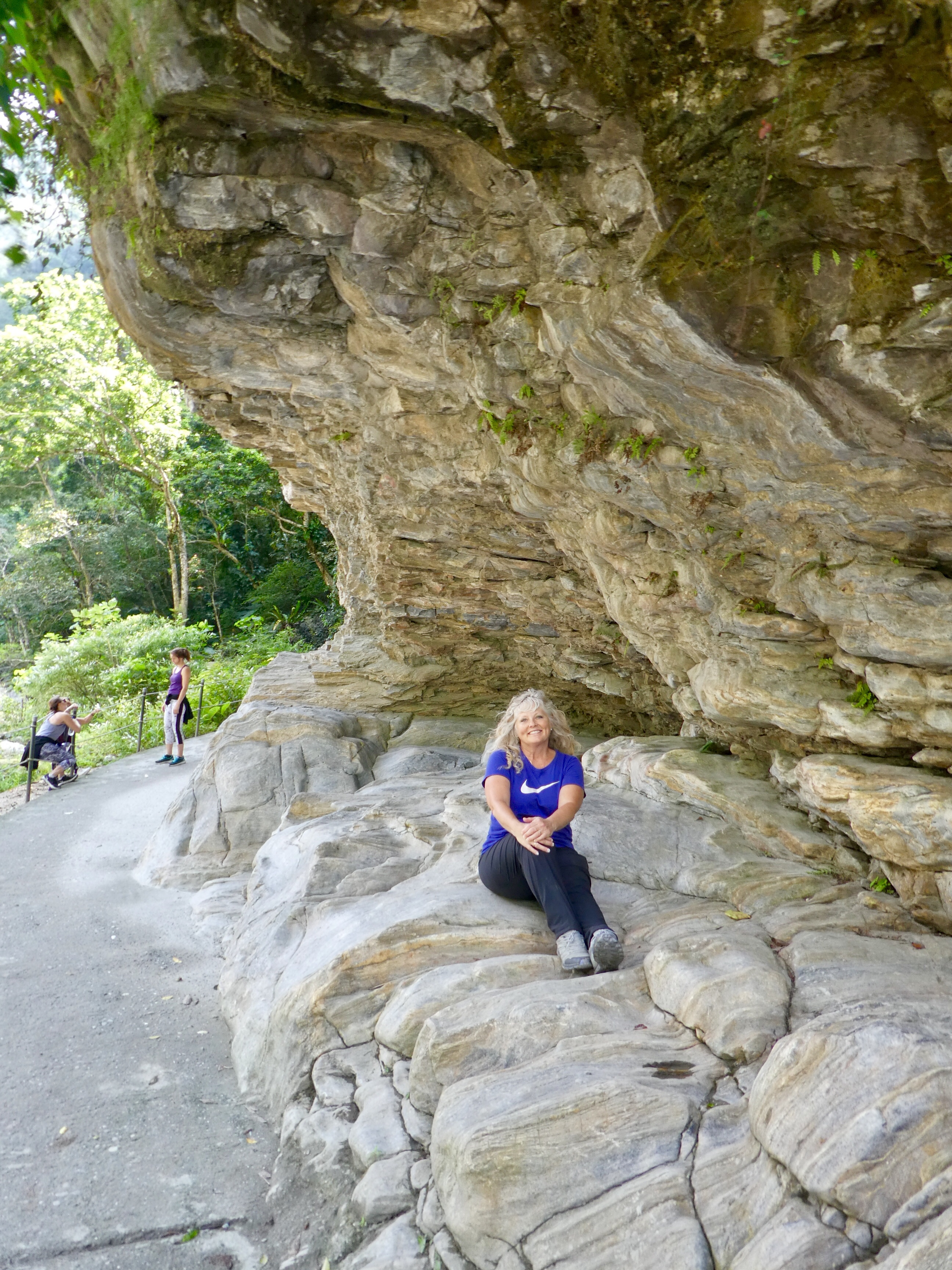
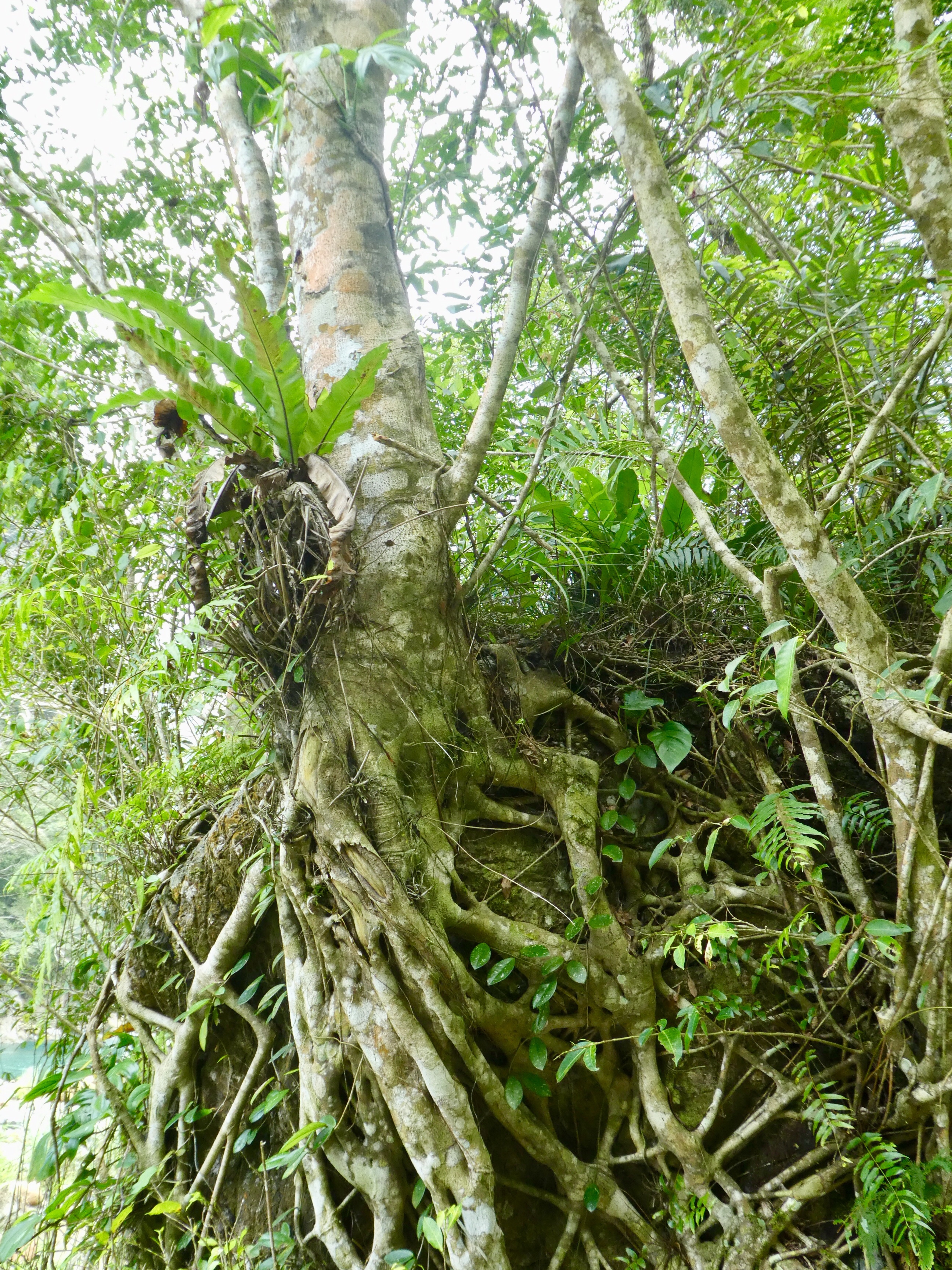
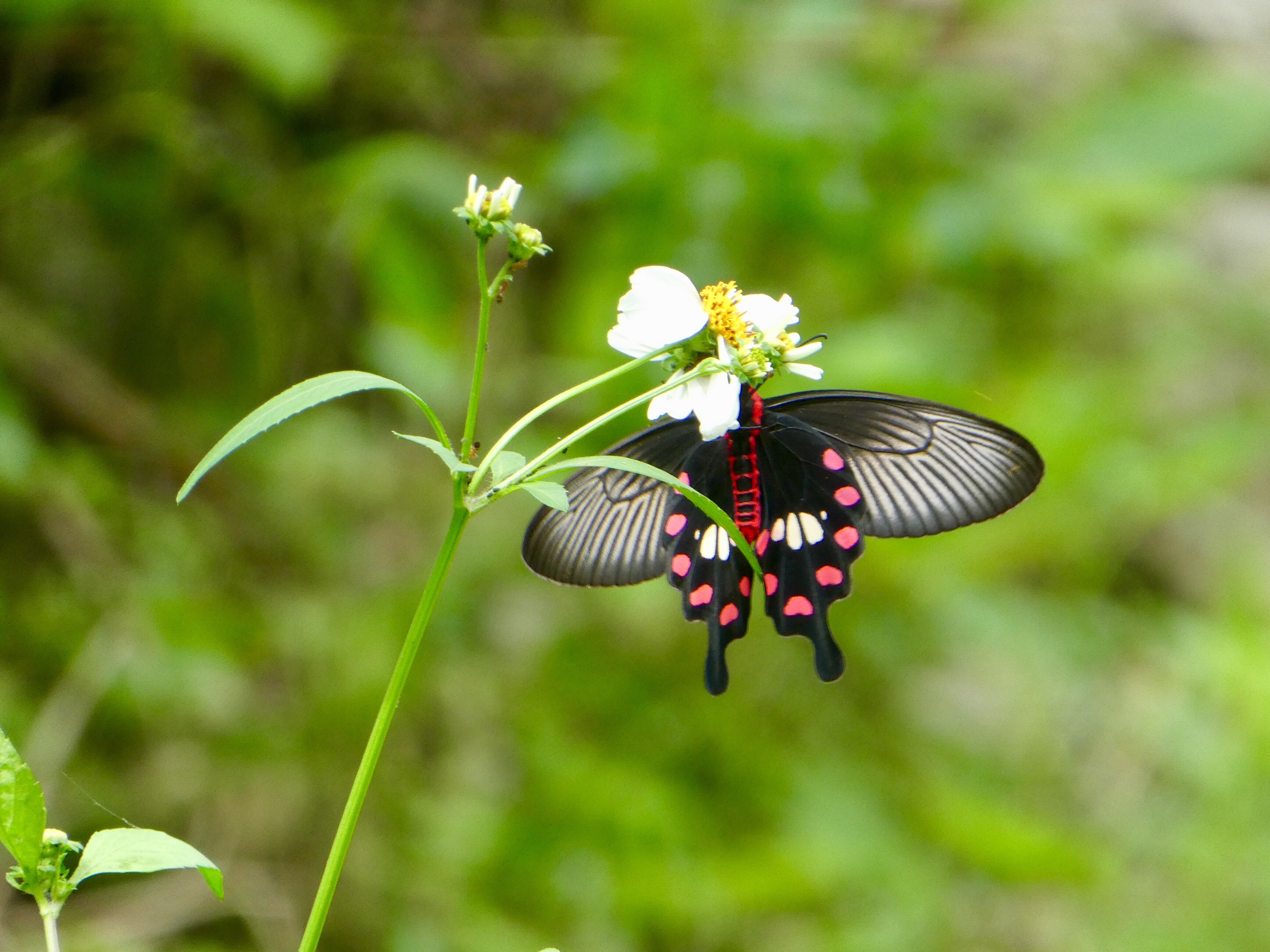
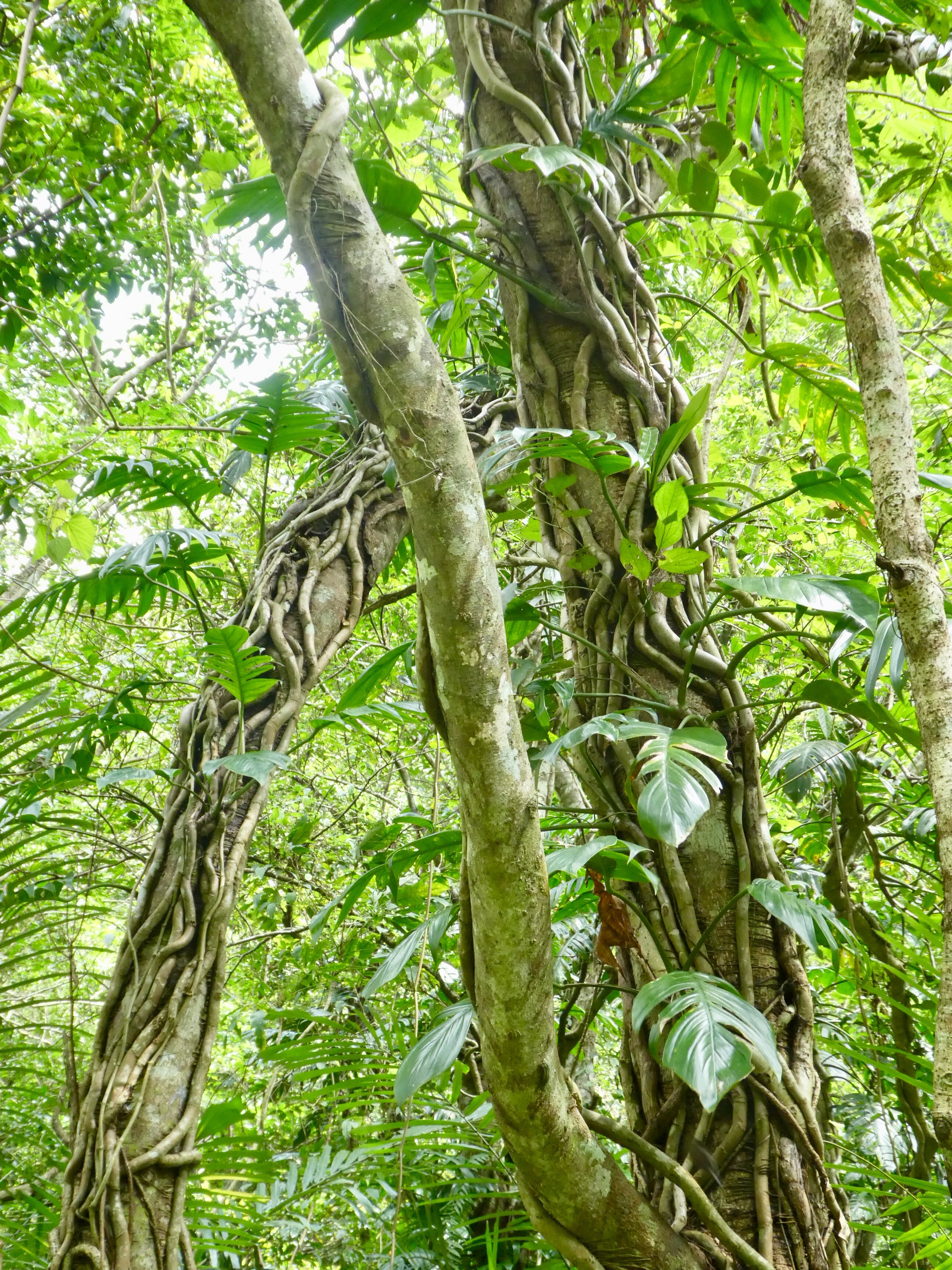
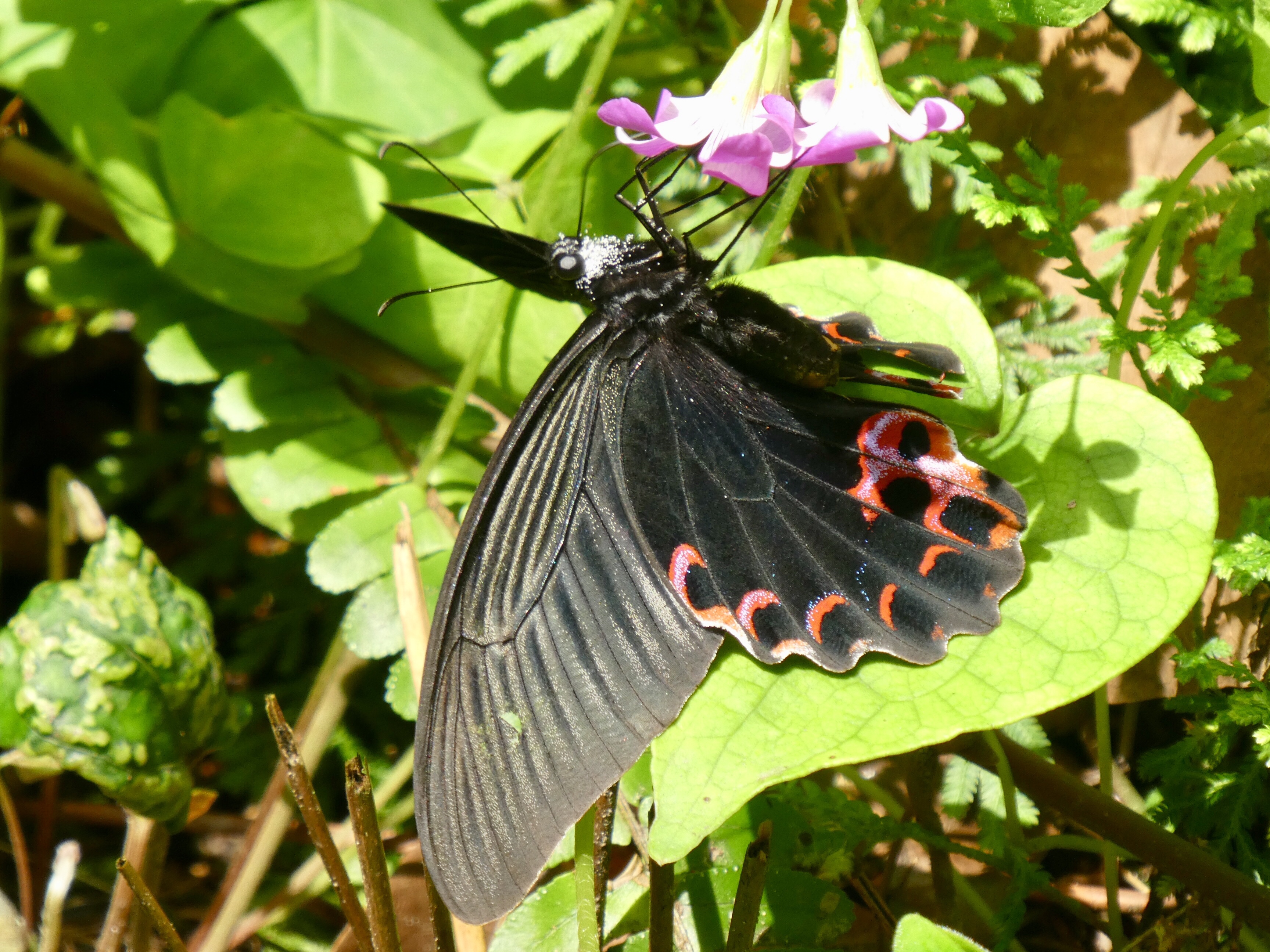
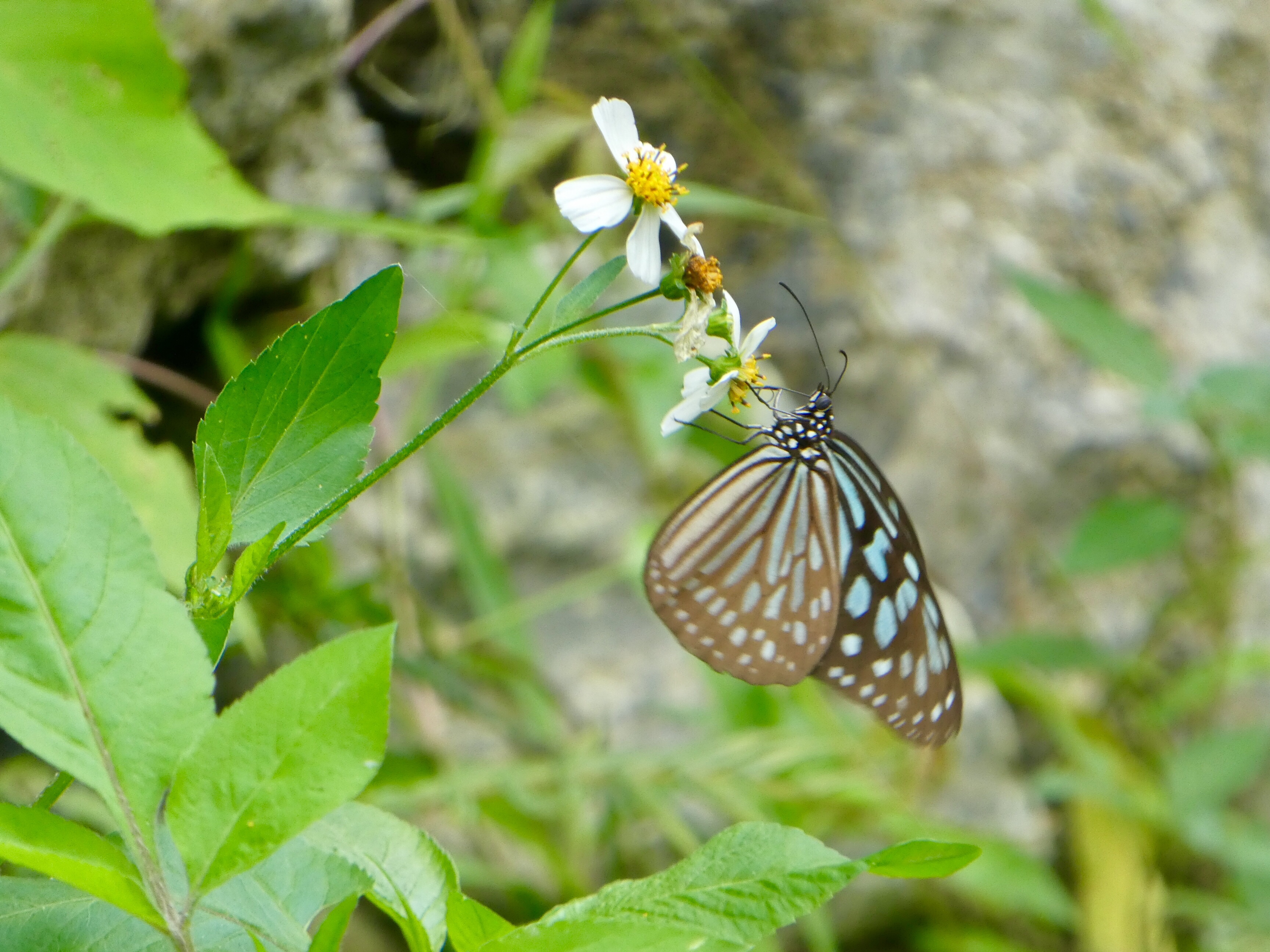
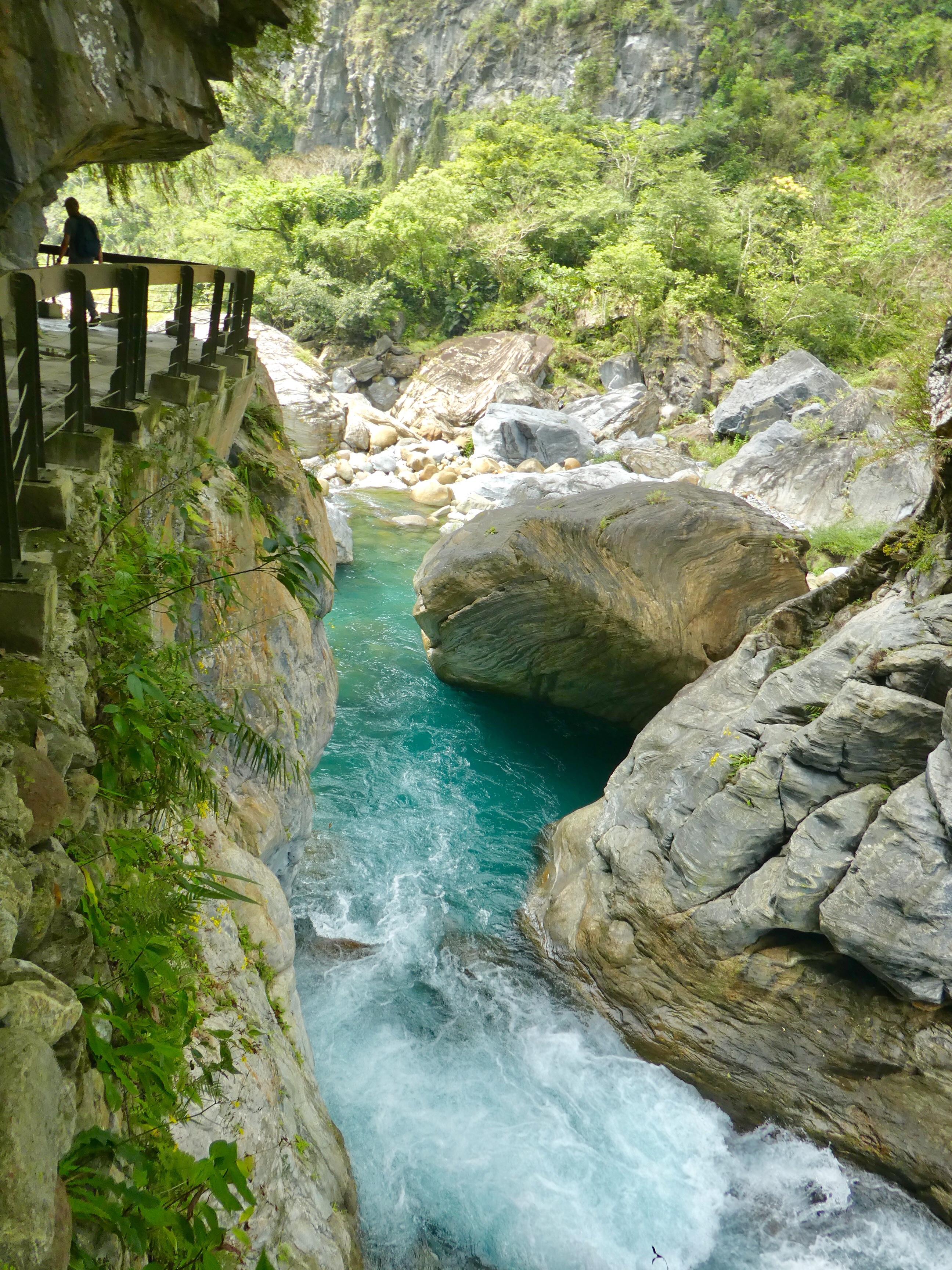
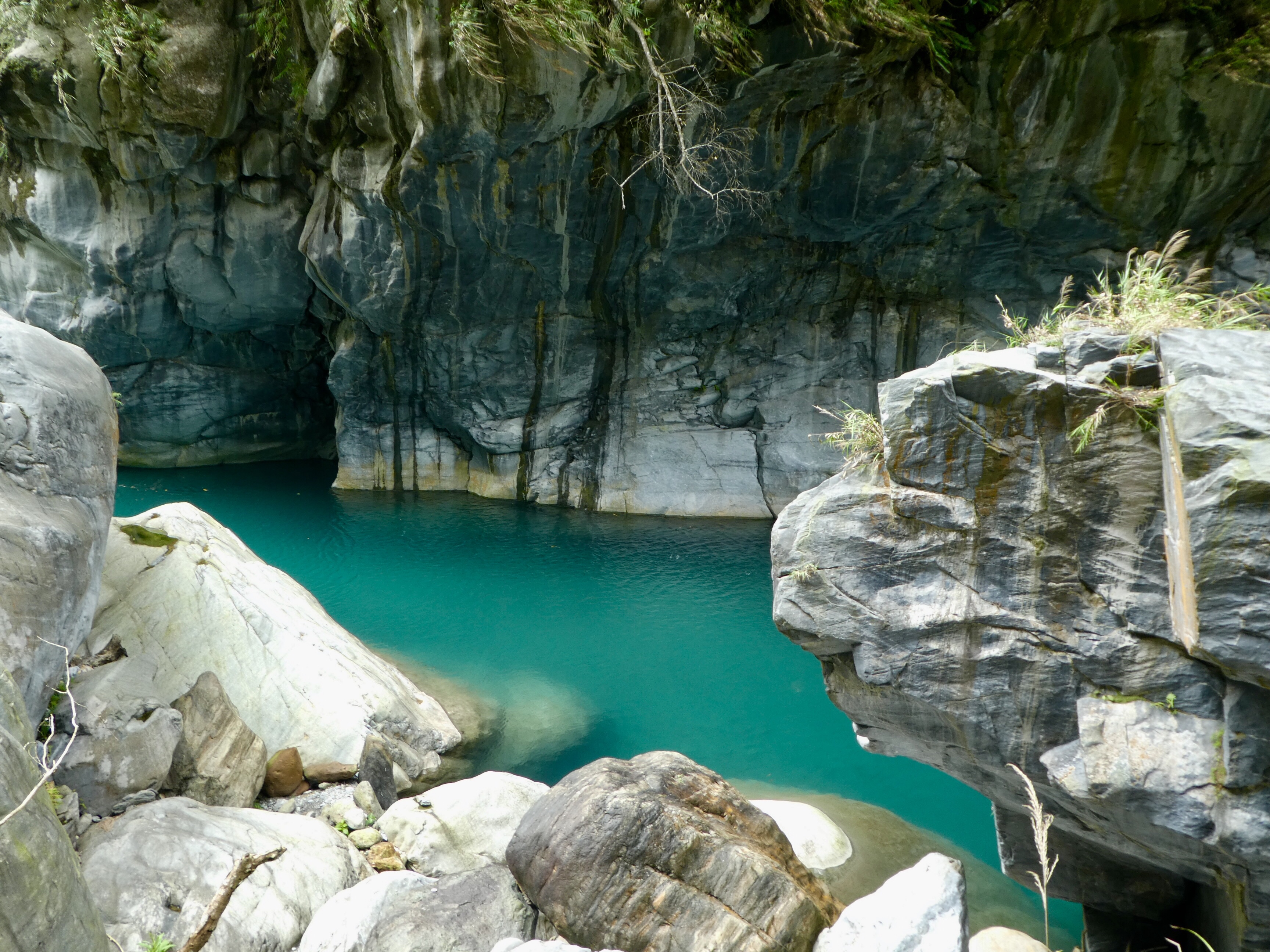
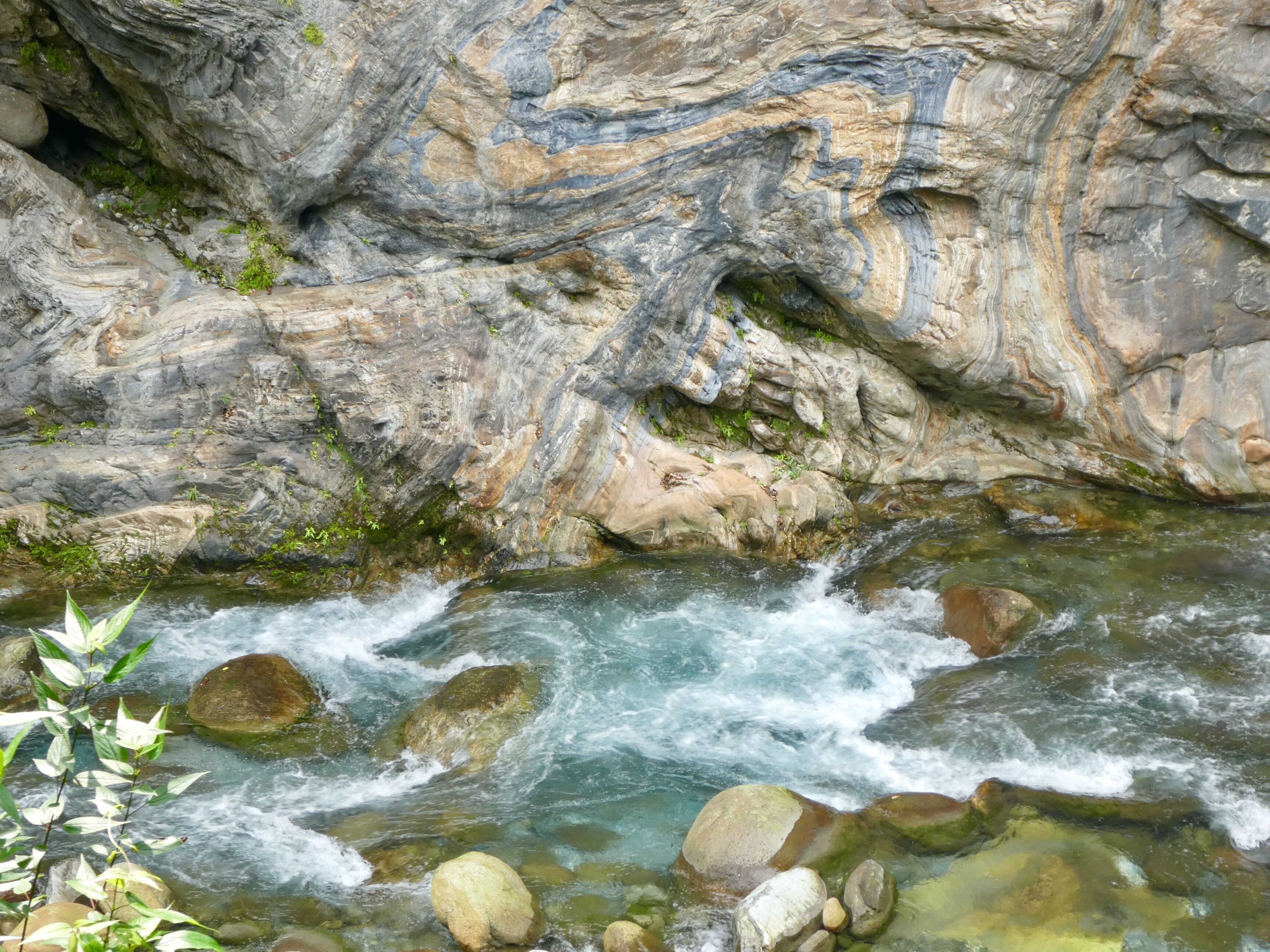
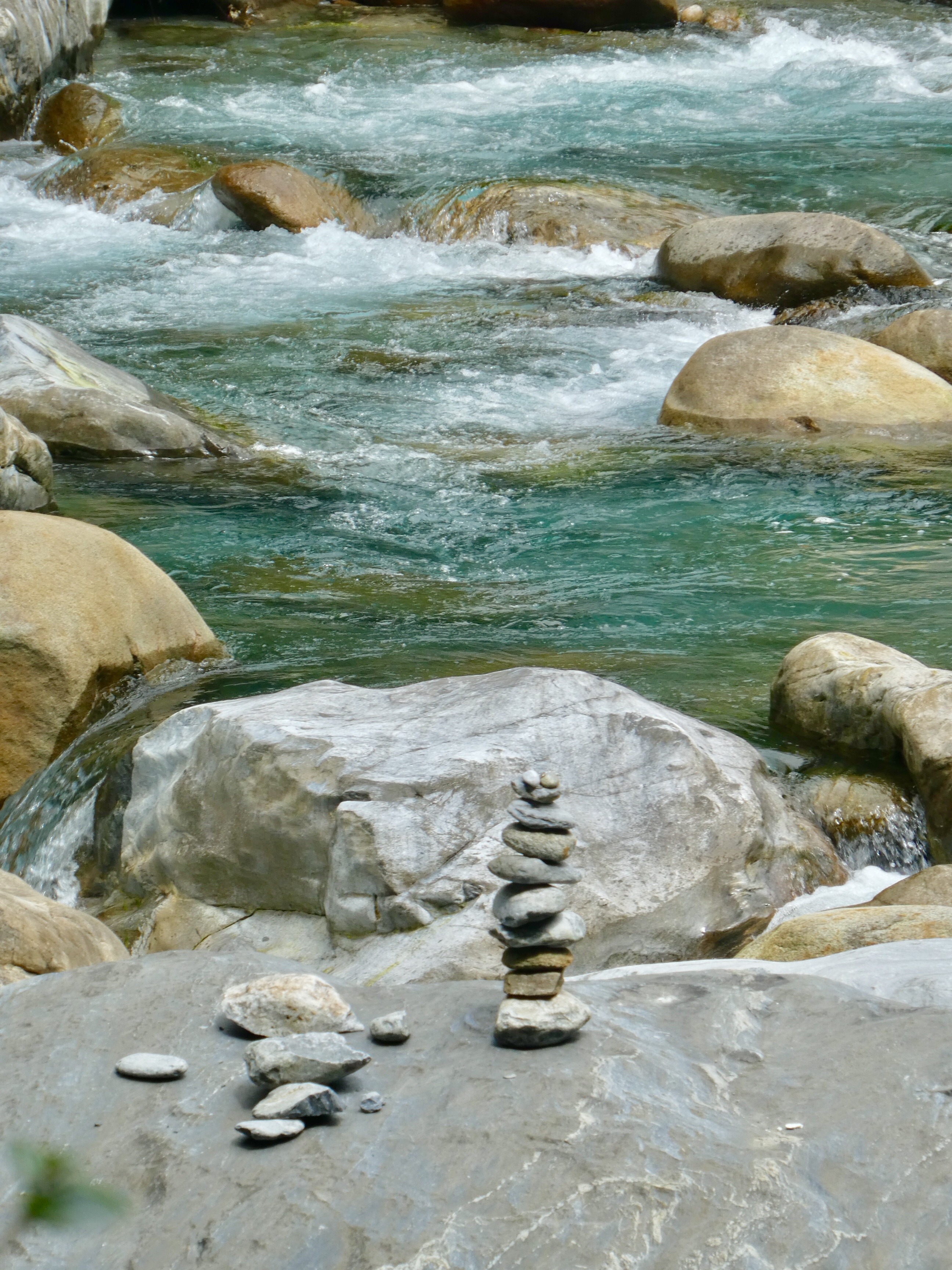
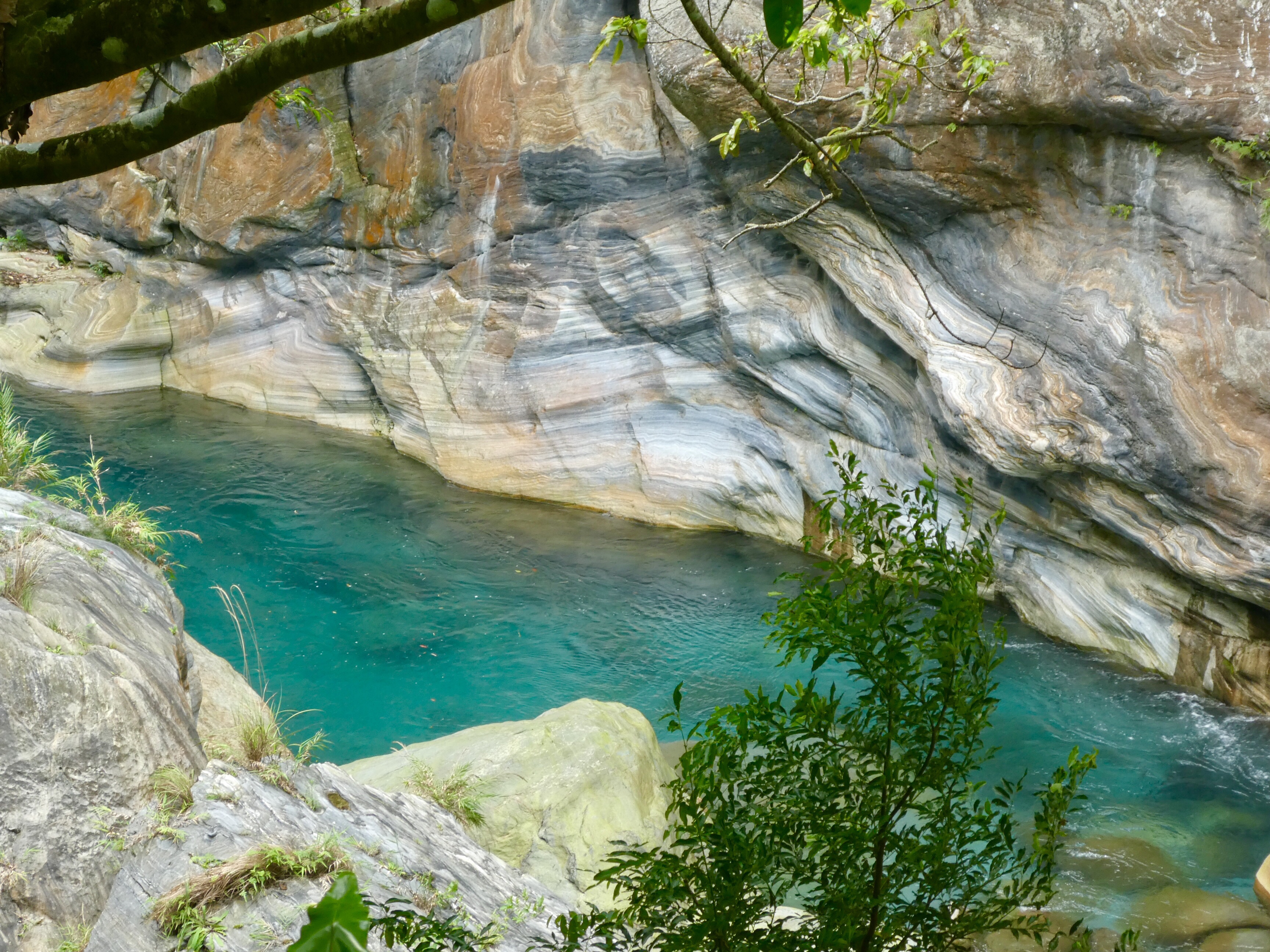
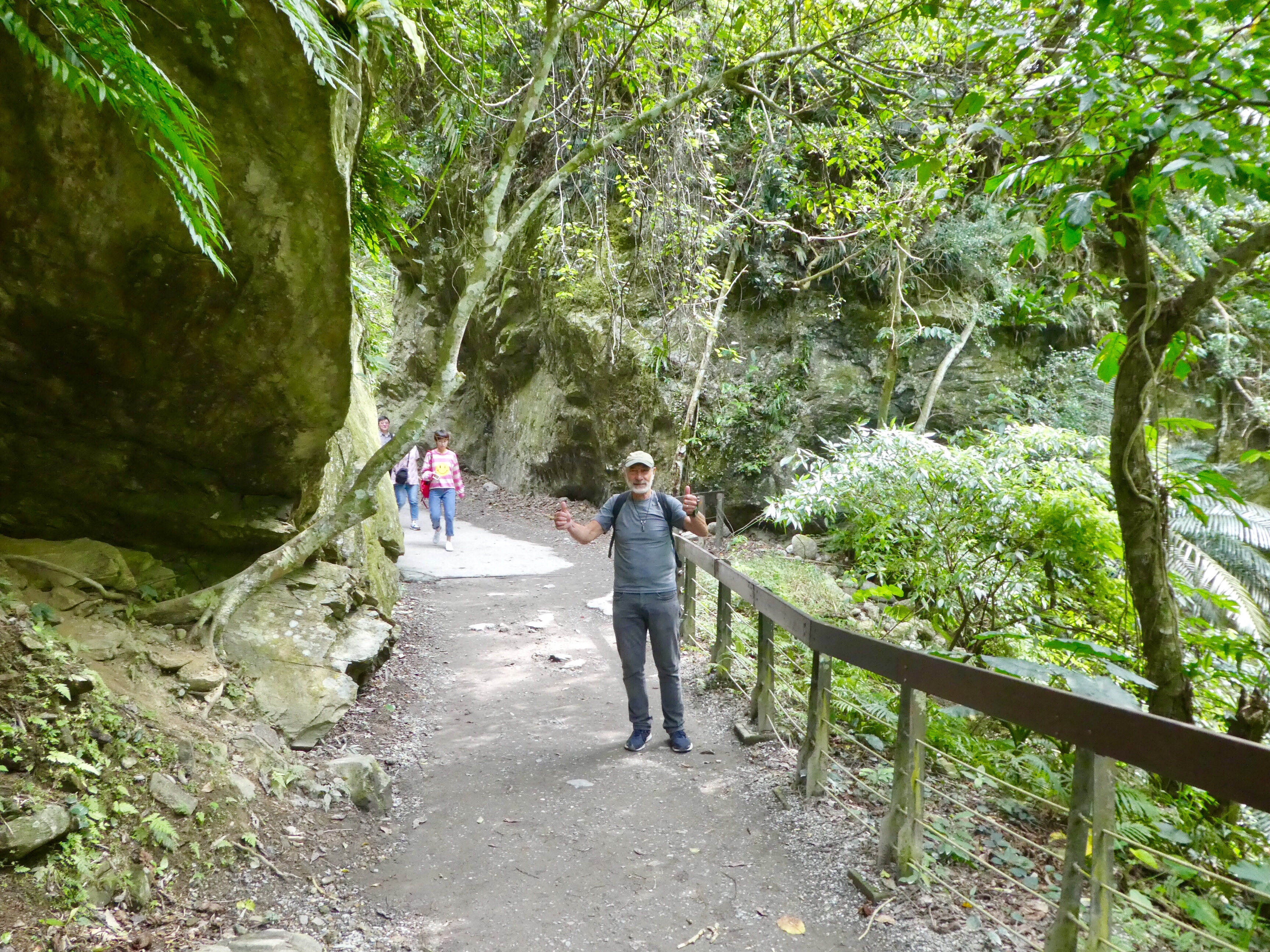
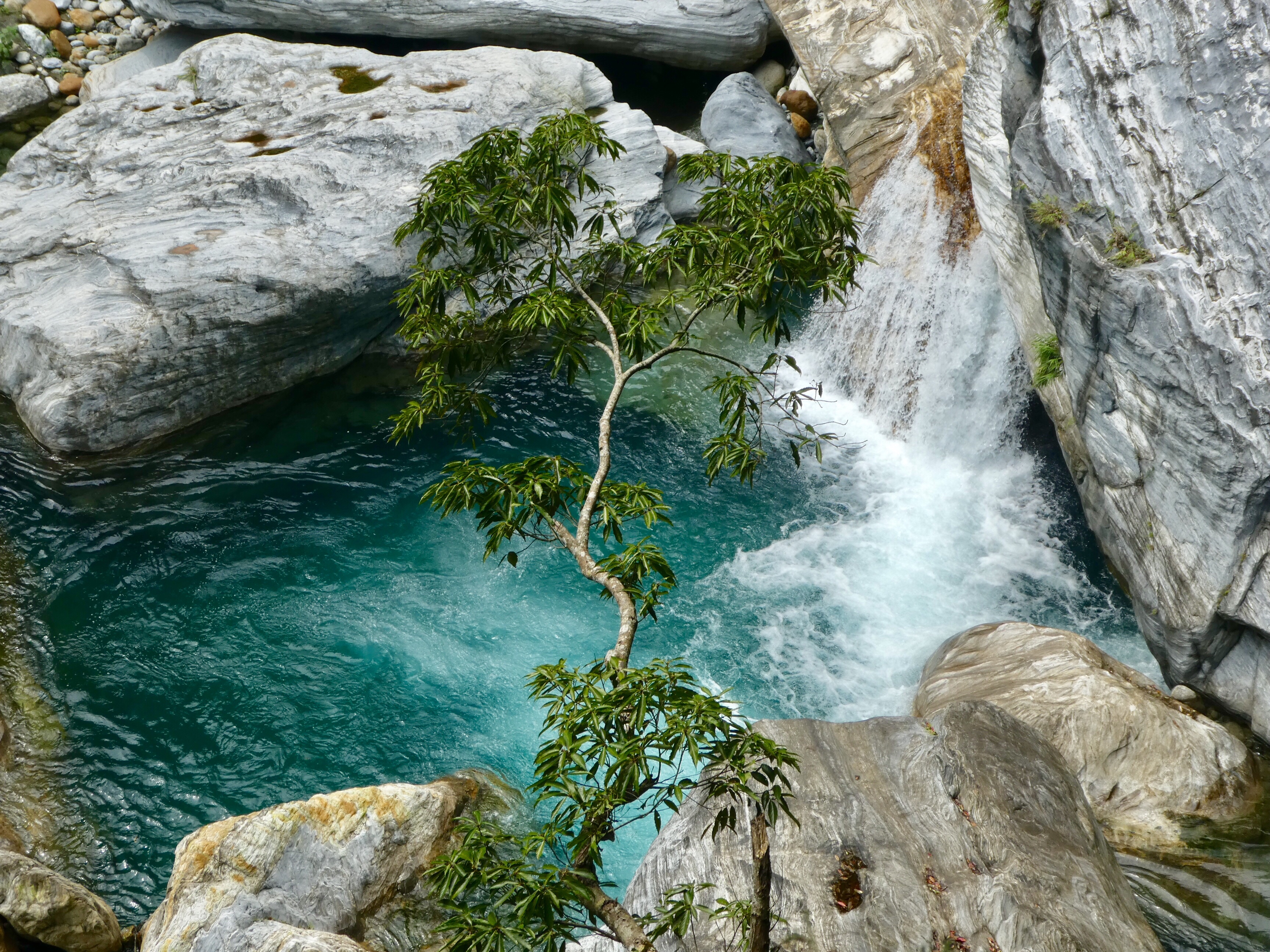
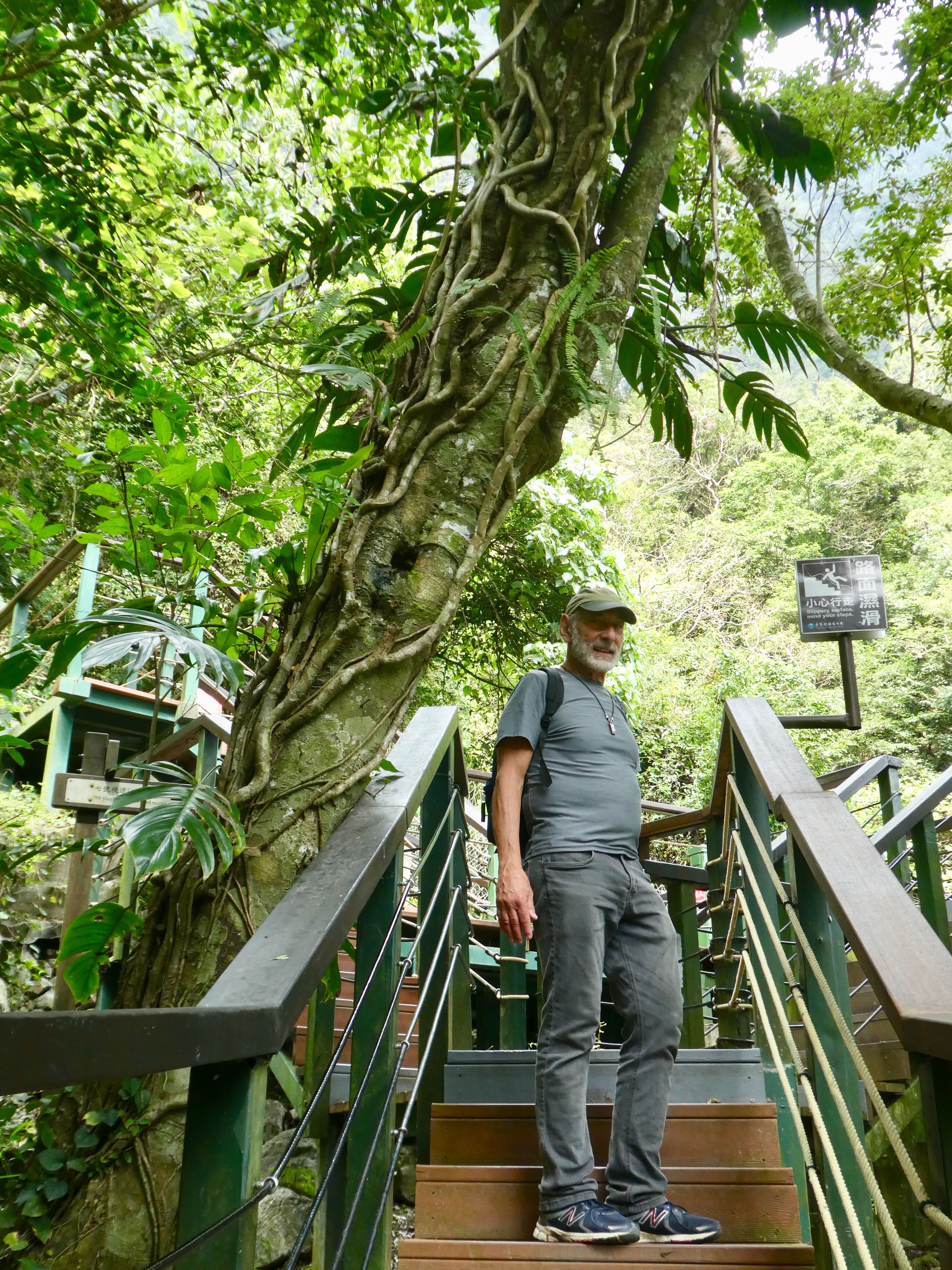
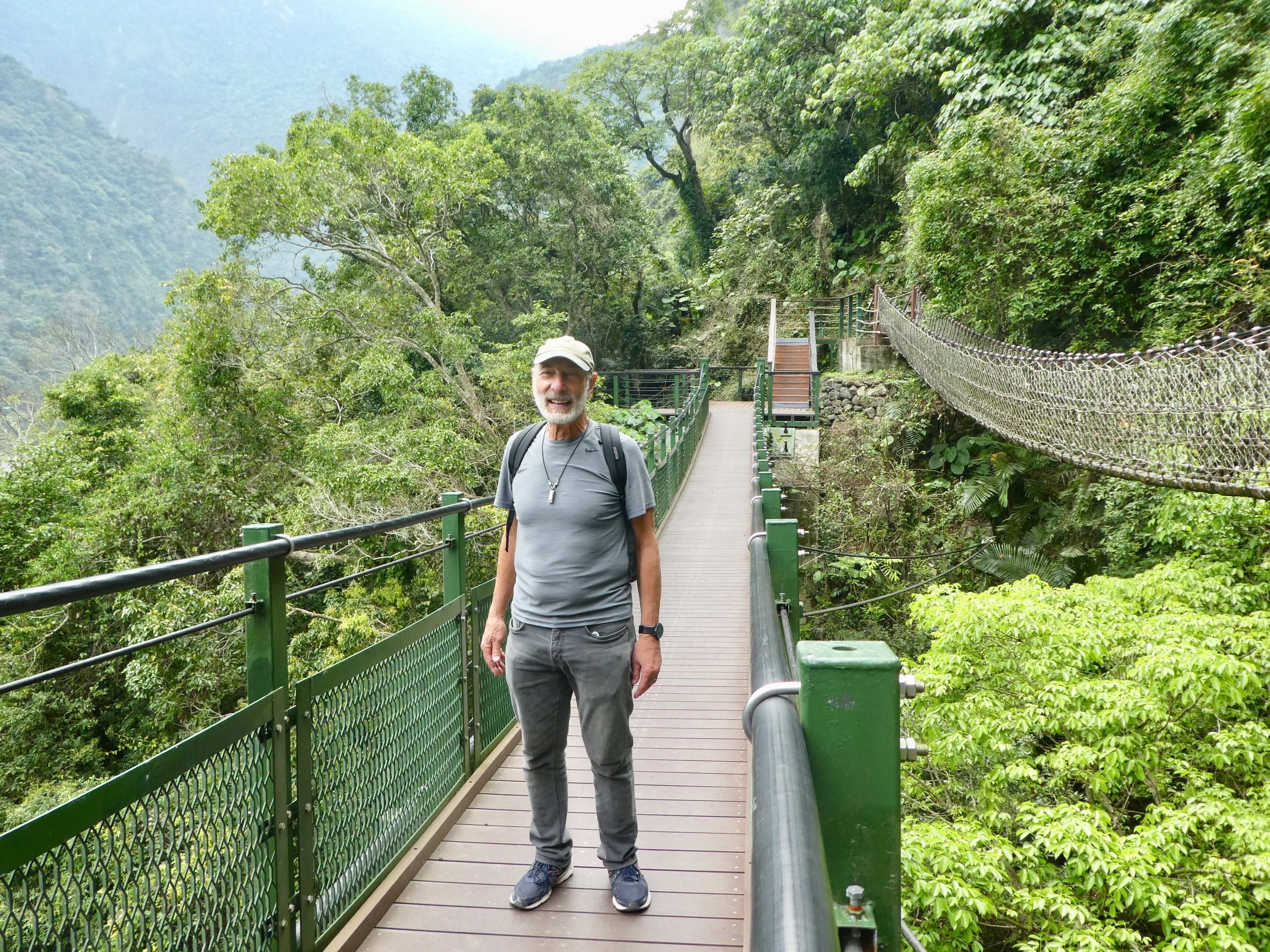
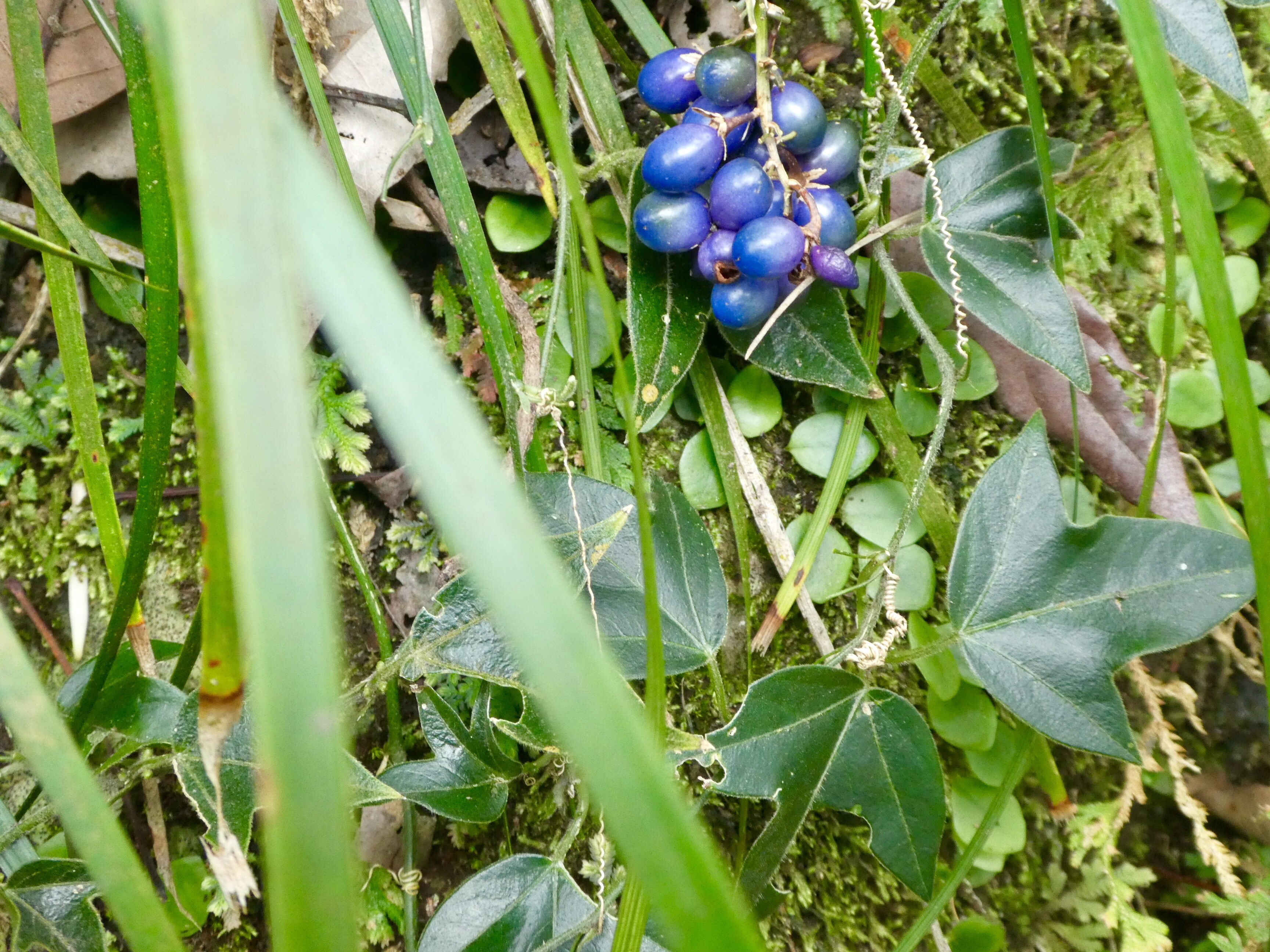
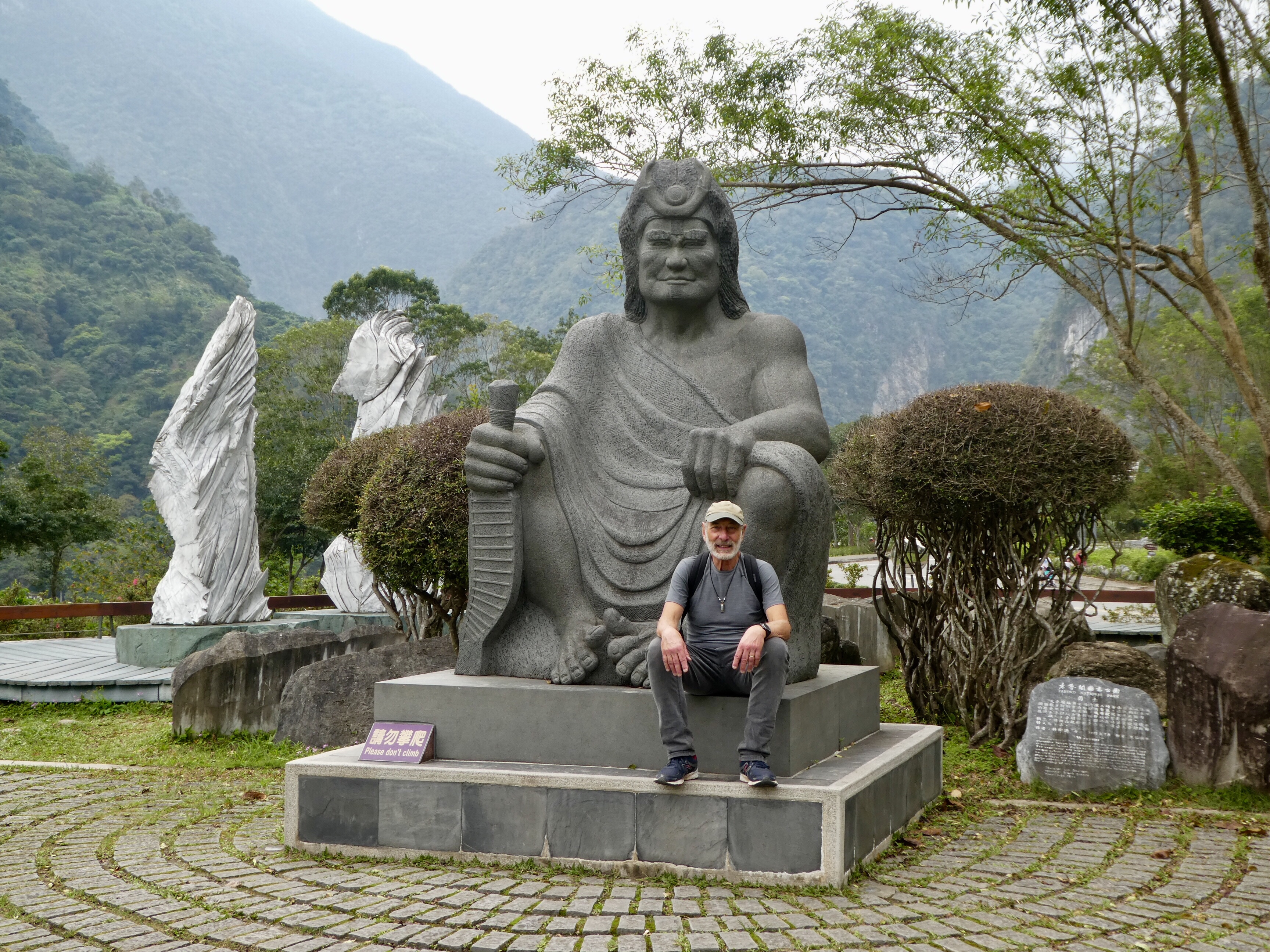
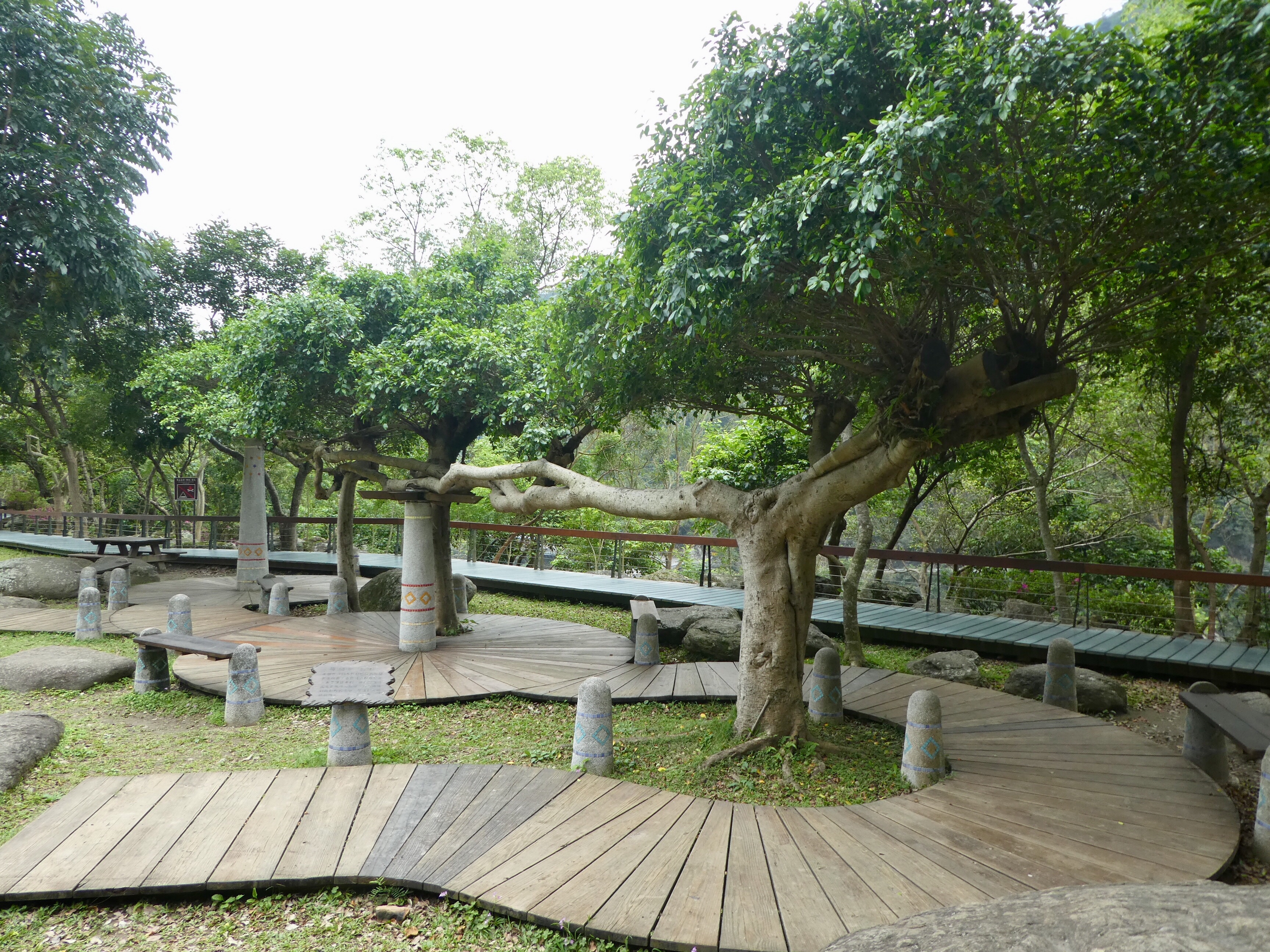
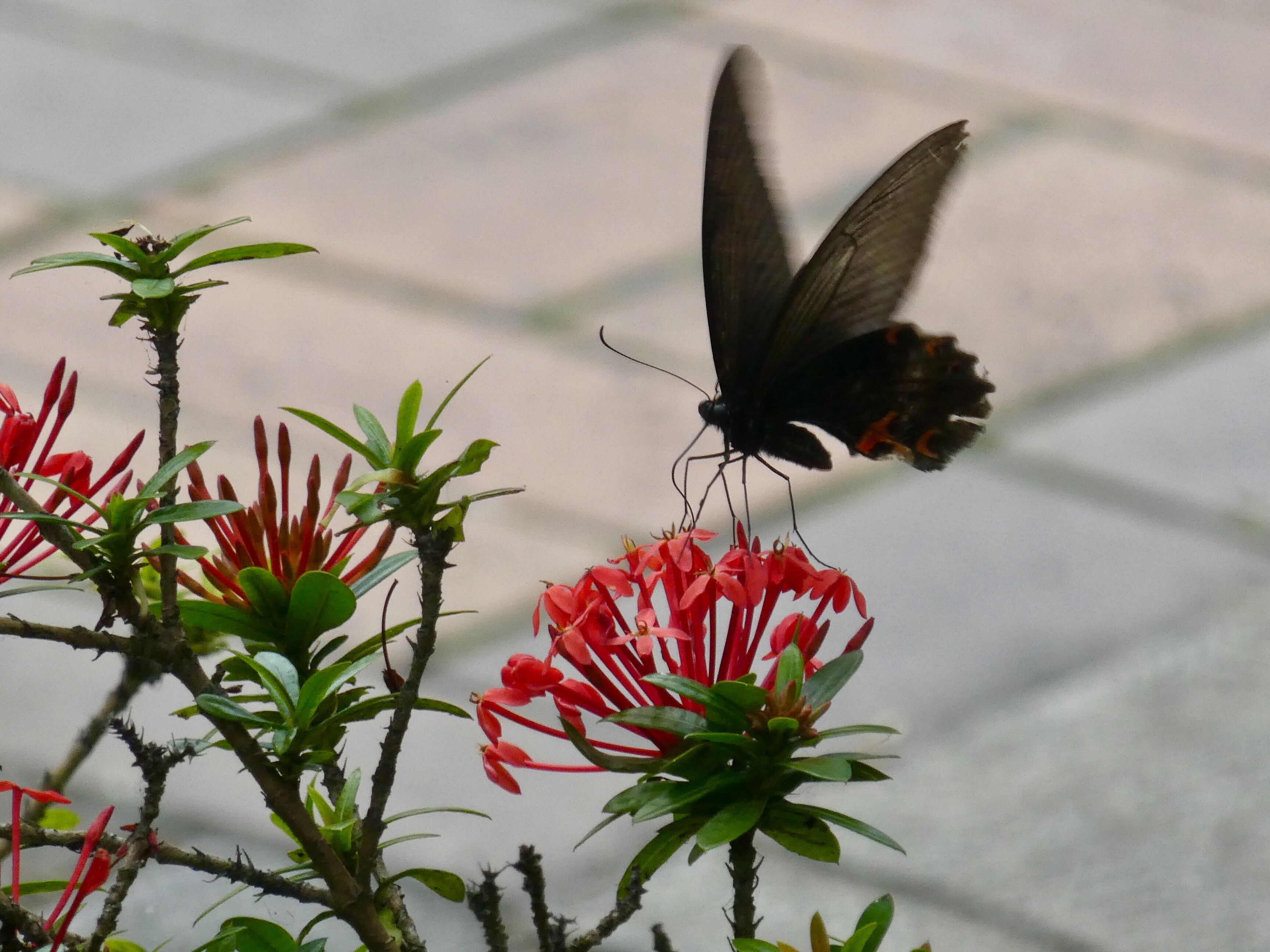
The hotel took us to the Taroko National Park bus stop and within 30 minutes we were hiking the gorge. The Shakadang River waters are crystal clear, the surrounding mountains steep and picturesque. We hiked the Shakadang trail and a trail to the visitor center for a total of 7 miles. These trails are loaded with tourists but still quite scenic. There were lots of beautiful butterflies, flowers, large leafy greenery, and twisted vines and roots.

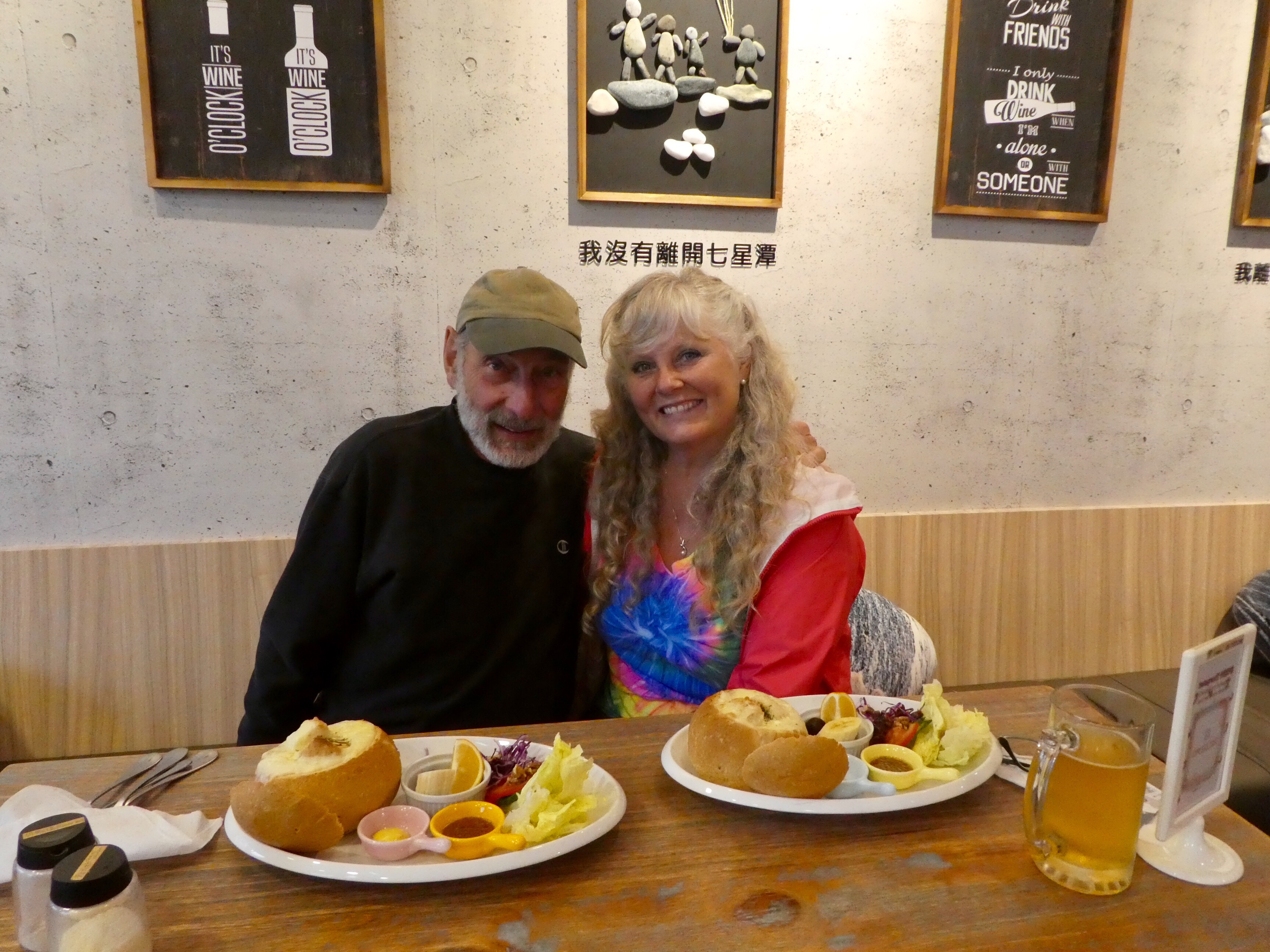
The dining options near the hotel are a bit strange to us westerners. We had a fish stir fry one evening that wasn’t too good, and fish soup loaded with spiked bones. We told our hotel manager he should open a fish and chips. It would be an instant success. We did find an excellent bakery/restaurant called “I See U,” and enjoyed bacon-corn chowder bread bowls there.

We will take a two-hour train ride back to Taiwan tomorrow and fly to Seoul, South Korea the following day. We have really enjoyed our time in Taiwan. People are fairly relaxed and kind. We’re so glad we explored Taiwan a bit more on this trip!

Hope you are all doing well.

Love n hugs,

BnL

ggyug

Jiufen, Taiwan…Stairway to Heaven

Dear Friends and Family,

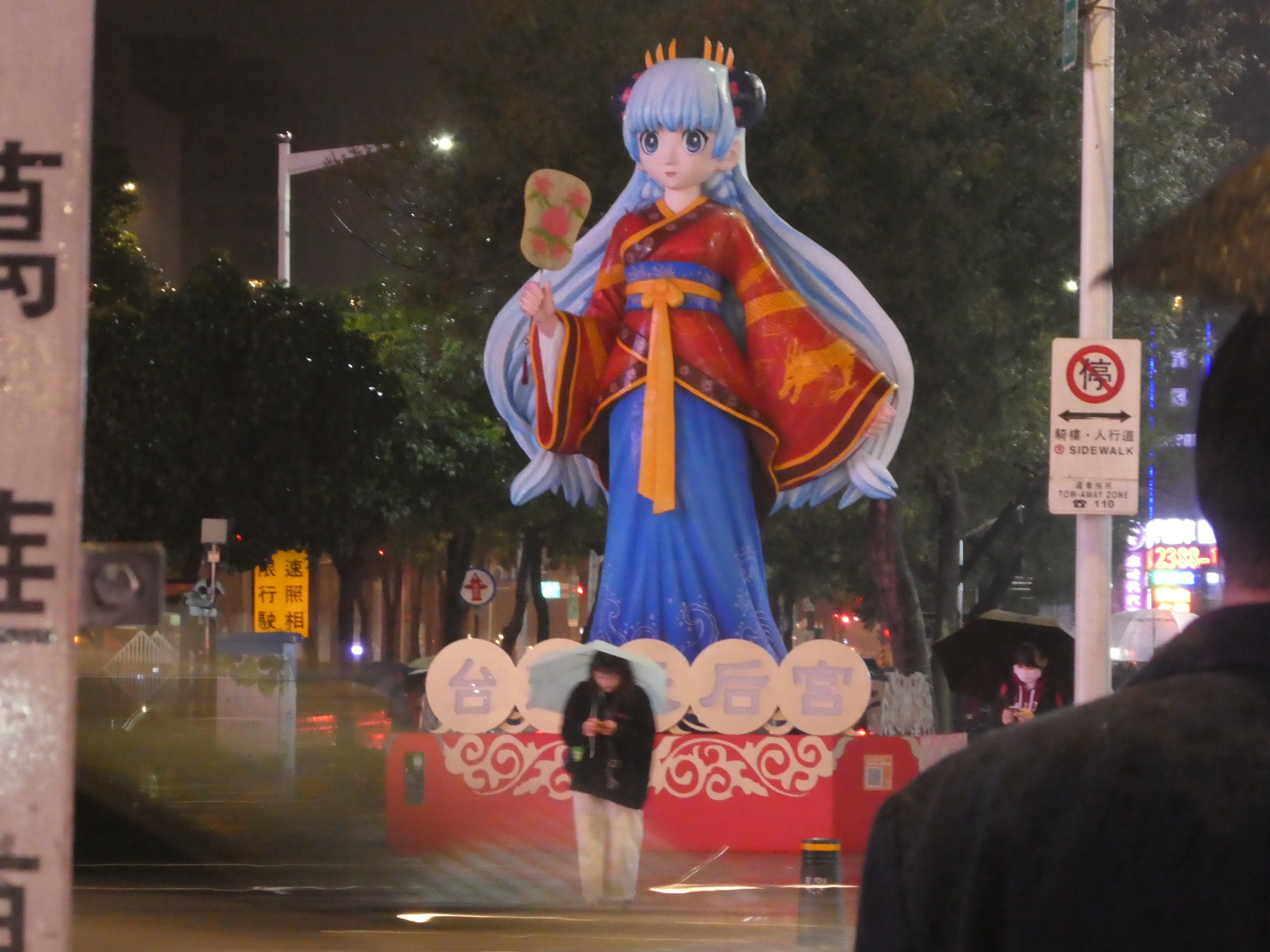
We flew from steamy, hot Malaysia into rainy, cool Taipei, Taiwan. We stayed near noisy, bustling, Xiemen Station, where “Animae” is very popular. Bruce scouted us a late dinner. After a very long day, we crashed for the night, in spite of the neon lights and commotion right outside our door.

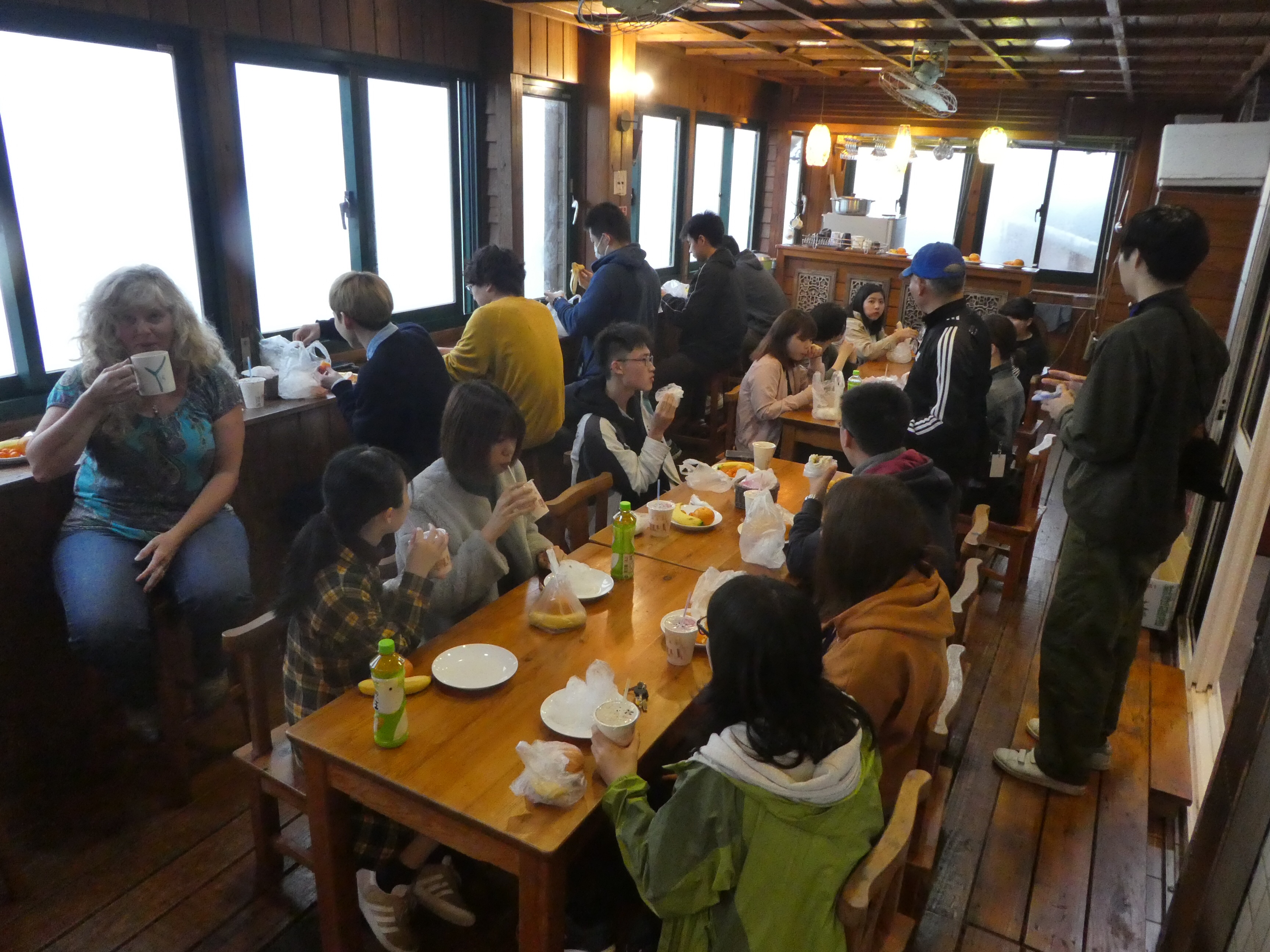
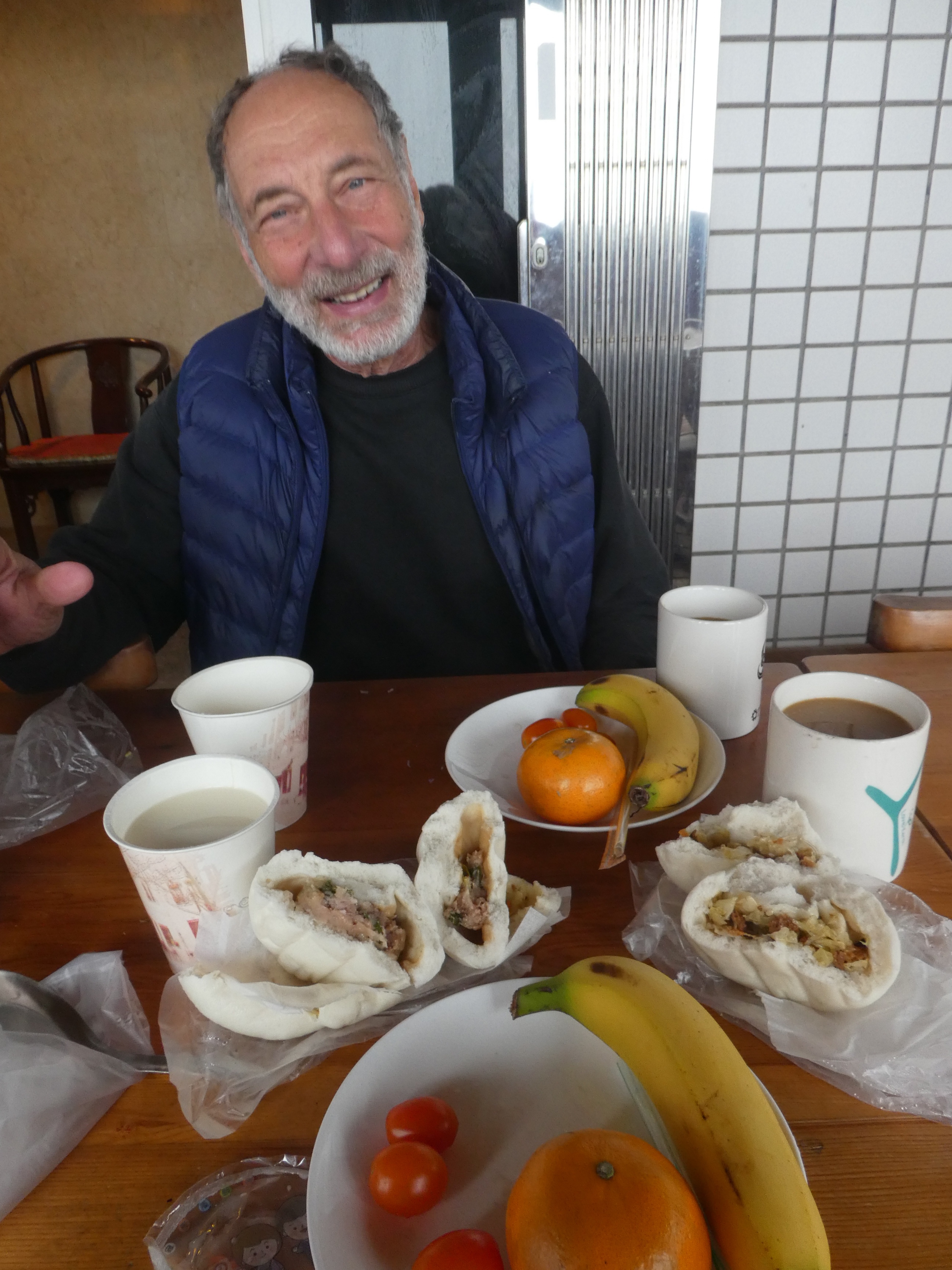
The next morning, we took the train one hour to Riufang station. We sat near an elderly Taiwanese man with nearly white hair and what appeared to be one remaining tooth. He was super excited to learn that we were from the U.S. His English was extremely limited, as is our Chinese, but the good vibes were there… This sweet man insisted on giving us his two boxed meals to enjoy upon our arrival in Jiufen. We tried to say “No, thank-you,” but he was quite insistent. We didn’t want to be rude, so we thanked him profusely and accepted the food. (Hopefully his wife will forgive him!) It’s nice to be in a country where Americans are appreciated. We conversed some more, in our broken way, exchanging the basics, “Where you from? Where you going? Kids? Grandkids? Ages? Your age?” Bruce, 75, Linda 55…He is 63. This new pal mistakenly thought Linda was 65. He accepted it as fact, not a bit surprised, and began referring to her in a very respectful manner as “Older Sister.” Back home, Linda has been mistaken for a much younger woman. In Asia, where women’s faces resemble “mother-of-pearl,” Linda’s face contains the smiles, laughter, worry, and tears of a long life! Bruce gifted this man an American dollar bill, which he reluctantly accepted with obvious delight. At the man’s insistence, we exchanged contact info. Although we cannot decipher his Chinese, it will be one of our favorite momentoes.

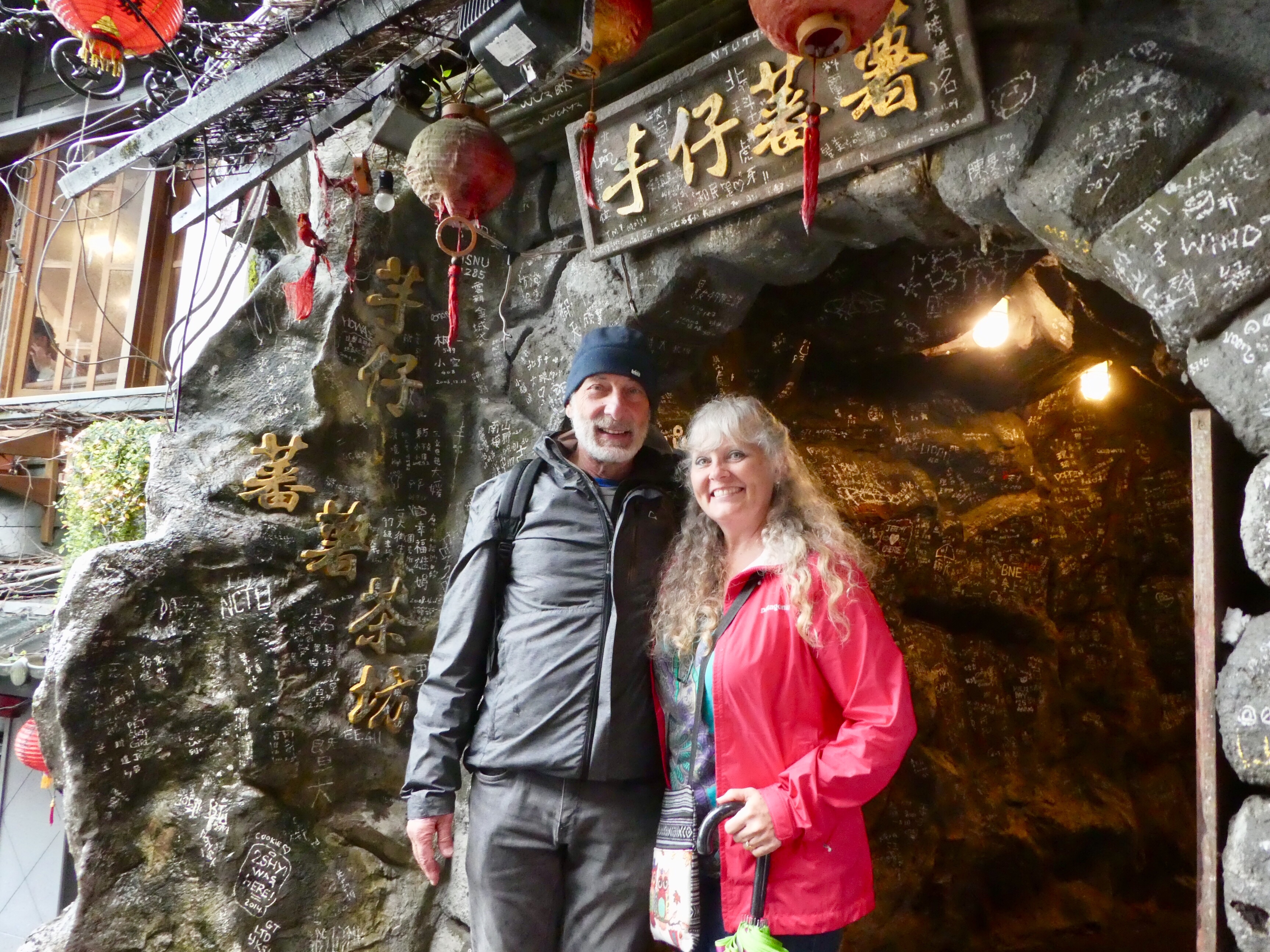
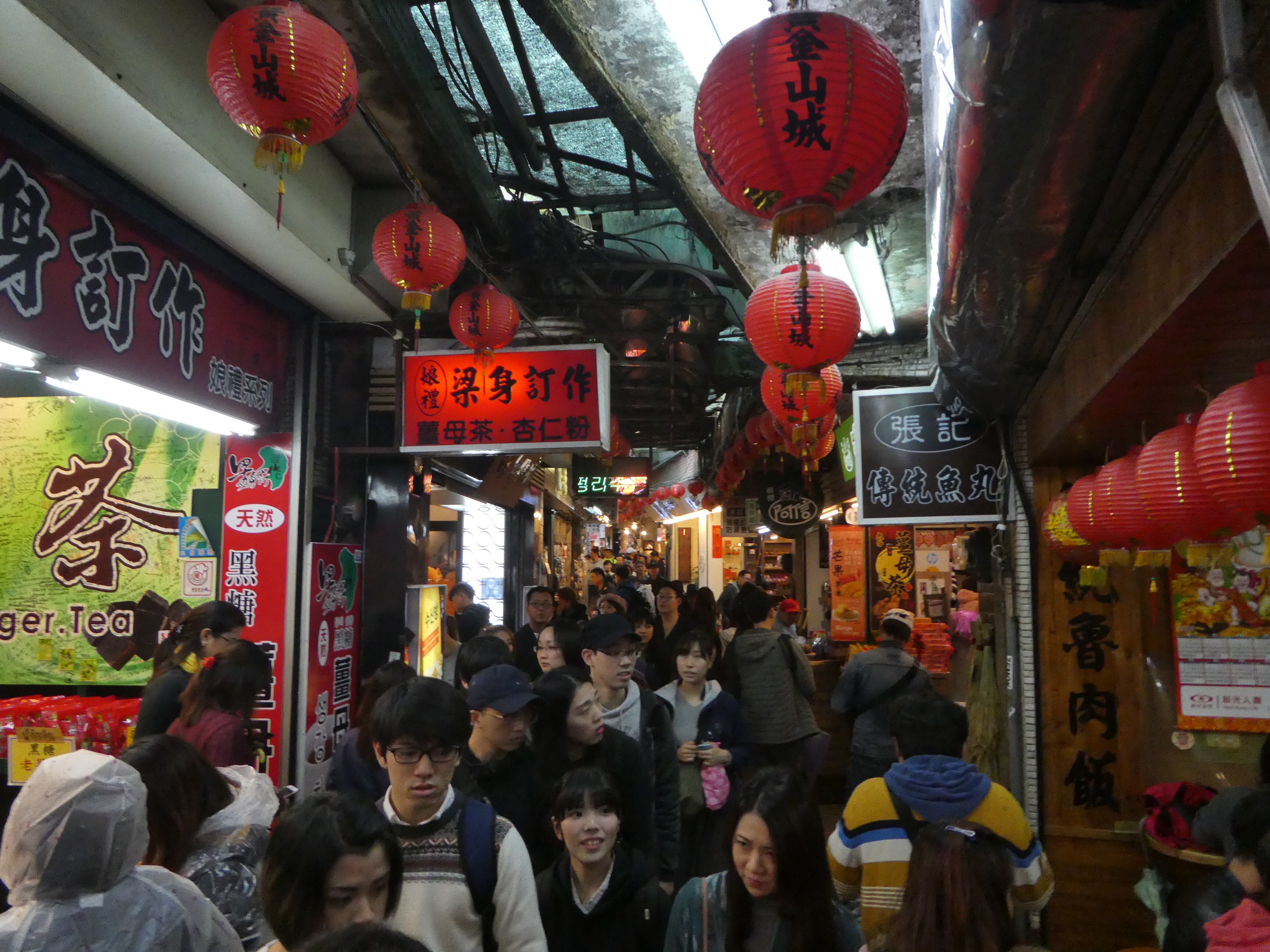
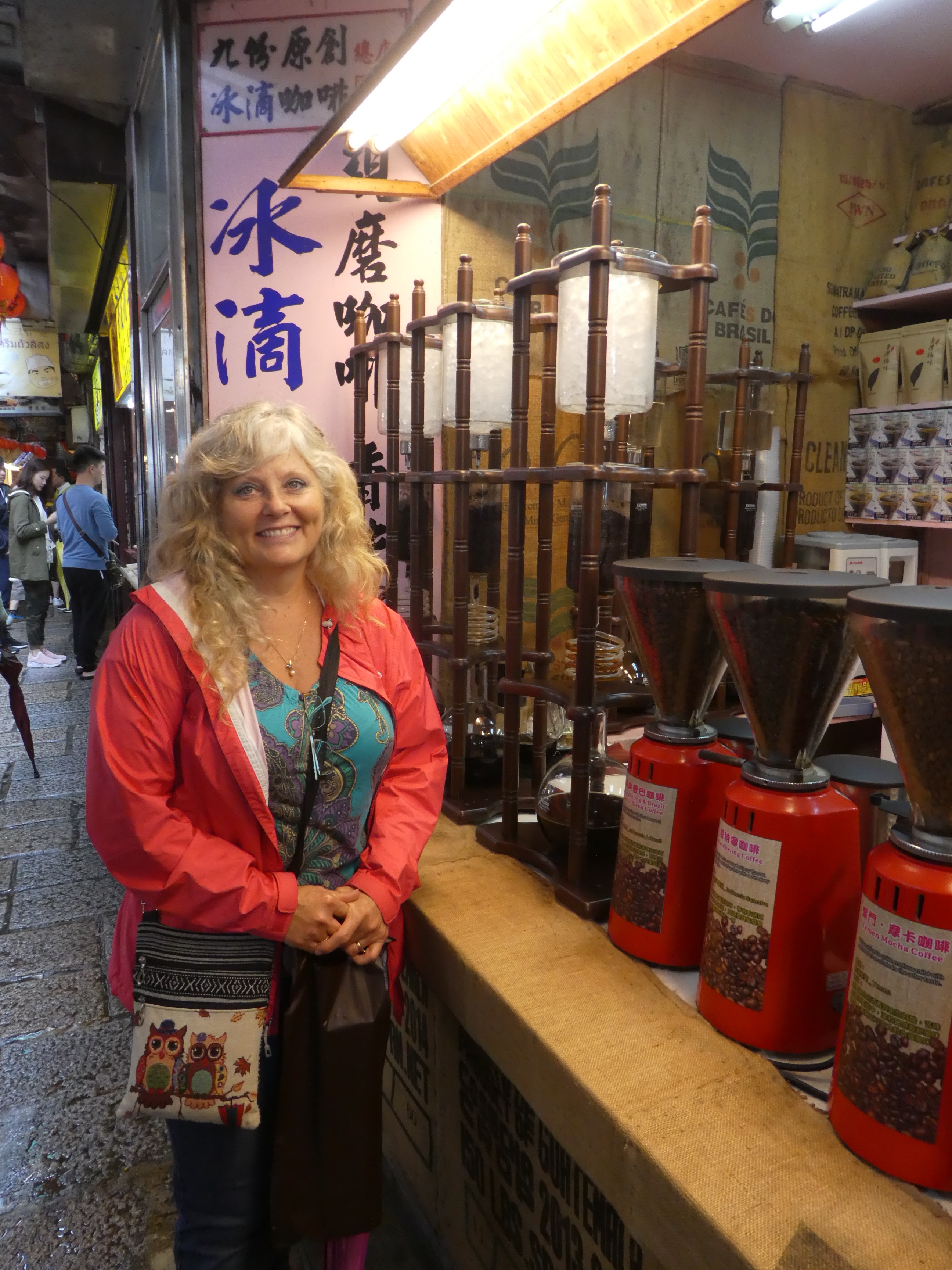
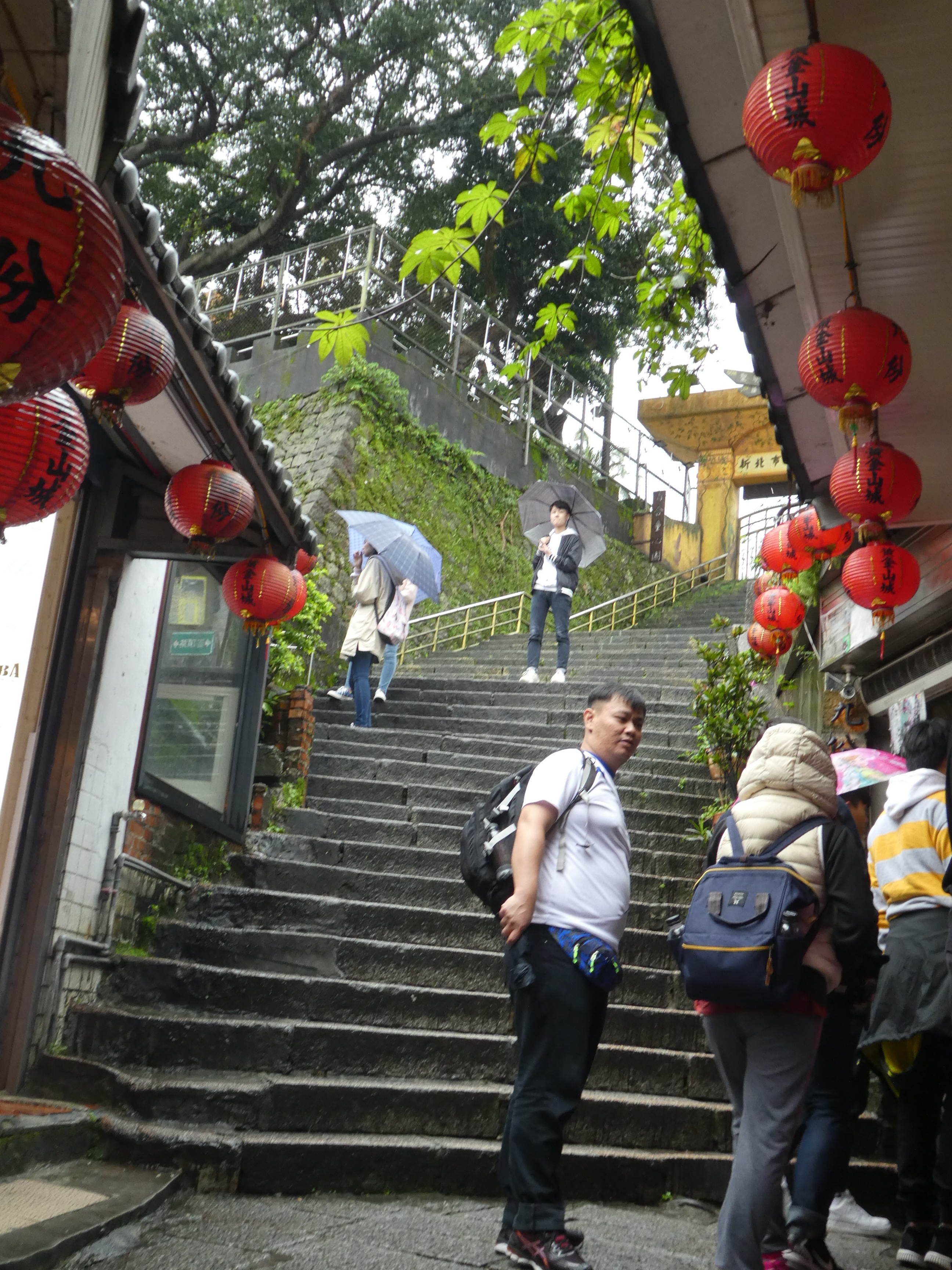
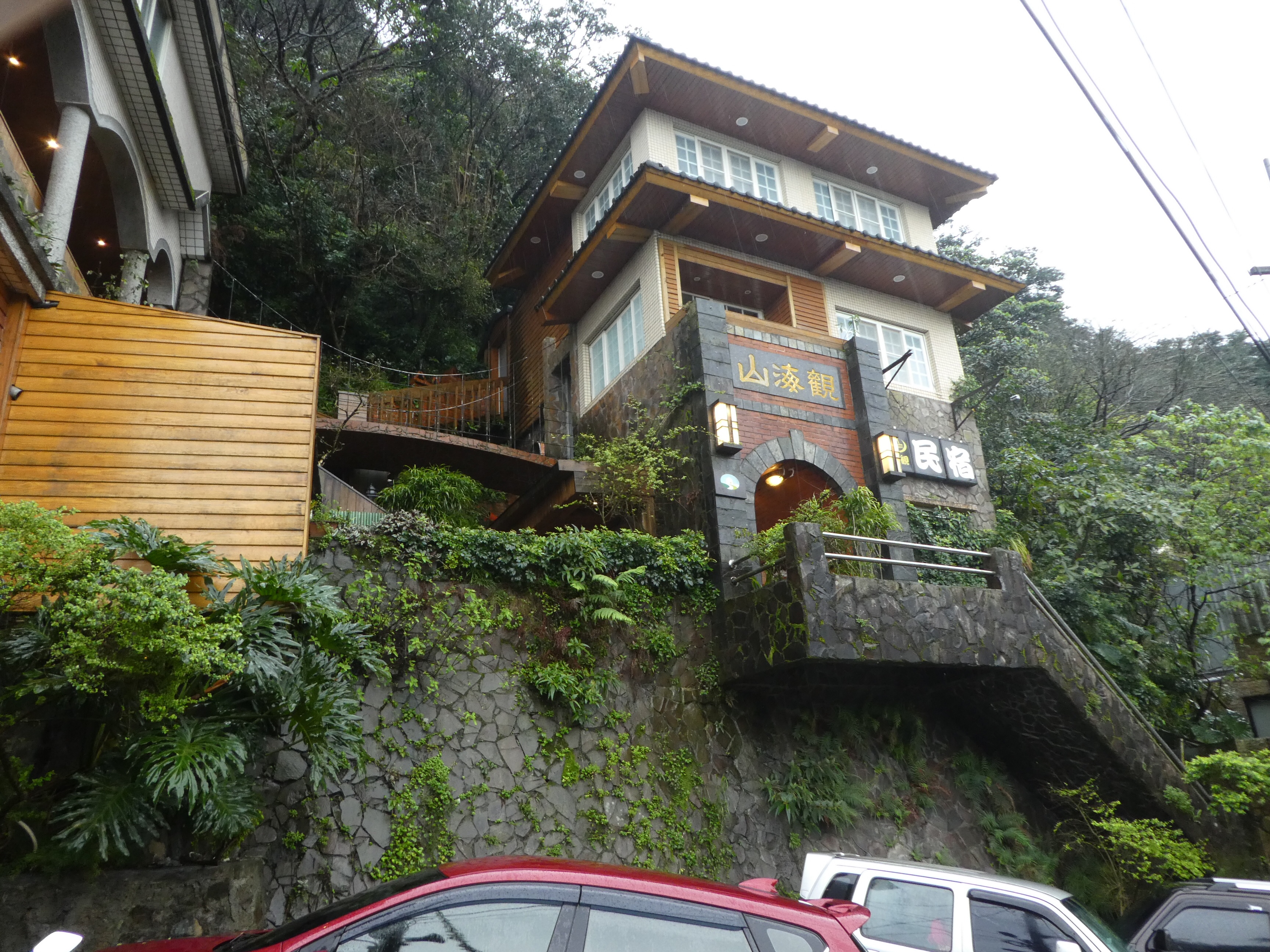
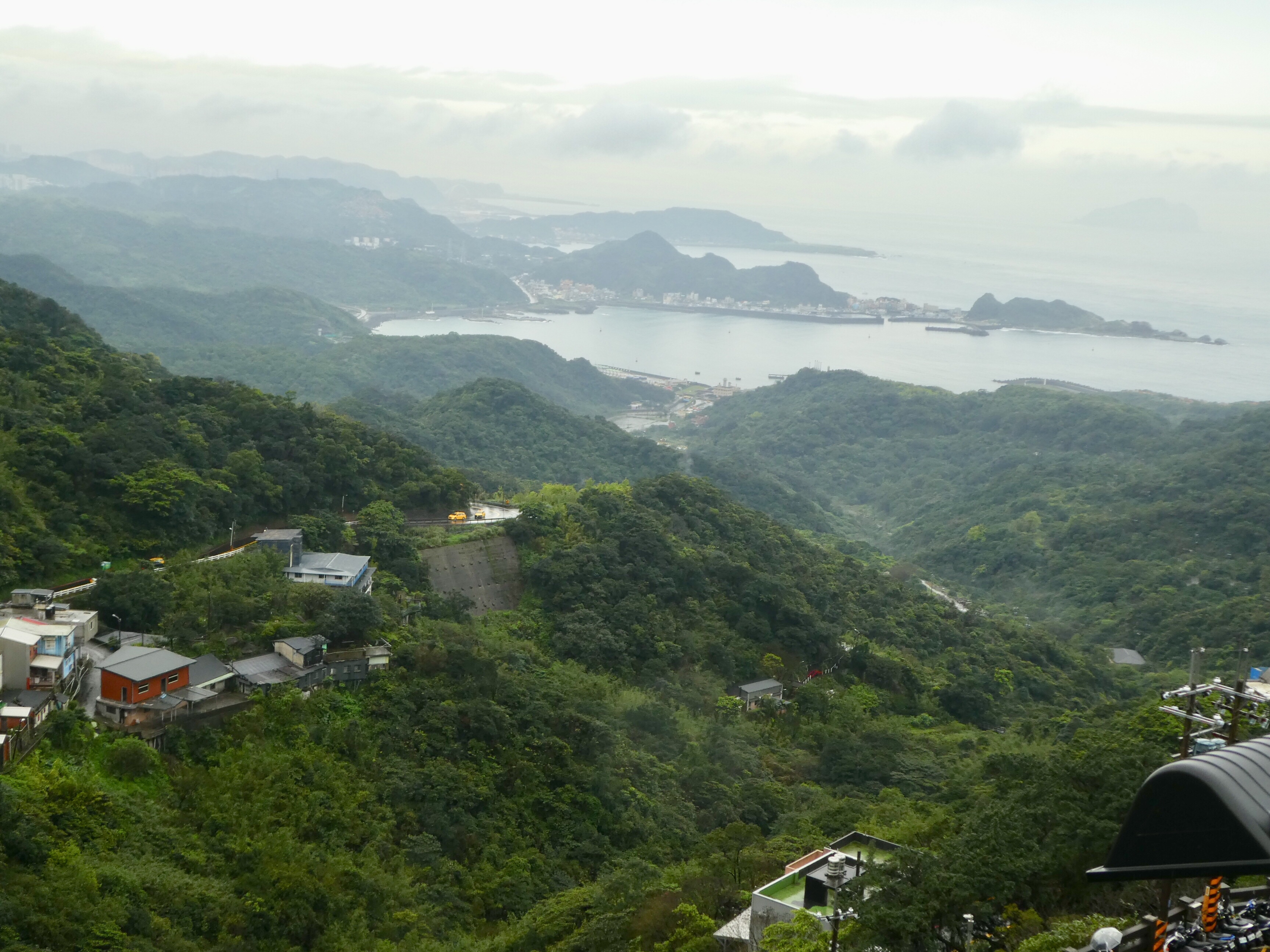
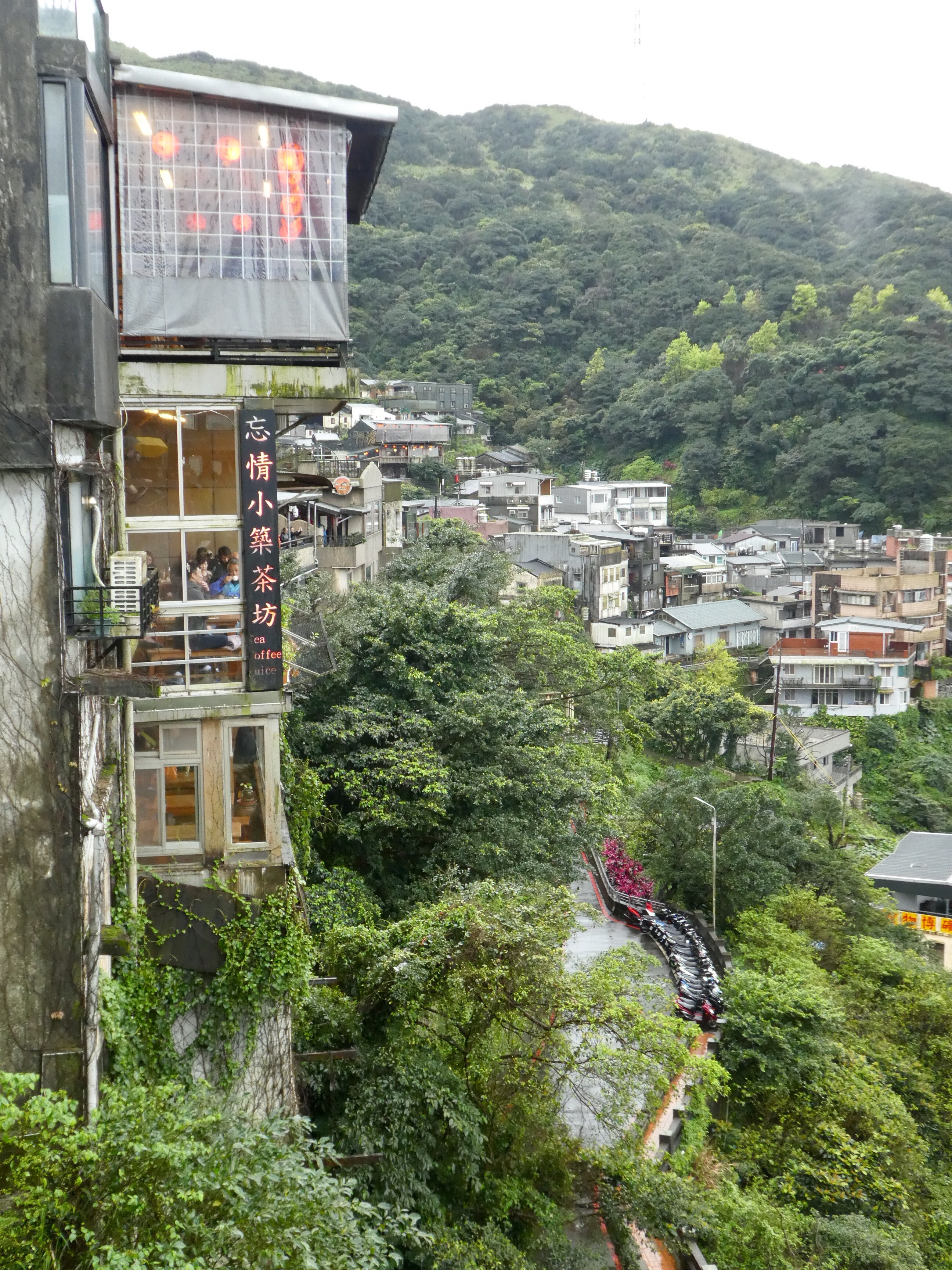
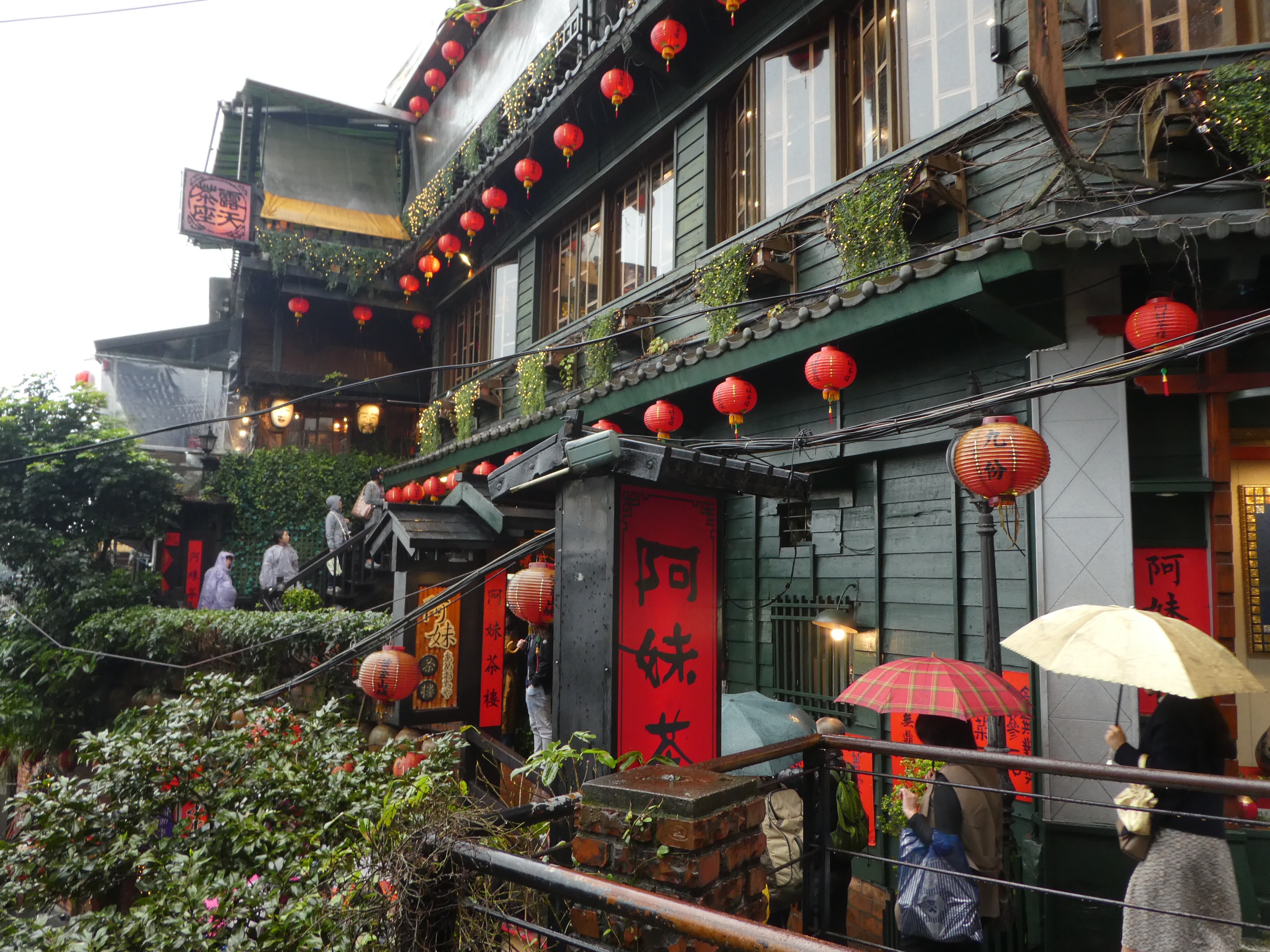
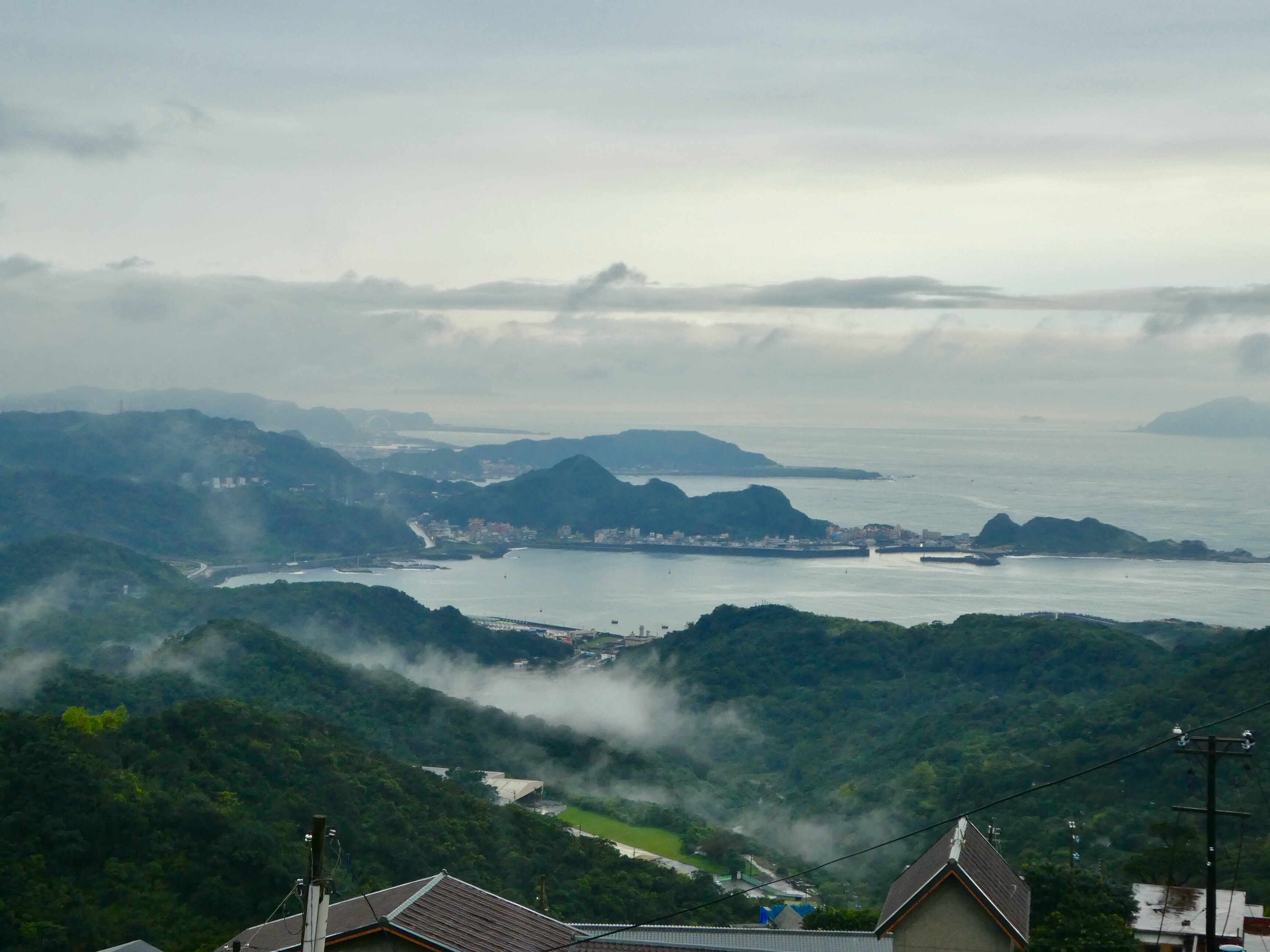
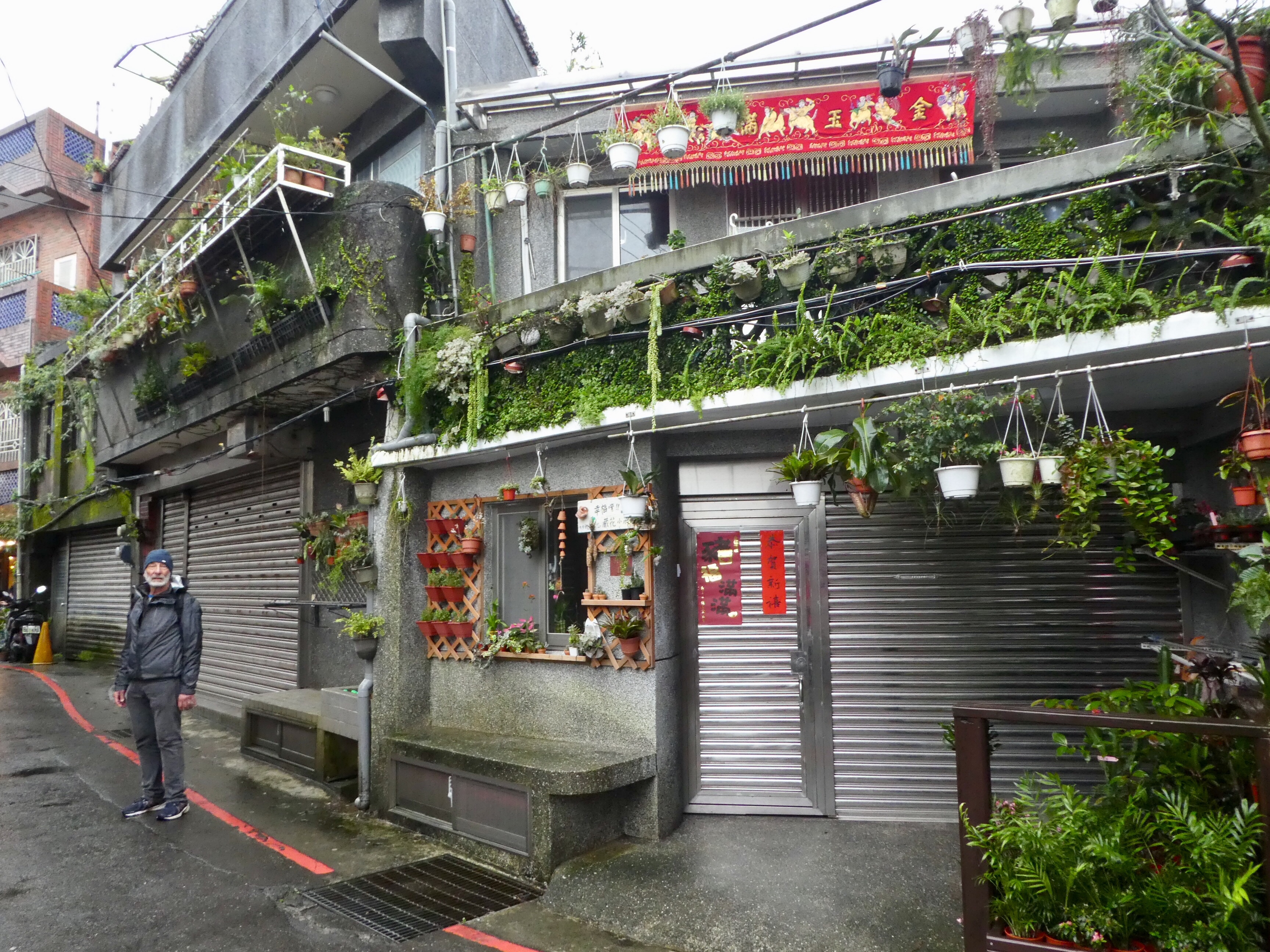
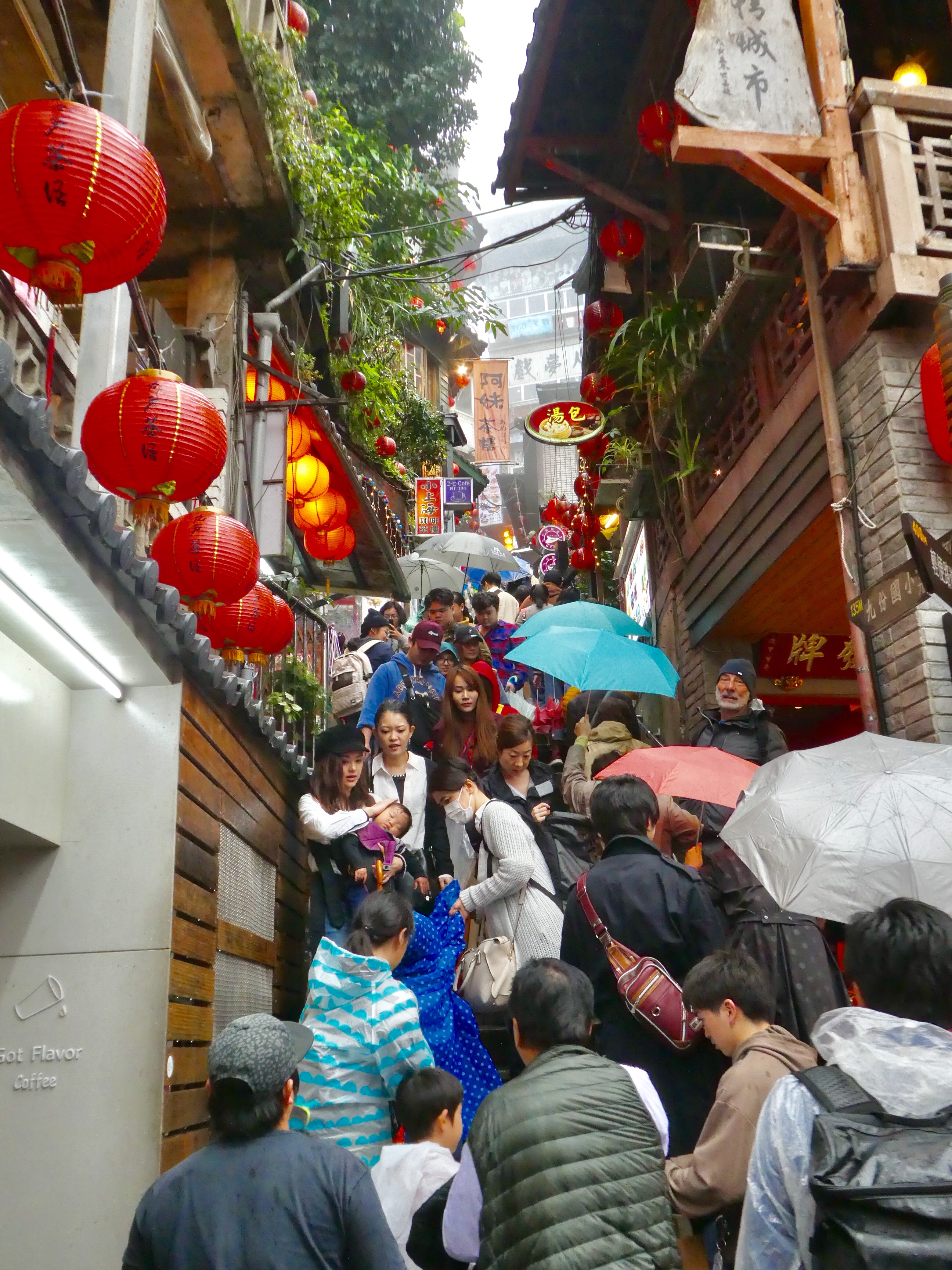
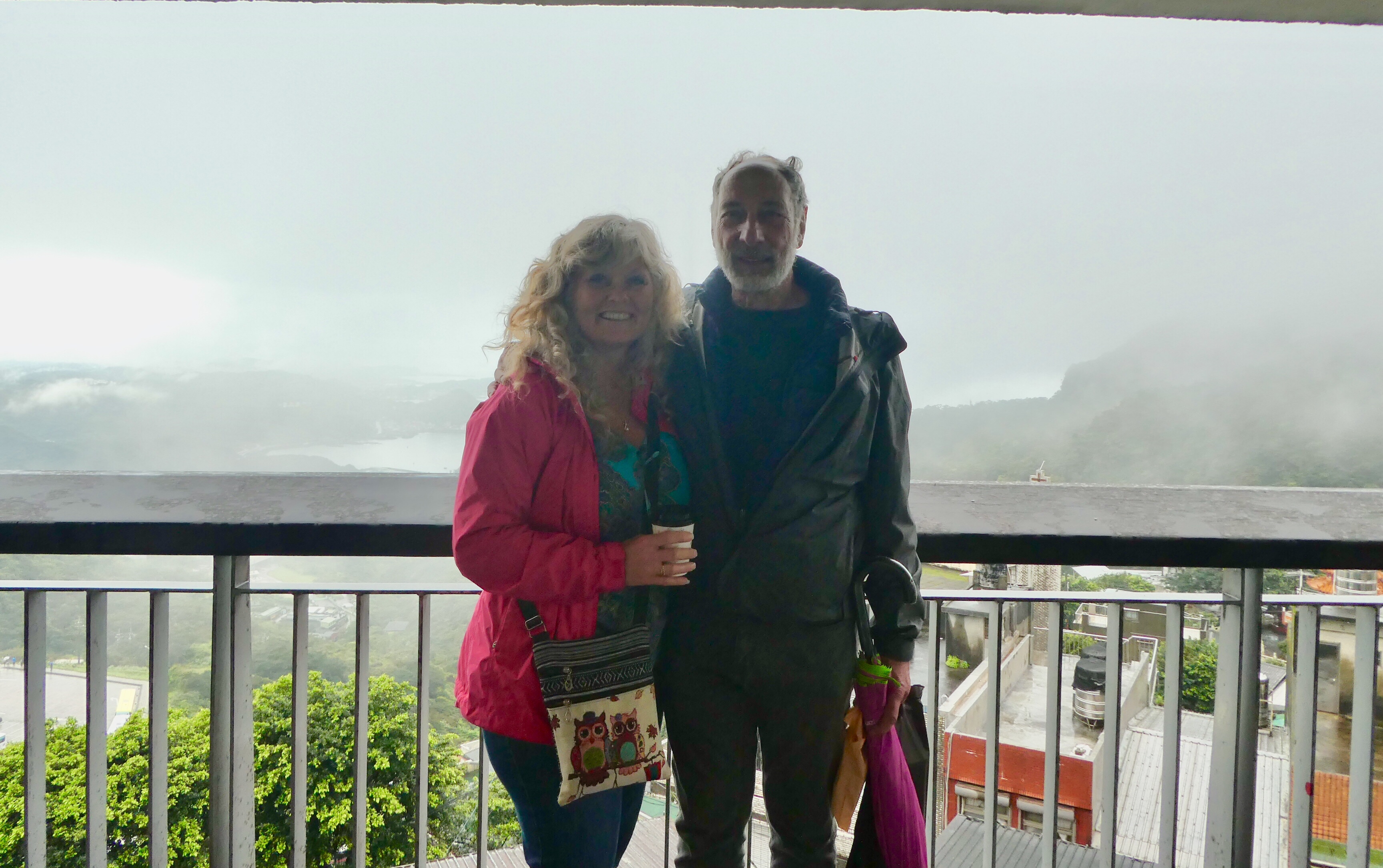
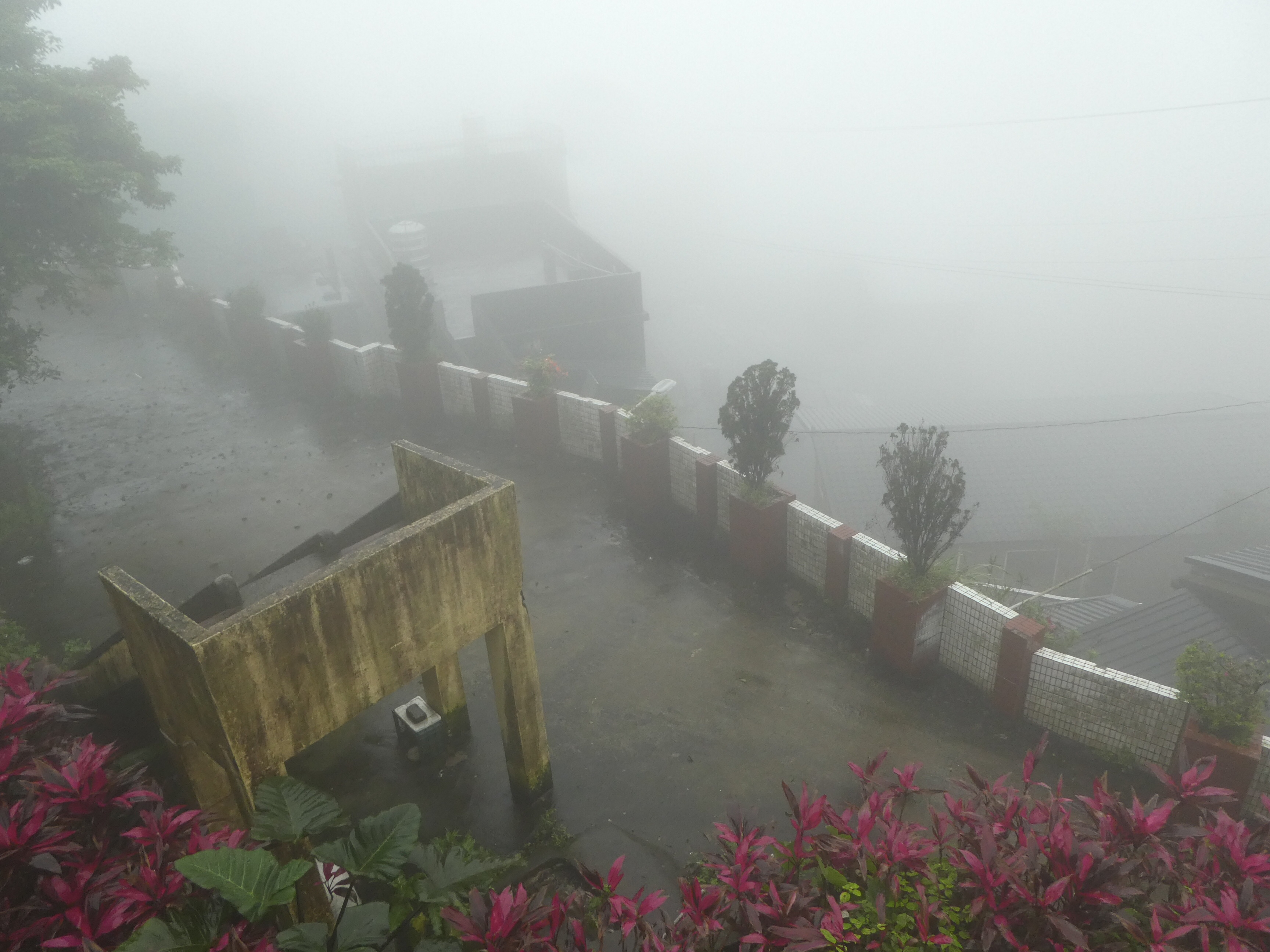
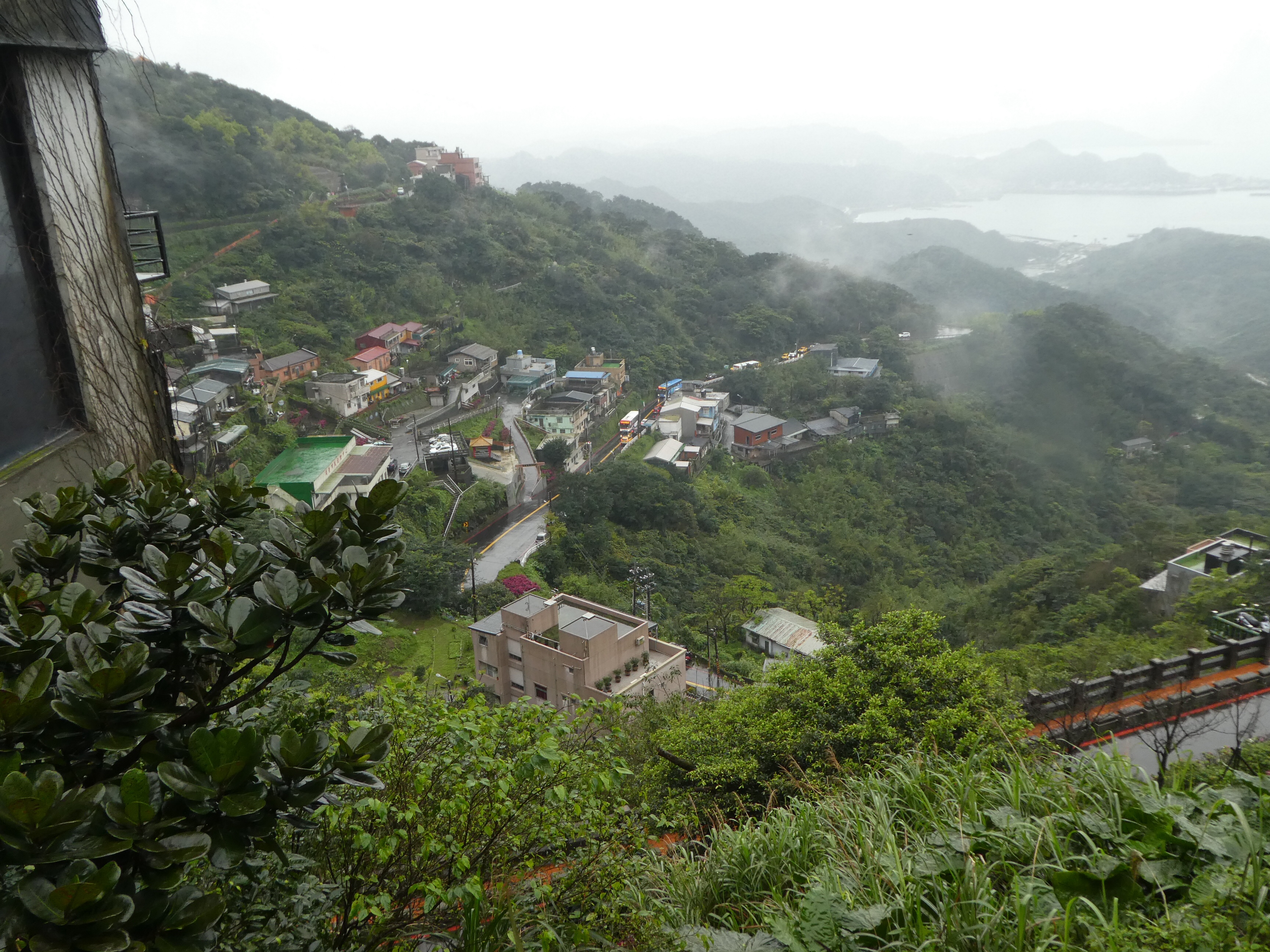
Our friendly host, Halu, met us at the Riufang train station and whisked us up to Jiufen, Taiwan. We climbed nearly 2000’ in 10 minutes, along a steep, curvy road, to his mountain top hotel, Long Men Ke Zhan. Our accommodation was really clean and comfy-cozy. The mountain village, which used to be a gold-town, overlooks the Pacific Ocean. Its two “old streets” are famous throughout Asia. One street runs horizontally, the other vertically, and they cross in the middle. We covered every inch of both! The vertical street is really a narrow, steep stairway, packed with mostly Chinese and Japanese tourists, even in rainy weather. It’s difficult, but exciting, to wind your way through the crowds. There are several inviting tea-houses, some literally tucked into nooks and crannies. One is built into a cave. Others hug the mountain side and provide ocean views. We sampled green, jasmine, high mountain oolong, and low mountain oolong teas. All of them were soothing in the damp weather, and calming in the hustle-bustle of Jiufen.

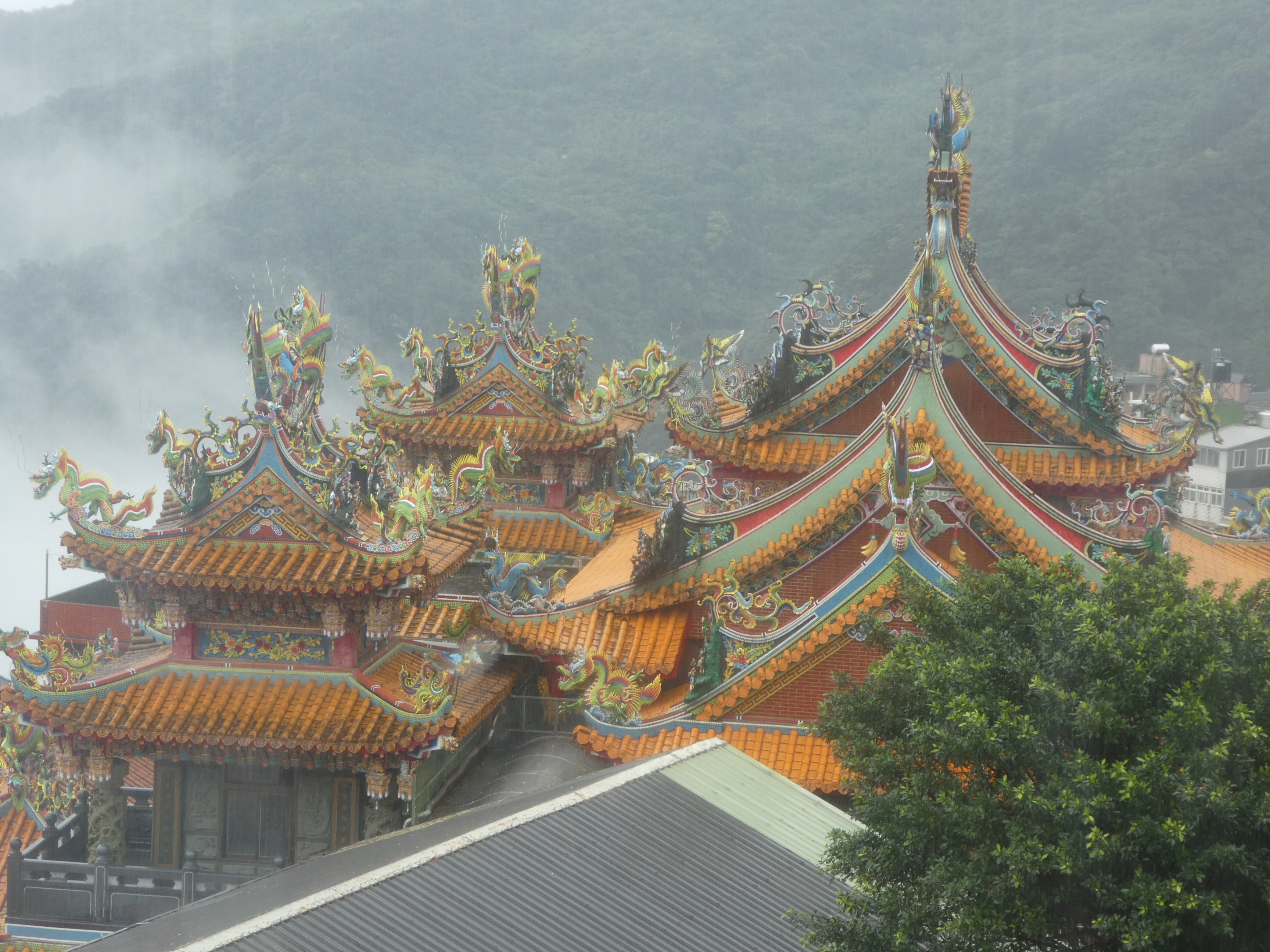
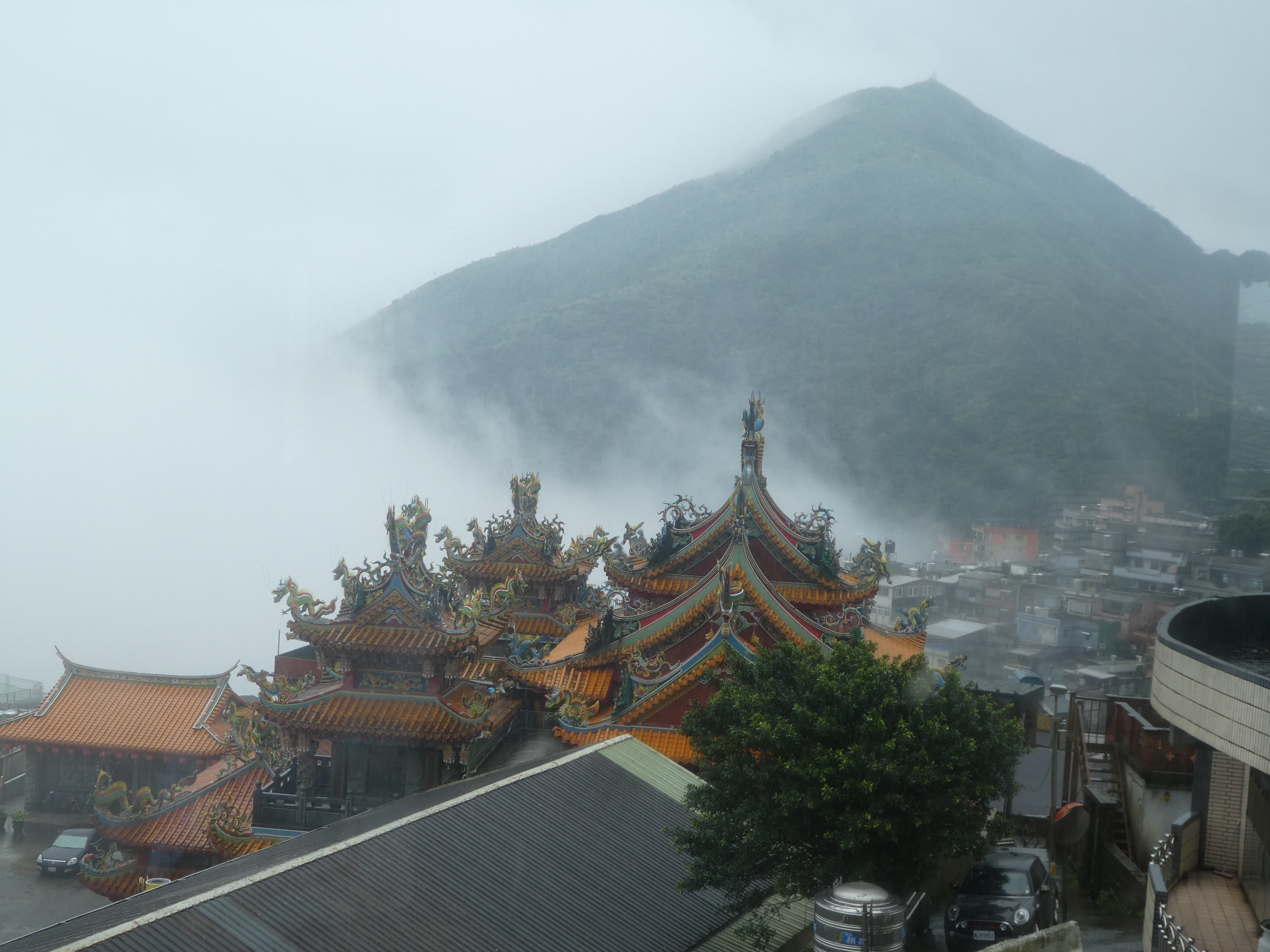
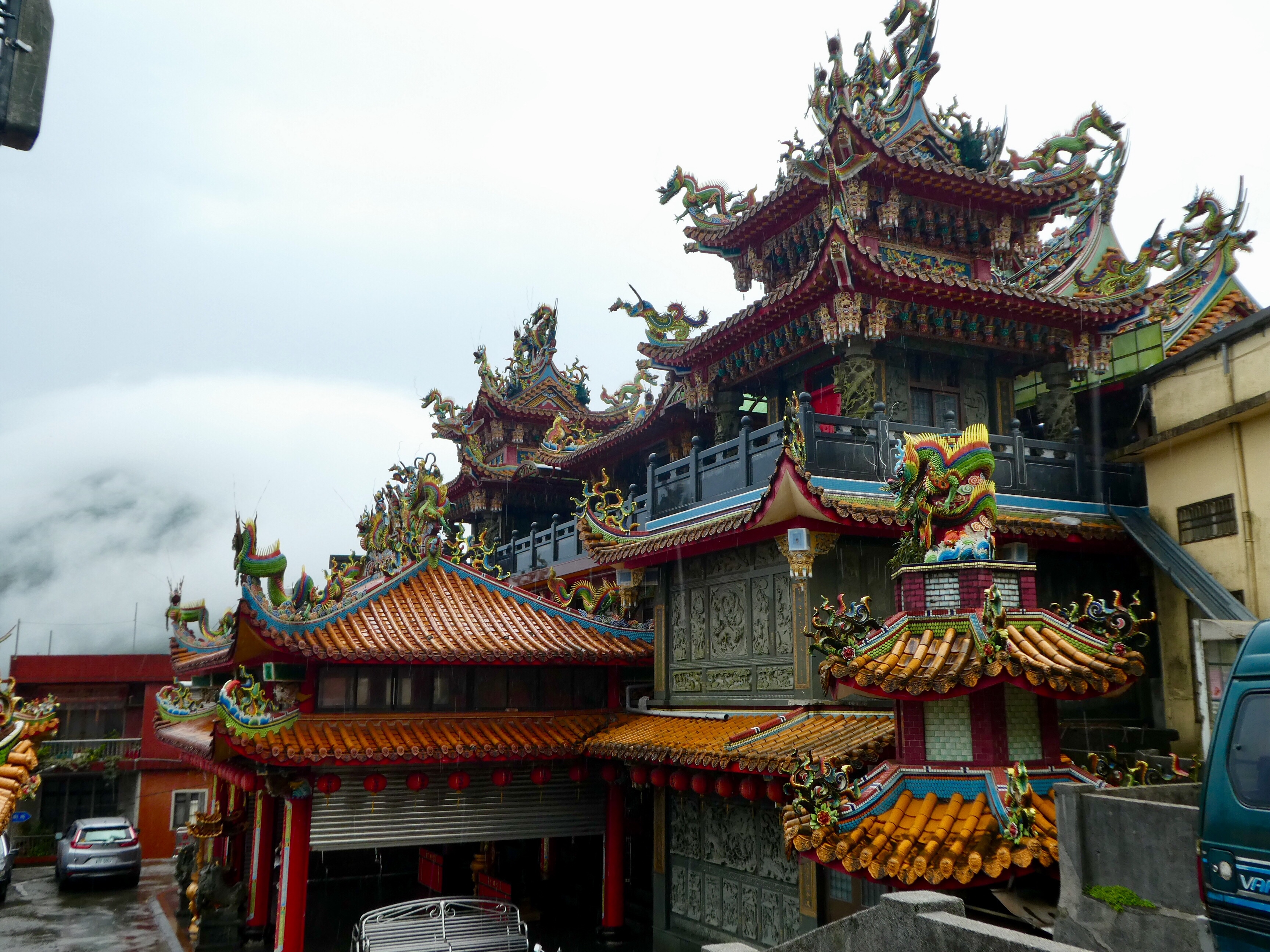
This enchanting “stairway to heaven” village provided the setting for the Japanese animated movie, Spirited Away. The views were magnificent in the mist and rain. We saw ornate, colorful Buddhist temples everywhere, peeking above tropical jungle forest. When we were enveloped by clouds it was mystical. When we weren’t, the ocean views were magical.

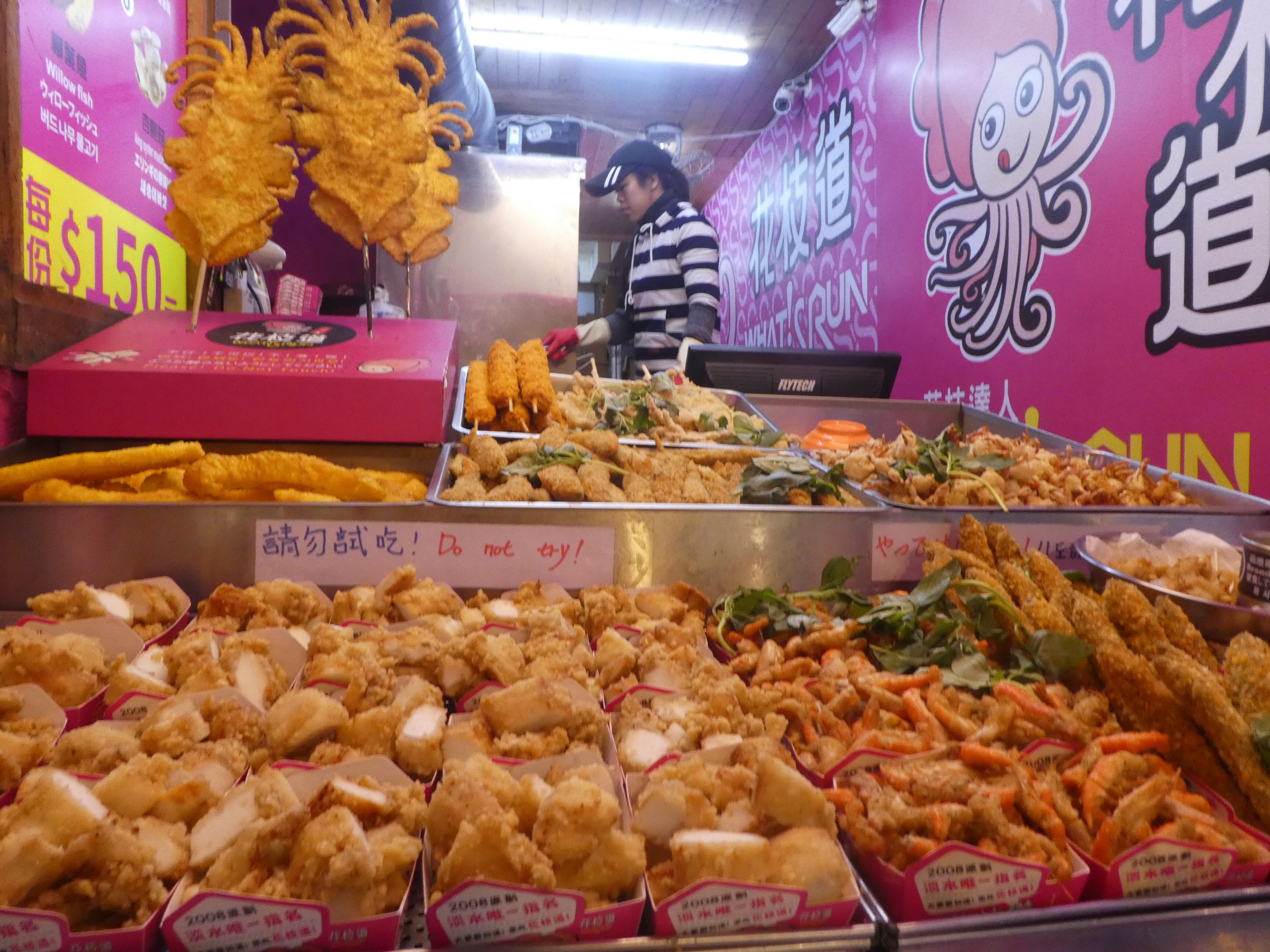
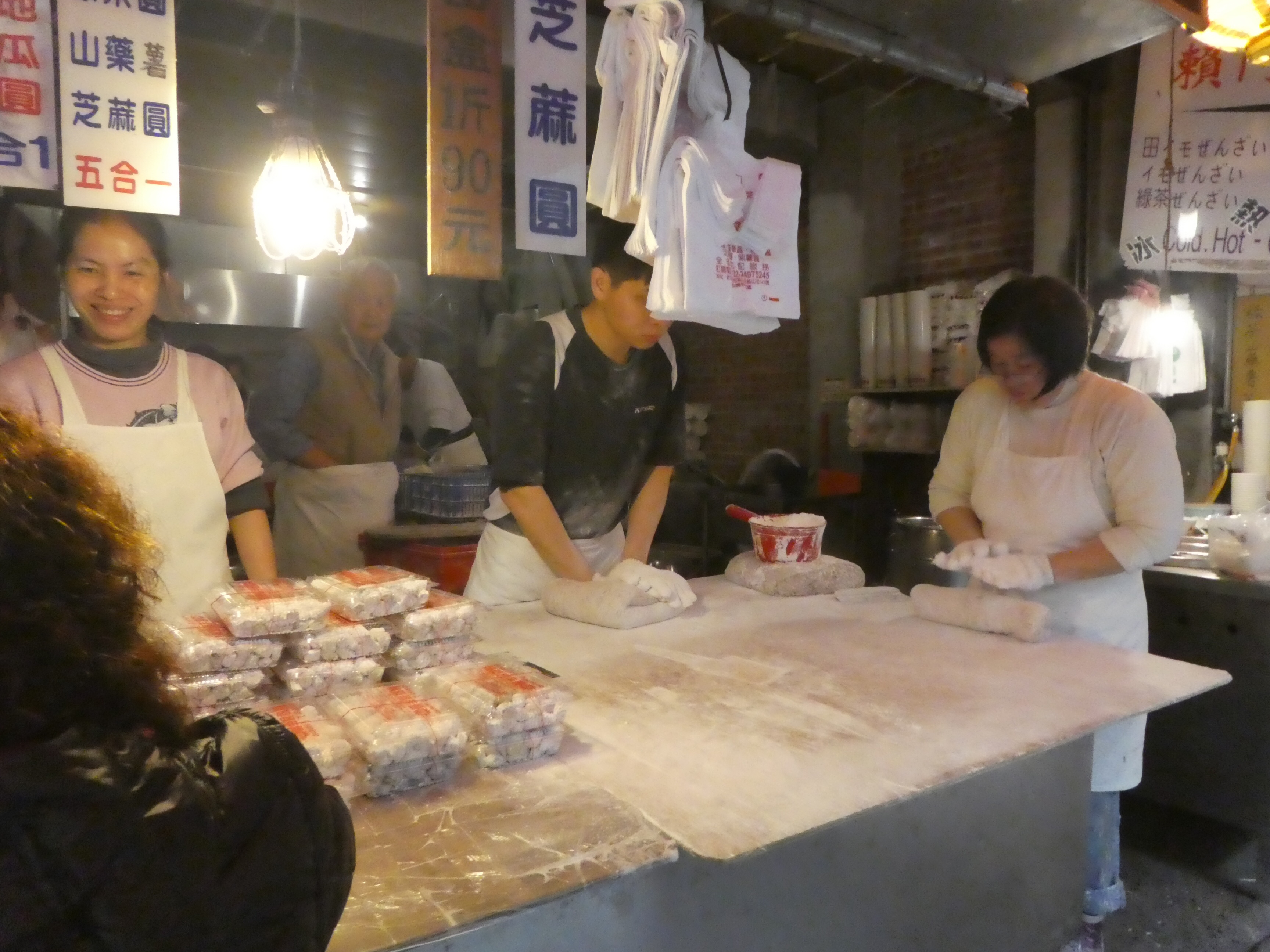
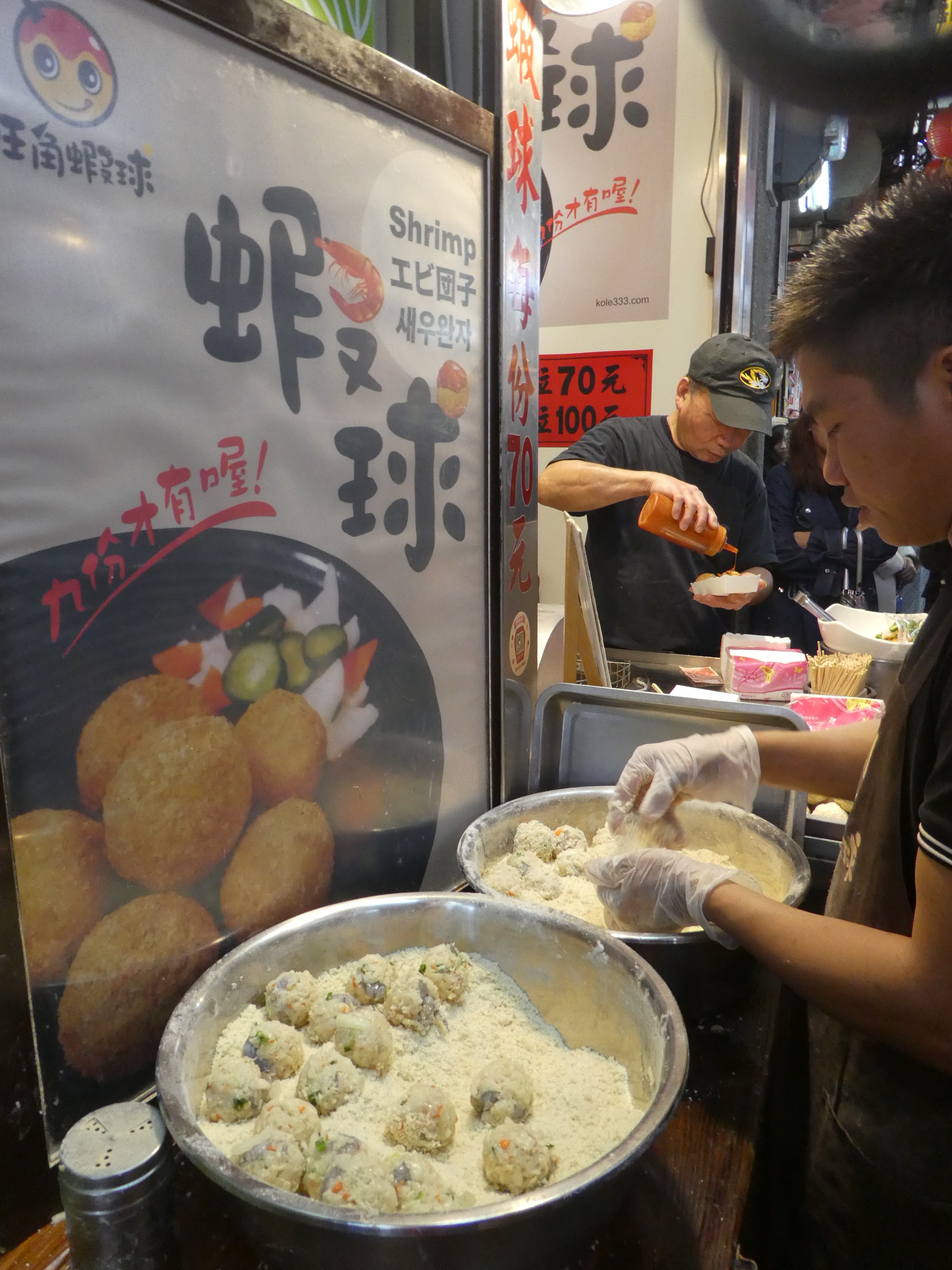
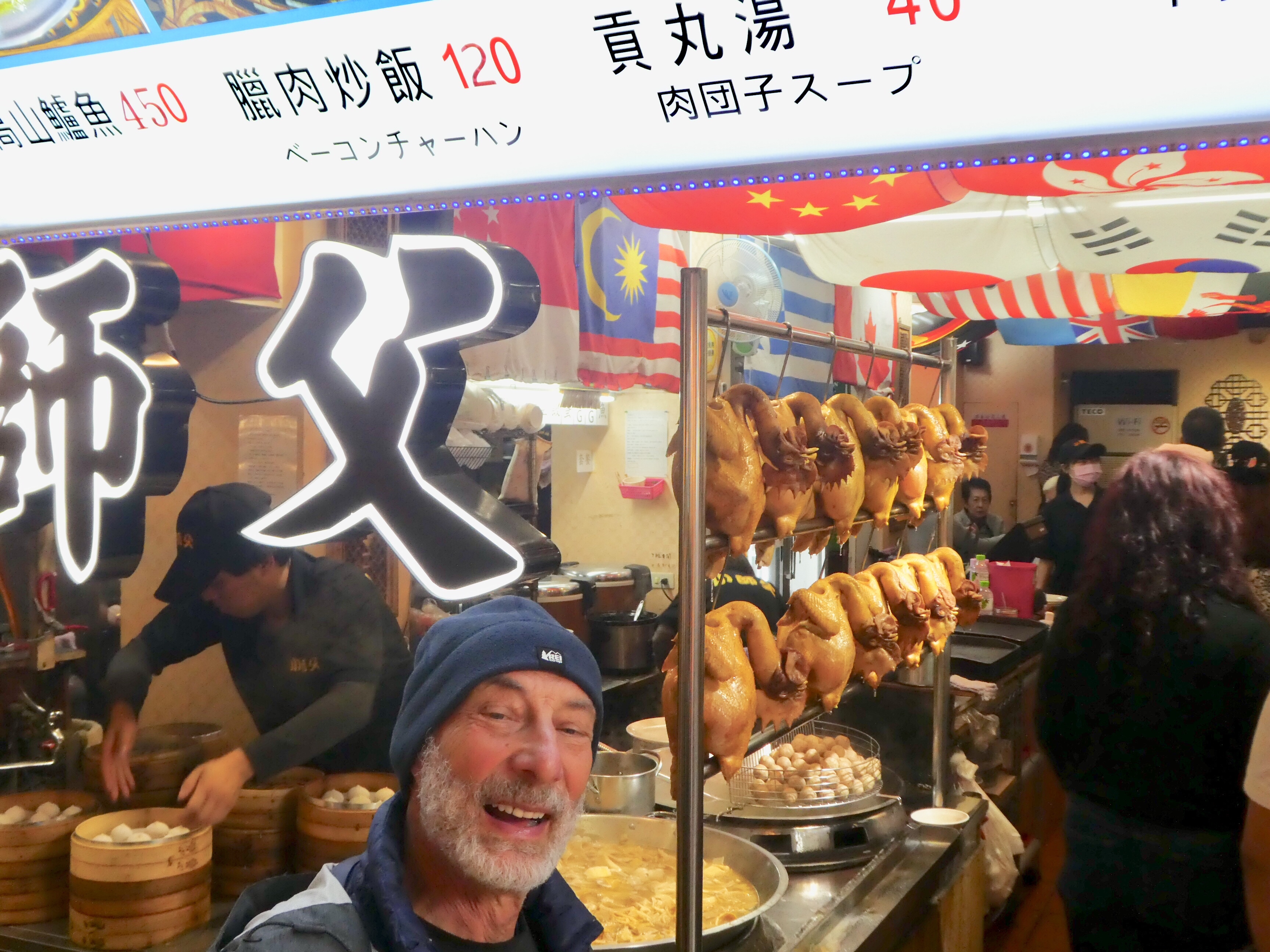
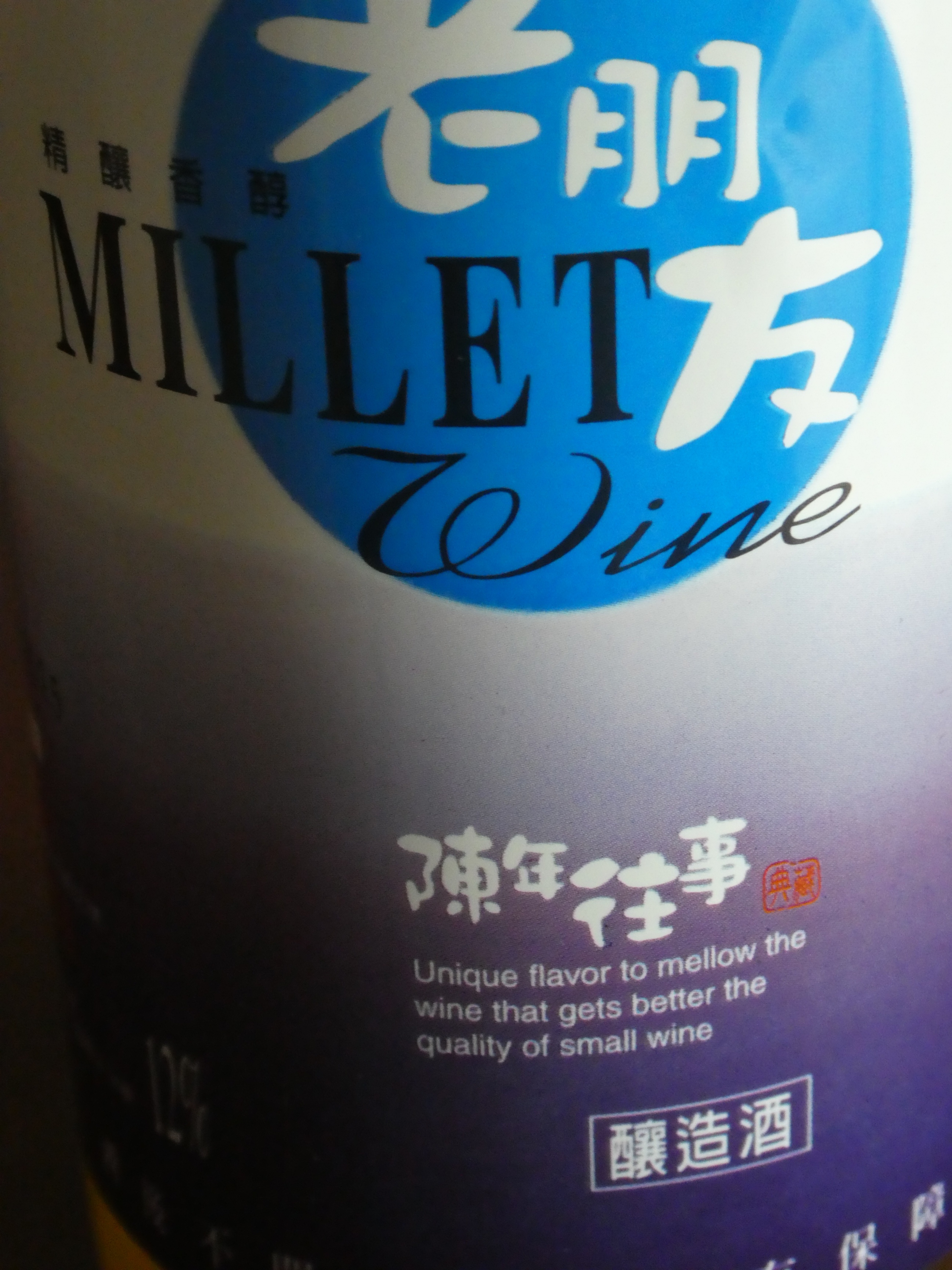
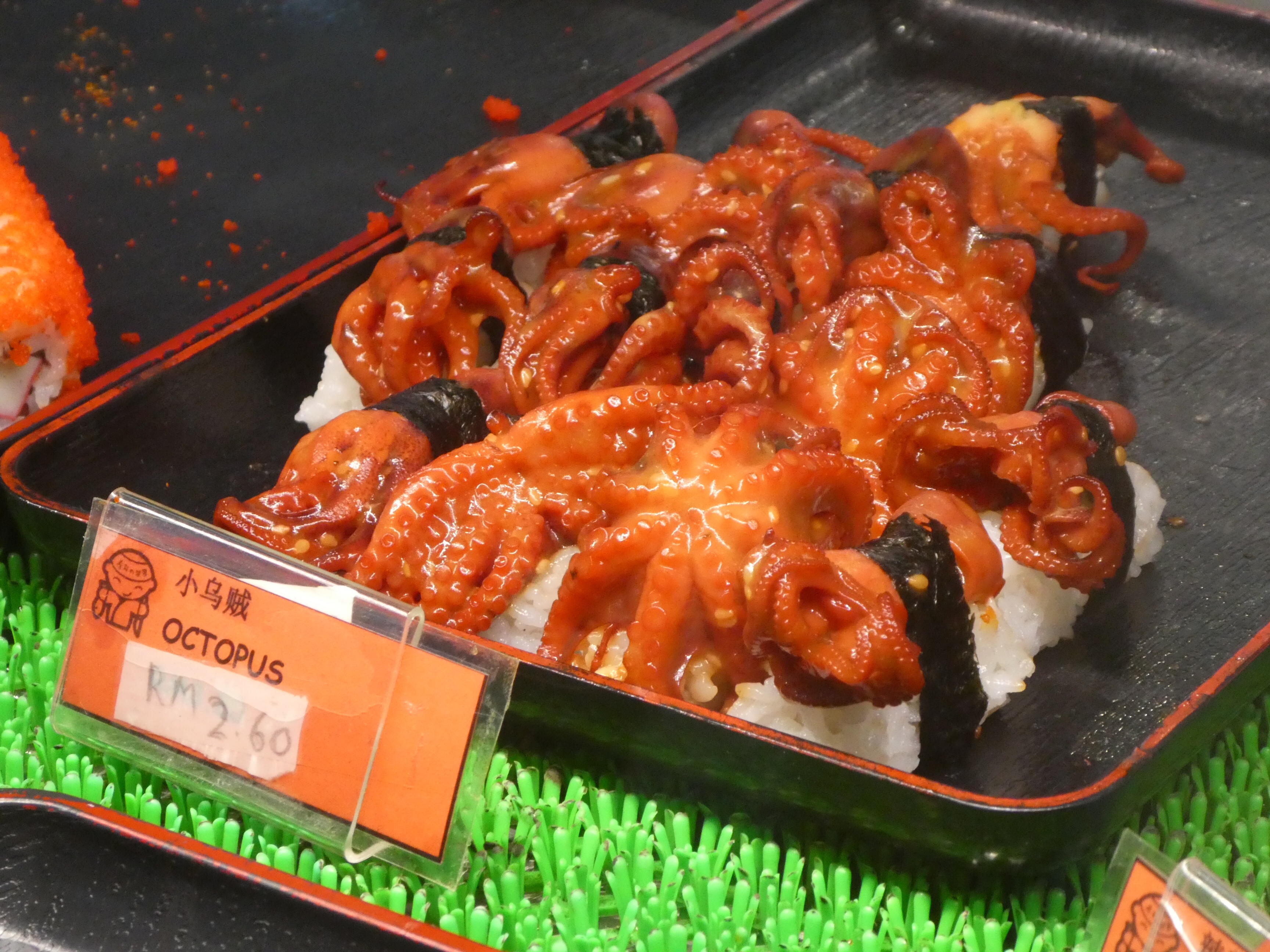
The street-stall food was delicious. Many vendors press samples upon you, hoping to entice you to purchase. Bruce was in Heaven, sampling squid, tea, wine, chicken, fish, dried fruit and nuts. The fare was uniquely Asian. We enjoyed yummy sausages, cartons of fried squid and shrimp, steamy bowls of wonton noodle soup. We found the stinky tofu, stinkin’ yummy! There are no burgers or pizza here. You see lots of pearl drinks and racks of dripping boiled chickens with the heads still on. We were tempted to try a century egg, but when the lady peeled and sliced this delicacy for us, we lost our nerve! It was black, and filled with a gooey black yolk. This duck egg took two months to produce, enveloped in a clay, ash, and quicklime plaster. Delicacy or not, we’ll take ours fresh from the hen, scrambled or fried!

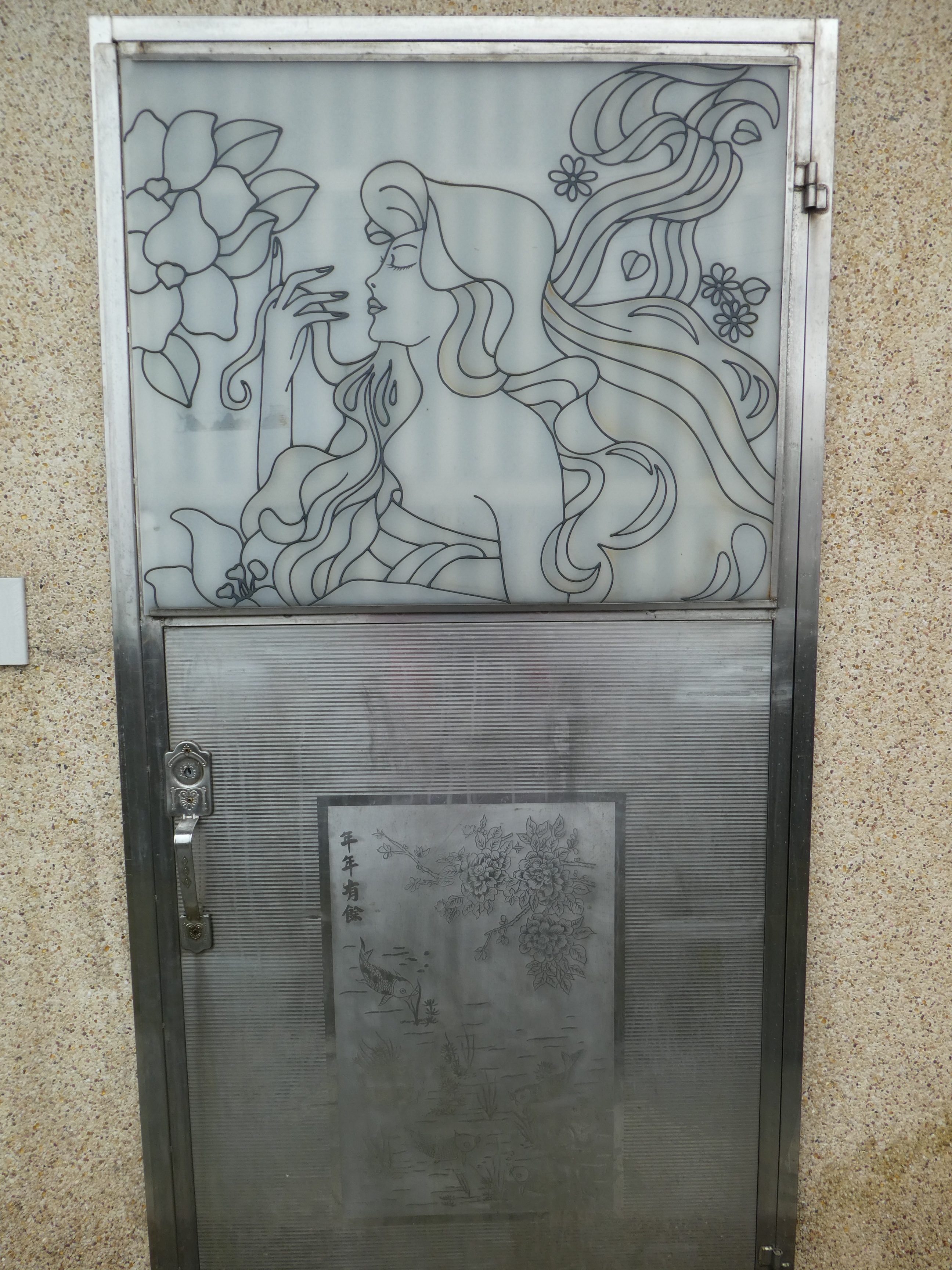
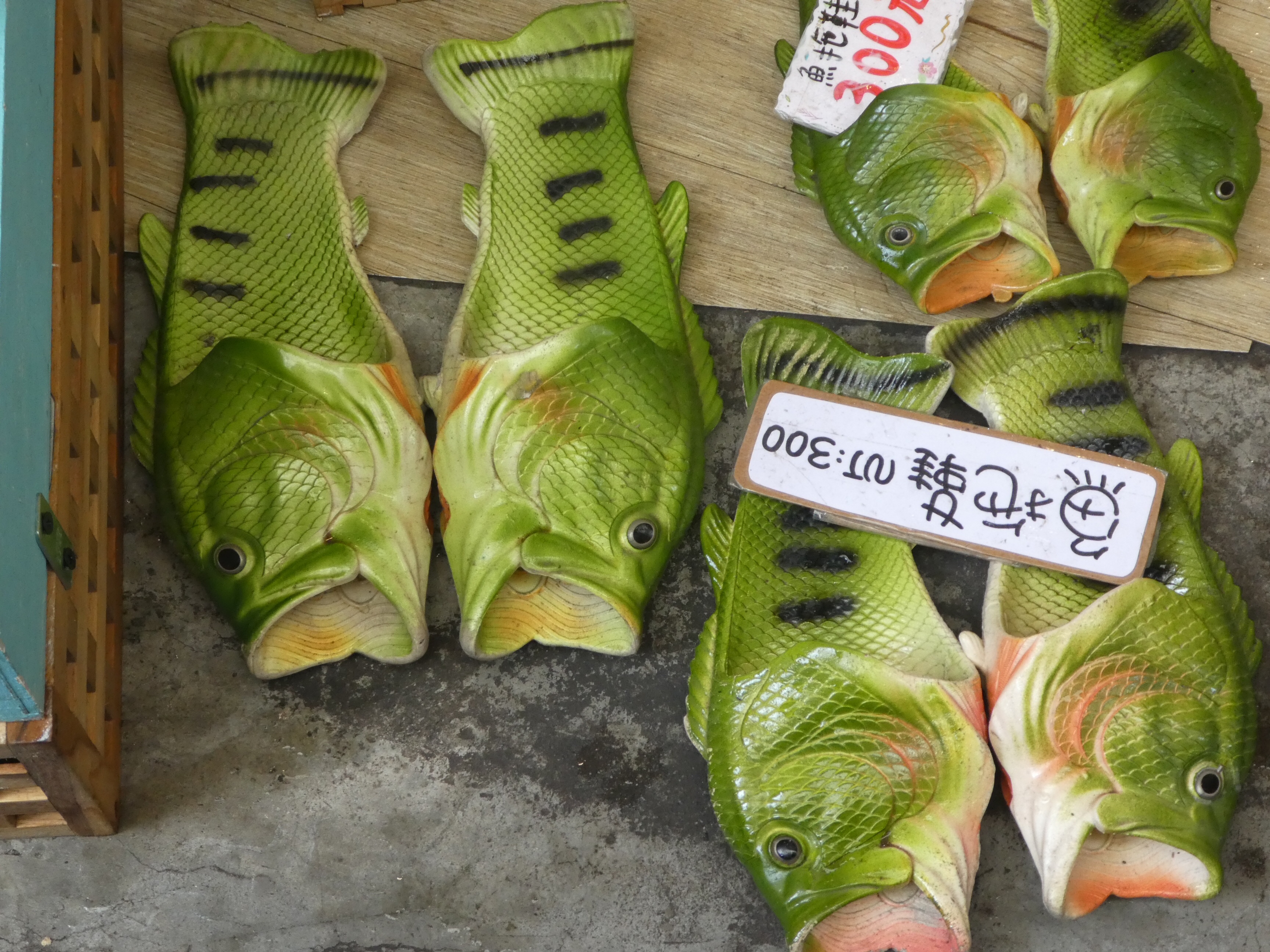
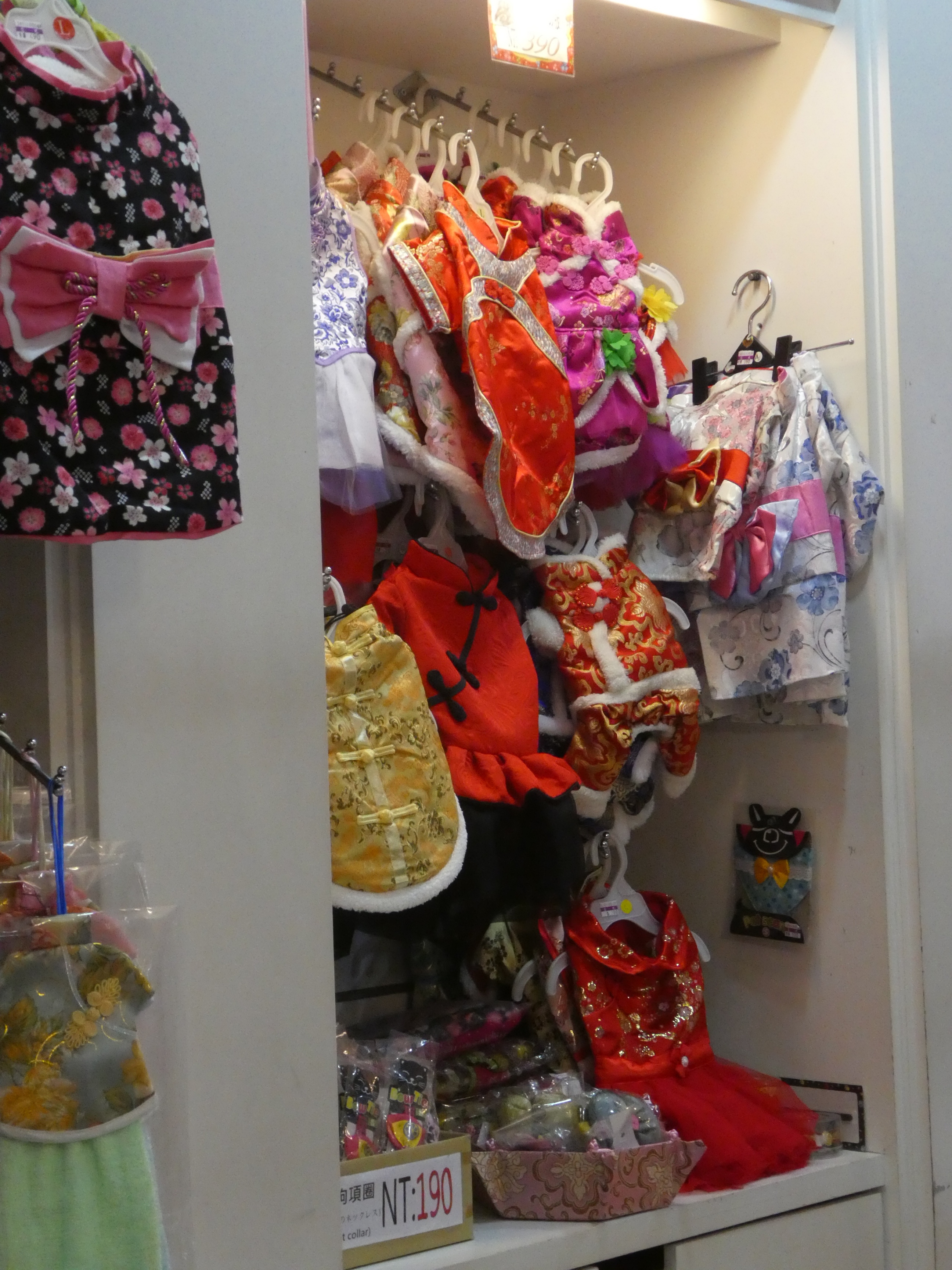
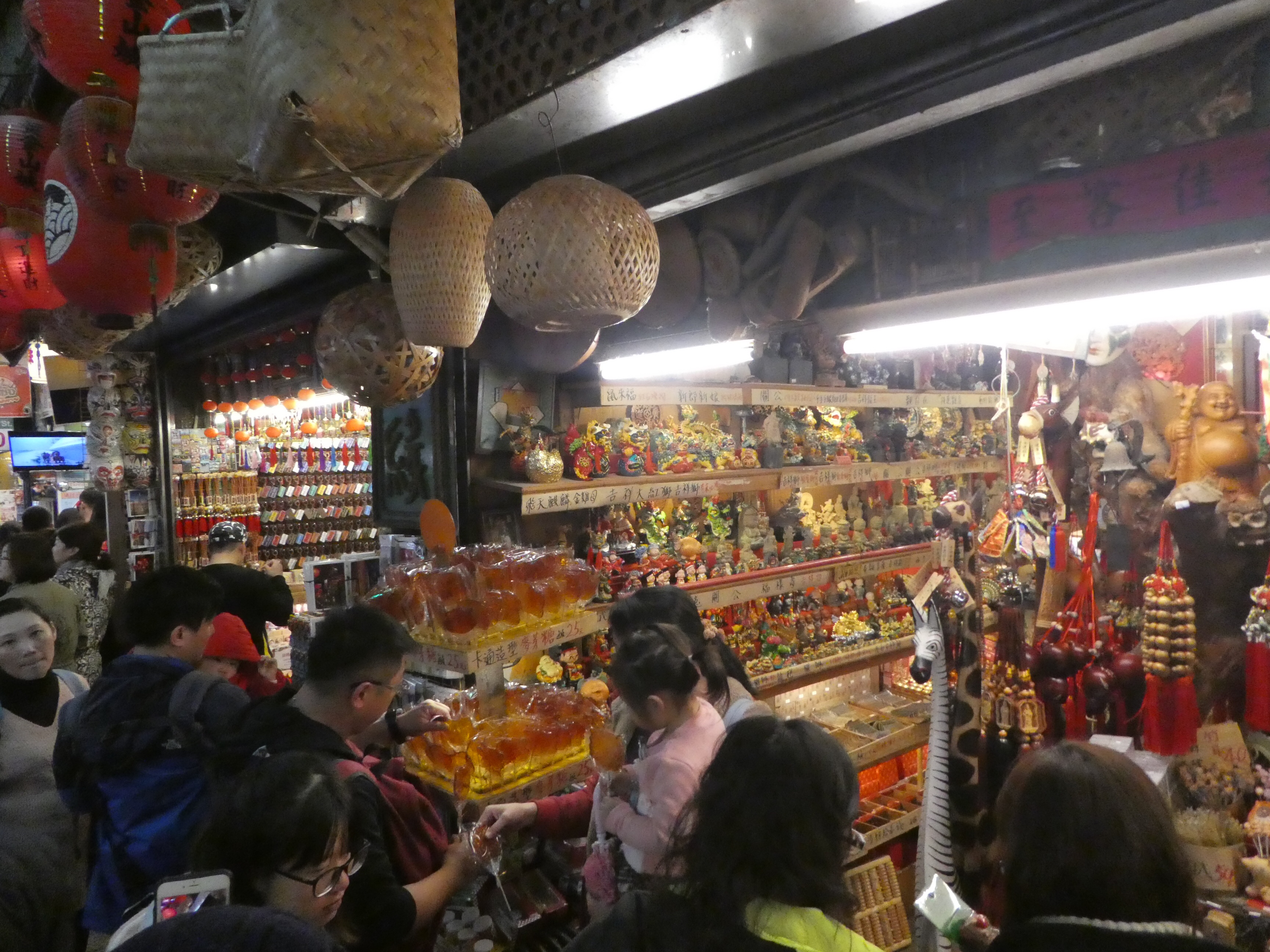
In addition to food stalls and tea houses, there were souvenirs galore. We saw artists painting names in Chinese on strips of silk. Vendors played/sold ocarinas (flutes), clothes for people and pets, and shoes. In Asia, a signature stamp is a legal signature, so shops engrave family surnames on stone, leather, and wood. There were loads of “good luck charms” for sale.

Our awesome host, Halu, kindly drove us down to Riufang train station for our train to Hualien, near Taroko Gorge. We hope to host Halu one day at our mountain home in Northern California.

This is our second visit to Taiwan and we really love it! It is a beautiful island, crowded, but filled with lovely people, and lots of tropical greenery.

We’ll post again soon. Hugs n Love, BnL

South to Melaka, Malaysia

Dear Friends and Family,

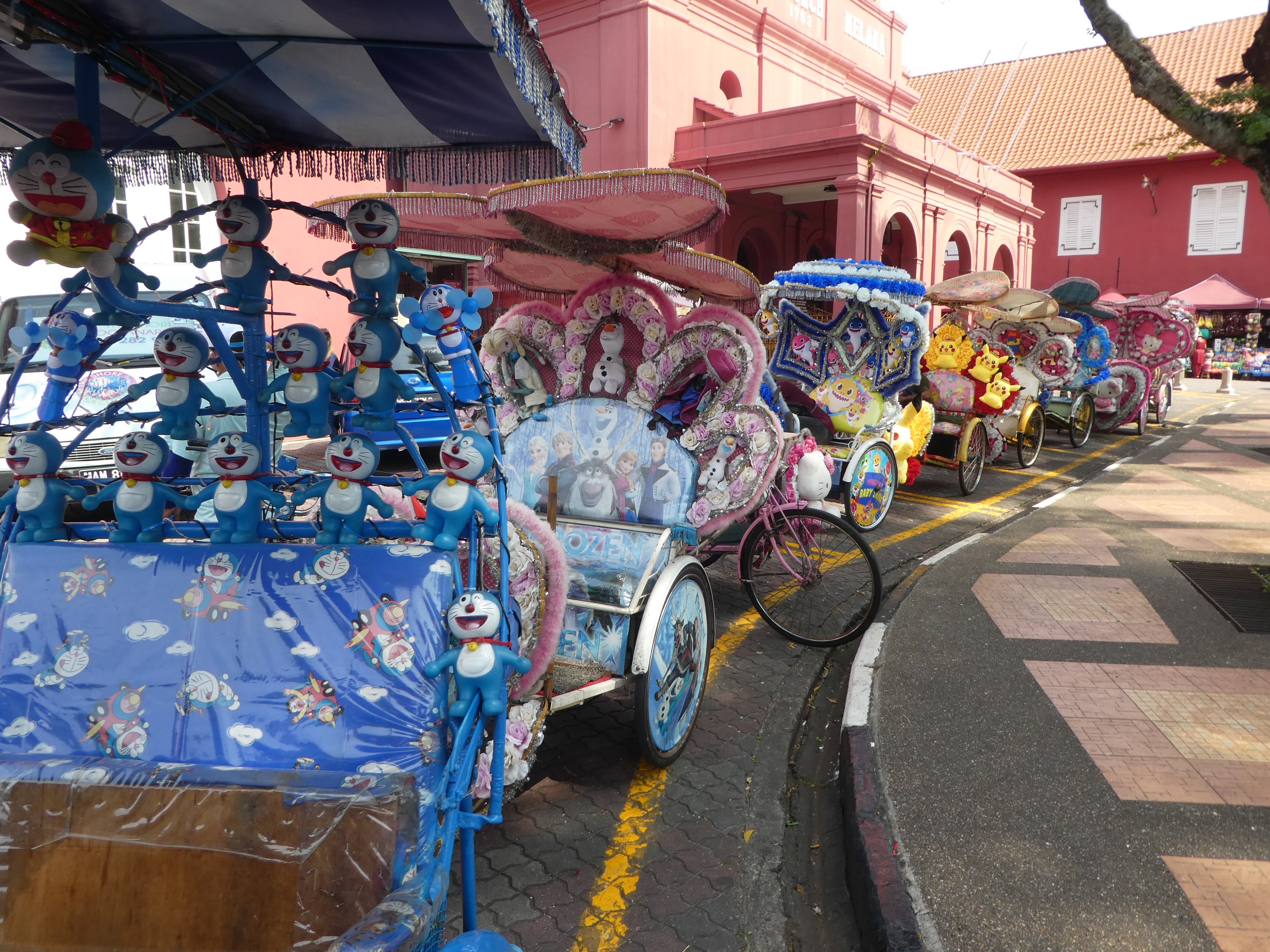
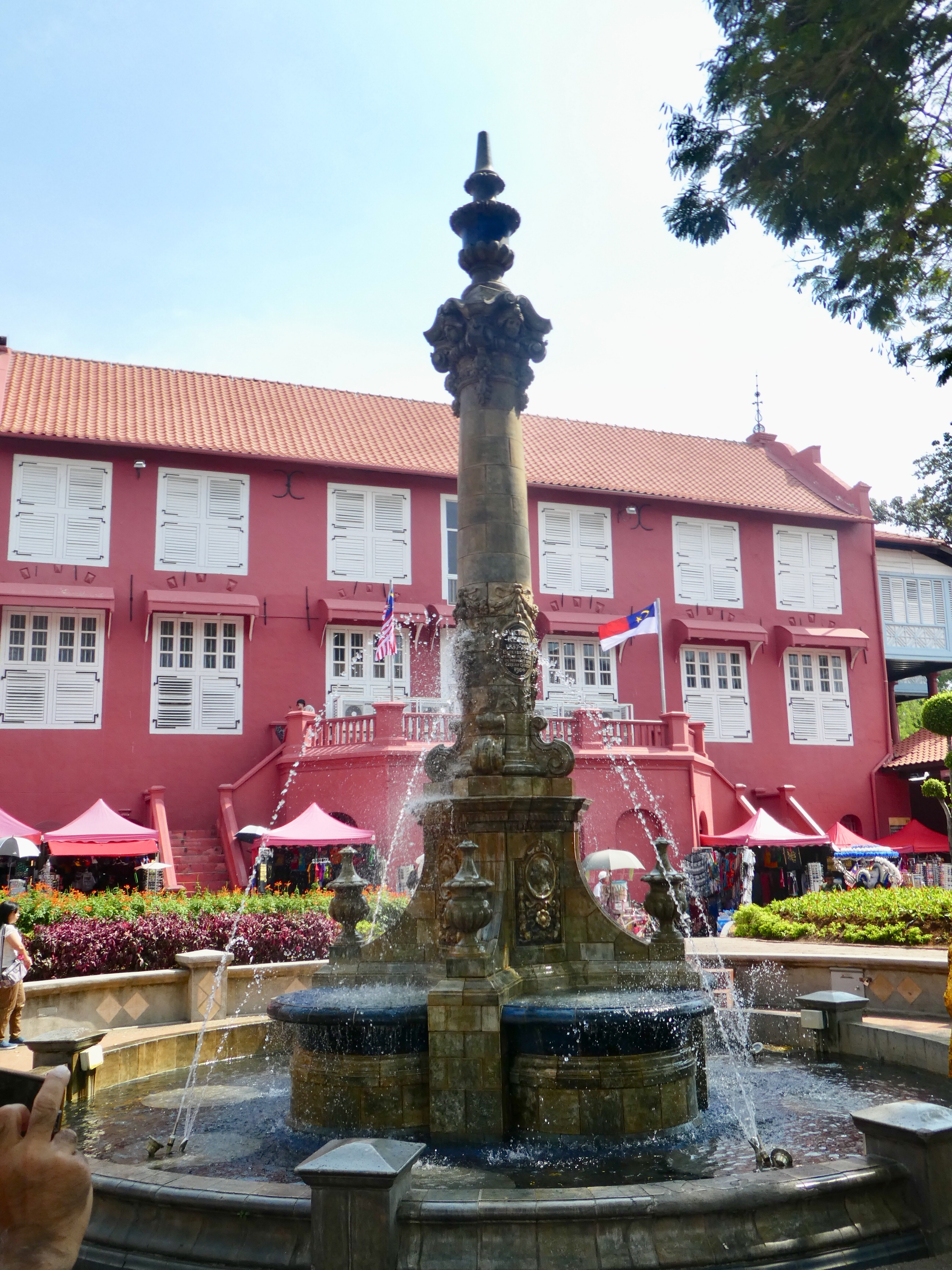
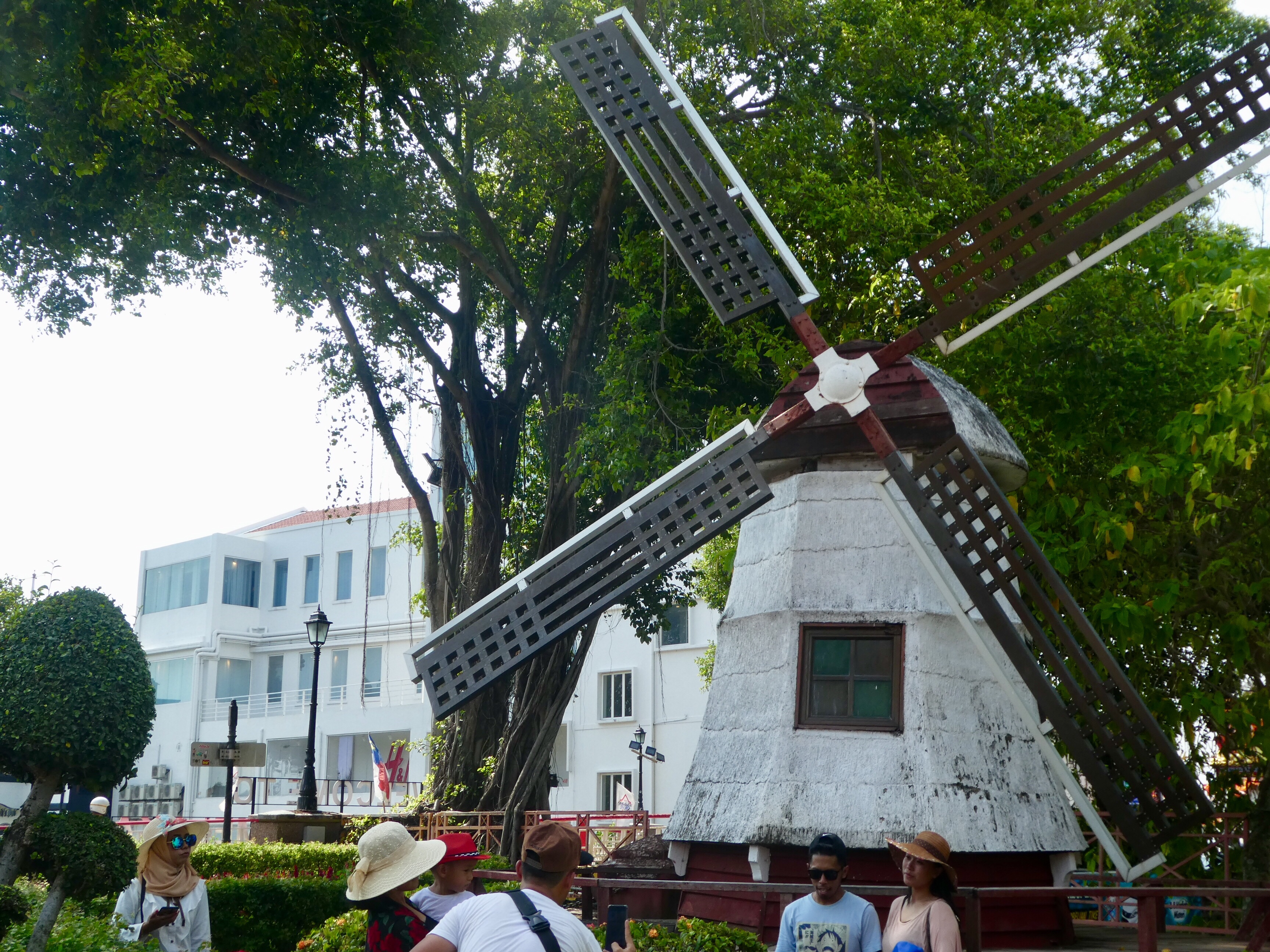
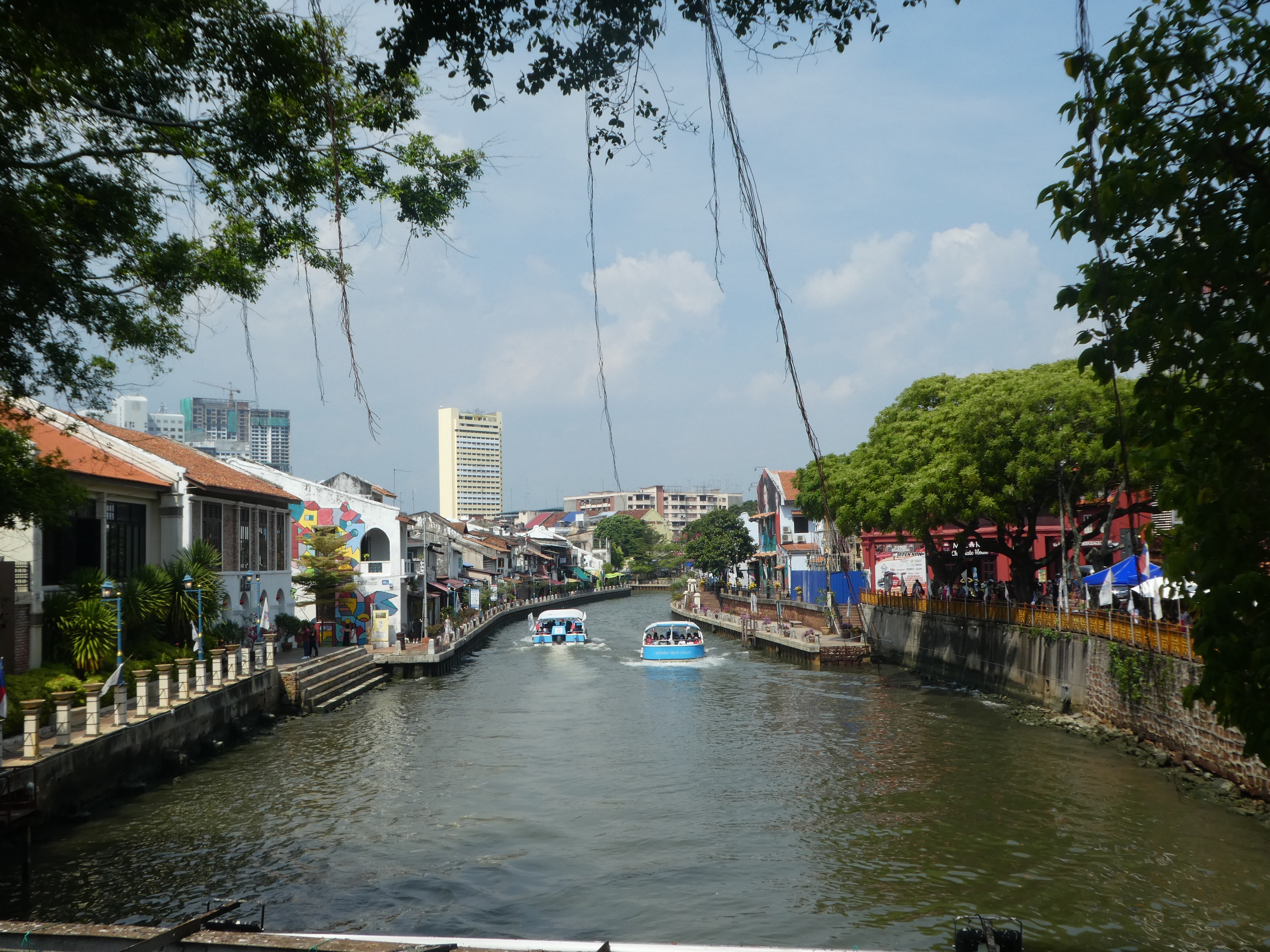
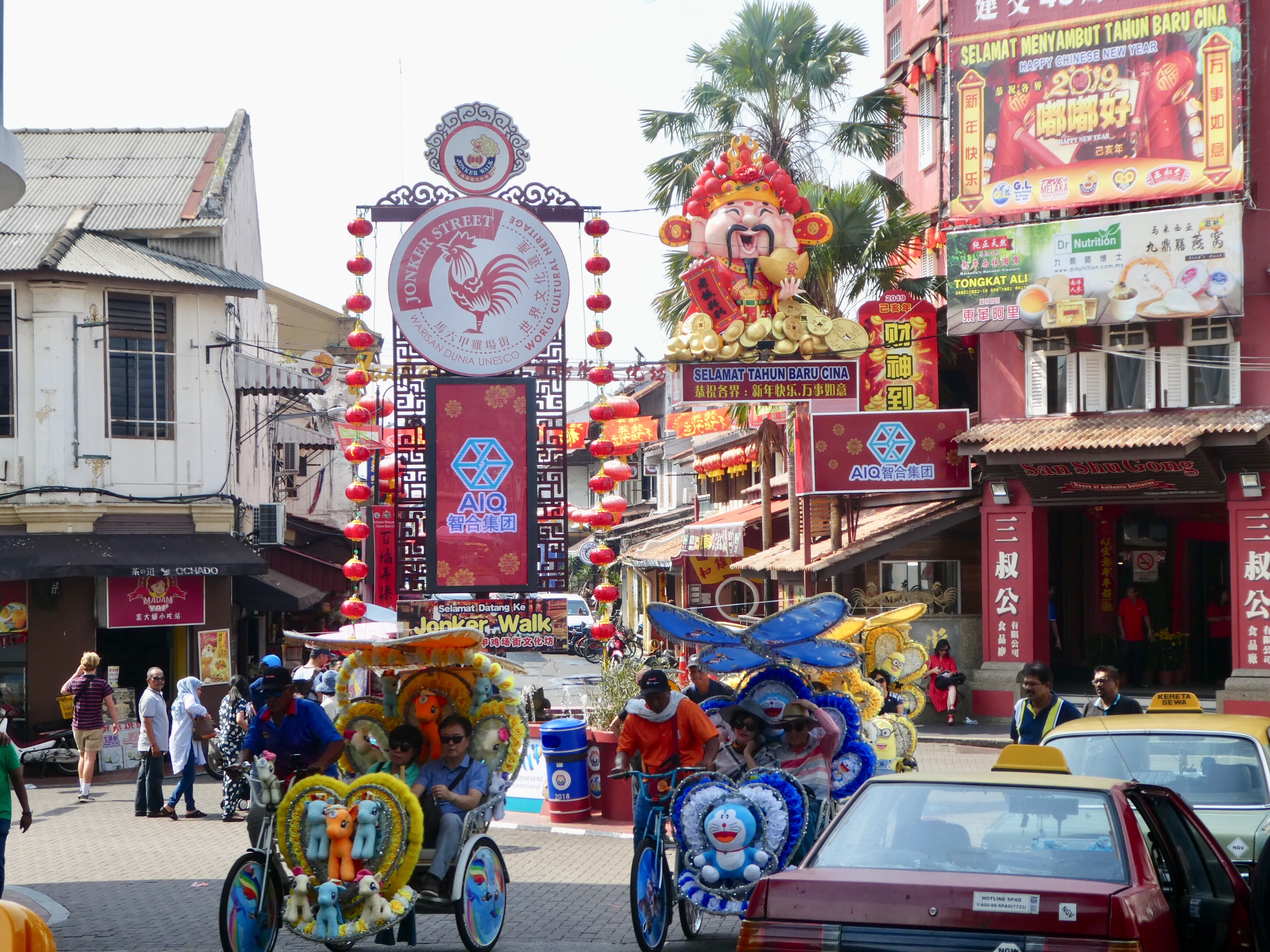
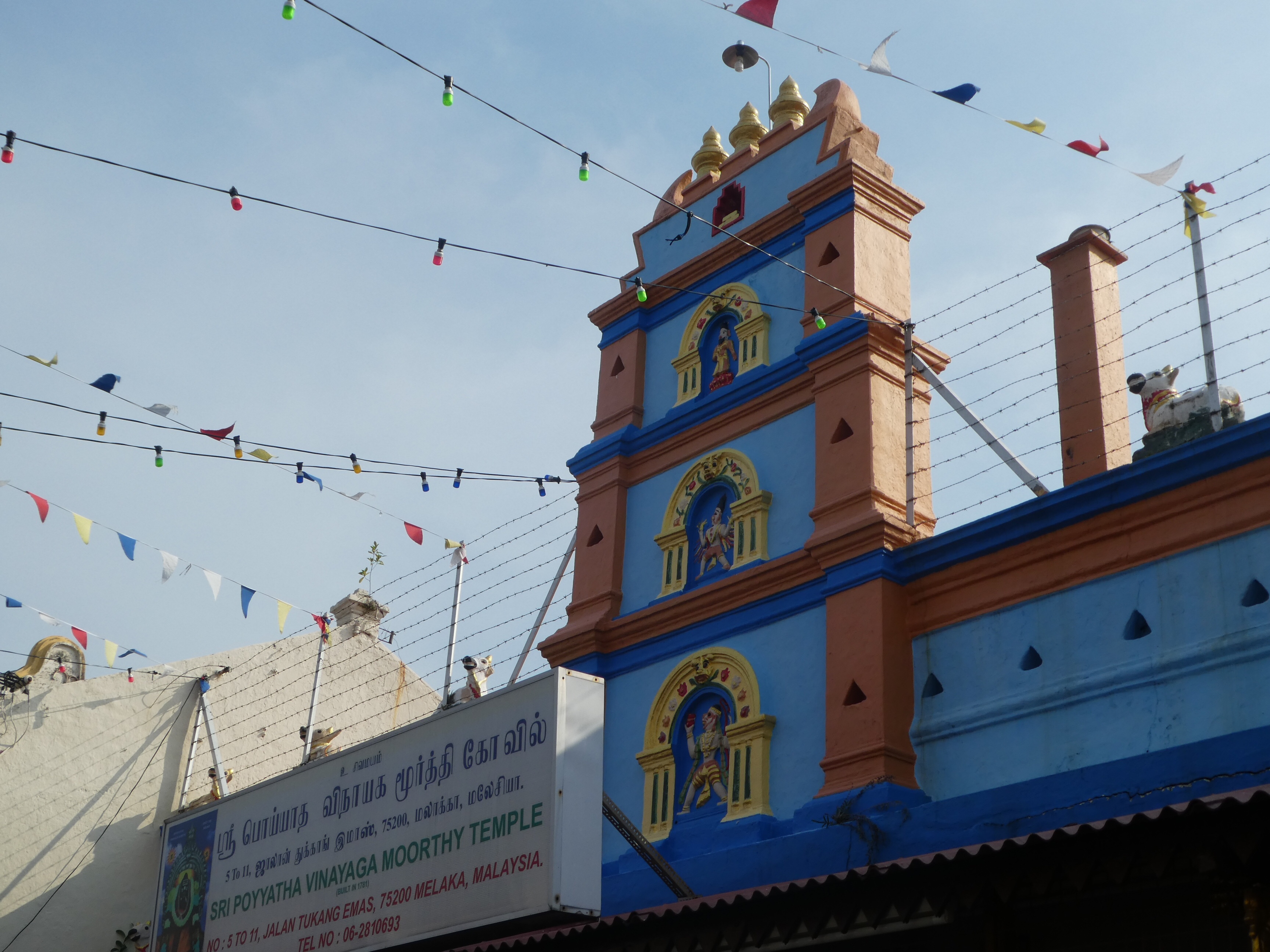
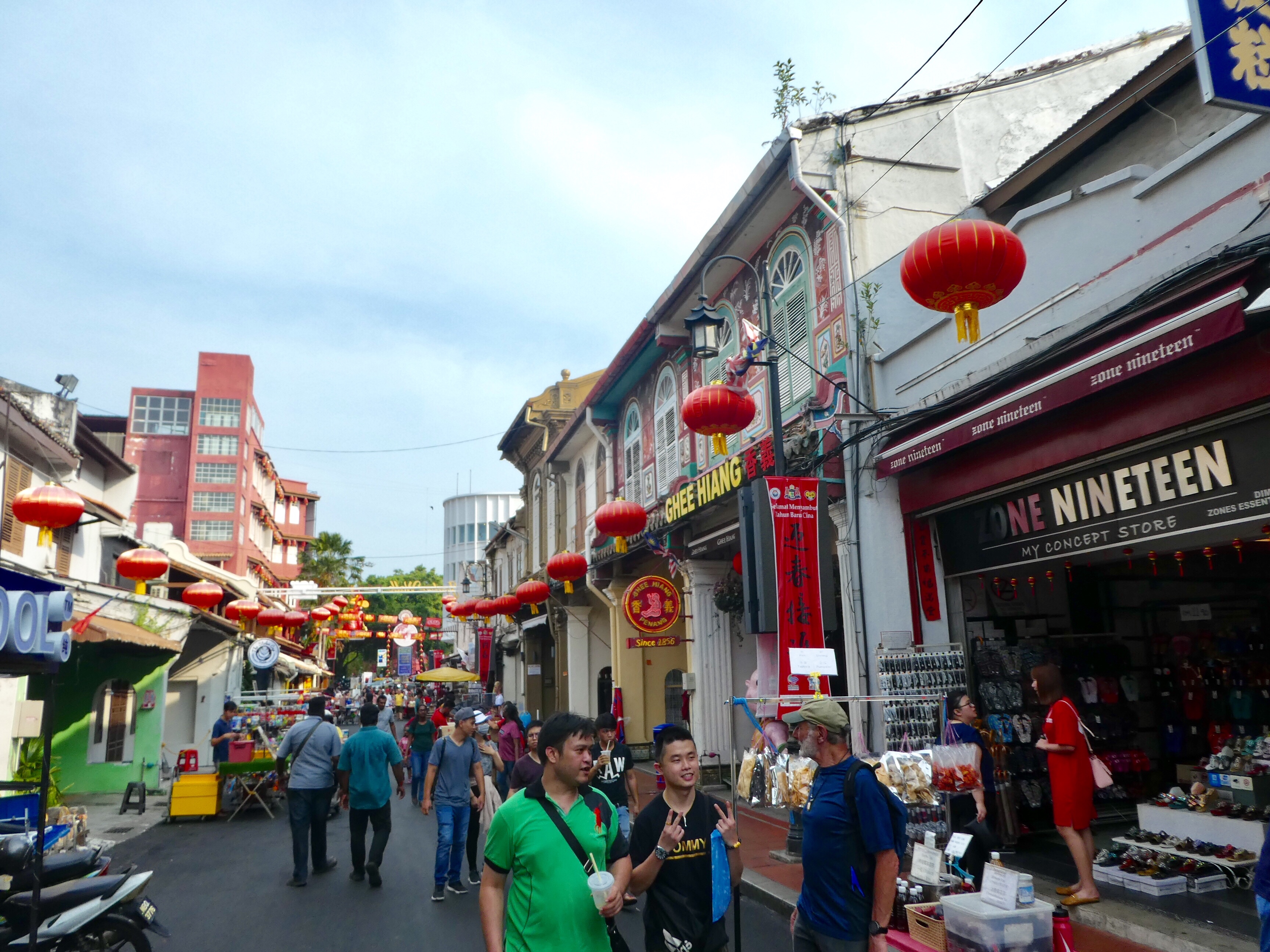
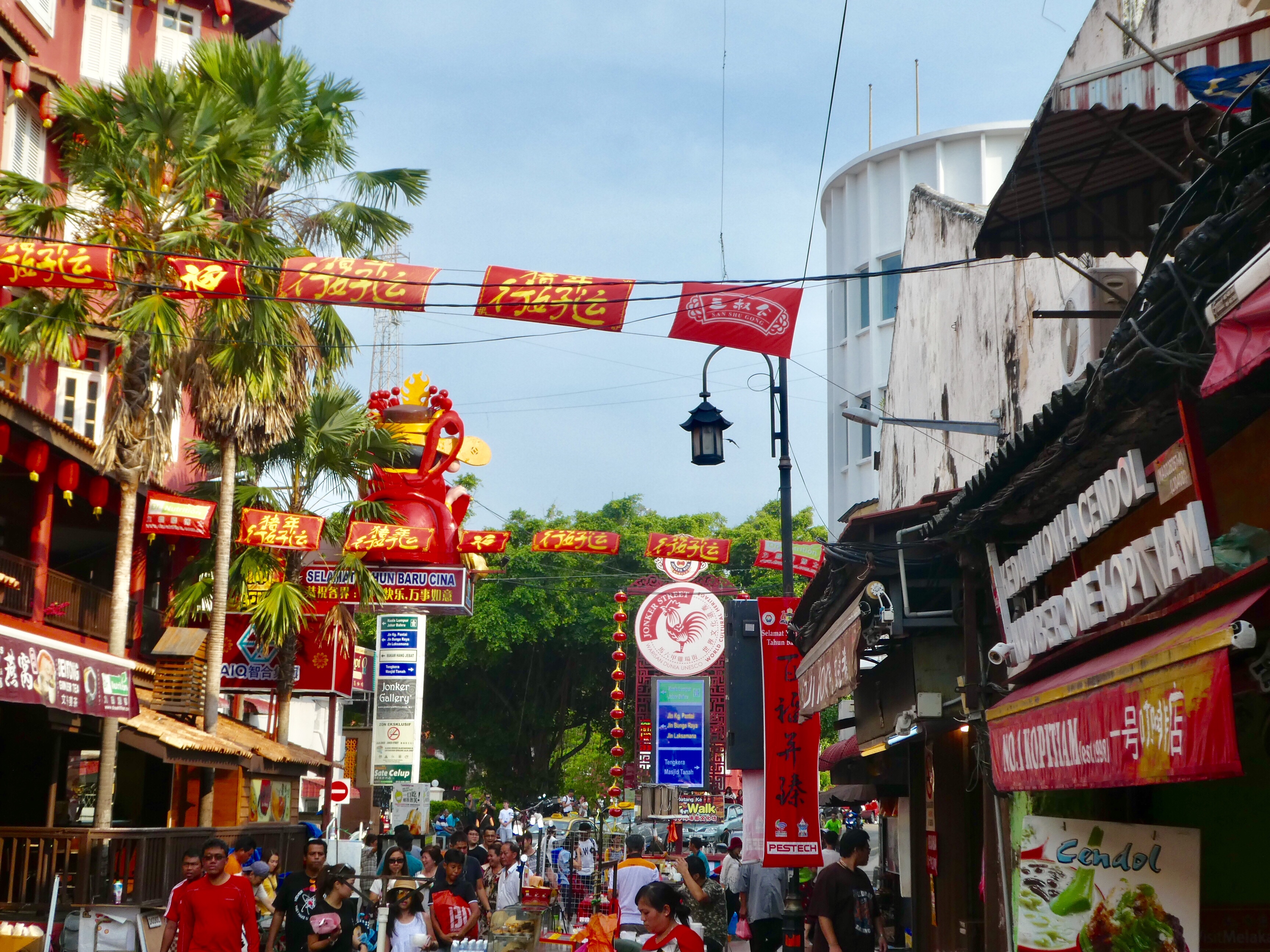
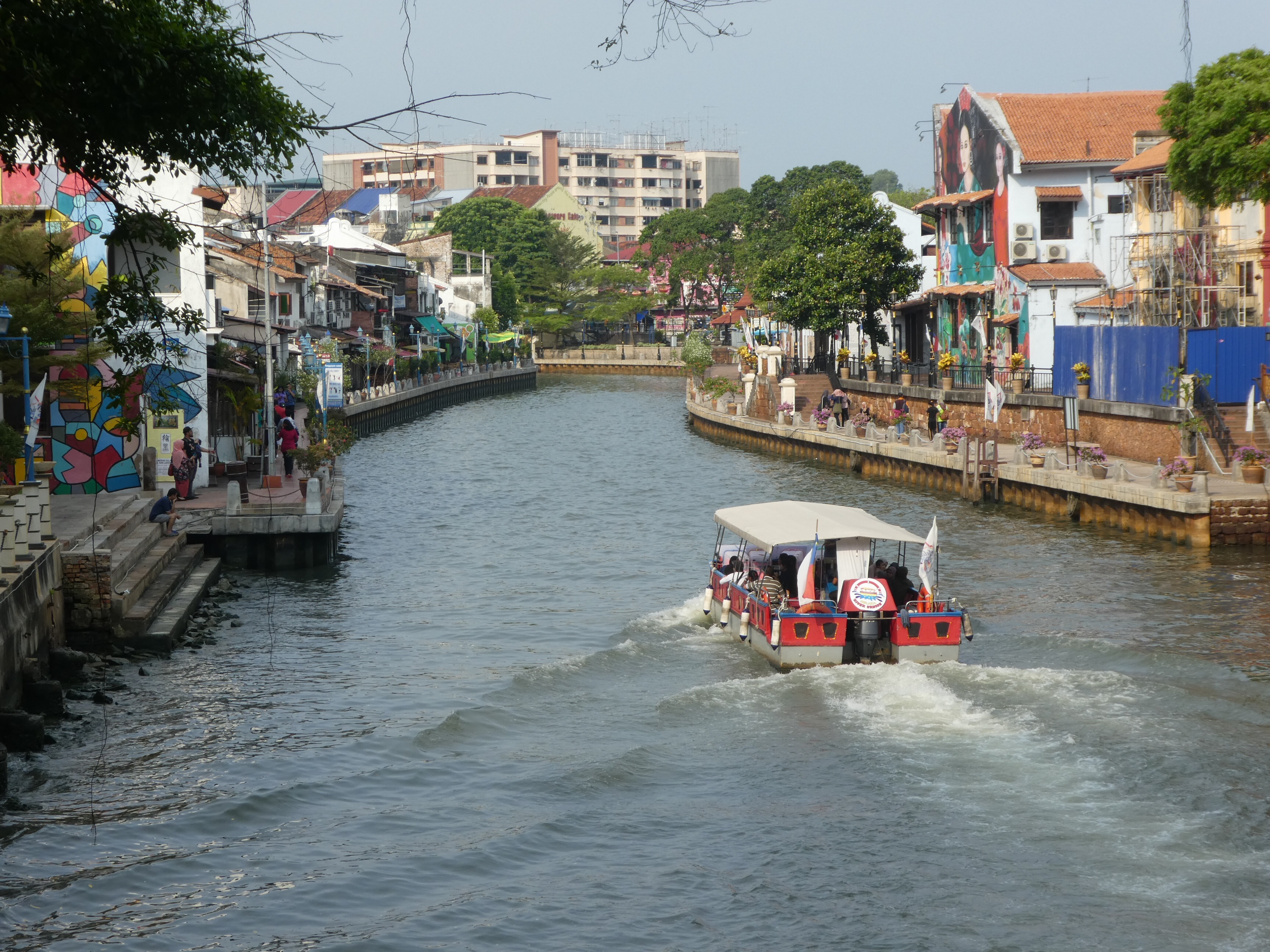
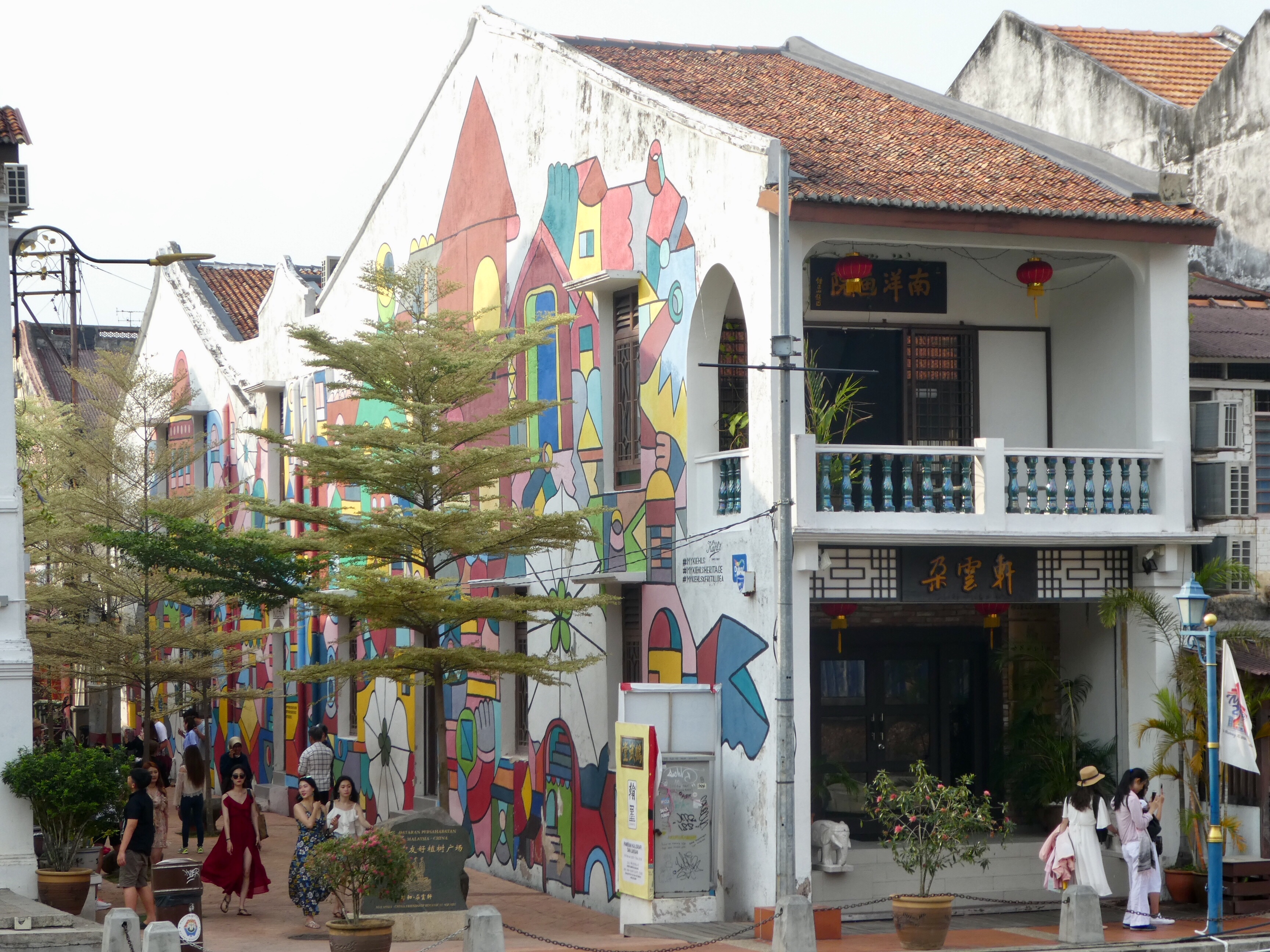
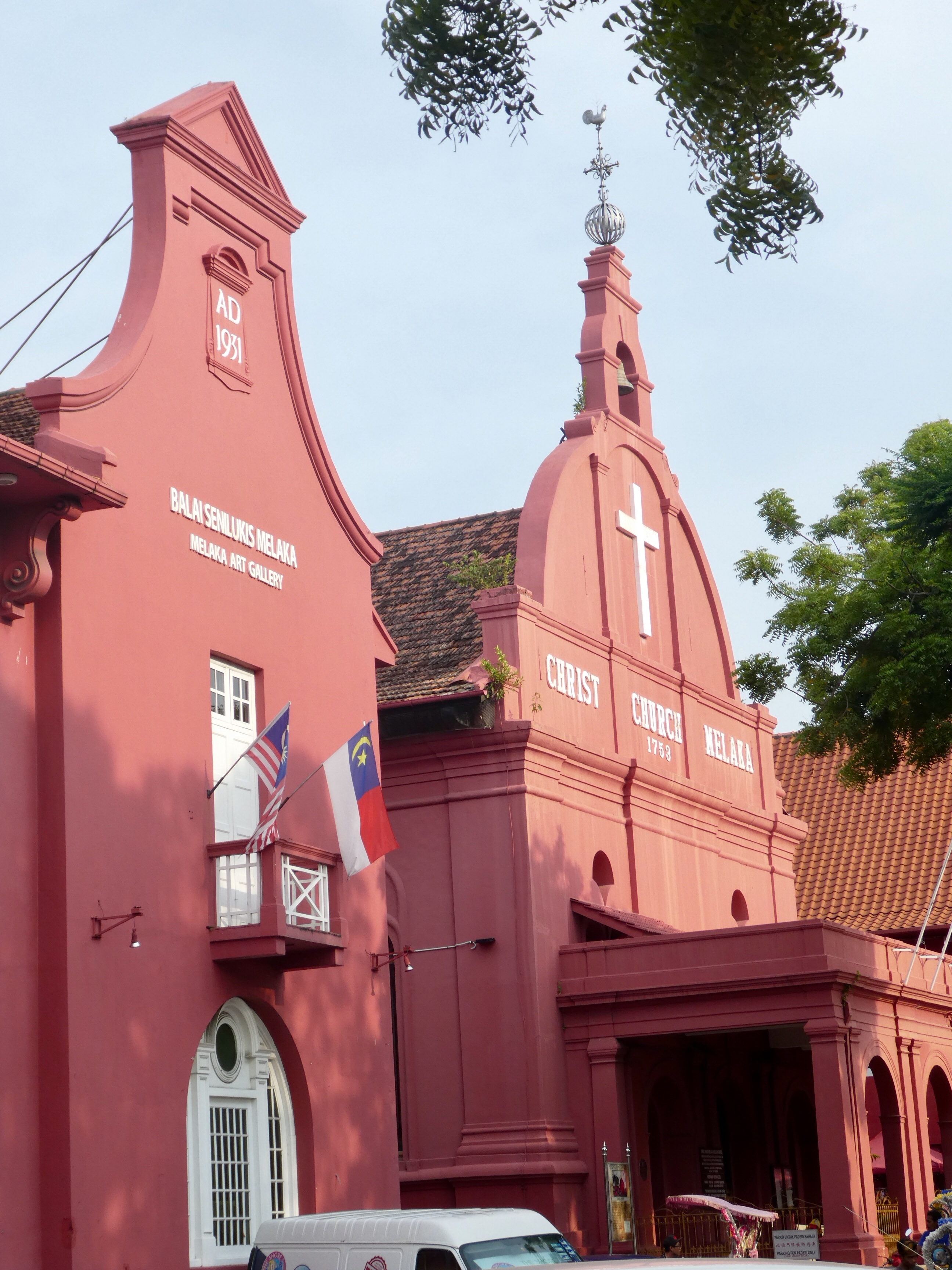
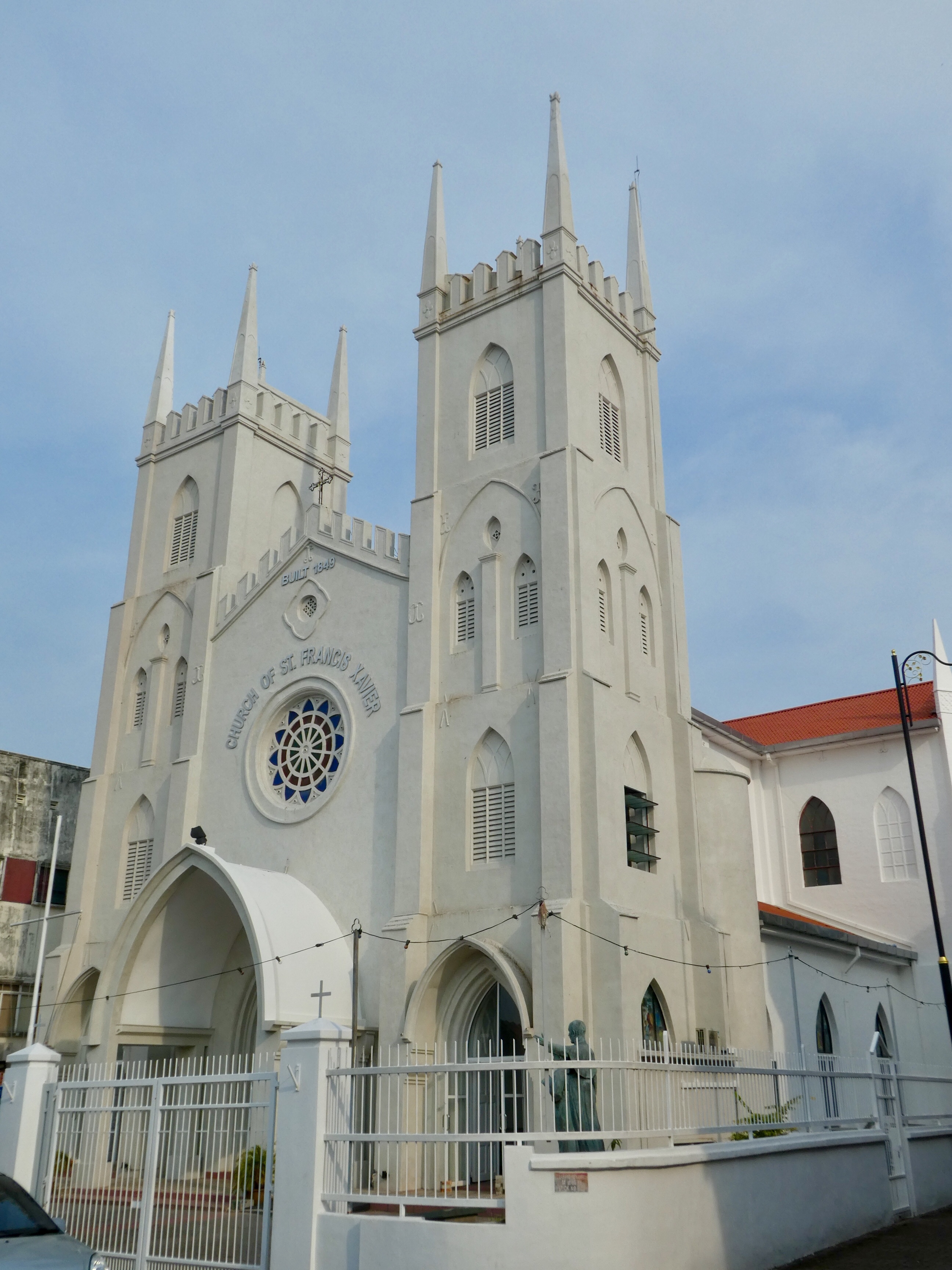
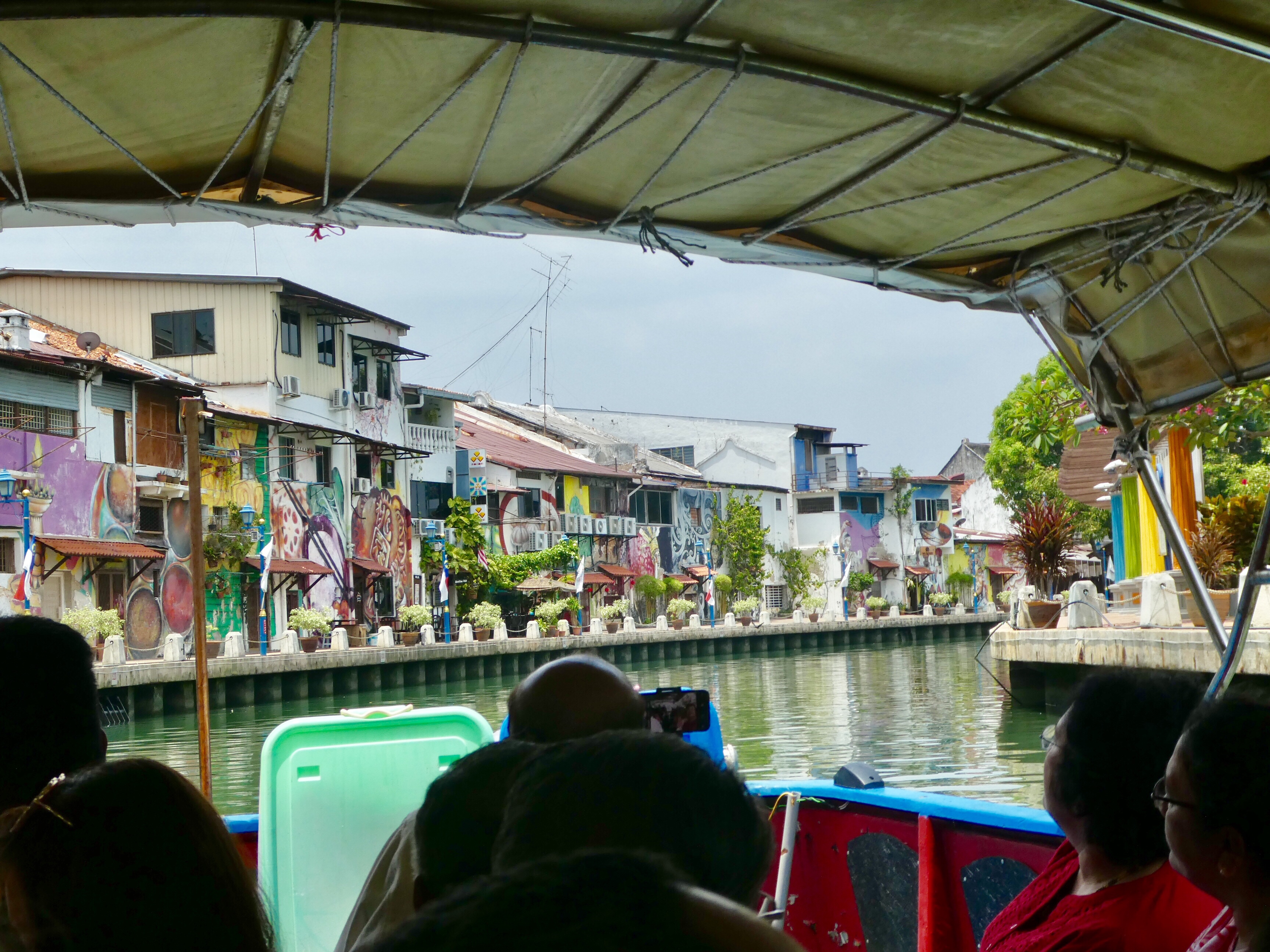
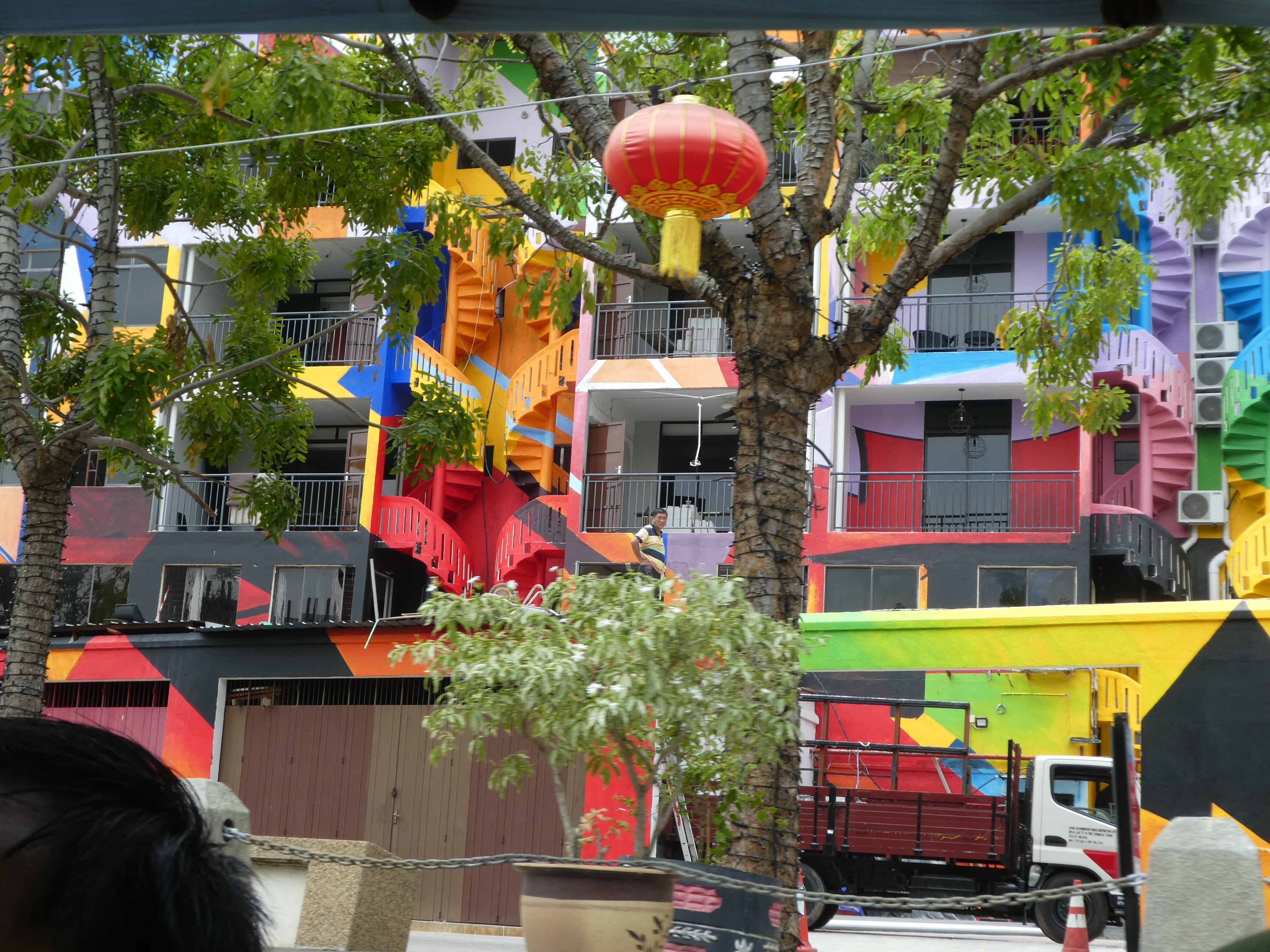
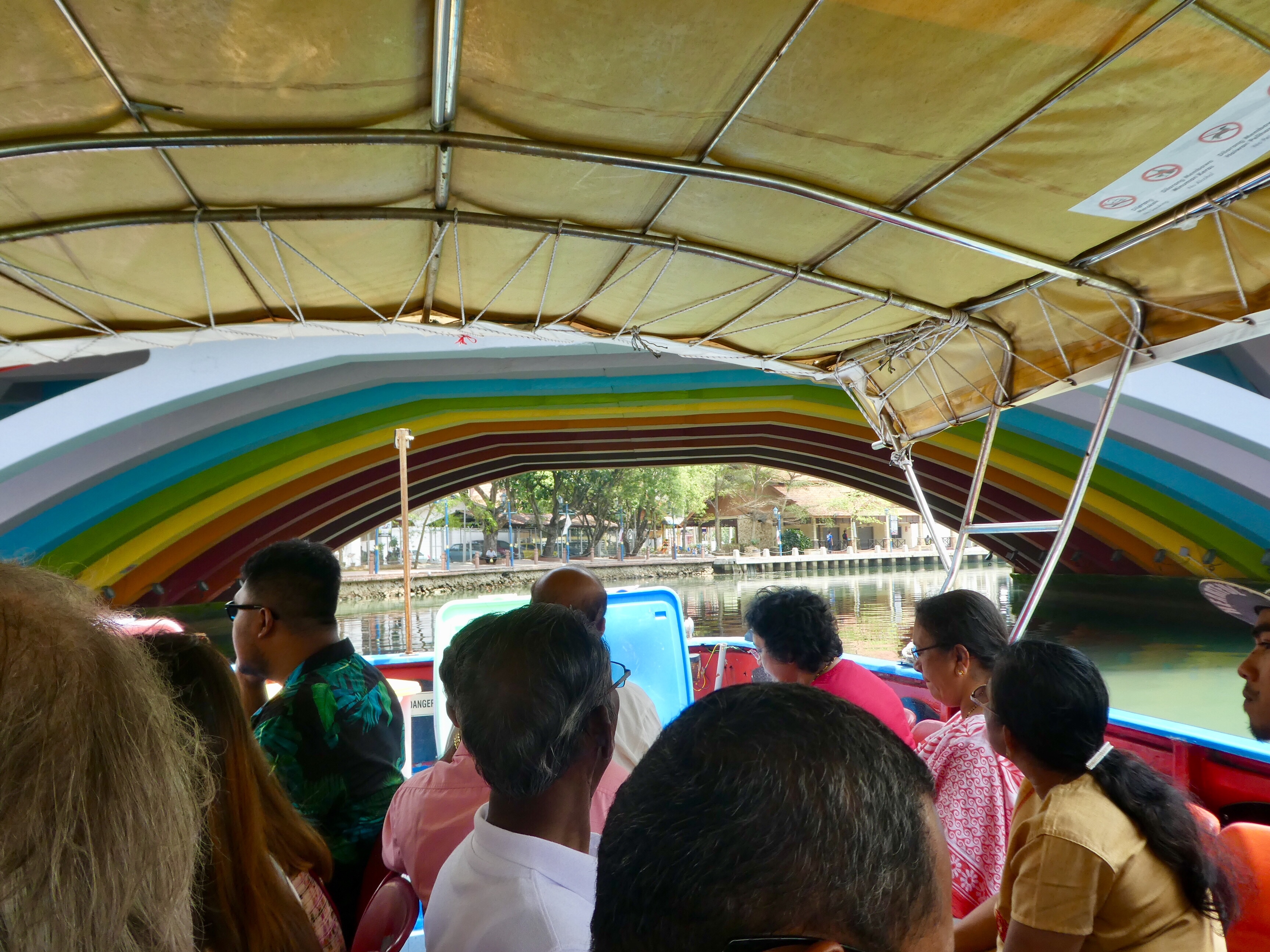
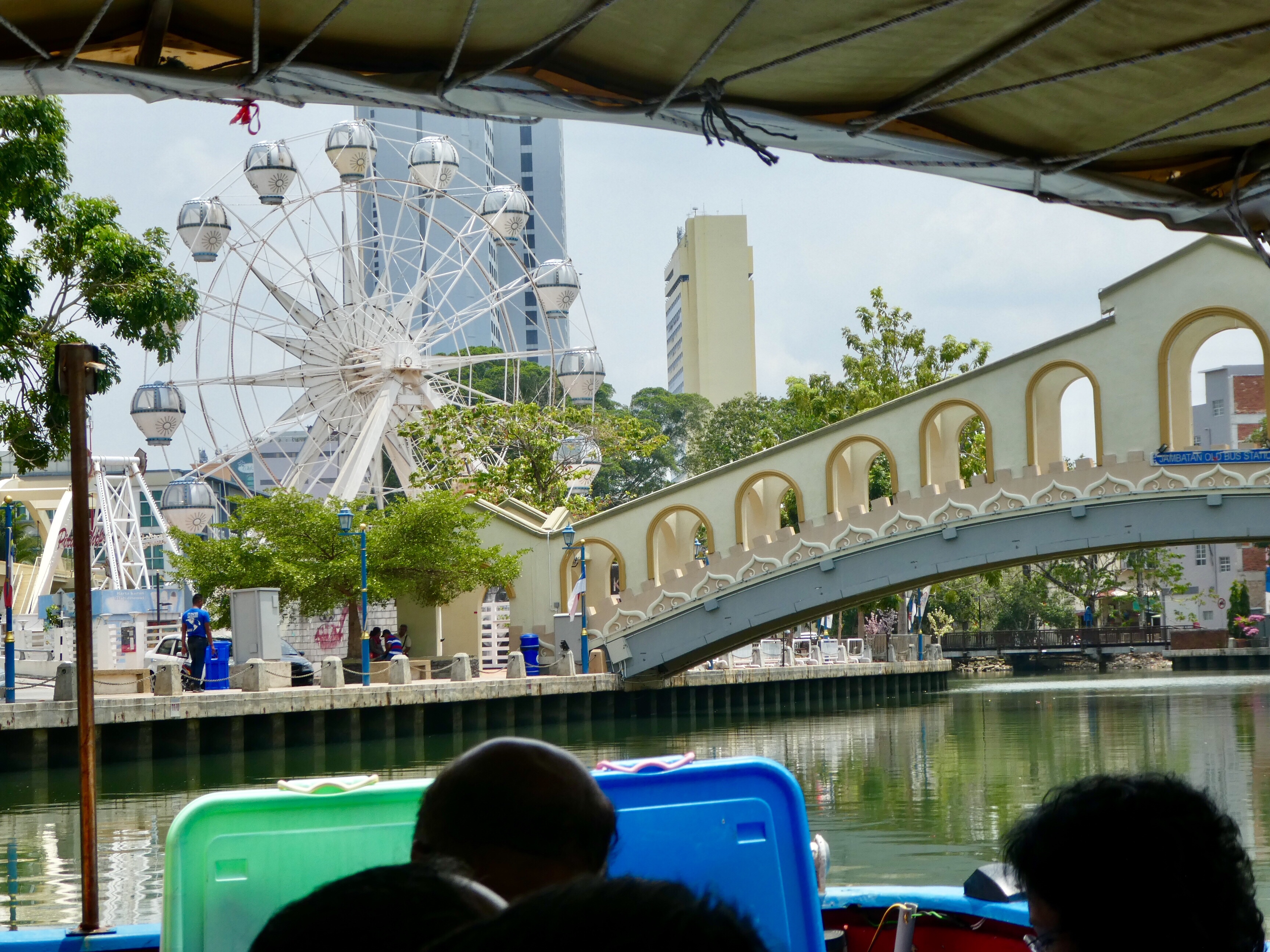
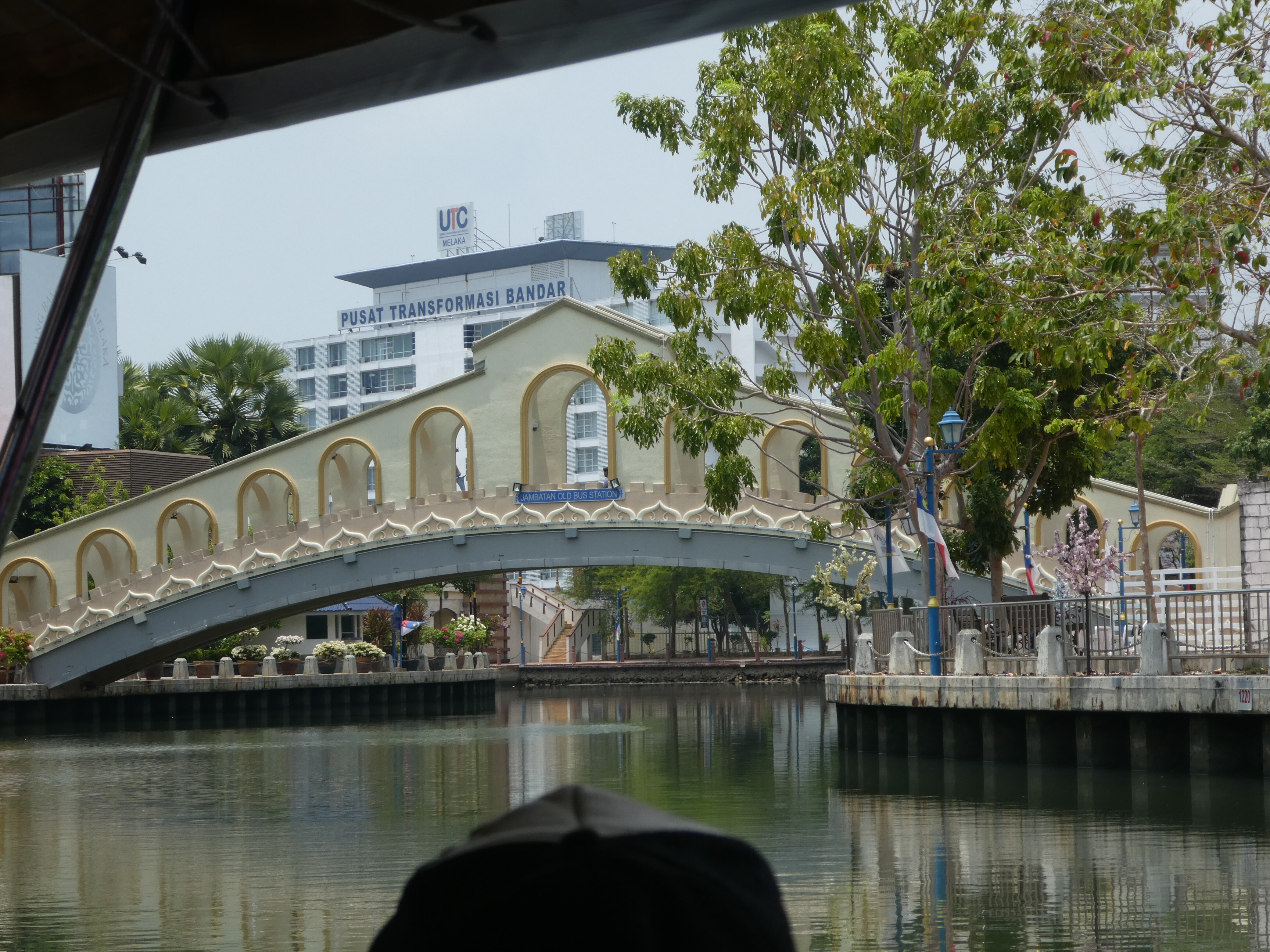
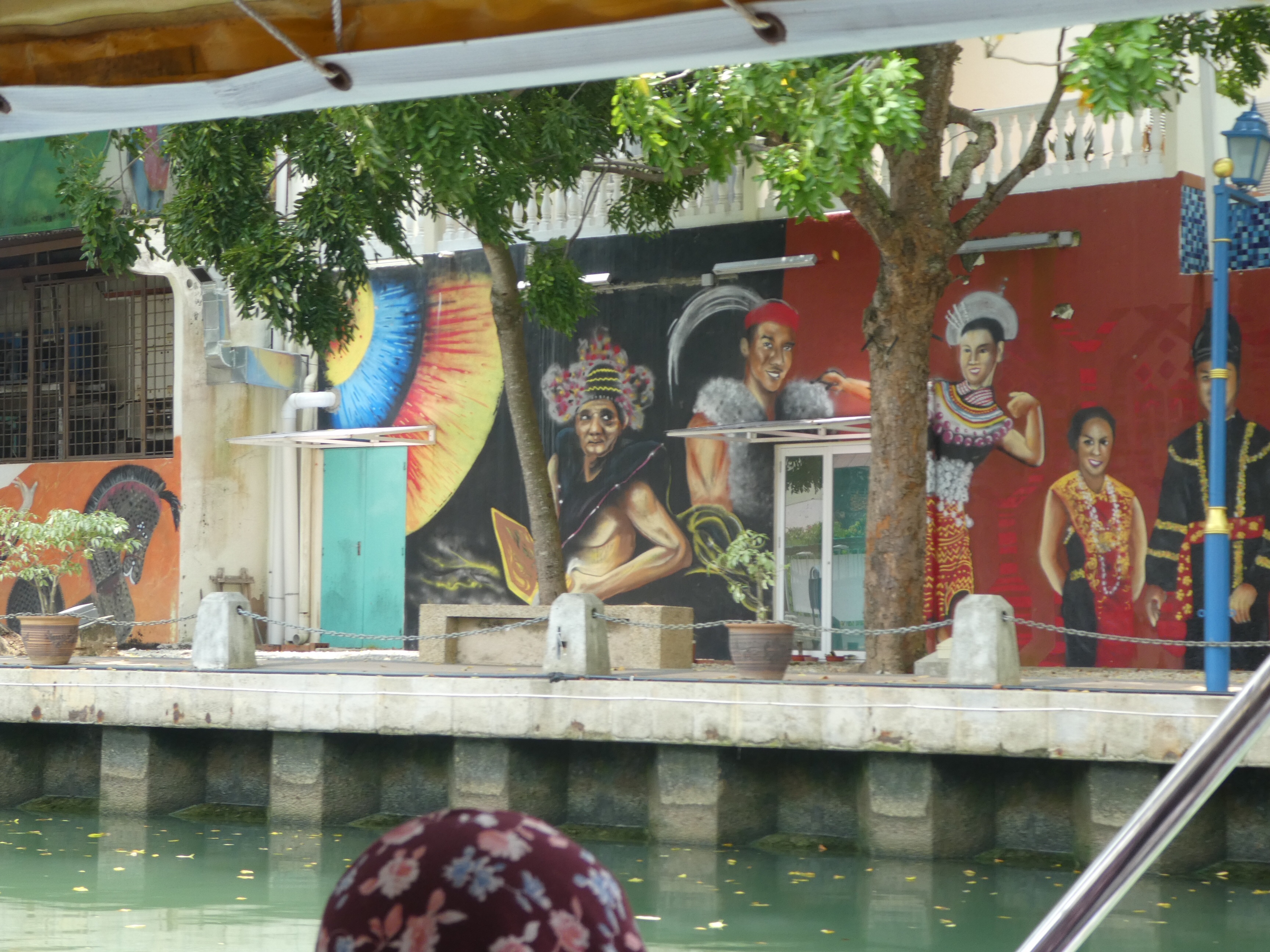
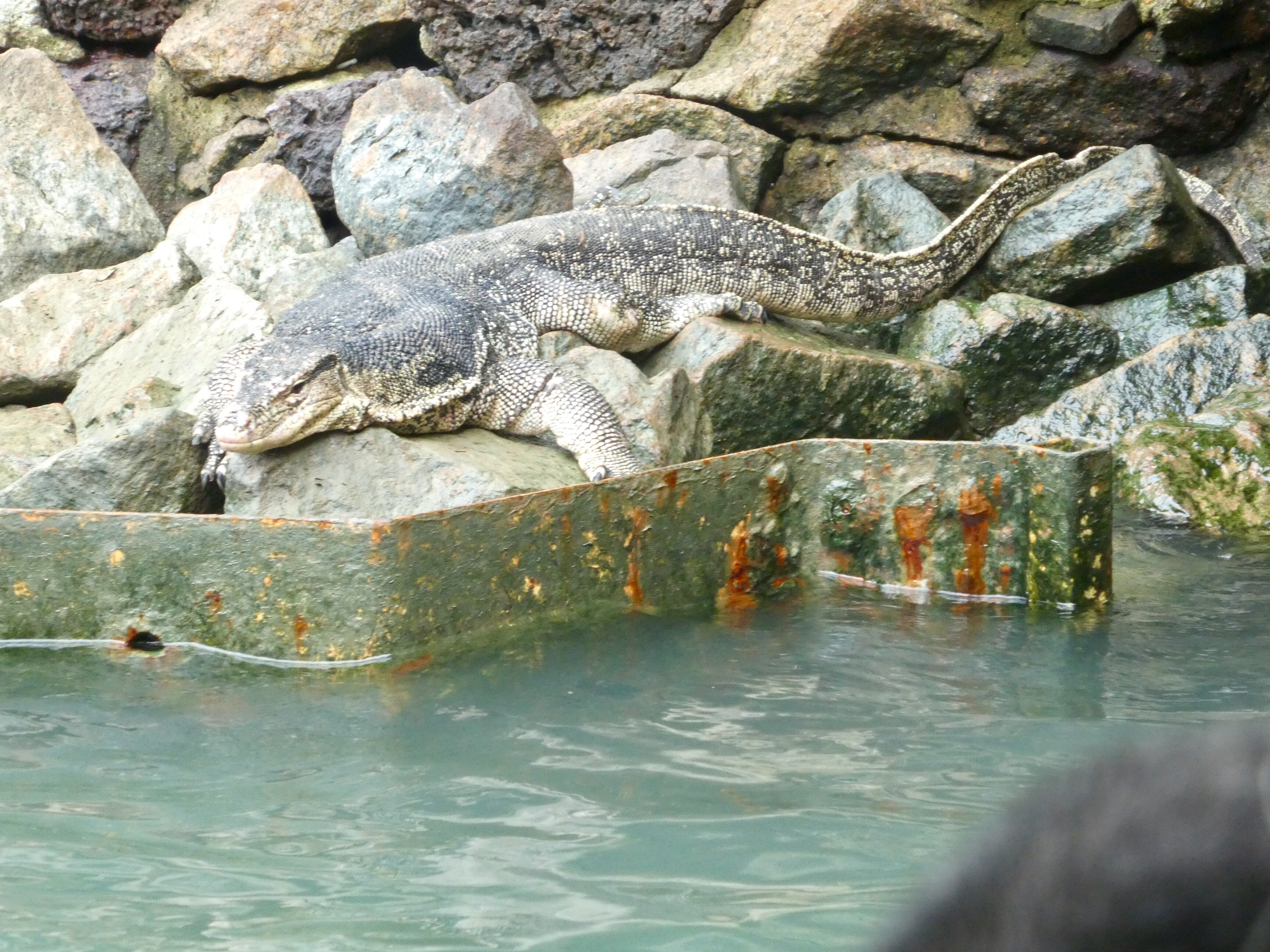
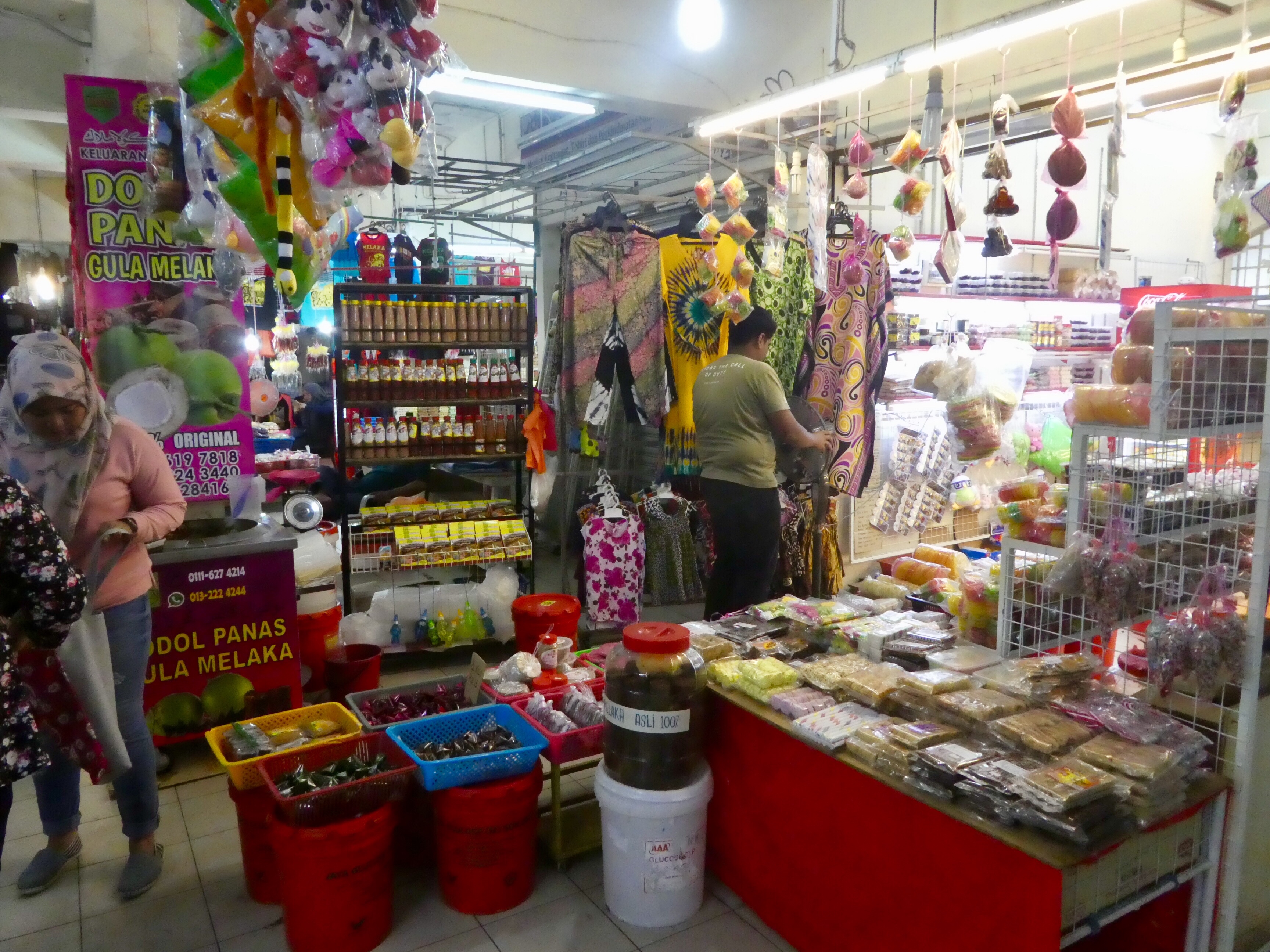
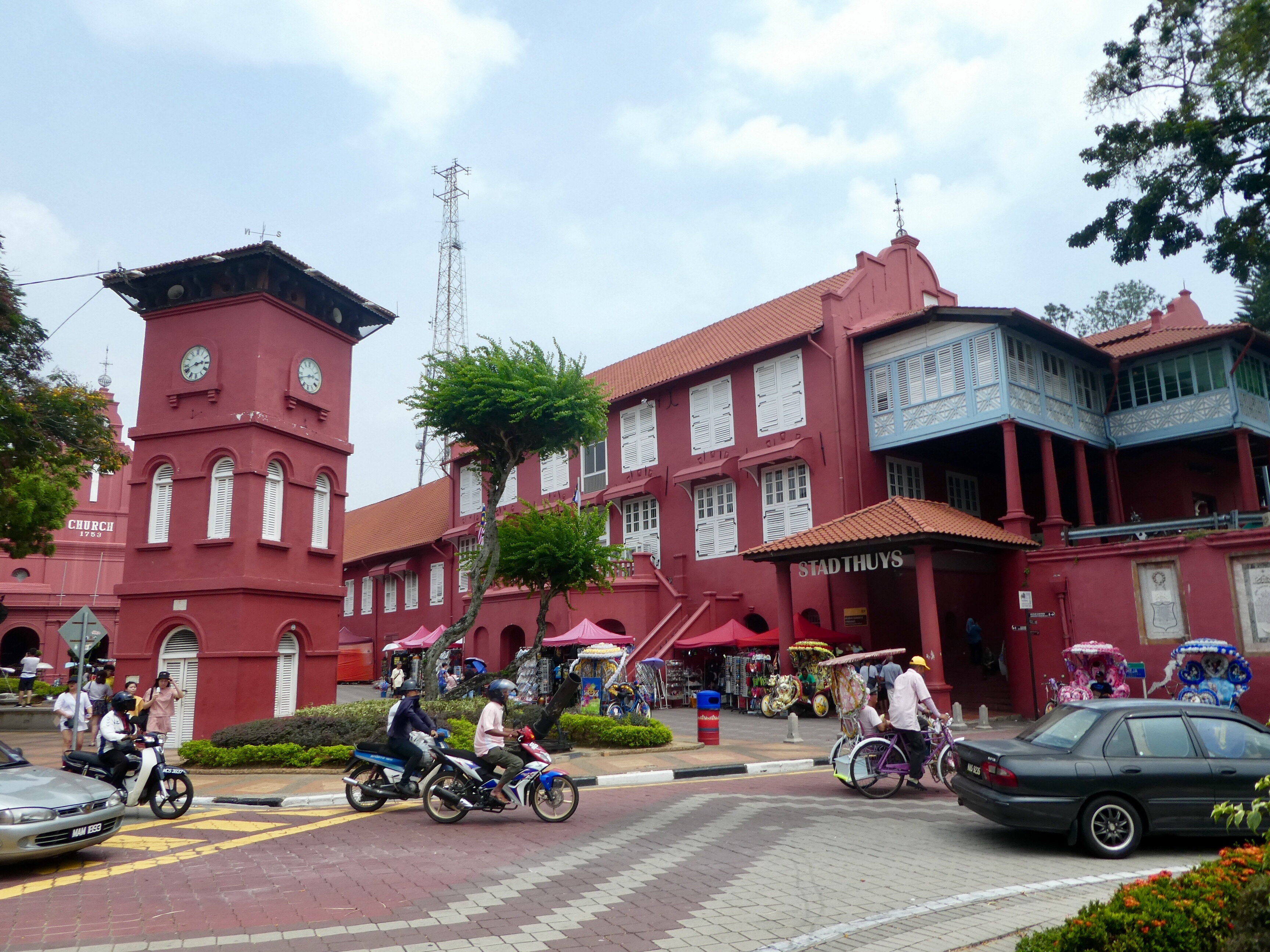
Melaka fun centers around UNESCO World Heritage protected Jonker street, a Chinatown filled with shops, food stalls and goings-on, geared towards Malaysian Chinese tourists. Though there are Indian and Malay venues nearby, the area is mostly attractive to Chinese tourists. They come in droves to buy and browse, take photos, and ride gaudy flowered trishaws blaring English and Chinese pop music. It’s a real carnival atmosphere, centered around the British clock tower, Queen Victoria fountain, a Dutch windmill, and the Melaka river cruise. We sampled durian ice-cream (blech!), biscuits from the oldest Chinese biscuit shop, established in 1856, teas, licorice and coconut candies, and several unknown “goodies.” We took a lovely river cruise. Some of the buildings we saw date back to the 16th century. Melaka has done a great job refurbishing historic buildings, painting multi-cultural murals, and landscaping. Our skipper pointed out a couple of gigantic monitor lizards, basking in the sun along the bank of the river. They were 3-4ft long. At first, we thought they were Caiman crocodiles! 🤣

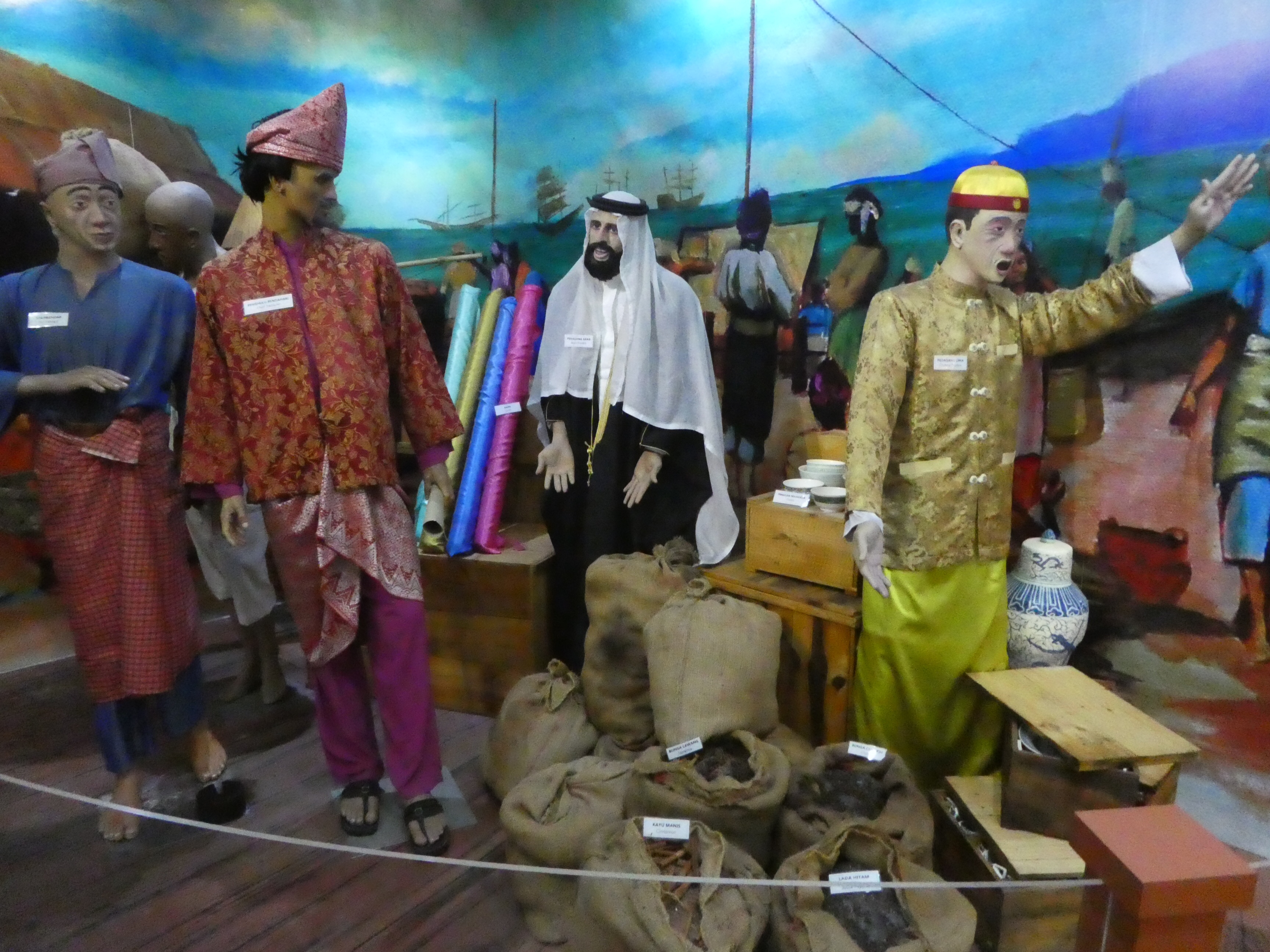
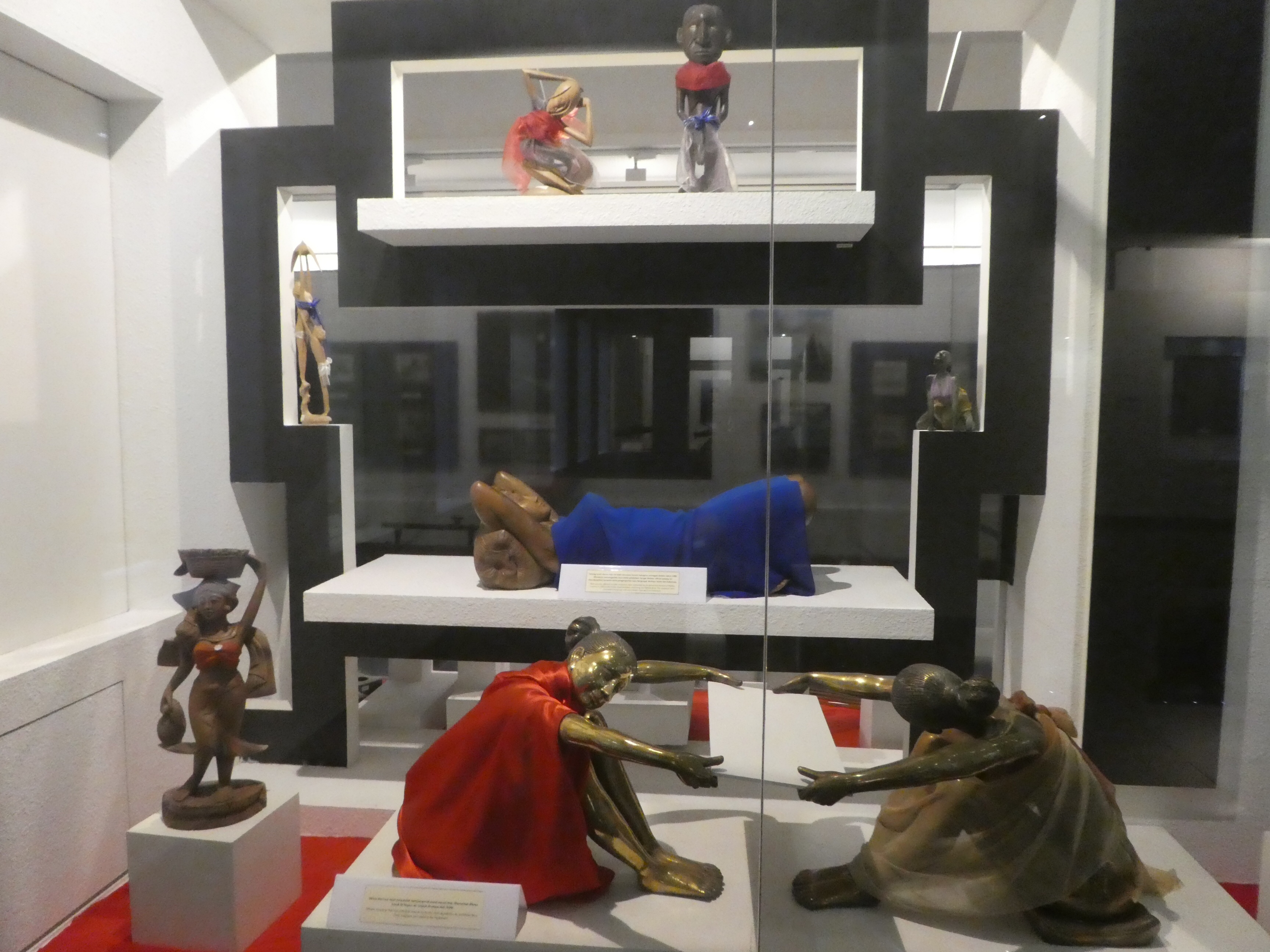
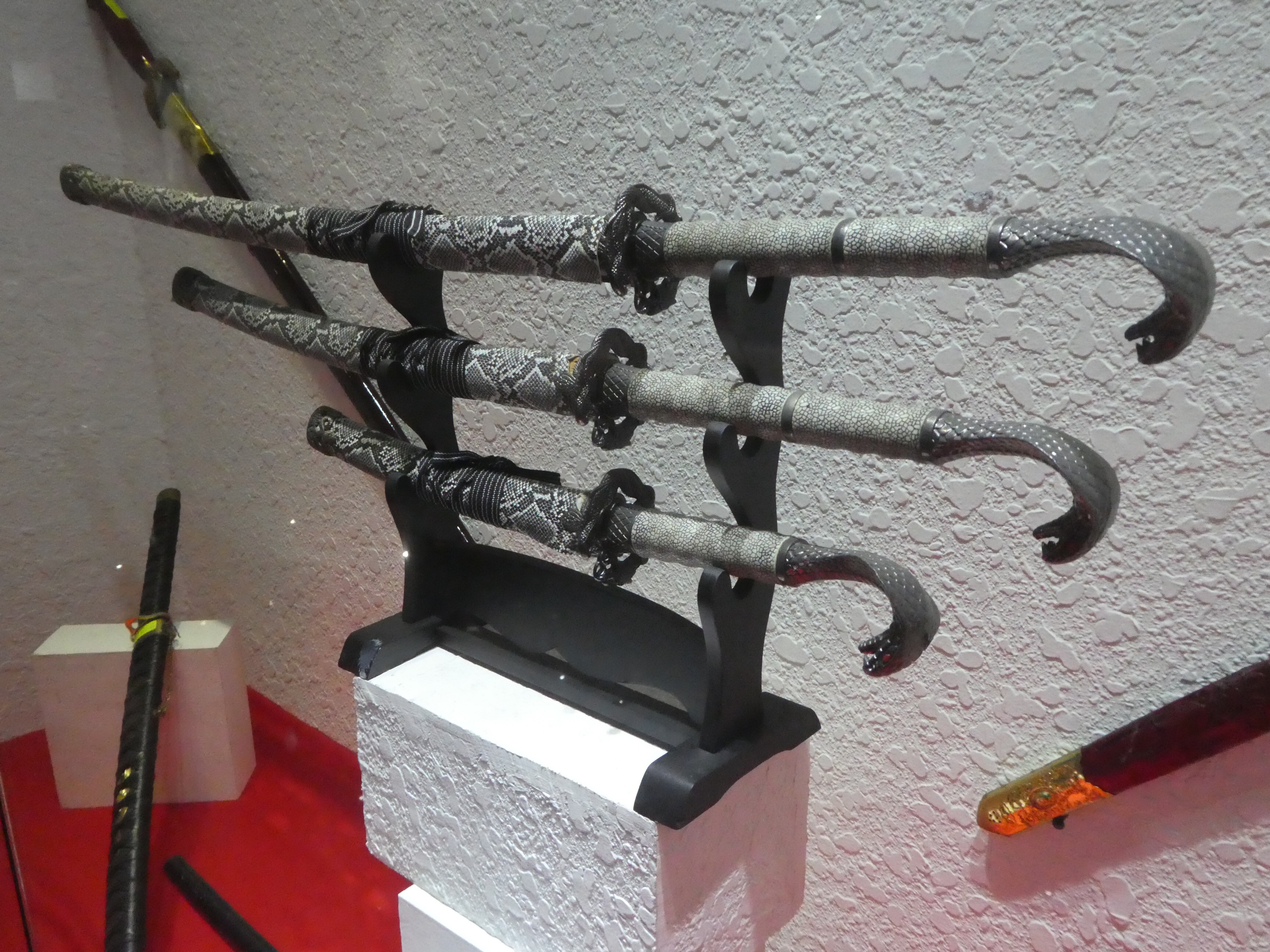
We spent some time at the Maritime museum. This served as an import/export house for more than 100 years. We saw confiscated illegal goods on display. These included guns, swords, drugs, porn (even a copy of Playboy magazine!), animal skins, ivory tusks, cigarettes and tobacco. The surprise items included clothing imprinted with words from the Koran holy book and wooden carvings of nude women. These are considered “indecent” in the conservative Malay culture. The carvings were “clothed” to hide otherwise exposed breasts. We learned about the thriving opium trade, and how it was later eliminated. An airport sign with a noose and the words “bringing drugs into Malaysia is punishable by death.” 👀

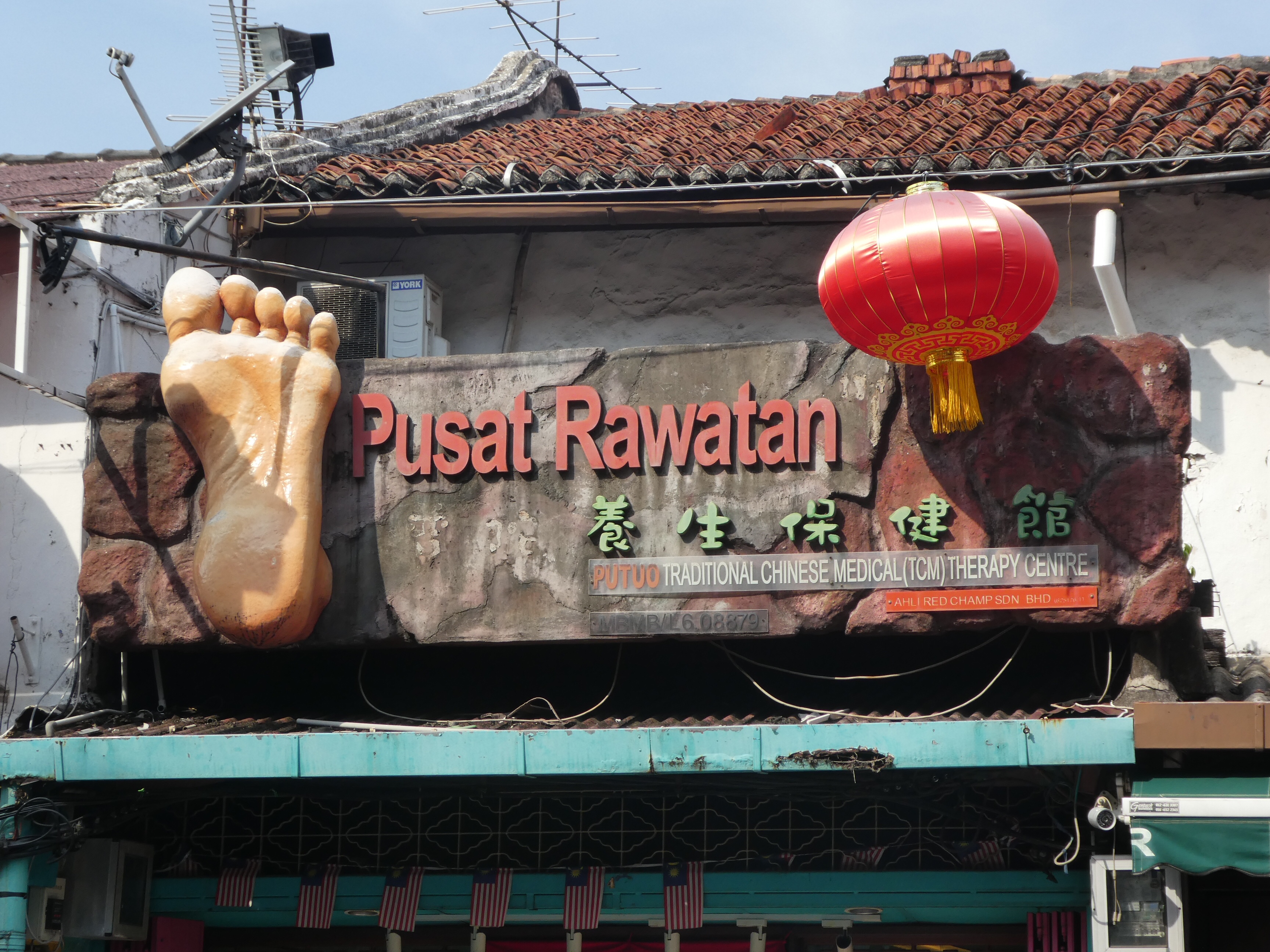
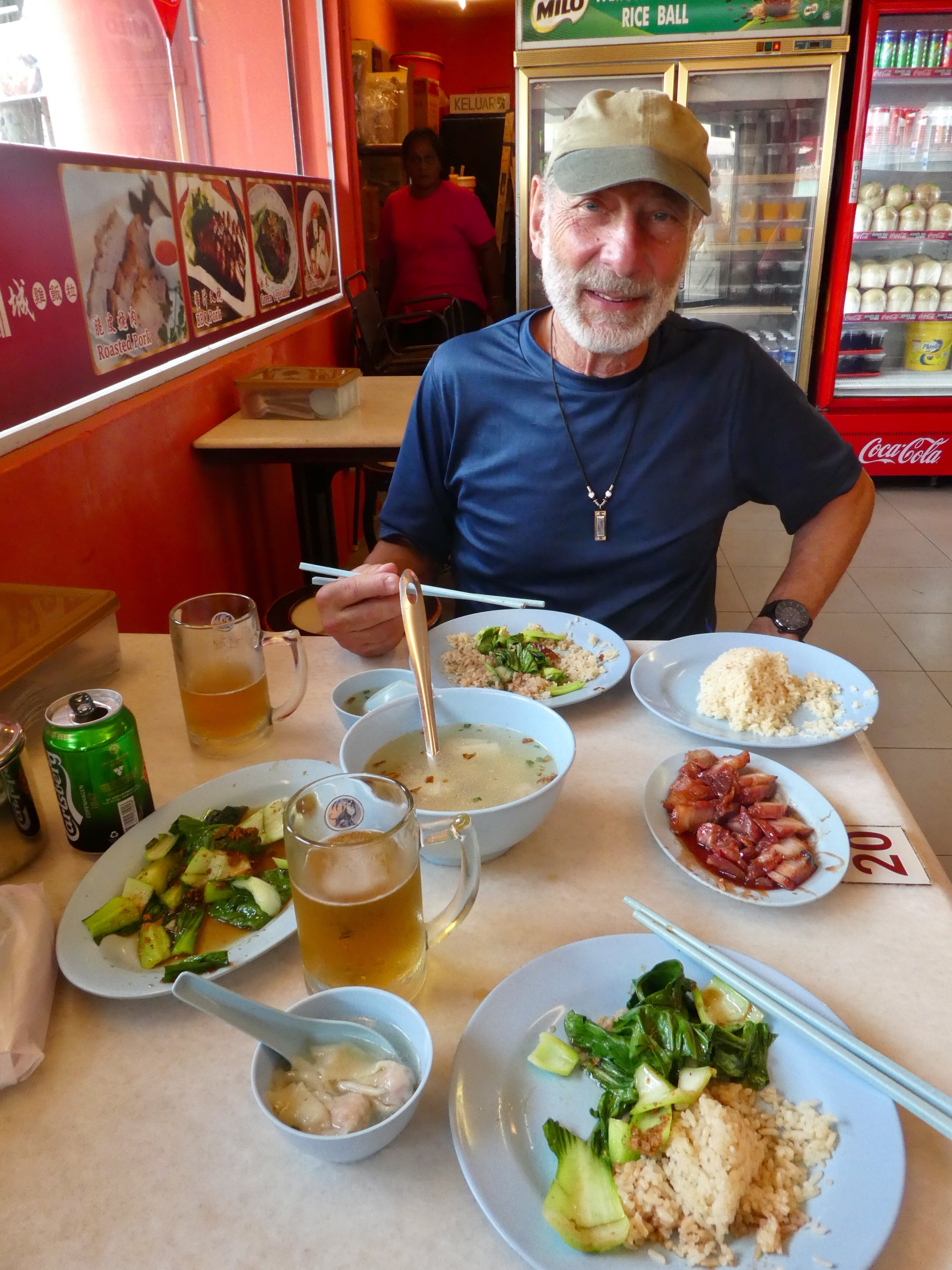
We spent two nights near Jonker walk and one night near the modern town center. The town center has broad streets and sidewalks and more upscale hotels. It also has lots of massage parlors and Chinese medicine venues. Melaka offers a lot of Indian and Malay food. We stayed away from those spicier cuisines and enjoyed Chinese favorites like BBQ pork and wonton soup.

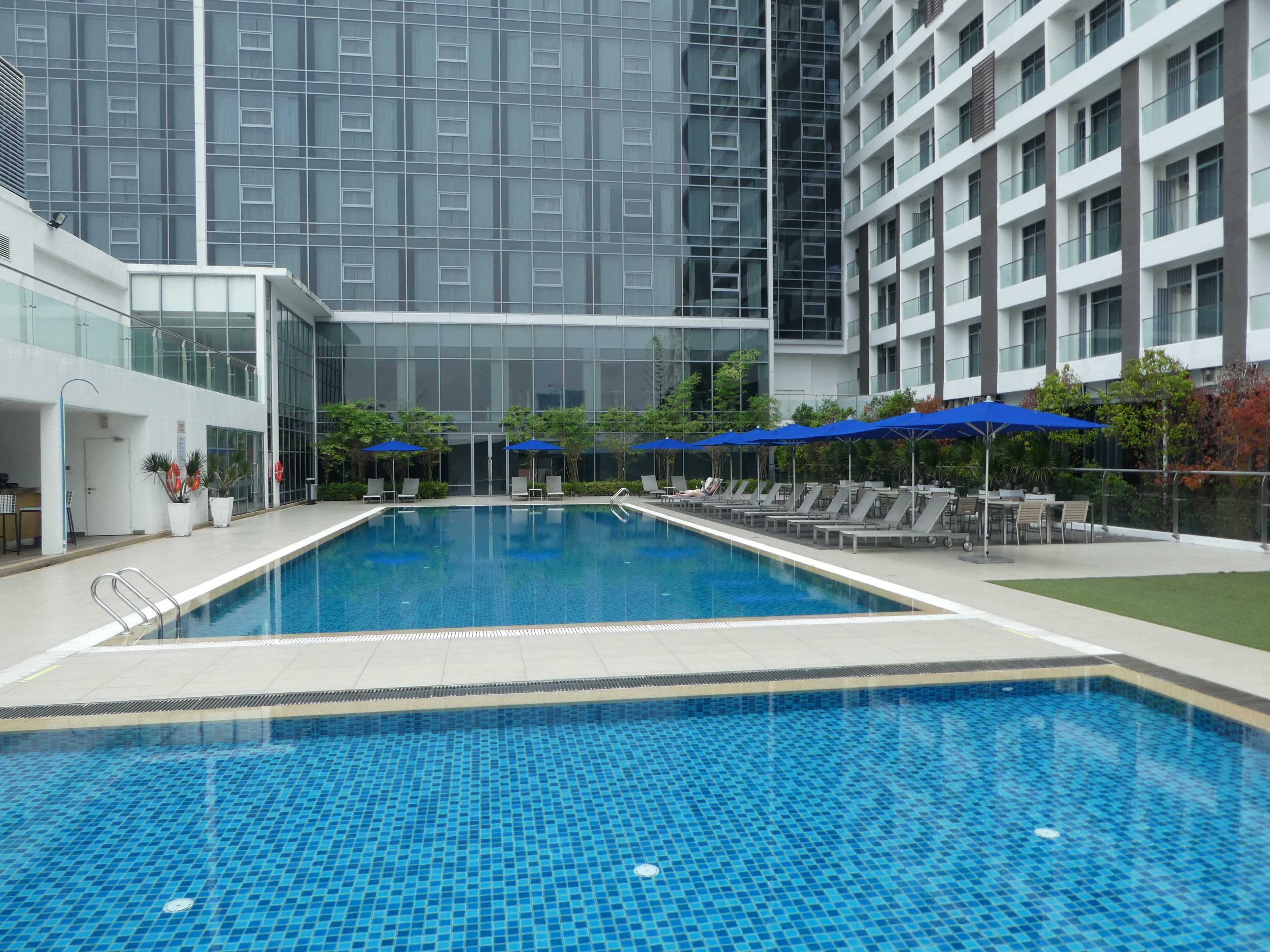
Melaka is much cleaner and more commercial than Penang’s Georgetown and attracts a richer crowd. The restaurants and infrastructure are more like the U.S. Cheap public transportation is not so easily available. We needed pricier taxi service twice. It took us five hours to bus back to KL from Melaka. It should have taken 3 hours or less. We found the heat and humidity of Malaysia oppressive, but we’re really lucky we avoided all stormy weather the U.S. has been experiencing over the past two weeks. You can’t drink or even brush your teeth with tap water in Southeast Asia. You drink bottled water or boil water in your hotel room kettle to kill the bacteria. So far, on this trip, we’ve stayed healthy. Our hotel rooms have been quiet and the beds have been firm and comfortable. We’ve been spoiled with beautiful swimming pools and gyms. The food has been great. Tomorrow night, and for the next few nights, we’ll encounter rainy weather when we travel through northern Taiwan. We’ll blog from there next week. We hope you are all doing well.

Love, BnL

Sweltering Georgetown, Penang, Malaysia

Dear Friends and Family,

A one hour flight south of Langkawi took us to the UNESCO World Heritage protected city of Georgetown, on the large island of Penang, “the pearl of the orient.” It’s crowded with cars, shops, motor-scooters, trishaws, and pedestrians, a frantic contrast to Langkawi isle. We had trouble locating Le Dream hotel. Bruce got lost twice trying to bring some street food back to the hotel room, but we finally got oriented. Le Dream was really dreamy. The rooms were quiet and comfy. $62 per night included a king size bed, buffet breakfast, high tea w/lunch/snacks, wine on the rooftop from 6 to 7 pm, ice cream all evening, and 2 rooftop tepid water spa tubs.

The area is famous for its inexpensive, delicious Asian street food. A platter of Malaysian noodles was only fifty cents! It’s a port city, with a Chinese settlement of houses on stilts in the ocean. The British first colonized Malaysia in 1771 and ruled until 1957. During the early years, the Brits charged an exorbitant land tax, so a large influx of Chinese immigrants out-foxed the English by building their community over water! Families still live there today and welcome tourists to browse souvenir stands, food stalls, and temples, sandwiched between their homes on the jetty.

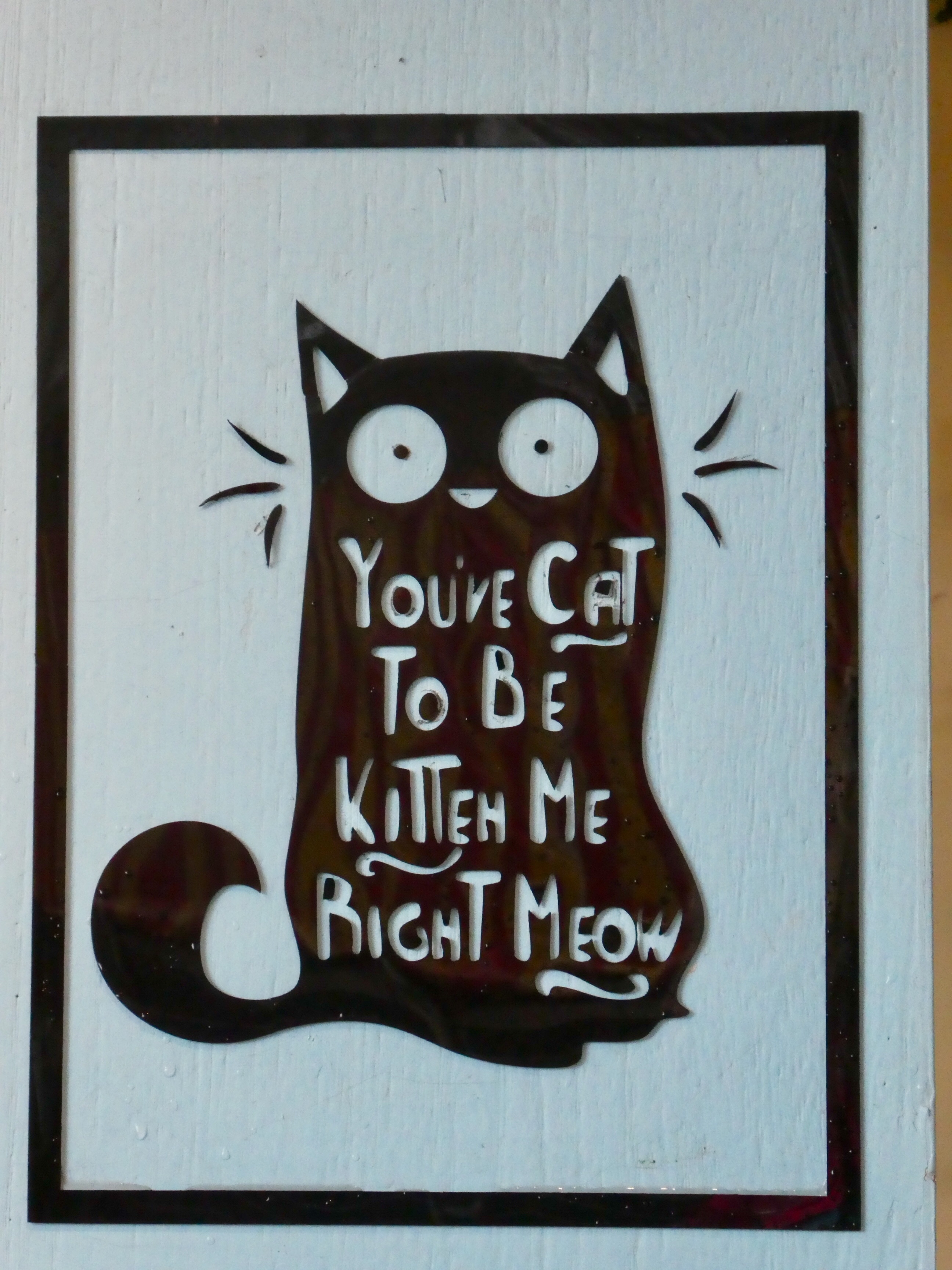
Old town Penang has a lot of colorful street art, both murals and wrought iron 3-D sculptures, using buildings as backdrops. There’s a very active SPCA that bought a large, narrow, and deep building that it uses for fund-raising. They sell space inside on which artists create mostly murals. Proceeds go to the SPCA for the care of animals in Georgetown. Cats are adored; but many people in Malaysia are Muslim and consider dogs (and pigs) unclean. In fact, if a dog brushes against the leg of a Muslim, the leg must be washed seven times. So here, “cats rule-dogs drool!” A lot of the street art includes cats. There are a couple of stores selling every imaginable cat related souvenir. Tourists pose and snap photos of themselves interacting with the murals.

We made the difficult 5K, 2 hour climb to the top of steeeep Penang Hill for a great view of the city with Michelle, a fellow traveler. She was amazingly fit and made it to the summit a good half-hour ahead of us. There were monkeys in the tropical forest along the way, and even sitting in the roadway, thankfully ignoring us. A local warned us to carry a stick, because those cute monkeys sometimes jump on tourists with backpacks, hoping to find food inside. “Backpack Bruce” really zoomed through that stretch! 😜 We didn’t encounter too many brave souls hiking up in the horrible heat, and were wildly surprised to find tons of tourists enjoying the “Disneyland” like atmosphere at the top. There were cold drinks, ice cream, cotton candy, and souvenirs for sale. There was a little train tootling children around. Couples posed for staged photos for a fee. There was even a building advertising an earthquake/tsunami experience inside! We walked up a final set of steps past a massive cobweb filled with spiders, some larger than the size of your palm, to find an amazing, though hazy, view of the city, including the 13.5K Penang Bridge. We were delighted to find a funicular ride to the bottom of the steep hill that took less than five minutes! Apparently, other tourists purchased round-trip tickets!

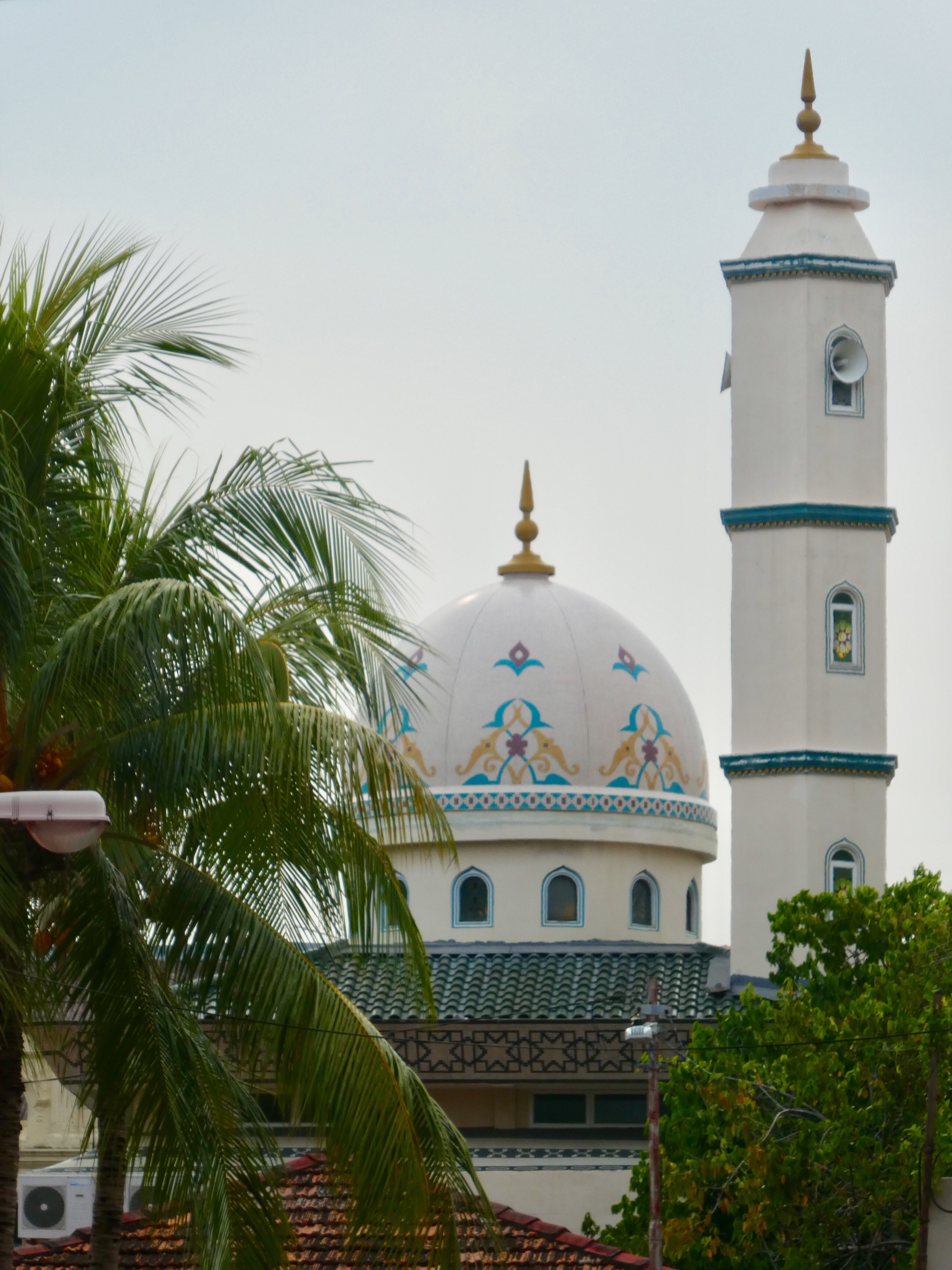
We enjoyed meeting several other guests over wine and high tea gatherings at the hotel. Wandering the streets was a bit unnerving, as there’s very little in the way of sidewalks. We crossed the roads carefully and quickly. We took an interesting free walking tour with a local man who pointed out many of the significant historic buildings and temples. We saw beautiful Muslim, Hindu, and Buddhist temples, and a Methodist church, all part of the neighborhood vibe. We heard the Muslim call to prayer in the early morning and each evening.

That’s all for now. We’ll write again after our visit to Melaka, another port city to the south. Love, BnL

Serene Langkawi, Malaysia

Dear Friends and Family,

We left our home on the Klamath River and drove into the Bay Area a day early to avoid 2 snow storms. Our China airlines flight left at 12 midnight. Fifteen hours later we laid over in Taipei, followed by a 5 hr. Flight to Kuala Lumpur, (KL) Malaysia. It is stinking hot in Malaysia and no wonder, KL is only about 200 miles from the equator! But wow, we cooled off in the warm waters of our great hotel pool, and the Asian street food behind KL’s Hotel Istana was cheap and tasty. Hawkers beg you to eat at their place. Generous portions are $2-6, and there’s plenty of great beer, fun, and live music. We couldn’t sleep on the plane, but we’ll adjust over time….then there’s the time difference, since Asia is 16 hrs. ahead of California. We were here for a week a few years ago. This time, we spent only two days in KL. We revisited the famous Petronas Twin Towers and milled around at a nearby upscale mall. Then we flew 1 hour to island paradise, Langkawi.

Langkawi is a small island off the NW coast of Malaysia. We treated ourselves to a beachfront chalet at the upscale Meritus Pelangi Resort for 4 nights, and enjoyed great breakfast buffets, incl. champagne, 2 large swimming pools, and an uncluttered beach of fine white sand hugging a placid sea. The guests were culturally diverse and wore everything from Speedo’s and thong bikinis to long black burkas. Muslim staff were modestly covered with hijab and very congenial. The pool and lazy warm ocean waters were divine. Except for quiet jazz music at breakfast, and the constant birdsong throughout the resort, we basked in quiet serenity. Everyone was relaxed and friendly.

Our routine was to exercise at dawn, walk the beach at sunrise, and lounge around the pools, dipping in and out. In the afternoon , we tried to stay under the a/c and avoid blazing sun/humidity. There were signs warning us of jellyfish, but we only encountered one washed up on the beach. In the evening, we walked down “Main St.” for great Chinese, Arabic, and/ or seafood, and watched the sunset on our stroll back to the resort. It was fun to eat falafel and hummus at a roadside stand that played Syrian/Arabic music. We had a fabulous seafood meal at “The Orkid” restaurant. They had tanks of fresh caught fish, crabs and lobster from which to choose our meal!

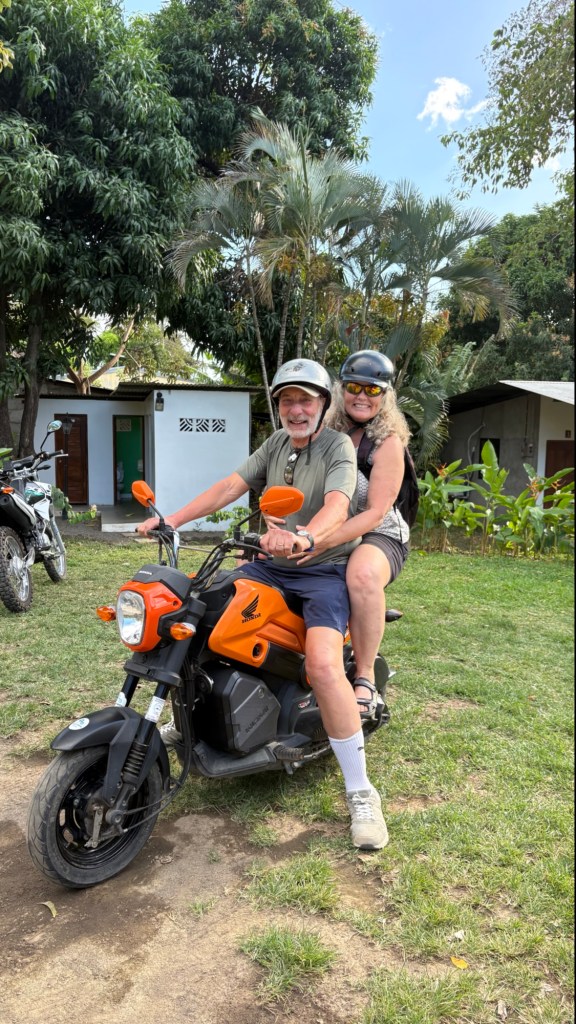
We could have rented a scooter for only $5 a day, but just really didn’t feel like exploring the rest of the island. There are all of the usual tourist trappings; helicopter rides, parasailing, jet skis, tours of caves, a crocodile farm, etc, but we were content to just hang out. We enjoyed a relaxing one-hour yoga class on the beach early one morning. We celebrated our 25th wedding anniversary with a Chinese dinner, and the resort surprised us with flowers and a delicious chocolate cake. All in all, the place was wonderfully rich and relaxing, decadent, but worth the splurge!

We left Langkawi a few shades darker and looking forward to exploring more of Malaysia.

Hope you are all well back home, safe and warm.

Love, BnL

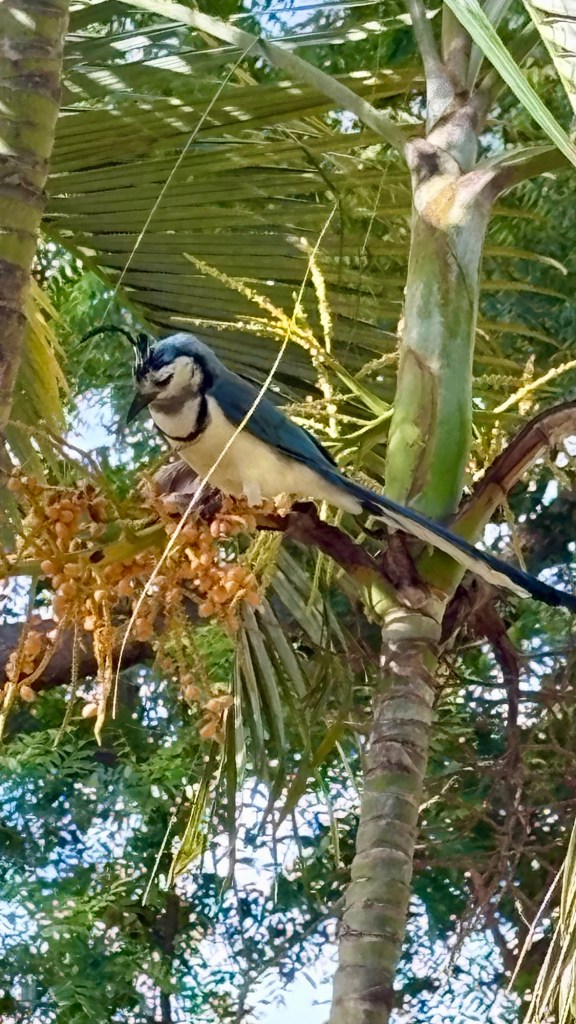
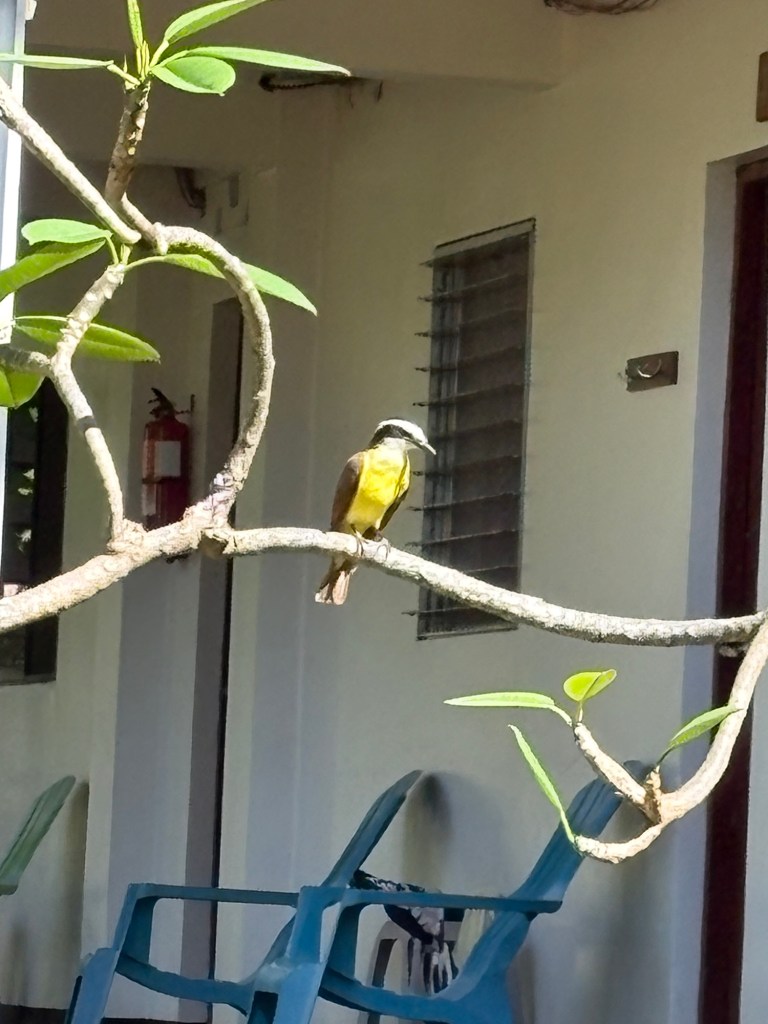
ps. We saw this bird in the flowering trees around the pool, but could not manage our own photo. We got this picture off of the internet. 😜