Dear Friends and Family,
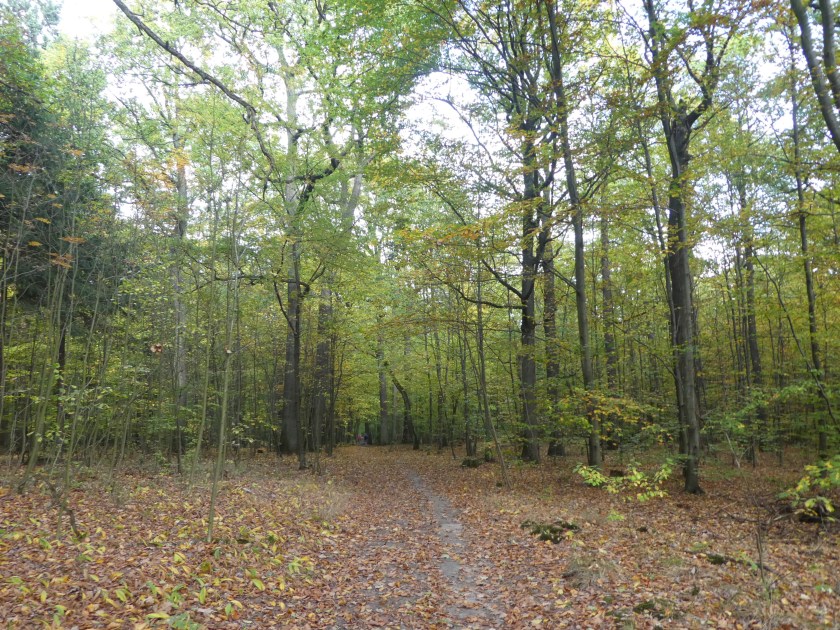
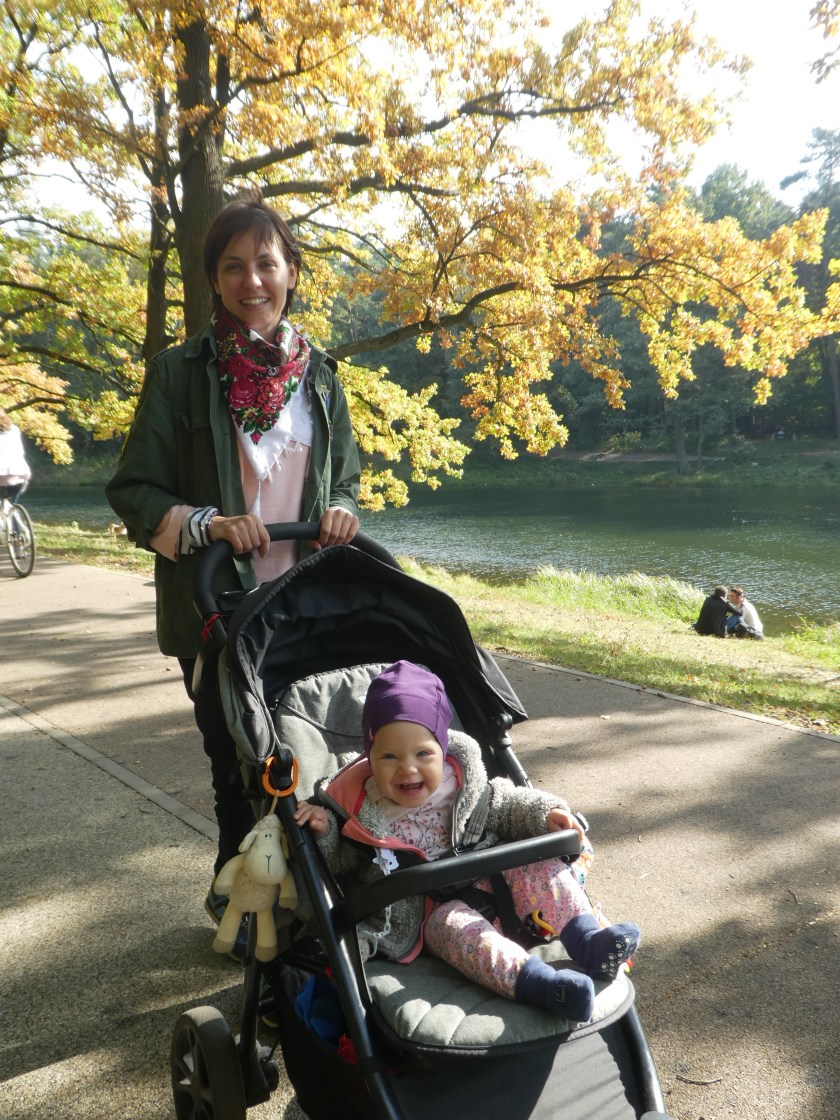
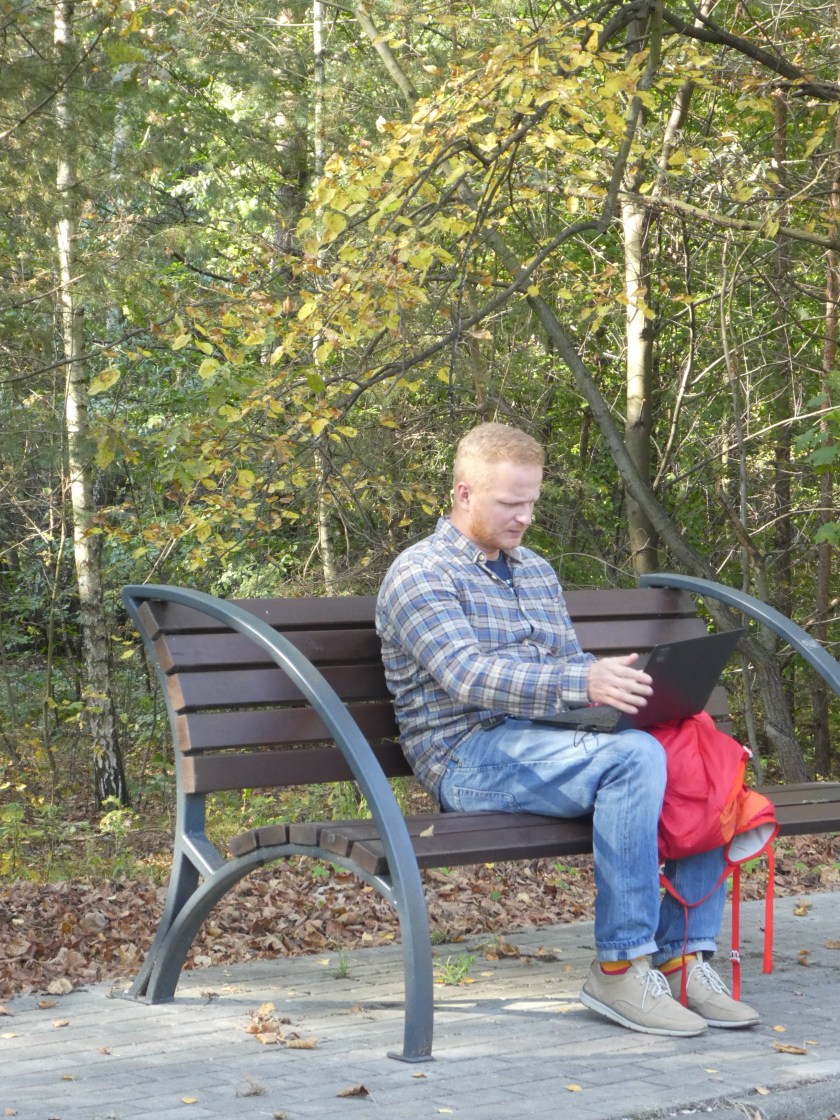
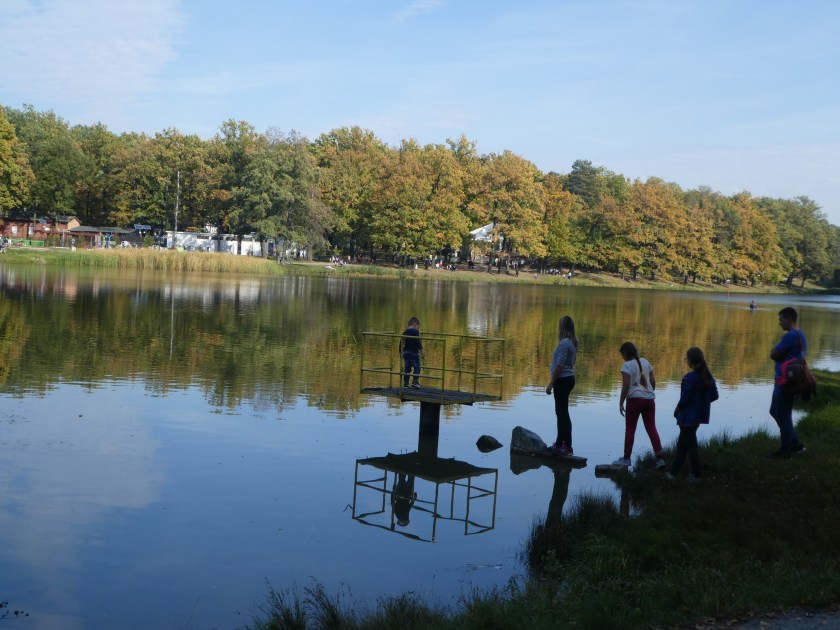
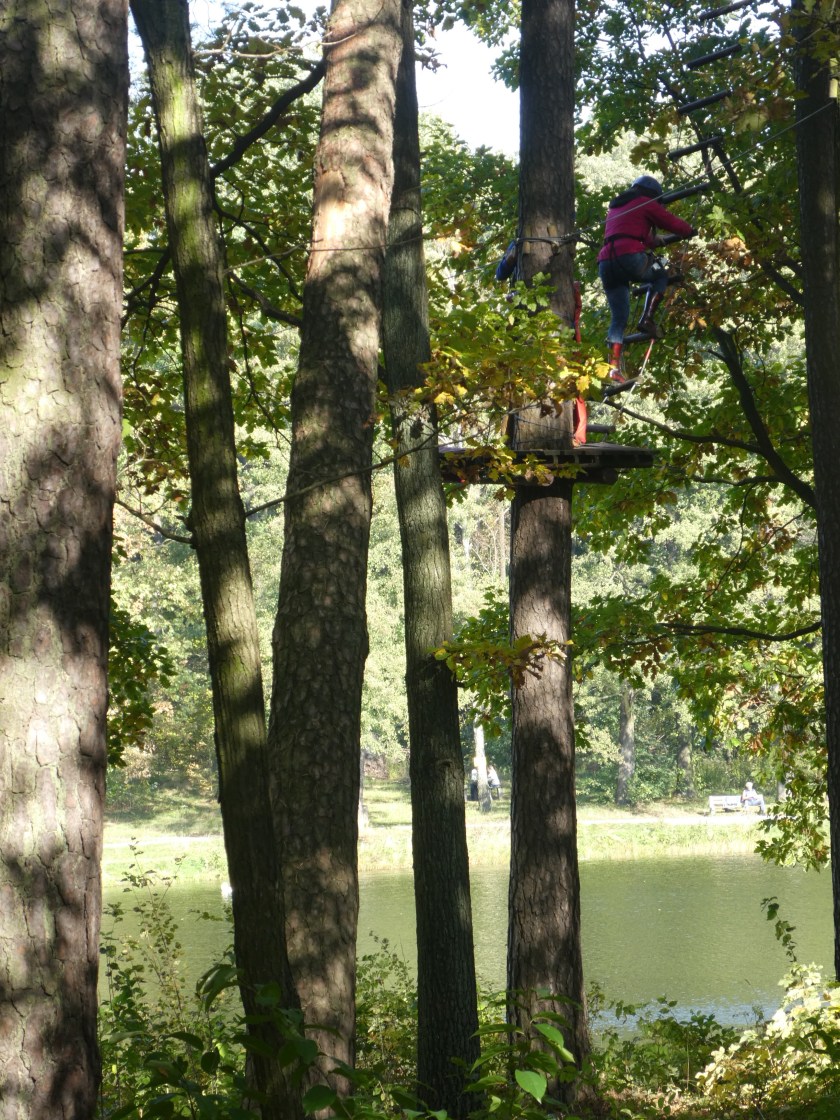
Our new friend Rafal’s hometown is pronounced Woodge, but spelled Lodz. We had an good time here, thanks largely to the hospitality of Rafal, (pronounced Rafaow), his wife, Ala (short for Alicia) and their darling 10 month old daughter, Lucy (pronounced Wootsie). Forgive us, Rafal, if we still don’t have it right! They picked us up at our Lodz Centrum B&B Hotel and drove us to Lagiewniki Park, where we all hiked along level forested trails for most of the day. Ala pushed Wootsie in her stroller, and we all laughed and talked about anything and everything in the beautiful fall weather. At the end of the trail we shared a beer. This is practically a Polish tradition. Alicia works in logistics. Poland entitles her to one year of maternity leave. Rafal is an IT troubleshooter. He had to occasionally take a work call and solve a computer problem, and his laptop eventually ran out of power. He had to hurriedly drop us off near Fabriczna train station and get back in touch with his company. We needed to change our train tickets to Kraków, so this drop off was ideal for us. We hope to host Rafal, Ala, and Lucy someday at our Klamath River home. We were so happy to have met this sweet family and visit their hometown! There was much more to see and do than our schedule permitted, but we thoroughly enjoyed our limited time there.
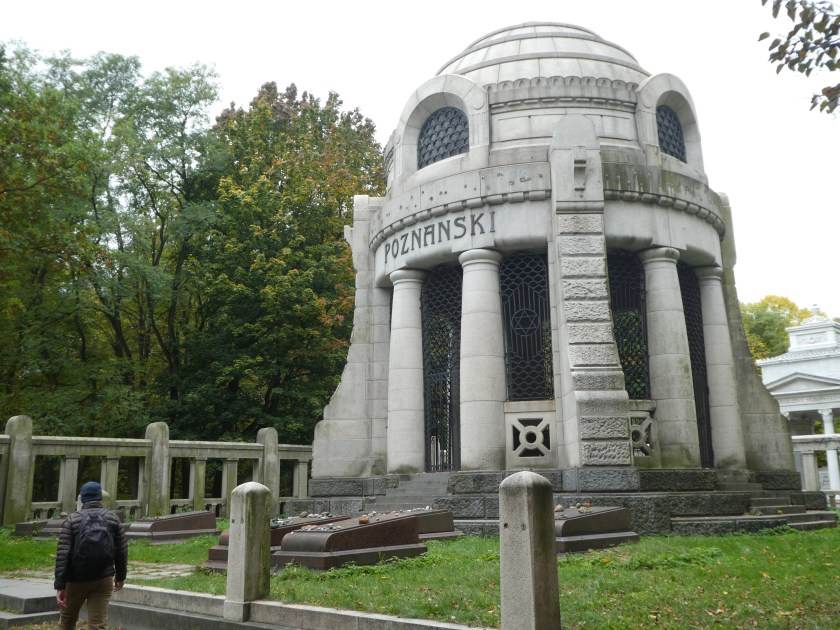
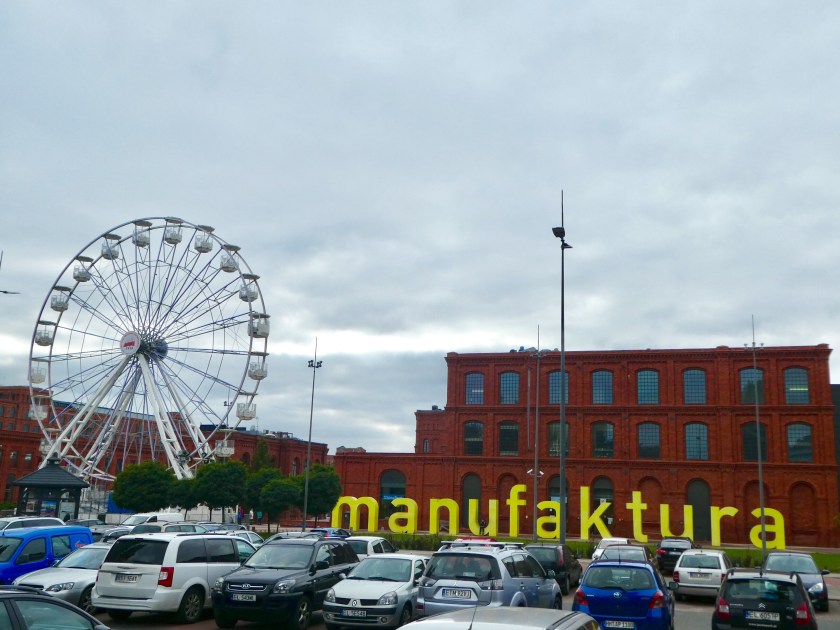
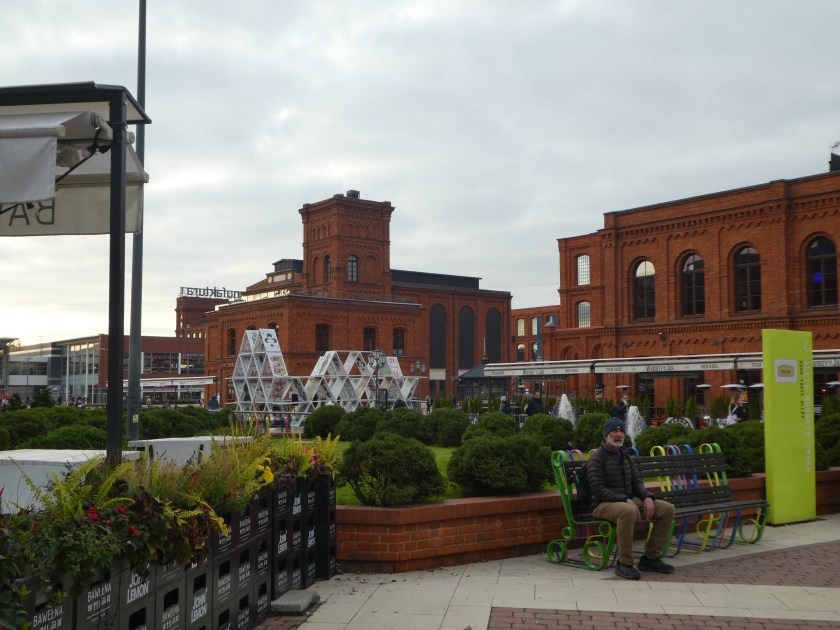
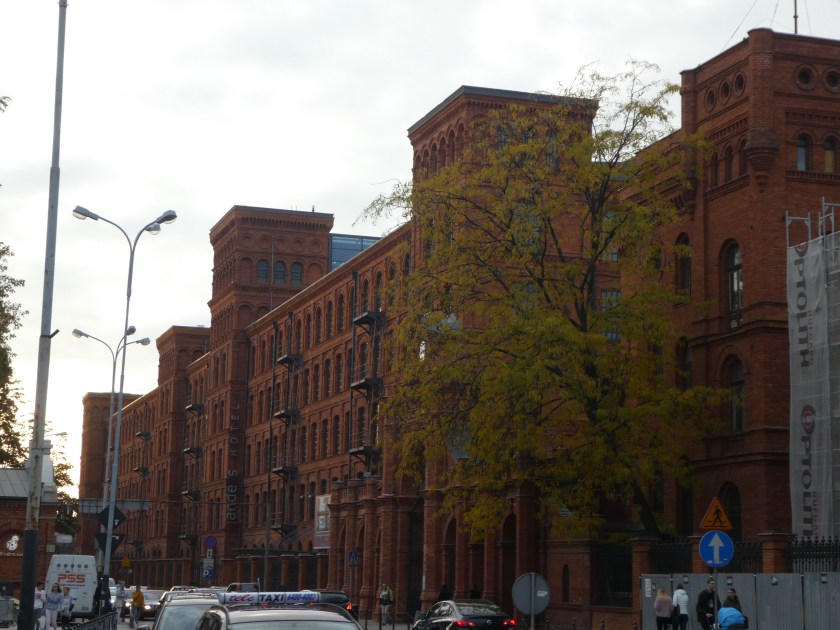
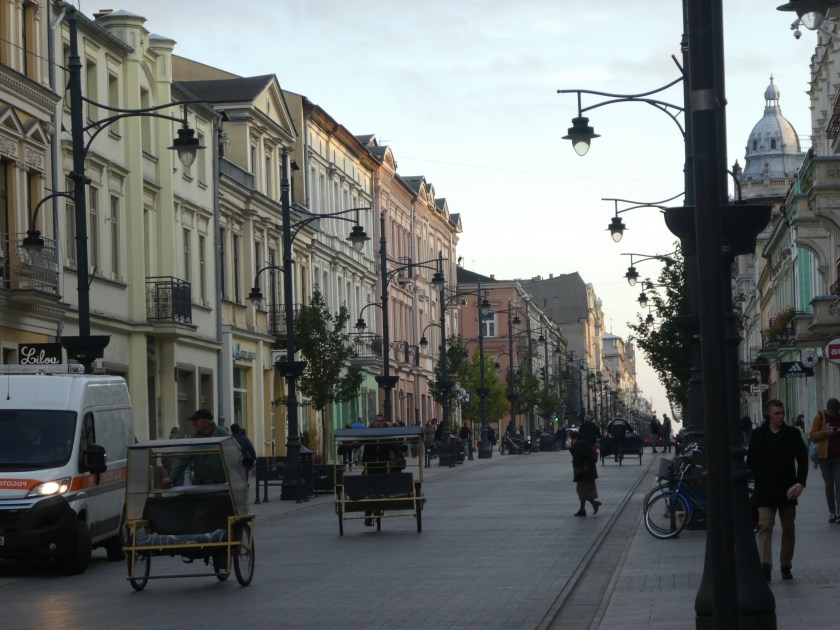
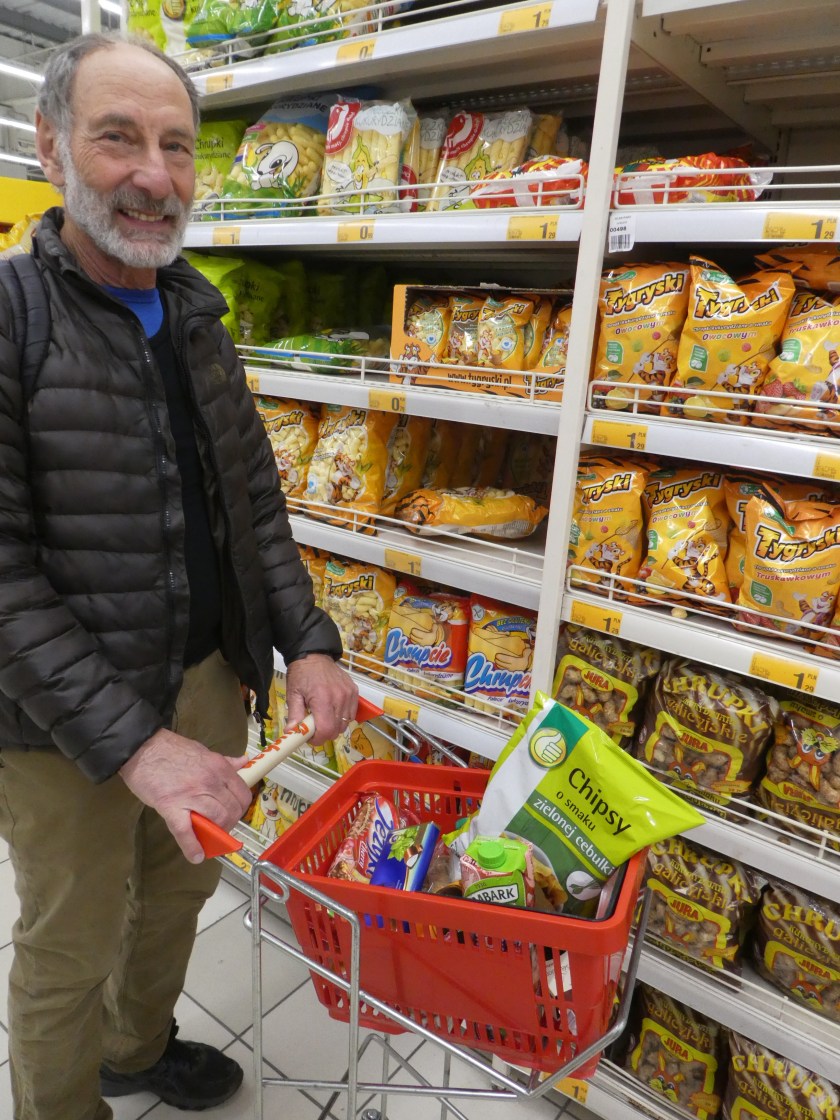
When we first arrived at our hotel on Saturday night, we walked over to the nearby, “Manufaktura,” an enormous mall that used to be a huge textile manufacturing plant. It was originally owned by Israel Poznanski, a wealthy Jewish merchant. He was laid to rest within the largest mausoleum in the Lodz Jewish cemetery. Manufaktura may be the the biggest shopping mall in the world. At least it seemed so to us. Huge red brick buildings surround a large, open plaza with a Ferris wheel, a merry go round, a large fountain, and a movie complex. There’s a giant exhibit of playing cards, shaped like a house of cards, that light up sequentially , to music. There are coffee houses, restaurants, and pubs along the exterior, with tables, umbrellas, and gaslit torches for added ambiance and warmth in the evening. Neon lights glow pink, purple, red, green, and blue around the square and over the main gate. The main building houses a large interior mall with the biggest supermarket we’ve seen in Poland. It was like three superWalmarts in one store. They had a fashion show going on near the superstore that people watched from several mall levels. Pencil-thin models pranced down a runway to the sound of rock music from high volume speakers. It was an engaging display. Why aren’t these fashion shows more inclusive? We also explored a section of the colorful Piotrkowska St., the longest pedestrian street in Europe. Two days later, we decided to deal with a much more significant issue.
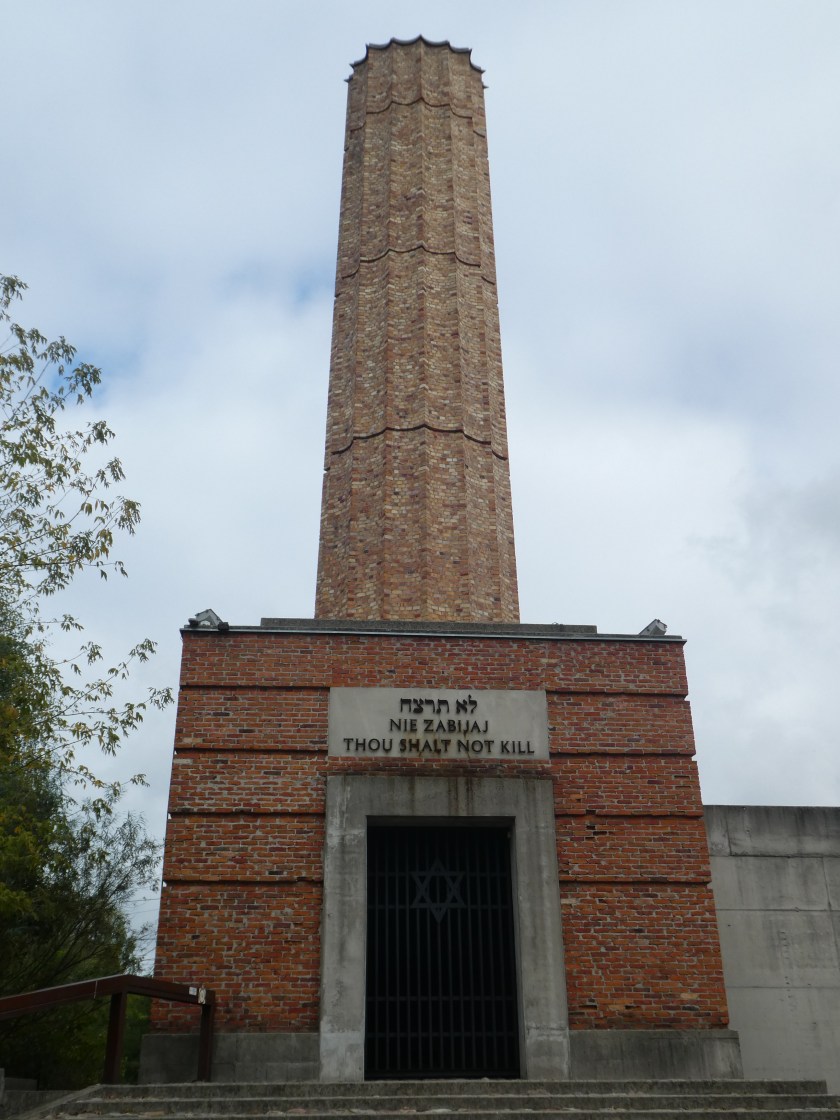
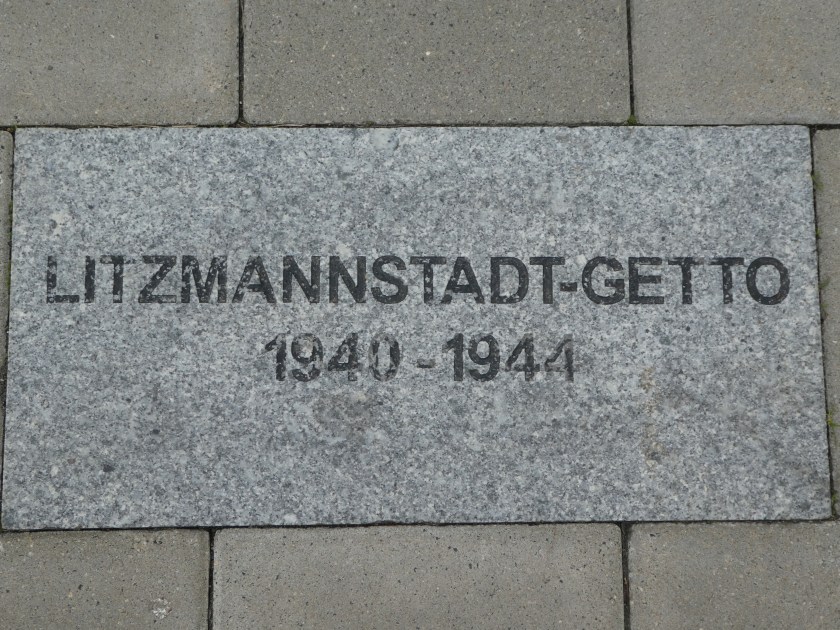
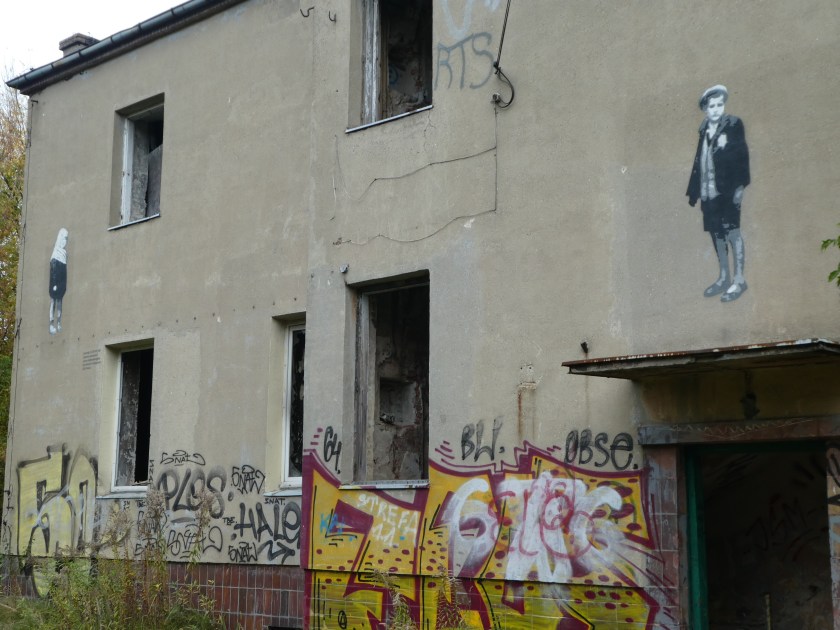
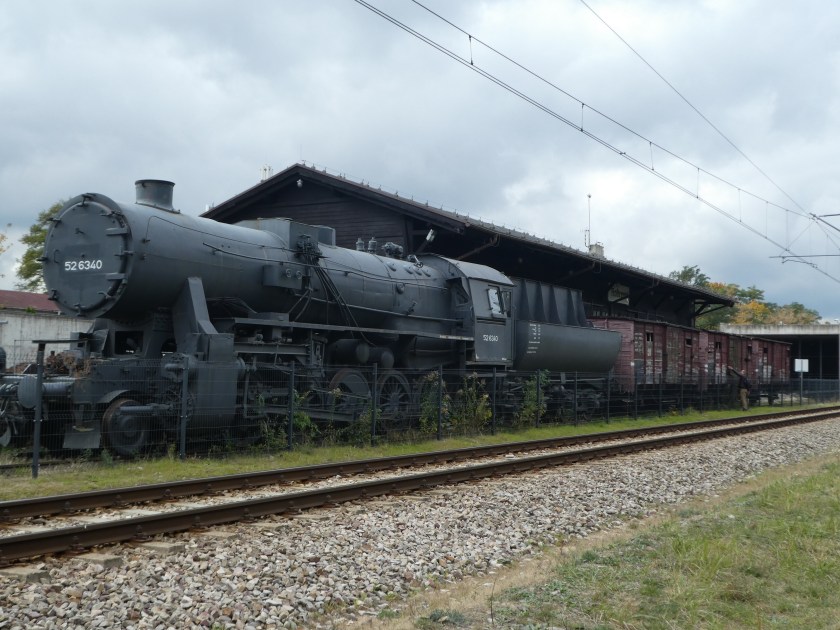
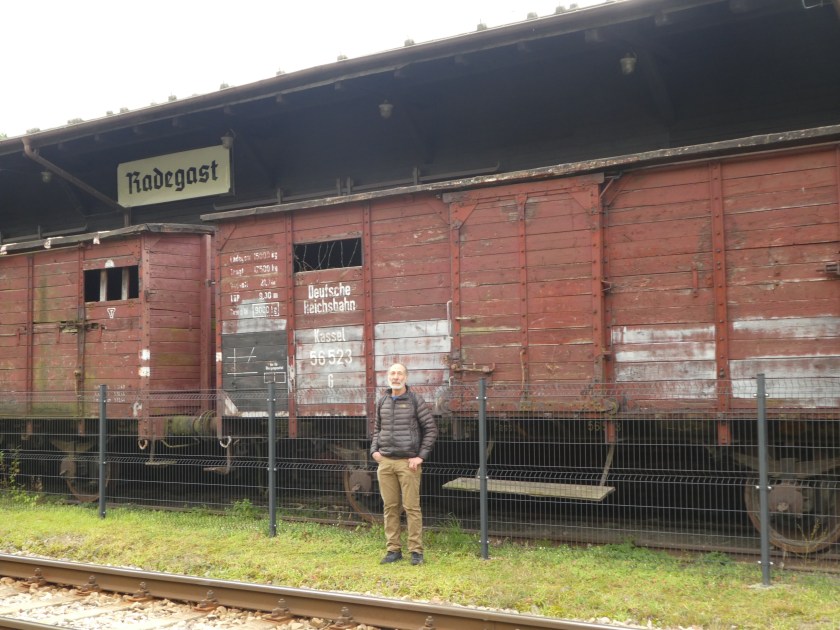
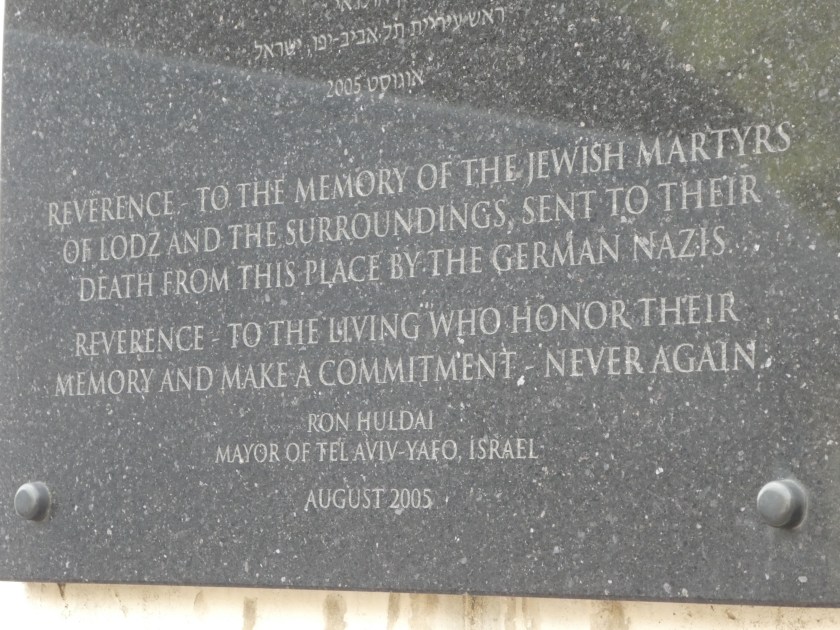
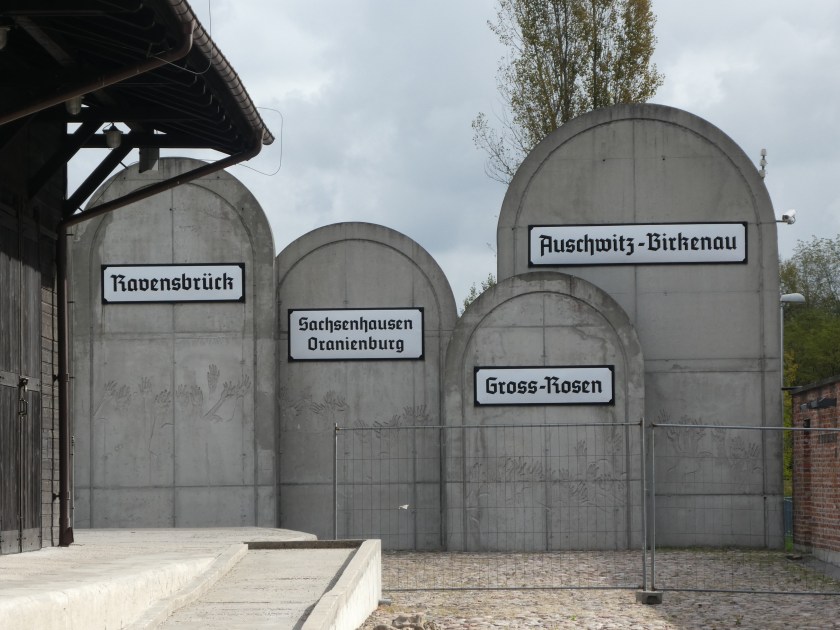
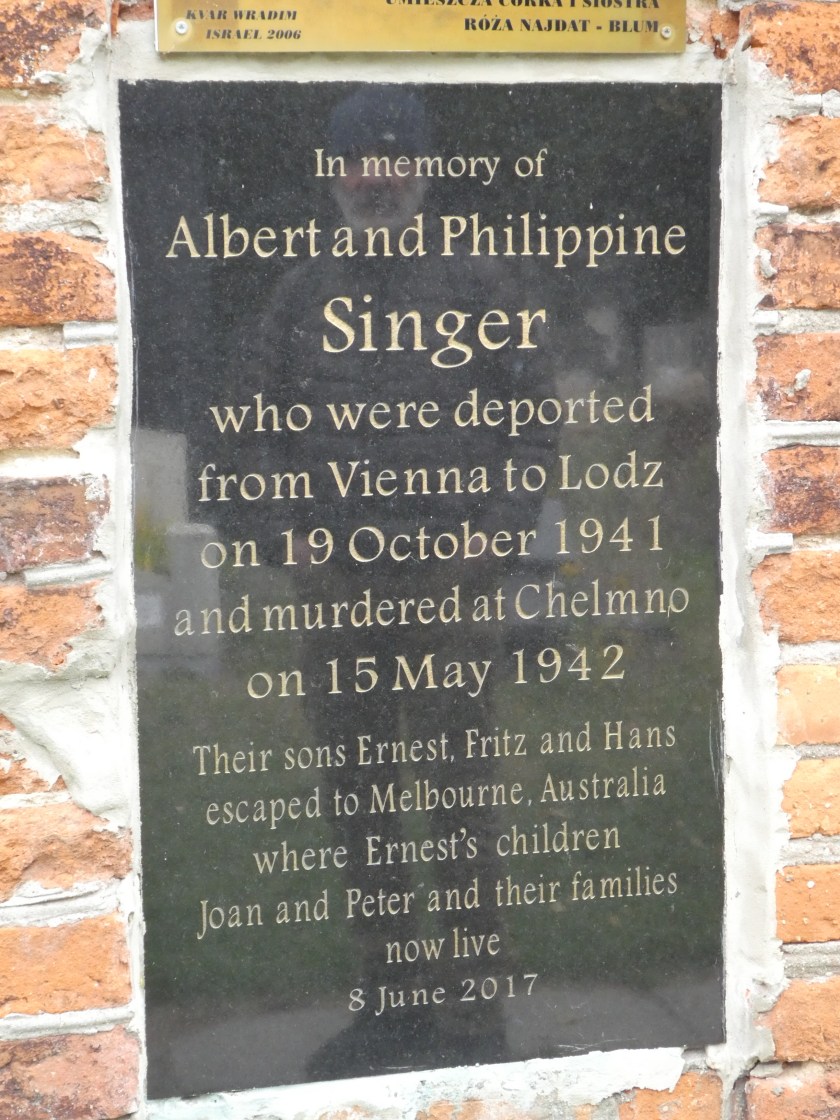
The Litzmannstadt neighborhood was originally named Baluty, but the Germans renamed it when they turned it into a ghetto. With approximately 230,000 Jewish occupants, (one-third of the entire city), It became the largest ghetto in Nazi controlled Europe. Thousands more Jews were shipped into the ghetto from other areas over a period of five years. We spent most of a day here. The approximately 10km. area includes Radegast (train) Station, where 200,000 Jews were sent in cattle cars to their death at the extermination camps of Chelmno, Ravensbruck, Stutthof, and Auschwitz. The station is now a place of remembrance. We saw 3 cattle cars and a locomotive used for transport beside several enlarged gravestones, inscribed with the names of the death camps. There was a mural of two children on a crumbling building. It is one of several murals throughout the ghetto remembering the children of Baluty, who were transported to the gas chambers.
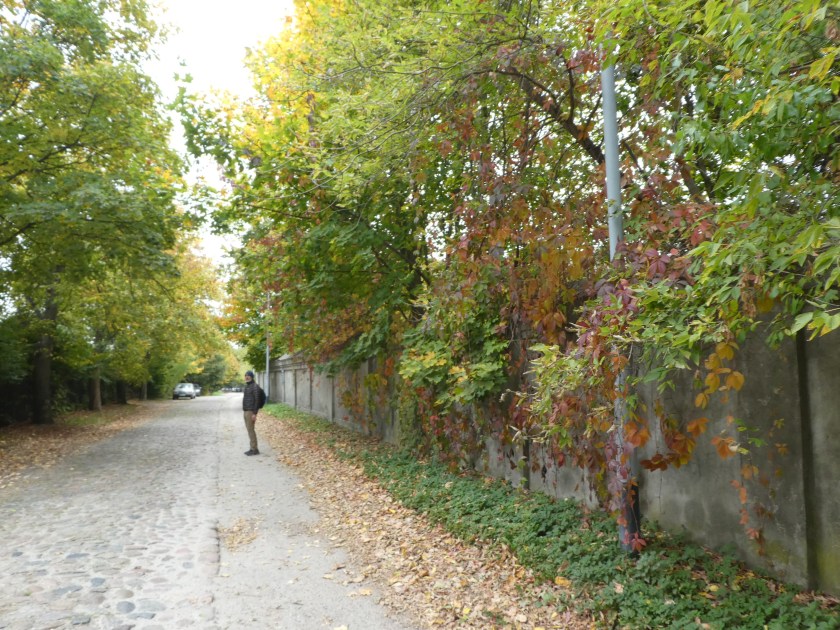
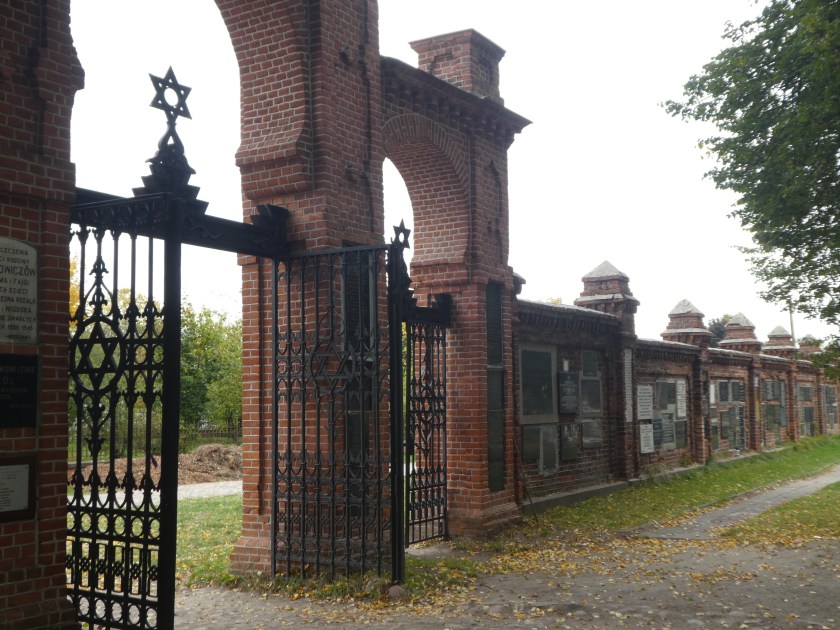
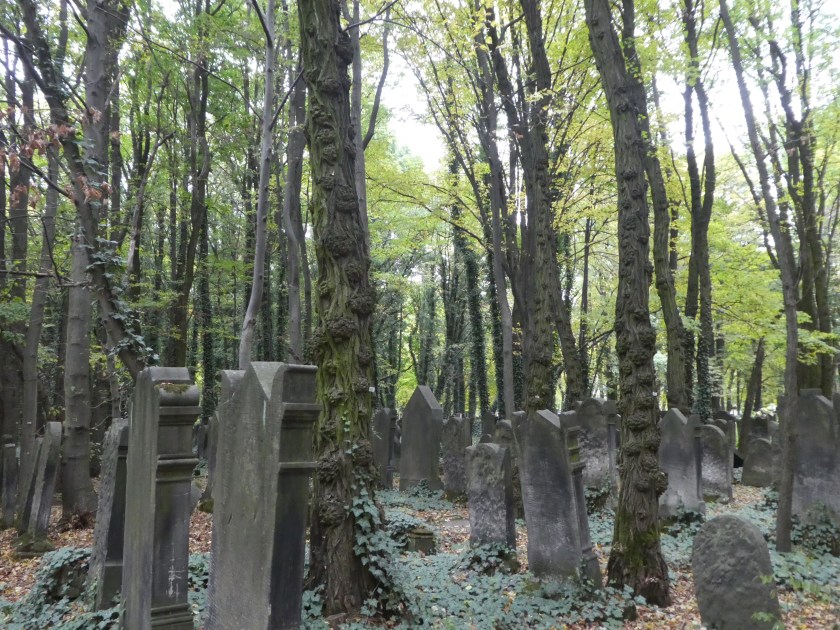
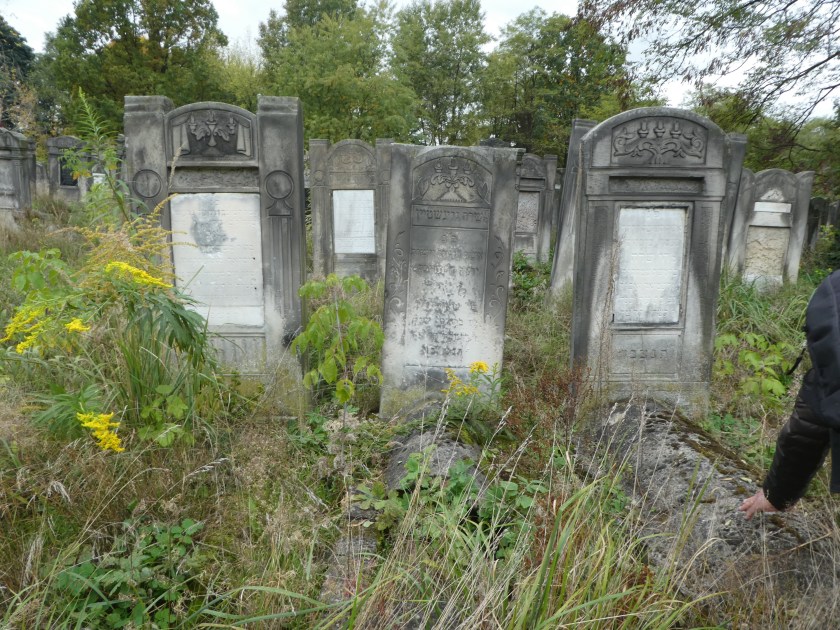
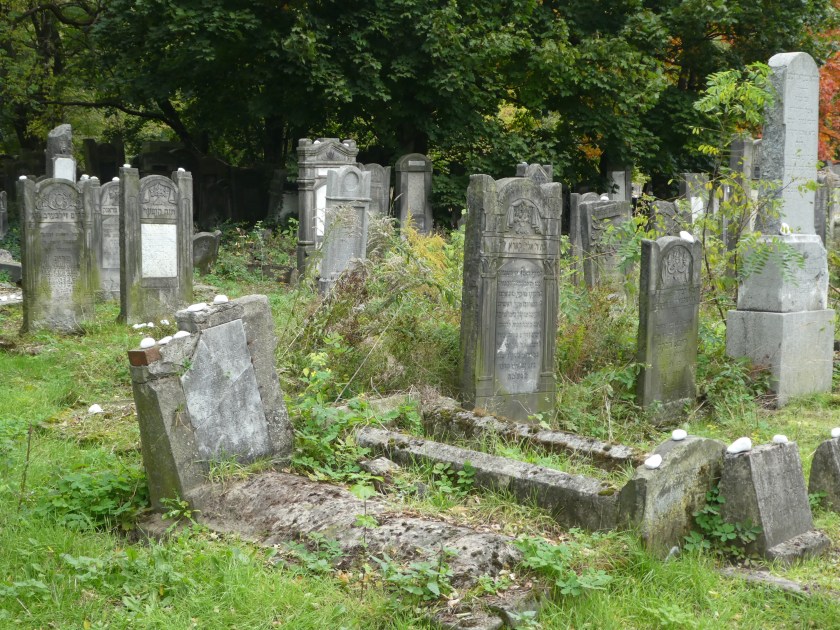
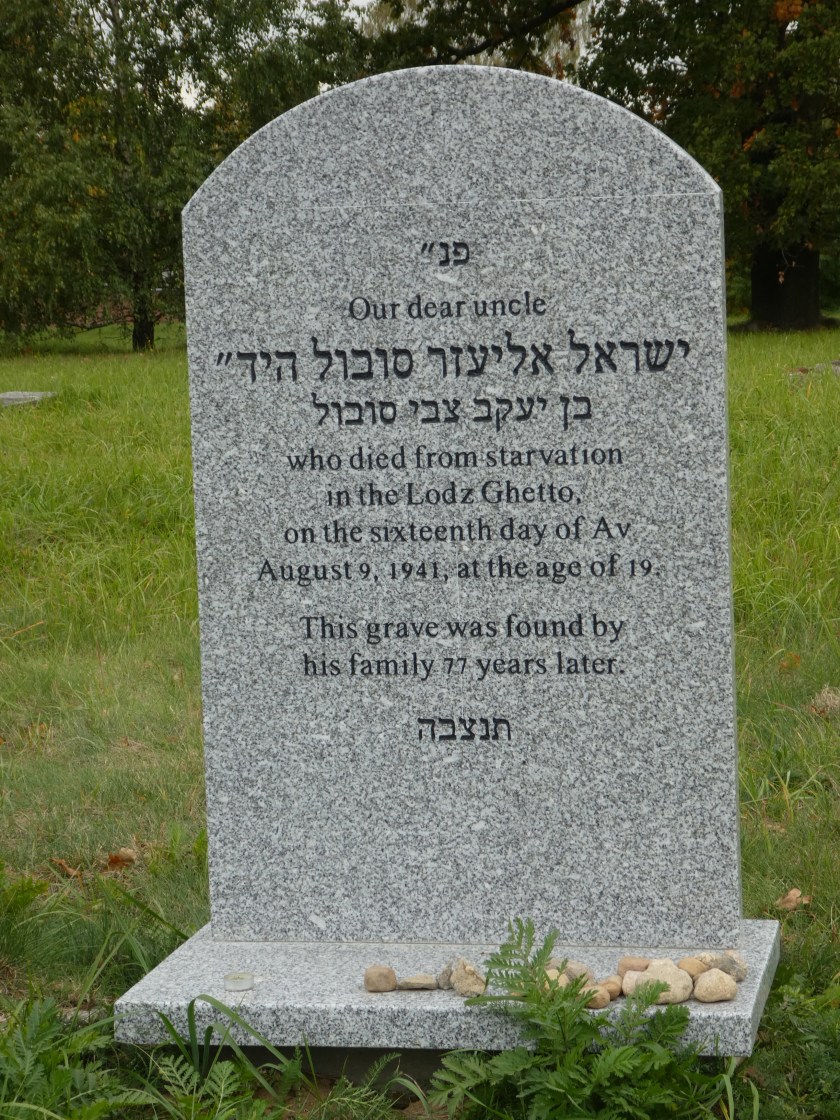
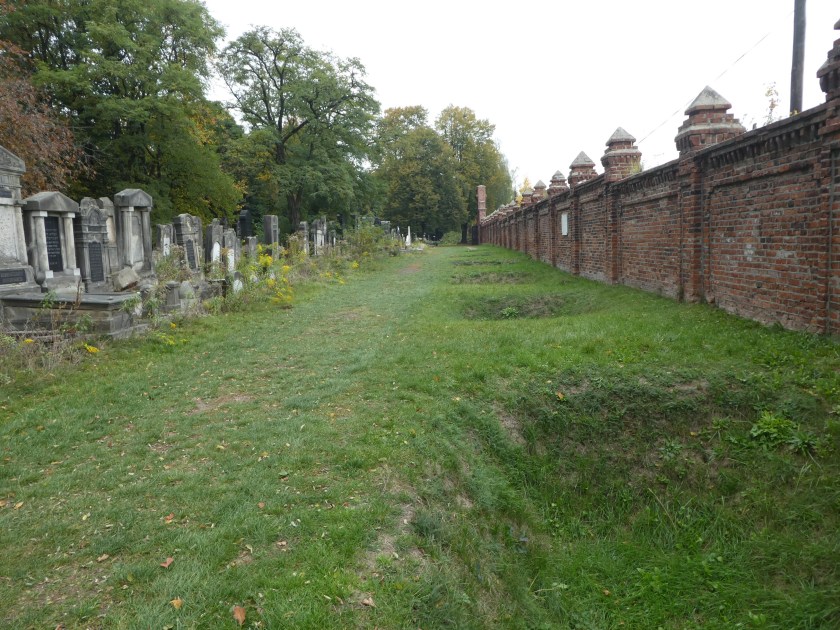
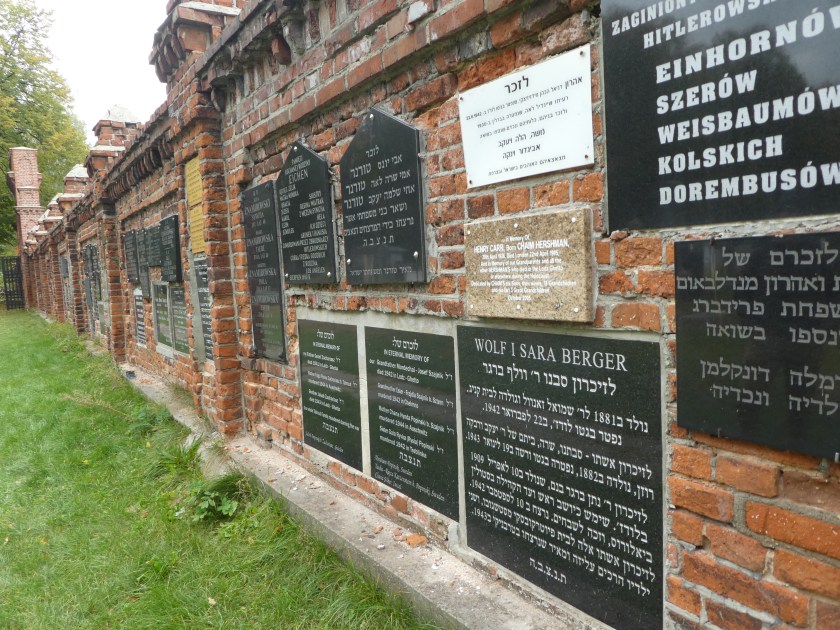
The Jewish cemetery nearby has 180,000 people buried there. Approximately 45,000 of them died in the ghetto (1939-44) from malnutrition, starvation, and disease, and were buried in mass graves. There was a large field filled with small markers over thousands of unidentifiable bodies. These graves, and the gravestones, were created by Israeli soldiers, who came to help sort and individually bury victims. Family members tried to identify their loved ones from these remains. Few were successful. It was sad and strange to see gravestones with inscriptions including the word “murdered.” In many cases, entire families were killed, so there wasn’t anyone left to commemorate their passing. There were several large empty graves in a row that were dug by, and intended for, 800 or so Jews who had to bury everyone else and clean up the ghetto. The Nazis planned to execute these men once they had finished digging their own graves, but they survived, because the Soviets were fast approaching, and the Nazis had to beat a hasty retreat. The cemetery is in the most tranquil, overgrown, wooded setting. It is sooo eerie and made us cry and hold hands. We placed stones on graves, as is the Jewish custom, and acknowledged the unmarked remains, by saying the Kaddish prayer honoring the dead. Both this forested cemetery, and the lovely park we hiked through with our friends, were the sites of so many murders during WWII. If trees could talk. Poland has historically been plagued by foreign domination. They’ve only had their recent independence from Soviet Russia since 1991.
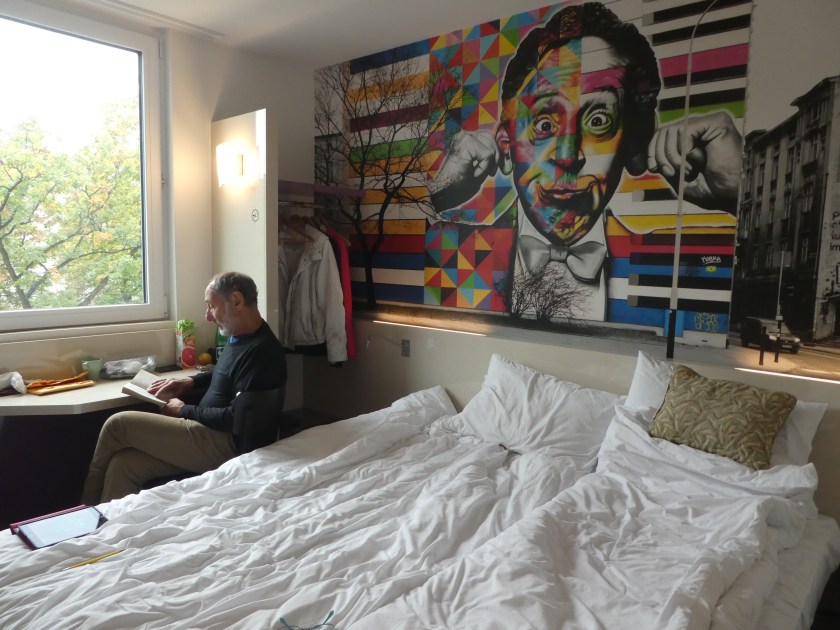
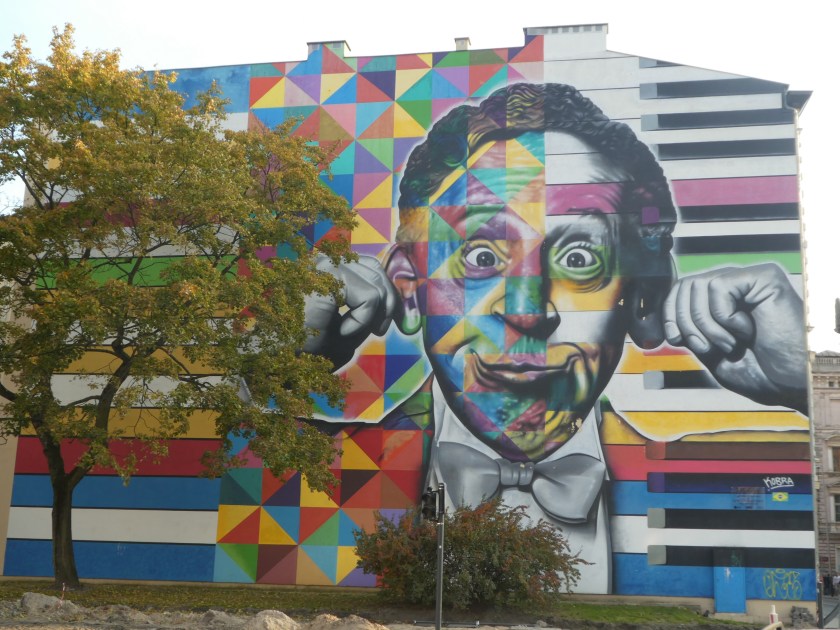
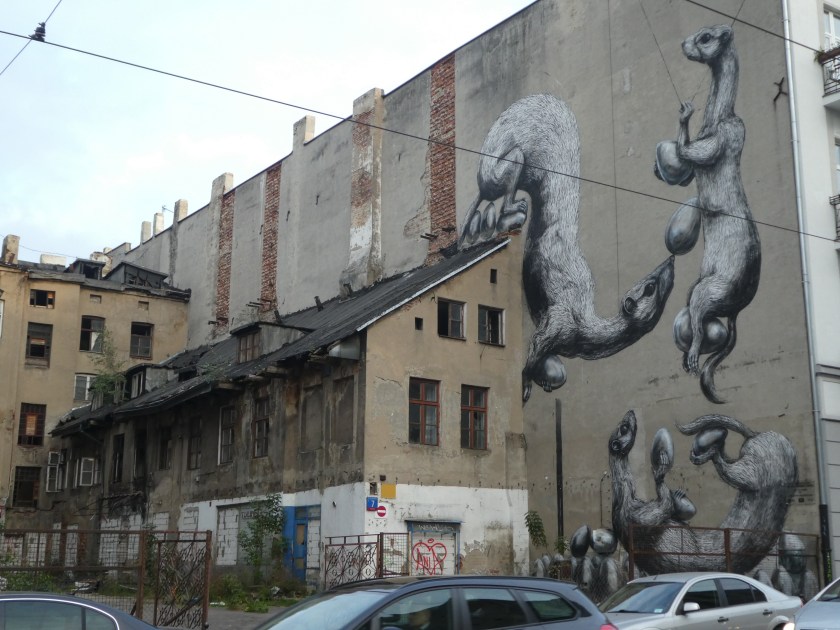
We’ll end on a brighter note. We were surprised by a huge picture of a man’s face, above the bed in our hotel room, with a weird look to it. We both thought, “kinda creepy, but at least we’re facing away from this guy.” Two days later, we saw the same picture covering the side of a building. We found out that a Brazilian street artist, Eduardo Kobra, painted this mural of a young Arthur Rubinstein. Bruce is very familiar with Rubinstein, a famous Polish-American classical pianist, but didn’t recognize this younger, muraled picture of him.We found out that Lodz has several famous murals. A second one we stumbled across while wandering around is of three weasels playing together. The mural was painted by a Belgian artist nicknamed ROA.
We’re in Kraków now, making the most of our last stop. We hope you are happy and healthy.
Love, BnL

 bnlmos
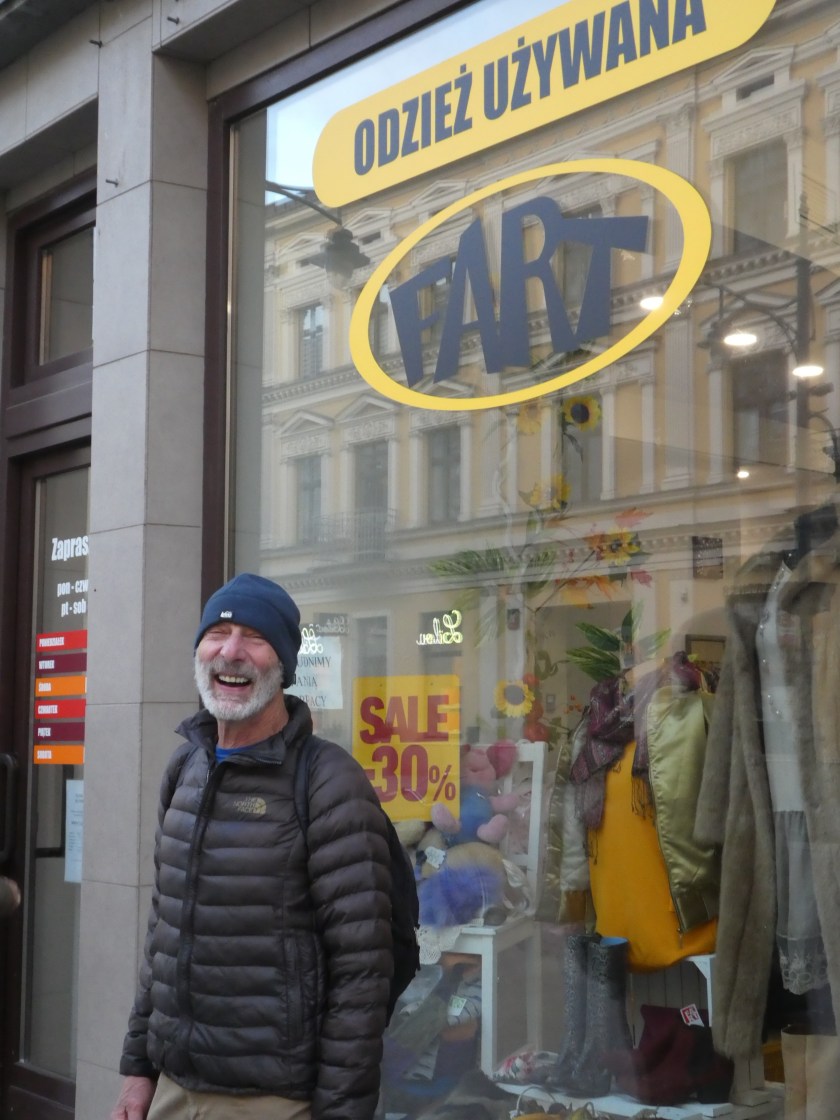
Hi, Hope you liked our city and you will visit it again. Ain’t easy to write our names in Polish 😁 by the way FART means Luck in Polish 😁
LikeLike
So that makes Bruce really lucky!😜😂
LikeLike
OMG that Rafael baby is so cute! Wonderful acquaintance… I hope your last stop is brighter than the horrors of Jews, I can’t imagine visiting that or, worse, living close to such memorial. Terribletimes…
Have fun for a few days
Rita
LikeLike
Aww yes- Wootsie is a cutsie! We could have taken her home as a souvenir…made us miss our grandkids!
LikeLike
Hey BNL, Sorry I haven’t been responding to your posts. I have been following your travels…but on my phone. I just opened your last post on my laptop. What a difference! It sounds like you’ve had an interesting journey. I’m sure it’s been both enjoyable and educational. I truly admire your stamina! How do you do it? We hope to see you soon. Safe travels home…and good fart always!
LikeLike
Thanks from the fartiest guy on earth, according to Linda. 😜
LikeLike
Hi Linda,
i have a question 🙂 Where in Dublin i can see traditional Ireland dance?
Now we are in Ireland and we are looking for what we can do in a weekend 🙂
Greetings!
Alicja – Lucy’s Mum
Alicja Januszkiewicz Wysłane z iPhone’a
> Wiadomość napisana przez bnlmos w dniu 14.10.2018, o godz. 09:28: > > >
LikeLike
Either of the two Arlington Hotels have free Irish Dance shows in the evening. Get there early and order a Guinness to get anywhere near the front. It gets crowded. You can also reserve a table to eat there. We just had beer and stood. It was awesome! There are two Arlington hotels so check it out and have fun! 🙂
LikeLike